Fairy Tales & Contemporary Music: The Dangers of Normalizing Toxic Relationships in Media

By: Anabel Lynch

Abstract

Fairy tales such as Beauty and the Beast and Cinderella promote societal misconceptions about love and gender roles in relationships. Beauty and the Beast demonstrates a Stockholm Syndrome relationship while Cinderella presents an obsessive prince, and both stories ignore the dangerous love circumstances being portrayed. Through research, analysis, and close readings of scholarly sources as well as One Direction’s song “Stockholm Syndrome” and Blondie’s song “One Way or Another,” this paper will analyze how the fairy tale themes of Stockholm Syndrome and stalking appear in modern music and inform personal views on love and gender roles. The themes involving love found in fairy tales that are mirrored in music are dangerous media to present to the public as they describe unequal gender roles, toxic love, and objectify women. Analysis of the two different fairy tales has been done by many different scholars such as PhD author Marcia, R. Lieberman. Research regarding female representation in music lyrics have also been completed in academic journals by professors such as Brook Bretthauer and Texas Tech University’s Eric Rasmussen and Rebecca Densley. However, not much research has been completed to relate Cinderella and Beauty and the Beast to contemporary music. The hope is to have this comparison help us shift societal understandings of love so that these dangerous relationships are no longer romanticized or encouraged and positive and respectful notions of love are represented in music. This paper also aims to call adults to action to begin conversation with children about gender and relationships in order to allow them the opportunity to form their own ideas of love. 

The Dangers of Normalizing Toxicity in Fairy Tales and Music

Fairy tales such as Jeanne- Marie Leprince de Beaumont’s “Beauty and the Beast” and the Grimm Brothers’ “Cinderella” exacerbate societal ideas about love, relationships, and gender roles. “Beauty and the Beast” tells a story of Stockholm Syndrome and “Cinderella” downplays the prince’s stalking behavior to be charming. The romanticizing of toxic relationships is a theme portrayed in both fairy tales and contemporary music. The interpretations about love found in fairy tales and contemporary music are a danger as they normalize unequal gender roles, toxic love, and objectify women. 

Jeanne Marie Leprince de Beaumont’s version of “Beauty and the Beast” details the story of young Beauty who takes the place of her father as the Beast’s prisoner. After months, Beauty realizes she loves the Beast and agrees to marry him and it is revealed that the Beast is actually a handsome prince who had previously been cursed to look like the Beast. This tale romanticizes Stockholm Syndrome, where a person who is held captive or abused develops a positive relationship with their captor or abuser. Another example of toxic romance is found in the Grimm Brothers’ version of “Cinderella”. The tale follows the story of a girl, mistreated by her step mother and step sisters, who meets the prince at a ball and captures his heart. The prince refuses to marry anyone but Cinderella and does everything in his power to find her. This story of Cinderella misrepresents stalking behaviors and obsessive actions as true love. These fairy tale themes are reflected in the contemporary songs “Stockholm Syndrome” by the famous British boy band One Direction and “One Way or Another” by the American rock band, Blondie. The song “Stockholm Syndrome” describes the situation where a person held captive falls in love with their captor and doesn’t want to leave them. “One Way or Another,” written by Blondie’s lead singer Debbie Harry, is based on her own life experience with a stalker. The song talks about following someone around, finding, getting, and winning them. Both of these songs share disturbing messages, but through their upbeat rhythms and high popularity the messages are shone in a positive light. The popularity of fairy tales and music skew the messages about relationships that are conveyed in both forms of media.

Fairy tales like the Grimm Brothers’ “Cinderellas  normalize unequal gender roles as the female characters in the tale are desperate to marry. As the prince arrives at Cinderella’s house, her two stepsisters cut their feet in order to fit into the shoe and have him take them as his wife. This idea stemmed from the step- mother, “Cut the toe off. Once you’re queen, you won’t need to go on foot any more” (Grimm 152). The idea of cutting off a part of the body in order for the prince to marry them is frightening and presents a stereotype in which women should be so desperate to marry and meet the standards of a man. Keera Allendorf et. al. analyzes the reasons why women often marry at earlier ages than men and their gender roles in her academic journal, “Early Women, Late Men: Timing Attitudes and Gender Differences in Marriage.” The article found that “gender differences in marital timing contribute to gender differences in family life, economic opportunities, and well-being.” It is interesting that women around the globe marry at such young ages as did the girls in the fairy tales who at times were only early teenagers. This concept of women marrying earlier than men can relate to the desperation women in fairy tales have to marry. The other gender stereotype in “Cinderella” is the idea of women as petty or cruel to one another. This is presented through the step sisters who taunted Cinderella saying “‘Why should this silly goose be allowed to sit in the parlor with us?…If you want to eat bread, you’ll have to earn it. Out with the kitchen maid!”‘ (Grimm 148). Gender roles depicted in fairy tales are reflected in modern day relationships. PhD author, Marcia Lieberman is the author of the academic journal “Some Day My Prince Will Come: Female Acculturation through the Fairy Tale” where she takes a closer look at marriage and relationships in fairy tales. Lieberman found patterns of fairy tales ending with marriage as happily ever after, powerful women are rarely depicted and if they are they live isolated from others, the message of being ill-favored correlates to being ill-natured, most heroines are helpless or submissive (3-5). The theme of a helpless heroine is present in Cinderella as she requires the Prince to rescue her from her abusive family.  Furthermore, as fairy tales, including “Cinderella,” often end immediately with marriage, and do not focus on marriage life it would be no surprise to see fairy tale gender roles become a reality where the female of a relationship is expected to rely heavily on the male for support and rescue. Fairy tales depictions of weak women and heroic men are also seen in music with limitations to the power of female character.

Both “Cinderella” and “Beauty and the Beast” narrate the dangerous love situations of Stalking Syndrome and Stockholm Syndrome in a nonchalant tone. In Cinderella, the prince becomes infatuated with Cinderella after meeting her at the balls and after one ball “the prince followed her, hoping to see which house she would enter”(Grimm 151). Despite how fascinated by Cinderella or how beautiful she was or how mysterious to the prince she might seem, it is never okay to follow someone to their house without them being aware of it. If a girl runs away from you three times, someone might assume that she is not interested or does not want you to know more about her; rather than be understanding the prince takes his actions to the extreme and follows her. This theme is not only found in fairy tales but it is also seen in Blondie’s song “One Way or Another” where the lyrics state “I will drive past your house/ And if the lights are all down I’ll see who’s around.” This is a similar situation, where someone watches another person at their house without their knowledge. Knowing that “One Way or Another” is based off of Debbie Henry’s personal experience with a stalker and the similarity between the situations, it escalates the actions of the prince into stalking. “Beauty and the Beast” clearly demonstrates Stockholm Syndrome as the story describes how “Beauty spent three peaceful months at the castle…[and] each day Beauty discovered new qualities in the monster. Once she began seeing him everyday she became accustomed to his ugliness, and far from fearing his arrival…There was only one thing that still bothered Beauty. The monster, before leaving, always asked her if she wanted to be his wife, and he seemed deeply wounded when she refused” (Beaumont 46). The first indication that this is a dangerous situation is how prior to loving the Beast, Beauty refers to him as a monster and fears him, similarly, over the course of her captivity she begins to accept him. Another sign of toxicity is the way in which the Beast continues to ask Beauty to marry him after she has already said no, and is somewhat manipulative in the way he is disappointed after she refuses again. This exact situation is reflected in One Direction’s “Stockholm Syndrome” where the storyteller details their experience saying “Who’s this whisper telling me that I’m never gonna get away?/ I know they’ll be coming to find me soon/ But I fear I’m getting used to being held by you.” These two presentations of toxic relationships do have an immediate effect on modern day perceptions of love. While much of the media is available to all ages, it is very impactful on impressionable children who absorb the content and messages included in both songs and fairy tales and adopt the attitudes and morals reflected in the stories and lyrics. Dr. Anne- Lesley Ey is a professor at the University of South Australia with research focusing on the sexualization of children and media problematic sexual behavior. Her article, “Sexualized Music Media and Children’s Gender Role and Self- Identity Development: A Four Phase Study,” reports “findings which suggest that the pervasive influence of mass media contributes to the construction of a sexualized milieu in which children grow and develop, and in this way has an impact their development” (13). Ey’s research shows that even children who are able to discern the messages being displayed in music are still impacted by it. She also found that young girls reflect the sexual behaviors in music videos at younger ages than typical because of such young exposure. It can also be assumed that then young girls will also view stalking and Stockholm Syndrome as a decreased danger than what it really is. Ey urges a call to action in which parents and educators aid children in understanding sexuality and gender roles so that they may develop ideals that do not reflect the negative impacts of music messages. From songs such as “One Way or Another” and “Stockholm Syndrome” and fairy tales like “Cinderella” and “Beauty and the Beast,” children may come to believe that obsessive love should be considered flattering rather than frightening. 

Fairy tales often objectify women, this is obvious in Beaumont’s “Beauty and the Beast” as only Beauty has to overcome the Beast’s hideousness and unintelligence for love, and the Beast does not have to overcome any flaws in Beauty’s looks. After the Beast is transformed back into the prince he reveals to her that, “An evil fairy condemned [him] to remain in that form until a beautiful girl would consent to marry [him]” (Beaumont 49). There are multiple issues with this message, the first being the description of “beautiful girl.” The Beast has to remain in his form until a beautiful girl agrees to marry him, not a smart or brave or kind girl but a beautiful girl. This sends the message that a girl’s beauty should be valued above all other traits she might have. Another problem presented is the fact that Beauty was the only one who had to look past the Beast’s looks. The Beast did not have to find any other reason to marry Beauty other than her looks, after all the girl’s name is literally Beauty. The idea of looks being important is also reflected in One Direction’s “Stockholm Syndrome” where the only actual description of the person is about physical appearance, “Who’s this man that’s holding your hand/ And talking about your eyes?”This again is an appreciation of looks shown in media rather than any other trait. Similarly, Blondie’s “One Way or Another” has lyrics saying “one way, or another, I’m gonna win ya,” offering the idea that women are something to be won, like a prize or a medal. In this context women are not a being with emotions of their own or the ability to choose but something to be won like an object. Studies have shown that across genres lyrics often diminish women down to their bodies and sexual actions alone. For example, well published authors from Texas Tech University, Eric Rasmussen and Rebecca Densley, worked to examine the portrayal of women in popular country songs in the United States in their academic journal, “Girl in a Country Song: Gender Roles and Objectification of Women in Popular Country Music across 1990 to 2014.” With close analysis of the lyrics to around 750 country songs and comparison of the portrayal of women in songs by female artists versus those sung by male singers, they report that country music today objectifies women as well as orients them toward family life. Similarly, the article, “A Feminist Analysis of Popular Music: Power Over, Objectification of, and Violence Of,” describes the authors’ completion of close readings of the top 20 songs for the years ranging from 1998 to 2003. They were searching for the most common themes within the lyrics. The article reports that the following “six themes were identified: men and power, sex as top priority for males, objectification of women, sexual violence, women defined by having a man, and women as not valuing themselves” (1). Despite exploring different genres of music both of these articles found that lyrics often objectified women. These messages are introduced into our society repeatedly until they become normal; as most of the audiences for this music are young teenagers, music with these messages give the idea that it is okay to objectify and diminish women and that women are responsible for preventing the objectification of men, as in “Beauty and the Beast” despite the fact that men do not hold the same responsibility. This risks adding to hostility against women and the inequalities they already face.

The messages portrayed in music that reflect the same themes of fairy tales are dangerous to the way societies construct ideas about relationships. It is essential that the themes presented in songs are addressed with children prior to and throughout their exposure in order to ensure that ideas about gender role stereotypes, dangerous relationships, and objectifying women do not become normalized or acceptable. It is important to be active listeners to popular music and work to address the ways in which it limits the female character, the same way fairy tales diminish, abuse, and sexually promote women.
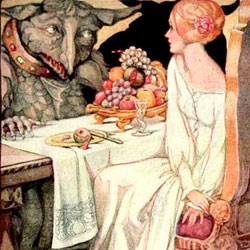
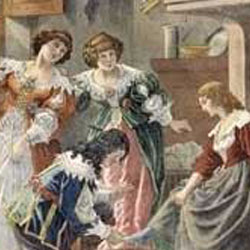
Depiction of Beauty and the Beast
By:  Anne- Anderson
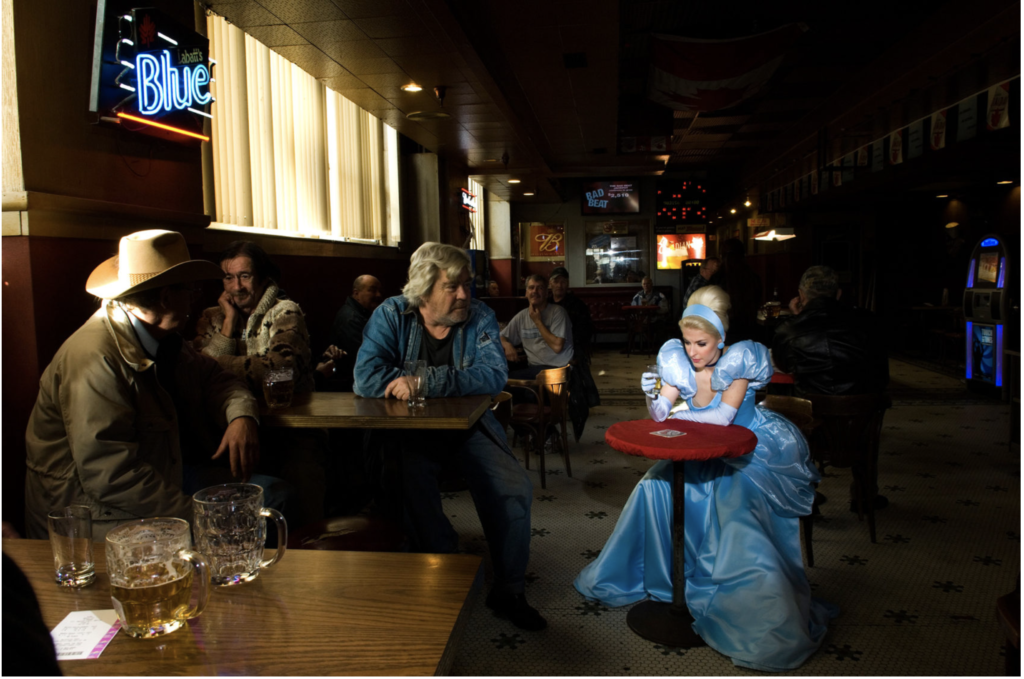
Depiction of Cinderella 
By: Frederic Lix

Animal Crossing’s Pandemic Getaway Package

By Caelyn Rose

Rose, Caelyn. Screenshot entitled “My Animal Crossing Character :)” May 2021, taken by Caelyn Rose from the video game Animal Crossing: New Horizons, Nintendo, 2020.

Abstract

When the Covid-19 pandemic first hit many wondered why Animal Crossing: New Horizons became one of the biggest games at a time when there was so much uncertainty and anxiety. Authors like Chris Comerford and Lin Zhu have addressed the massive success the game reached amid the pandemic and the role that escapism, a lack of normality, and prolonged social isolation play. One thing missing from this topic is how fairytales like Rapunzel play a role into it all and why people specifically turned to this type of fantastical activity as a way to deal with the harsh realities of the pandemic. Because of the open-ended plot line, ample in-game choices, and social connectivity to people around the world I argue that Animal Crossing: New Horizons can be interpreted through the lens of “Rapunzel” as a small sense of control in a disorderly world. Both “Rapunzel” and Animal Crossing: New Horizons encompass a lack of control, autonomy, and the effects of social isolation. For this project, I will be doing a close reading of “Rapunzel” by the Brothers Grimm. This project will help us better understand why in a time of adversity and hardship, many people turn specifically to the fanciful worlds of video games as a way to escape from an unpleasant reality. It also shows how media like video games can help people handle distress and fears similar to the comfort and insight fairytales provide.

Autonomy and Social Isolation in “Rapunzel” and Animal Crossing: New Horizons

The story of “Rapunzel” by the Brothers Grimm and the game Animal Crossing: New Horizons are two seemingly different things but are similar in theme and certain elements. Both “Rapunzel” and the discussion around Animal Crossing: New Horizons influence amid the pandemic involve topics of independence, control, and social isolation. “Rapunzel” is a story about a girl who was given away by her parents in desperation for rapunzel lettuce. She was locked away and isolated in a tower by Mother Gothel with the only way to get in or out being by climbing on Rapunzel’s hair. She met a prince and Mother Gothel punished her for meeting with him by sending her away to a desolate land. Eventually the prince found Rapunzel and she went off to live happily with the prince. Animal Crossing: New Horizons is a life simulation game published by Nintendo on March 20th, 2020. The game revolves around the player’s character who moves to a deserted island after buying a getaway package from Tom Nook, the head of a traveling services company called “Nook Inc.” The game inadvertently came out at the right time when the pandemic was at its peak and is currently the 16th best-selling video game in history and the 2ndbest-selling game of all time in Japan. The story of “Rapunzel” in certain ways can inform us about the impact Animal Crossing: New Horizons had amid the Covid-19 pandemic and a need for control during a time of uncertainty and adversity. Because of the open-ended plot line, ample in-game choices, and social connectivity to people around the world I argue that Animal Crossing: New Horizons can be interpreted through the lens of “Rapunzel” as a small sense of control in a disorderly world. In recognizing this connection people can better understand how fairy tales and video games influence people and provide consolation in a time of considerable distress.

Open-ended plot line

The open-ended plot line in Animal Crossing: New Horizons provides players with a small sense of control in a world that is out of their control. The game allows freedom over how the game progresses and there is a lack of definitive deadlines. Players can postpone the development of the island in favor of other side activities and create the island to one’s playstyle. In support of this sentiment, in Chris Comerford’s study of Animal Crossing: New Horizons players, a participant claimed that one convenience of the game was, “the ability to have control over the aspects of my in-game life when I didn’t have control over my actual life during lockdown” (Comerford 105-106). Similar to the freedom in the game’s progression, there is freedom within gameplay as there is not a way to play the game incorrectly. In contrast to many other games, in Animal Crossing: New Horizons there is no way to lose the game, die within the game, or penalize the player for playing wrong. This concept is also reinforced by Comerford who states that, “unlike other games that encourage learning through failure and negative feedback loops ACNH is largely devoid of this” (106). Similar to Animal Crossing: New Horizons, in the story “Rapunzel,” Rapunzel’s hair provided her a sense of control amid uncontrollable circumstances. Lindsay Wells has similarly stated that the fairy tale is a story of possession and a struggle for growth and personal freedom (Wells 81). The tale also serves as a way to understanding the human condition, and opens the door to self-understanding (Mitchell 268). Rapunzel’s entire life and future had been at the control of someone else’s hand as a result of Mother Gothel locking her away in a tower. In “Rapunzel” this is shown when it is stated that “when she was twelve years old, the sorceress locked her in a tower located in a forest. It had neither door nor stairs, only a little window high above” (Grimm 490). Rapunzel’s hair, however, was the one small thing that allowed her to be in control of something, and eventually became something that allowed her to reach part of the outside world and the prince. Rapunzel has control over who accesses the tower since the only way in or out is by climbing her hair. She decided on her own and out of Mother Gothel’s control to allow the prince in to bring silk and aid in her escape, as stated by the text, “they agreed that until then [the ladder is finished] he would come to her every evening, for the old woman came during the day” (491). Rapunzel has no choice about most things in her life except in these instances. In these ways Rapunzel’s hair brought control to her life in a way similar to Animal Crossing: New Horizons’ open-ended game progression. In a time where many things that happen in people’s lives are no longer in their control, the game provides at least one thing people can control.

Ample in-game choices

Animal Crossing: New Horizons’ ample in-game choices afford players control and choices absent amid the pandemic. There is flexibility amongst the various activities within the game like harvesting, maintaining the island, shopping, gardening, etc. In reinforcement of this statement Comerford says that, “in terms of day-to-day gameplay, ACNH affords significant freedom, allowing the player to choose their preferred activities to aestheticise the island and earn the in-game currency – Bells – needed to support it” (Comerford 104). The player gets to determine what activities satisfy their specific playstyle. This is also supported by Comerford who states that, “it is largely left to the player to determine self-set goals for gameplay gratification and feedback loops, including the aesthetics and material goods that will be deployed on the island, and the location of the island’s shops and homes” (104). Similar to this concept, apart from her hair, Rapunzel had no choice in many things that happened in her life. At the beginning of the story, her parents abandon and give her away for rapunzel lettuce, as stated in the text, “in his [Rapunzel’s father] fear, the man agreed to everything, and when his wife had the baby, the sorceress appeared at once. She gave the child the name of Rapunzel and took her away” (Grimm 490). This abandonment along with being locked in a tower for majority of her life reflects the lack of control she had over hardship in her life. The fairy tale is a screenplay of adversity, quest, struggle, and acceptance (Zehetner 161). Rapunzel’s entire life circumstances has been dictated by other people, but her hair allows her to control who goes in and out of the tower. Similarly, Animal Crossing: New Horizons provides a sense of control and comforting space for players amid the pandemic. These beneficial effects are apparent, and it has been stated that, “ACNH’s activities can grant positive mental health benefits, a factor endemic in gaming as a whole” (Comerford 110).

Social Connectivity

Animal Crossing: New Horizons’ social connectivity to people around the world grants players social interaction amid social isolation caused by the pandemic. Through the gameplay and communities formed around the game it “satisfies people’s unwillingness to be lonely and their deep inner desire for the social interaction to get rid of the loneliness” (Zhu 158). Players can collaborate within the game through trading and exploring other player’s islands. In support of this account Lin Zhu states from her case study of Animal Crossing: New Horizons that, “the gamers not only can invite others to their islands to trade items but also can talk and hang out virtually” (158). The game not only connects people within the game but also in community groups outside of the game on other social media platforms. This is reinforced by Comerford who states that, “the Animal Crossing series has a history of encouraging player collaboration, interactivity, and creativity, embodied both inside and outside the game by players and player communities” (Comerford 113). The widespread nature of the game has provided one way for people to connect despite the ongoing pandemic. Similar to the pandemic, Rapunzel was isolated from most of society, and unable to do anything due to the circumstances. Rapunzel’s hair was her one connection to the outside world during her time locked in the tower which was spent entirely in isolation and solitude. Similar to the game, the tale of “Rapunzel” serves as a medium of working with people’s troubles in a secure, trustworthy, and unconditionally accepting ambience (Sanyal and Dasgupta 46). At the beginning of the fairy tale, the only person Rapunzel has ever seen is Mother Gothel. There are no others in Rapunzel’s life and the vehicle for the connection between Rapunzel and Mother Gothel is Rapunzel’s hair (Andresen 71). Rapunzel’s hair also connected her with the prince as it is stated within the text that, “all at once the hair dropped down, and the prince climbed up” (Grimm 490). Similar to what Animal Crossing: New Horizons is for people who must stay isolated in their homes amid the pandemic, Rapunzel’s hair was her only way to connect to people outside of the tower. This type of social isolation has been proven to be detrimental to people as “there is one meta‐analysis [that] estimates that loneliness and social isolation can be as damaging to health as smoking 15 cigarettes a day” (Zhu 158). Overall, these connections can aid in understanding and helping people confront adversity and isolation in their lives amid the pandemic.

Conclusion

In conclusion, both “Rapunzel” and Animal Crossing: New Horizons provide a small sense of feeling like your life is in your hands again. Rapunzel’s entire life was controlled by other people and her hair provided what in many ways Animal Crossing: New Horizons provided for people at the height of the pandemic. They both afford readers and players with a sense of control, and Rapunzel’s hair even ends up being the reason for her escape from Mother Gothel. Fairy Tales are used to provide comfort to people and help them overcome their worries and Animal Crossing: New Horizons provided that same sense of comfort in a different way and helped people affected by isolation caused by the pandemic. By making this connection people can better understand how media such as video games can help many people cope with adversity, and the widespread impact they can have due to their pervasive nature. The interpretation of this theme through the lens of “Rapunzel” and relating it to what Rapunzel’s hair provided for her in a bad circumstance can serve as a way to better understand people coping through adversity and provide hope for the future as Rapunzel was eventually freed from her unfortunate situation.

Works Cited

Andresen, Jeffry J. “Rapunzel: The Symbolism of the Cutting of Hair.” Journal of the American Psychoanalytic Association, vol. 28, no. 1, 1980, pp.69-88. EBSCOhost, doi: 10.1177/000306518002800104.

Comerford, Chris. “Coconuts, Custom-Play & COVID-19: Social Isolation, Serious Leisure and Personas in Animal Crossing: New Horizons.” Persona Studies, vol. 6, no. 2, Mar. 2021, pp.101-117. EBSCOhost, doi: 10.21153/psj2020vol6no2art970.

Grimm, Jacob, and Wilhelm Grimm. “Rapunzel.” The Great Fairy Tale Tradition: From Straparola and Basile to the Brothers Grimm, edited by Jack Zipes, New York, W. W. Norton & Company, 2001, pp. 489-491.

Mitchell, Meredith B. “Learning about Ourselves through Fairy Tales: Their Psychological Value.” Psychological Perspectives, vol. 53, no. 3, July 2010, pp.264-279. EBSCOhost, doi: 10.1080/00332925.2010.501212.

Rose, Caelyn. Screenshot entitled “My Animal Crossing Character :)” May 2021, taken by Caelyn Rose from the video game Animal Crossing: New Horizons, Nintendo, 2020.

Sanyal, Nilanjana, and Manisha Dasgupta. “Fairy Tales: The Emotional Processors of Childhood Conflicts in Dynamic Interpretative Lens.” SIS Journal of Projective Psychology & Mental Health, vol. 24, no. 1, Jan. 2017, pp.39-47. EBSCOhost, search.ebscohost.com/login.aspx?direct=true&db=a9h&AN=121809595&site=eds-live&scope=site.

Wells, Lindsay. “Open Space Rapunzel.” Psychodynamic Practice, vol. 9, no. 1, Feb. 2003, pp.81-85. EBSCOhost, doi: 10.1080/1353333031000073311.

Zehetner, Anthony. “Why Fairy Tales Are Still Relevant to Today’s Children.” Journal of Paediatrics & Child Health, vol. 49, no. 2, Feb. 2013, pp.161-162. EBSCOhost, search.ebscohost.com/login.aspx?direct=true&db=edb&AN=85603936&site=eds-live&scope=site.

Zhu, Lin. “The psychology behind video games during COVID-19 pandemic: A case study of Animal Crossing: New Horizons.Human Behavior with Emerging Technologies, vol. 3, no. 1, Jan. 2021, pp.157-159. EBSCOhost, doi: 10.1002/hbe2.221.

Categories
Fairy Tales

How Fairy Tales Reinforce Class Hierarchy through the Portrayal of Fashion

Lucie Mowat

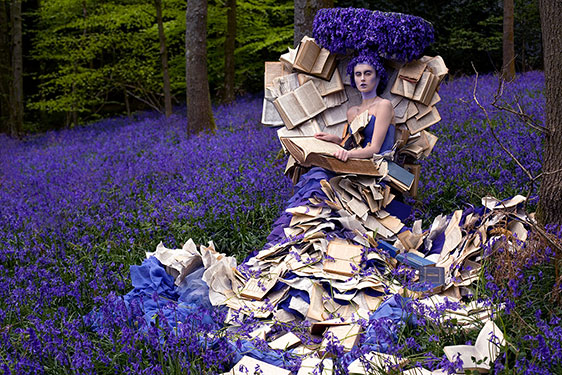
Kirsty Mitchell, The Storyteller, from the Wonderland series. Photograph © Kirsty Mitchell, kirstymitchellphotography.com

Abstract

Past authors, philosophers, critics, and scholars have debated the importance of fashion design in our media and how judgments of it influence our culture’s choices and opinions. However, not many industry professionals have considered the impact that fashion in popular fairy tales has on societal stereotyping based on one’s outward appearance. In her article titled “Fairy Tales And Fashion Criticism,” Rachel Matthews brings up the frustrating dichotomy between wanting to care about one’s appearance and not wanting to come across as excessively vain and self-obsessed (Matthews). This conflict arises due to the media’s ruthless scrutiny and appraisal of fashion. Tales that identify a character by their clothing can greatly inform us about their attributes, sexuality, status, goals, and faults. While reading these stories, we must ask ourselves a question. How does fashion within fairy tales influence the social context of our lives and expose the ramifications of our implicit biases towards what someone is wearing? I will be identifying the importance of fashion design within fairy tales such as “Cinderella” and children’s movie classics such as Brave by examining the social repercussions that prominent articles of clothing in these tales have uncovered. I will articulate how fairy tales reinforce class hierarchy through the portrayal of fashion in a few ways. These tales construct happy endings as class mobility represented by one’s attire and depict beauty standards as the primary conduit for gendered class mobility over other methods of agency. In doing so, these iconic fairy tales relegate power to unattainable iconography in fashion. My extensive research illustrates how the stereotypes perpetuated in mainstream literary media are the root of common implicit biases we hold towards one another daily. We predominantly base many of our initial opinions of others on our judgments of their physical nature, i.e., their clothing. In just a few seconds of meeting someone, we have come up with assumptions, correct or not, about their gender, personality, status, and wealth. It is important to understand why we make these superficial judgments and where they materialize in our psyche in order to eradicate them effectively. 

How Fairy Tales Reinforce Class Hierarchy through the Portrayal of Fashion

While humans have worn clothing for over 170,000 years (“UF”), the intention behind the design and creation of garments only emerged 163 years ago (“History”). This purposeful construction of clothing characterizes what we have come to know as the art of fashion design. Today, avant-garde designs grace fashion runways and collections, leaving consumers hypnotized by these outrageous, typically unwearable, garments. 

To better identify where the inspiration for these looks comes from, we must turn to our cultures’ literary media consumption to see how different fashion designs popularize within our society. The decade-old medium of storytelling and fairy tales greatly influences our fashion choices more than most people realize. Fashion in fairy tales can escalate a character’s status, privilege, and power by transforming their outward appearance. The barrage of stereotypes in literary media encourages societal biases towards one another based on clothing. These judgments inspire the sexualization of women and the concept of clothing’s ability to elevate social rank. With this in mind, how does fairy tale fashion influence the social context of our lives and expose the ramifications of our implicit biases towards what someone is wearing?

To answer this question, I will articulate how fairy tales reinforce class hierarchy through the portrayal of fashion in a few ways. To support my argument, I will reference fairy tales such as “Cinderella” and children’s movies such as Brave. The stories provide iconic female characters whose personality traits, status transformations, and societal reputations reflect and depend upon their appearances and clothing. I will also briefly mention the fictional superhero, Superman, to aid my argument regarding the power of symbolism in fashion. 

The Brothers Grimm version of “Cinderella” follows the tale of a young girl whose two stepsisters and evil stepmother maliciously torment her after her mother’s death. With the aid of a white bird, Cinderella is able to attend the King’s three-day festival, each day showing up in a gown more stunning than the last. Due to her beauty, the prince falls in love with Cinderella and is adamant about discovering her true identity. In the end, Cinderella and her prince earn their happily ever after, and the stepsisters get “punished with blindness as long as they live” (Grimm). This classic fairy tale conveys to young children that people will treat you better if you have an attractive outward appearance. Cinderella’s value as an individual is ascribed to her clothing rather than her personality. 

Brave, Pixar’s first ever fairy-tale-based movie, greatly contrasts the leading female depiction in Cinderella by portraying a young Princess Merida as strong, athletic, and brave. While Merida’s family expects her to find a husband, she would rather be off practicing archery and exploring the forest. Merida decides to take matters into her own hands by consulting a witch who promises to change her fate. Merida is constantly being told by her mother to “act like a princess,” which perpetuates the idea she must act and look a particular way to be desired by the opposite sex. 

With the aid of these examples, I will articulate how fairy tales reinforce class hierarchy through the portrayal of fashion in a few ways. These tales construct happy endings as class mobility represented by one’s attire and depict beauty standards as the primary conduit for gendered class mobility over other methods of agency. In doing so, these iconic fairy tales relegate power to unattainable iconography in fashion.

These damaging literary depictions are significant due to the strong influence they have on young children who look up to the prominent figures in these tales. These tales teach young consumers that what someone wears is directly related to how that person should be treated. This dangerous mindset reflects harsh beauty standards that infest the fashion industry today. 

Fairy tales such as “Cinderella” construct happy endings as class mobility represented by the iconic dress, and in doing so, reinforce class hierarchy through the portrayal of fashion. In their version of “Cinderella,” the Grimm Brothers tell the story of a young woman who experiences a rags-to-riches transformation, a popular archetype in literature and media. At the beginning of the tale, Cinderella’s two stepsisters torment and treat her very poorly. The two girls “took her [Cinderella] beautiful clothes away from her, dressed her in an old gray smock, and gave her wooden shoes” (Grimm 148). From this moment on, Cinderella is cruelly mocked and mistreated by her stepsisters for looking “dusty and dirty” (148). Cinderella’s terrible treatment is directly reflective of her unpleasant physical appearance. Cinderella’s stepmother mocks her wishes to attend the King’s festival by declaring, “No, Cinderella, you have no clothes, and you don’t know how to dance. Everyone would only laugh at you” (Grimm 150). However, a white bird feels sorry for Cinderella and gives her a stunning gold and silver dress to wear to the festival. The stepmother and stepsisters do not recognize Cinderella and think “she must be the daughter of a foreign king “(Grimm 150). Cinderella’s beauty enchants the prince and causes everyone at the festival to treat her like royalty.

Through the use of lavish gowns and extravagant shoes, Cinderella drastically changes the way others perceive her. She is still the same person before and after the makeover, but her elegant attire has given her a superficial elevation of status. The rapid switch in Cinderella’s treatment shows how people’s minds explicitly relate someone’s looks to their status and self-worth. Rebecca-Anne Do Rozario, author of Fashion In The Fairy Tale Tradition, is fascinated by “the power of clothing to redefine identity” (Rozario 4) present in “Cinderella.” Rozario describes how Cinderella gains empowerment through wearing her lavish gown and slippers, similar to how certain clothes establish one’s public identity and authority in modern society. 

While I believe that fashion can be a source of empowerment and confidence for many women, how the status of one’s character has become ascribed to clothing is hugely damaging. Our literary media contains countless stories like “Cinderella” that only further reinforce a superficial culture dependent on external appearance for internal worth. The children that consume these tales, especially young girls, are constantly told that their self-worth is contingent upon their physical nature rather than their personality traits, intelligence, and individuality. The fashion industry capitalizes on fairy tales that hide behind titles such as “women’s empowerment” to exploit people’s inherent competitive nature towards elevating their social status. 

Fairy tales such as “Cinderella” and Pixar’s fairy tale movie Brave reinforce class hierarchy through the portrayal of fashion by representing beauty standards as the primary conduit for gendered class mobility over other methods of agency. As detailed above, the Brothers Grimm depicts Cinderella’s desirability as constantly defined by her appearances. Most fairy tales function this way, assigning women’s worth based on their physical attractiveness. Female characters are typically deemed good-looking if they are beautiful yet in a frail and delicate manner. This paradox holds true for most classic fairy tales, including “Cinderella.” To better understand this concept, we must engage a story that breaks away from this expectation. 

Pixar’s 2012 animated fairy tale film, Brave, depicts a princess who desires to break away from her expected path of marriage and future queenship. Leading female Merida is told by her mother that “a princess should not have weapons” and that princesses should “strive for perfection” (Andrews). However, Merida doesn’t want to fit the stereotypical role of royalty that her family expects of her. Rather, she is a strong, curious, adventurous, and overall productive role model for young girls. Many applaud Brave for its nuanced depiction of a princess that differs from past female characters of similar influence. CarrieLynn D. Reinhard and Christopher J. Olson, editors of Heroes, Heroines, and Everything in between, claim that movies like Brave are paving the way for more frequent and normalized representations of female empowerment (Reinhard and Olson 9). 

However, the movie succumbs to a common pitfall that many other films attempting to represent non-traditional characters similarly fall victim to. On the rare account that children’s media portrays leading females as strong and independent, they are seen as either having no suitors, incapable of attracting a man, or not interested in having one at all. While Merida is a multidimensional character in many other senses, she falls into the category of not being interested in attracting a person of the opposite sex. The movie renders this trait a character flaw of Meridas’; something is “wrong” with her for not wanting to pursue a man. To clarify, I do not aim to deduct from the recent progress made in terms of non-traditional representations of sex, gender, socioeconomic class, etc., in children’s media. While I acknowledge and appreciate the headway, we must be aware that the cultural dynamic of future generations depends upon expanding inclusivity in children’s media. 

The manner in which fairy tales relegate power to unattainable iconography in fashion influences and reinforces class hierarchy through the portrayal of clothing. There is an undeniable fascination surrounding the beautiful attire and marvelous realities we read about in our favorite fairy tales. There is also an interesting similarity between the idea of an out-of-reach world and the outlandish designs that grace runway fashion collections today.  Colleen Hill, the author of Fairy Tale Fashion, asserts that the eccentric designs in runway collections are inaccessible to the average person and, in doing so, evoke an awe factor that keeps our youthful curiosity for the fantastical alive. There is a yearning for fantasy within the fashion industry. Hill believes that fairy tales can get us back to that state of magic and wonder by feeding our human craving for a more utopian reality. 

Iconic garments and popularized looks within fairy tales perpetuate the message that particular significant articles of clothing contain the ability to assign power to an individual. Examples of this allurement can be identified in “Cinderella” with descriptions of “slippers embroidered with silk and silver” (Grimm 150) and dresses so splendid that everyone goes “speechless with amazement” (Grimm 152). High-end fashion utilizes similar awe tactics to captivate and lure consumers in with the promise of grandiose glamour and guaranteed adoration. 

While the story of Superman does not technically classify as a fairy tale, the fictional superhero operates similarly in terms of assigning an enormous degree of power to certain symbolic dress. In Andrew Bolton’s book, Superheroes: Fashion and Fantasy, he states how “the ‘S’ emblem inscribed on his [Superman’s] chest and cape functions as a simplified statement of his identity” (Bolton 25). In popular culture, Superman’s distinguished “S” epitomizes fantasies, stereotypically male, of a heroic character with exceptional powers and strength. 

However, there exists a predicament in the infatuation our culture has with media idols and fictional characters. The praise we give to these figures is dangerous because they live in realities where superhumans, fantasy, and magic exist. No human can attain Superman’s strength, similar to how no human can achieve Cinderella’s level of beauty and grace. These stories are not accurate reflections of the world we live in and therefore portray an unattainable expectation of power and status we expect to receive when mimicking their actions and clothing. 

By considering the research detailed above, we can make a concrete analysis of how fairy tales reinforce class hierarchy through the portrayal of fashion in a few ways. Tales like “Cinderella” indicate to young readers that a “happily ever after” is defined by the ability to elevate one’s status by transforming one’s physical appearance. Stories like Brave depict beauty standards as the primary conduit for gendered class mobility over other methods of agency. Lastly, the fictional characters and fantastic worlds children and adults idolize in these tales accredit power to unattainable iconography in fashion.

The stereotypes we see in the media consequently affect how we view others and ourselves. This truth holds even more robust for children who are in the process of developing their own ideas of gender identity, physical appearance, and individuality. Children’s media has all the power to evolve our societal expectations of gender by targeting the minds of our future generations, which is why it is so vital for children to consume media that reinforces positive messaging and imagery regarding sexuality, gender, and appearance. 

We experience real-life examples of these negative judgments in the way we insult someone’s clothing when we don’t like the person. We connotate their physical appearance to their identity and, in doing so, admit to associating their worth and status to their fashion choices. The idolization of significant figures or idols is present in how the media obsesses over catching and documenting celebrities wearing “normal clothing.” Our society sees superstars as much higher in status than the average person, so when their appearances begin to resemble ours, they lose their power and are suddenly just like us. 

Over the years, fashion design has lost some of the innovation and ingenuity that I initially fell in love with. The superficial culture that has woven itself in the threads of the fashion industry pulls us away from the place of creativity and wonder where fashion initially formed. Clothing has become a stressful task, a mask of garments we drape upon ourselves to portray a facade that will make us feel included within society. Fashion should be electrifying, provocative, and dangerous, but instead, it has become a source of conformity that puts people’s individualism at risk. 

Works Cited

Andrews, Mark, et al. Brave. Walt Disney Studios Motion Pictures, 2012.

Bolton, Andrew, and Michael Chabon. Superheroes: Fashion and Fantasy. The Metropolitan Museum of Art, 2008. 

Clothes 170,000 Years Ago.” News, University of Florida, 6 Jan. 2011, news.ufl.edu/archive/2011/01/uf-study-of-lice-dna-shows-humans-first-wore-clothes-170000-years-ago.html. 

Do Rozario, Rebecca-Anne C. Fashion in the Fairy Tale Tradition: What Cinderella Wore. Palgrave Macmillan, 2018. 

Grimm, Jacob and Wilhelm. “Cinderella.” The Classic Fairy Tales, edited by Maria Tater, W.W. Norton & Company, 2017, pp. 148-153. 

Hill, Colleen. Fairy Tale Fashion. Yale University Press, 2016. 

“History of Fashion Design.” Wikipedia, Wikimedia Foundation, 27 Mar. 2021, 4:30 (UTC), en.wikipedia.org/wiki/History_of_fashion_design. 

Matthews, Rachel. “Fairytales And Fashion Criticism .” Reading Design , AddressPublications.com, 2014, www.readingdesign.org/fairytales-and-fashion-criticism. 

Reinhard, CarrieLynn D., and Christopher J. Olson, editors. Heroes, Heroines, and Everything in between: Challenging Gender and Sexuality Stereotypes in Children’s Entertainment Media. Lexington Books, 2017. 

Ableism in Fairy Tales

by Michael Giday

Fairy tale portrayals of disabilities and deformities play a significant role in the representation of them in media. More specifically, on how said portrayals have shed a derogatory light on disabilities and deformities and provided audiences with inaccurate ideas, such as disabilities defining those that have them and making them less than human. These inaccurate ideas have been popularized through the introduction of them to young audiences in popular media such as massive corporations like Disney and are thought to be true due to a lack of personal experiences regarding disabilities for both audiences and the authors of said tales. It is important for people to gain personal experiences regarding disabilities and information from more credible places such as real people with disabilities rather than just accepting what has been popularized in order to prevent the formation of harmful stereotypes. Because disabilities are inaccurately portrayed as weaknesses, devices for cruelty, and villainization, I argue that the degrading aspect of misrepresentations of physical deformity in “Beauty and the Beast” and “The Little Mermaid”, the introduction of ableist ideologies to children, and the lack of first-hand experiences with disabilities, for both audiences and authors, perpetuate ableism in popular storytelling.

All cultures around the world have some form of social distinctions that separate the “acceptable” from the “unacceptable” as determined by their specific standards in health, beauty, etc. Another commonality in most societies is the existence of fairy tales in some form which are used to spread/reinforce a society’s respective standards. For example, in “Media has been Wrong about Disability and it May Cost 24 Mil People their Healthcare”, Barbarin, a disabled black woman, writes, “News media, especially unchecked puff pieces, would lead you to believe that the “only disability is a bad attitude.” This is an ableist lie of epic proportions: you can be successful with a disability. The reason this lie is so popular, though is because it quietly promotes a narrative of “personal work ethic”; that if you’re disabled and work, the world may forget what’s “wrong” with you and treat you like a human being, but if you “choose” not to work, you’re lazy and deserve the suffering that accompanies your diagnosis.”  This clearly portrays modern America’s ignorance and lack of empathy regarding disability. Rather than adjust itself to better suit the needs of its less able members, society pushes them to fend for themselves and if they are unable to, looks down upon them. In addition to this, many people, specifically Americans, see those with diseases and disabilities as inferior due to their increased risk of dying as a result of COVID-19. They go as far as disregarding warnings that limit exposure because they don’t care about sickly/disabled people dying due to their perceived lack of societal worth (Barbarin, “I Was Unprepared for 2020”). “Beauty and the Beast” and “The Little Mermaid” are just two of the many popular tales that have plots that revolve around a protagonist’s disfigurement/disability. 

It is common for those who are seen as “different” to be persecuted by others for things that are completely out of their control such as race, sexuality, and even having disabilities.

Modern examples that are very prevalent would be the BLM and LGBTQ+ movements. 

Fairy tales portray disability in a way that makes those afflicted by them appear to be unwanted by society and degrades them to be seen as less than human. Fairy tales also create the damaging idea that disabilities are things that should be eradicated, as seen by the magical transformations that protagonists usually undergo at the end of them.

A common theme in fairy tales that is usually overlooked, is that a person’s status as a human is determined by how capable they are and their role in society. If one lacks in any of these qualities they are deemed undesirables and dehumanized. This idea directly relates to those with disabilities and deformities that are looked down upon for not being able to conform to society. This notion can be clearly seen in Disney’s “Beauty and the Beast” through the isolation that Beast has gone through due to his fear of rejection as a result of his transformation into a “Beast”. Despite having a rational mind, he is treated and talked about as nothing but a monster. The villagers go as far as to literally hunt him down like an animal, as if he was never a human at all. In Adrion Dula’s “B(e)Aring the Beast: Deformity, Animality, and the Ableist Gaze in French Literary Variants of ‘Beauty and the Beast’”, she argues that ableist ideology is heavily prevalent in multiple early modern stories such as “Beauty and the Beast” and Là où la mer commence. She goes on to explain how these ableist concepts have led to the dehumanization of characters and in turn real people with deformities/disabilities by making said characters become animalistic, unable to be active parts of society, and by making their illnesses be seen as something that needs to be eradicated. 

That last point regarding illnesses not being a part of happy endings is something that can also be seen in Hans Christen Anderson’s “The Little Mermaid”. Despite having all the things a human has and being a princess, Ariel still obsesses over becoming human and considers herself as less than one just for lacking legs. Anderson also emphasizes this through a conversation between Ariel and her grandmother, ““We lack an immortal soul, and we shall never have another life…But human beings have a soul that lives on forever, even after their bodies have turned to dust. It rises up through the pure air until it reaches the shining stars…they rise up to beautiful, unknown regions that we shall never see.” “Why weren’t we given an immortal soul?” the little mermaid asked mournfully. “I would give all three hundred years of my life in return for becoming human for just one day and having a share in that heavenly world.”” Through this we can see a sense of what can only be considered arrogance the author has about being a human. This however begs the question, why does he depict only humans as having souls but not mermaids when their only difference is legs and tails? This shows how even the slightest of differences can change the way that one is perceived by others, to the point that not having legs is enough to no longer be considered human and soulless. 

In “In fairy tales, disability is never part of the happy ending” by Louise Kinross. In this text, Louise Kinross, of the Holland Bloorview Kids Rehabilitation Hospital, interviews Amanda Leduc, a disabled author who is well versed in disability studies, who argues that in fairy tales the disabled person is often seen as stained or marked by their disability and, the disability is removed by the end. To support this claim Leduc references popular villains such as Scar and Maleficent. She also provides examples of protagonists whose stories revolve around their deformities and undergo journeys that lead to their eventual removal.

It is also common to see authors of fairy tales utilize disabilities as a way of isolating characters and making them feel unloved by anyone. In “Reading Disability in Children’s Literature: Hans Christian Andersen’s Tales”, Vivian Yenika-Agbaw argues that popular fairy tale authors have been utilizing disabilities in their tales in order to make their characters outcasts and distanced from the rest of society. She goes on to explain why this is especially true for older stories that were made in the early nineteenth century when societal beliefs were heavily influenced by Christianity. 

Fairy tales portray disability in a way that makes those afflicted by them appear to be unwanted by society. The dehumanizing aspect of disability portrayals in fairy tales such as Beast from “Beauty and the Beast” has real-life consequences by making those with disabilities feel and be perceived as less than human and outcasts. In addition to this, most fairy tales in which the protagonist is afflicted by some kind of deformity or disability, they must have their condition magically removed before going on to live happily ever after. This, in turn, creates false expectations in the minds of young children with disabilities and also makes them feel like they are not “normal”. It doesn’t help that authors and producers of media use deformities and disabilities to bolster their works which in turn creates inaccurate stigmas about them that hurt those with them. This all links back to the idea that the misrepresentation of disabilities in fairy tales has led to the degradation of those with real life conditions. Additionally, there is a significant lack of accurate portrayals of disabilities and deformities in children’s media which has led to the universal negativity that is associated with disabilities. 

Children in Western societies have beauty and health standards shoved down their throats from the minute they are born in the form of media and teachings. In Hanna Sigurjónsdóttir’s “Cultural Representation of Disability in Children’s Literature” she argues that children base their reactions towards those with disabilities primarily upon what they have learned through popular culture rather than public policy and personal experiences. Children’s literature is a way in which these concepts are introduced to people starting from a young age and over time, poor representation of people with disabilities has led to modern stereotypes and misconceptions about them. Sigurjónsdóttir also explains that these misconceptions arise in Western societies due to its heavy emphasis on health, beauty, and fitness, and this emphasis is reflected in the material that we introduce children to. Specifically popular tales that have been turned into films such as Disney’s “Beauty and the Beast” whose title alone creates several subconscious biases in the minds of children. In real life “Beast” could be someone with hypertrichosis which causes an excessive amount of hair to grow all over the body who now feels like less of a human due to something completely out of their control.

Lack of childhood exposure and teachings regarding disability have also forced children to base the little knowledge they have on it off of what they see in media such as films and fairy tales. Today, policies have been passed that previously did not exist. These policies allow for special education students to be placed in regular education classes. “Attitudes Toward and Images of Children with Special Needs,” by Hala Elhoweris provides several examples of these kinds of policies such as LRE, IEP, and IDEA. Elhoweris also analyzes 109 pieces of Arabic and English children’s literature and concludes that almost all of them portray disabilities in a negative way.

The emphasis Western societies place on beauty and health is a significant contributor to the lack of accurate portrayals of disabilities in media that is then consumed by children. These beauty standards create a social divide between those who fit into the “beautiful and acceptable” category and those who don’t. Also, the previous lack of policies that exist today which allow for the inclusion of those with disabilities in regular education classes plays a part in limiting students’ experiences and forces them to base most of their knowledge upon inaccurate and misleading portrayals found in new and old media. The lack of accurate portrayals of disabilities and deformities in media has led to the universal negativity that is associated with them and has ultimately created a lasting image in the minds of children. 

Furthermore, there is a widespread lack of personal experiences, in both authors and audiences, with disabilities which has caused major misinformation and the development of stereotypes about them. This lack of exposure to disabilities can lead to misconceptions about them that can only be remedied through the accumulation of personal experience. In Ann Schmiesing’s Disability, Deformity, and Disease in the Grimms’ Fairy Tales she specifically discusses how the Grimm Brothers’ portrayals of disability and illness were based upon personal experiences which is why they made many edits to their stories in their updated editions as they gained more knowledge. Although at times unintentional, this form of misinformation can have a drastic effect on many people. The majority of society is unaware of the prevalence of stereotypes regarding disability in modern media. “The Disney-Fication of Disability: The Perpetuation of Hollywood Stereotypes of Disability in Disney’s Animated Films” by Stephanie Kirkpatrick claims that many people lack personal exposure to disability and the media has consistently presented the public with certain images that paint disability in a negative way and have been cemented into society’s beliefs and ideas. In order to prove this point, Kirkpatrick analyzes Disney animated films to identify and examine commonly used stereotypes in popular media such as deformities in “Dumbo” and “Finding Nemo”. Because of the positive emotions that are usually roused by the mentioning of Disney and how heavily integrated it is in our culture, it is common for people to overlook/refuse to believe that there could be damaging messages in its films and their origins.

In order to counteract the consequences of misinformation, people need to gain personal experience with disability and not just accept what they hear and see in the media which can be inaccurate and misleading. Disney has become America’s main storyteller for the majority of the twentieth century and an inseparable part of American popular culture and society. These strong ties between society and Disney have caused people to just accept Disney as “good” and in turn, accept their messages as well. This misinformation applies to those with disabilities as well, through the creation of false expectations in the minds of children with disabilities that one day their disability will one day be magically removed.

In conclusion, fairy tales do indeed hold a large influence over the minds of society and specifically how we perceive disabilities through their portrayals of them. This influence is notably harmful and has caused those with disabilities to be degraded through the portrayals of them as subhuman, outcasts, and beings only defined by their disabilities. It has also caused the spread of misinformation to children who have no prior knowledge to tell right from wrong, which in turn leads to the development of fear and discomfort around those with disabilities. In addition to this, the mass lack of exposure to disability has led to the misrepresentation of disabilities in fairy tales and misunderstandings of disabilities in the real world.

Fairy tales and popular media as a whole have caused the development of inaccurate and hurtful stereotypes towards disabled and disfigured people.

Works Cited

Schmiesing, Ann. Disability, Deformity, and Disease in the Grimms’ Fairy Tales. Wayne State University Press, 2014. EBSCOhost, search.ebscohost.com/login.aspx?direct=true&db=nlebk&AN=1052030&site=eds-live&scope=site.

Dula, Adrion. “B(e)Aring the Beast: Deformity, Animality, and the Ableist Gaze in French Literary Variants of ‘Beauty and the Beast.’” Marvels & Tales, vol. 34, no. 2, July 2020, p. N.PAG. EBSCOhost, search.ebscohost.com/login.aspx?direct=true&db=hft&AN=148623401&site=eds-live&scope=site.

Sigurjónsdóttir, Hanna. Cultural Representation of Disability in Children’s Literature. In: Traustadóttir R., Ytterhus B., Egilson S.T., Berg B. Childhood and Disability in the Nordic Countries. Studies in Childhood and Youth. Palgrave Macmillan, London. https://doi-org.electra.lmu.edu/10.1057/9781137032645_8 

Elhoweris, Halah; Gharaibeh, Mahmoud F.; Abdulrahman, Olla; Al Ahbabi, Wasmeya; Alkaabi, Marwa; and Alshamsi, Maryam Saif (2017) “Attitudes Toward and Images of Children with Special Needs,” International Journal for Research in Education: Vol. 41 : Iss. 3 , Article 10. https://scholarworks.uaeu.ac.ae/ijre/vol41/iss3/10

Kinross, Louise. “In Fairy Tales, Disability Is Never Part of the Happy Ending.” Holland Bloorview, Holland Bloorview Kids Rehabilitation Hospital, 8 May 2020, hollandbloorview.ca/stories-news-events/BLOOM-Blog/fairy-tales-disability-never-part-happy-ending. 

Kirkpatrick, Stephanie. “The Disney-Fication of Disability: The Perpetuation of Hollywood Stereotypes of Disability in Disney’s Animated Films.” Electronic Thesis or Dissertation. University of Akron, 2009. OhioLINK Electronic Theses and Dissertations Center. 23 Apr 2021.

Yenika-Agbaw, Vivian. “Reading Disability in Children’s Literature: Hans Christian Andersen’s Tales.” Journal of Literary & Cultural Disability Studies, vol. 5 no. 1, 2011, p. 91-107. Project MUSE muse.jhu.edu/article/418659.

Christian Andersen, Hans. “Beauty and the Beast.” The Classic Fairy Tales. Maria Tatar, 2017. 283-303

Trousdale, Gary and Kirk Wise, directors. Beauty and the Beast. Walt Disney, 1991.

Barbarin , Imani. “Media Has Been Wrong about Disability and It May Cost 24 Mil People Their Healthcare.” Crutches and Spice, 25 June 2017, crutchesandspice.com/2017/06/25/media-has-been-wrong-about-disability-and-it-may-cost-24-mil-people-their-healthcare/

Barbarin, Imani. “I Was Unprepared For 2020.” Crutches and Spice, 31 Dec. 2020, crutchesandspice.com/2020/12/31/i-was-unprepared-for-2020/

Categories
Fairy Tales

Capitalism in “Hansel and Gretel”: The All or Nothing Mentality in Starving Societies

Analysis by Maia Black

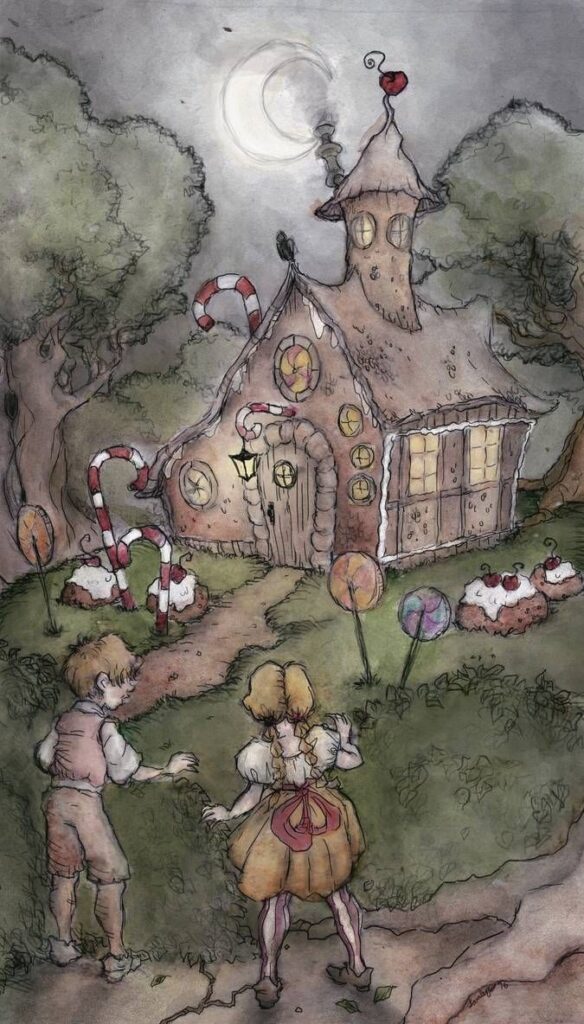
This image has an empty alt attribute; its file name is Hansel-and-Gretel-Approach-The-Gingerbread-House-by-LaraBerge-on-DeviantArt-1-584x1024.jpg
Lara Berge, Hansel and Gretel Approach the Gingerbread House, (Deviant Art), 2016

Abstract

As capitalism has developed through modernization, political scientists such as Christopher Calvo theorize that the American economic society has also led to gross increases in poverty in the United States. Political analyst Jasun Carr expands upon the poverty epidemic when he asserts that poverty has created a disparity between class systems, which is characterized by the wealthy over-consuming resources in a period of “economic stability.” Individuals who fall within the class systems defined under capitalism cannot look beyond the potential benefits of capitalist institutions and recognize the perils that oppress marginalized populations.  I argue that the all-or-nothing ideal is exacerbated in capitalist societies, such as the United States and “Hansel and Gretel” because they both are dignified by a community that prioritizes individualism over collective action; are sustained by the large divide between the wealthy and impoverished; and is characterized by overconsumption by those who have, and food insecurity among those who do not. Because the story of “Hansel and Gretel” dates back centuries before capitalism was introduced in modern societies, the understanding of capitalism’s institutionalized consumption of resources through the lens of “Hansel and Gretel” will be used to demonstrate the importance of how capitalism in struggling societies affects our social dynamics. Moreover, this paper will demonstrate that there is a lack of moderation in places where two extreme opposites are presented. Using “Hansel and Gretel” as a model for the potential ramifications of capitalist ideology will garner conversation on the potential effects of it on our real-life dynamics within the United States and how we can achieve solutions to the rising level of inequality, sustainability, and food insecurity that oppress vulnerable communities.

The themes of poverty, scarcity, wealth, and overconsumption demonstrated in “Hansel and Gretel” are identical to the principles that are exemplified in the United States under the ideology of capitalism. I argue that the all or nothing ideal is exacerbated in capitalist societies because the United States, a country that is built upon these fundamental concepts are signified by an economy that prioritizes individualism over collective action; is sustained by its large divide between the wealthy and impoverished, and is characterized by overconsumption by those who have, and food insecurity among those who do not. The understanding of capitalism’s institutionalized consumption of resources through the lens of “Hansel and Gretel” is important because it shows how capitalism in struggling societies affects our social dynamics. Additionally how nothing comes in moderation in places where two extreme opposites are presented. Using “Hansel and Gretel” as a model for the implications of capitalist ideology will garner conversation about how we can achieve solutions to the rising level of inequality, sustainability, and food insecurity that affect our marginalized communities.

Capitalism is an economic system composed of private actors that work towards their interests. The economic framework of capitalism has become institutionalized within our social constructs. Containing dualistic properties of theory and practice capitalism can be observed within even our most idealistic fairy tale stories. The Brothers Grimm’sHansel and Gretel” is a tale of two children who are living in extreme poverty. This story demonstrates the obstacles two children had to overcome as they endured living during a famine and were left in the woods to die. After leaving home they cross into uncharted territory filled with food. Trying to make the unfamiliar familiar, they subsequently resort to over-consuming the resources they are provided with. The story of “Hansel and Gretel” showcases the potential consequences of institutionalized capitalism on society that mirrors the real-world case example of the United States. Over the past decade, the U.S has seen a sharp increase in inequality by 11.2 percent in the past year alone(U.S Census Bureau). This epidemic is comparable to the poverty identifiable within the tale of “Hansel and Gretel.” After centuries of enduring capitalism; men, women, and children have suffered under a system that prioritizes individualistic values, unrealistic wealth, and overconsumption of scarce resources. 

                        Individualism Over Collectivism

In a capitalist society, there is a priority of individualism over collective action, where personal goals outweigh public good. This mode of action is particularly shown in “Hansel and Gretel” through the house of the Witch. The antagonist of the story has plenty of resources at her disposal, but under the ideals of capitalism, it is not her responsibility to help those who are starving as a result of a famine. She instead uses food as a tool to lure children into her lair and use them to the benefit of her agenda of personal nourishment. In the tale she tricks the children by saying “dear children come inside… no harm will come to you.”(Brothers Grimm 301). Despite what she promised, “the old woman pretended to be so friendly…she had built the little house of bread just to lure them inside. As soon as a child was in her power she killed, cooked and ate it” (Brothers Grimm 302). The witch is characterized as an evil character that audiences disdain for the tribulation she imposes on the children that originate from her hoarding of resources and lack of allocation to her starving community. Similarly in capitalistic nations working towards one’s interest is deemed to make an economy more “efficient”(Smith 2). In  The Wealth of Nations Adam Smith, a forefather of institutionalized capitalism argues “It is not from the benevolence of… The brewer, or the baker, that we expect our dinner, but from the regards to their interest” (Smith 2). Being individualistic in capitalist societies, according to Smith, is a fundamental aspect of a “healthy” society. The problem centers around prospects of individualism being deemed as more alluring than collective action. While capitalism has merely endured in the United States via entrepreneurial endeavors, its determinants are most distinguishable. These repercussions theorized by Karl Marx prove that capitalism is not sustainable in the long run. In The Communist Manifesto Marx asserts that “the essential condition for the existence, and the sway of the bourgeois class, is the formation and augmentation of capital…The advance of industry, whose involuntary promoter is the bourgeoisie, replaces the isolation of the laborers, due to competition, by their revolutionary combination, due to association. The development of modern industry, therefore, cuts from under its feet the very foundation on which the bourgeoisie produces and appropriates products” (Marx 13). Dissimilar to the proposed increase of individualism by Smith, Marx staunchly believed that individualism leads to exploitation, inequality, and in the end, an unbalanced system that supports no one.   

Similar to the witch, capitalism is led by personal motifs. In Smith’s assertion individualism is presented as a model framework of our economic system within the United States since there are individuals like the witch in “Hansel and Gretel” that are fortunate enough to have more than others. The witch is supported by those who have less than her but in the end, her deceitful individual aspirations led to her brutal death. As Marx notes “Society as a whole is more and more splitting up into two great hostile camps”(Marx 1). Working as a collective unit within our workforces would bridge the gap between two contrasting class systems  of the elite( bourgeois class) and working class (proletariat) within the United States.

                                      The Wealth Gap

A large divide between the wealthy and impoverished is characterized by struggling societies. As the United States continues to evolve economically so has the growing rate of inequality. Using the lens of Hansel and Gretel in comparison to the United States, there are significantly large wealth gaps between the privileged and impoverished exhibited in both societies. In the story of “Hansel and Gretel” the children are members of the lower class population that dabble in affluence. After being abandoned they discover a world of wealth and security that they lacked at home. Audiences of “Hansel and Gretel” can familiarize themselves with the personable family that Hansel and Gretel are a part of. The children are raised by their father and stepmother. Their father is “a poor woodcutter”(Brothers Grimm 297). With humble beginnings originating in a struggle they cross through the woods are met with a stark shift of lifestyle. The Grimm Brothers describe that “as they approached the house they realized it was built of bread and had a roof made of cake as well as a transparent window made of sugar” (Brothers Grimm 301). The scarcity of bread throughout the story highlights that it is seen as a luxury item for those who are impoverished. When the story repeatedly proclaims that there is a minimal supply of bread, this allows the witches’ home to symbolize a place of prosperity, where bread is so readily available, that it is used as material for a house.  

While the notion of inequality is not as substantial as a communal famine its effects on lower-class communities within the United States are monumental. In  Poverty: A New Perspective, George Wilber states that both an adaptation and a reaction of the poor to their marginal position in a class-stratified, highly individuated, capitalistic society. It represents an effort to cope with feelings of hopelessness and despair that develop from the realization of the improbability of achieving success in terms of the values and goals of the larger society”(Wilber 7). Akin to the children in “Hansel and Gretel”, most impoverished individuals within the United States do not have the ability to make it out of their class system. They are stuck in a cyclical nature in which Wilber references the “culture of poverty” (Wilber 42).  Moreover, aside from the sheer luck of finding the witch’s house, Hansel and Gretel would have never had the privilege of being financially stable. With a vanishing middle class in the United States, the wealth gap between the class systems has created a divided society that is becoming increasingly separate from each other. The experience of the poor and the experience of the rich within the United States are worlds apart.

                     Overconsumption versus Food Insecurity 

 The implications of capitalist society are characterized by overconsumption by those who have, and food insecurity by those who do not. Children often lack the resources and knowledge to be functioning, productive members in capitalist institutions alone, therefore in the  system children are solely reliant on adults to provide them resources. As demonstrated in “Hansel and Gretel”, without the presence of a competent adult figure children become insecure about food. We are introduced to the children of the story and their circumstance of “never having very much to eat in the house… during the time of famine, the woodcutter could no longer put bread on the table”(Brothers Grimm 197). These children living in a struggling household, are not able to contribute to the labor force to get nourishment for themselves. So when they are abandoned in the forest it is expected that they will not survive. Through great luck, they do and find a place that contains an infinite amount of delights at their disposal. It is noted that the children ate and “continued to eat without getting distracted”(Brothers Grimm 302). This new comfortability presents an extreme shift from the norms of food insecurity that encompassed their daily life back at home, that makes it difficult for them to show restraint. In “Examining Overconsumption, Competitive Consumption, and Conscious Consumption from 1994 to 2004: Disentangling Cohort and Period Effects” Jasun Carr, a political scientist, and professor in communications at Susquehanna University, argues that “when in a position of economic stability, our values and responsibilities shift and our desires as consumers lead to higher economic contributions in many sectors of the economy”(Carr 1). This is true for many wealthy individuals within the United States who have “disposable income” that can be dispensed on the whims of their desires. The drastic contrast in access to resources results in two extreme differences that require a middle ground. Highlighted within “Hansel and Gretel”, the children start at home that is a representative of where they are deprived of food. Their reality, encompassed by the absence of food, quickly shifts as they discover the Witch’s house, which is covered in a surplus of delights. Nevertheless, there is no in-between; no place that symbolizes balance. The common thread demonstrated is that individuals are either engulfed in poverty so much that they don’t know when their next meal is, or they have accumulated a surplus of wealth that allows them to over-consume food items at an unsustainable rate. The idea of gluttony and starvation are two sides of the same extreme coin of capitalism that forces individuals to choose from. 

                                        Conclusion

The antithesis of two options presented in facets of The United States socioeconomic system has created an environment where people within capitalistic societies are stuck within a perpetual cycle of having all or nothing. The tale of “Hansel and Gretel” showcases the symptoms of capitalism and serves as a warning sign to the implications these tendencies can have on the rich and poor within our society. The idea of “pulling yourself up by the bootstraps” and working individually to generate wealth has conflicted with the idea of working as a collective society to achieve goals. Living in poverty with little to no education, opportunities, and experience is skewed in contrast to the perception of wealth and living comfortably. Lastly, the divide between the rich and poor have created contrasting methods of consumption via food insecurity and overconsumption.  In “Hansel and Gretel”, the only solution presented for the two children to escape their situation was an experience. We must provide disenfranchised men, women, and children with opportunities and resources that will give them the expertise they need to overcome the perils of poverty and food insecurity. They cannot do it alone and without the help of strong governmental policies that include mutual aid, increased funding in welfare programs, and education. Becoming more collective with our allocation of resources is essential to solving issues that are created by capitalism in the United States.


Work Cited

Carr, Jasun D., et al. “Examining Overconsumption, Competitive Consumption, and Conscious Consumption from 1994 to 2004: Disentangling Cohort and Period Effects.” he Annals of the American Academy of Political and Social Science, vol. 644, no. 1, 2012, pp. 220-33. ProQuest. Accessed 8 April 2021.

Garner, Rosalie. Food Insecurity: Patterns, Prevalence, and Risk Factors. New York : Nova Science Publishers, Inc., 2016. eBook Collection (EBSCOhost).

Grimm, Jacob, and Wilhelm Grimm. Hansel and Gretel. 7th ed., Berlin: Dieterich, 1857. pp. 297-304.

Marx, Karl, et al. The Communist Manifesto (Penguin Classics). 1st ed., Penguin Classics, 2002.

Smith, Adam, and Alan Krueger. The Wealth of Nations (Bantam Classics). Annotated, Bantam Classics, 2003.

Tatar, Maria, editor. The Classic Fairy Tales. Second Edition ed., W.W Norton and Company, 2016.

Wilber, George L. Poverty: A New Perspective. Lexington : The University Press of Kentucky, 2015. eBook Collection (EBSCOhost).

Rapunzel & Beauty Standards-Jacob McKinnon

Rapunzel and Beauty Standards

Since the 1400s, skin color and physical appearance have been used as points of justification for harm and oppression. White-skinned Europeans labeled themselves as saviors, and having white skin became associated with the values of civility, justice, and good. This process of course labeled Black people, indigenous peoples, and people of color as savage as well as lesser than, on the basis that their skin wasn’t white. In other words, white people and the appearances of white people became the accepted standard. One way in which this system mainly exhibited itself was through the concept of beauty. White women became the direct definition of beauty, on the basis that they were white and possessed European features—which white men were attracted to. On the other hand, Black women were deemed ugly as well as forced to aspire to have the appearance of white women. Black women were harmed, as well as harmed themselves, because their beauty did not fit into these racialized standards. Even today, this system of beauty still prevails and one way it has asserted itself is through fairytales like Rapunzel. Rapunzel informs us that beauty standards uphold white supremacy by idealizing white womanhood through representations of gold hair. These standards are harmful to Black women because they damage Black women’s self-perception and undermine their beauty.

Both the Grimm’s version and Friedrich Schulz’s version of Rapunzel tell us that Rapunzel’s long blonde hair is what makes her beautiful. In the Grimm’s version it states, “Rapunzel grew to be the most beautiful child under the sun…Rapunzel’s hair was long and radiant, fine as spun gold” (Grimm 490). It is emphasized here that her hair was so beautiful that it could be equated to gold. Another thing we can take from this quote is the part where it states that she was the most beautiful. We can safely infer that her hair is what made her “the most beautiful child under the sun”; in other words, she is so beautiful because she possesses this hair— realistically because she is a white woman. It is widely known that white women are the main beneficiaries of natural blonde hair. In terms of the beauty that is promoted within this tale, any woman that had hair that wasn’t like Rapunzel’s would be deemed ugly. Friedrich Schulz’s version says something similar when mentioning Rapunzel’s hair. The tale reads, “Rapunzel’s hair was the most beautiful part of her. It was thirty yards long, and she did not mind having such heavy hair. It was blond just like the finest gold and woven into braids and tied with beautiful ribbons” (Schulz 486). Here also, we see the emphasis that is placed on her blonde hair: it is the one thing that truly makes her “beautiful”. Another thing which is emphasized in both the Grimm’s version and Schulz’s version is the length of Rapunzel’s hair. Both make sure to include this detail when discussing how beautiful the hair made her. The length is praised just as the blondeness is praised; short hair or shorter hairstyles would also be deemed ugly by this standard. In idolizing Rapunzel’s beauty, through her long and blonde hair, the tale essentially racializes the idea of beauty. Women who don’t naturally possess this type of hair, Black women to be specific, are considered ugly by this Rapunzel standard. The beauty of their hair is negated because it does not fit the standard.

Beauty standards harm Black women by damaging their self-perception. For example, in an article titled “Hair as Race: Why ‘Good Hair’ May be Bad for Black Females”, author Cynthia L. Robinson shares how many Black women feel about their hair. In the article, one of the women that Robinson is interviewing states, “And [my sister] said the same thing. She would rather have white people’s hair. It’s just so much easier…It’s not anything against our color. It’s just that, I just don’t like Black hair. Because for me personally, when I do press it, it doesn’t stay pressed. It just kinks right back up” (Robinson 369). Although the Black woman being interviewed mentions that she dislikes her hair because of how difficult it is to manage, we can still see how much she has internalized beauty standards. She explicitly says, “It’s just that, I just don’t like Black hair”, while she has Black hair herself. She is unappreciative of her own hair because she idolizes how easy it is for white women to manage white hair and have their hairstyles deemed acceptable by society: she wishes she had the hair of white women. Along with the idea of hair, beauty standards also encompass skin color. Beauty standards form a skin color hierarchy in which white woman are placed at the top, and all other races exist beneath them: Black women are at the bottom, because they have Black skin. In an article titled, “The Beauty Ideal: The Effects of European Standards of Beauty on Black Women” author, Susan L. Bryant talks about the effects that this hierarchy has on Black women. She states, “Black women who do not meet the established standards of European beauty are more likely to be unemployed than those who have more of the preferred European physical characteristics” (Bryant 84). She goes on to mention that there is a correlation between employment and attractiveness. This idea of employment basically tells Black women that they are unemployed because they are unattractive, causing Black women to think this as well. In the larger scheme of things, this idea is damaging to Black women’s self-perception because it is further telling Black women that they are unattractive because of their skin color; to put it bluntly, they are ugly because they are Black.

Beauty standards also harm Black women by undermining their beauty. For instance, in an article titled, “Images of Women’s Sexuality in Advertisements: A Content Analysis of Black- and White-Oriented Women’s and Men’s Magazines” author Christina N. Baker shows how Black beauty is undermined within popular magazines. Within the findings of her article she states,

Similar to previous findings, images of Black women in mainstream media were still

uncommon. This means that the mainstream image of sexuality and beauty is still highly

associated with Whiteness. Another aspect of this is that even though there are very few

Blacks in mainstream magazines, the ones who are pictured often have European-like

physical features. This confirms and emphasizes the racial hierarchy of sexual

attractiveness in mainstream society. (Baker 26)

This quote emphasizes the larger idea of whiteness and European features being the standard within society as I alluded to earlier. This quote also mentions the main way that this undermining of Black beauty occurs, through representation. The first thing which Baker mentions is that Black women are rarely present in the “mainstream media”. The second thing that she mentions is that the Black women who are shown appear to have “European-like physical features” (Baker). So, not only are Black women un-represented but they are also misrepresented. This means that they are always portrayed in conversation with whiteness, never as just themselves which undermines the individual beauty of said Black women. In Cynthia L. Robinson’s article, a similar point is made within the conclusion. She says, “Problematic for many Black females is the unfeasibility of fitting African hair textures into European hairstyle choices. Unstraightened, the shorter, tightly coiled, or kinky hair textures can be difficult to comb, style, and manage. Yet, it is the kinkiness that allows the creative diversity of popular Black hairstyles that, ironically, makes bad hair particularly good for unstraightened styles” (Robinson 372). Though this article is talking about hair, it still alludes to the fact that racialized beauty standards undermine the beauty of Black women. Here specifically it mentions that the diverse hairstyles that are unique to Black women are only possible with “bad hair” or hair that doesn’t fit the standard. However, these hairstyles and hair types are unappreciated, as well as deemed unacceptable, because the straight and wavy hairstyles­—of white women—are deemed beautiful.

In retrospect, beauty standards are a tool that have been used to uphold ideas of white supremacy which continually cause harm to Black women in particular. These beauty standards cause harm to Black women by damaging their self-perception and undermining their beauty. Rapunzel and other classic fairytales have been used throughout the late 20th century and early 21st century to push the agenda of beauty standards. Nowadays television, films, and mainstream media are used to propagate these ideas. Through similar hiring practices like the ones described within Susan L. Bryant’s article, lots of actresses on screen are white or possess features that make them appear within great proximity to whiteness. Blackness and Black beauty are left out of the conversation of beauty and oftentimes Black beauty is put down by these same racist images within the media.

One example of a modern television show that has perpetuated these messages is the sitcom Martin, that features an all-Black cast, starring Martin Lawrence. It is a comedy which focused on the daily experiences of Martin and his girlfriend Gina, a light skinned Black woman. However, when we take a closer look at the interactions between Martin and Gina vs Martin and his neighbor Pam, a brown skinned Black woman, we can see the ways in which racist ideas of beauty are encroached upon viewers. Martin was not only married to Gina but also constantly praised her looks, hair, and overall beauty. Whenever Martin saw Pam, he would constantly berate her: often mentioning her darker skin and comparing her physical appearances to beasts or wild animals. This was a running gag throughout the 5 seasons of the show. By putting Gina on a pedestal for her lighter skin and European-like features, Martin perpetuated racist beauty standards as well as degraded Pam, a dark-skinned Black woman for simply not fitting the standard.

In general, beauty standards cause immense harm to Black women but an analysis of them begs the question of are Black women the only ones who are suffering from them? By relegating people to beautiful or ugly and judging their worth solely off this standard are we not damaging our own perception? Are we not forcing ourselves to only look at what is external as opposed to seeing both the external and internal qualities of each other? This outward bias forces us to judge each other incorrectly and undermines our own individual humanity. We are all unique, a world with only one way of viewing things lacks the capacity to progress.

Shot Through the Heart: Happily Ever After?

Alexandra Weary

Weary, Alexandra N. “Fake Gun, Real Weapon with Wilted Purple Hyacinth.” 2021. JPEG. 

Fake Gun, Real Weapon with Wilted Purple Hyacinth:

This image, taken by myself, shows a fake gun with wilted purple hyacinth flowers coming from the “barrel” of it. The barrel itself is, in actuality, a knife. I chose to photograph this specific flower due to the meaning behind it. As the Greek tale has it, the hyacinth flower grew from the blood of Hyakinthos’ fatal head wound, so Apollo named the flower in his honour. Purple hyacinth, specifically, represent sorrow, and wilting flowers symbolise death. Rather than having these flowers come out of the barrel of a gun, whether real or fake, I decided to have them stuck to the end of a blade. Many in favour of the second amendment argue that guns do not kill people, people do. Guns often come into question as to whether they are a fatal weapon or not, but knives never do. This image makes it clear that a weapon is a weapon – and fatal at that.

Abstract:

In the wake of yet another mass shooting, Joe Biden promises that “as President, [he] is going to use all the resources at [his] disposal to keep the American people safe” (@POTUS). This sentiment should sound familiar. Like the Peach Boy in Momotarō trusts all the animals he meets in the woods and Snow White in her story trusts that the strange woman knocking at her door is not going to kill her, American citizens have been taught to trust what their president says, even if they make nothing but empty promises. Fairy tales like these teach that trust is vital to success. Studies done by Wallace, Kaliambou, and Qayyum at the Yale University School of Medicine prove that there is a direct link between the morals in fairy tales and child development. Not only do fairy tales affect how a child grows and learns to think, but according to author and Professor Jack Zipes, “these enchanting, lovable tales are filled with all sorts of power struggles” (“Might Makes Right” 23). Those “power struggles” directly translate into the real world as politicians, thus linking the reasoning behind the thought that children are conditioned to trust politicians through fairy tales. Although there is research behind the connection of fairy tales and child development, politics in fairy tales, and the lies politicians tell, there is little connecting all these findings. I will use my research to link the trust fairy tales like Momotarō and Snow White teach us to have, and the repeated gun violence Colorado allows to occur. Because fairy tales condition children into blind trust, citizens of Colorado have grown to trust empty promises regarding gun control. With close reading and careful rhetoric, the connection between the lessons in Momotarō and Snow White will be obvious and allow Coloradans to understand why so many shootings happen with no real reforms ever taking place, considering many citizens have been conditioned to blindly trust empty promises such as the ones that politicians make about gun control. With this understanding, Coloradans can move past their trust in false hope, allowing America to find a real solution to gun violence and once again have compassion for human lives.

Once Upon a Time –

The themes and occurrences in fairy tales train young minds to trust promises – that is, after all, what a fairy tale is, is it not? A promise of a happy ending. We have grown to accept that promises will be fulfilled, even though in reality this is not often the case. Fairy tales such as Momotarō and the Brothers Grimm’s Snow White have fostered, through examples of trust and promises, the idea that promises are made to be kept. However, recent years have unveiled the truth of the storefront-like cover that promises offer for leaders and politicians. Issues like gun violence continue to occur time and time again because fairy tales like Momotarō and Snow White have trained audiences into believing and trusting that all promises will be fulfilled, when often, promises are used as a ploy and are rather hollow. Because fairy tales have conditioned children into blind trust, citizens of Colorado have grown to trust empty promises of gun control – allowing it to happen repeatedly. In the case of Colorado, gun violence has haunted the state for years, arguably since the shooting that started it all: The Columbine Shooting in 1999. 

            Colorado has a rich history when it comes to gun violence. The shooting that occurred at Columbine High School has affected the country ever since it happened over 22 years ago. Once that incident “broke the ice,” many other acts of violence continued to happen. Notably the Aurora Theatre Shooting in 2012, Stem School Shooting in 2019, and most recently the Boulder King Soopers Shooting on March 22, 2021. Those are just a few of the shootings that qualified as “mass shootings,” but do not even begin to cover the mass number of shootings that do not meet the qualifications, which are largely undefined (Goodland). 

            Being from Colorado myself, I have grown to believe that school is a scary place to be, considering that is where most of the shootings happen. At the beginning of each year in high school, I re-drafted my will. Just in case. The first thing I look for in any room are the doorways out of it, should I need to escape. The fear and acceptance that Coloradans have to face on a daily basis is insulting, and yet we continue to live in this haunted reality. After each shooting and gun threat I, along with my fellow Coloradans, turn to our state leaders and government officials for guidance and help. Without fail, we are always met with the same messages of thoughts and prayers and promises to make a change in our state. Do you know how many times I have been told by governments both national and federal that gun control is an issue they will work towards, just in my relatively short lifetime? Even recently, President Biden tweeted that he will “use all the resources in [his] power to keep the American people safe,” but why should any of us believe him (@POTUS)? Why do citizens continue to put trust into empty promises?

            Trusting empty promises is not just something that adults do when it comes to politicians, but also something that children are taught from a very young age. For example, in the fairy tale Momotarō, the protagonist, Momotarō, a picture-perfect boy, pops out of a peach and goes on an adventure to get treasure from the Ogre’s island. Along the way, he meets a monkey, pheasant, and a dog. Momotarō’s plan to get the treasure relies entirely on the help of these animals, which he trusts he will have. In exchange for a millet dumpling each, the creatures agree: “I will go with you” (Ozaki 338). Now, if any one of the animals does not keep up their end of the bargain, the entire plan will be foiled and Momotarō will be in serious danger. Luckily, the trust he placed in his new companions was not a mistake and they all make it out rich and alive. 

            Similarly, in the Brothers Grimm’s Snow White, the princess continues to trust that no harm will come her way. When her evil stepmother comes to her door in a disguise, Snow White tells herself that “[she] can let this good woman in,” even after being warned that the evil queen wanted her dead (Grimm 138). Snow White wrongly trusting in people’s good will and nature happens a total of three times throughout the story, all ending with the princess being in grave danger and barely saved. Here, Snow White’s trust is seen as “dear” rather than foolish (140).       

       These tales and their rhetoric are two examples of fairy tales showing that trust leads to success, whether that success be treasure from ogres or true love and a happy life. Many tales have taught children this moral for years, and growing up with that belief and understanding will alter the way a child behaves and views the world. In this case, people have grown to place their trust into promises simply because they were shown in fairy tales that trust leads to success. Because fairy tales have conditioned children into blind trust, citizens of Colorado have grown to trust empty promises regarding gun control, allowing the issue to repeat itself. With countless political promises, power dynamics and trust in fairy tales greatly affecting child development, it makes sense that people tend to believe what politicians say.

Wish Upon a Star: Political Promises –

Although it is widely assumed and accepted that politicians lie, there is even a way to prove these theories. Influential leaders do lie, and their lies are what lead citizens into a false hope and allow gun violence to repeat itself. Hélène Laurent with the University of Namur completed multiple studies on politicians and how much they lie. Using information from the CIA World Factbook and Transparency International, she developed a variable labeled “corruption perception index,” in order to prove that not only do politicians lie, but they do more so under specific circumstances (Laurent 72). Her data show that term length is “positively associated with corruption,” proving that the longer a politician serves, the more corrupt they become (85). There is scientifically proven evidence that politicians lie, yet citizens still look to them for answers and promises. At the end of the day, people want hope. 

            Lying, for politicians, is “a rational response to the peculiar incentives faced by [them,]” according to Davis and Ferrantino with the Southern Methodist University (Davis and Ferrantino 12). They created graphs that showed a positive trend between lies and a politician’s chance of winning, even furthering the idea that to succeed as a politician, lies and exaggerations must take part. These trends and facts may just seem like statistics on paper, but real-life examples highlight just how damaging these lies are. 

            For instance, Colorado and its city Boulder intended to pass a law that would promise stricter gun regulation, specifically regarding assault weapons. The city was thrilled to be in the hands of safety, but they later faced a devastating mass shooting dubbed The Boulder King Soopers shooting. The shooting was able to happen because “ten days before the shooting, a Colorado judge struck down Boulder’s ban on assault weapons” (“Before the Boulder Massacre”). After the shooting, residents were met with tweets from President Joe Biden and their Congressman, Joe Neguse, who both gave similar messages of being “heartbroken for our community tonight” and updates of “praying for the families who lost their loved ones” (@JoeNeguse). These were among the same people and politicians who promised to have the ban on assault weapons put in place but failed. Congressman Neguse even appeared on a radio show the next day where he claimed he planned to “push for common-sense gun violence reform at the federal level” (Shapiro). There should be no reason for citizens to believe this promise, especially after the state’s failure to act before the devastation. There is a trend in Colorado of “more attention focused on gun safety” only after a shooting, but then “it somehow fades” (“Before the Boulder Massacre”). So, if the state follows its pattern again, the sorrow and promises will once again mean nothing. 

            While the attention is still on gun safety in Colorado, Governor Jared Polis has been hard at work to make his citizens feel safe. Well, at least he has been giving the people the impression of safety. Polis has signed two laws. One “requires safe storage of guns in households with minors,” and the other “requires owners to report when their weapons are lost or stolen” (Goodland). While it is true that these laws are a great step in the right direction, they are not enough. The Boulder King Soopers Shooting still could have occurred if these laws were in place. In this way, Governor Polis is lying and giving Coloradans a false sense of security. Sure, he has signed two bills into law, but they are not going to truly affect the mass amount of gun violence that the state faces. Additionally, studies done by Lott and Whitley with the American Enterprise Institute in the University of Adelaide show that “safe-storage gun laws” like the one Polis signed actually “increase violent and property crimes” (Lott and Whitley). Again, what Polis is doing is certainly a good gesture and proof that he is listening to the citizens, but not enough is being done. Coloradans are once again falling into the belief that they are going to be protected when that is simply not true.

Kings, Queens, and Fairy Godmothers: Trust and Power Dynamics in Fairy Tales –

There is proof and logic behind the fact that politicians lie, so why do citizens still trust them? The answer may come from an unexpected place. Trust in those with prominent power is not only present in real life, but also in the fairy tales we learn our morals from. Fairy tales that children grow up hearing often include power dynamics that mimic the real world. Additionally, many fairy tales such as Snow White and Momotarō preach the moral that trust leads to success – especially when that trust is placed in those with higher power. 

            Renowned author and professor at Columbia University, Jack Zipes, claims that “we have never known a time without lies, propaganda, and conflicts,” even when it comes to fairy tales (“Speaking the Truth” 243). In a different book of his, he states that “these enchanting, lovable tales are filled with all sorts of power struggles” (“Might Makes Right” 23). Fairy tales often use power dynamics to their advantage, and as the children who read these stories have grown older, they reflect that into reality. An example of strong power dynamics in a fairy tale is in the Grimm’s Snow White, where authority plays a major role in the progression of the story. The mirror that the Queen talks to has power in it’s influence over the Queen and her actions. Plus, the Queen always puts her trust in it, for she believes that “the mirror always [speaks] the truth” (Grimm 135). Later, the Queen herself is at the head of a power dynamic between her and the huntsman, who she orders to do immoral things, such as kill an innocent little girl. The huntsman nearly does as he is told, for she is the Queen, and he is not (136). Even when the Queen does not appear to be the Queen, she holds power over Snow White. She disguises herself as an elderly woman, and, due to her status in age, Snow White trusts her because the Queen is, again, of a higher status than her (138). There are multiple points in this tale where power dynamics are used and the power in them is abused in order to gain trust. This relates to the real world as Coloradans trusting their politicians. 

            Snow White is not the only tale that gives examples of those in power abusing it. Momotarō, as told by Yei Ozaki, describes Momotarō as “finer and stronger than ever” and “the stoutest and bravest boy of all that country-side” (Ozaki 337). His bravery and good looks give him power and cause everyone who meets him to believe him to be the most powerful and accomplished hero. He places trust in the animals he comes across in his journey, and they place just as much trust in him in return. For Momotarō, there are not only examples of power dynamics within the story, but also examples of the character playing a role in reality. Momotarō is already deeply connected to politics and propaganda. Momotarō as a character was used all around Japan during the war years throughout the 1930s and 40s. Momotarō, a Japanese man, is always seen overcoming a “seemingly superior enemy” which was often represented as the American and English (Antoni 162). Klaus Antoni, of the University of Hamburg, not only gives a deeper understanding of Momotarō through connecting and researching Japanese wartime propaganda, but also makes the connection between a fairy tale and a government irresistibly clear. 

Petals Off the Rose: Fairy Tales and Child Development –

Sure, fairy tales and real politicians seem to reflect onto one another, but who is to say that the reason mass shootings continue to happen in Colorado is because of fairy tales? Well, fairy tales greatly affect child development, which helps form the beliefs that the child will grow to have. Many fairy tales display their characters gaining success due to their trust in those with power, which has translated to adults trusting their leaders. However, considering leaders and politicians lie, that trust does not find a stable home. Proving that fairy tales are essential to development and learning morals strengthens the argument that fairy tales affect how people behave and view the world even in adult life. Having this proof allows for the connection between the effect of fairy tales and how that leads to implicit trust in politicians. 

            A study done at the Yale University School of Medicine done by Wallace, Kaliambou, and Qayyum show that fairy tales “[provide] a glimpse into the fears and fantasies central to development” in children (Wallace et al. 118). They believe that fairy tales and their morals so strongly affect how a child grows that fairy tales should be included in psychiatry training (118). David Lewin with the University of Strathclyde agrees that fairy tales play a major role in how a child develops. In fact, he argues that many fairy tales are too horrific and thus scaring for children (Lewin 213). Fairy tales affect growth so much that some, like Lewin, are afraid that they can negatively alter a child’s perception of the universe forever. Both of these studies prove that fairy tales alter how children develop and learn to understand. Since fairy tales like Momotarō and Snow White display success coming from trust, it makes sense that citizens in Colorado have grown to trust their politicians’ claims of gun reform time and time again. 

Moral –

Citizens of Colorado have grown to trust empty promises of gun control because fairy tales have conditioned children into blind trust. Politicians lie – it is even beneficial for them to do so – and people believe them. People believe them, however, because they have grown up reading tales of Momotarō and Snow White who gain success from their trust. This constant display of trust in superiors in fairy tales has altered the way that children grow and develop to the point where Coloradans believe the real fairy tale: even after all this time and devastation, that their state leaders will truly do something to protect them. 

Works Cited

Antoni, Klaus. “Momotarō (The Peach Boy) and the Spirit of Japan: Concerning the Function of a Fairy Tale in Japanese Nationalism of the Early Shōwa Age.” Asian Folklore Studies, vol. 50, no. 1, 1991, pp. 155–188., doi:10.2307/1178189.

“Before the Boulder Massacre, Multiple Mass Shootings in Colorado Have Led to Only Modest Changes in Its Gun Laws.” Business Insider, Newxtex LLC, Mar. 2021, go-gale-com.electra.lmu.edu/ps/i.do?p=STND&u=loym48904&id=GALE%7CA656131279&v=2.1&it=r&sid=STND&asid=2b94bb12.

Biden, Joe (@POTUS). “There is a great deal we do not know about the killer, his motivation, and other critical aspects about this shooting, but know this: as president, I will use all the resources at my disposal to keep the American people safe.” March 23, 2021, 11:32. Tweet. 

Davis, Michael L., and Michael Ferrantino. “Towards a Positive Theory of Political Rhetoric: Why Do Politicians Lie?” Public Choice, vol. 88, no. 1-2, 1996, pp. 1–13., doi:10.1007/bf00130405. 

Goodland, Marianne. “Gov. Jared Polis Signs Gun Control Measures into Law.” 9News, 19 Apr. 2021, www.9news.com/article/news/local/next/colorado-gun-control-measures/73-860590d8-e58a-4429-b9c8-66d746f8f9dc.

Grimm, Jacob, and Wilhelm Grimm. “Snow White.” The Classic Fairy Tales, Maria Tatar, Second Edition, p.p. 134-141. Norton Critical Editions, 2017, New York. 

“Joe Neguse.” Congress.gov, 2021, www.congress.gov/member/joe-neguse/N000191?searchResultViewType=expanded.

Laurent, Helene. “Corruption and Politicians’ Horizon.” Economics of Governance, vol.22, ser. 1, Mar. 2021, pp. 65-91., doi:10.1007/s10101-021-00250-1.

Lewin, David. “Between Horror and Boredom: Fairy Tales and Moral Education.” Ethics and Education, vol. 15, no. 2, 2020, pp. 213–231., doi:10.1080/17449642.2020.1731107. 

Lott, John R., and John E. Whitley. “Safe‐Storage Gun Laws: Accidental Deaths, Suicides, and Crime.” The Journal of Law and Economics, vol. 44, ser. 2, Oct. 2001. 2, doi:10.1086/338346. 

“Meaning & Symbolism of Hyacinth.” Teleflora, 2020, www.teleflora.com/meaning-of-flowers/hyacinth?promotion=MAYWELCOME10.

Neguse, Joe (@JoeNeguse). “Andrea and I are heartbroken for our community tonight, and we are praying for the families who lost their loved ones today in #Boulder. While there’s much we don’t know, one thing is clear – we need #gunreformnow. Congress must act.” March 22, 2021, 20:01. Tweet. 

Ozaki, Yei Theodora. “Momotarō.” The Classic Fairy Tales, Maria Tatar, Second Edition, p.p. 336-340. Norton Critical Editions, 2017, New York. 

Shapiro, Ari. “Colorado Congressman Joe Neguse Speaks About the Shooting in His District.” All Things Considered, performance by Joe Neguse, National Public Radio, 23 Mar. 2021.

Wallace, Ryan, et al. “Fairy Tales and Psychiatry: a Psychiatry Residency’s Experience Using Fairy Tales and Related Literary Forms to Highlight Theoretical and Clinical Concepts in Childhood Development.” Academic Psychiatry, vol. 43, no. 1, 28 Aug. 2018, pp. 114–118., doi:10.1007/s40596-018-0968-5. 

Weary, Alexandra N. “Fake Gun, Real Weapon with Wilted Purple Hyacinth.” 2021. JPEG file. 

Zipes, Jack. “Might Makes Right: The Politics of Folk and Fairy Tales.” Breaking the Magic Spell, by Jack Zipes, Lexington: University Press of Kentucky, 2002, pp. 23–46. 

Zipes, Jack. “Speaking the Truth with Folk and Fairy Tales: The Power of the Powerless.” The Journal of American Folklore, vol. 132, no. 525, 2019, pp. 243–253., doi:10.5406/jamerfolk.132.525.0243. 

Collaboration and Peach Boy

By Jeremiah Onyango

 One of the most famous performance centers is the John F. Kennedy Center for the Performing Arts in Washington, D.C. that was founded in 1971. There, they believe that “working with others is an essential skill to learn, collaboration has been identified as a 21st-century workplace ability as well as a component of the Common Core State Standards. Given that the performing arts are primarily group experiences, the arts become a prime tool for building skills in collaboration” (Kennedy Center). With fairy tales being a source of knowledge and lessons in everyone’s childhood, it is important to highlight relevant themes in these tales including collaboration. A fairy tale that has seemed to cross over between Japanese culture to American culture is the story of the Peach Boy or Momotaro. In the story, a boy is born out of a peach and tasks himself with slaying the ogres that are harming his village, and along the way, he meets friends that are willing to help him. With all that being said, how does the telling of Momotaro inform us of kinship structures and building community? Through the oral tradition of storytelling and the narrative structure, I argue that the telling of Momotaro informs us that kinship structures and coalitions within a theatre production rely on shared goals, faith, and payoff. These elements are important as they all are what fairy tales are meant to be, moral educating stories to make a better theatre community and society. 

Momotaro teaches the audience the foundations of friendship, commonality, which is quintessential to the theatre. A key to a great friendship is similarity. In a study by University of Pennsylvania professors, they had college students who had never met each other in a room for an entire year. At the end of the year, it was found that “friendship attraction was closely related to the agreement between what the students thought of themselves and how their roommates perceived them” (Roberts-Griffin 3). The commonality they all shared was that they had agreements among their opinions. Their agreements led them to become closer and establish a more meaningful friendship as “people tend to like other people that are similar to themselves.” (Roberts-Griffin 3). In Peach Boy, Momotaro is on his way to slay ogres but is stopped by three different strangers. Each stranger along the way asked if they could have a dumpling and in return, help him kill the ogres Southeast of his village. The commonality that they all share that initially kicks off their friendship, is their love for dumplings. When Momotaro was written, children’s literature in Japan was used as an allegory for Japanese imperialistic views and propaganda (Henry 218). With that in mind, dumplings were the food of choice before Momotaro went off to battle ogres which is an allegory for leaving home to fight in the war. Any soldier is aware that they may not return home after putting their life on the line and for Momotaro to choose dumplings as his snack on the journey and to willingly share them with strangers is an expression of his kindness, a fundamental point to a healthy friendship. Continuing with the allegory, his friends along the way are soldiers joining him with the same goal. In Momotaro’s journey, they are slaying ogres instead of fighting other countries, but the shared objective continues to bring their friendships to fruition. Momotaro’s common goal of destroying ogres and love for dumplings among the strangers creates a bond and kinship between them. 

Faith in theatre/acting is essential to great storytelling and in the plot of Momotaro. Momotaro gives up his dumplings in exchange for the help of strangers, but he has no way of knowing whether they will live up to their word. The entire exchange is based on whether they will help him slay the ogres with which they do help him with. Any good friendship has trust on both ends. Professors at Iqra University and the University of Punjab found a positive correlation between friendship and trust (Warris 80). In Momotaro, one of the reasons he gave his friends dumplings was so they could join him on his quest to slay ogres (Tatar 303). If their shared love for dumplings did not ignite their friendship it was the fact that they all did as they said and helped Momotaro with the ogres. In an ensemble, it is important to have everyone work as one unit. The production’s cast should be comfortable with each other which is why trust-based acting exercises are used at the beginning of the rehearsal in productions. To give an outstanding performance, actors need to believe in their castmates and feed off their energy. Being timid and distrustful of another actor will only prohibit the chemistry on stage and create poor performances. “Trust is a major theme in organizational studies” (Lupton 1) such as theatre. Actors get comfortable with each other and trust in each other but also must trust the director’s vision of the production and trust the process. Trust in theatre is essential to great productions and an important moral in Momotaro. 

Both Momotaro and theatre teach us about how rewarding it can be when friends work together. At the end of Peach Boy, Momotaro and his new friends collect as much treasure as they can hold and return home to share their newfound riches. By working together, they get to go home successfully. While acting may be an after-school activity for some, it is a real occupation for many with it being as rewarding as treasure. With that being said, having a workplace with friendships between co-workers boosts productivity in the workplace and community (Xiao 9). With Momotaro being a children’s fairy tale, a collaborative effort from the main characters yields them treasure but a collaborative effort from children in an educational setting develops teamwork and stimulates creativity (Burke 88). As Momotaro is a children’s story, having the theme of collaboration in the end with the characters coming together and getting treasure emphasizes the importance of cooperation. That same cooperation is perfect for any workplace, including the theatre. 

In theatre, there are multiple positions intertwined within a production like an actor, director, set designer, lighting technician, usher, concessions, costume design, etc. Each one is required for a show and plays a valuable role but with even one of them missing, the show can collapse into ruins. In an interview with StageBuddy, the producers of ‘Project Broadway’ elaborate on the importance of collaboration saying “one of the things we love about musical theatre is that it requires collaboration. You need the composer, book writer, choreographer, and set designer, among others to collaborate. We wanted to celebrate that sense of collaboration because it’s what we share” (StageBuddy). That shared love over theatre is what created the collaboration and not only does theatre display the importance of collaboration but Momotaro also expresses the need for teamwork. As all performances are guided by a script and bond the cast and crew, the dumplings bind Momotaro and his friends as the script is what brought everyone together to work together, dumplings brought the strangers together and created a collaborative atmosphere. The success they achieve by slaying the ogres resembles the success that can be achieved from a coherent show, the applause, cheers, and pride. Through Momotaro’s themes of collaboration, friendship, and community, we can see how those same themes parallel the reality of the theatre and any workplace environment.

Work Cited

Burke, Alison. “Group Work: How to Use Groups Effectively.” The Journal of Effective Teaching, 2011, pp. 87–95.   

David Henry. “Japanese Children’s Literature as Allegory of Empire in Iwaya Sazanami’s Momotarō (The Peach Boy).” Children’s Literature Association Quarterly, vol. 34, no. 3, 2009, pp. 218–228., doi:10.1353/chq.0.1916.

“Interview: The Producers Behind ‘Project Broadway’ on the Importance of Collaboration.” StageBuddy.com, 24 Apr. 2017, stagebuddy.com/theater/theater-feature/interview-producers-behind-project-broadway-importance-collaboration. 

Lupton, Julia Reinhard. “Trust in Theater.” The Palgrave Handbook of Affect Studies and Textual Criticism, 2017, pp. 155–181., doi:10.1007/978-3-319-63303-9_5.   

Roberts-Griffin, Christopher P. “What Is a Good Friend: A Qualitative Analysis of Desired Friendship Qualities.” Penn McNair Research Journal, vol. 3, no. 1, ser. 5, 2011. 5.   

Tatar, Maria. The Classic Fairy Tales: Texts, Criticism. W.W. Norton Et Company, 2017.   

Warris, Ayesha, and Rafia Rafique. “Trust in Friendship: A Comparative Analysis of Male and Female University Students.” Bulletin of Education and Research, vol. 31, no. 2, Dec. 2009, pp. 75–84.

Working Together: Teaching Collaboration in the Arts

www.kennedy-center.org/education/resources-for-educators/classroom-resources/articles-and-how-tos/articles/educators/working-together-teaching-collaboration-in-the-arts/. 

Xiao, Jincen, et al. “Relationally Charged: How and When Workplace Friendship Facilitates Employee Interpersonal Citizenship.” Frontiers in Psychology, vol. 11, 2020, doi:10.3389/fpsyg.2020.00190. 

Why We Need to Stop Reading Fairy Tales to Our Kids

(Goldstein)

By: Julia Kramberg

Abstract

Dina Goldstein presents opposition to what is designed to be the “happily ever after” that most fairy tales endorse, through her humanizing and realistic photos, named “Fallen Princesses,” that bring into question the severity of how fairy tales can negatively affect the minds of its young readers. Difficulties such as child abandonment, child abuse, and death are themes that are traditional to fairy tales. Still, how they are discussed is done so that they are disguised to the reader and almost glamorized through happy endings and miraculous events. Professors Lori Baker-Sperry and Liz Grauerholz have researched the impact of the “happily ever after” and the reason why today’s most famous fairy tales are the most popular in their study, “The Pervasiveness and Persistence of the Feminine Beauty Ideal in Children’s Fairy Tales,” which only provides structure and affirmation to the argument of the negative impacts of stories such as Cinderella, on children. Fairy tales lack the real-life aspect that many stories should include, as they create a false reality in the minds of their readers, which only leaves them less prepared for the world they will grow up into. Messages that bolster the over-sexualization of women, condone child abuse, and dissuade interpersonal relationships are all negative for the development of young children, especially girls. Fairy tales affect their readers in the long run when they open their eyes to the real world, leaving them vulnerable, hence why they should stop being read.

Fairy tales, for centuries, have been one of the most common pieces of literature read by young children, as they present scenarios that are not only happy and enjoyable to read, but they do an excellent job of eliminating any negative plot twists that could upset readers. Today, however, only a few fairy tales have risen to the top and stayed there. These stories conclude with the “happily ever after” phenomenon, which misleads the reader into thinking that everything always works out great in the end. Where is the real-life struggle and conflict that all human beings encounter in life? Famous fairy tale scenarios such as child abandonment, child abuse, child abduction, and death are disguised with miraculous outcomes to make readers oblivious to what’s actually occurring. They present a front where the character is okay in the end or living the life that we all would want to live but doing so by completely ignoring the actual difficulty of, for instance, being abandoned by your parents. Stories such as Snow White, Cinderella, and Sleeping Beauty, all fall into this category, as they are three of the most famous fairy tales in the world. This begs us to ask why we read stories that are misleading and create dissolution about the real world we live in to our children? For the sake of this argument, the story of Cinderella will be discussed as it presents unrealistic endings and situations that can be damaging to the minds of young readers, leaving them in a poor position for their future endeavors. Fairy tales in general, including Cinderella, fail to highlight the struggles that the protagonist endures through their climactic conquests by simply ignoring the fact that struggle even exists or focusing the reader’s attention on the physical appearance of the character; this leaves readers, especially young girls, with distorted ideas of what it means to be female as well as false perceptions about perseverance; resulting in readers being less connected to their inner feelings and more vulnerable to the world around them.

As there are two sides to every story, there are two sides to this argument. Some people think reading fairy tales is beneficial to kids, while others believe they are harmful, but both sides agree that fairy tales are unrealistic. That agreement is pertinent as that is the only conclusion that needs to be agreed upon truly. Where the statement varies is whether or not reading unrealistic stories is bad for children. One artist that has brought light upon this argument, sharing her side artistically and uniquely, is Dina Goldstein. In Goldstein’s piece “Fallen Princesses,” a collection of photographs staged to show the struggle that would actually occur in the top nine most famous fairy tales, she brings to light the reality that is missing from these stories by exploiting true struggle. Each photo shows the classic princess in the outfit she is most known for wearing, but instead of living her “happily ever after,” the struggles that she would most probably be enduring in the story are shown if the authors had included it. For instance, Cinderella is seen in her photo sitting at a table at a rundown bar, wearing her gown, looking down at her glass full of what can be assumed to be some sort of hard alcohol, while eyes surround her from all over, as she pays no mind to them. This photo itself shows the real-life emotion and response to what Cinderella is going through in her life, as this side of the story is never told.

For those who are not familiar with the story of Cinderella, she is a young girl who is a victim of child abuse, as she must live in the corner of the kitchen by the hearth and succumb to any demand from her evil step-sisters and step-mother. In The Brothers Grimm version, it states,

“From morning until night she had to work hard. Every day, she got up before daybreak to carry water, start the fire, cook, and wash. On top of that the two sisters did everything imaginable to make her life miserable. They ridiculed her and threw peas and lentils into the ashes so that she would have to get down andpick them out” (Grimm 148).


Cinderella was a victim of child abuse and endured real trauma that is never discussed in the story. Cinderella’s life changes when she hears about a ball where a prince is looking for his potential princess. Cinderella pleads to go, but of course, her family will not allow it, so to her luck, a fairy godmother (depending on the rendition, sometimes a tree) comes to her saving and dresses her in beautiful gowns on multiple occasions. Ultimately Cinderella loses a slipper which is how the Prince, who falls in love with her instantly, finds her, as she is the only one whom the shoe will fit. Cinderella ends up living happily ever after, but the lengths she had to go to get there are seemingly impossible from a real-life perspective. Cinderella lived a horrid life until she finds her Prince, but evidently, the entire time until that moment, she keeps her composure and just “gets through it.” This is only one of many fairy tales that lacks truth to what the situation would really look like, as one is left to ask how Cinderella is okay? Should everyone just “get through it,” and they will live happily ever after? This is a damaging message to young readers, as the answer is no. No one should just “get through it,” as child abuse is not easy to work through. This is where Goldstein presents an impressive alternative to the narrative with her photo, where one can say, “I can’t blame Cinderella resorting to drinking as I can’t imagine what she was going through.” People resort to different types of things like drinking, drugs, and therapy when looking for a way to cope with intense hardship. Not to say that Cinderella drinking was an excellent way to cope or the right message to be sending, but Goldstein’s photo at least presents a more relatable story than that of Grimm’s. Goldstein wants to show the other side of the story and say, “Hey, life isn’t always easy, just look at these princesses they went through struggle as well.”

So why don’t fairy tales show emotion and real-life struggle? Liz Grauerholz and Lori Baker-Sperry, two professors at Purdue University, wanted to put this question to the test. They decided to compare fairy tales that are most known today, such as Cinderella, to stories that almost no one knows today. Stories that were once popular but lost touch over time, but why did they fade into the darkness? When comparing these two categories of stories, they found that stories like Cinderella, which focus heavily on the physical beauty and looks of the protagonist, were ones that are at the top of the list for most known, where stories that shared a more true human-like experience where the protagonist endured struggle and hardship, were stories that virtually no one has heard of today. They measured how many times beauty or physical appearance was mentioned in both types of stories and found that stories such as Cinderella mentioned physical appearance 94% more than stories that focused on actual life events. The fixation with how a woman looks seemingly is more appealing to readers than that of reality. They found that female protagonists tend to be identified by their looks far more than male protagonists and young female characters tend to be discussed by physical appearance more than older female characters (Baker-Sperry). So what is the obsession with young female beauty standards? Does it sell more copies, so authors are more inclined to write about it? This discovery leads to the more extensive discussion at hand, the impact stories like this have on young readers, especially girls.

Fairy tales are a child’s first impression of the world around them. Although they are fictional, they are about humans and human activities, so why would children not perceive them as truthful? Not only do fairy tales lack truthfulness about what being human means, on top of that, it’s clear they over-sexualize and obsess upon the female body, leaving girls extremely disoriented on what they should and should not believe. Amanda Schnibben wrote her final thesis for Antioch University – Santa Barbara on this topic and stated the following,

“Results of the study demonstrated that some of the female participants identified with fairy-tales during their youth; however, all participants indicated that real life is far more challenging when contrasted with typical Western fairy-tale stories that often portray an easeful outcome to engagement in a romantic relationship. Common themes that emerged throughout this study were those of status, external factors such as appealing fashions and coiffed hair, familial upbringing and witnessing the parental relationship” (Schnibben).

As Schnibben writes, fairy tales mislead readers into believing that they should look a certain way or act another way, as they think that is how they should be according to stories like Cinderella. These stories teach girls that they should only say so much or share certain emotions because that is all they are valued for. Truly feeling sad or needing help isn’t shared in these stories because it isn’t perceived as the “ideal beauty standard.” A girl is beautiful when she sits there, looks pretty, and doesn’t open her mouth. The fixation on the female body values women for that alone, their body, which is a message that no young girl should read. Fairy tales also tend to focus a lot on the ultimate goal for women being marriage or having children, leaving no room for other goals. There isn’t a fairy tale that discusses a protagonist rebelling against this stereotype, but instead, it is a pattern seen in stories time and time again.

The romanization of the most challenging endeavors a person can go through is offensive and invalidates a person’s struggle when they are going through it. It’s damaging to a young brain to think that if faced with a situation such as child abuse or abandonment, they need to persevere just how their favorite role model princess did because they ended up fine in the end. Brandie Crane, a student in the master’s program at Louisiana Tech University, phrased this idea quite well when she wrote,

” “All Fur,” “Cinderella,” “Snow White,” “The Juniper Tree,” and “Hansel and Gretel” create the idea that parents are sometimes a disappointment and that children should embrace independence and be equipped to handle isolation and abandonment. In reality, disappointing parents sometimes breed disappointing children, but in fairy tales poor parenting gives the child power over their own lives and the tools to overcome adversity, passing this power to the reader, as well, be they child or adult, and a plethora of lessons can be learned by both parent and child in the aftermath of these stories” (Crane).

For instance, child abandonment is a horrible thing that sadly occurs in the real world. It yields struggle and hardship to come for that child in their life, but fairy tales almost romanticize it. “You’re free from your parents, so now you’ll just work it out on your own because that’s what the princesses did,” this is a highly damaging message and leaves girls especially with skewed ideas of who they should be. No child is rejoiced to be left alone and in no way can successfully take care of themselves on their own at a young age. This is yet another false message spread by fairy tales as well as a disheartening one.

As mentioned before, there are two sides to every story, as there are people who think fairy tales are not, in fact, damaging but good. From research done, many people believe fairy tales shield children from the darkness of our world by staging events that aren’t real because it keeps kids happy. Dr. Dheerendra Prakash Mishra and Vishakha Shekhawat are professors at MVGU in Jaipur, India. They believe that fairy tales have a positive impact on the physiological development of children as they state, “With the positive outcome of their stories, fairy tales help in appeasing the fears experienced at various developmental stages, in reassuring that the unknown can become known and contribute to the establishment of a wider, positive perspective about life, while answering a child’s deep need for justice” (Shekhawat). This view that Dr. Mishra and Shekhawat present is precisely the problem. They highlight that most fairy tales ending with a “happily ever after” is good as it reassures its readers that everything will be okay in the end. Although this is a lovely message to be sending and, yes, can be a probable outcome in many situations, it’s sadly not always the way things turn out. Sometimes struggle needs to happen to get to a better place, and that struggle can be ongoing. People who view fairy tales as positive for young readers want to shield children from the actual world, which is only harmful to their development. It leaves kids at a huge disadvantage when they encounter hardship, as everyone does, leaving them unprepared for it. The earlier you prepare your child for what’s to come when they get older, the better prepared they will be for it.

Struggle is something that is built into our society. If everything were easy and went how we wanted it to go, the world would be broken. People wouldn’t learn necessary traits of perseverance and will of strength without struggle because no one would have to work for anything. For instance, as a female, the struggle one encounters in wanting to start their own business is immensely more difficult than for a man. Sadly, just being a girl puts you at a disadvantage, as that is how our society has structured itself. Reading fairy tales will misconstrue readers’ minds into thinking that everything works out when that isn’t the case. People fall, people deal with challenges, people get back up, but knowing that all that occurs, as it is the standard way humans develop, is vital. A story such as Cinderella that doesn’t show how Cinderella learned to cope with her struggles or overcome them is useless. Goldstein puts a more comical twist on this idea through her photos, but she at least shows that Cinderella is a real person. No one is perfect, and sometimes you just need to have a drink. I mean, after all, that Cinderella must deal with, I don’t know who could blame her. Vanessa Loder, a writer for the HuffPost, coined a phrase that all should use, “Snow White lived with her prince at the castle, sometimes they were happy, sometimes they were sad, sometimes they were angry, scared, silly or grateful” (Loder). That phrase sounds a lot better than “Snow White lived happily ever after” because I’m sure she didn’t. The reader doesn’t learn what happens to Snow White after the story, but in the real world, when people get married, it’s not always happy; sometimes it leads to divorce, it’s never “happily ever after.” Learning this message at a young age is very valuable and will create a more worldly individual.

Fairy tales are integrated into our society as a pillar in a child’s developing mind. Everyone can recall the story of Cinderella or Snow White, but they don’t realize the negative impact those stories had on them until they are old enough to face the real world. Girls especially are subject to listen to stories that obsess upon the female body and what it should mean to be female, as all other aspects of life are seemingly unimportant here. Teaching children about the reality of the world we live in, in moderation, of course, is only going to benefit them in the long run and avoid the pain many people encounter when they realize that life isn’t always so perfect the way the Cinderella story said it would be. If fairy tales are to be read, they should be read by adults who are old enough to know that what is being said is false, not the youngest people of our society who are entirely ignorant to that fact. Fairy tales have been harming the minds of youth for far too long, endorsing that difficulty is nonexistent, creating false realities in the minds of young children, and damaging their developing minds.

Works Cited

Baker-Sperry, Lori, and Liz Grauerholz. “The Pervasiveness and Persistence of the Feminine Beauty Ideal in Children’s Fairy Tales.” JSTOR, Sage Publications, Oct. 2003, www.jstor.org/stable/3594706.

Crain, Brandie. “Finding Our ‘Happily Ever After’: How Poor FairyTale Parenting Breeds a Better Child.” Digital Commons, 17 Nov. 2018, digitalcommons.latech.edu/theses.

Goldstein, D. (2007-2009). CINDER [Photograph]. Fallen Princesses.
Grimm, The Brothers. The Classic Fairy Tales: Texts, Criticism. W.W. Norton & Company, 2017.

Jorgensen, Jeana. “The Most Beautiful of All: A Quantitative Approach to Fairy-Tale Femininity.” JSTOR, University of Illinois Press, 2019, www.jstor.org/stable/10.5406/jamerfolk.132.523.0036.

Loder, Vanessa. “Why Fairy Tales Are Bad For Our Kids.” HuffPost, Huffington Post, 24 Feb. 2015, www.huffpost.com/entry/why-fairy-tales-are-bad-for-our-kids_b_6736634.

Schnibben, Amanda. “Enchanted: A Qualitative Examination of Fairy Tales and Women ‘s Intimate Relational Patterns.” Clinical Psychology Commons, Antioch University, May 2014, aura.antioch.edu/cgi/viewcontent.cgi?article=1134&context=etds.

Shekhawat, Vishakha, and Dheerendra Prakash Mishra. “Psychological Impact of Fairy Tales on the Mind of Children.” Gnited Minds Journals, Journal of Advances and Scholarly Researches in Allied Education, Jan. 2018, ignited.in/p/130330.

Tesar, Marek, et al. “Forever Young: Childhoods, Fairy Tales and Philosophy.” Sage Journals, Sage Journals, 15 May 2016, journals.sagepub.com/doi/10.1177/2043610616647642.

“Canceling Fairytales: What Will Our World Become?”

Clara Delnik

Abstract

Karen E. Rowe makes the case that the glorification of passivity and dependency portrayed in fairy tales ultimately shapes even a modern woman’s romantic relationships and role in society to a negative extent. Similarly, Sandra Gilbert and Susan Gubar dissect the Brothers Grimm Snow White for themes such as the patriarchal “looking glass” which dictates the conflict between the Evil Queen and Snow White and glorifies a docile and passive young protagonist while vilifying an older woman with a desire for action. Actresses like Keira Knightely and Kristen Bell have openly called out the misogynistic narratives portrayed in fairy tales such as Cinderella and the Little Mermaid, and Knightley has revealed that she has imposed a ban on certain “sexist” fairy tales in her household. However, although our society has developed a collective “anti-fairy tale” sentiment because stories like Cinderella and Sleeping Beauty can depict scenarios and “morals” which may be problematic in today’s society, fairy tales also have immense power to do good for both children and adults. Instead of boycotting fairy tales for their problematic qualities and scenarios, we should instead acknowledge them and allow ourselves and our children to mold these interpretations for a modern society in hopes that we will learn from these stories in order to craft our own world. According to Maria Tatar, fairy tales “recruit the extraordinary to help us understand the ordinary” and Donald Haase argues that children’s ability to “own” fairy tales, that is to connect to them, understand them, and debate questions about a situation that isn’t perfect is an integral part of how they form their own opinions. “Canceling” fairytales would be detrimental to children who are forming their own cognizance, to adults who may use fantasy worlds to deal with survival and fear, and to those who simply want an escape into a world unlike their own. The fantastic worlds of fairy tales use strange and extraordinary aspects to help us tackle our own world and for children they are integral because finding unique connections to a wide variety of stories helps them build their cognizance of the world. This kind of understanding can help teach us and our children a better way of thinking: that stories are fluid and their interpretation and “message” can be unique and evolve over generations and time. Therefore, we should focus on making progress, both singularly and collectively, and keep in mind that conflicting points of view should be embraced and discussed instead of silenced. 

Essay

What does it mean to “cancel” fairytales?  Fictional literature and films can have a huge impact on the minds of children, and can shape the way they see themselves and their roles in society.  Some modern day authors have labeled the traditional fairytales of our childhood problematic because of their pervasive patriarchal standards, and although there is a lot of new content being created for children that tries to erase the rigid stereotypes portrayed in the traditional stories in order to become more inclusive, the original versions are still sources of controversy and many believe we should “cancel”, or boycott, these stories. Actresses like Keira Knightley and Kristen Bell have openly called out the misogynistic narratives portrayed in fairy tales such as Cinderella and the Little Mermaid, and Knightley has revealed that she has imposed a ban on certain “sexist” fairy tales in her household. Although these stories can be controversial, I believe we should embrace the “problematic” qualities of fairy tales or at least be aware of them when transferring their morals to children. While fairy tales may have problematic aspects, they also have immense positive power. They bring us into fantastic journeys which can either serve as a release/distraction from a harsh world or they can allow children and adults alike to play with their imagination and cognizance in a manner that allows them to discover and confront their deepest fears and wishes. This kind of understanding can help teach us and our children a better way of thinking: that stories are fluid and their interpretation and “message” can be unique and evolve over generations and time. 

Karen E. Rowe, an American literary critic and professor of Renaissance literature at UCLA, wrote an article discussing our society’s continued fascination with fairy tale romance in literature not merely for children but for twentieth-century adults, and makes the case that the glorification of passivity and dependency portrayed in these narratives ultimately shapes even a modern woman’s romantic relationships and acceptance of roles which relegate her to motherhood and domesticity. Sharing her sentiments are Sandra Gilbert and Susan Gubar, professor of English at the University of California at Davis and professor of English and women’s studies at Indiana University respectively, who take it a step further by dissecting the Brothers Grimm Snow White. They argue that the “looking glass” which rules the Queen’s self evaluation and dictates the conflict between her and Snow White is the voice of a patriarchal society constantly telling the Queen that someone else is more beautiful and desirable than her. Snow White is the heroine because she is young and happy to be docile and passive, whereas the Queen is older and a woman who wants action which in her time is considered unfeminine and therefore labels her as dangerous and evil (390). Both of these articles demonstrate just how pervasive fairy tales are even in our adult life and how the traditional aspects of the characters’ relationships with each other have a dangerously important influence on the children that read them and shape the way they form relationships and see society as adults. Having stories ridden with misogynistic undertones is an issue in itself, but the close relationship we associate between this pervasive fantasy and our own reality, especially in our adult lives, means these stories are shaping the way we are forming relationships and the standards we set for ourselves, often to a negative effect. 

In the Brothers Grimm Briar Rose, the story begins with gifts given to the young child by the fairies, which include virtue, beauty, and wealth. Even as she grows, there is no mention of her having intelligence, courage, or wisdom and merely a continuation of these external qualities such as beauty and grace, indicating which traits are valued for women in society. Later in the story, the prince is able to bypass the barriers, roam the castle, and kiss a sleeping Beauty (a non consensual kiss), having her wake up and automatically fall in love with him. Not only did the prince do nothing to gain her heart, he was also allowed to just kiss a comatose woman, setting the standard that acts like these are permitted, which doesn’t set a good example for young boys or girls. The prince does not seem to care about the princess’s inner traits and falls in love with her based solely on external qualities. What does this say to young girls about the traits they should value in themselves and others? The traits they will be noticed or liked for? In another Brothers Grimm tale, Cinderella, the protagonist’s “heroine” moment begins only when she dresses up and goes to the ball. Her worth seems to come from that “dolled up” external beauty because that is what the prince notices. However, even after seeing her and dancing with her multiple nights, he is not able to remember Cinderella after the ball, leading to a kingdom wide search using a shoe. He eventually goes off with both of her stepsisters (thinking each one was his “Cinderella”), which shows that he didn’t truly “see her”, however she still married him in the end. What kind of message does that send to young girls reading or watching about how they should be treated by others? Is it right to be with a person who doesn’t “see you” (and who can’t even tell the difference between you and another girl)? Additionally, the stepsisters’ desire to be “beautiful” and to be the prince’s “true love” leads them to mutilate their feet in order to fit the shoe, which is an example of quite violent standards of beauty which are imposed on young girls. In Hans Christian Anderson’s The Little Mermaid, her fascination with the prince becomes so strong that she gives up her hobbies and interests. She leaves her family, sacrifices her identity, and undergoes severe pain to change herself in order to be liked and admired by the prince. Her voice, which is her strength and power, is stolen from her and it is rationalized by saying that instead she now has a “lovely figure” and “graceful movements” (294). 

Because of the standards depicted in these stories, our world bashes the traditional fairy tales and our society has developed a collective “anti-fairy tale” sentiment. However, although new stories try to throw in some modern originality by breaking characters from the mold of their original fairy tale role and changing their stories to be more inclusive, we still continue to gravitate towards the original versions despite the additional adventure and uncertainty portrayed in these modern tales. According to Wolfgang Meider, professor of German and folklore at the University of Vermont, despite the fact that these new tales may be more representative of our somewhat troubled modern age, the simple happy endings are and perhaps will always be, the prevalent conclusion we run to. One of the parts of mankind’s psyche is that we are always pulled towards “fairy tale thinking”, meaning that although we understand that life isn’t like a fairytale, we still strive to escape the status quo of suffering in order to achieve that happy ending. That is because, deep down, “happy endings” are the human hope and these “simple” beliefs are written into our soul as human beings. Therefore, we keep reading them because, in a way, reading fairy tales allows us to place ourselves in a world that has a happy ending, something Jack Zipes refers to as “emancipatory potential”. The trust of “justice prevails” and “belief in good” have to remain significant in a world that is anything but a fairy tale. In this regard, instead of traditional fairy tales being archaic, their simplicity and optimism makes them therapeutic. 

However, that doesn’t necessarily mean that fairy tales are simple. Fairytales have transitioned from childhood stories told over a campfire to integral parts of the entertainment we see today. Traditional fairy tales have been made and remade into TV shows and movies, with new adaptations popping up all the time. Part of the reason why is that these modern adaptations actually show us just how much these fairytales mimic our real life experiences. Fairy Tales may seem like they show a world unlike our own, but some deal with personal topics like survival, fear, and losing control, and can actually propel us forward in our own crises. That is exactly why “That’s nothing but a fairy tale” is a dangerously dismissive phrase that ignores the power of a make believe world. According to Maria Tatar, professor at Harvard University and an academic in folklore and children’s literature, fairy tales have the ability to take the reader, especially a child, and bring them into a fantastic journey which allows them to play with their imagination and cognizance in a manner that leads them to discover and confront their deepest fears and wishes. Simply put, they “recruit the extraordinary to help us understand the ordinary” (xi). Fairy tales can impact an individual’s lives as they get older, because they will try to define themselves, sometimes comparing their own life with a character from their favorite story. As for the parents that fear the influence of a hero who lies or cheats their way to good fortune? As people get older, they read the same fairy tales over and over again and can learn (or be taught) more about the importance (or lack thereof) of certain qualities in real life. 

But is a connection to fairy tales actually important? Donald Haase says yes. Haase, professor Emeritus of German and Senior Associate Dean for Faculty Affairs in the College of Liberal Arts and Sciences at Wayne State University, argues that children’s ability to “own” fairy tales, that is to connect to them and understand them, is an integral part of how they form their own opinions, which can be difficult to do when parents and teachers are often the ones controlling what is read and how it is interpreted. Instead of completely controlling which tales are read in order to avoid taboo topics, adults can offer children a wider variety of fairy tales, including different versions, which gives the child a larger choice in which they choose to read and encourages a unique response. Additionally, children can be encouraged to create their own versions of their favorite tales, therefore giving themselves power over the interpretation in a way that suits their unique consciousness as they grow. And it seems to work. In an interview with Kristen Bell, one of the actresses that has called out fairytales, the actress explained that her approach to the issue is to ask her children questions about them as they read. Allowing the child to read the story and asking at the end, “Don’t you think that it’s weird that the prince kisses Snow White without her permission?” or “Don’t you think it’s weird that Snow White didn’t ask the old witch why she needed to eat the apple?” evokes a response from the child that has not only brought them to the correct conclusion (the child understands that kissing without consent is wrong and not to take food from strangers) but they have reached that conclusion by themselves by reading a situation that isn’t perfect. Acknowledging the problematic qualities and scenarios depicted in these fairy tales, stories like these shouldn’t be discarded for fear of them becoming antiquated. Because whether a traditional narrative or a modern adaptation, these stories can be used for good. The fantastic worlds of fairy tales use strange and extraordinary aspects to help us tackle our own world and for children they are integral because finding unique connections to a wide variety of stories helps them build their cognisance of the world. Most importantly, our society and we as people continue to find unique and meaningful connections to even the most traditional stories. 

Although stories like Cinderella and Sleeping Beauty can depict scenarios and “morals” which may be problematic in today’s society, fairy tales also have immense power to do good. Instead of boycotting fairy tales for their problematic qualities and scenarios, we should acknowledge them and allow ourselves and our children to mold these interpretations for a modern society in hopes that we will learn from these stories in order to craft our own world. Part of why they are “good” is because they are unlike our world, and they don’t seek to be. They amplify the negative and positive qualities and clearly separate villains from heroes. If Perrault’s time saw these stories as concrete “How to Live your Life” manuals, our generation sees them as historical pieces which don’t necessarily reflect our views today, and that is why it is integral to let go of the “anti fairy tale sentiment”. Fairy tales reflect many generations of wisdom and tradition and while some of them may seem to be outdated, the general concepts of truth vs. lie, humanity vs. cruelty, and loyalty vs. betrayal ring true even today.  “Canceling” fairytales would be detrimental to children who are forming their own cognisance, to adults who may use fantasy worlds to deal with survival and fear, and to those who simply want an escape into a world unlike their own. Fairy tales aren’t perfect and we shouldn’t force them to be. This kind of understanding can help teach us and our children a better way of thinking: that stories are fluid and their interpretation and “message” can be unique and evolve over generations and time. We should focus on making progress, both singularly and collectively, and keep in mind that conflicting points of view should be embraced and discussed instead of silenced. 

Works Cited 

Rowe, Karen E. “Feminism and Fairy Tales.” Women’s Studies, vol. 6, no. 3, 1979, pp. 237–257., https://doi.org/10.1080/00497878.1979.9978487

Mieder, Wolfgang. “Grim Variations: From Fairy Tales to Modern Anti-Fairy Tales.” Germanic Review 62.2 (Spring 1987): 90-102. Rpt. in Children’s Literature Review. Ed. Tom Burns. Vol. 106. Detroit: Gale, 2005.  Literature Resource Center. Web. 18 Nov. 2013.http://electra.lmu.edu:2048/login?url=https://www-proquest-com.electra.lmu.edu/scholarly-journals/grim-variations-fairy-tales-modern-anti/docview/1290311085/se-2?accountid=7418.

Gilbert, Sandra M., and Susan Gubar. The Madwoman in the Attic: The Woman Writer and the Nineteenth-Century Literary Imagination. New Haven, CT: Yale UP, 1979

Haase, Donald. “Yours, Mine, or Ours? Perrault, the Brothers Grimm and the Ownership of Fairy Tales.” In Once Upon a Folktale: Capturing the Folklore Process with Children. Ed. Gloria T. Blatt. New York: Teachers College, Columbia U, 1993. 445-446 

Grimm, Wilhelm and Jacob Grimm. “Briar Rose” The Classic Fairy Tales (Second Edition) (Norton Critical Editions). W. W. Norton, 2017. [Yuzu]. 130-133

Grimm, Wilhelm and Jacob Grimm. “Cinderella” The Classic Fairy Tales (Second Edition) (Norton Critical Editions). W. W. Norton, 2017. [Yuzu]. 148-153

Anderson, Hans Christian. “The Little Mermaid” The Classic Fairy Tales (Second Edition) (Norton Critical Editions). W. W. Norton, 2017. [Yuzu]. 283-300

Duncan, John. The Sleeping Princess. 1915. Perth and Kinross District Council. Perth, Scotland, the United Kingdom. SurLaLune. 

css.php