Once upon a time, a few months ago, in the 2019- 2020 NBA season the Miami Heat had a run that took the league by surprise. The Miami heat climbed out of the Eastern conference with a relatively young core of rag tag players to the Finals. Miami was headed by the controversial Jimmy Butler, supported by role players, and had strategy provided by Erik Spoelstra. Both Butler and Spoelstra both had disappointing runs throughout their previous years leading up to the Butler Trade into the 2019 season. Butler had a rough start to the league. Earning a reputation to be difficult to work with, self-isolating and hard to work with. He bounced around the league with the 76’s and pistons and left both organizations with a bad taste in their mouths. The media called him a “diva” and said he had isolating tendencies. However recently there has been evidence that it was those respective organizations that were the source of the problems. However, once he reached the Heat, he took charge of the young core and mentored them.
No one expected the Heat to make it out of the eastern conference to the Finals especially after facing tough competition like the Boston Celtics, and Milwaukee Bucks who had established systems and stars. The Heat were the underdogs of the NBA with an exciting story, full of high stakes and more. While the Heat took the world by storm, they ultimately met their match. Three of their star players Bam Adebayo, Jimmy Butler and Dragic were injured heading into other finals.
First, let’s examine, why do we love the underdog story? This is a question that applies both in sports and in fairy tales. Fairy tale writers often use the word “little” in front of each of protagonists’ names. For example, little red, the little mermaid. In some form or another the protagonist is belittled. This can also be seen in Cinderella as the main character is ridiculed for simply existing by her mothers and stepsister’s. The key to the reader is that she is underserving of the conditions brought towards her. She must both overcome her status as “little” and overcome the trials of her family. Part of what makes that story magical is the transformation from a life of suffering and misfortune to a new beginning and happy ending.
Psychologically people find similarities to the underdog story because we all at one point have been the “youngest” ort weakest before. There is a level of similarity we can identify with. The psychology of the imposter syndrome can also insight to how being “little” can feel.
The last time the heat had made it to the finals was in 2014. Between the 2010 and 2014 finals run the Heat assembled a “Big Three” comprised of Dwayne Wade, Lebron James, and Chris Bosh that dominated the league. Following the Lebron departure the team had a restructuring period. In the next few seasons, the other two members of the group also retired. Following an underwhelming 2016 season, they drafted Bam Adebayo in the first-round draft. In 2017 the heat had a brief hint of brilliance as Wade, Dragic and Bam had a solid run.
In the 2019-2020 season the Heat signed All start Jimmy Butler and drafted Tyler hero. Buter and Bam both became all stars. They also acquired Jae Crowder and Andre Igoudala. They also gained the undrafted rookie Kendrick Nunn and Second Year Duncan Robinson. This was the core team. In the brief regular season, the team went on a 44 and 29 a respectable placing on the way to the finals.
The Heat “Big Three,” Lebron James, Dwayne Wade, Chris Bosh (from left to right)
The league favorite for the eastern conference was the Boston Celtics who were led by Jason Tatum however the role players stepped up. Tyler Herro played unprecedently well making history as the youngest player to ever score a triple double in the playoffs ever. Role players like Kelly Olynyk and Kendrick Nunn were essential in scoring quick buckets and the team as a unit was more cohesive than many of the other teams with depth. The narrative of the league quickly became that the Heat were on a role as a Cinderella team.
Heading into the finals the Heat were optimistic. However quickly in the first game the three stars of the team Bam, Dragic and Butler were out. The Heat were outclassed and struggled on defense. Without their stars they were disjointed and uncoordinated. While Butler returned in the 3rd game his incredible spark was not enough to carry the team to victory. The role players like Herro and Olynyk failed to return to their old glory and the team was shut out in 2-6 against the Lakers. The Lakers were dominant playing some of the best of the basketball they had played.
For many fans of the NBA following the Heat was very interesting. The journey for an unexpected team making it to the finals was thrilling. Marketing companies capitalized on this and there was a buzz round the league. Regardless of how well the team did the Heat struck a chord in the league, reaffirming their place as a contending team. Now with rumors of a trade between the Heat and Rockets for James Harden, making sure they will be a contending team for the future.
In 2017, the internet blew up with controversy over a new “fat-shaming Snow White movie.” The movie audaciously tried to modernize the Snow White fairy tale by making Snow White a plus-sized princess. The producers shared that the movie’s message was intended to challenge the social standards of physical beauty and emphasize the importance of inner beauty. In their initial marketing, however, the movie seemed to say that heavier women are not beautiful. Two years later, the movie was quietly released with new character designs and a reworked plot, and unfortunately, it seems to have flown under the radar of the mainstream media.
I was curious to see how the movie turned out after the initial controversy, so I watched it. While it was not perfect, I really enjoyed the film. I saw a massive improvement from the original marketing — so much so, that I decided to make a video essay comparing two trailers published before the controversy and a trailer published prior to the movie’s eventual release. I have seen a few videos on YouTube that defend the final movie, but I could not find any video that really delved into the original trailers and compared them to a newer trailer.
This comparison helps reveal the effect that the critics had on the final outcome of the film and the power of fairy tales to shape how we view real-world topics.
As a forewarning, the original trailers feature home invasion, voyeurism, fat-shaming, objectification, sexualization, and non-consensual contact. I want to make clear that, while I use a sarcastic tone in portions of the video essay, these are issues that I take very seriously. The depiction of women as objects and the body-shaming of the female protagonist are unacceptable.
I used to think of fairy tales as childish stories with little bearing on real life. It wasn’t until I took a fairy tale class in college that I actually sat down to really read them. During this class, I rediscovered these tales and found that they had a lot to say about the human experience. We analyzed these stories in class, but I wanted to go a step further. I wanted to read my own world as literature, to analyze my life through the lens of fairy tales. This poetry-photography project explores the topics of self-love, faith, and change through “Snow White,” “Sleeping Beauty,” and “Hansel and Gretel.”
~
my mirror
we were reading Snow White
and you talked about the importance of mirrors
how powerful they were
dangerous even
you said, maybe in jest, that we couldn’t look in the mirror
for ten minutes
a measly ten minutes
that we would be overcome with existential crises
and have to look away,
defeated
well, I, having dealt with
plenty of existential crises already
wanted to prove you wrong
and so I sat down
in front of my bedroom door
on which hangs a mirror
and stared into it
and for a while
there was nothing to it
I couldn’t understand why the Queen
loved her mirror so
but then I looked closer
and I could see my skin in relief
all the pores
the way it breathed
the way the light hit upon it
a surface like a planet
and I was struck
that
it was
beautiful
and I realized
that I had not yet ever had the opportunity
to lie down
and to look upon someone else’s face
their skin
so up close
so intimate
so loving
and I thought of the old Queen
who married for the kingdom
and though beautiful
was not loved
and how she
no longer had the opportunity
to look at anyone so close
like she was looking at herself
and I thought of us
so young and so old
one before her time
and one after
and how we were really in the same place
staring at the mirror
but really
staring at ourselves
loving ourselves
safe, and warm, and wonderful
and before I knew it
ten minutes had passed
and I had never looked away.
burnt spindles
after hearing the fairy’s curse,
Briar Rose’s mother and father
burned all the spindles in the kingdom
still
at the appointed time
Briar found the last, forgotten one
and fell asleep
anyway
why bother
burning the spindles at all?
it reminds me of my own
mother and father,
Christians,
one a convert during a severe illness,
the other third generation
but solidified after a mystical experience
they raised me and my kid sister
as serious Christians:
we went to church every week,
not like those Christmas-and-Easter-only types
I prayed
I believed
I even tithed
and I sacrificed
(maybe now I would say repressed)
parts of myself for the Faith
but I was never so sure that I heard the voice of God,
like my parents were,
and I would pray every night
to know him better
to have a real relationship with him
and when nothing came,
I figured it was my fault
eventually I went to college
learned more
and opened myself up to the world
and after much trepidation
allowed myself to finally
question my Faith
in good faith,
letting myself be honestly led
wherever the answers would take me
so the college student returns home
like many others
having shed their belief
though freeing for me
it must’ve been a bitter loss for my parents
who had to feel like the king and queen
when Briar found the spindle anyway
then I looked at my sister,
who after hearing my story
agreed she could not answer my questions
but said that she knew she could
trust God
despite her doubts
and that was assuring enough for her
and I couldn’t help
but see myself,
who would’ve said the same thing
in her place
and I thought it likely
that she would eventually
take the same path as me
and I thought of my parents
and Briar’s, thinking to themselves:
if we had done it all differently,
maybe it would have still turned out the same.
little bit of color
out of food
Hansel and Gretel’s parents
forced them out of the house
hearing that as a child
was strangely comforting
to know there was another in the world
that had to leave home
just like me
you see
my family had moved six times
by the time I was nine
but I had my own trail of breadcrumbs
for by 13
I had been living in Missouri
for five years
the longest I had ever lived anywhere
my dad had found his dream job
and my parents said we were going to stay
but things change
and dreams don’t turn out as well as you think
the birds swoop in
and we were moving again
to California
like the fairy tale children
trials came upon me
but my hungry witch was
sitting alone at lunch
or with people that didn’t see me
and not knowing what to do with myself
but in the story
the witch was defeated
and the children found the treasure
and strangely enough
I did too
moving allowed me
to reinvent myself
I learned how to be happy
I made wonderful friends
I think of all the things that have happened
the great, life-changing things
and I couldn’t see them happening
if I had stayed in Missouri
I don’t know how Hansel and Gretel felt
arriving at their happily ever after
but I was confused
what does it mean
that California was so good for me?
does it mean
my moving was good?
how could it be?
I was so angry at my parents for moving
I felt they betrayed me
how could it have turned out for good?
whenever people would ask me
if I liked Missouri or California better
I would always answer Missouri
maybe to spite my parents
but also because it was my home
and I loved it
and I missed it
but I was no longer so sure that my answer was true
and what did that mean
was I betraying myself?
you see
back then I was stuck in fairytale logic
black and white
where dragons were evil, and princes were heroes
princesses were loving, and witches were terrible
and that was that
California had to be good
and Missouri bad
or vice versa
and moving had to be good or bad and nothing in between
Since Barbie as Rapunzel came out, I’ve been an avid fan of the fairytale – which only increased with the release of Tangled. Actually, Rapunzel was the first story for which I’d read the original fairytale as a child so this story has always been special. So I decided to make my project 3 Rapunzel-themed. I’ve organized it so that my project has four parts to it, each from the perspective of a different key character in the story.
~ A dish that works to symbolize Rapunzel’s situation, both physically and mentally
~ A rewritten song/lullaby from the perspective of Rapunzel’s biological mother, describing her experiences
~ A poster by the witch (“Mother Gothel”) that attempts to sell her vegetables for first-borns
~ A diary entry “written by” Rapunzel describing her thoughts throughout the fairytale
These various parts of the project are structured within a cootie catcher. Cootie catchers are origami fortune tellers that many children use – and thus an aspect of our childhood that many of us relate to. I aim to transport the audience to their childhood and evoke emotions of nostalgia throughout the project. In order to move on to the next part, simply keep going until the end of the abstract and there will be a link to return to the choices (to access a different part of the project) or to end.
Over quarantine, like many others, I have turned to Netflix as my main source of entertainment – and comfort. Around Thanksgiving time Netflix added two seasons of the hit reality show Survivor, and it probably took me about three days to finish all 29 episodes, each of which are about 45 minutes long. Insane – I know – but I’m also the girl who watched all ten seasons of Friends in one month, so… not surprising. I was, however, surprised at how much I loved seeing people suffer. I know, I know, I know that sounds really messed up, but hear me out. There’s something about survival stories that is just so enticing and exciting.
Before we get into the nitty gritty of my super messed up mind, let me introduce what actually happens on Survivor. Each season there are about 16-20 contestants, referred to as “castaways”, all of which spend up to 39 days competing for the title of “Sole Survivor”, but even more so for the $1 million prize. The castaways arrive on an island in Fiji where they’re split into two or three different tribes (depending on the season and number of contestants) and are completely stripped from any luxuries they may have had back home. When they arrive at their campsites they have to build shelter from scratch, account for their own food, and account for their own bathroom and waste. They also never get a change of clothes or any hygiene products, so these people are literally in the same underwear and don’t brush their teeth for a total of 39 days or up to however long they last. And to top it all off, they’re playing a ruthless game of intellectual survival filled with deceit, lies, and paranoia. And yet, for the audience, it’s absolutely thrilling.
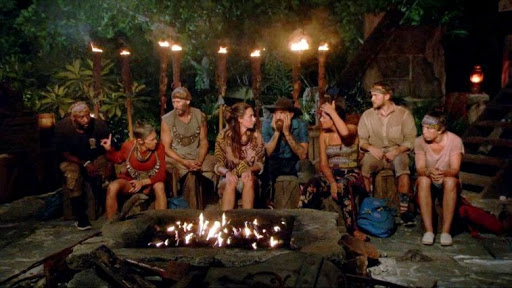
One of the more physical Survivor challenges.
Twice every three days, the contestants meet for challenges, some of which are physical while others are more mental, but most of the time they’re both. There are two types of challenges: Reward Challenges and Immunity Challenges. The first ends in a reward for the winning tribe which usually amounts to some type of food like an Outback Steakhouse meal or equipment like tarps to protect themselves from rain. Sometimes the rewards are more personal and can be letters, visits, or videos from loved ones – keeping the emotional motivation strong throughout the show. Immunity Challenges, on the other hand, keep the tribe safe from the oh so dreaded Tribal Council. The tribe that loses the Immunity Challenge arrives at Tribal Council that night where they must cast secret votes to determine who from their tribe will be sent home and lose their chance at winning the $1 million. But, before then, the contestants are in store for an afternoon of full-blown manipulation and betrayal.
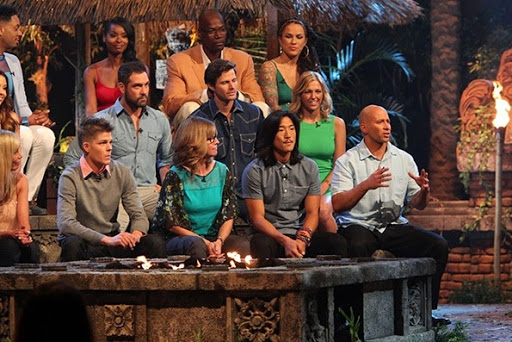
Tribal Council, Survivor: Winners at War
Before arriving at Tribal Council the castaways begin to discuss who they’re going to vote out while they’re back at camp and this is when we see the formation, as well as the destruction, of alliances. Starting the very first day, the castaways begin to form different alliances within their tribes to ensure their safety at Tribal Council, but slowly these alliances dwindle and the castaways become blindsided left and right, one after another. There’s almost always a mastermind that spearheads these blindsides and acts as a sort of puppeteer, completely manipulating the rest of the castaways in the tribe. Day by day the game becomes more intense and more serious, and eventually the two tribes combine to become one – and this is when it gets good, really really good.
When the tribes combine, everyone is placed in the same campsite rather than two separate ones, and the paranoia truly begins to set in, not only with the players, but with the audience as well. Typically, those in the minority (meaning those that aren’t in the main alliance) get voted off one by one, BUT every once in a while plans to vote certain people off fail due to Immunity Idols that individual contestants can win during the challenges, and Hidden Immunity Idols that contestants can find buried around camp. So, at this point, the castaways really begin to scramble to either join the main alliance or to find hidden immunity idols, all of which will protect them and their chances at becoming the Sole Survivor. There have been instances when contestants have straight up stolen immunity idols from other contestants, displaying completely ruthless tactics ensuring to protect themselves over the others. Not everyone’s this sneaky or evil, though. There’s always the nice guy or girl that everyone falls in love with, but the less conniving you are the lower your chances are of making it to the end. This game of deceit, blindsiding, and backstabbing continues throughout 39 days, and at the end the final three plead their case as to why they should win $1 million in front of the jury (made up of previously eliminated contestants) at the final Tribal Council. The winner, chosen by the jury, is then revealed at a live show after the final episode.
So far, I have basically categorized Survivor as a deceitful game filled with suffering and betrayal. Which is true, but it’s actually so much more complex than that. First of all, why would anyone want to watch people suffer both physically and mentally for 45 minutes nonstop? Strangely enough, even though the game is real, with real people in a real place, it does have some fantastical elements to it that keep drawing you in. It’s almost like a fairy tale, not the happy, magical Disney-like fairy tales, but more like the original stories of survival that are filled with both good and evil, and an overwhelming sense of justice.
Survivor: Cagayan live show. Tony Vlachos (bottom right) is determined the winner against Woo Hwang (to the left) after playing a conniving game all season.
Survivor is exactly that: a tale of survival. Fairy tales are just the same. Both manage to tap into our greatest fear as humans: complete isolation. There truly is no greater threat in life than the thought of being completely deserted. When contestants enter the game of Survivor, they leave behind their families, their jobs, their friends, and their lives. They basically have to start from scratch as they develop a new shelter and are surrounded by strangers that they have to befriend. If you’re in the minority alliance, without any way of saving yourself, even though you’re still physically surrounded by people, you have no one to fight for you or to fight with you. Isolation doesn’t have to be just physical, but it can also be completely mental and emotional, and Survivor is an expert at creating that mental isolation within the contestants – you never know who’s going to flip and blindside you or who’s going to leave next, so you’re truly on your own and left to fend for yourself. You cannot trust anyone because the second you start to, you’re out of the game. We see this same fear of isolation appear in various fairy tales throughout time. In stories like Rapunzel, the titular character is essentially abandoned by her parents when they choose food over her. She’s just a baby when this happens, so she doesn’t necessarily know, but still, as a child reading this story imagine the fear that sets at the thought of your parents, the people meant to protect you for the rest of eternity, willingly abandoning you. Hansel and Gretel shares a similar sentiment when the father chooses his wife over his children and leaves them in the middle of a forest to starve. What these children must do is find a way to survive these evils, just like the contestants on Survivor and just like we do in daily life.
The contestants’ ability to navigate through these evils of starvation, isolation, and paranoia makes it easy to forget that they are just normal people, like us, that come from normal places with different backgrounds. As I watched those two seasons of the show on Netflix, I found myself looking up to the castaways as if they were heroes completing these seemingly impossible tasks. Former Survivor contestant, Stephen Fishbach even agrees his capabilities were beyond his comprehension: “My second season, as my body gave out in the Cambodian monsoon, I saw that even when I was at my lowest, still by force of will I could continue forward.” Personally, I know I wouldn’t survive a day on Survivor! No food or shelter for over a month? Yeah, no thanks, I’d rather just watch from the comfort of my own home, snacking on some popcorn. But as I’m sitting on my couch, I watch these contestants rise above us mortals as they live in this fantasy land of survival and I find myself transported into the wondrous and foreign world that is Survivor. I find myself feeling for the contestants, imagining what it would be like to be them, thanking the universe that I’m not one of them, but still, I begin to identify with the characters in the same way a child would with fairy tale characters. In these tales there’s usually two main character types: the one that gives into despair, that sits there crying until a magical helper arrives to guide them, and the one that takes matters into their own hands and attempts to escape their terrible fate. The contestants in Survivor are no different. The ones that go hunting for hidden immunity idols without any clues are typically the ones that make it far in the game while the ones who sit around and do nothing are voted off fairly quickly. What fairy tales and Survivor both do is expose human behavior – both the good and the bad that we carry. They present characters that are kind and contrast them with the evil character that, from my perspective, must be avenged. Survivor: Heroes vs. Villains is a perfect example of this.
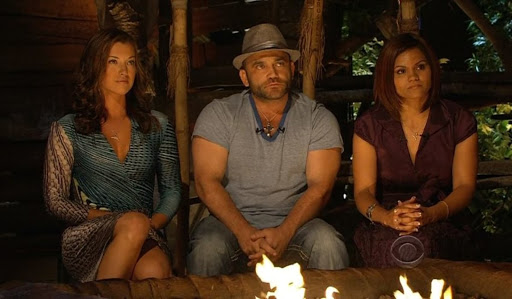
Parvati Shallow, Russell Hantz, and Sandra Diaz-Twine (the final three) waiting for the winner to be determined at the Survivor: Heroes vs. Villains live show. All were on the Villains tribe.
Throughout the Heroes vs. Villains season, we see Russell Hantz become the mastermind puppeteer of the game. He tricks people left and right to give him immunity idols and manages to blindside some of the most beloved Survivor contestants of all time. He’s the villain of the season, and he makes it to the final three. The other two castaways in the final three are Parvati Shallow and Sandra Diaz-Twine, two women that may not have been the nicest of people through the entirety of the game, but were nowhere near as betraying and disloyal as Russell. When the jury votes for the winner, absolutely no one casts a vote for Russell, and for the second time in a row, he loses the $1 million. While the villain doesn’t always lose on Survivor and the “good guy” or “not fully the bad guy” sometimes wins, there’s an overwhelming feeling of justice that arises when the villain does lose because, to me at least, rewarding the villain just seems wrong. In The Uses of Enchantment, Bruno Bettleheim notes that “children are innocent and love justice, while most of us [adults] are wicked and naturally prefer mercy.” I find there to be some truth to this statement. The beauty of Survivor, or at least in my own experience, is that it transports you back into a mesmerized, childlike state, engulfed in those feelings of unmanageable chaos that we experience when we’re young and unaware of how to control or work through our emotions. But the villains of the show, they’re like the adults in the real world and in fairy tales. They prefer mercy over justice and allow their wickedness to guide them and foster their desire to win. So, yes, it’s upsetting to those of us that tap into our childlike states while we watch the show when the villain wins because we feel a sense of loss and a lack of justice. But, I think I keep going back to the show because of those instances when the heroes do win, validating my hopes and feelings, and creating a sense of comfort. At the end of the day, Survivor follows the same process as many fairy tales: fantasy, recovery, escape, and consolation. The contestants are placed in this survival fantasy island in Fiji, they have to recover from feelings of complete despair, they have to escape from the villains’ traps, and in the end there’s typically a consolation of justice being achieved. But what if the villain wins? How does consolation present itself then?
Here’s the thing… it all ends, eventually. ITENDS. Even if the villain wins, the game has to end. That’s our ultimate consolation. That’s my consolation. That’s my comfort. That’s why I keep coming back to Survivor and the reason why I can live peacefully with my obsession. I know that the game doesn’t last forever and I realize it’s not me who has to physically experience the game. The fact that the game ends and that a new season starts soon after also gives me hope that the nice guy will beat the villain next time. I feel comfort in knowing that there’s another chance for good to beat evil. Rather than having to undergo those terrifying feelings of isolation and starvation, I can simply just live vicariously through the contestants. In fairy tales, children are consoled by the instances of justice – like Little Red killing the wolf and Cinderella’s step sisters getting their eyes pecked out by birds – but also by the fact that they’re transported back to reality once the story ends. They’re not the ones in the story, but they manage to identify with the characters and the storyline by living vicariously through them to work out their chaos and fears. Children, through fairy tales, and I, through watching Survivor, can finally come to realize that we aren’t actually deserted and won’t be anytime soon, because oftentimes there’s going to be a happy ending with these characters managing to make it one more day. At the end of the day, that’s all we can do too: survive.
Illustration by Alexander Zick of Hansel and Gretel, nineteenth century (public domain)
Introduction
COVID-19 has completely changed our reality, and the current world is unrecognizable. One of the largest problems that my family and I have personally faced is dealing with childcare. My brothers both have children, and they and their wives work full-time. One of my brothers is a pediatrician; luckily, he has been able to live at home despite working in a hospital, and his wife is a teacher, so was able to spend time with their 1-year-old son during her summer vacation when the pandemic first hit and daycares shut down. My other brother and his wife, however, work full-time on the phones for a broker, and the pandemic did not change that. They were forced to give their 18-month-old daughter to her grandparents for a few months, a transition that was traumatic due to the unknown duration and the physical distance between them: my brother lives in Nebraska, his in-laws live in Colorado.
Watching my brothers struggle with childcare, and personally stepping in as a nanny for a close family friend because of childcare issues, I realized how many people were being affected in this way during the pandemic. After reading tales such as “Hansel and Gretel” and “Rapunzel” that feature child abandonment and isolation, I was immediately drawn to the idea of using these stories to analyze and cope with the current situation because fairy tales offer hope when reality seems bleak, and we desperately need hope during this time. Whether your family has personally dealt with the problems of finding childcare during this time or if you know someone who has, almost everyone can relate to the anxiety it causes. People may be experiencing wish fatigue, but fairy tales remind us that wishing is never a waste of time. There is always the possibility of a “happy ending,” and these tales provide hope that the current generation of children will survive this pandemic with new resolve and maturity, rather than trauma, as many parents fear.
Fairy Tales and the Pandemic
The year 2020 has been anything but a fairy tale. It began with fires that devastated Australia, but that event was quickly overshadowed by the spread of COVID-19, a disease that single-handedly changed lives across the world. Businesses shut down, Zoom University became the only option for higher-education, and masks appeared as the new (mandatory) fashion trend. Add one of the most divisive U.S. presidential elections in recent history and the unearthing of persisting blatant racism, and you get what 2020 has become: a year filled with fear, tension, and hopelessness. How could this be anything like a fairy tale?
Fairy tales are full of princesses, princes, and happy endings. The Disney store beckons, walls overflowing with sparkling dresses and accessories. That is a fairy tale. There is no extensive violence, no uncertainty threatening to drive the characters to insanity. Or is there? Disney sanitized tales into forms often unrecognizable from their oral counterparts, but these versions are the ones most people are familiar with. Disney removed much of the blood and gore in “Cinderella,” such as when her stepsisters cut off parts of their feet in order to fit into the glass slipper, and rejected versions of “Snow White” that depict the prince as a necrophiliac or force the evil queen to dance in red-hot shoes until she dies at Snow White’s wedding. These details were deemed “unfit” for children, so they did not make the final cut for Disney’s renditions.
Disney’s intentions may have been rooted in a place of genuine concern towards preserving the innocence of children, but the current state of the world demands the true nature of these tales. Our reality is grim, so while oversaturated films where the biggest problems are jealousy or extra chores provide escapism, we cannot relate to their eventual happy ending. It is not unacceptable to dress up in a sparkly blue dress, don a blonde wig, and imagine a fairy godmother who will magically appear and grant our wishes; it is a mistake, however, to gloss over the true trauma in the story. We need to be reminded of the horrible occurrences in fairy tales because they reinstate hope. If fairy tale characters can endure vengeful fairies, poisoned apples, or wolves with an appetite for young girls, we can surely face our reality.
That reality, however, can be daunting. As COVID-19 became more of a threat, normal societal behaviors were placed on hold as people sheltered at home, terrified to go outside. Social interactions became a thing of the past, and everyone put on their armor in the shape of a face mask. Forget the knight in shining armor. He can no longer save us. Life suddenly seemed to mirror a dystopian film or novel and a sense of detachment arose. Going to the grocery store became an act of bravery. Will there be toilet paper today? Will it be worth the risk? Working parents, however, faced one of the most pressing problems: how to work and still take care of their children, without being forced to abandon them.
My brother and his wife abandoned their child. How could they do this to my sweet, cherub-faced niece? They did not leave her on the streets and had every intention of retrieving her, but the pandemic created circumstances where they could no longer take care of her. As COVID-19 became a more dire issue, my brother and his wife faced a terrifying prospect: their 18-month-old daughter could no longer go to daycare, and they both work full-time. With technology being what it is, a pandemic did not dispose of these responsibilities, but rather increased them; their workspace was now their home. Throw in three dogs, and there was no way to ensure that everyone had their needs met. Hectic was an understatement. One of them quitting their job was not an option because they had only just begun to make ends meet. Although daycare added an expense, it was still better financially than having a stay-at-home parent. The irony of this situation is evident; we work to pay for people to watch our children while we work.
With this fear looming down, they realized that they had to find a place for their daughter to go, even if that meant being separated from her for an extended period. This decision was not easy, but necessary given the ever-spreading pandemic. My sister-in-laws’ parents offered to take care of my niece for however long was needed, but they live in Colorado. My brother and his family live in Nebraska. Although this situation was not the typical case of abandonment, because both of her parents wanted to stay with her and she was going to a place where she would be loved, my niece was still forced to live away from her parents for a few months. She was also at an age when children are completely reliant upon and attached to their parents, making it more traumatic for all involved.
“Why are you crying?” I ask my mother. “She’s going to be damaged, I just know it,” my mother replies, as she calls my other brother, the pediatrician, for his opinion.
This decision, however, was a privilege in itself, despite the pain it caused their family. Many parents faced similar situations as cities imposed COVID-19 restrictions, especially those who belonged to the lower working class. They did not have the privilege of taking time off from work in order to care for their children because their jobs pay the bills and put food on the table. Daycare facilities and schools were relied on to provide childcare, but these services were taken away in a matter of days, and people scrambled to find alternatives. Where was the benevolent King to take care of his subjects? Is he just a figment of imagination?
Other families did not have the same support system as my brother and his family, had multiple children, or had essential jobs that took them out of the home. Working parents everywhere had to find ways to ensure that their children were safe, healthy, and still getting some semblance of an education, while also trying to pay the bills. Those who did not physically abandon their children emotionally abandoned them, leaving them unsupervised for most of the day while they worked. Zoom meetings are not conducive to parenting. Your boss can still see you.
This situation would not be out of place if written in a children’s story. It would be set in a different time period of course, “many years ago” or “once upon a time,” but the main components would still be there: fear, uncertainty, abandonment. Although the childhood abandonment instigated by a global pandemic may seem as far removed from a fairy tale as possible, one of the most common characteristics of any fairy tale is the departure of a character from the home, whether that be through death or a journey. Vladimir Propp sought to define this aspect, placing it as the first function in his list of thirty-one: absentation. Whether a parent dies or the hero departs on a quest, someone leaves the safety of home, venturing into the unknown. It is only through the trials and tribulations faced on their journey or in their grieving process, however, that the hero is able to achieve their happy ending.
We see this separation not just through children who are forced to leave their homes and live with others, but with parents who cannot come home for fear of infecting their children. Yes, the pandemic is real. Yes, it affects real people. Health-care workers must not only leave their children during the day, but many are unable to return home during this time. They live in pop-up campers in parking lots or hotel-like rooms provided by the hospital, apart from their spouses and children for months on end (Ellis). As the pandemic continues to drag on, they are forced to lengthen this period of separation indefinitely. Their isolation has no expiration date.
“Rapunzel, Rapunzel, let down your hair!” (Grimm, 125). Who needs a tower when you have a parking lot camper?
There is no amount of hair that will fix their predicament. There is no selfish witch keeping healthcare workers from their friends and families. They will not be rescued by a charming prince. Their captor is not tangible, and they must rely on society as a whole to take the necessary precautions to limit the spread of the virus so that they can soon return home to their families. Individual initiative helps, but only collective cooperation will halt this villain.
As the pandemic drags on, we must ask ourselves whether the idealized concept of a “happily ever after” will play out in reality, or whether our fragmented society is beyond repair. Is this cliché another Disney ploy? Buy into a happy ending while buying turkey legs in front of Sleeping Beauty’s Castle? Or is the idealized conclusion no longer confined to the pages of storybooks?
We can actually turn to classic fairy tales to help us answer these questions because of the similar circumstances threaded throughout many tales, such as “Hansel and Gretel.” This story is widely recognized as one of the quintessential fairy tales; people are familiar with the basic plot, even if they have not read it since childhood. Who could forget a gingerbread house? Writers have reimagined the tale throughout time, adapting it to fit more modern settings. The classic version, however, contains themes that align to our current situation in startlingly similar ways.
Hansel and Gretel are two children who are abandoned in the woods by their parents during a time of poverty and forced to face the elements. They are able to find their way back once in most iterations of the tale, but eventually succumb to their parent’s deception. After accepting their inevitable fate, their wanderings eventually lead them to a gingerbread house, where they eat their fill, only to learn that it belongs to a cannibalistic witch. A sugar crash is no longer their biggest problem. Luckily for them, they use cunning and trickery to escape, captivating all who hear their story by the fantastic image of an edible house and their ingenuity.
The tale has roots in the famine that devastated Europe during the 1300s; during this time, parents actually abandoned their children in forests or churches because they could no longer afford to feed them (Campbell, 0:57-1:05). Hansel and Gretel’s parents’ decision to leave their children reflects this time period because they are motivated by their financial insecurity and hunger. Their mother berates her husband, claiming that if they do not abandon their children, “[t]hen all four of [them] will end up starving to death. [He] might as well start sawing the boards for [their] coffins” (Tatar, 236). Hansel and Gretel are abandoned because of their family’s intense hunger and the way it affects each family member. There are no motherly tendencies. The mother reverts to base, primal instincts, saving herself without thinking of her children. She is willing to coerce her husband into giving up the children in order to save herself. It is never the man’s fault, after all. He would have been innocent if not for his wicked wife. No matter who receives the blame, we see the strain that financial difficulties can put on a family, a concept that is being echoed by the current state of the world.
Hansel and Gretel’s parents ignore the needs of their children in order to fulfill their own needs, but the motivating financial insecurity and resulting hunger resonates with parents during the pandemic. Grocery stores initially became barren as people flocked to stock up on what they deemed as necessities. Goodbye toilet paper, goodbye flour. Everyone became a baker during quarantine.
When food disappeared from shelves, more pressure was put on parents to provide security for their children, despite the struggles they were already facing. There was also a new fear of going hungry; families that usually did not have to worry about food faced new difficulties. Food became a main focus and induced stress, a trend similar to the famines that inspired “Hansel and Gretel.”
Food scarcity and financial anxiety change people’s priorities because they have a large impact on one’s overall lifestyle, something many are loath to give up or alter. The word “hangry” was coined for a reason. As Bruno Bettelheim notes, “poverty and deprivation do not improve man’s character, but rather make him more selfish, less sensitive to the suffering of others, and thus prone to embark on evil deeds” (159). Leaving a child unsupervised because you have to work does not constitute an evil deed, but it does show a lack of attention that normally would not occur to the same extent. Parents place great emphasis on taking care of their children, but when other, more base anxieties arise towards food or money, the latter takes precedence.
We also see a similarity in the struggles the children face once the parents abandon them. Modern children are not given to a cannibalistic witch, but there is still an element of danger. Giving a child to someone else, even if there are no other viable options, puts both the child and caregiver at risk. There is no way to ensure that the mere transfer of the child will not cause someone to become sick, nor is there a way to ensure that the other people are following the protocols you have set for yourself and your family. Every decision is laced with anxiety. The witch poses a threat because of her cannibalistic tendencies, but COVID-19 has made everyone a threat. This disease is a silent and stealthy killer. It is more terrifying than a villain in a fairy tale because it cannot be seen or easily identified in most cases. There is no dragon to slay or witch to escape, only the crippling fear of the unknown.
The relationship between “Hansel and Gretel” and the current reality has never been more important. Parents may balk at the idea of giving their child up, even if it is to a close family friend, but this tale provides some comfort because the children end up victorious. A happy ending, despite the trauma. The witch poses a threat to the children, but they use their wit to escape her clutches, a parallel we can hopefully identify as time passes during the pandemic. From Hansel’s idea to convince the witch that he is not yet fat enough to eat by “stick[ing] a little bone out,” to Gretel’s insistence that the witch must show her how to climb into the oven, both children demonstrate a level of cunning in order to secure their escape (Tatar, 240).
Their ingenuity allows them to secure their future. The children of today must also demonstrate a similar adaptability in order to persist despite their adverse circumstances. While there is no expectation that an 18-month-old child like my niece will be able to escape COVID-19, or discover a way to create a vaccine that allows society to resume normal activities in some capacity, there is hope that their resourcefulness will allow them to overcome the hurdles they are facing in some of the most formative years of their lives. They will not be damaged by the decisions their parents are forced to make, but will persevere to reach their “happily ever after” eventually.
Hansel and Gretel only return home after crossing a stream, a detail of great significance. This trek signals their transcendence past childhood and complete dependence—if only puberty was this easy. Before they met the witch, they were dependent on their parents and each other. By crossing the stream one at a time, they undergo a “transition, and a new beginning on a higher level of existence…[and] arrive at the other shore as more mature children, ready to rely on their own intelligence and initiative to solve life’s problems” (Bettelheim, 164). Their period of separation from their parents allows them to transition into more developed beings. It does not traumatize them, but rather is an essential aspect of their maturation.
The idea that the eventual transcendence of Hansel and Gretel can be applied to our current situation highlights the wish many of us have that the trauma we are experiencing will be fruitful in some regard. The pandemic has altered our way of life fundamentally, and many feel powerless or out of control, so wishing for something better is natural. Wish fulfillment is a concept also popular in fairy tales; Cinderella wishes to go to the ball, and her fairy godmother provides—just get back before midnight, the ever important caveat. In the past months, however, modern society is experiencing a new phenomenon: wish fatigue.
At the start of the pandemic, wishing was all we did. We wished for things to return to the way they were pre-pandemic, at least in regards to face masks and social distancing. We wished to be reunited with friends and family in person instead of over a computer screen, and we wished for the things we once took for granted. As the months dragged on, however, our wishes became less frequent; this new way of life seems permanent and inescapable. Many, including my own family, began experiencing wish fatigue. Wishing seemed futile. Nothing was changing, so what was the point?
The extent of the wish fatigue we are experiencing now is unprecedented. It may seem pointless to read a fairy tale because of the lack of hope towards a possible happy ending, but this situation is what makes engaging with fairy tales even more important. They are not just a promise that things will get better, but a reminder always to wish for better things, even when they seem impossible. Remember Hansel and Gretel? The two children who were able to outsmart a cannibalistic witch and find their way back home through a forest? Nothing is impossible. The drastic conditions in fairy tales surpass even our grim reality, yet these characters do not give up their hope even after many years of suffering. We have suffered for less than a year, although it admittedly feels much longer. We cannot give in to the wish fatigue plaguing us because, in doing so, we forfeit our happy ending.
Fairy tales, such as “Hansel and Gretel,” do not provide a realistic reflection of the events occurring in the world, but they do provide a road map that allows us to understand how we can cope when presented with new horrors. A cannibalistic witch is a magical and purely fictional creature. A global pandemic that completely changes society, however, was also once unimaginable. Fairy tales allow us to understand that life will present unforeseen challenges, but that falling into despair will not solve anything. As daycare facilities remain closed, or even as they begin to open back up, parents will continue to be faced with the prospect of giving their child up for a time in order to provide for them in the future, or sending them to a place that could potentially expose them to the virus. Each family must make that decision based on their individual circumstances and situations, but it is important to think back to fairy tales that describe this type of abandonment, and the ultimate transcendence of the child into a grounded and content adult.
We desperately need hope in this time, and fairy tales provide it. No longer tales reserved solely for children, these simple yet profound stories allow us to perceive the world around us in a new way and gain insight into how best to navigate the rocky road ahead. We must believe future generations will persevere, and we must believe that wishing for better times is not a foolish endeavor. Without this belief, we will descend further into the chaos around us. We must fight the fatigue we feel and trust that society will overcome this adversity. We will get through this pandemic, and all it entails, with a little help from Hansel, Gretel, and our other friends who have already faced the unimaginable and returned unscathed and triumphant.
In everyday life, a small amount of intention can lead us to recognize the prevalence of fairy tales in our society. In the case of advertisement, adaptations have been made to some classic fairy tales in hopes of prompting a nostalgic reaction and leading potential consumers to purchase a product. In one sense, fairy tales and advertisements serve a similar purpose. They both paint a desirable picture and provide the means for attaining this satisfaction. A fundamental difference, however, is that fairy tales more subtly influence the mind of the listener, while advertisements attempt to explicitly show the viewer to fill a void in their life. According to University of West Alabama, “the use of narrative and storytelling has been proven to help consumers make emotional and personal connections with brands. This sentiment is backed up through research, which has shown that 55 percent of consumers who love a brand’s story are willing to make a purchase” (UWA). The synthesis of fairy tale motifs and commercials appears in many forms throughout modern-day commercials. The objective of this project is to identify aspects of various commercials that reflect the themes and nuances of fairy tales that are incorporated into television marketing.
This Pepsi One commercial presents an extremely sexualized rendition of “Little Red Riding Hood.” The advertisement capitalizes on the seduction associated with the color red, which in the original fairy tale, is the color of only Little Red’s hood. In the commercial, red is the color of the woman’s entire outfit. This completion of her signature color represents the maturation of Red’s sexual desire as she shifts from a young, innocent girl to a grown woman. In the commercial, her voice is intentionally suggestive, which can be seen as a marketing tactic to entice the male audience. A key difference between the original fairy tale and this Pepsi advertisement lies within the intended audience. While the fairy tale appeals to children of all genders alike, the commercial’s focus on the male audience further heightens Red’s lust embedded into Pepsi’s work. This commercial epitomizes the common phrase, “sex sells.”
Even though Little Red herself feels strong sexual curiosity in the original tale, the wolf still plays the role of the seducer. In the case of the Pepsi commercial, the seductive role switches to Little Red. In Bruno Bettelheim’s The Uses of Enchantment, he states, “The immature person who is not yet ready for sex but is exposed to an experience which arouses strong sexual feelings falls back on oedipal ways for dealing with it” (173). In the case of this commercial, Little Red is a grown woman, not merely a small, curious child. Since she has matured, she does not need to fall back on her oedipal desires in order to satisfy her sexual craves. Red unambiguously expresses her carnal craving while having a complete understanding of who she is as a woman. This contrast allows for the role of the seducer to switch from the wolf to the woman in red.
In the Levi’s version of Cinderella, a young woman searches around the city for the man who fits the pair of jeans she holds. The original fairy tale involves a prince searching through the city for a woman who fits a glass slipper, but the Levi’s role reversal takes on a progressive, feminist viewpoint which provides a different perspective than traditional fairy tales. Originally, Cinderella’s happiness and fruitful future lies within the hands of a male character. She does have a strong mindset, filled with patience and kindness, but regardless, Cinderella lives a life of disregard up until her foot slips into the coveted slipper. In the Levi’s commercial, the young woman loses her slipper, and an anonymous motorcycle rider cuts off a man who is chasing her, but he drops a pair of Levi’s as he rides off. The role of Cinderella in the commercial ends up being played by the mystery man, and the young woman plays the role of the “prince.”
The young woman’s decision to scour the town portrays her initiative and independence, contrary to the original female character’s perspective of “good things come to those who wait.” After an extensive search, she finds a mechanic who fits the jeans she holds, and they find their happy ever after. The director of this commercial intentionally leads the viewer away from the classic Cinderella archetype and changes the storyline so that the young woman’s prosperity is not based on her patience to tolerate neglect and emotional abuse, but instead due to her independence and perseverance. Her independence effectively parallels the message Levi’s portrays at the end of the commercial, stating “no two pairs are the same.”
This AT&T commercial caters to the nostalgia induced by the synthesis of a well-known fairy tale, Hansel and Gretel, and the busy city streets that are so common in 21st century film. In the original fairy tale, Hansel and Gretel’s sense of comfort revolves around having access to food, which is provided in their home. Once they know they are going to be abandoned, the siblings realize that their lives are in danger. In the commercial, the erasure of their bread crumb trail as they travel through the big city symbolizes the parental abandonment they experienced in the old tale. Since knowing that they can find their way home means they will have food to eat, the crumbs act as a comforting bridge to home during their adventure. In the commercial, Hansel and Gretel’s sense of comfort is revived by accessing the cell phone GPS function, effectively portraying AT&T as the hero of this fairy tale remake.
Since the commercial lacks some aspects of the original fairy tale, namely the wicked stepmother and the witch, the viewer is forced to refer to their familiarity of the Hansel and Gretel tale to fully understand the implications of the siblings’ longing for home. If the viewer has not read Hansel and Gretel, the commercial may not as effectively convey the message that the purchasing of their cell phone is crucial because the dangers of life away from the cottage are not depicted. While the dangers are not explicitly mentioned, they are implied by Gretel’s facial expression when the children realize that the bread crumbs are not still in their trail:
Whether commercials accurately portray well-known fairy tales or introduce significant redirections, fairy tale themes assist in inclining viewers to favor the purchase of an item because of the nostalgia that accompanies fairy tale references. In the case of the over-sexualized Pepsi One Little Red Riding Hood commercial, the inclination was aimed towards a specific audience, but in AT&T’s Hansel and Gretel rendition, the reminiscence was evident in all who were familiar with the tale. Regardless of the approach, fairy tale implementations in modern advertisement can lead to the purchase of the advertised products because of our yearning to bring childhood magic back into our everyday lives.
Mrs. Lee, my kindergarten teacher, was not my first introduction to the power of staying on task, finishing what I start, and not giving up. Disney stories were not the first to show me that anything was possible. If children’s storybooks and fairy tales are the amalgamation of magic, marvel, and meaning, then my origin, my bloodline, is the quintessential Disney storybook. The lessons and experiences from my parents’ life anecdotes, tales, accounts, and narratives, have revealed to me the story of my ancestors, my family, and my community. This repertoire illustrates the magic and marvel found in growing up dirt poor in a pueblo in Mexico and making the most of living in the barrios of East LA.
Similar to the story of “Jack and the Beanstalk,” I too share humble beginnings and have been entrusted with a great responsibility. Like Jack, my responsibility is to metaphorically take the “magic beans” my parents have entrusted me with and see to it that they grow into something special. It is through the lens of my parents’ lives — their struggles, sacrifices, setbacks, triumphs, and optimism — that has had the greatest impact on the person I am today. These “magic beans” have sprouted into a magical beanstalk that lies deep within me: spurring imagination, engendering hope, and brimming with optimism. My beanstalk grows confidently, exploring a world full of possibilities, and knows only the very top of the sky as its ceiling.
“Papá you actually lived in a house made of dirt without electricity, gas, and indoor plumbing?”
As a little girl, my parents’ stories were captivating and unbelievable; I was unable to fathom a reality so different from my own. “Papá, you actually lived in a house made of dirt without electricity, gas, and indoor plumbing?” I asked incredulously. I would paint mental images of my parents’ pueblos and would commonly contrast the quotidian events of my childhood with theirs. My dad would share with me his experiences living through the 1968 Chicano blowouts as a teenager at Roosevelt High School and of supporting Cesar Chavez and the farmworker boycotts. I often found myself wondering what I would have done had I been there. My mom has talked about all the responsibilities she had as a child. By the age of 10 she knew how to buy groceries, wash clothes at the river banks, and how to make tortillas. My parents’ stories left me in awe and wonderment and etched powerful and lasting images in my fertile and imaginative mind.
Slowly, I’ve pieced together my dad’s arduous journey: from going shoeless to shining shoes, from being disparaged for not speaking English in grade school to obtaining a college degree. In doing so, I gained a deeper appreciation of what it means to not give up and to always give it your best; to “echarle ganas.” “Echarle ganas”, the essence of giving it your all, is as deep-rooted and integral to the Mexican culture as balance and harmony is to the Chinese culture. This imperative phrase has since become much more than a motto. It is my mindset, my heartbeat, and my cultural battle cry as I aim high and give life my best shot.
Mija, always try to keep it simple, but reach for a deeper understanding of things”
As I mature, my understanding and appreciation of my parents’ experiences has only grown and intensified; filling me with a sense of wonderment and inciting gratefulness, a strong sense of self-awareness, identity, and pride. “Mija, always try to keep it simple, but reach for a deeper understanding of things,” my papá frequently advises me. I have put this into practice and it has helped me gain a deeper and more profound understanding of my culture, heritage, and myself. This mindset has also assisted me in gaining a broader, deeper, and more nuanced understanding of the realities and meaning found in the stories we have undertaken in this class.
I planted my “magic beans” in fertile ground.
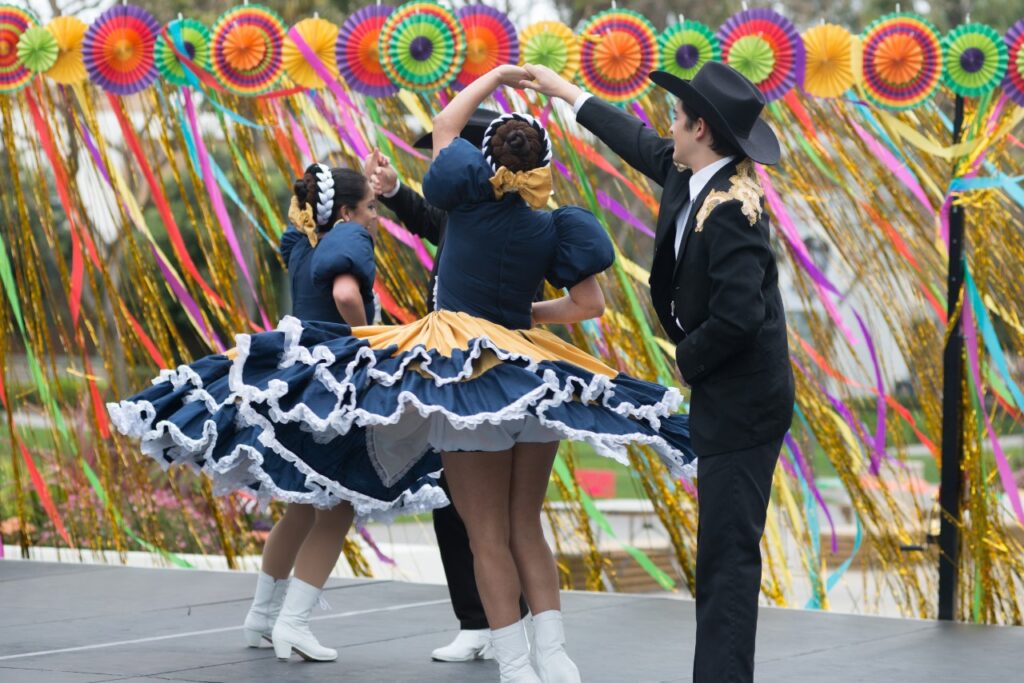
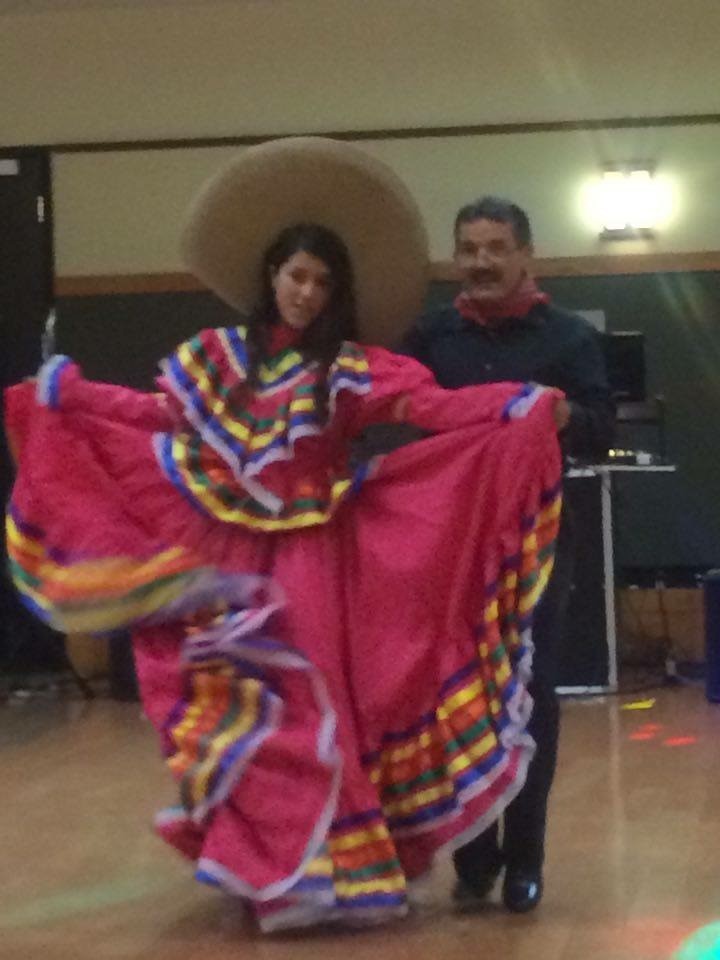
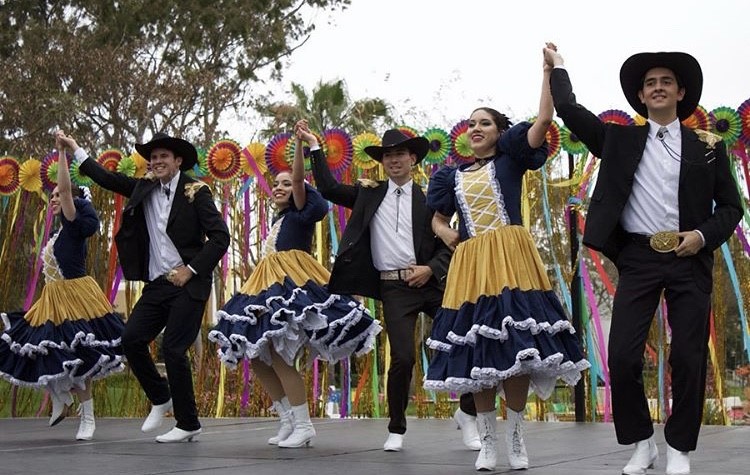
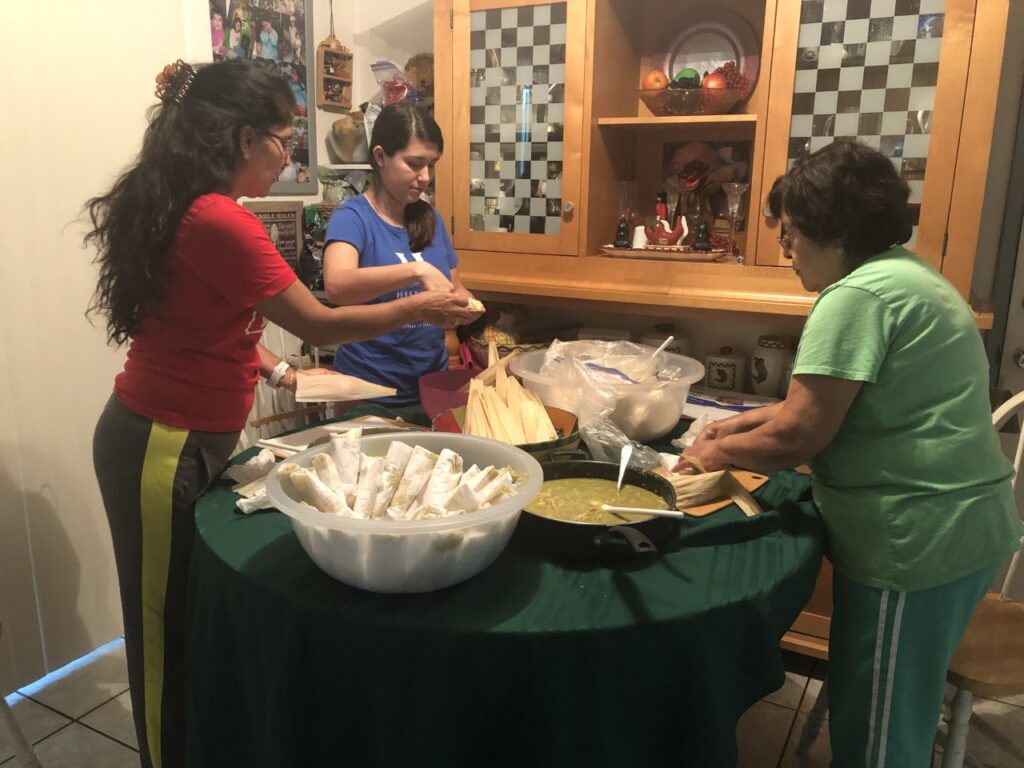
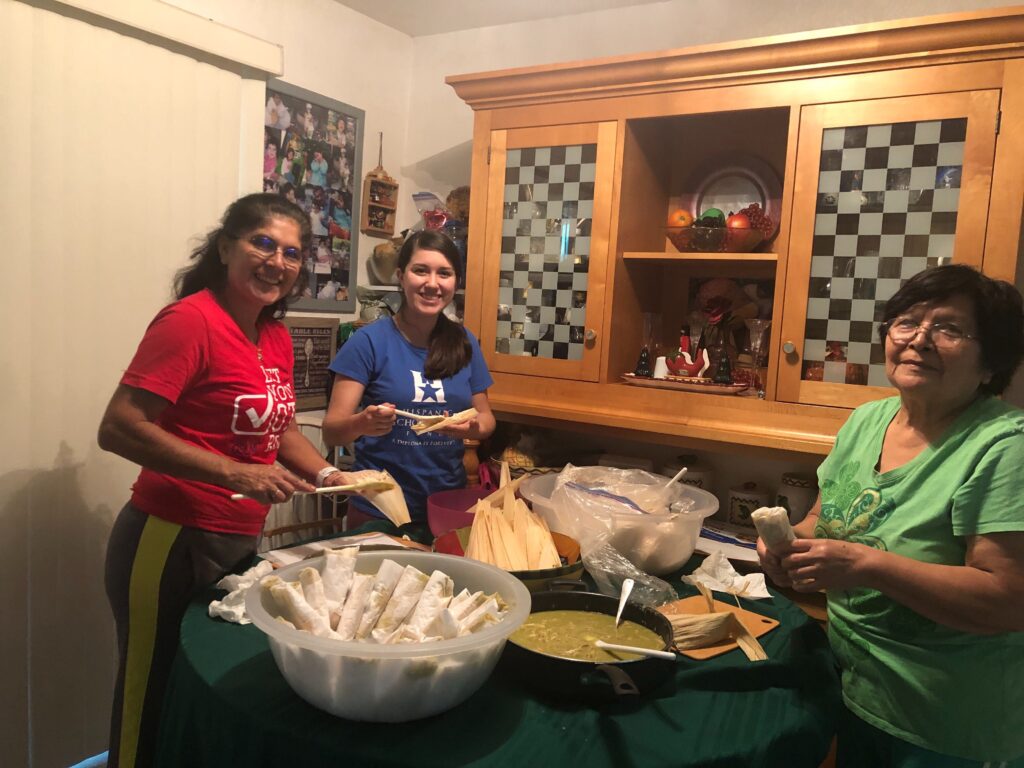
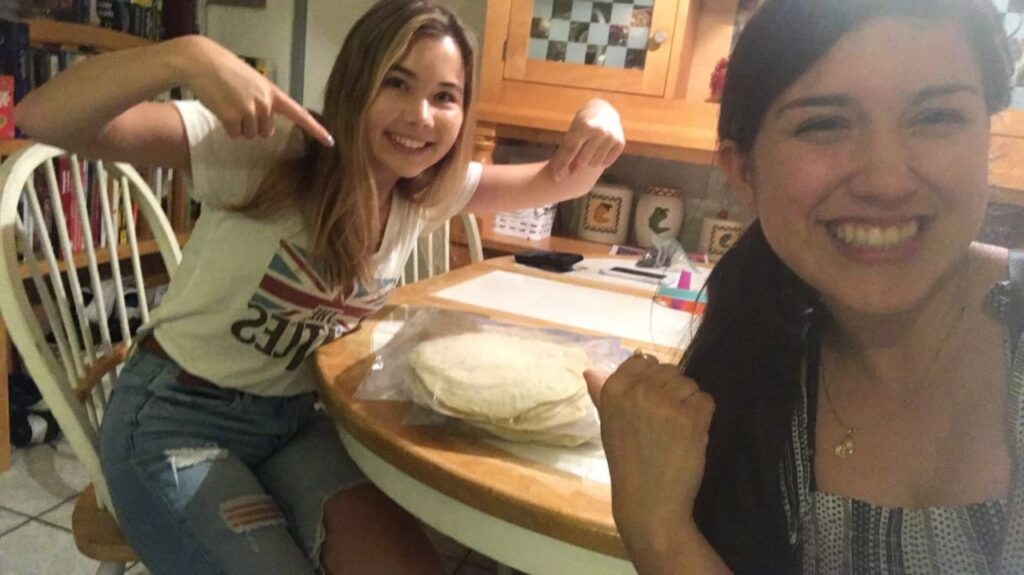
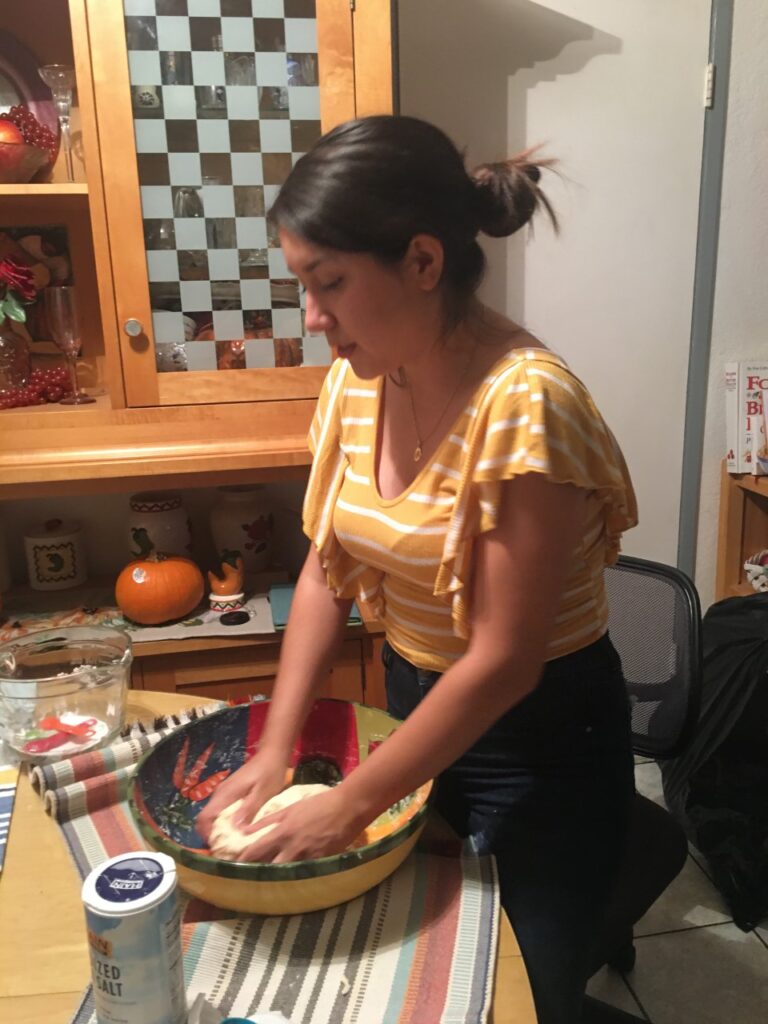
As I take this time to reflect on my own story, I feel blessed to know that I planted my “magic beans” in fertile ground (unlike Jack who just threw them out the window). And we all know the reality, that good seeds will grow strong and healthy not by themselves, but only if they are nurtured and taken care of. As I continue to grow, I make sure to find time to engage in opportunities that help me stay connected and nurture my connection to my culture. For example, dancing as part of LMU’s Grupo Folklorico De LMU (as my dad did from 1973 to 1977), tutoring children who just immigrated from Mexico, and helping my family make tamales from scratch during the holidays.
My unique and evolving personal perspective — birthed, nuanced, and shaped by the influences of my immigrant roots, household, and community — is the stuff of Disney. My story is rooted deeply in overcoming the challenges that life puts in our path. Luckily, my parents instilled in me an “anything is possible” mentality and a “comeback can be stronger than your setback” attitude. A confidence dwells in knowing that my metaphorical “beanstalk” has Hispanic heritage, family, and community written all over it. It is a beanstalk growing, thriving, and blossoming, hopefully into something truly special.
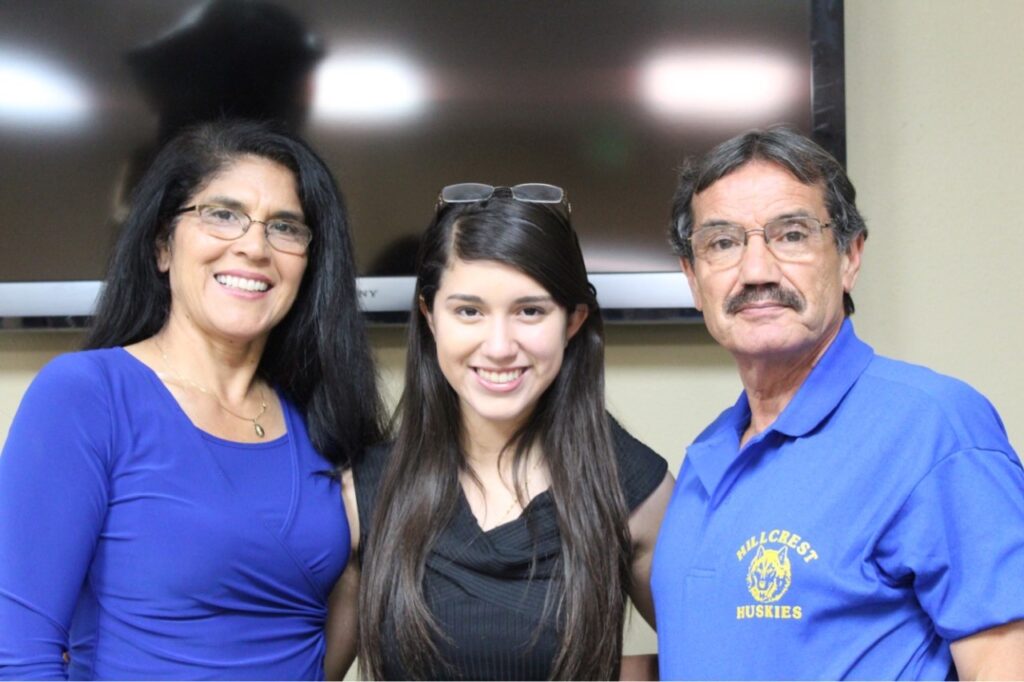
My parents
Folklorico at LMU
Folklorico Dancing with my dad
Folklorico at LMU
Making Tamales this Chirstmas!
We made 100+ tamales
The mural at my elementary school that my dad painted
As Senior Computer Science majors taking both Natural Language Processing (NLP) and Honors Literary Analysis this past semester, Maddie Louis and Merissa Tan found a common interest in the intersections of NLP text generation and fairy tales. They therefore decided to embark on a mission to teach machines how to write fairy tales.
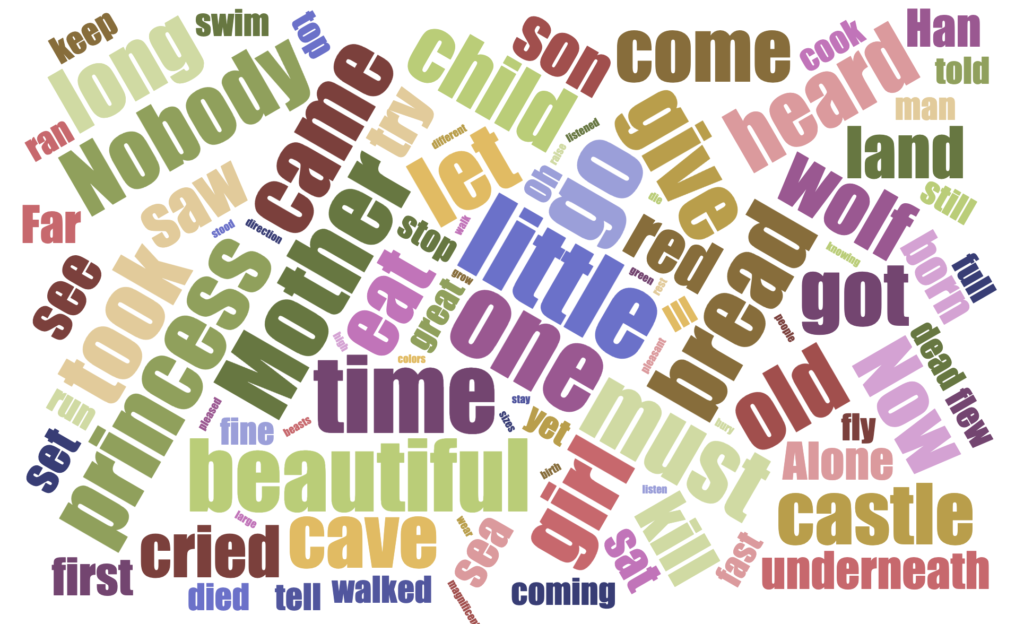
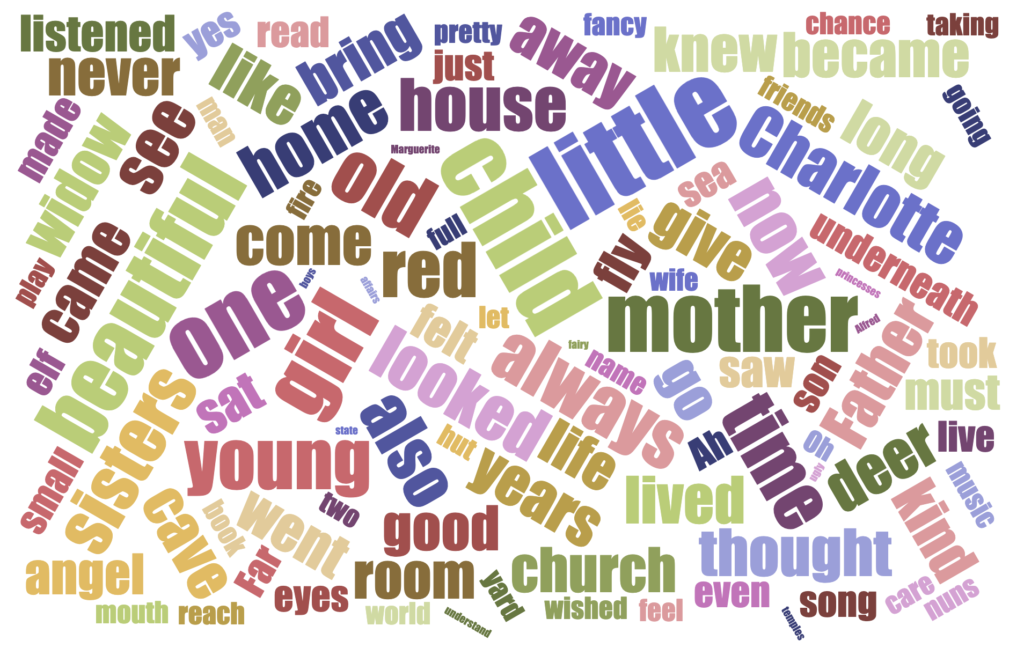
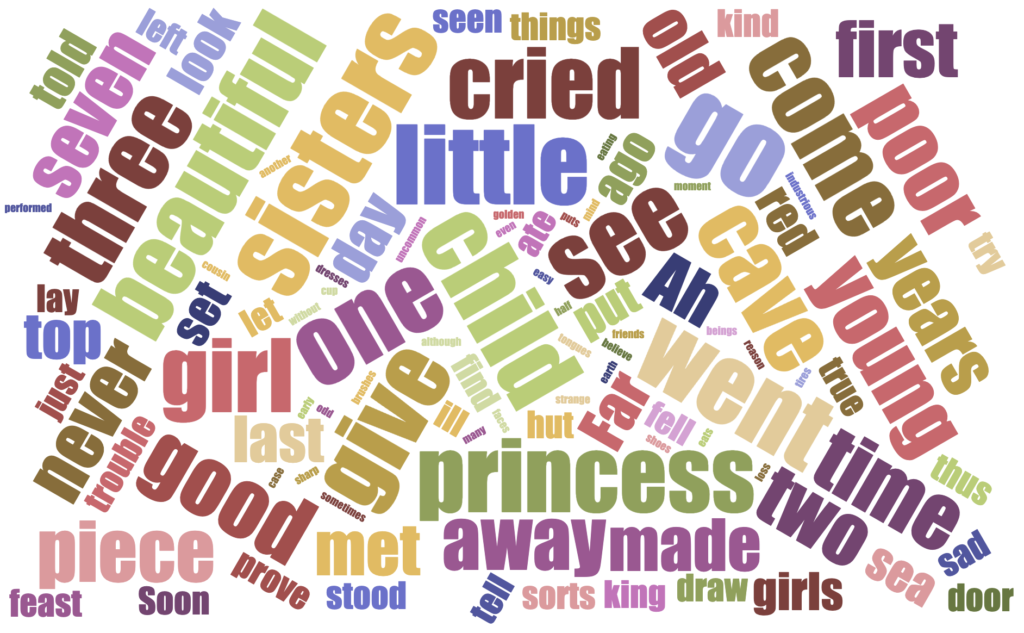
The paragraphs below are sample stories generated by language and text-generation models that have learned from the works of prominent fairy tale authors. The models are given a prompt which are italicized in the text. The word clouds showcase the most common words in these generated texts.
Model learned from Brothers Grimm’s tales
Sample Generated Text #1
Alone in the woods was a small girl in a red cape. She was on her way to bring bread to her grandmother.
‘Well, grandmother,’ thought the cook, ‘how can I make money from her, and cook my meal for you?’ ‘Alas,’ said Gretel, ‘I will eat only my bread’s half.’
Then she took a red apple, and nibbled at it until she was satisfied. Then she thought: ‘I should like to get some for you, but I have no one I can reach.’
At last she gave up the apple, and went home satisfied. With the exception of a few days when she had a little cow, the wild goose were very lucky.
They came all the time to their great-great-great-grandmother to have their dinner, and had so very little that no one could get in.
Sample Generated Text #2
Out in a cave, there lived a horrible beast.Nobody dared go near it, and the cave remained untouched by the nearby village for thousands of years. But that was only the beginning.
At last, a fisherman and his wife found shelter under a hillock, and heard the strange sounds of the beast, when it was about to leap upon their boat.
They soon fell down upon one another, and as they had come to the place where the monster had been, the fisherman got up and tried to throw him on the top of his boat.
The monster began to run after him with great speed, and began to sing and dance under the water.
‘Oh dear God, give me a break,’ cried the fisherman, ‘give me a break,’ as it sprang off the top of his boat again. But the fisherman sprang back, and, seeing that the monster was no longer there, went down again to the water.
‘Pray swim away,’ said he, ‘you can’t swim away,’ but he clambered out of the water, and said: ‘Oh dear God, grant me a break,’ and clambered on again; and again, he ran upon his boat as fast as he could.
Model learned from Hans Christian Andersen’s tales
Sample Generated Text #1
Far underneath the sea, there lives a young princess who has seven sisters.
Their names are Charlotte, Charlotte, Charlotte; they are all beautiful, and one of them is a little daisy; she is beautiful, and Charlotte is beautiful.
The daisy is not only Charlotte but also Charlotte who also is a lovely human being, because in her soul she lies, and does her bidding; she is the one who knows what is at stake in the future.
Charlotte can neither lie nor lie about herself, so that nothing in the world may be expected of her. But the little daisy can be held together and strengthened by the love which she gives to it.
Charlotte is a girl who can be read; but the book she is reading is nothing, because she has never read the book she had intended to read, but only a sketch, for the drawing will remain for years; she cannot think of that again.
Now when she looks at the daisy, she sees a young angel, and a beautiful girl, but she cannot perceive them. She cannot see them, for the angels are not there.
The little daisy is sitting up in her arms, and the little angel has been kissing her, and they are kissing her heart, and her lips are moving through the air.
Sample Generated Text #2
Once upon a time there was a young girl who was the fairest of them all.Her sisters were jealous of her beauty. She was beautiful, they believed.
And when she was about ten years old she was married to a noblewoman.
The girl was very clever, and had all the qualities, while her mother believed that this girl should never have a chance to be with her; so that she had no chance of ever being with her.
The only thing which the daughter of her master could wish to know was how she was to remain in a kind home with the noble people of her birth–in which the mother remained for half a year, and the child was always with her. It was a very beautiful time, in the summer.
The Dryad came out of the country in winter to visit her, which was certainly of great importance; so it was very pleasant and interesting to see her, to have her, and to see all her beautiful gifts.
The Dryad had a splendid home in the town; a pleasant house that had been built on top of hers; and a splendidly furnished yard; but the whole arrangement was only to give the dryad much entertainment; and so she became quite convinced that the house, in which she lived, was to serve as her home.
Model learned from Charles Perrault’s tales
Sample Generated Text #1
Alone in the woods was a small girl in a red cape. She was on her way to bring bread to her grandmother.
Now this poor thing had got a good deal of money out of the boy, and had given him money to buy a pretty little hut, which he had cut up on the outskirts of town.
Now this little hut was called The Fox’s Fair, because, as far as was known, it lay on a ridge above, behind the house, and was called The Fox’s Mountain, for the hill that is just at the top of this rock, over there a very dangerous place.
In the forest stood a deep ditch.
Here there was once a girl who was very kind, and to give good advice to the man who was to come out of the forest, and tell him why his brothers had got into this dangerous place; but he had a wicked old cap lying upon his head, as the poor little girl told him.
Sample Generated Text #2
A long time ago, there was a couple who wanted more than anything to have a child of their own.
The eldest was very fond of having one, and the other very fond of having two; so she laid hold of her father’s neck, and asked: ‘Dear father, do you wish to have a child?’ ‘Yes,’ replied the father, ‘but if my child be given to me I will give you to the poor girl, for she cannot bear to keep herself in this world.’
So she was given a little child, and by marriage her mother lived with her, and they lived for three years together very happy.
Then she sent them all up into the world, for they called the little people: and this the eldest sister did, and was called Rose-red, and was called Lily-red; and when she was old enough, and could go no farther, she left the little children to her, and set them to work and get wood, and make furniture, and clean the house; and it was not long before she got pretty well enough to draw some wood out of the wood, so as to put one in every corner of the house, to make beds, beds for her maidens, and cook the cook’s table, or whatever else she would like.