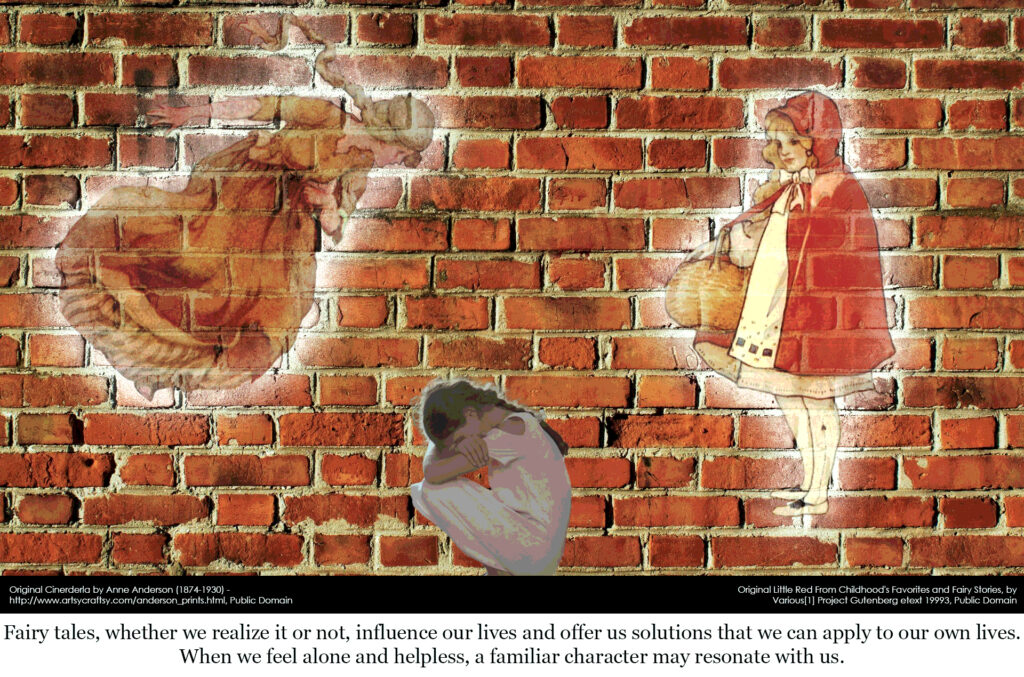
Fairy tales are more than quirky stories told to children; they can be tools as well. Ever wondered why we read or tell them in the first place? One, because fairy tales are fun. They ignite our imaginations, fly us off to lands far from our realities, and allow us to root for the little guy that has a zero percent chance of defeating his enemy (even though, of course, he is victorious in the end). Two, because fairy tales have the power to instill lessons into the subconscious of an adolescent through that fun, where there is no danger of their fears and confusion coming into the life right before their eyes. Fairy tales are able to curb children’s “oedipal impulses,” as Bruno Bettelheim calls them, satisfy a child’s need for true justice (rather than the compassion we “adults” seek), and grapple with the somewhat irrational fears they may have of being actually devoured or abandoned by their own parents.
“Fairy tales do not tell children the dragons exist. Children already know that dragons exist. Fairy talestell children the dragons can be killed.”
– G.K. Chesterton
Fairy tales may be gruesome, countercultural, and absurd, but that is precisely what makes them into not only a new way for children to understand difficult-to-grasp concepts, but also a prescriptive medicine for even adults to begin healing from violent and traumatic events or to accept their mental situations in real life. Fairy tales grab reality, force it into a blender, and pour out a bubbling magical potion which resembles nothing of our own environment or understandings of the world. Because of this reorder of what we know to be true or real, a survivor of rape or sexual assault can begin reconstructing the narrative of their own traumatic event at a safe distance through the mystical land of Snow White or Sleeping Beauty, a victim of human trafficking may find solace in the familiarity of tales like Rapunzel or Beauty and the Beast, and an individual with paranoia, schizophrenia, or general anxiety disorder can learn they are not alone in their state-of-mind through tales such as Hansel and Gretel, Bluebeard, or even The Red Shoes. There are endless possibilities of how we can connect to ourselves, to our own identities, through the thousands of traditional fairy tales that exist, it is simply a matter of picking up and reading these tales or prescribing them to another as a form of therapy.
Now Imagine…
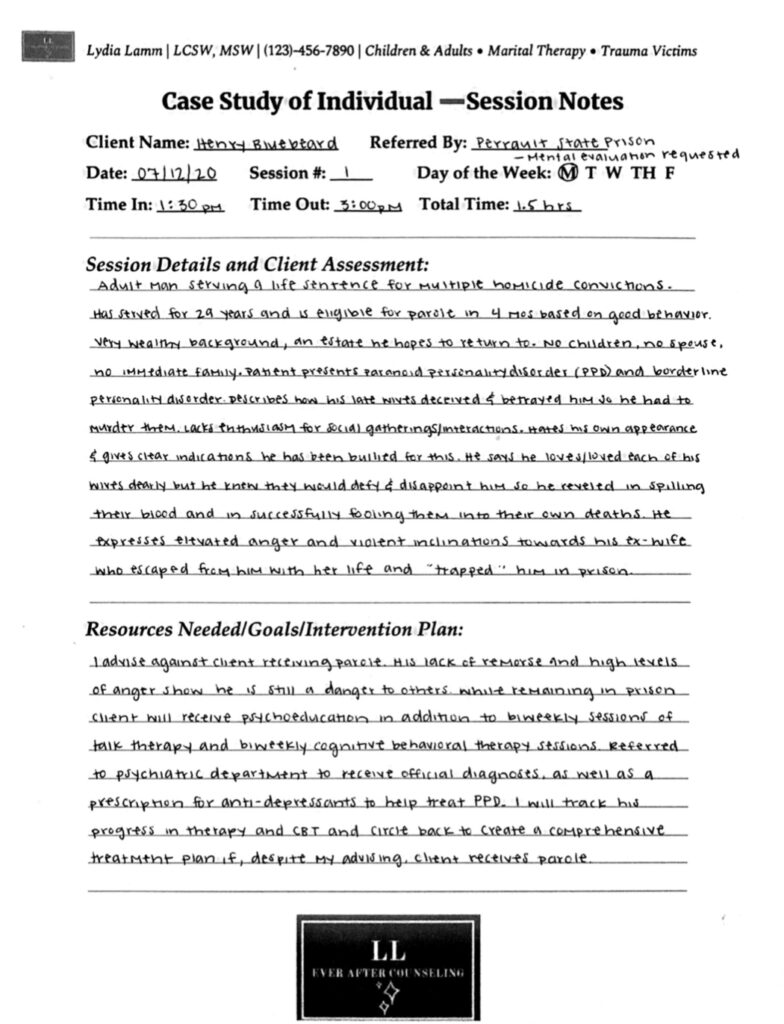
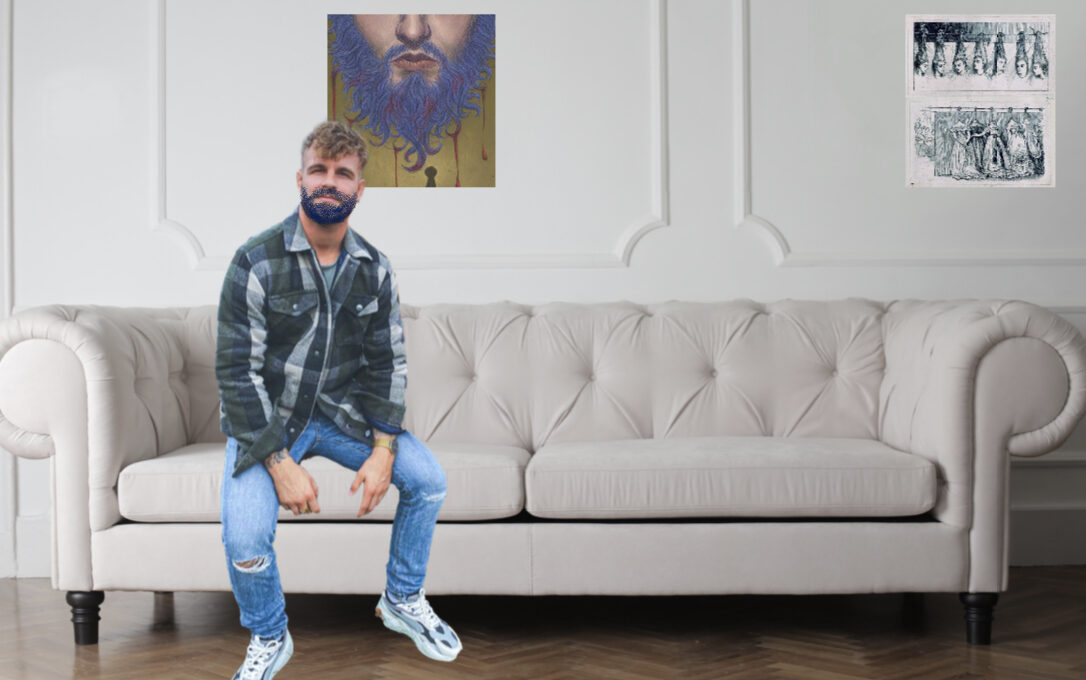
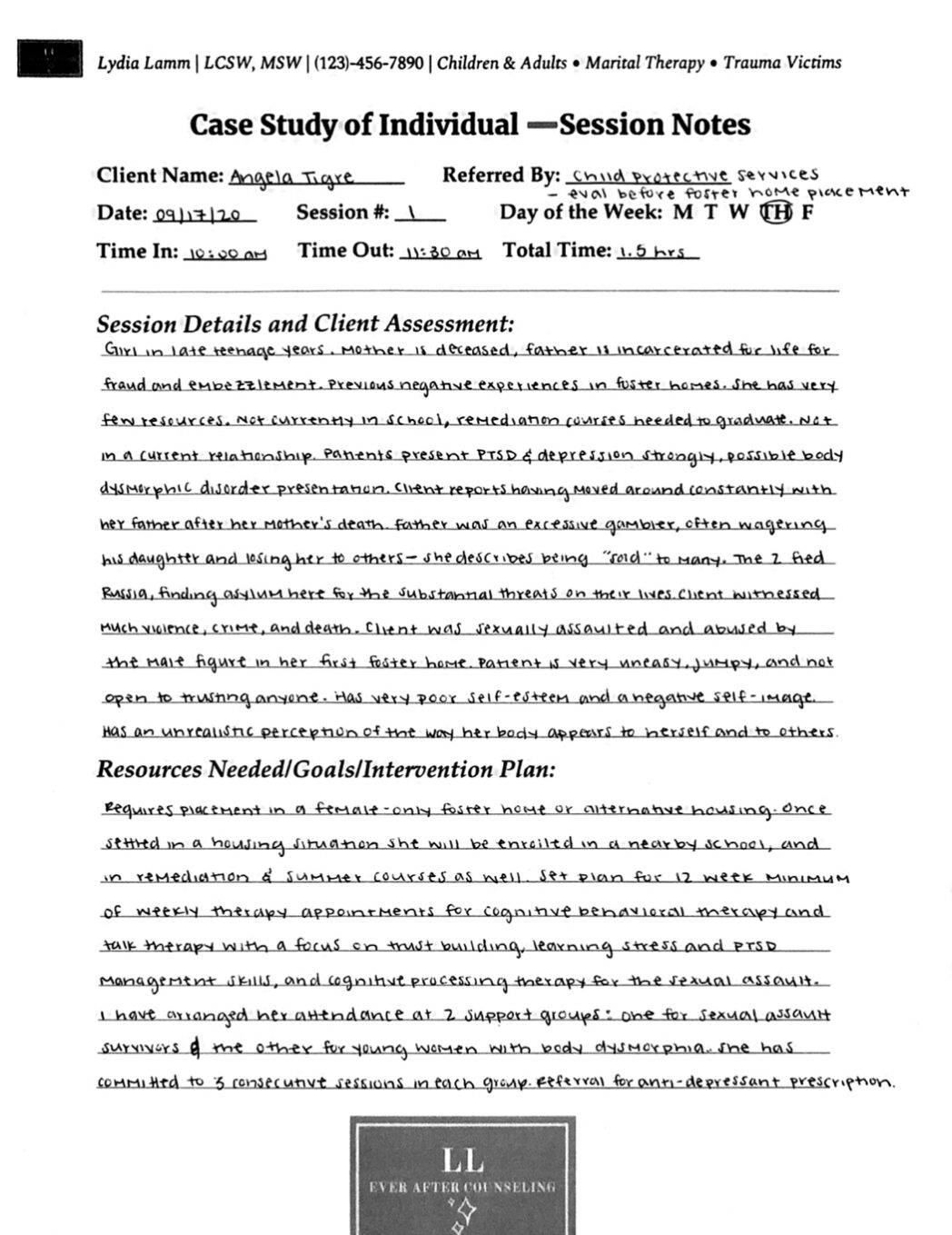
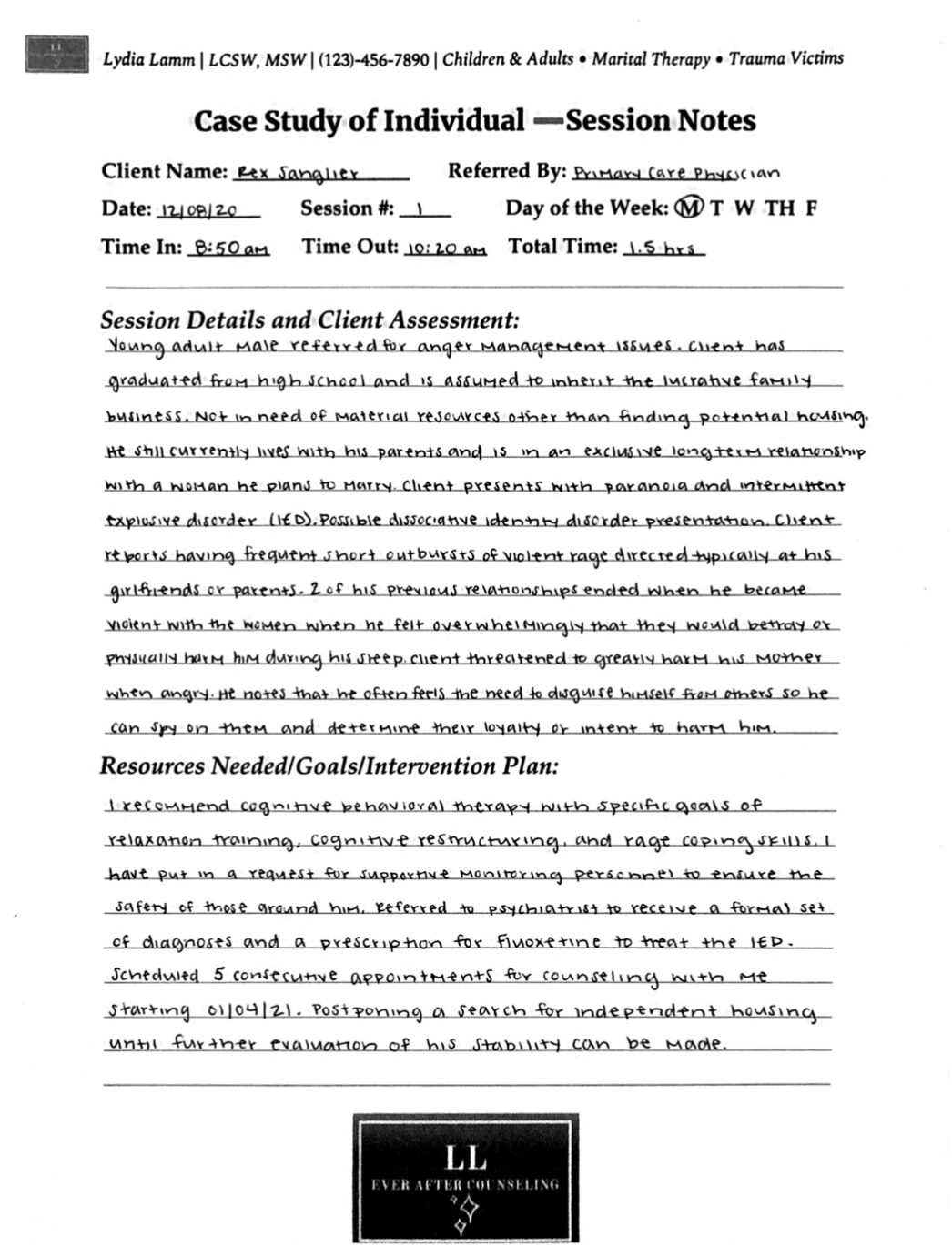
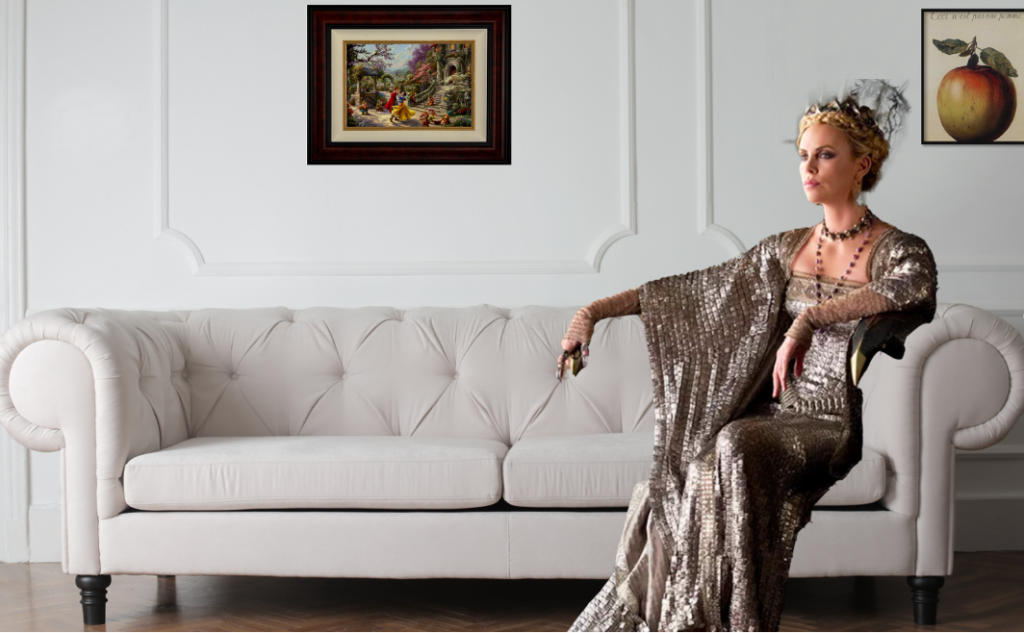
Welcome to Ever After Counseling. Take a moment and imagine that fairy tales did in fact consist of real people and that the events which unfold within them have taken place in our world today. Fairy tale characters would obviously need extensive psychiatric evaluations and treatment plans for the trauma they have either experienced, inflicted, or both. The following is a representation of four fairy tale characters who are referred to a social worker by various entities and of how they are evaluated, diagnosed, and potentially treated in light of their mental states, material and emotional resources, and the physical actions they have committed in their conditions.
(PLEASE disregard my mediocre photoshop skills, the images are for comedic effect.)
Case Number 1: The Character of Bluebeard (Perrault’s Version)
Case Number 2: The Maiden from Tiger’s Bride (by Angela Carter)
Case Number 3: The Pig King (by Straparola)
Case Number 4: The Queen from Snow White/Snow, Glass, Apples (by Neil Gaiman)
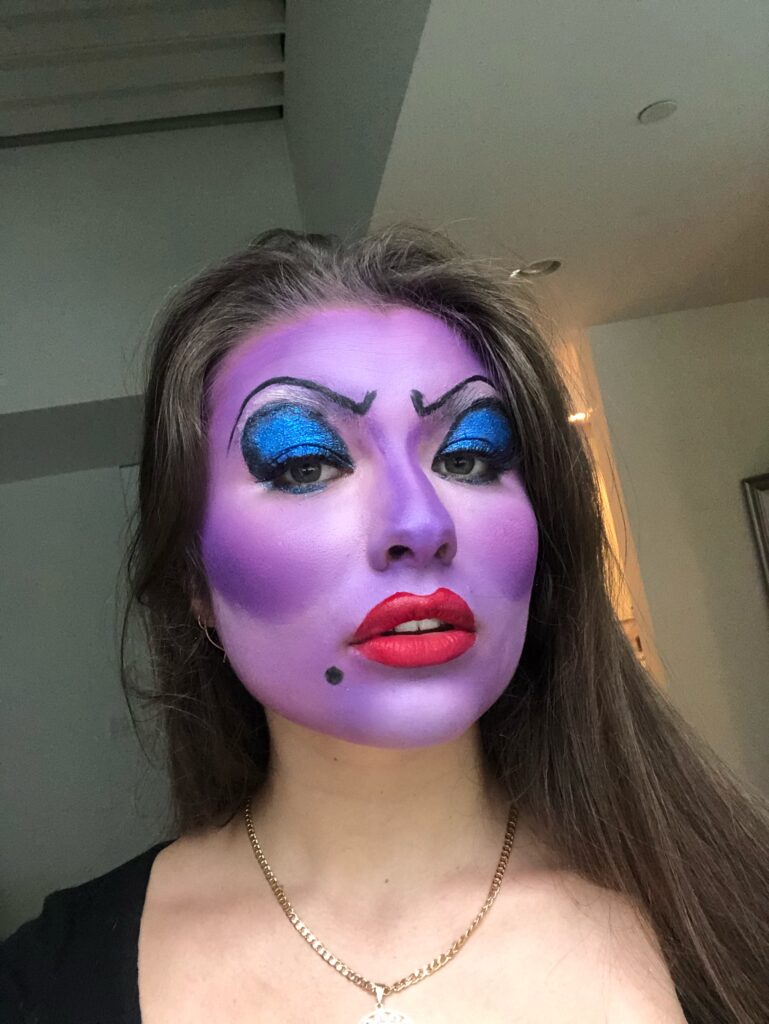
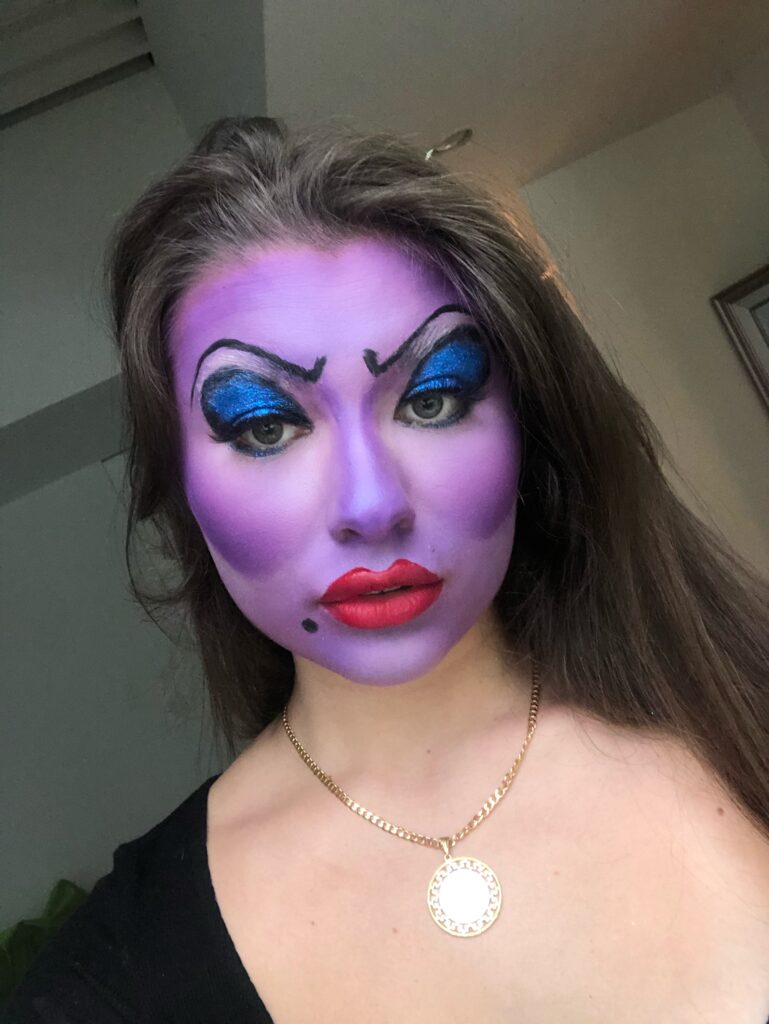
I’ve always been super passionate about makeup. To me, it’s an art and a way of expression that you get to wear on your face! For this project, I wanted to put my makeup skills to the test and create several looks inspired by different fairy tales. This definitely presented some challenges as I don’t have much practice with this style of makeup, but I had a lot of fun doing it!
I was first inspired to take on this project after learning that Ursula of Disney’s “The Little Mermaid” was actually inspired by a drag queen. I have always been impressed with drag makeup and fascinated by drag culture. After doing some research on the history and importance of drag, I decided to pay homage to Ursula and Divine, her inspiration, through a drag-inspired makeup look.
To create the purple base, I used my Urban Decay Naked Skin Concealer in the shade “Lavender” (which was sadly discontinued). I then set it and contoured with my Juvia’s Place Zulu palette (a high-quality, black-owned company I am obsessed with). I had never done a drag look, but I had so much fun creating this. It took 2-3 hours from beginning to end due to the precision (and having to make my entire face purple). This was by far my favorite look of this project, and easily one of my favorites of all time.
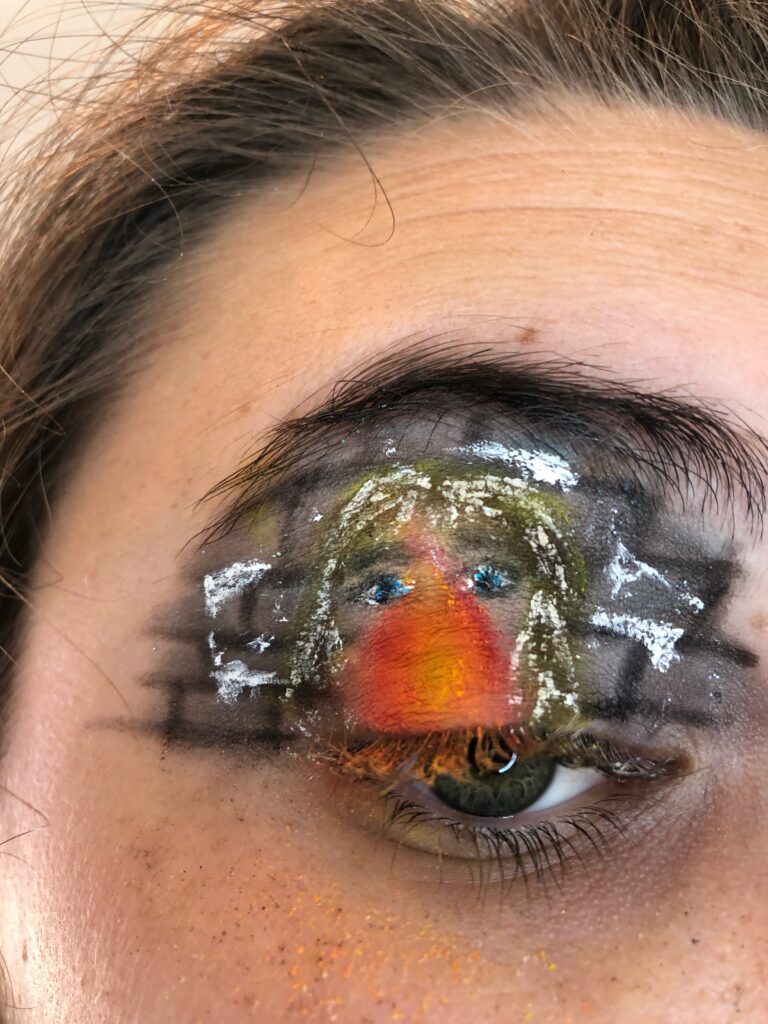
The next look I did was inspired by Hans Christian Andersen’s “The Little Match Girl.” I don’t have a very steady hand, so creating this much detail on such a small area was extremely difficult for me. My goal was to depict the girl looking at the flame from her match in front of a snowy brick wall. Overall I’m fairly satisfied with how this one turned out given that it does not play to my strengths.
For this look, I created the brick background using my Urban Decay Naked Smoky palette (discontinued). I created the snow and the base for the girl using my NYX White Liquid Liner. Lastly, I filled in the details with shades from my Violet Voss Bright Vibes palette. I think the concept I was going for comes through alright, although there is certainly room for improvement.
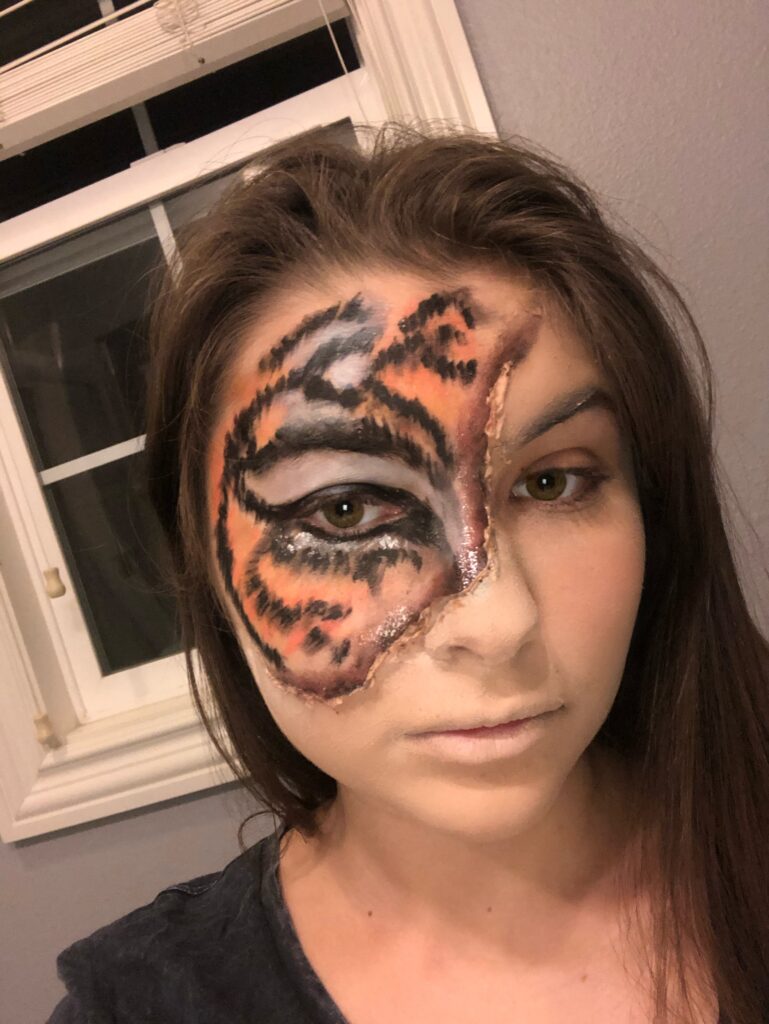
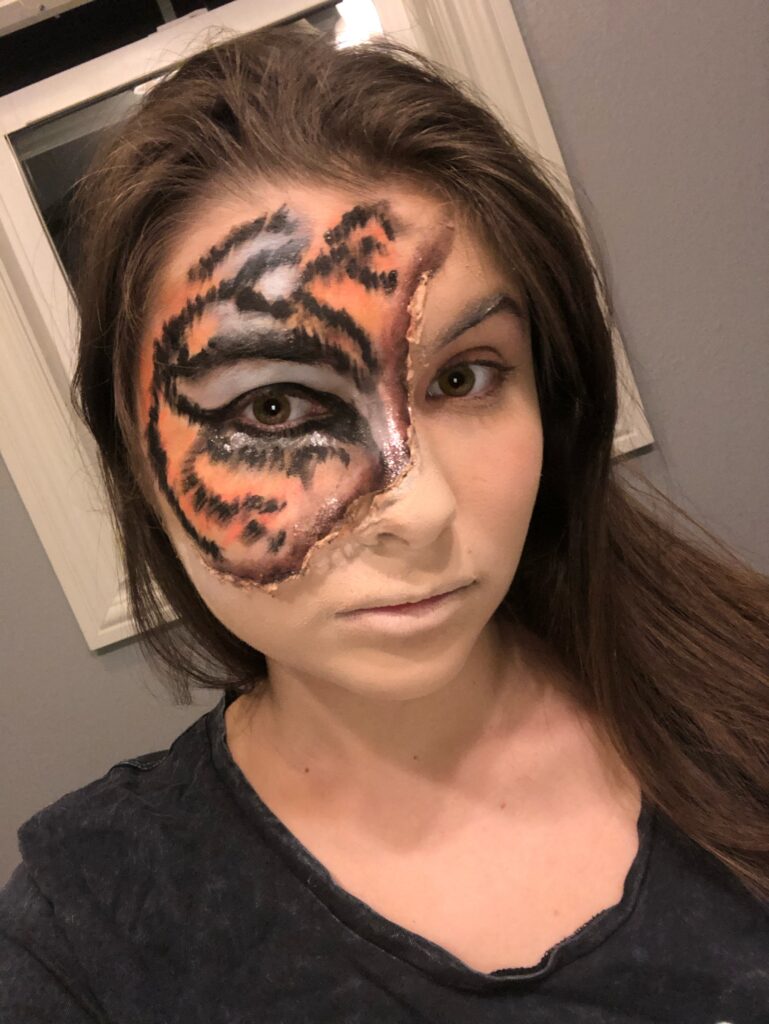
The next look I created was inspired by Angela Carter’s “The Tiger’s Bride.” I was inspired by her description of the mask that the tiger wore and the way that he removes it and reveals himself. I wanted to create a split look that showed both sides of the tiger’s persona. Carter described the mask as looking too perfect to be human, so I tried to create a completely smooth and blank slate.
To create the orange base, I used the Lime Crime Venus Neon palette (discontinued) and did the stripes with my Pat McGrath Labs Double-Sided Eyeliner (discontinued, but another wonderful black-owned brand worth checking out). To create the peeling effect, I used Ben Nye Liquid Latex, which I have only used a handful of times. It is definitely a little tricky to work with due to the irregular peeling and the knowledge that if it gets on your eyebrows/eyelashes it will rip them off. Fortunately, I did not run into any issues with this look. I was very happy with the finished product and felt like it demonstrated the duality of the tiger.
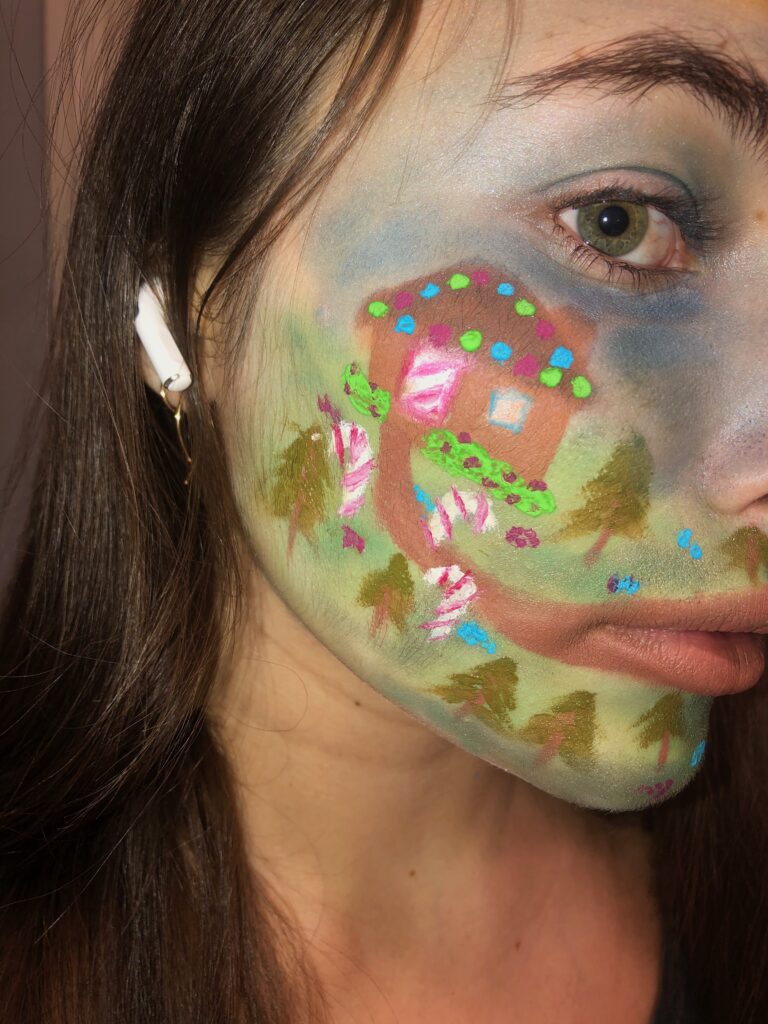
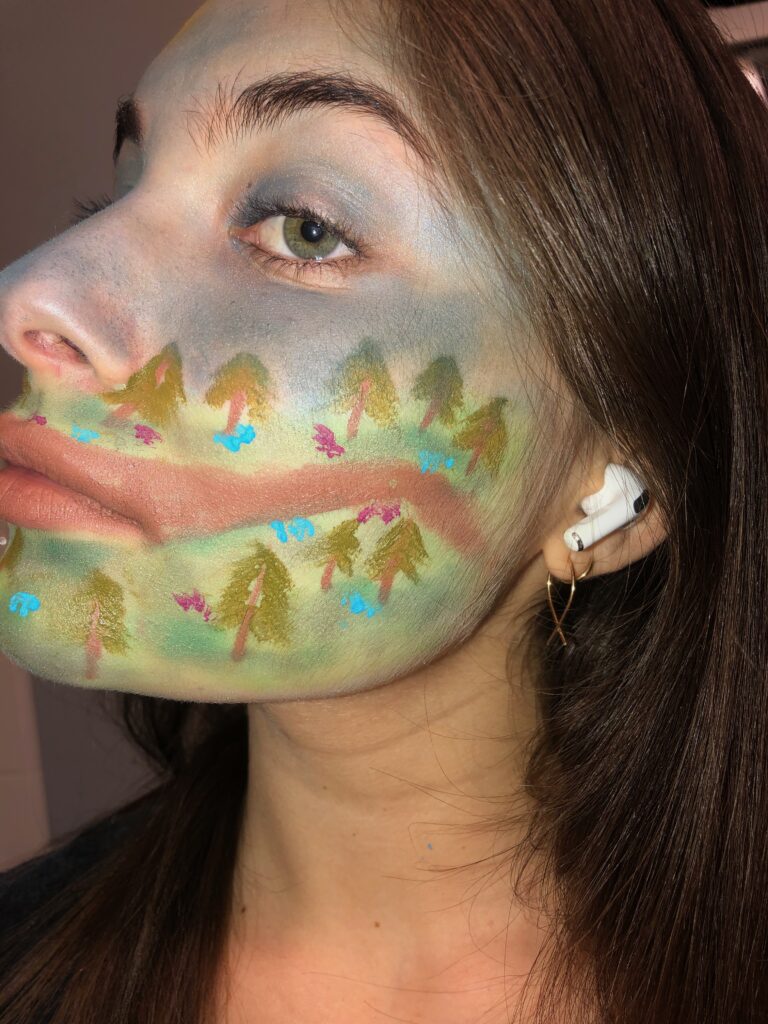
This next look was an absolute failure, but I felt like I had to include it with the others. I wanted to create a nature scene inspired by “Hansel and Gretel” and the candy house, but the look was not as cohesive and detailed as I hoped. I think I definitely bit off more than I could chew with this concept, but I tried not to get too discouraged.
The base of this look was done with the Urban Decay Naked Skin Color Correcting Fluid in the color “Green.” I then added detail primarily using the Anastasia Beverly Hills Lip Palette Vol. 1 (discontinued) and the Smashbox Cover Shot palette in “Bold.” Although I tried to create a solid base, the colors (especially the blue for the sky) went on very grey and patchy. I also didn’t have the best supplies to create something as detailed as I would have liked. I couldn’t wait to take this look off, especially since my face was covered in lipstick!
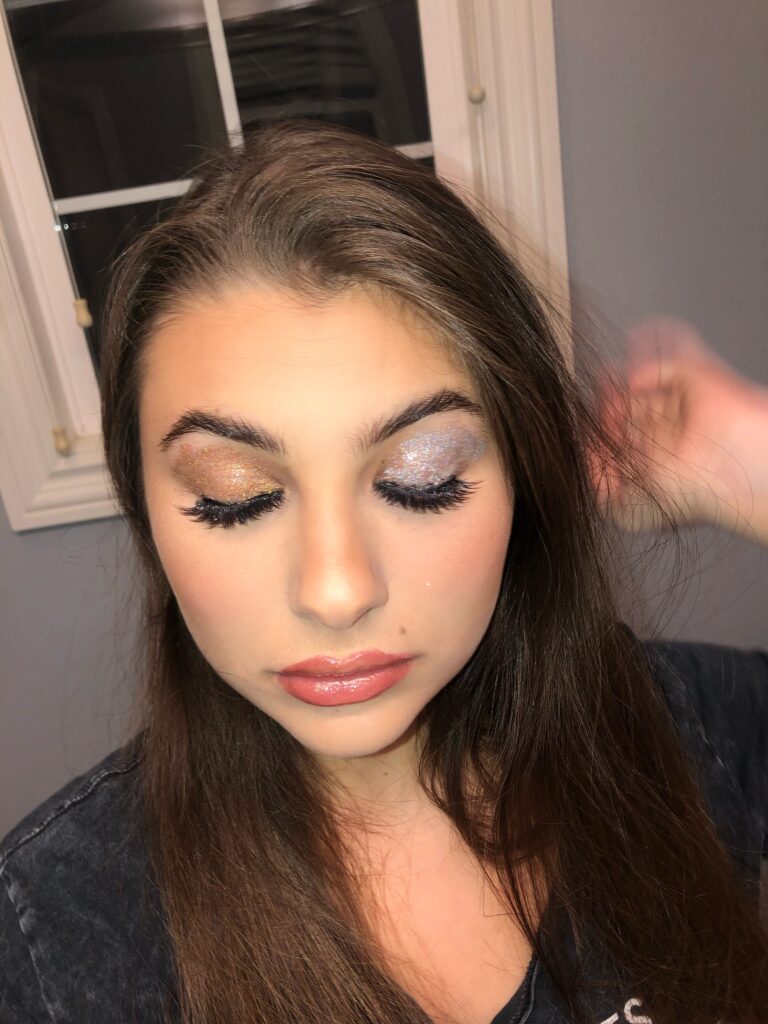
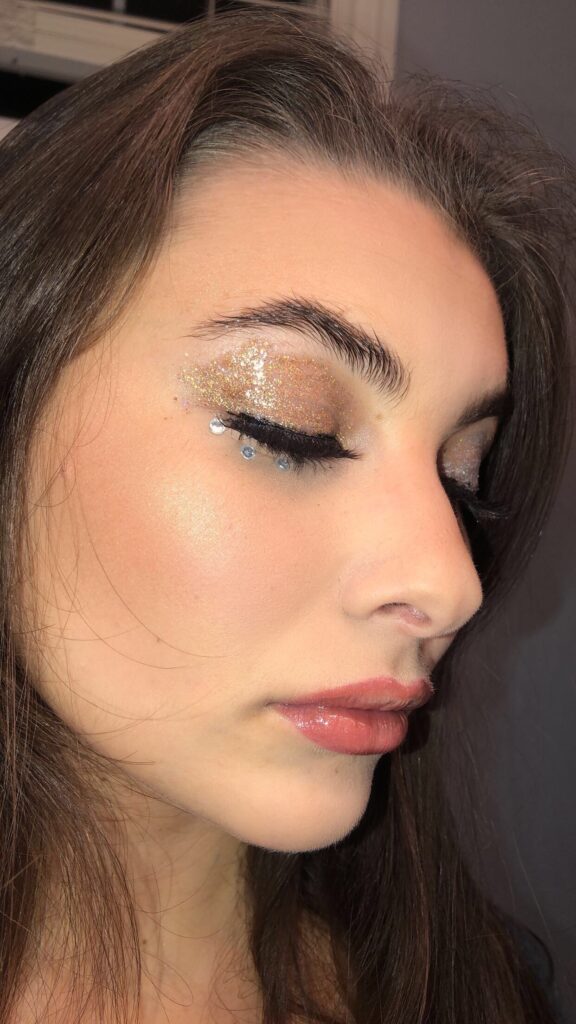
Following the catastrophe of the “Hansel and Gretel” look, I wanted to do something a little less detailed. For this look, I was inspired by the dress in Charles Perrault’s “Cinderella,” which is described as being made of the finest silver and gold, paired with beautiful jewels. Inspired by the shine of this dress, I created a glittery, glossy, glamorous look that reflects the colors and essence of Cinderella’s dress.
For this look, I did my regular face routine, but I added some extra highlighter from my Anastasia Beverly Hills Glow Kit in the shade “Sun Dipped.” For the gold eye, I used a pressed glitter from the Pinky Rose Cosmetics Hypnotize II palette and, for the silver eye, I used an Obsessive Compulsive Cosmetics loose glitter (discontinued). To add extra shine, I tried something new and applied Milk Makeup Eye Vinyl (discontinued) over the glitter. I then placed rhinestones of the opposite color (I buy mine at Party City, I wouldn’t suggest that as they probably aren’t eye-safe) under my eyes. For a little extra glow I finished the look with my Fenty Beauty Gloss Bomb in the shade “Fenty Glow” (this is the most universally flattering lip gloss, also a luxurious black-owned brand with the most inclusive shade range on the market). I absolutely loved this look and I would probably wear it out for another occasion. I had a lot of fun experimenting with the eye gloss and I thought the effect was super cool.
More than anything, this project taught me patience. These looks took anywhere from 1-3 hours to complete and they forced me to put my makeup skills to the test. I loved being able to take concepts from the tales and bring them to life through cosmetics. This project allowed me to break out of my comfort zone and get creative during an otherwise stressful time, and I’m proud of the results.
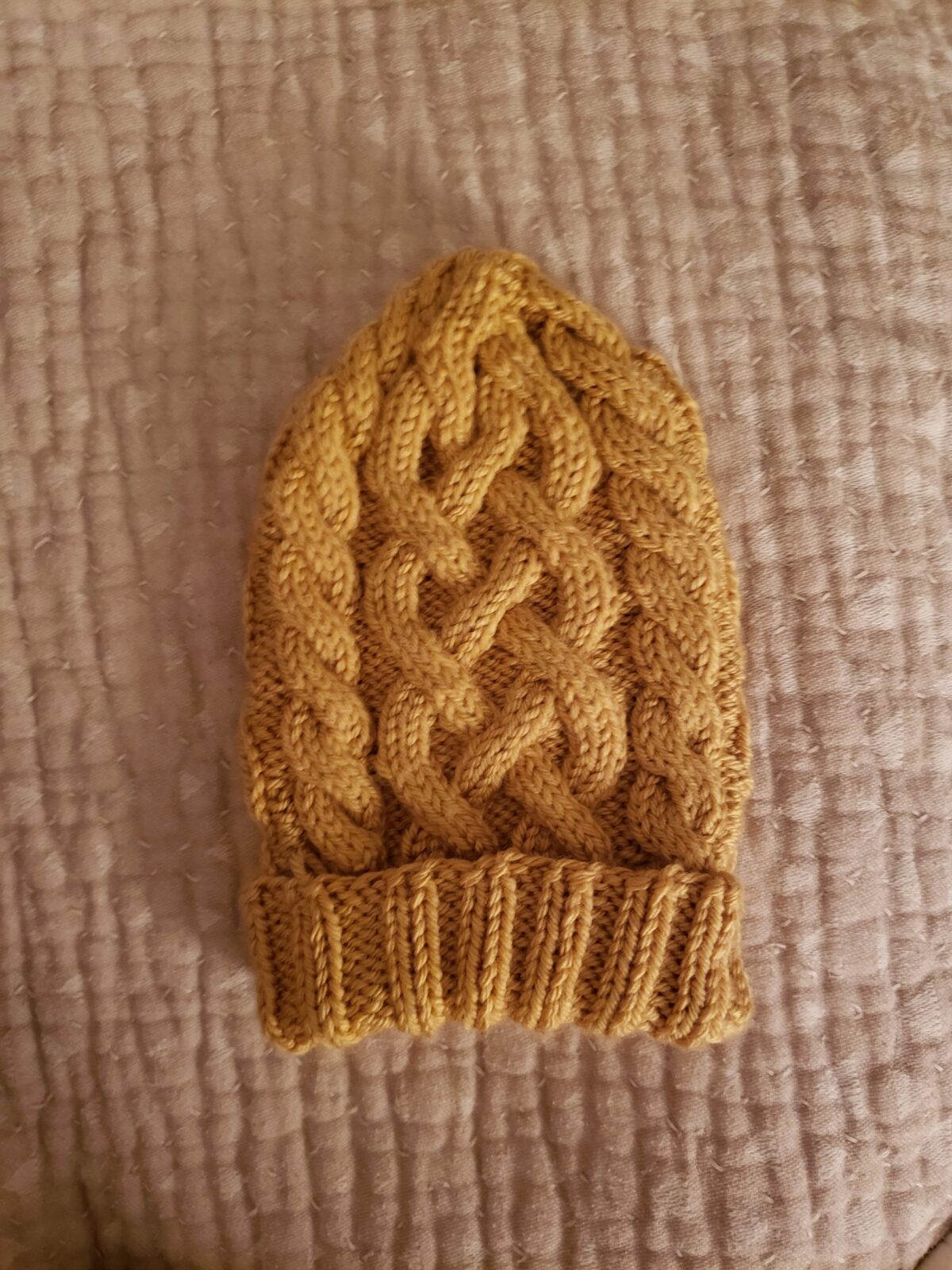
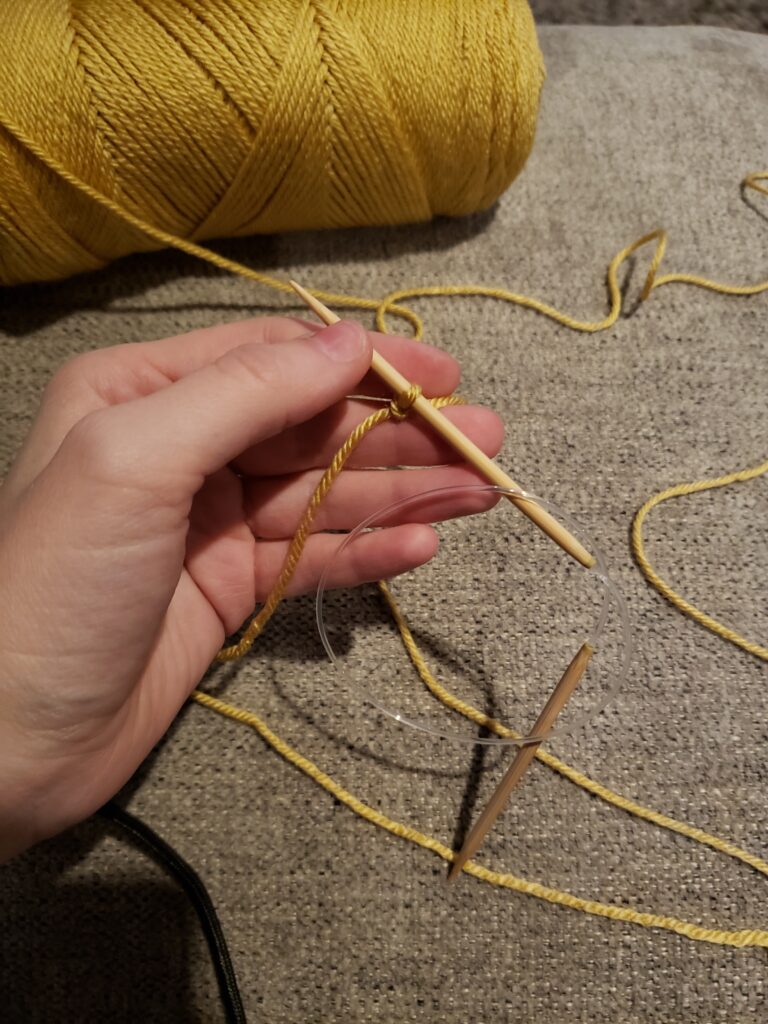
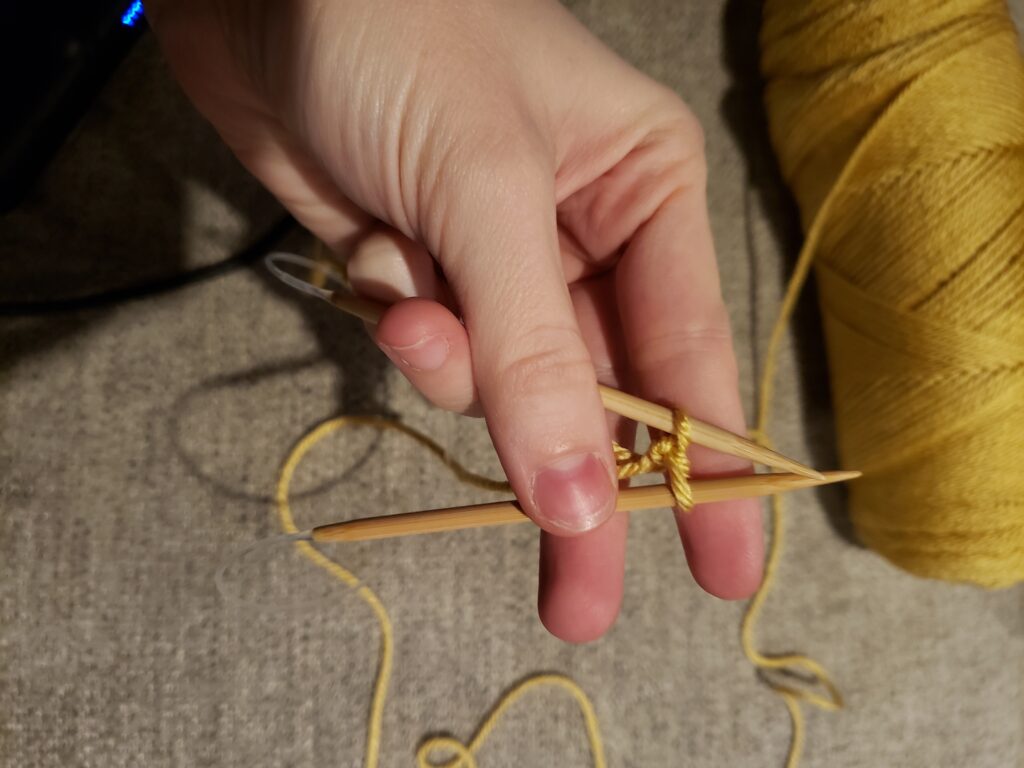
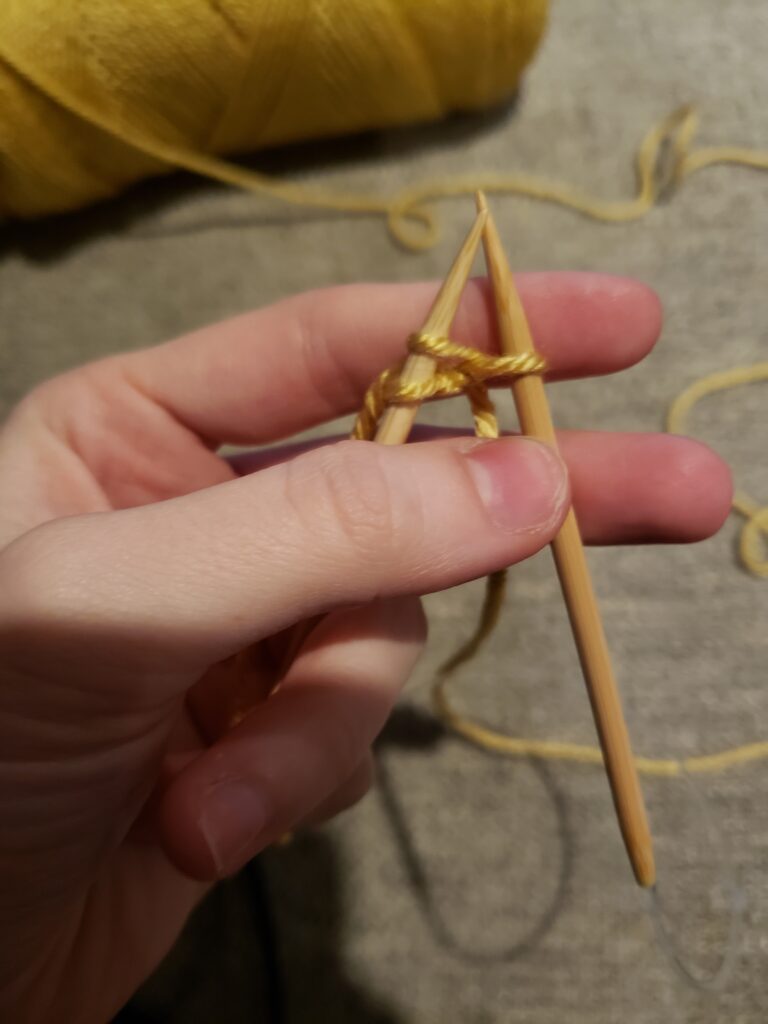
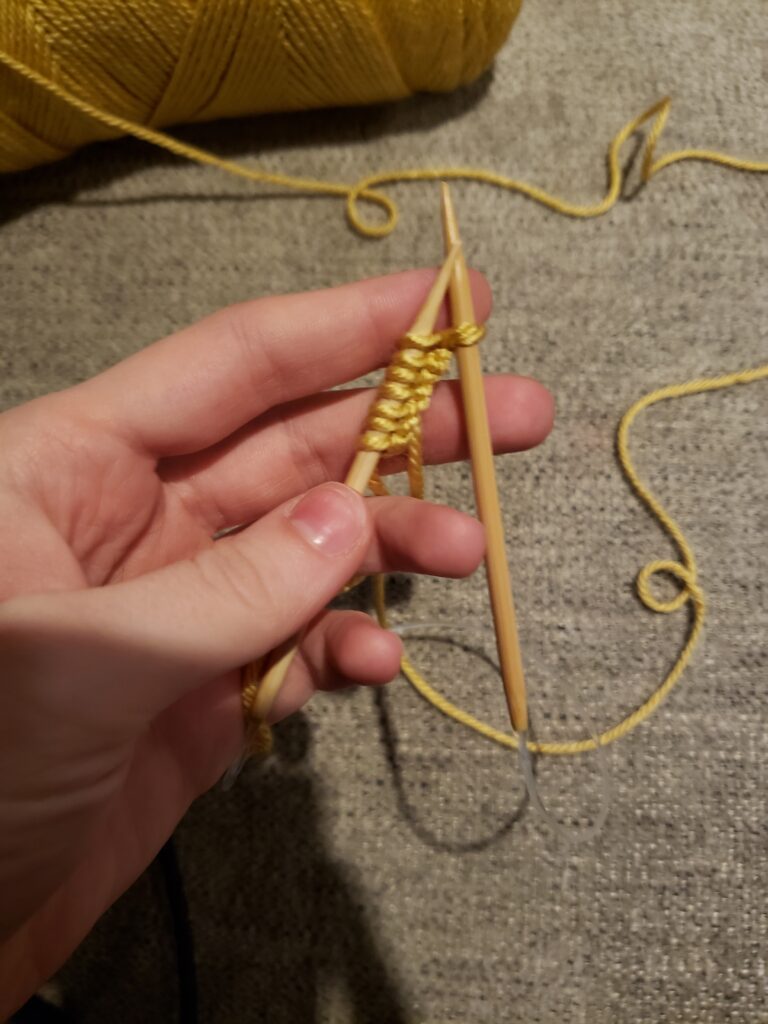
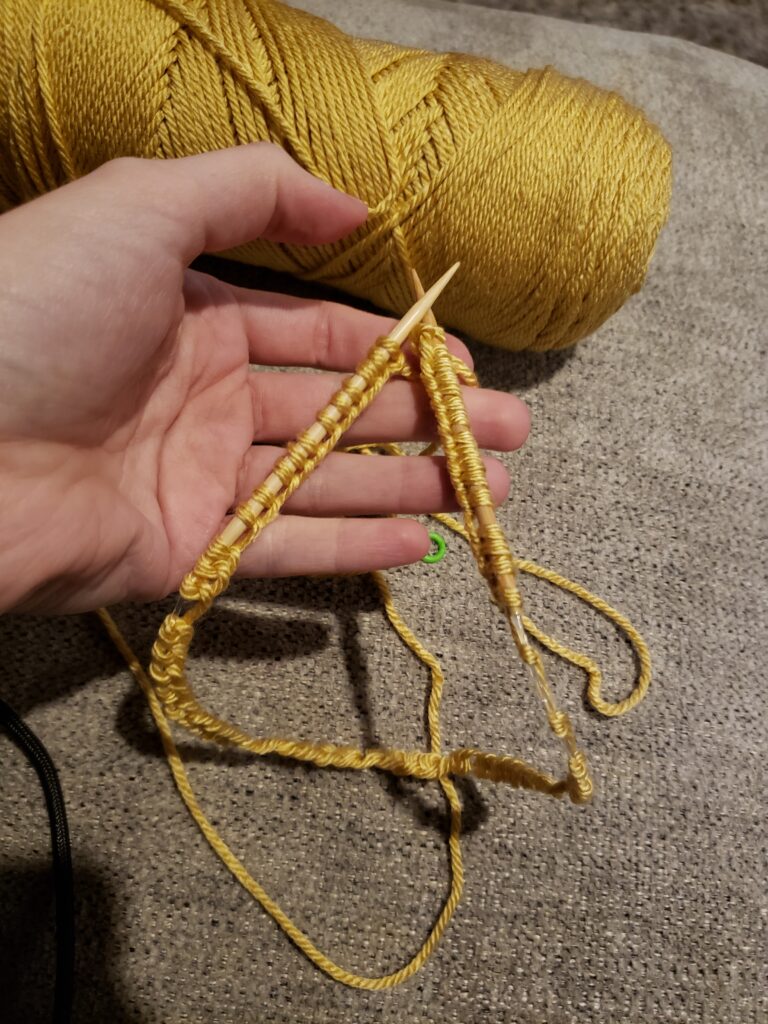
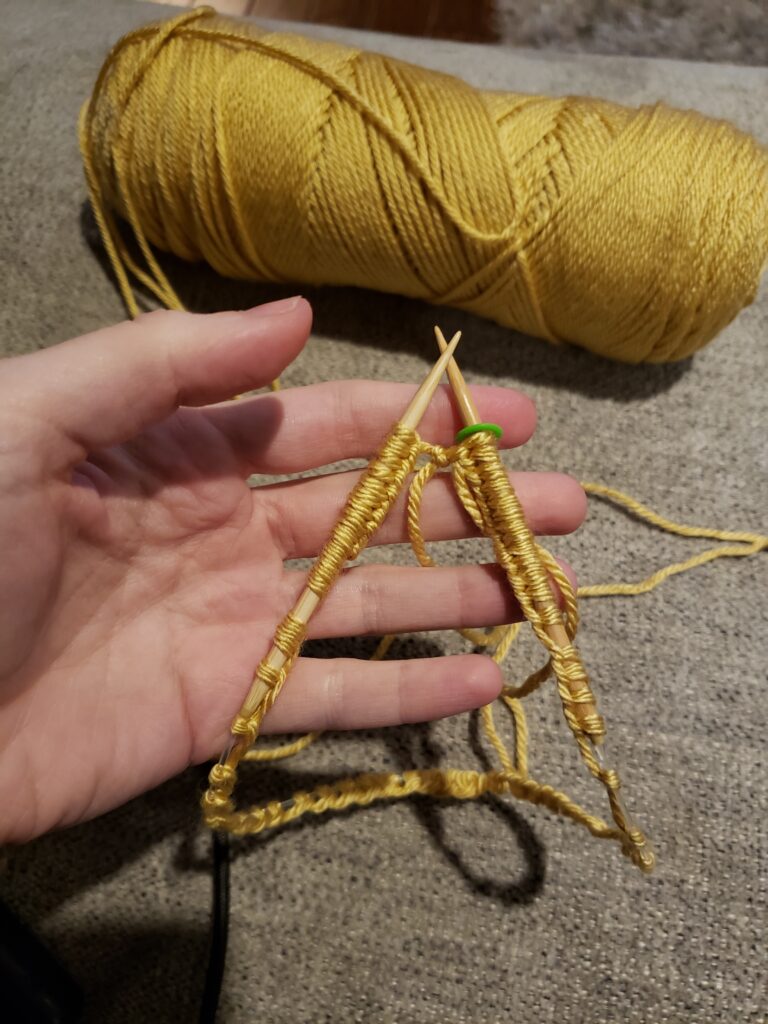
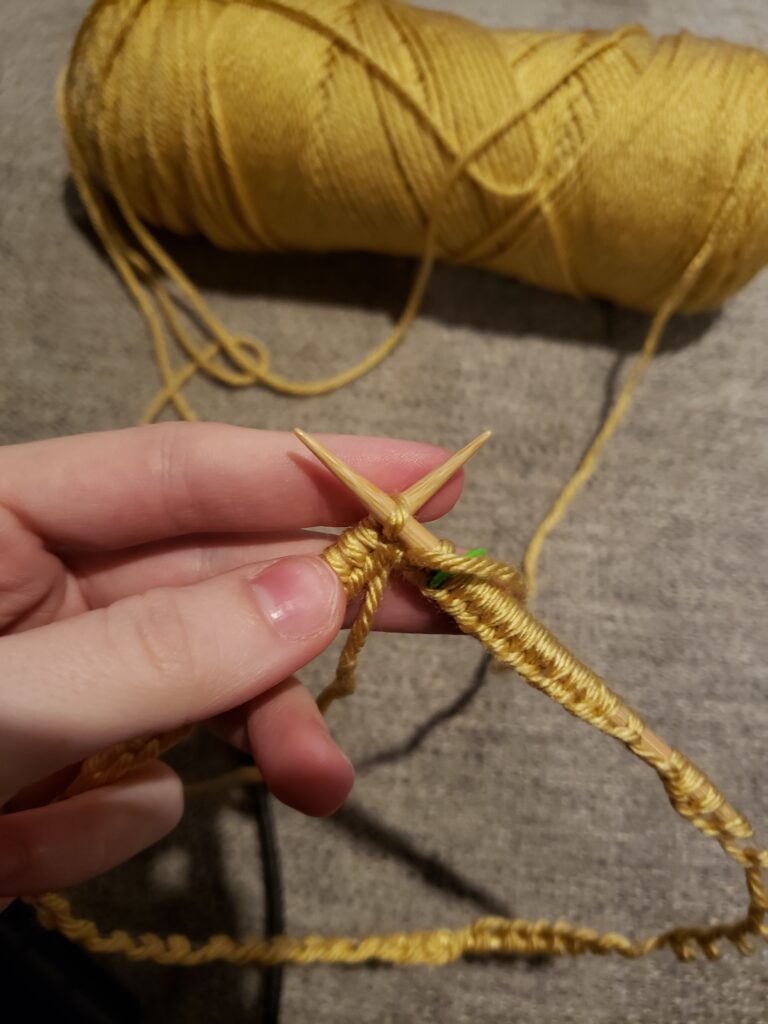
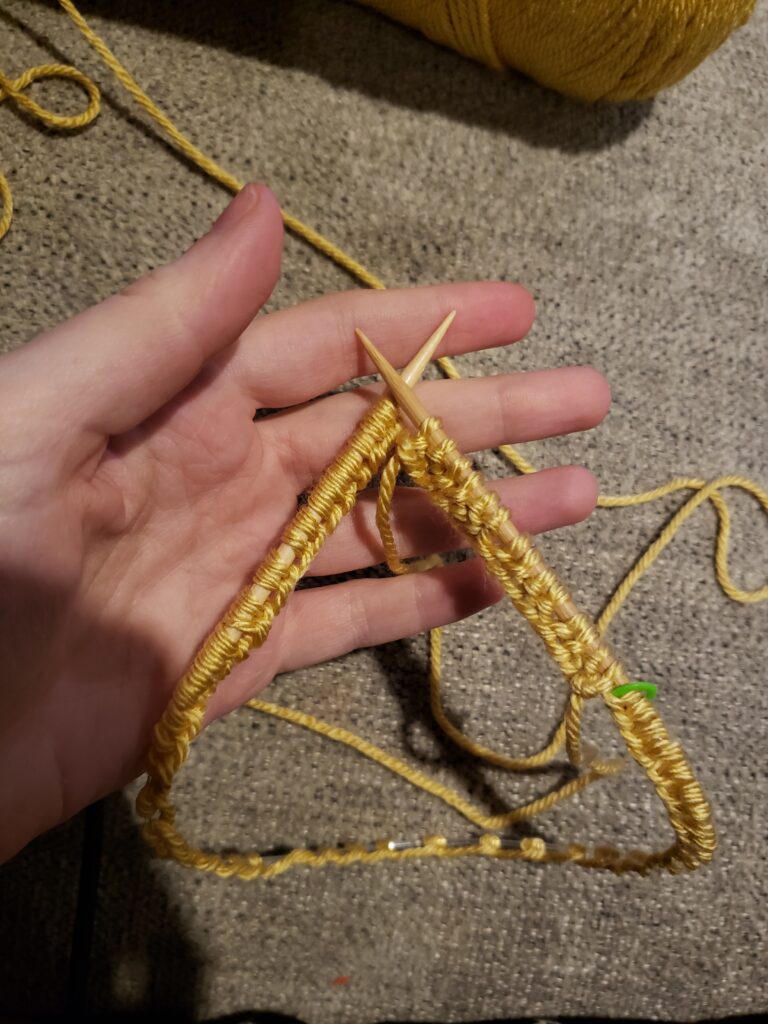
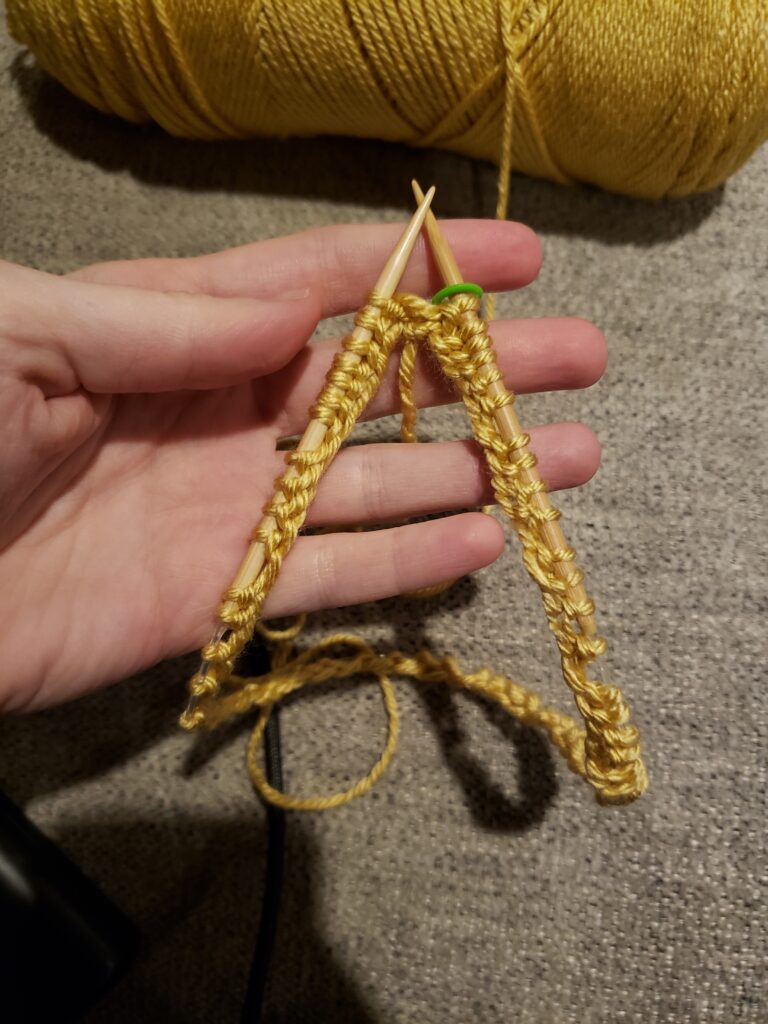
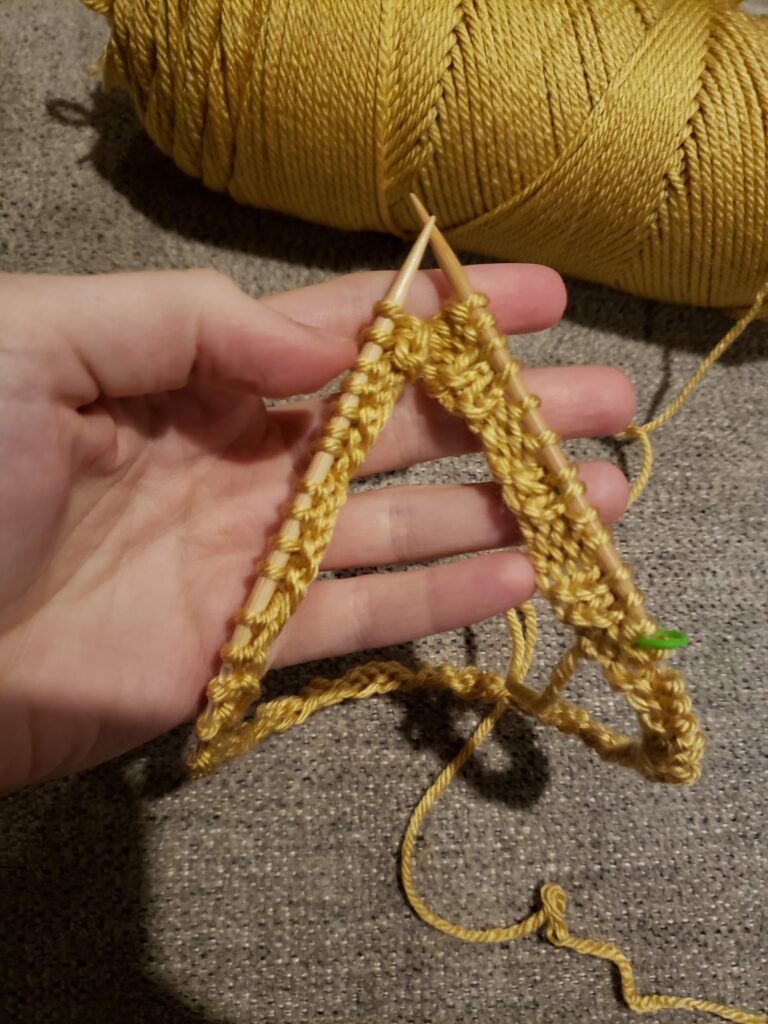
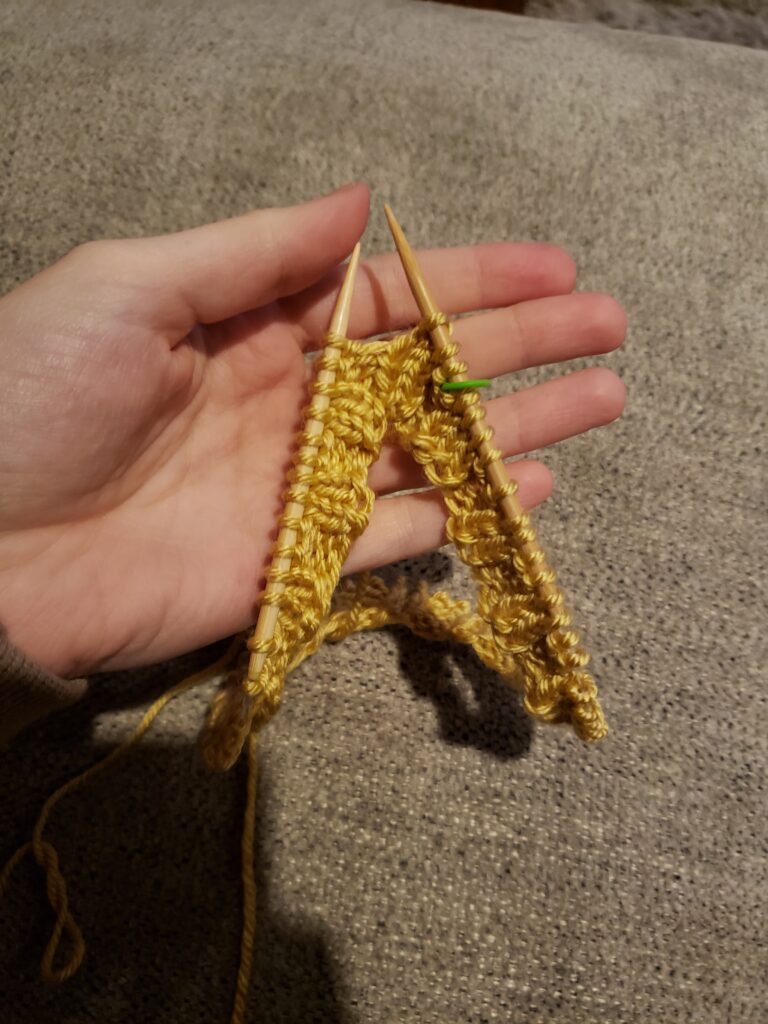
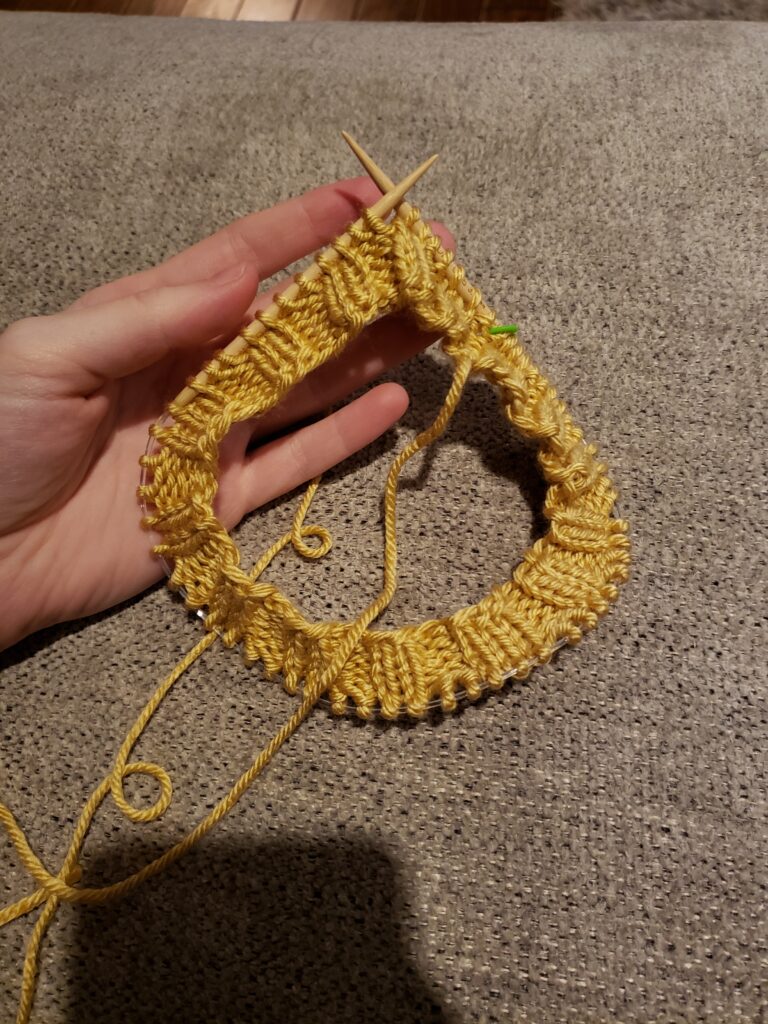
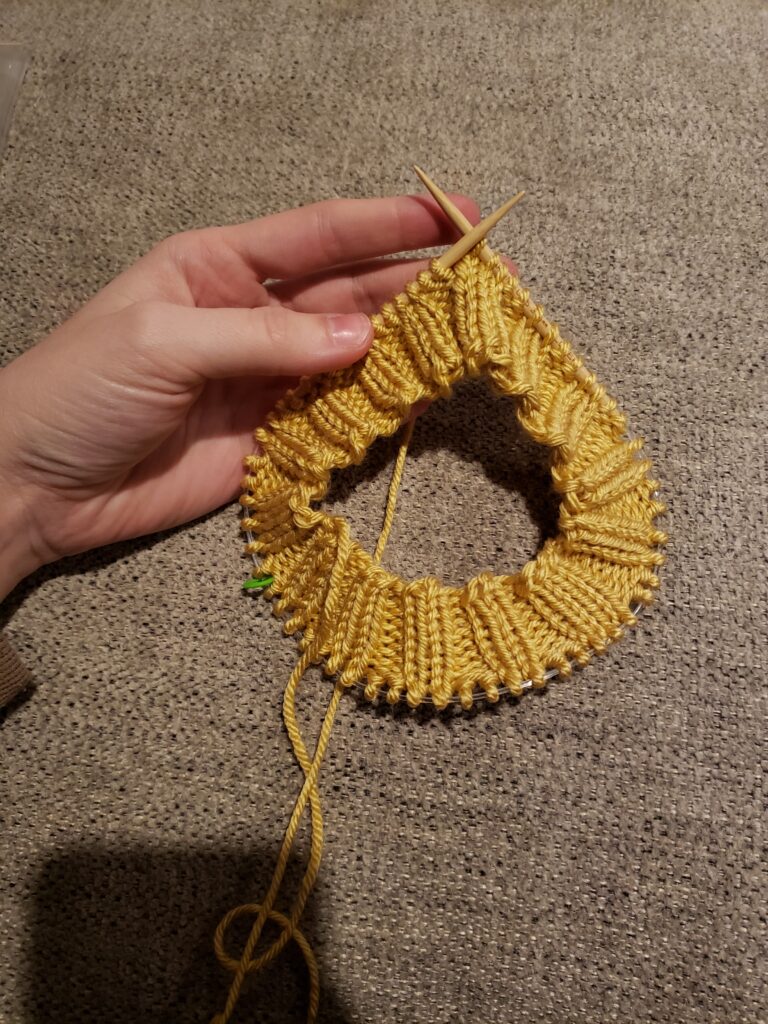
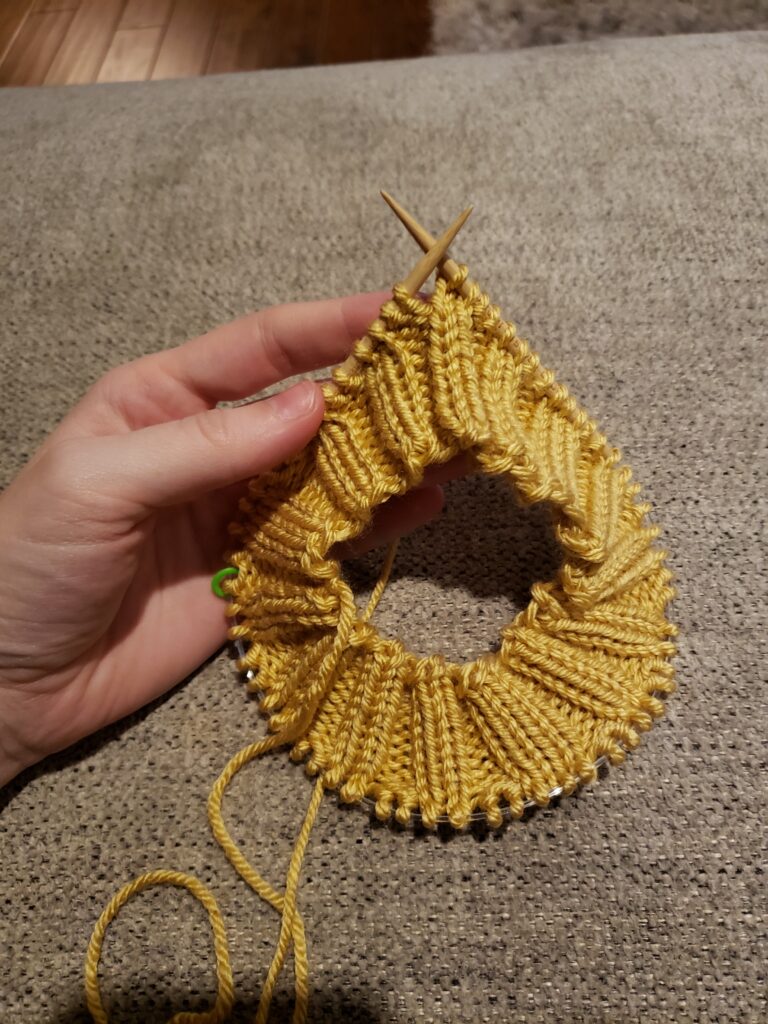
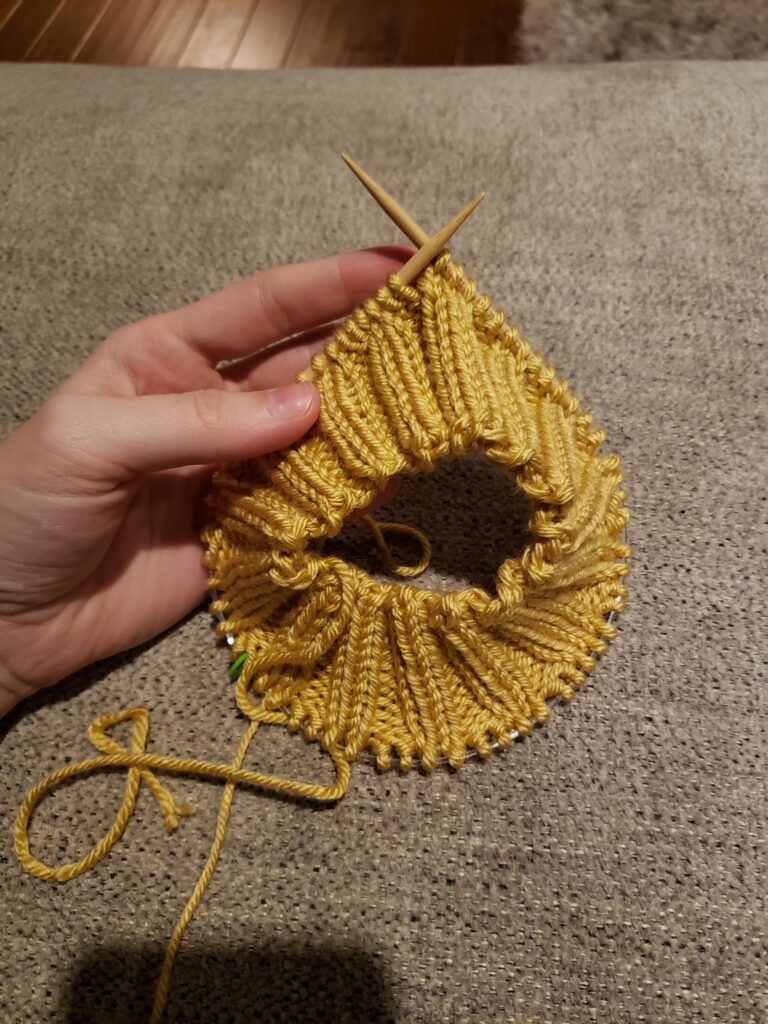
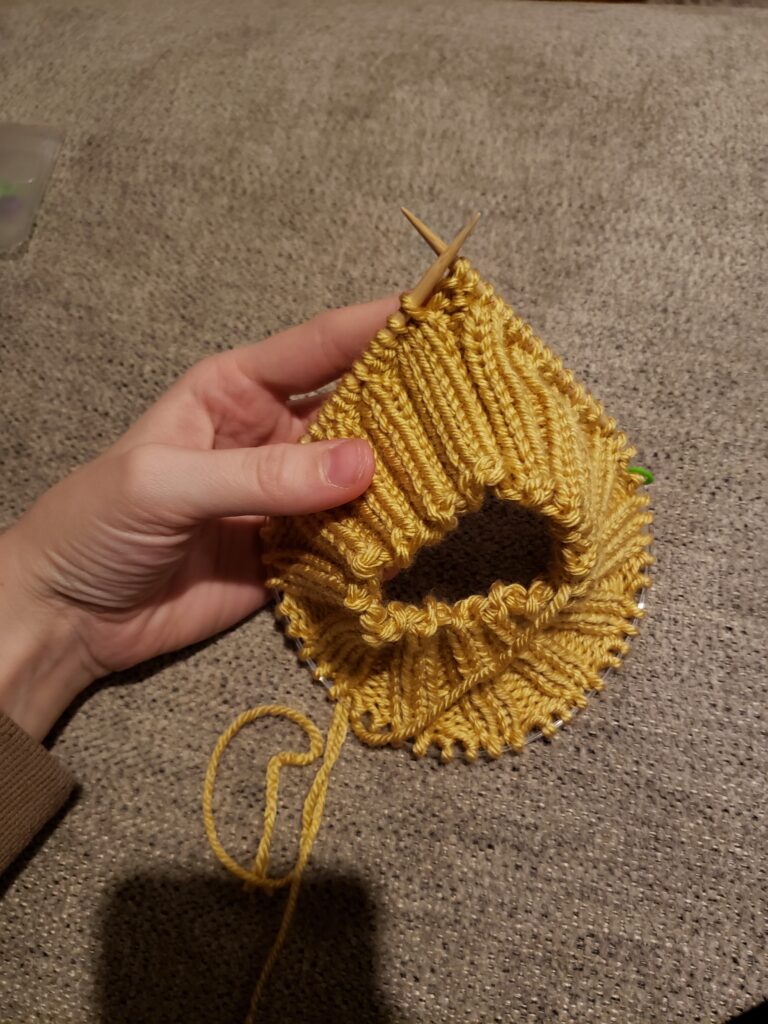
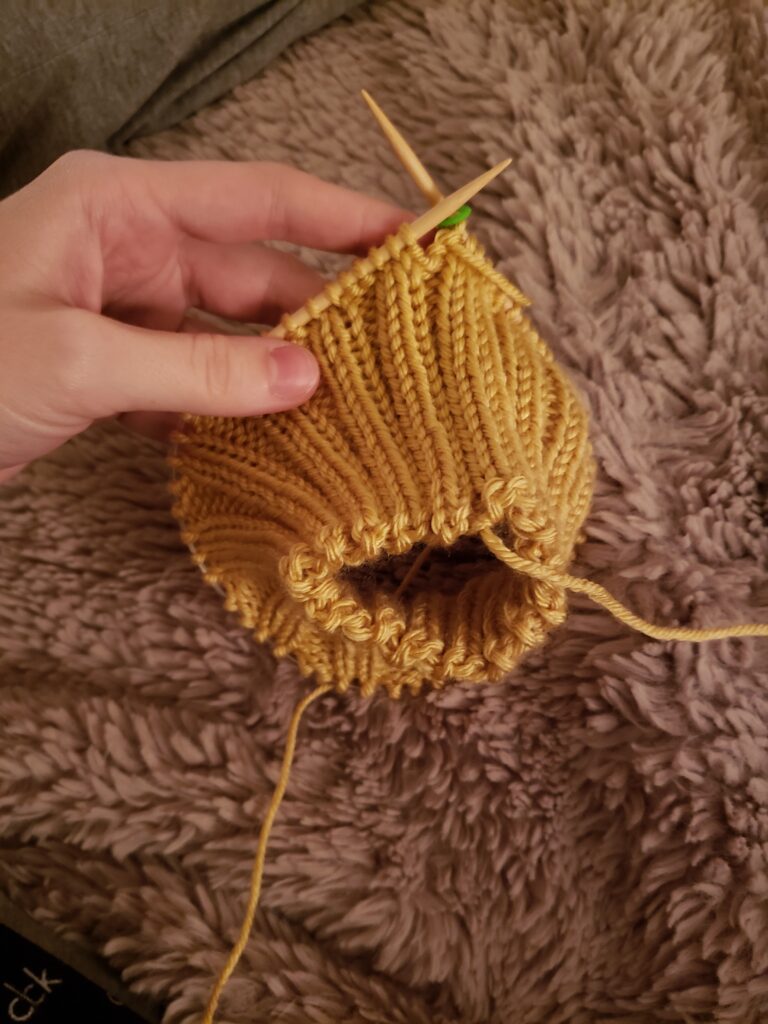
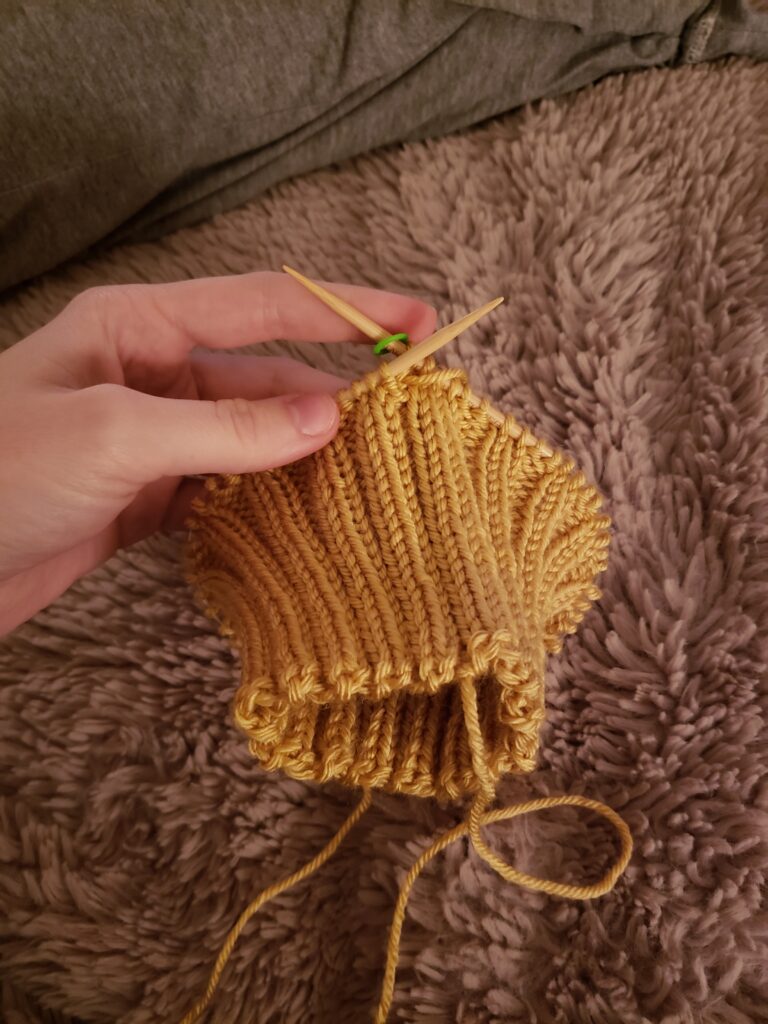
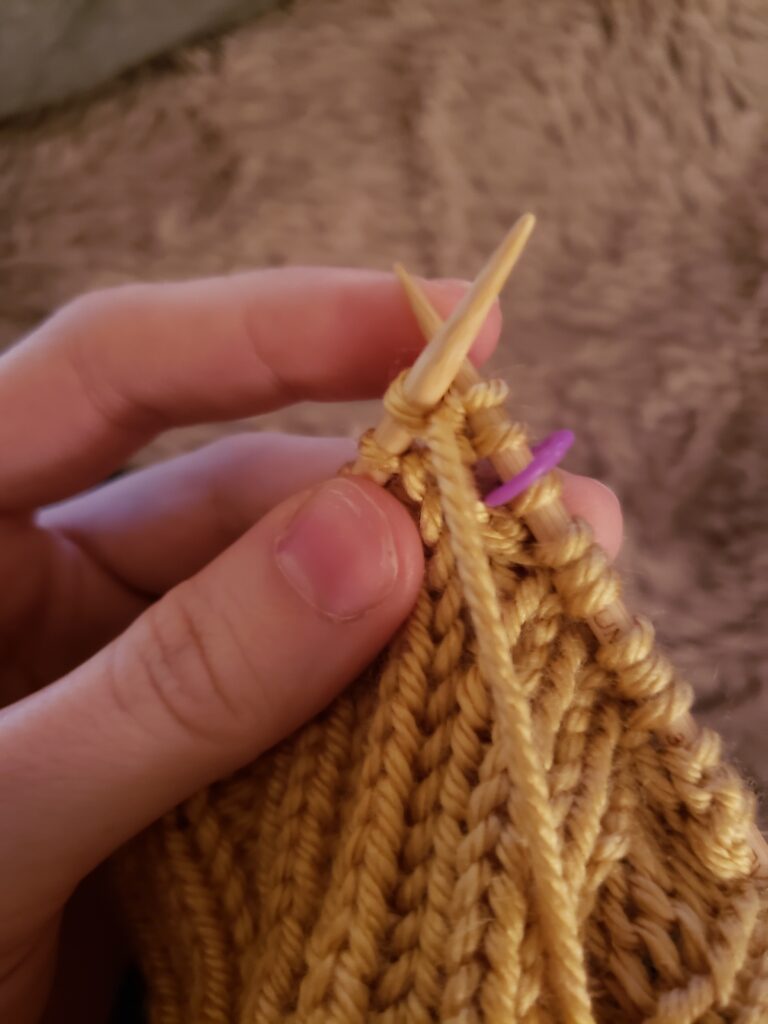
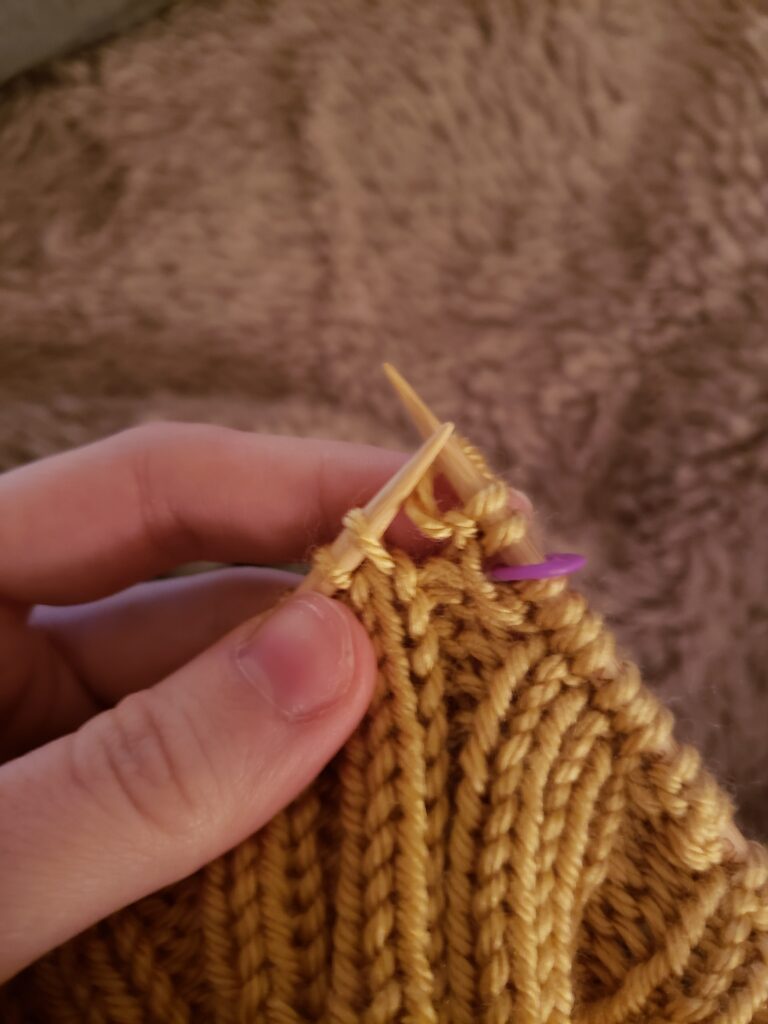
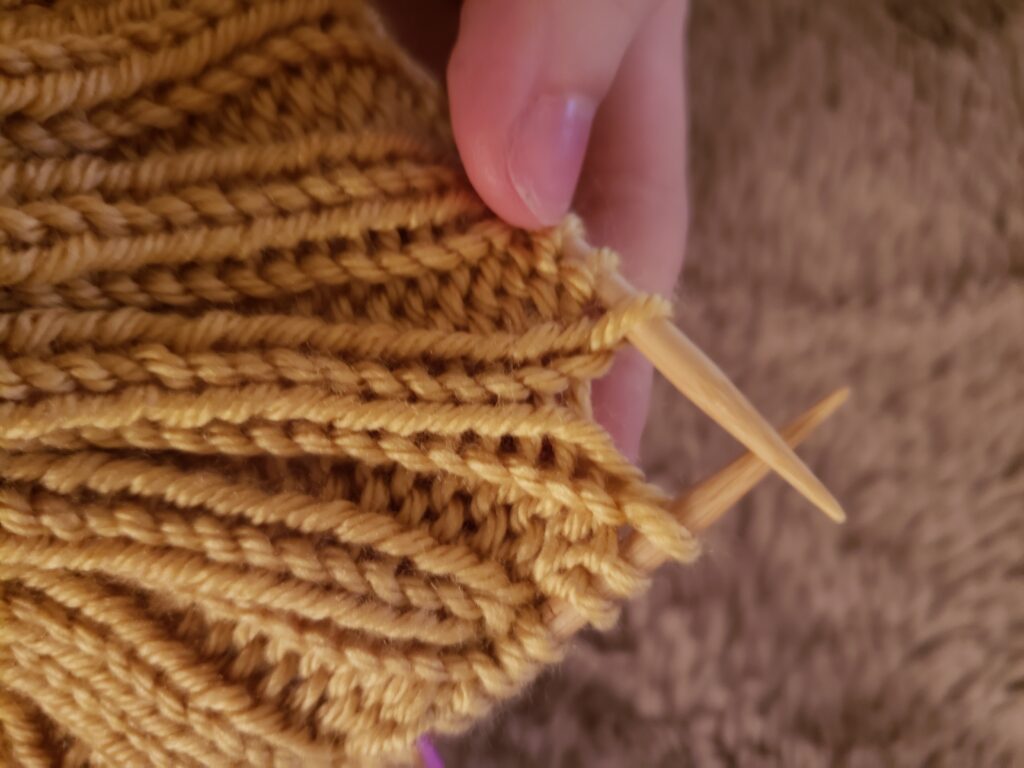
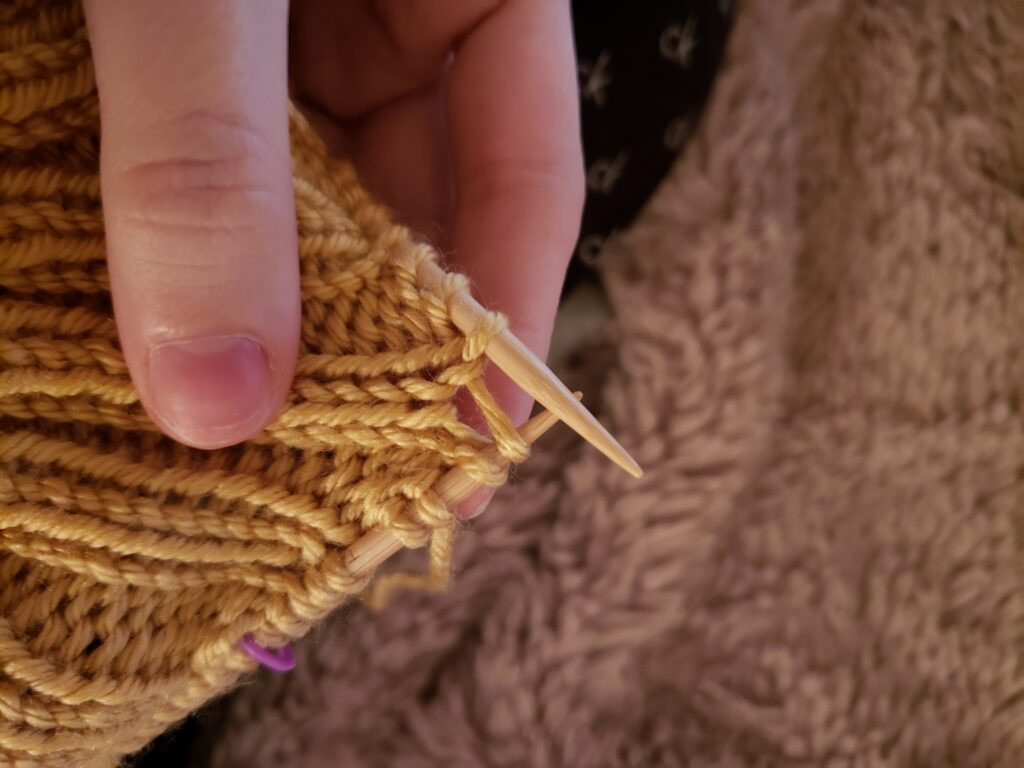
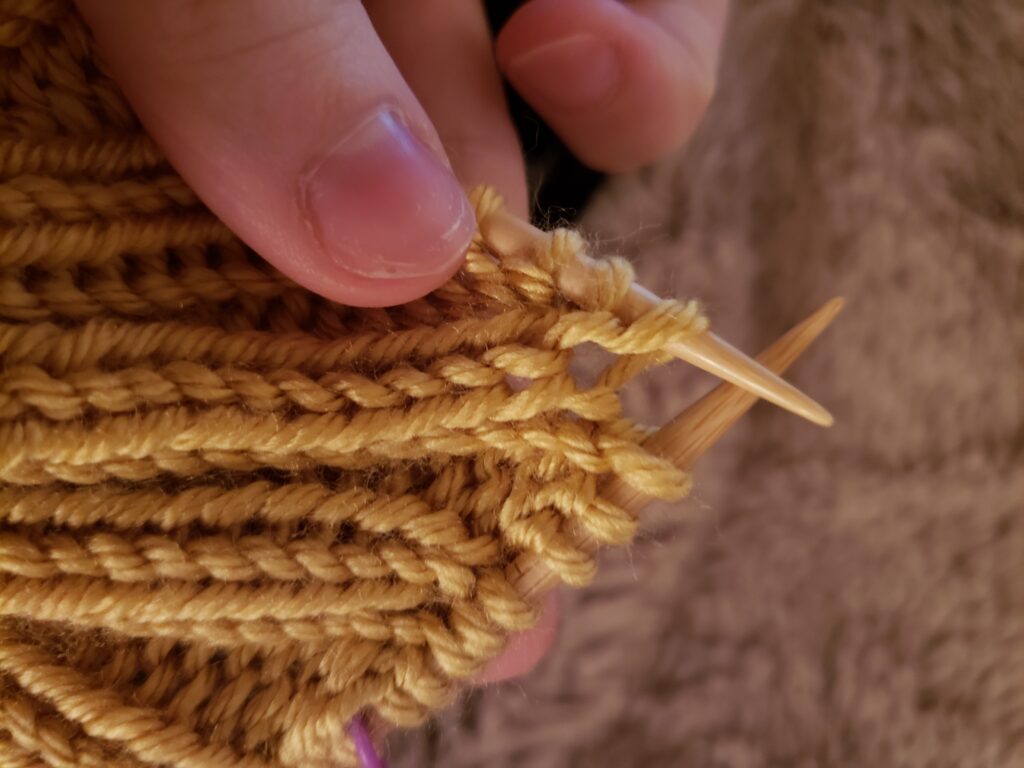
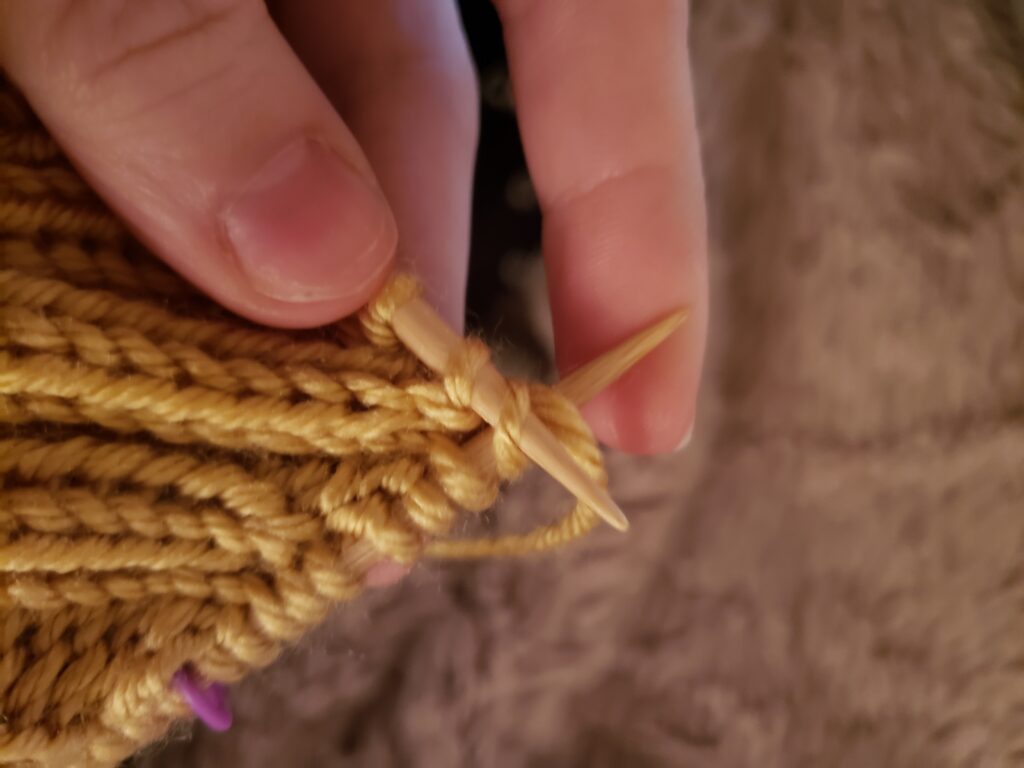
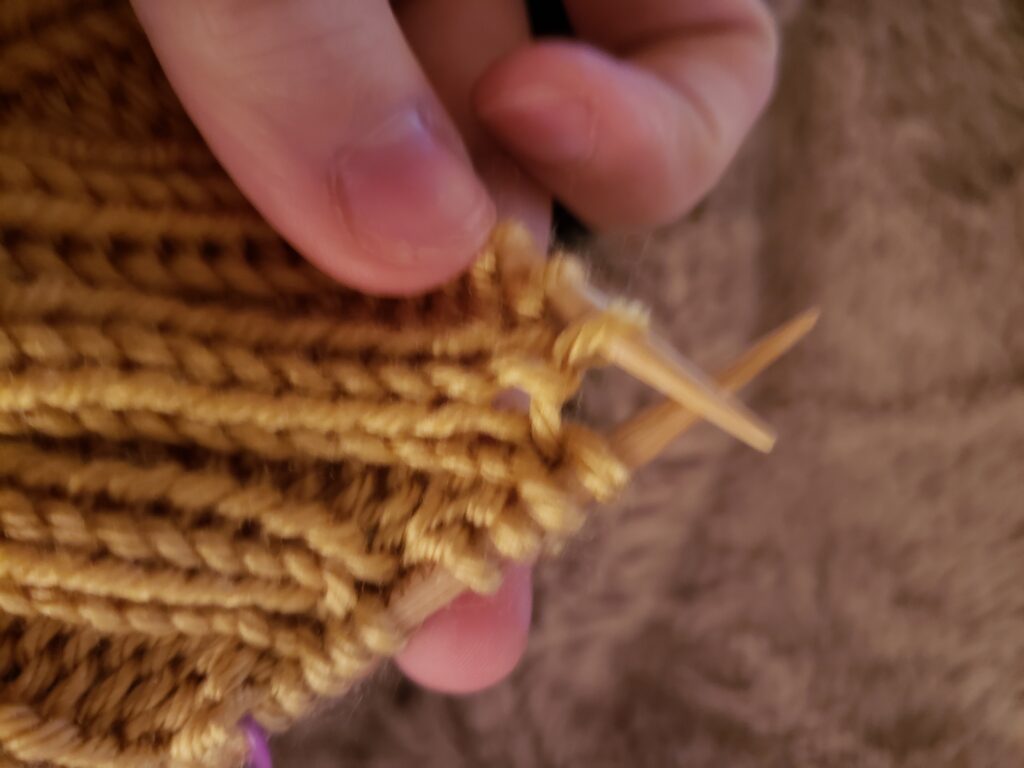
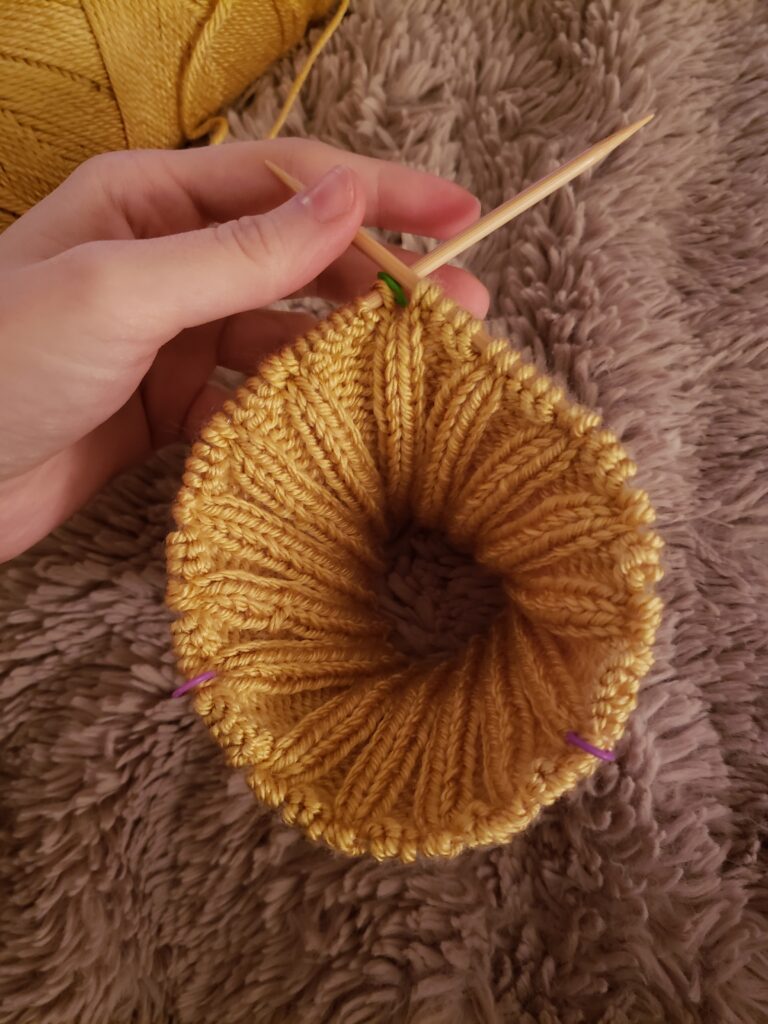
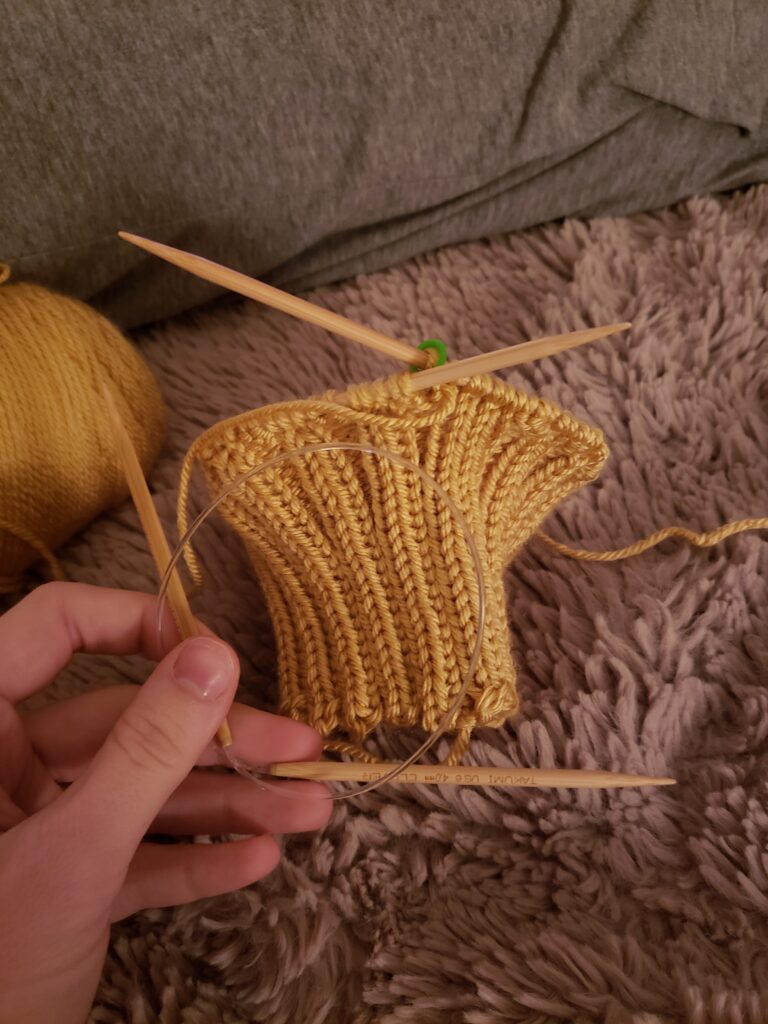
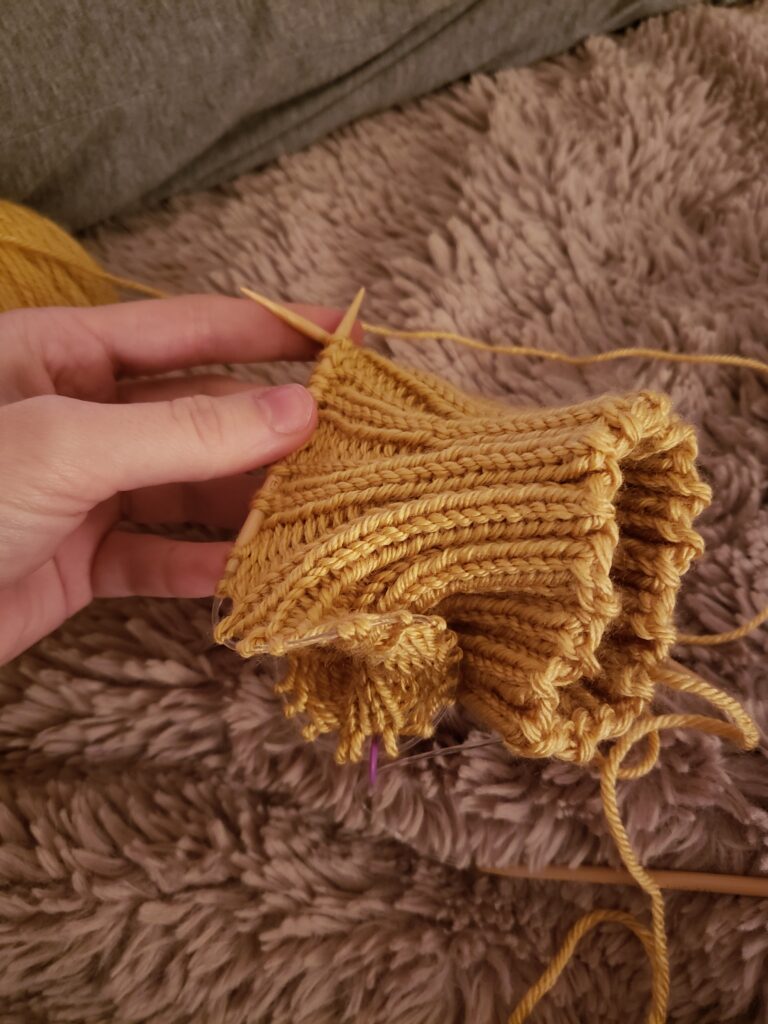
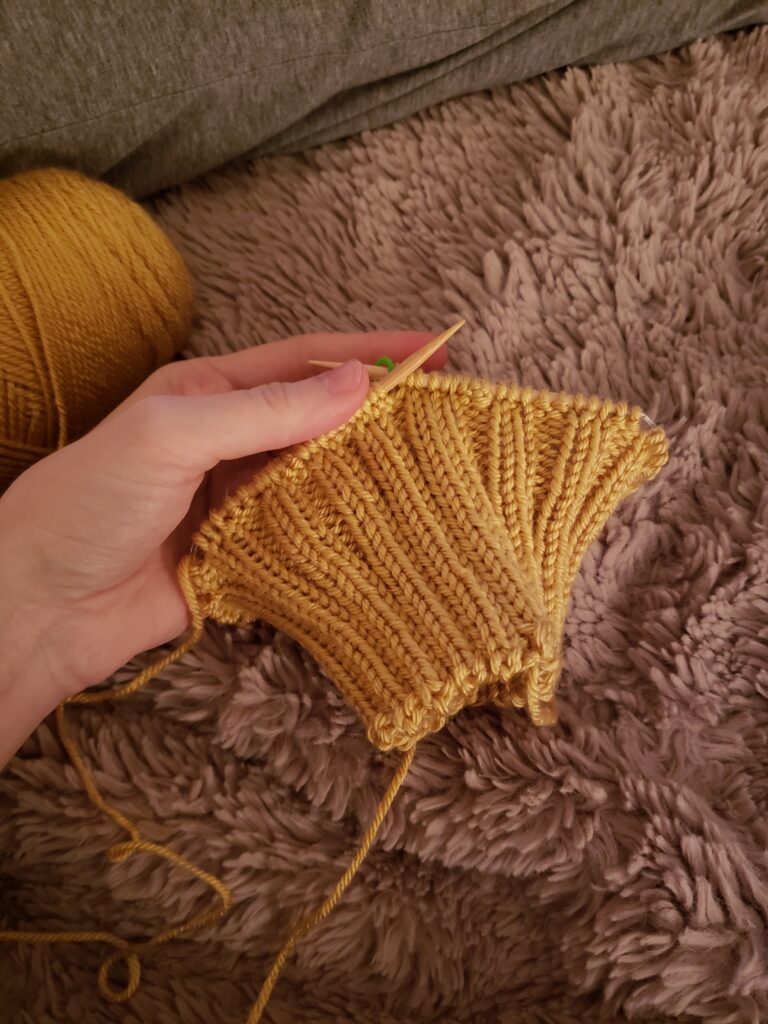
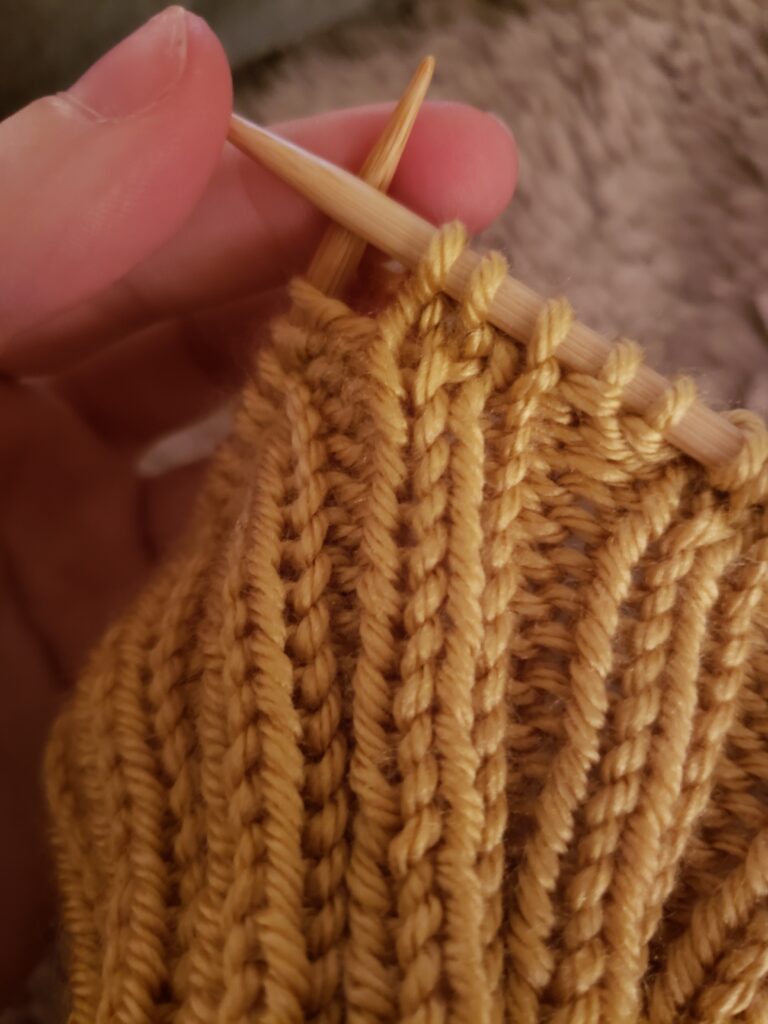
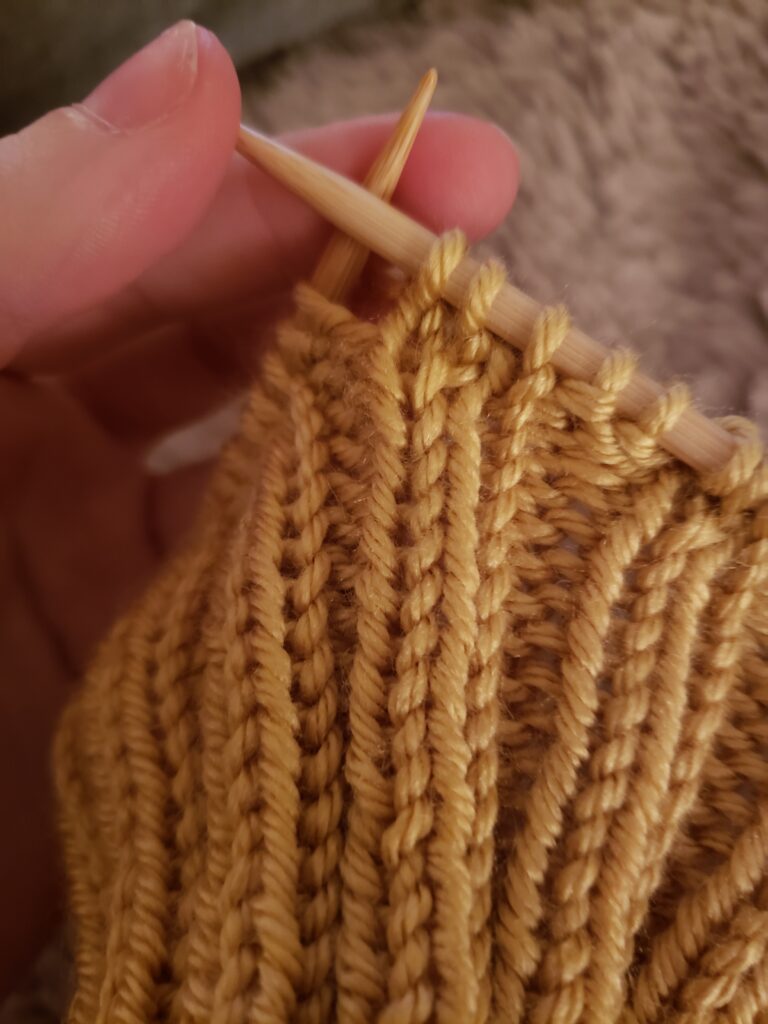
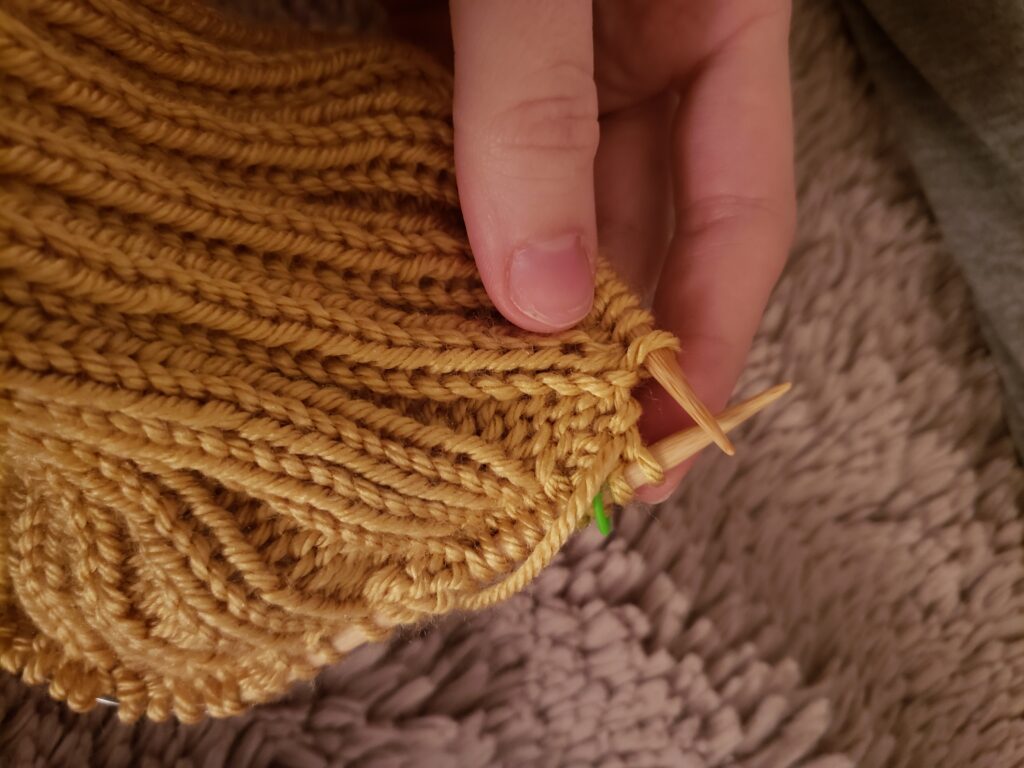
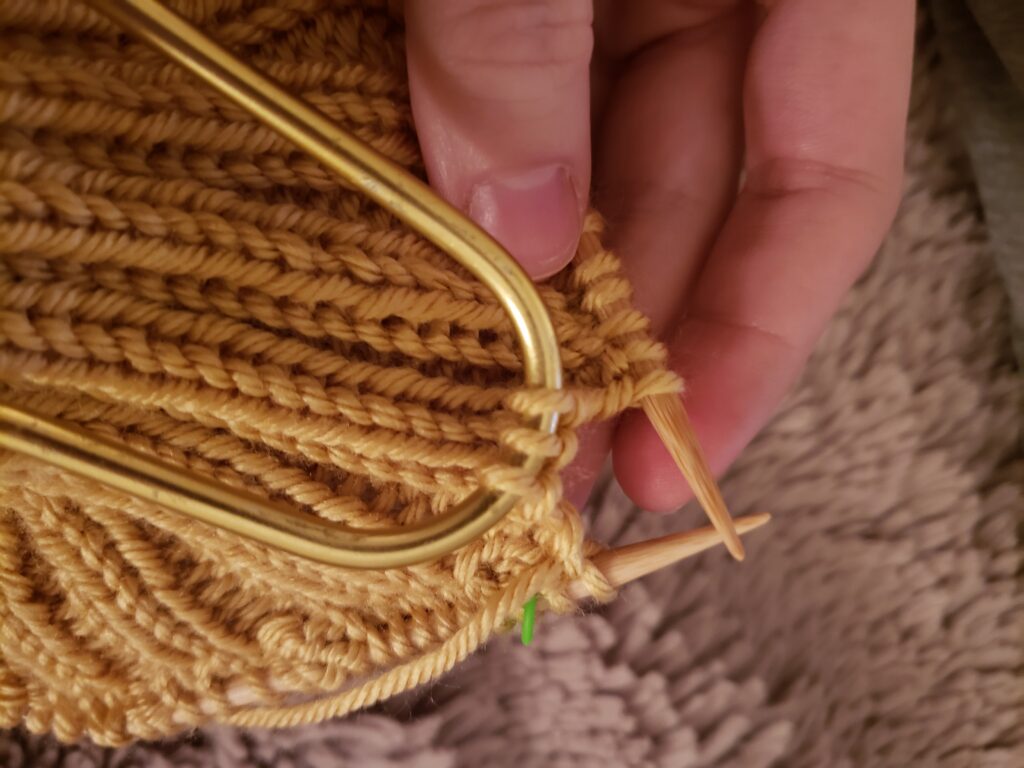
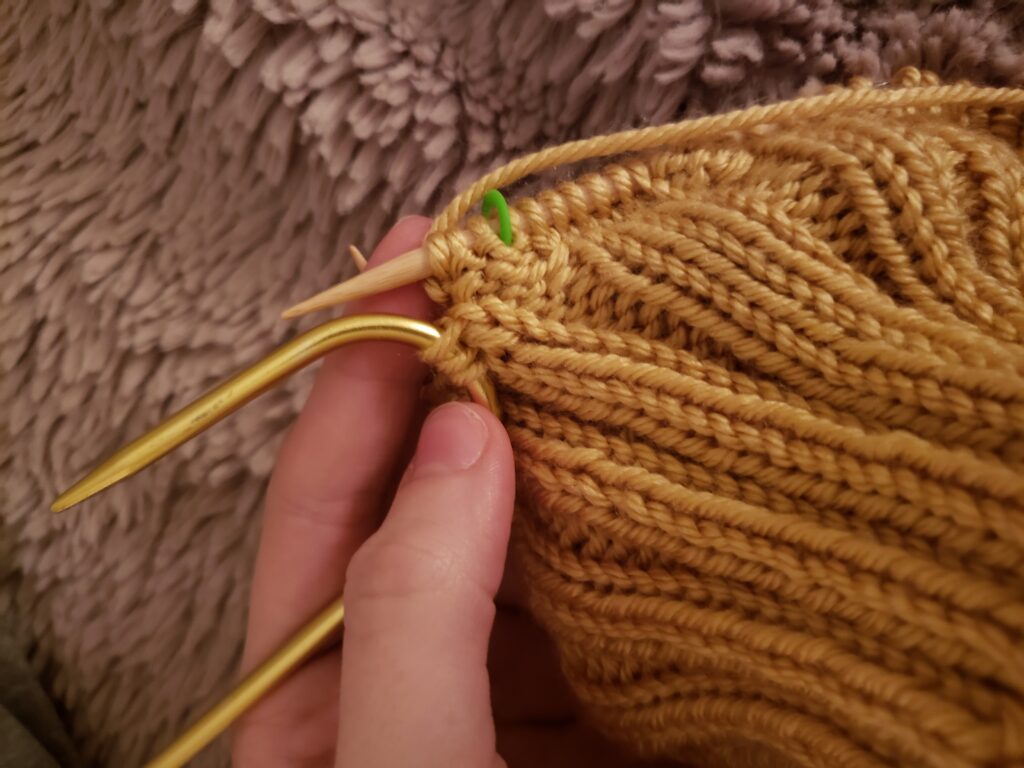
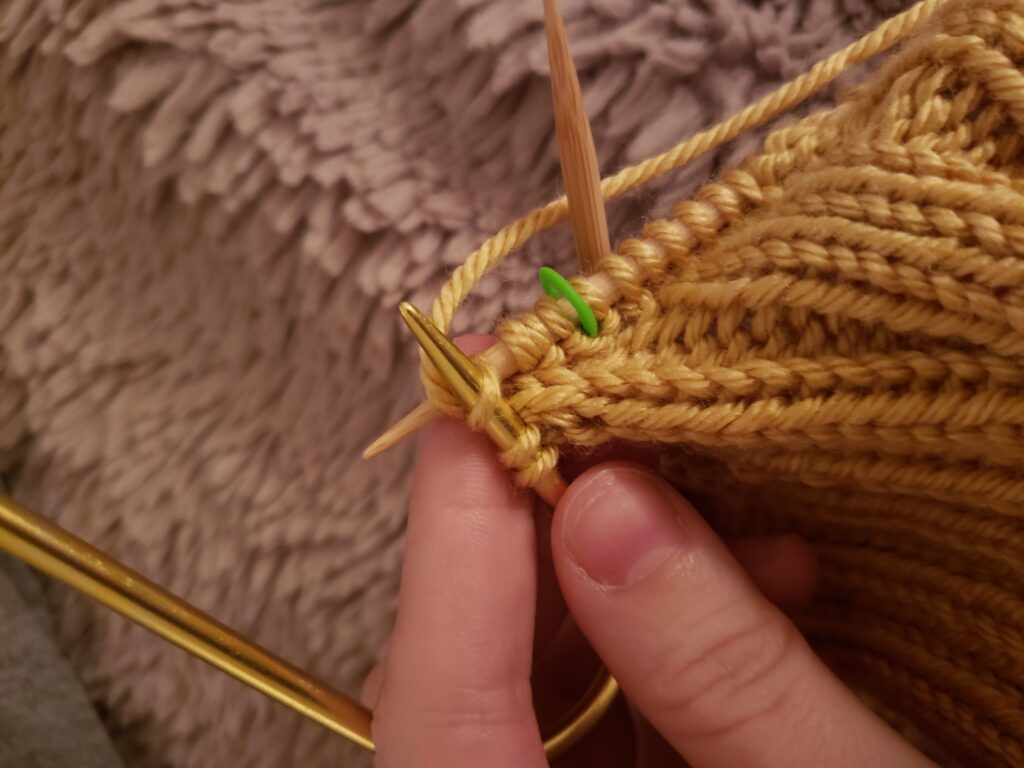
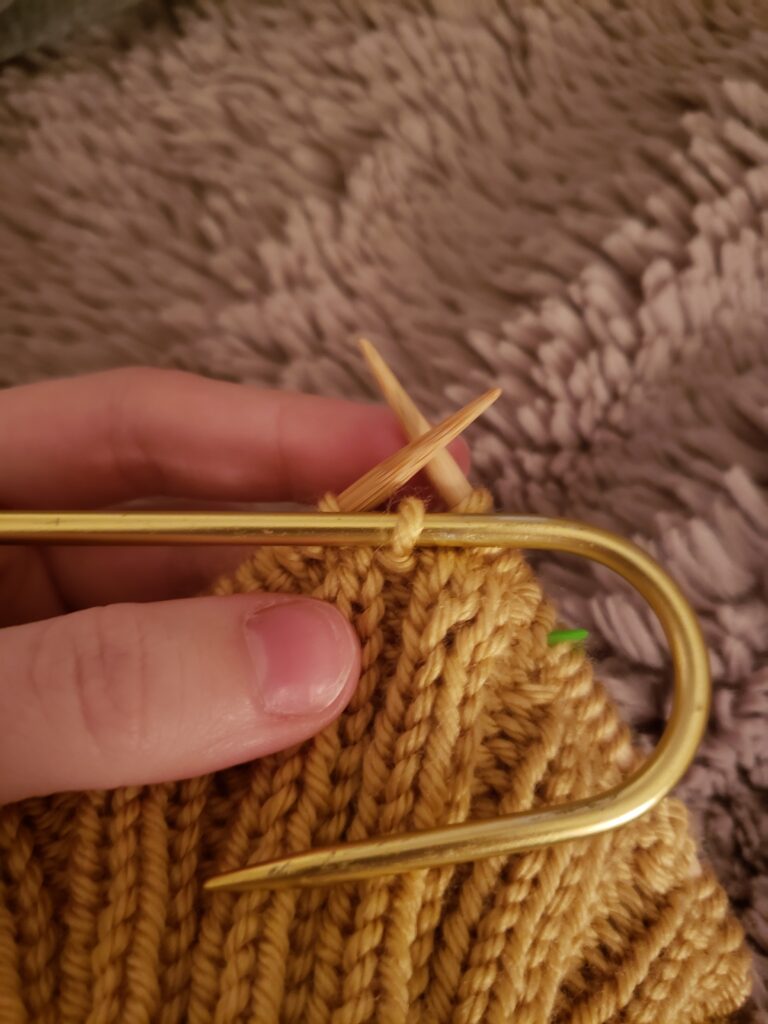
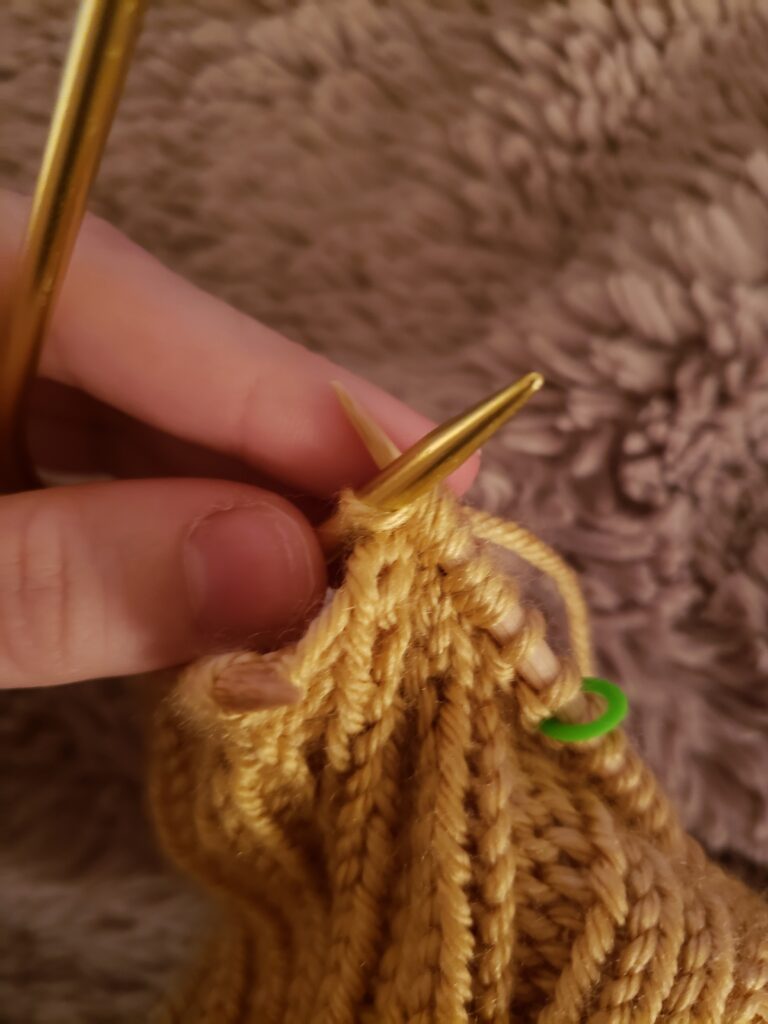
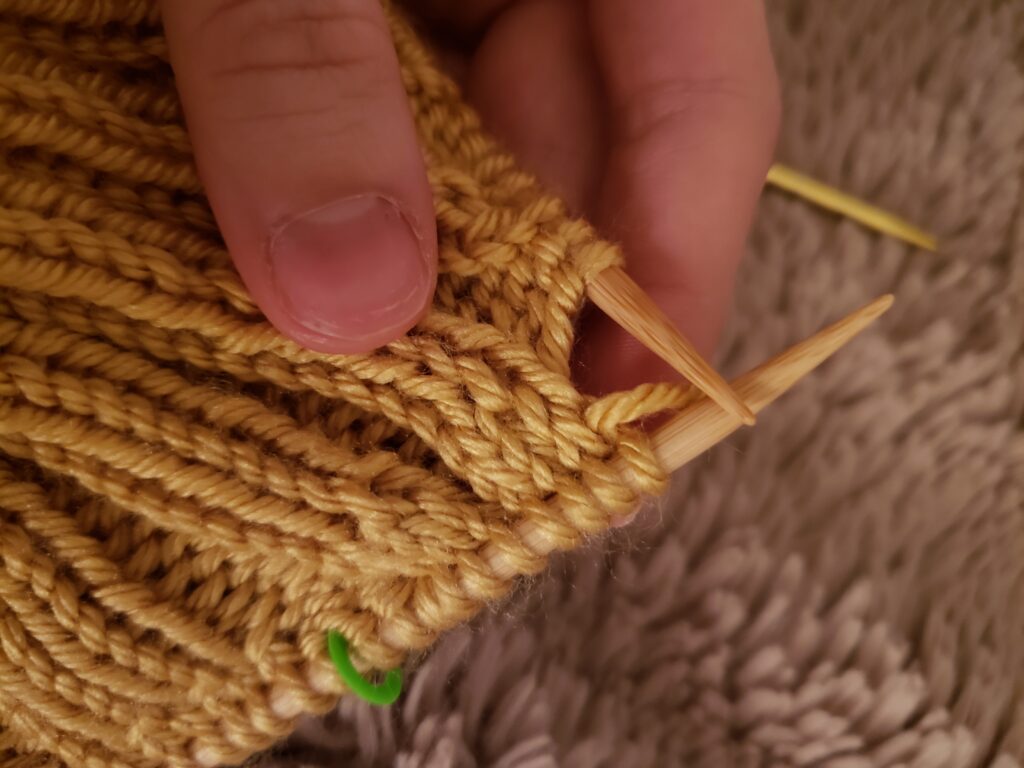
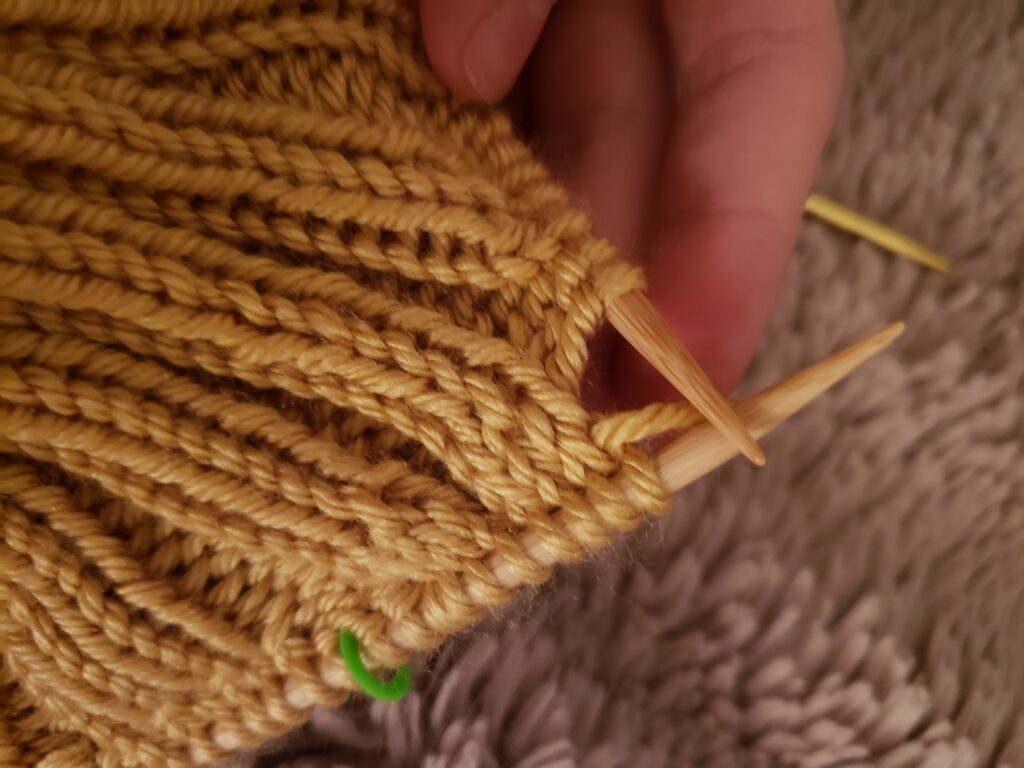
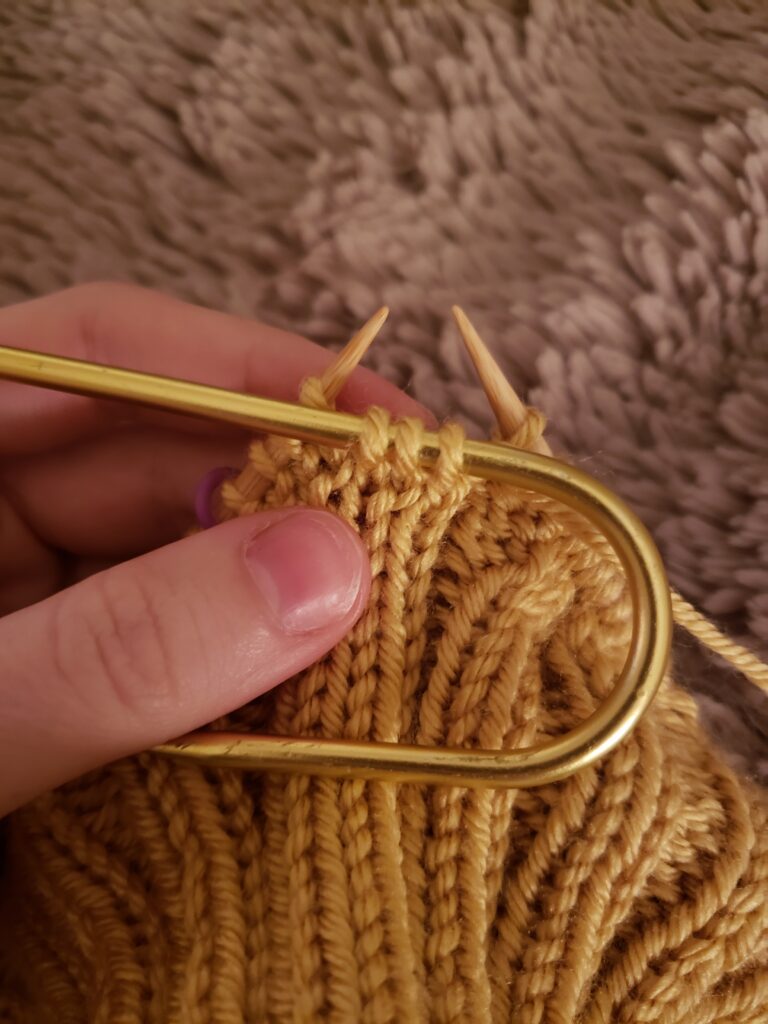
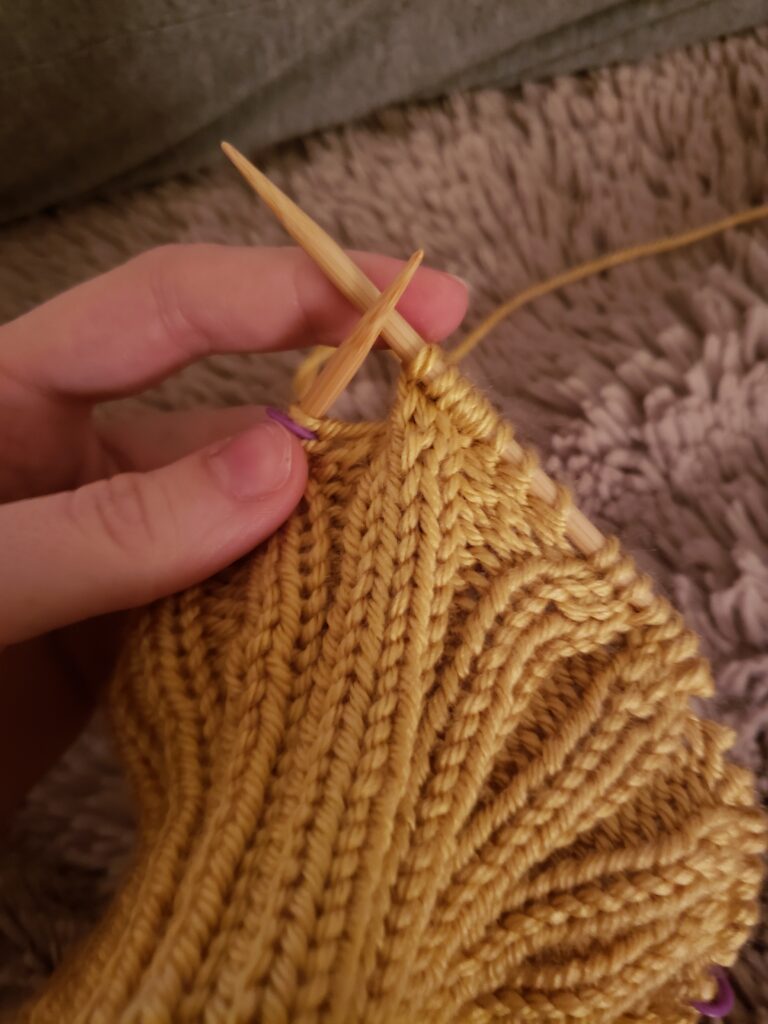
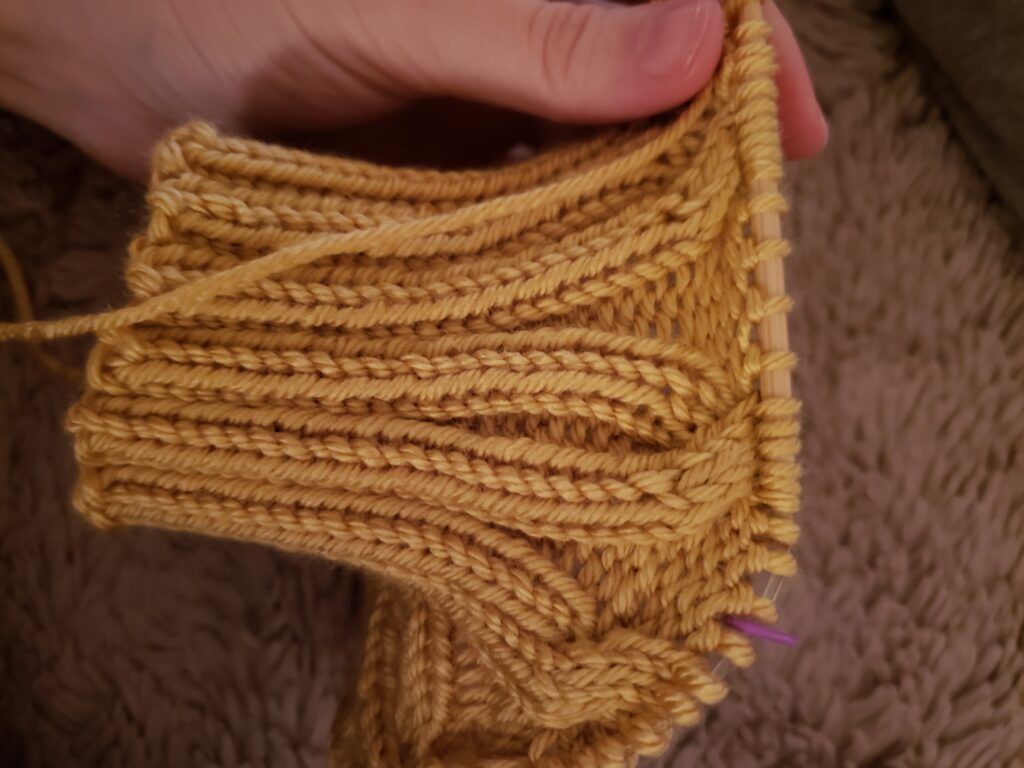
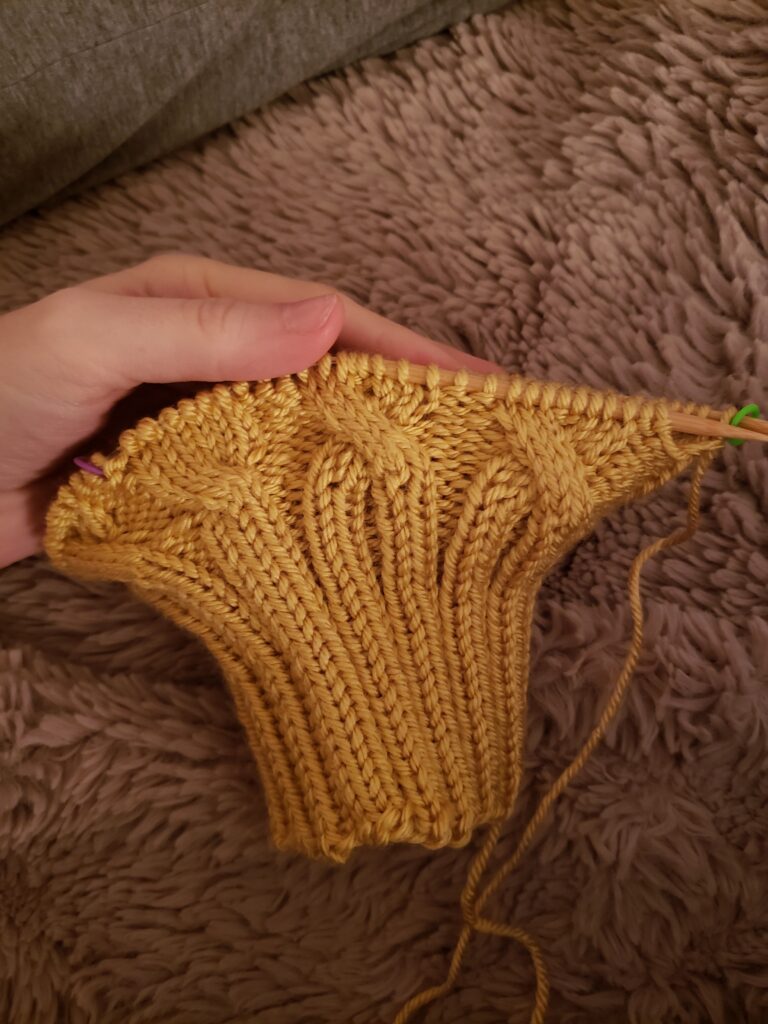
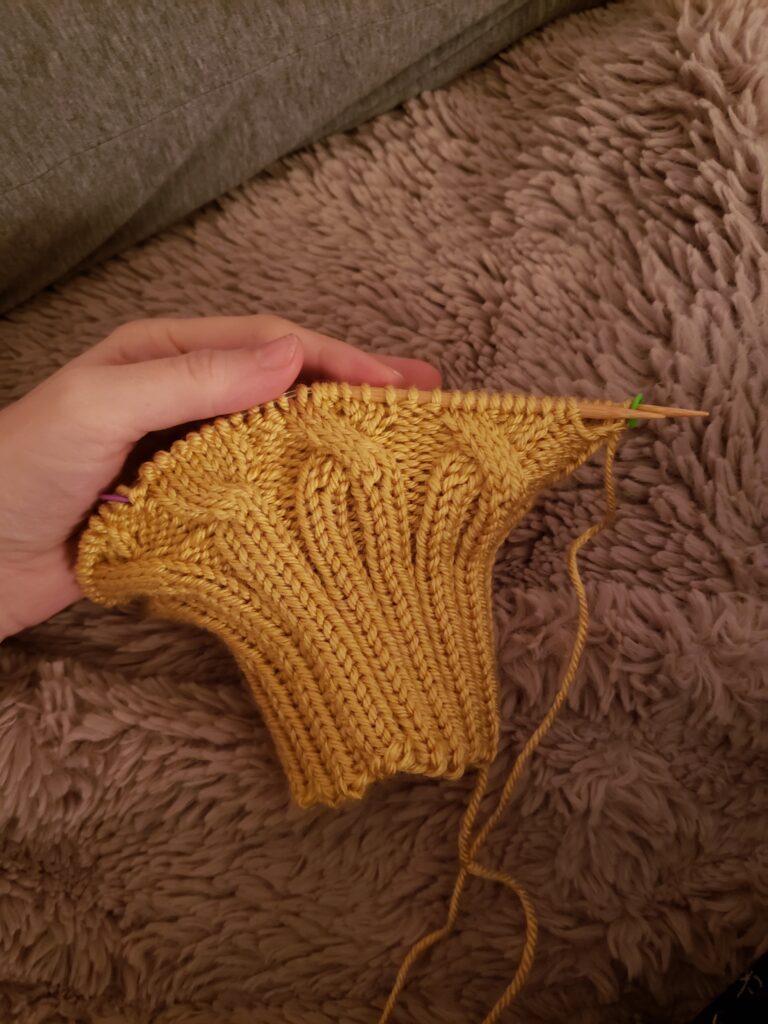
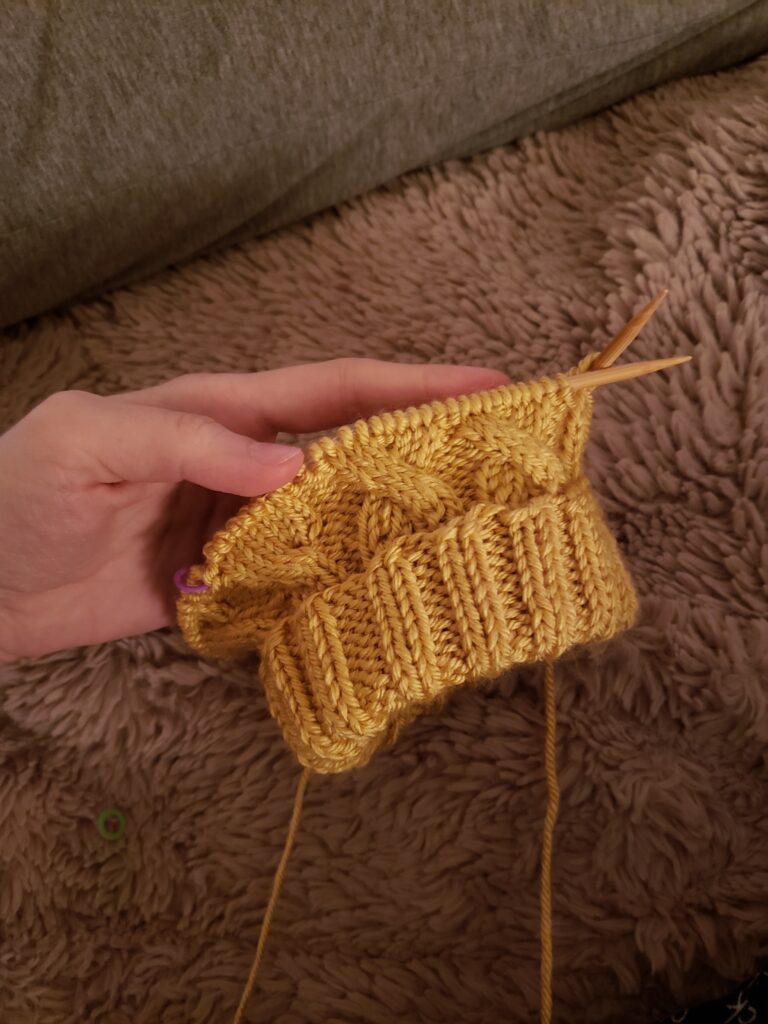
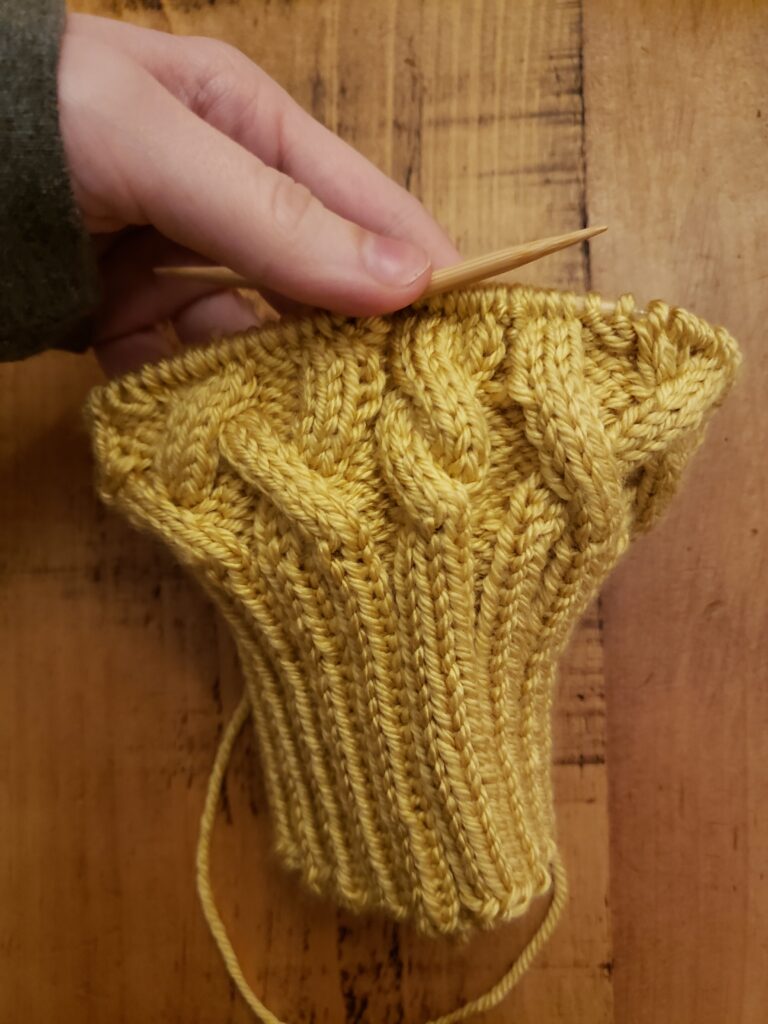
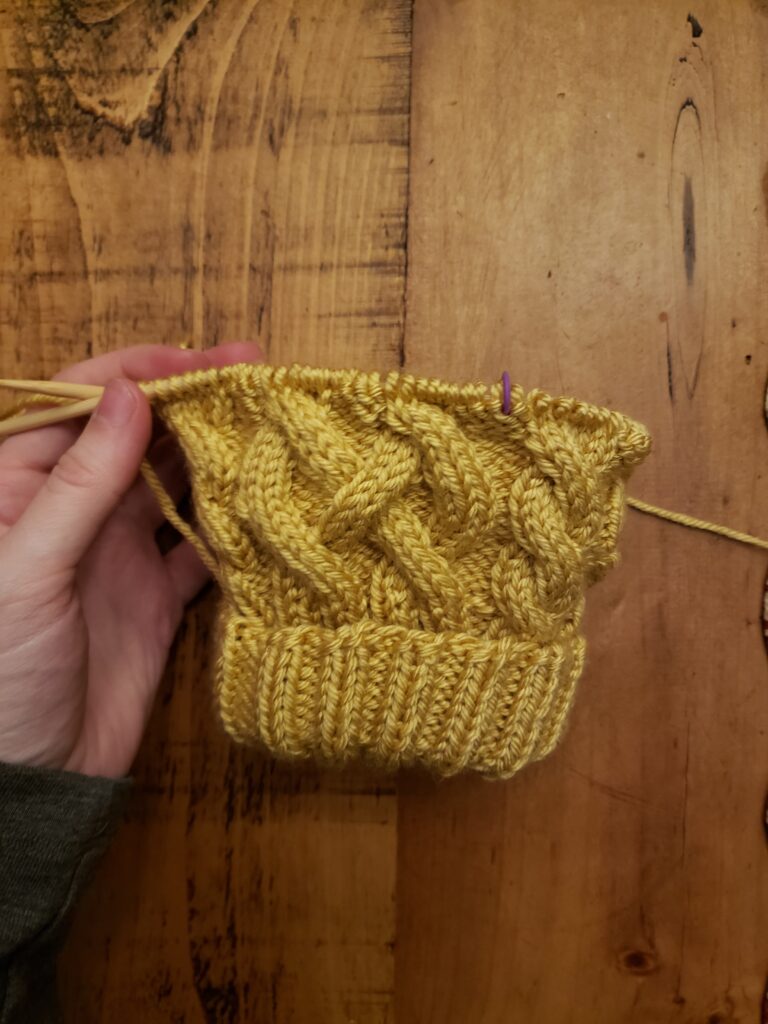
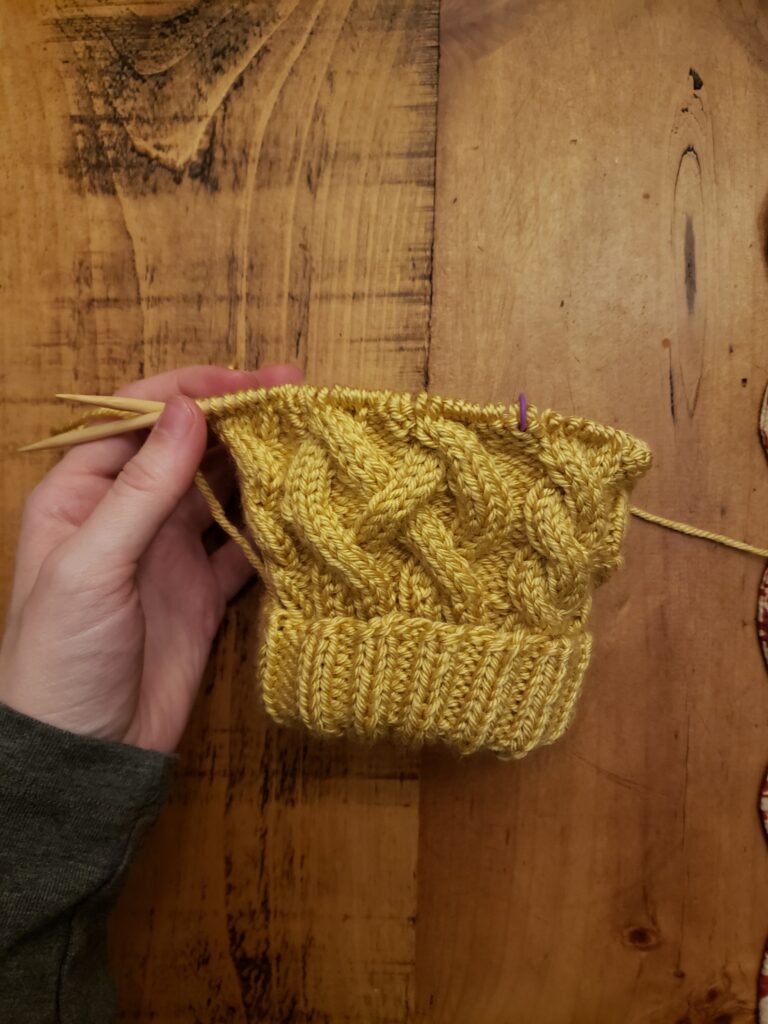
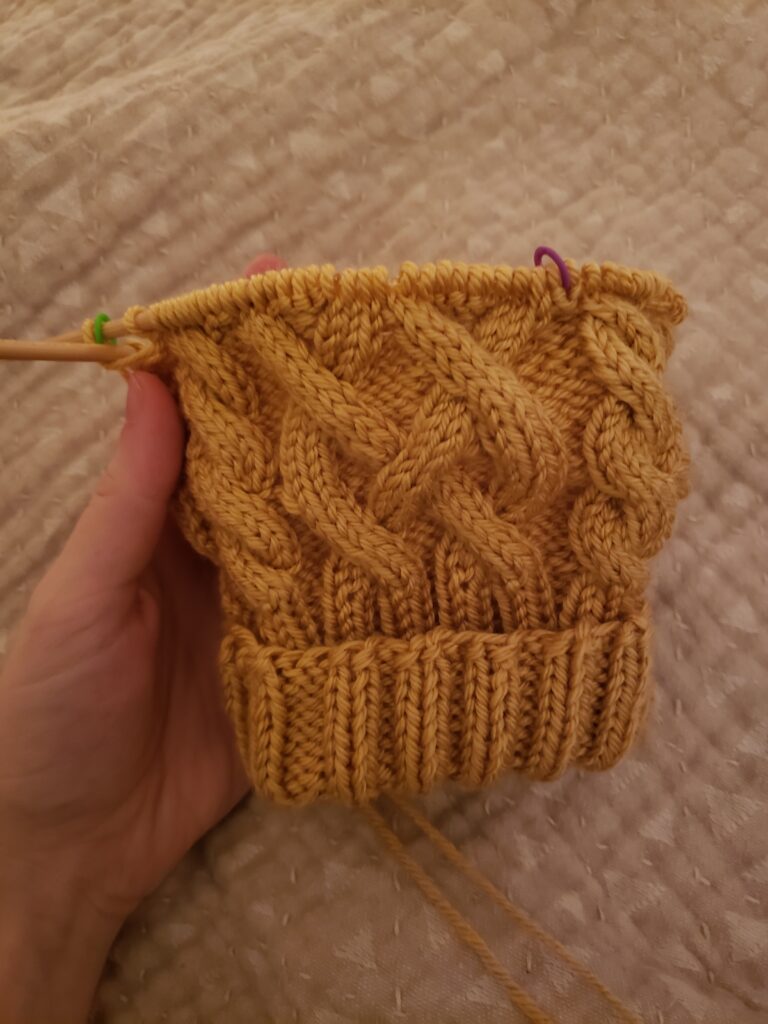
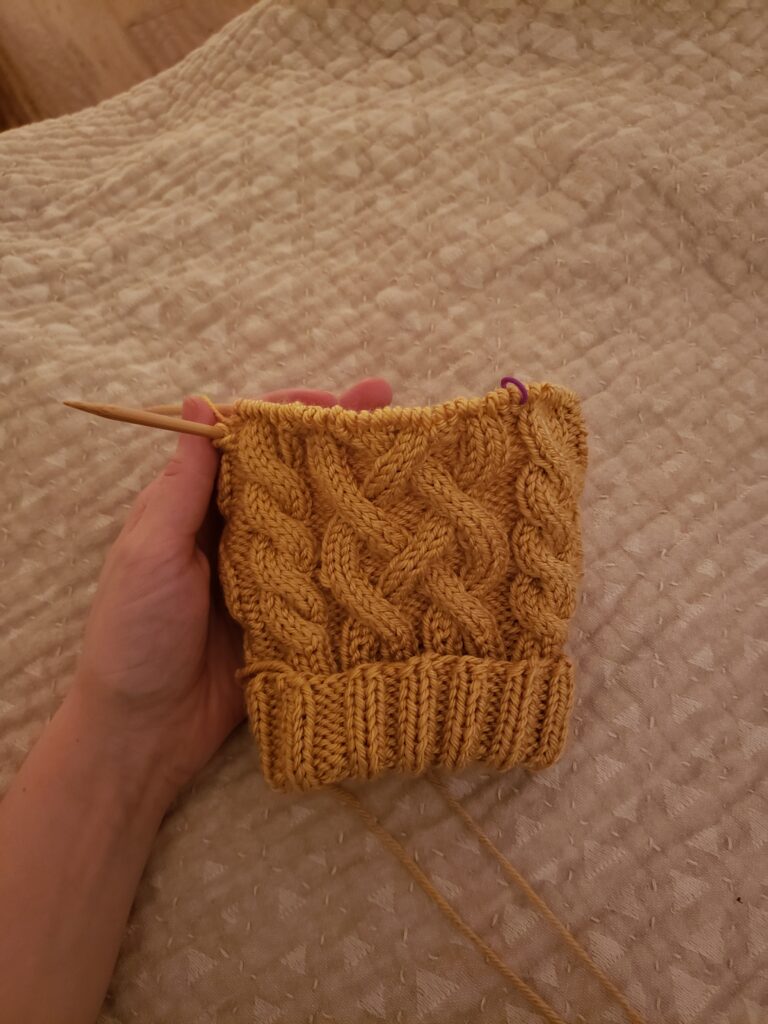
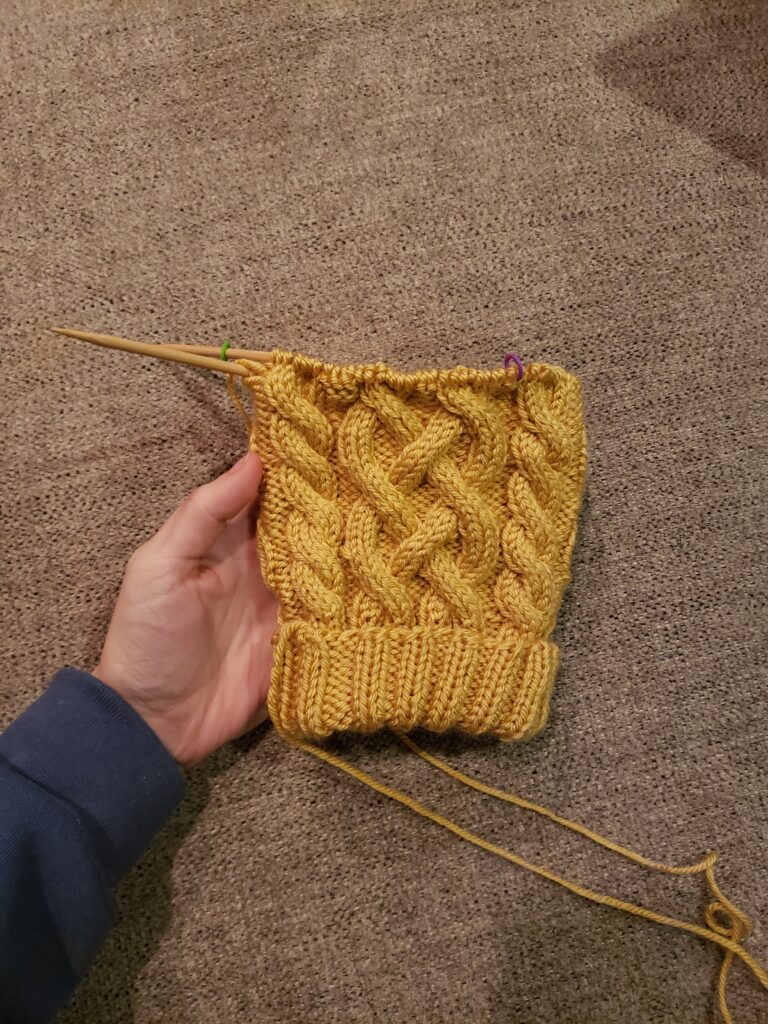
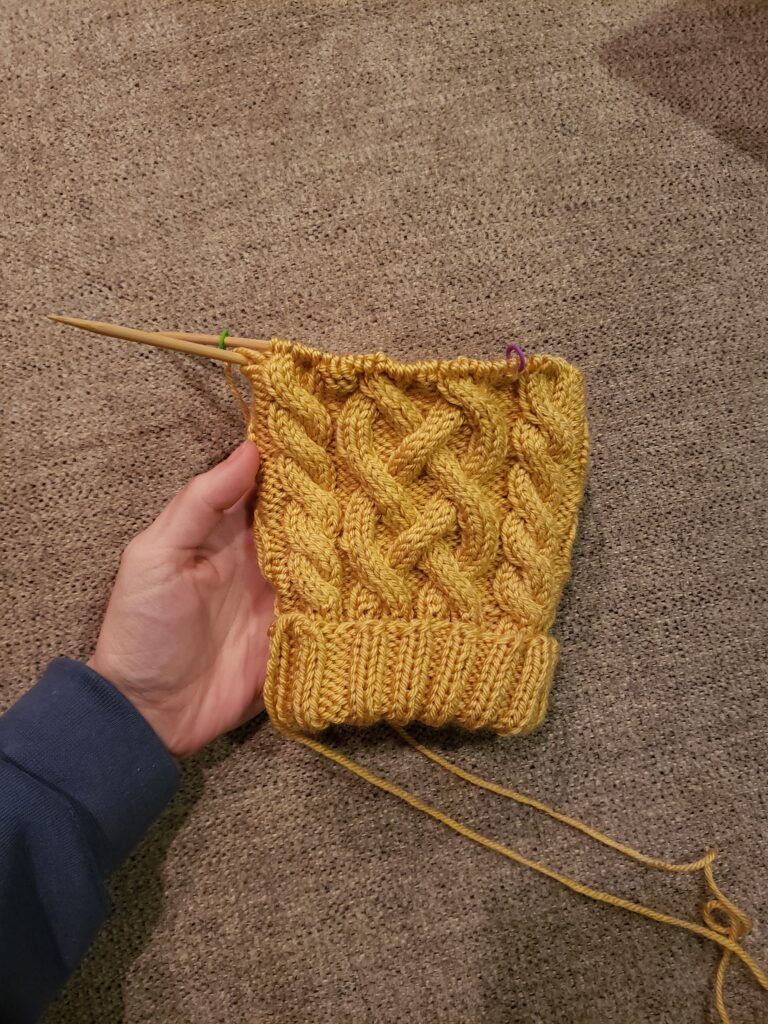
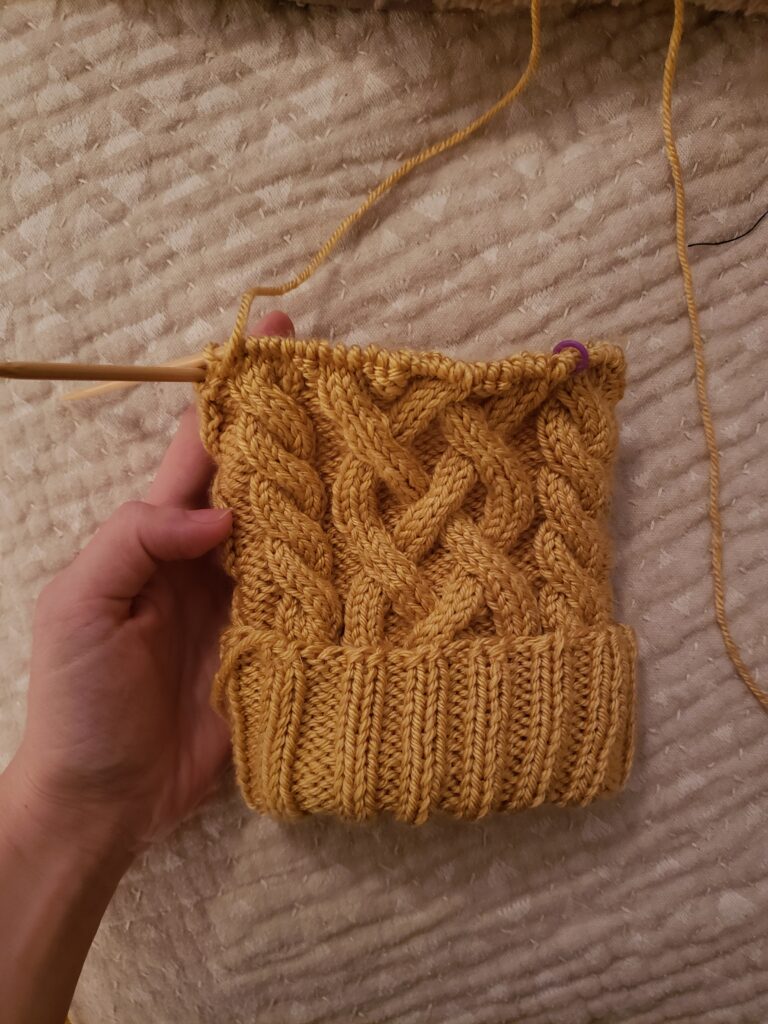
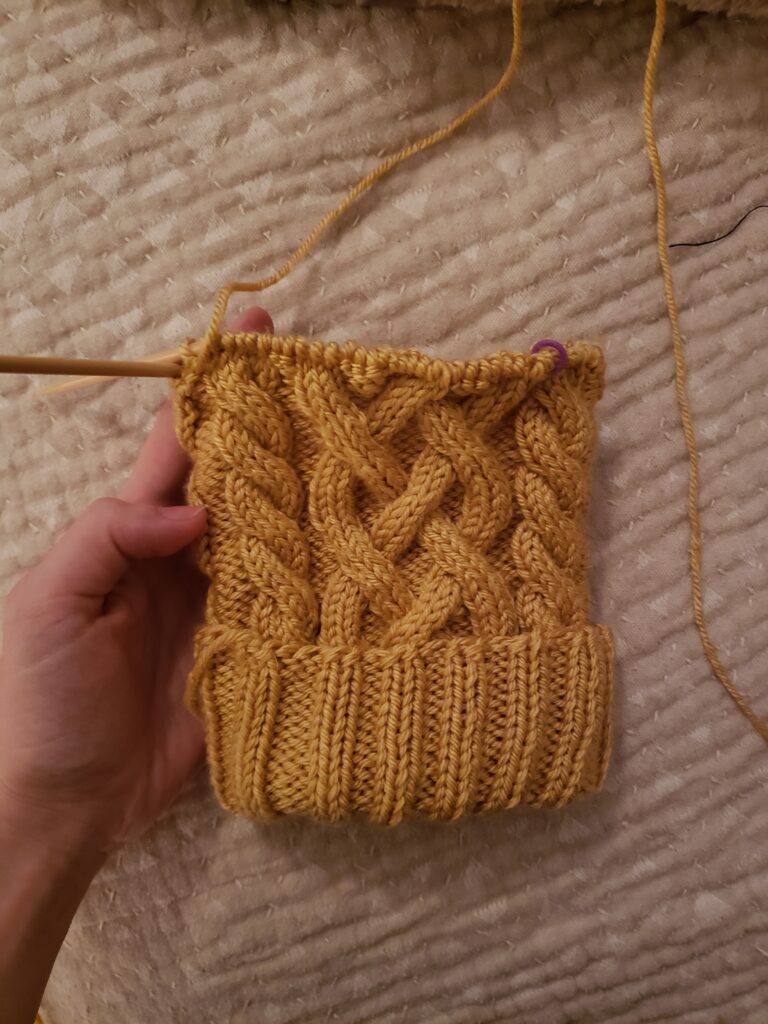
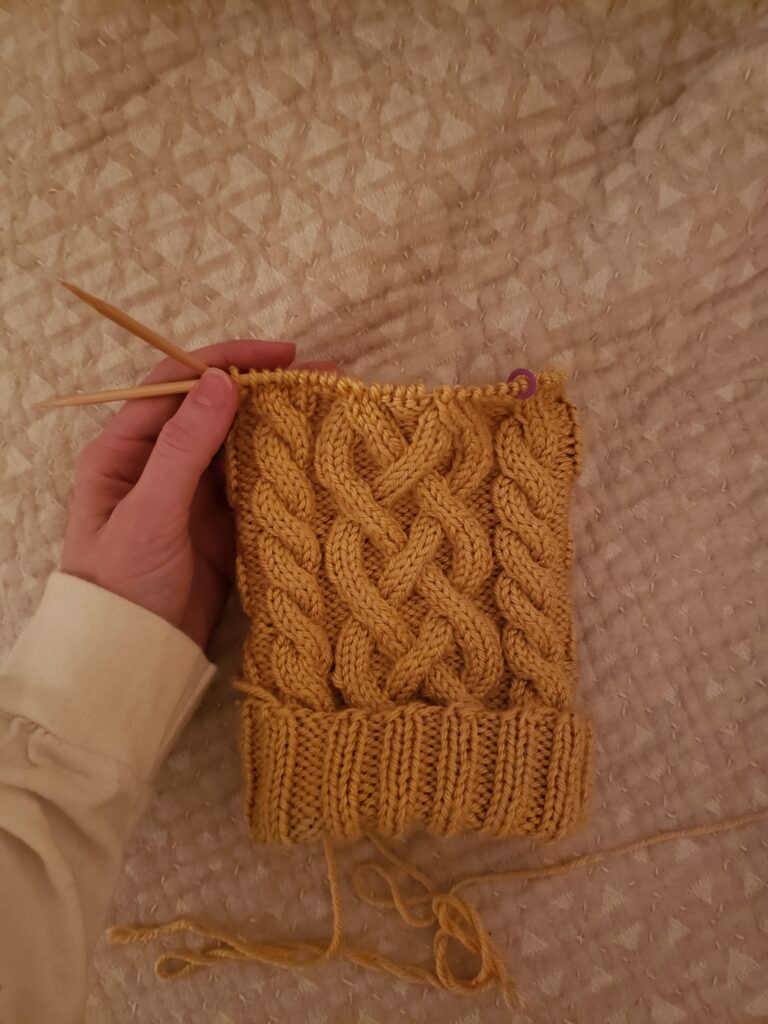
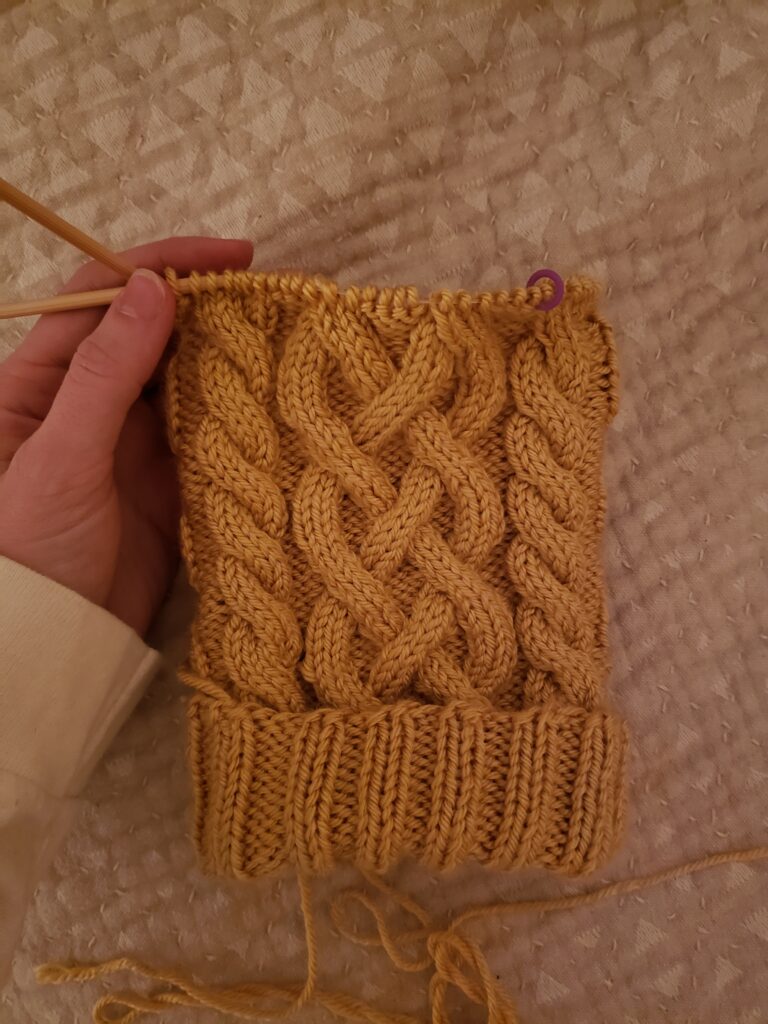
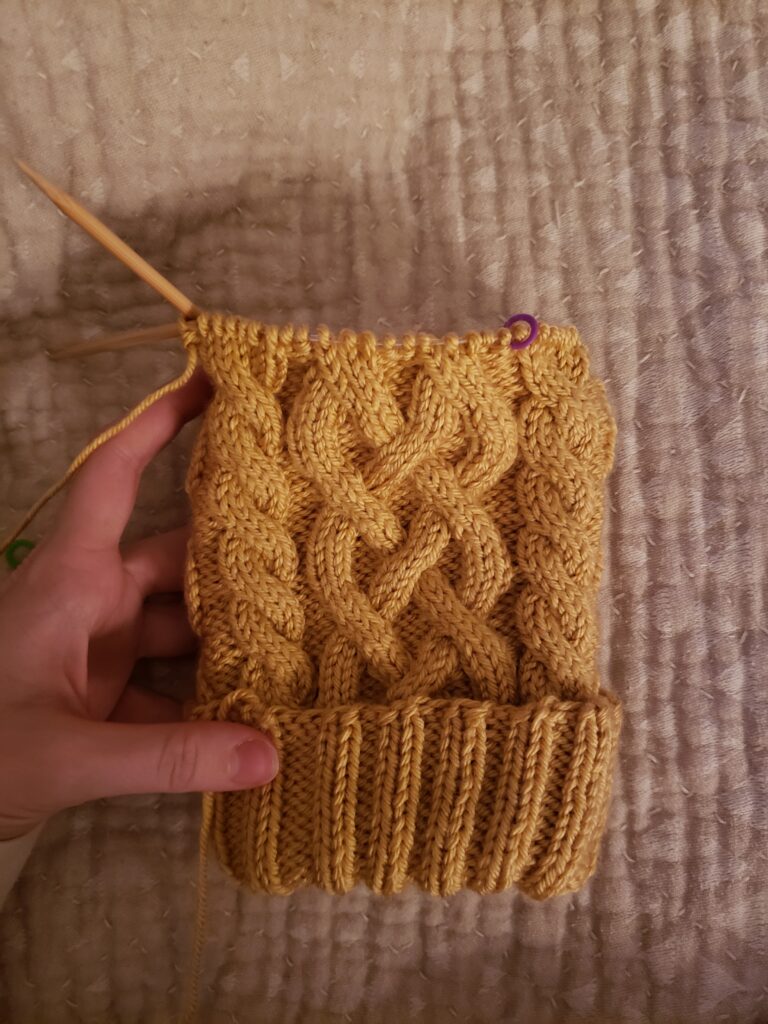
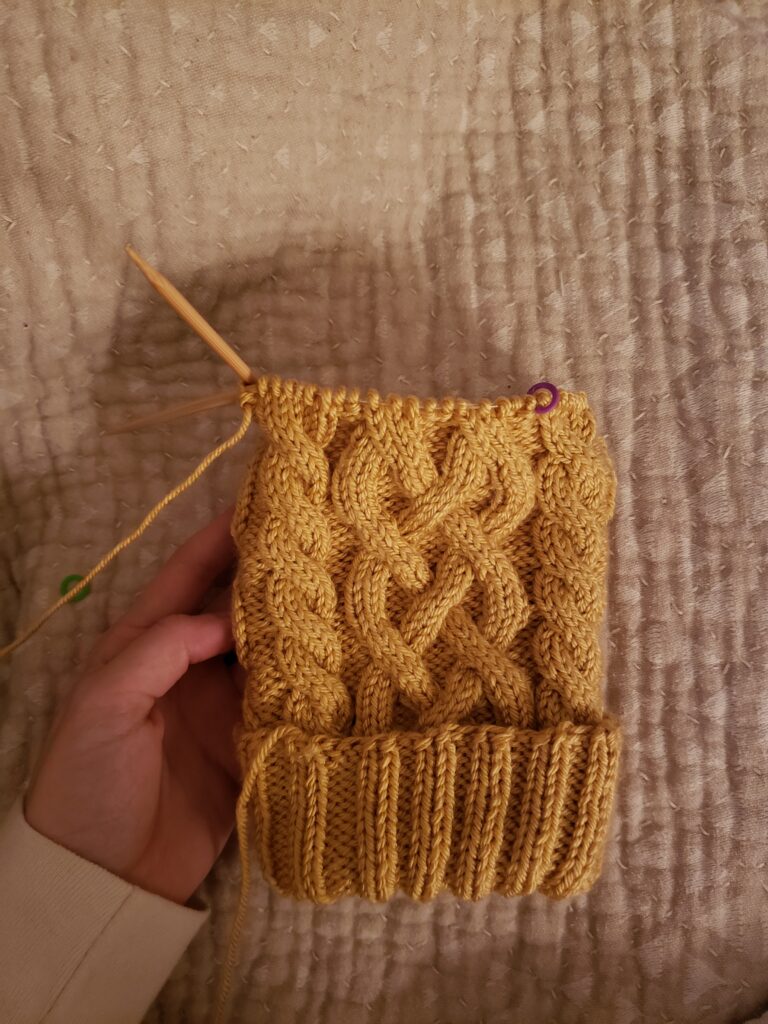
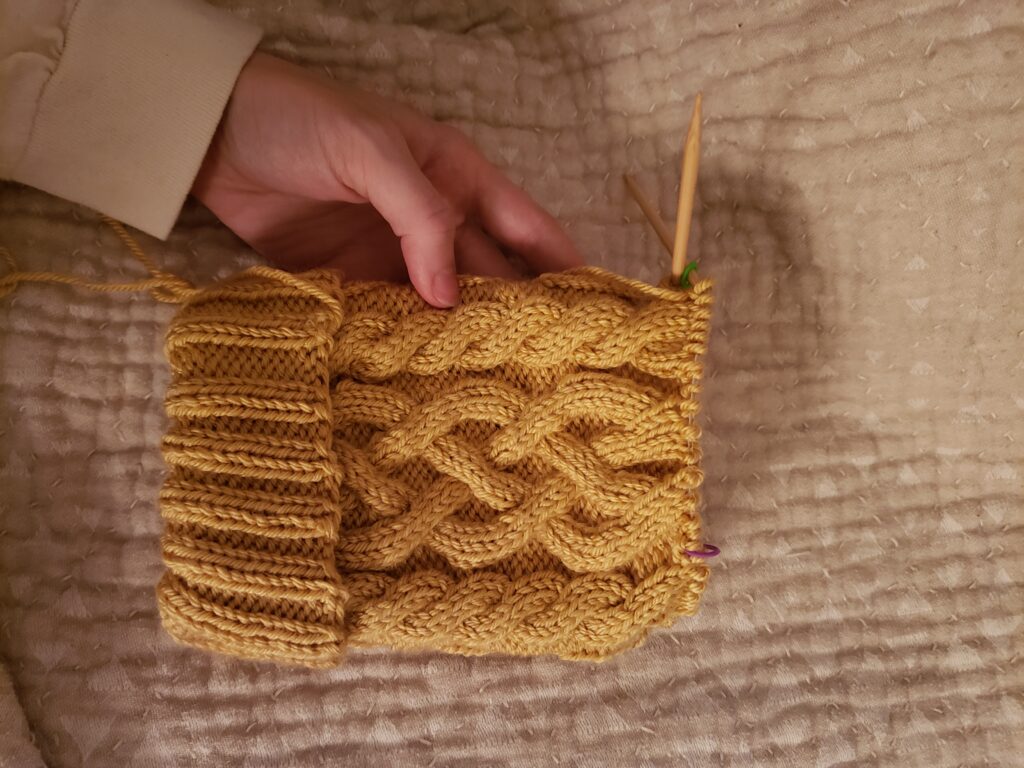
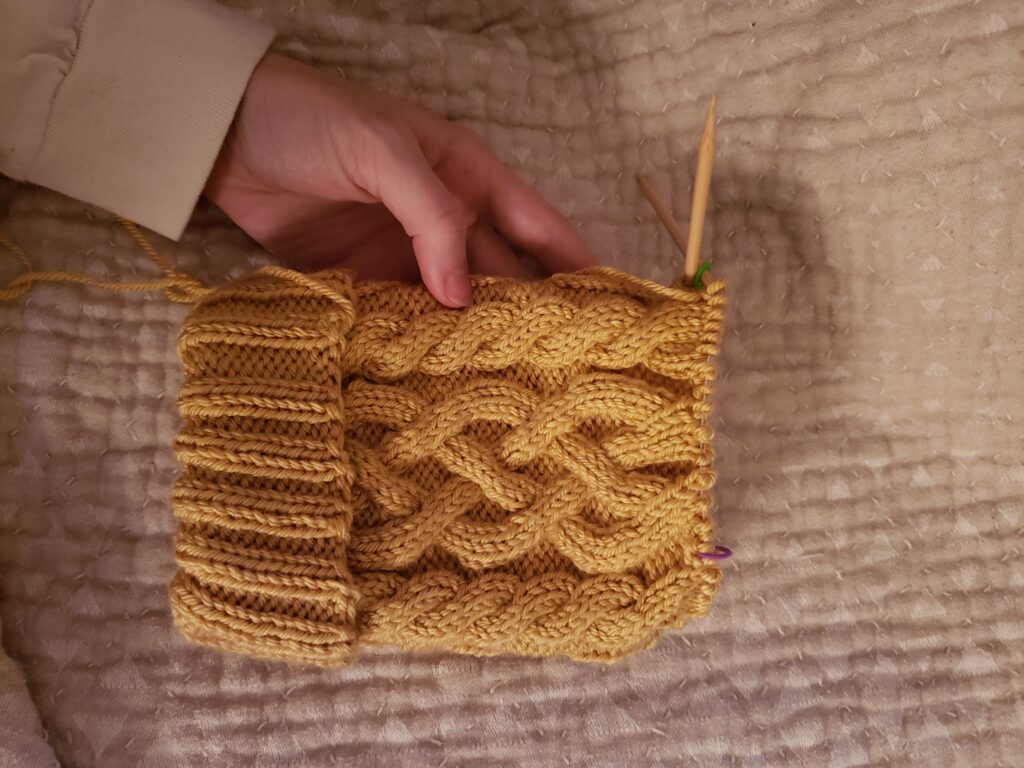
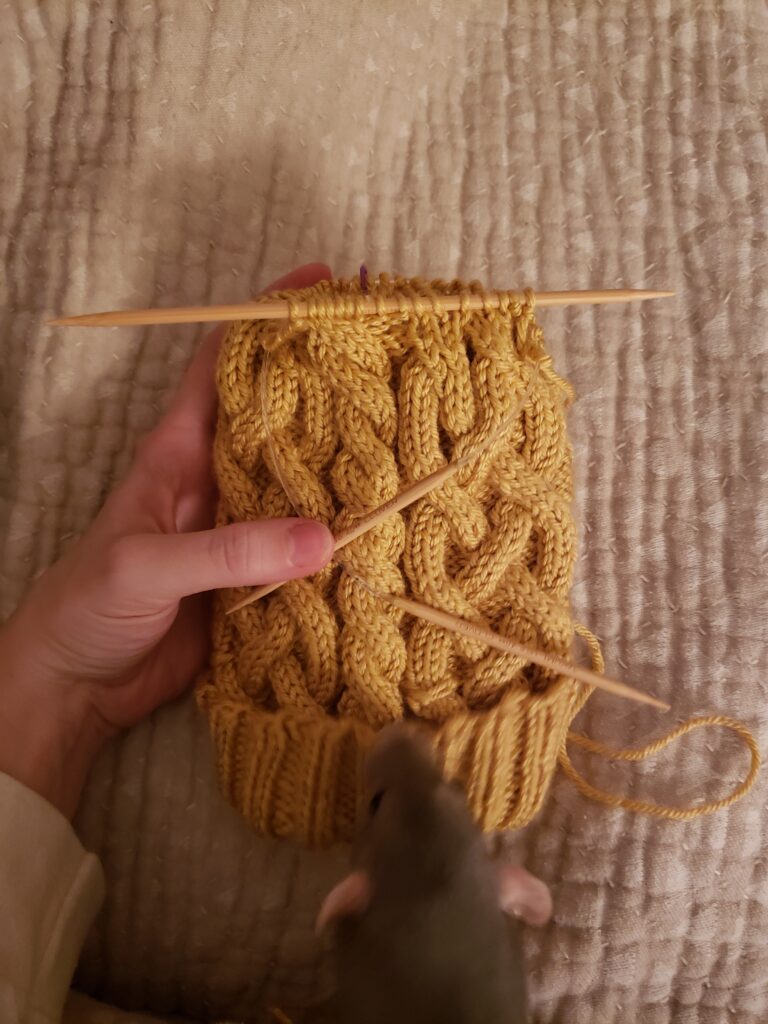
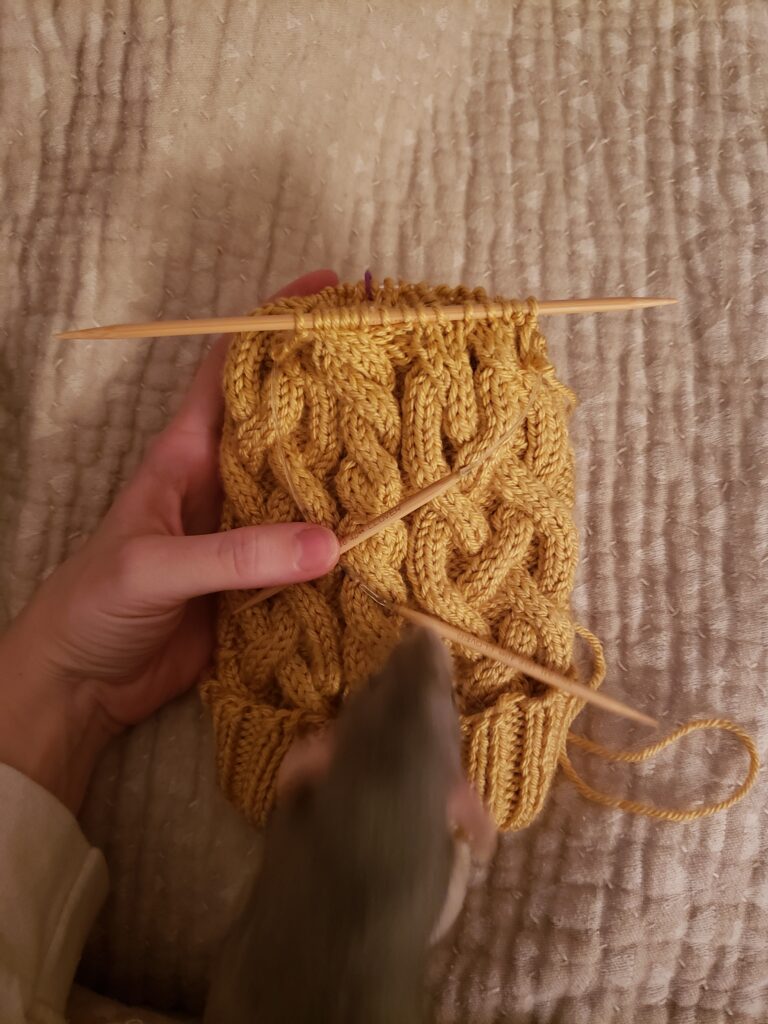
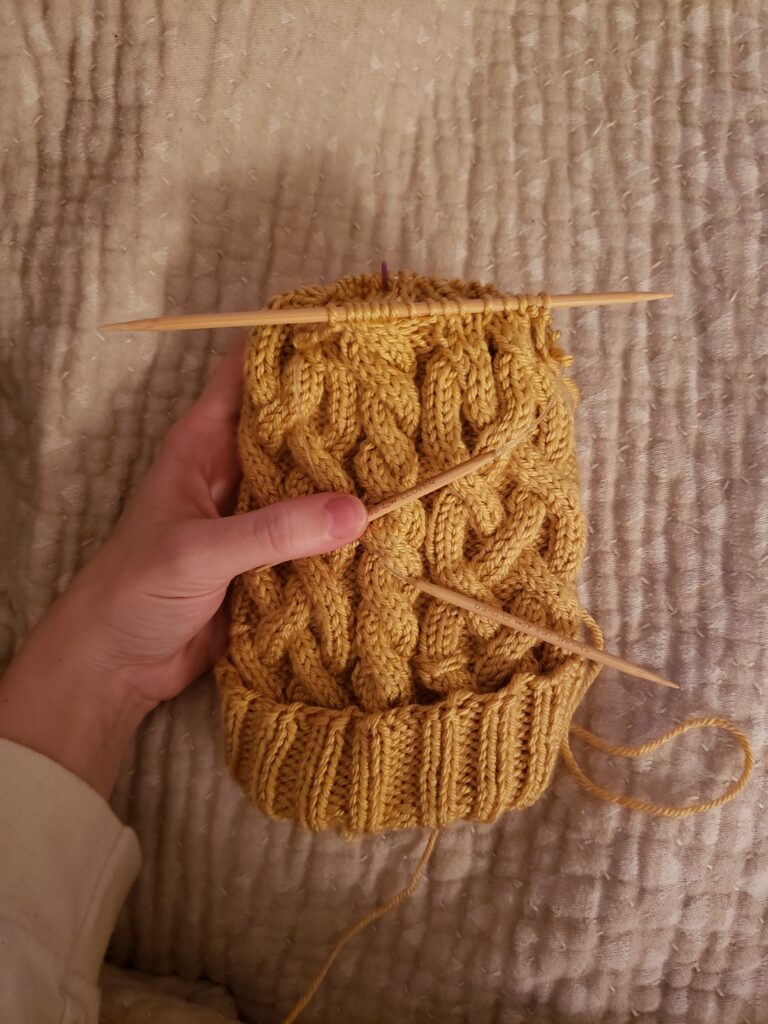
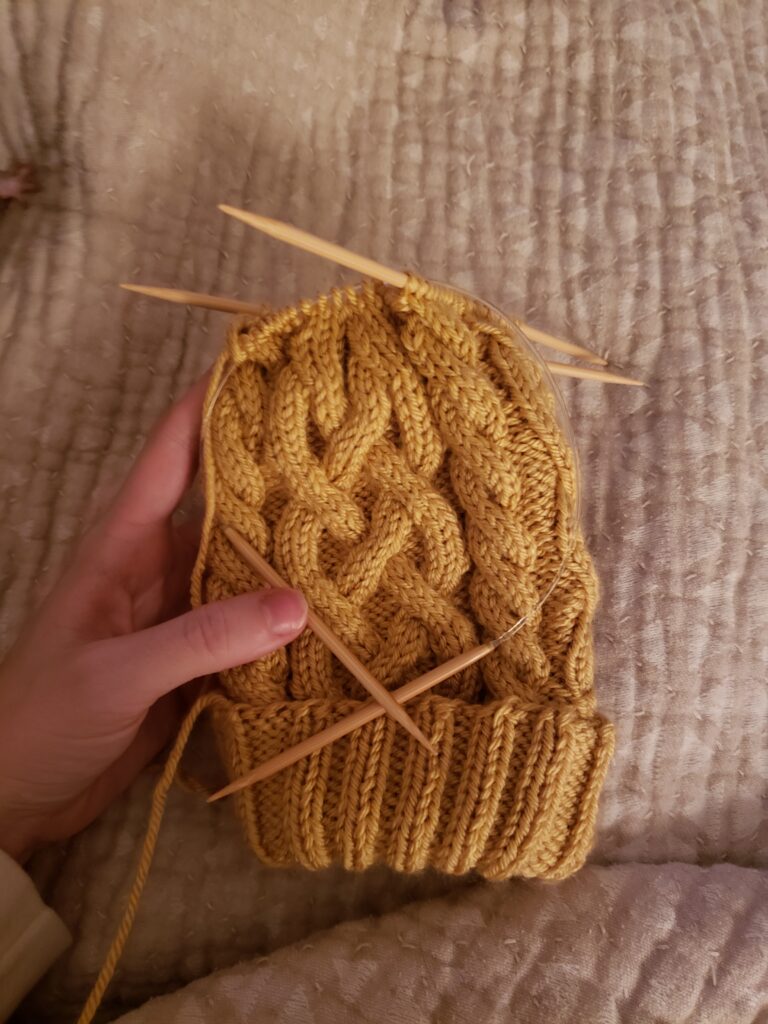
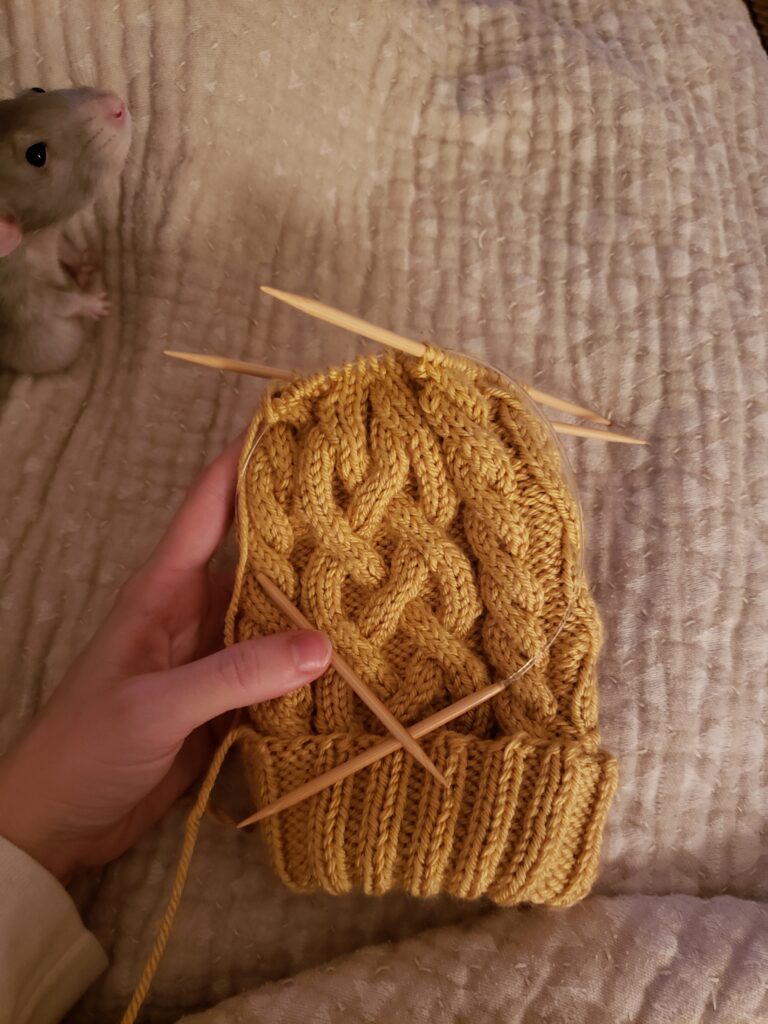
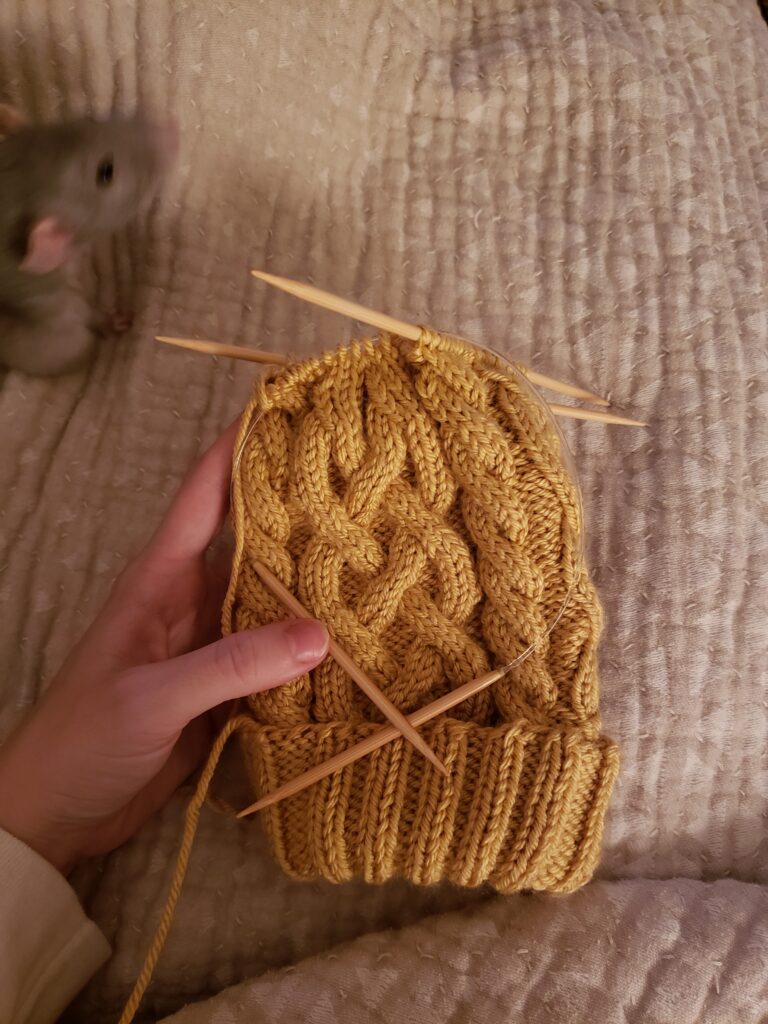
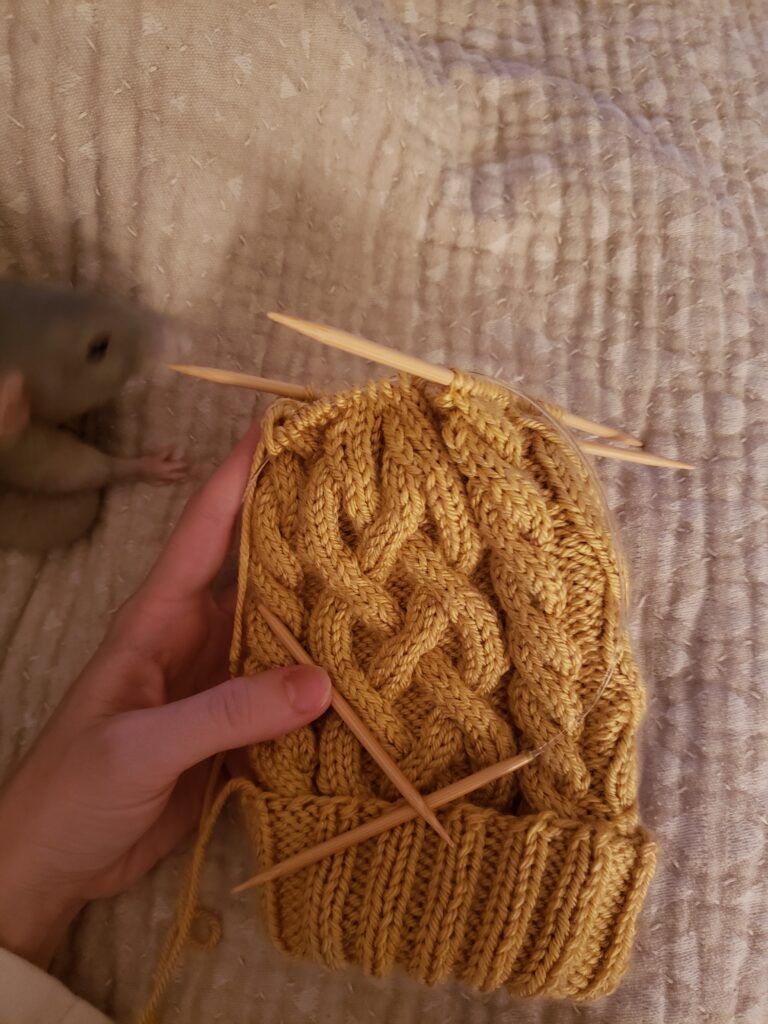
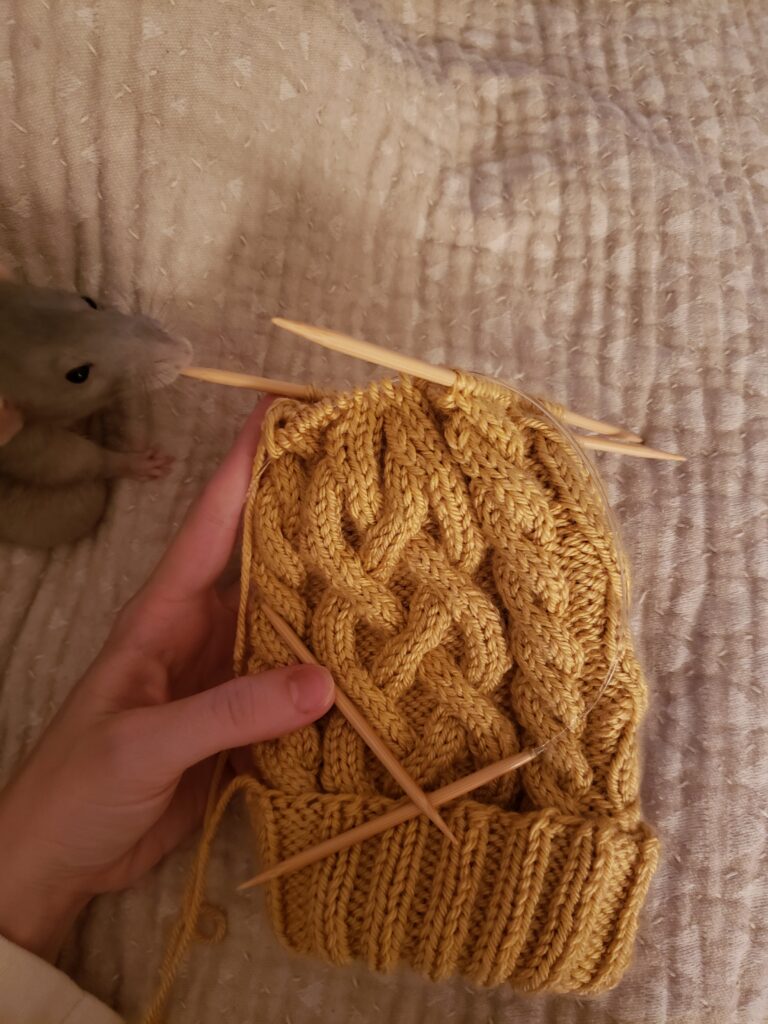
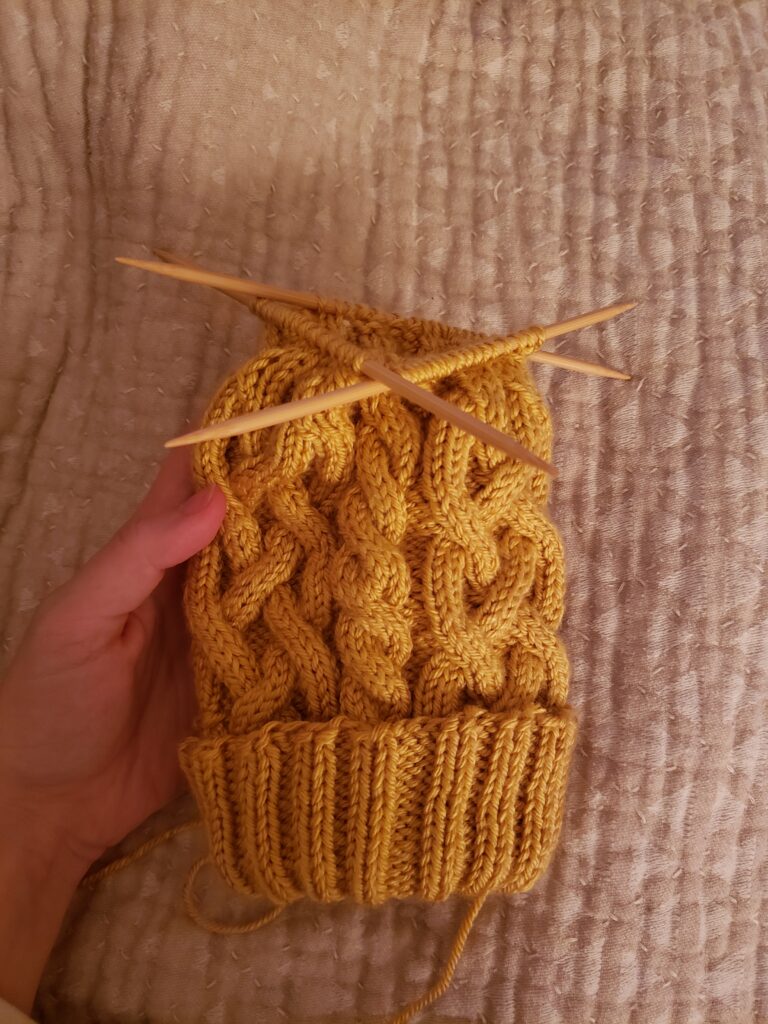
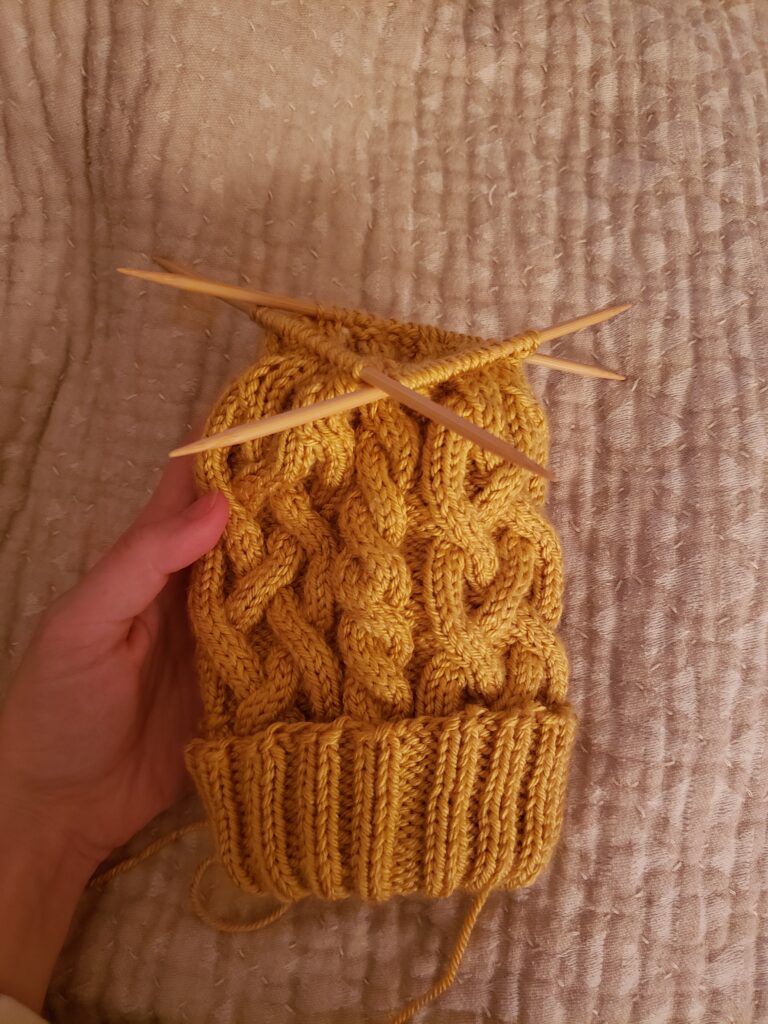
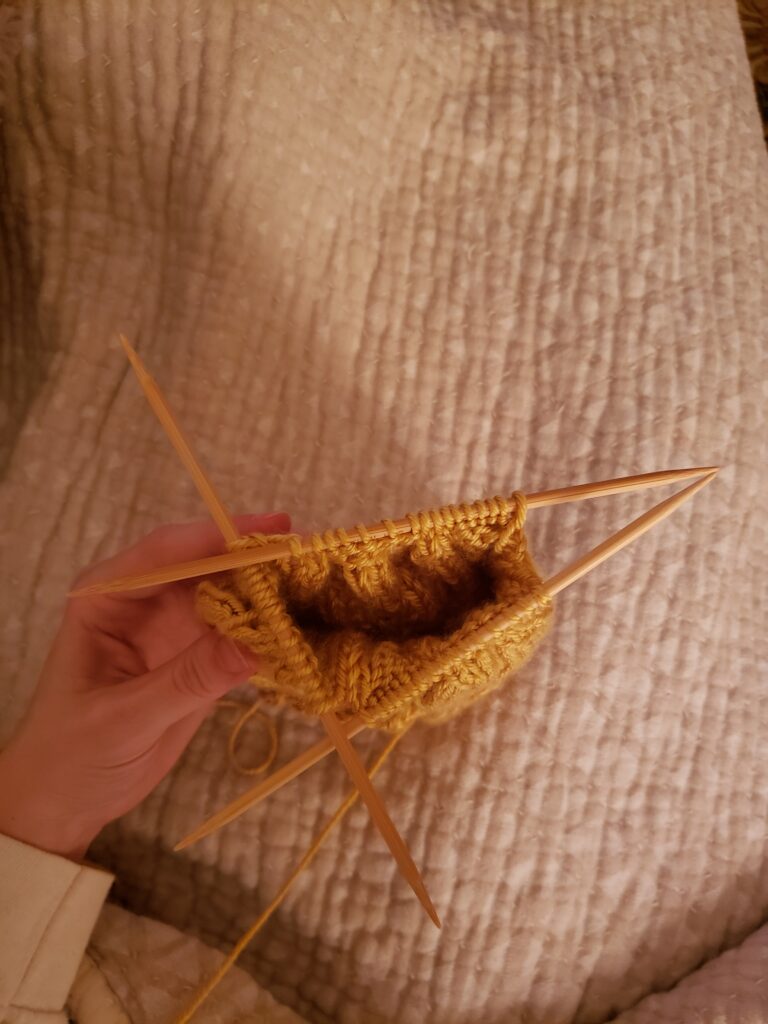
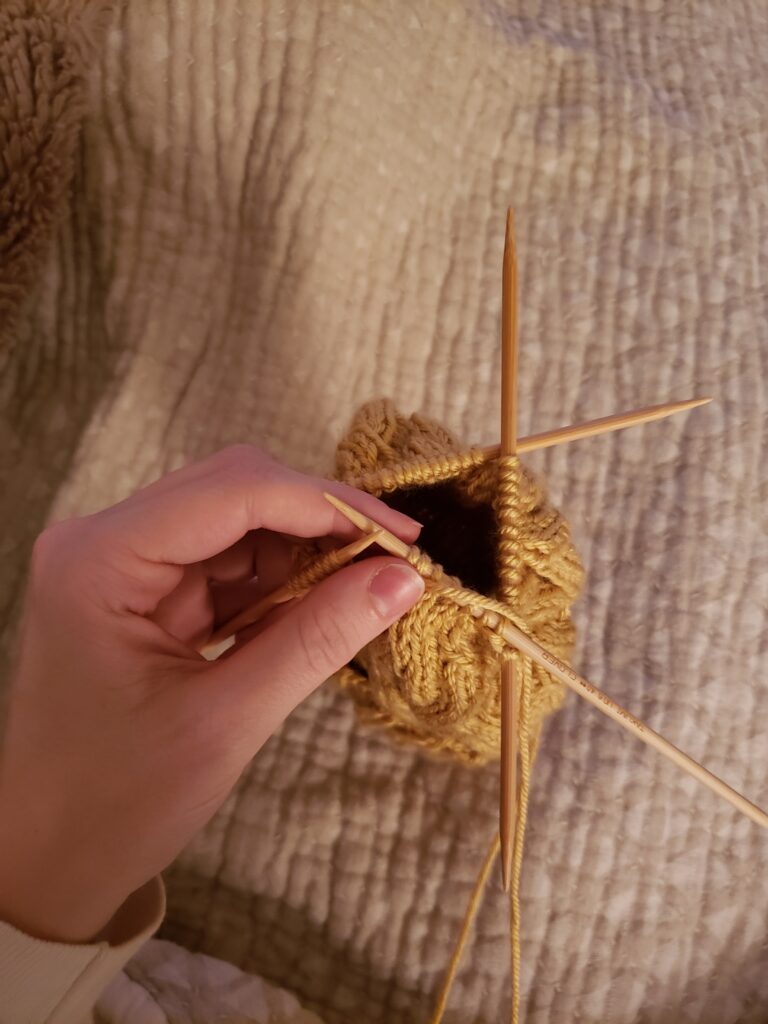
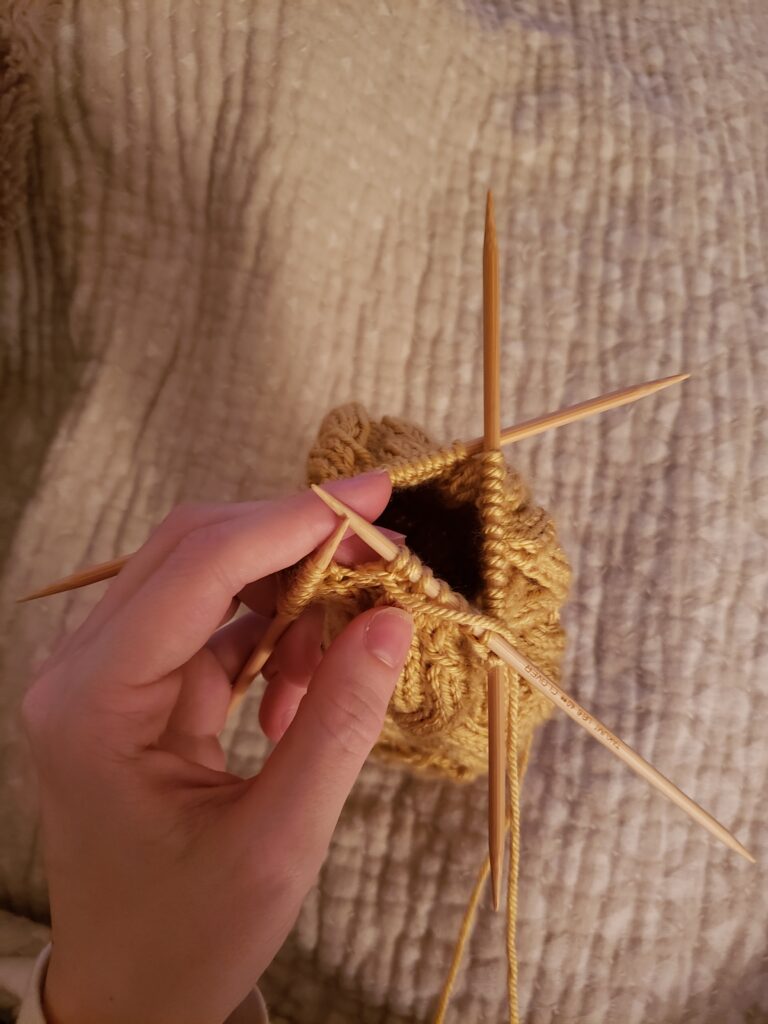
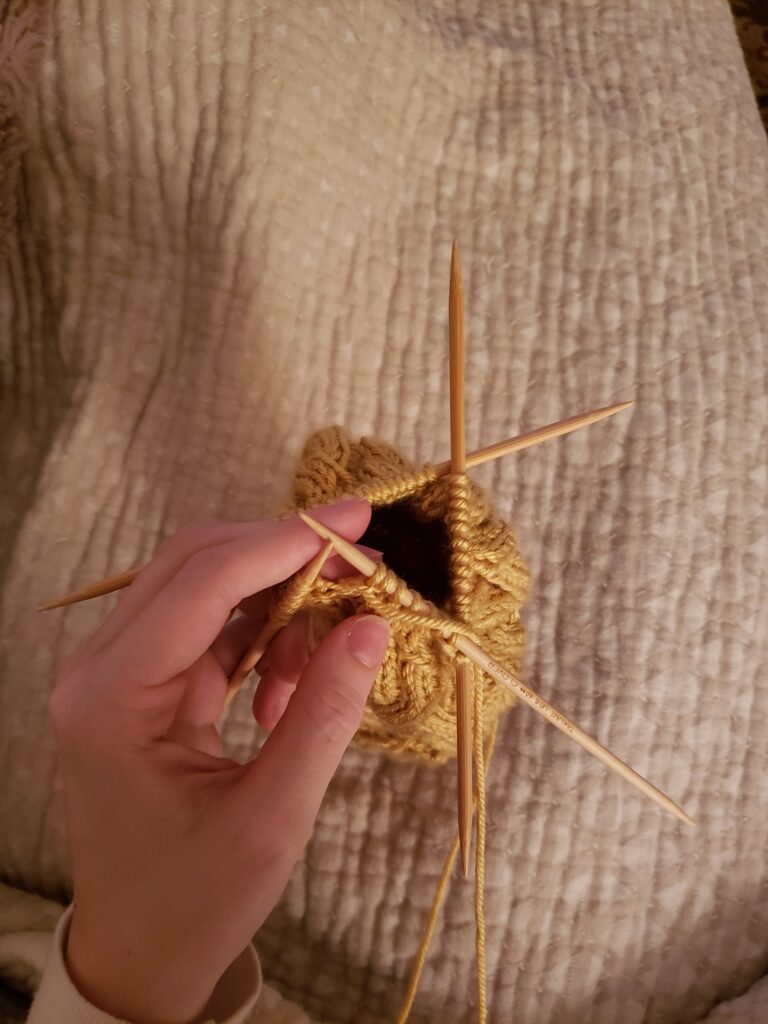
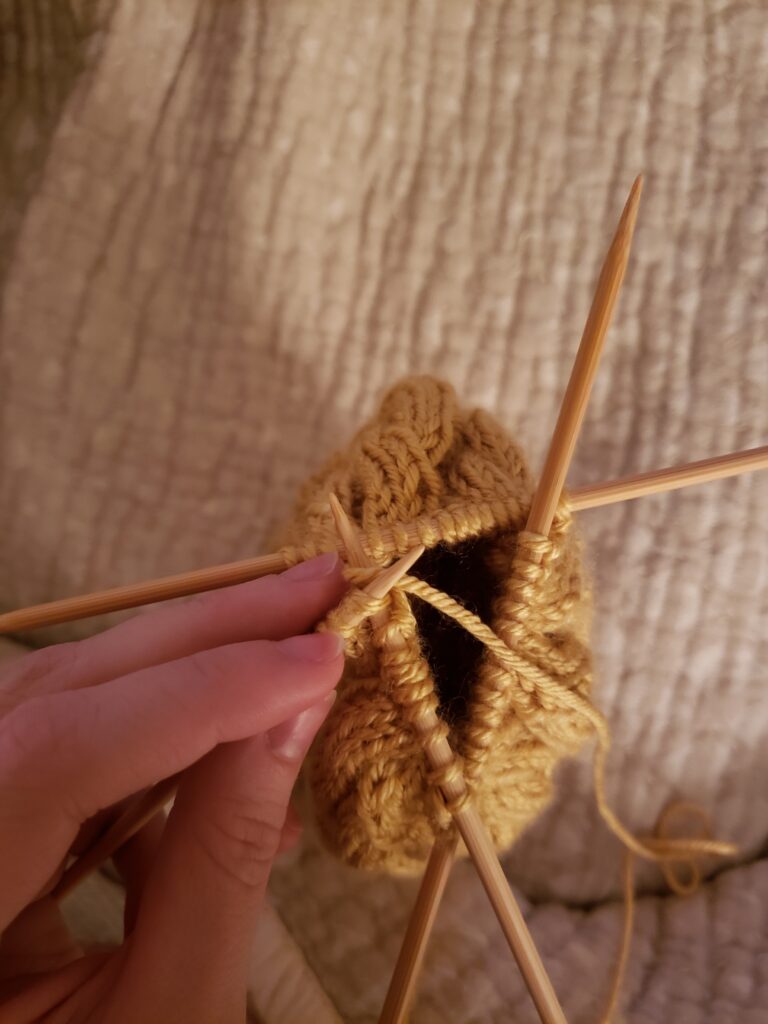
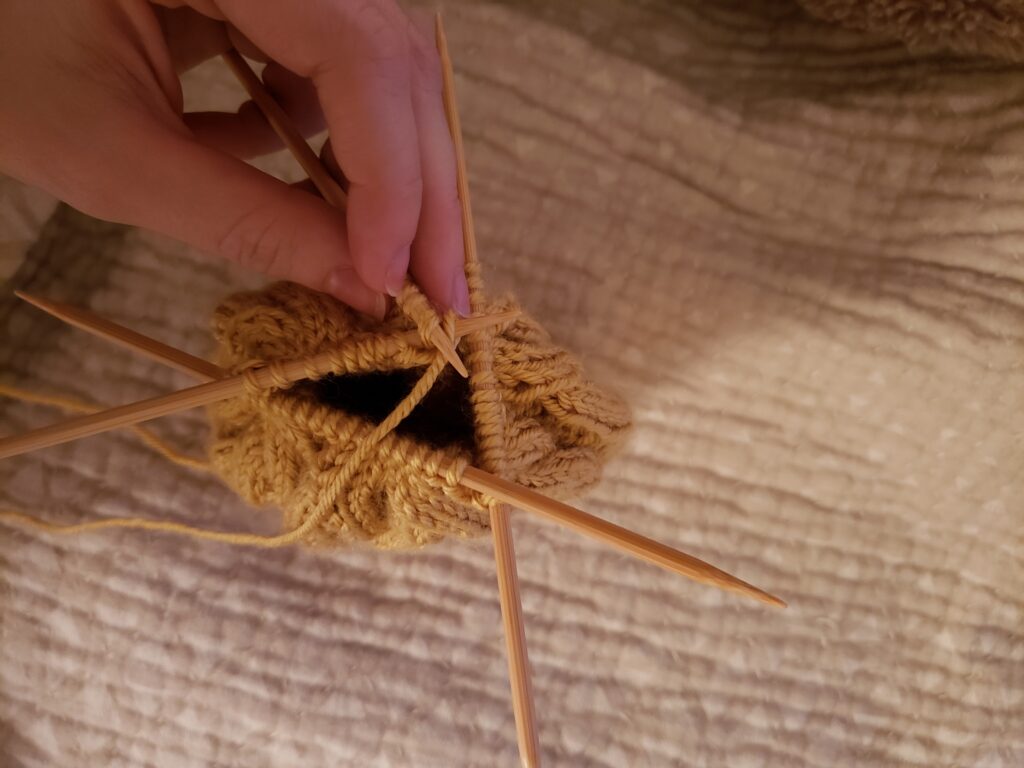
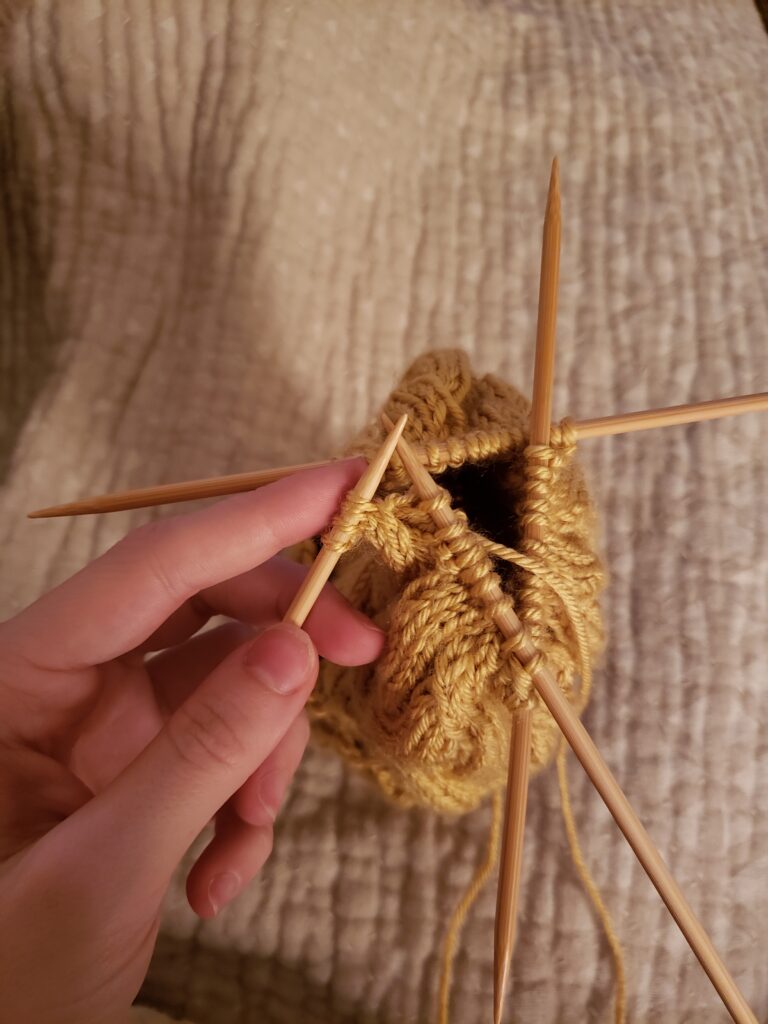
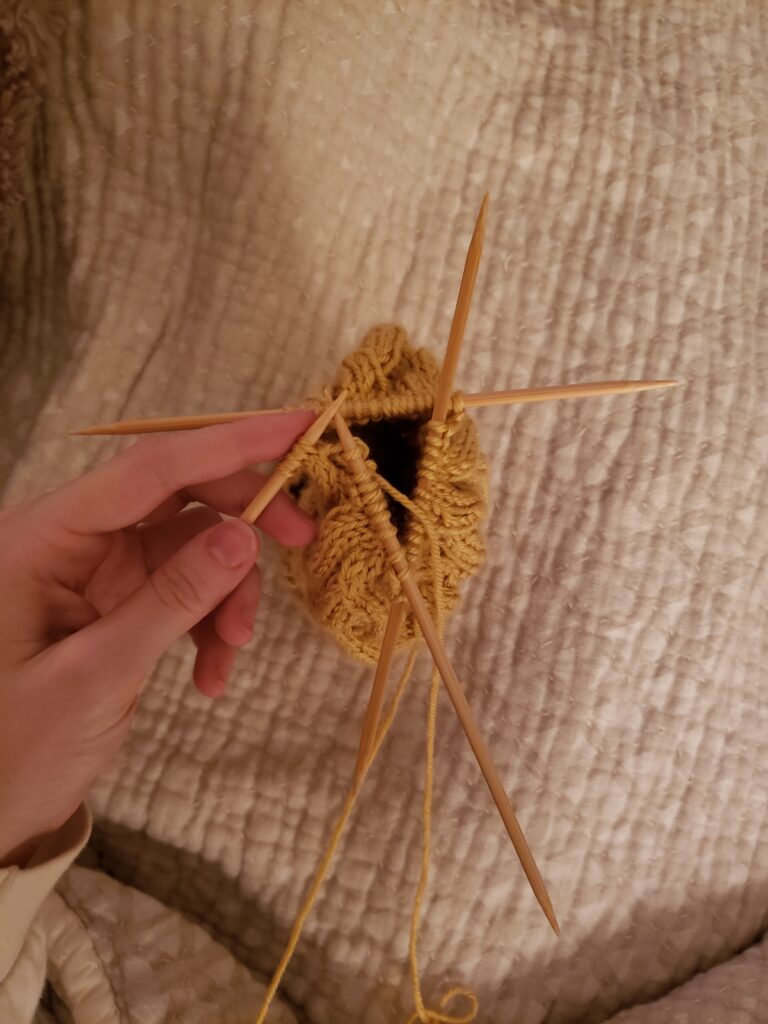
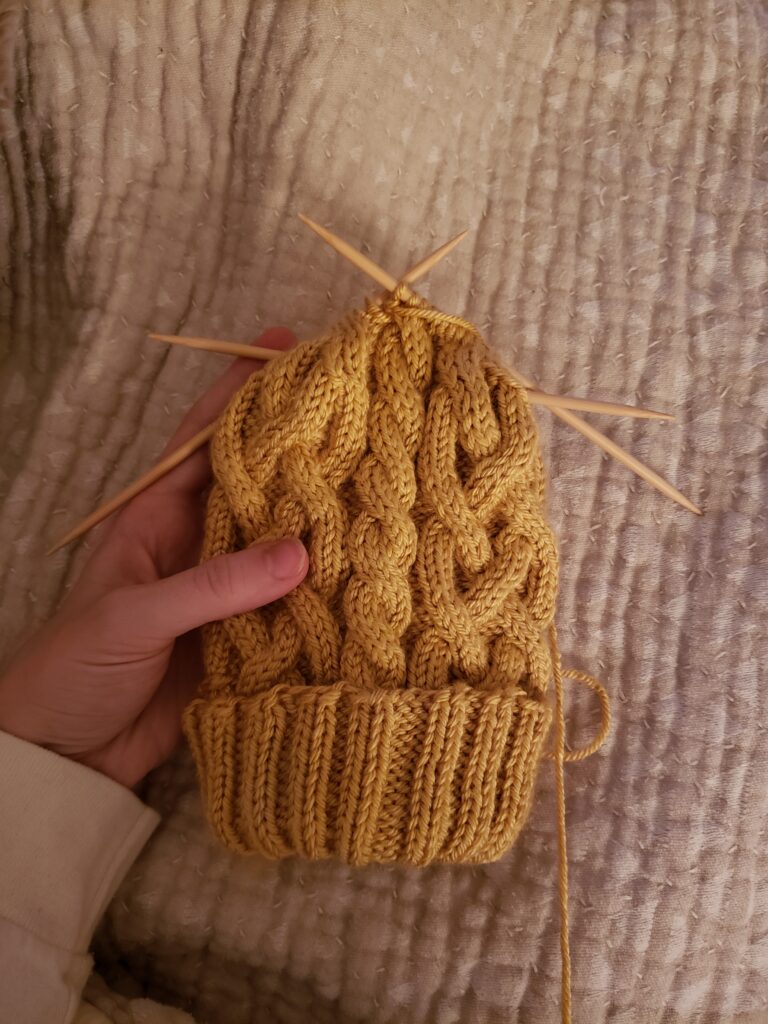
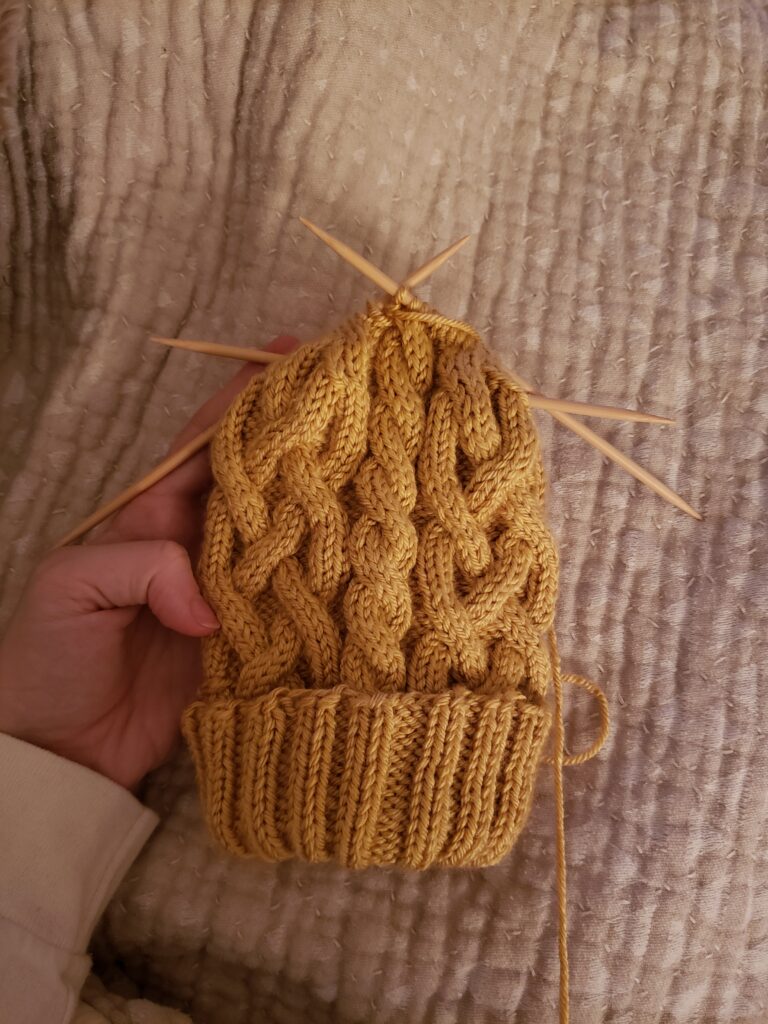
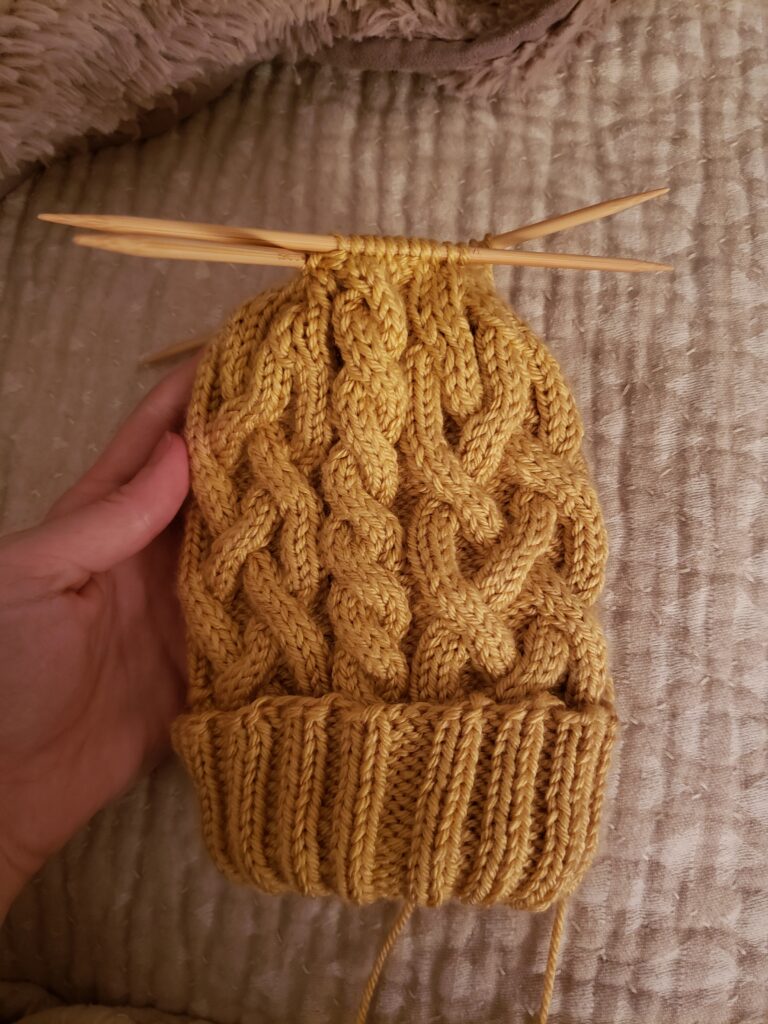
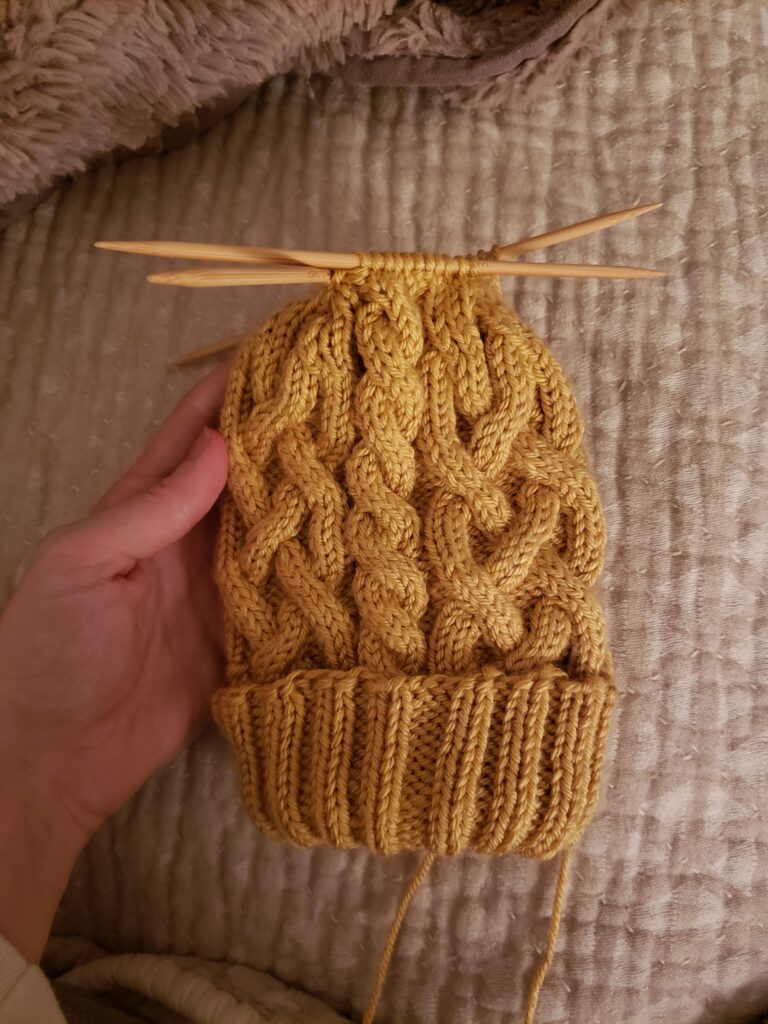
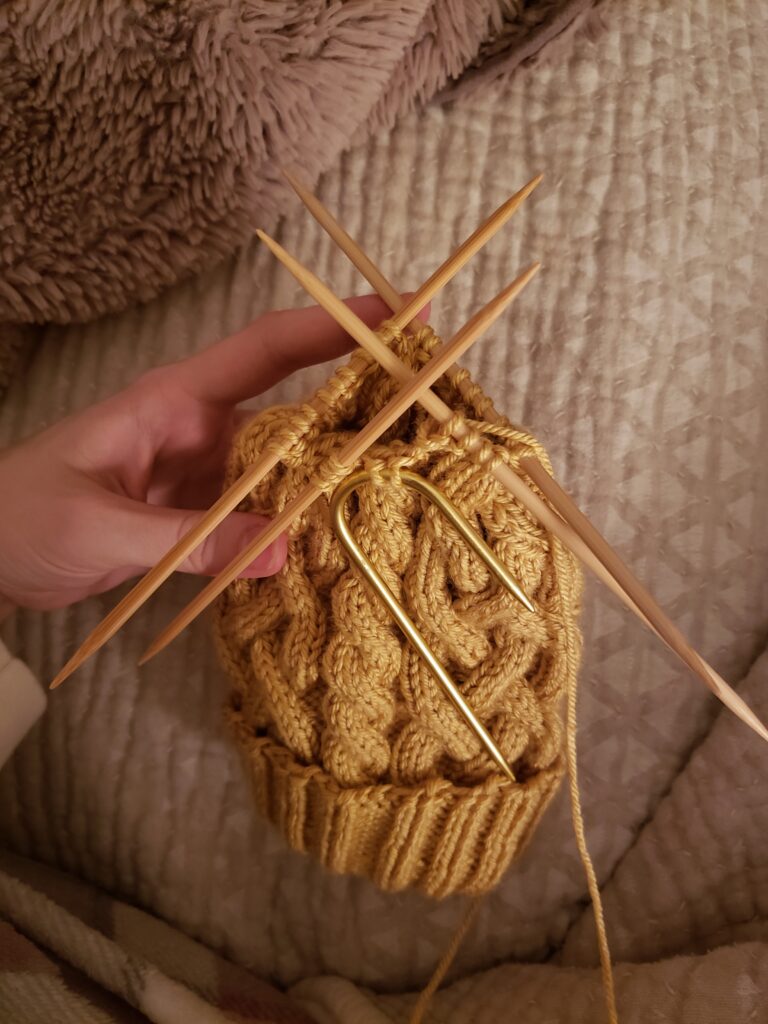
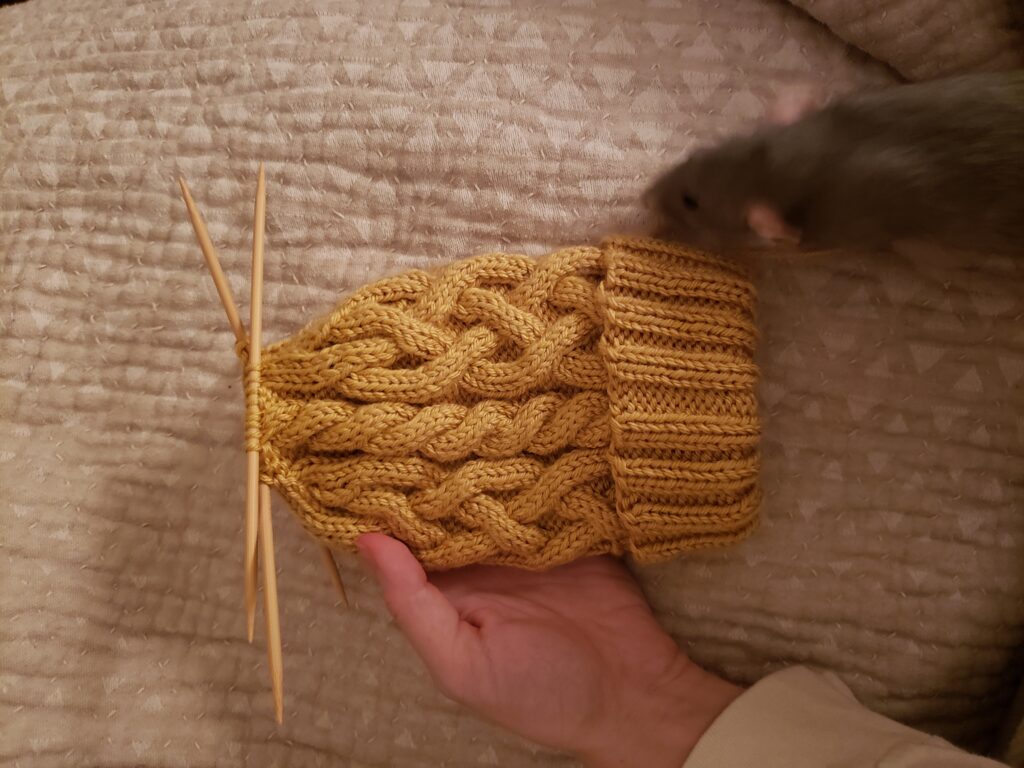
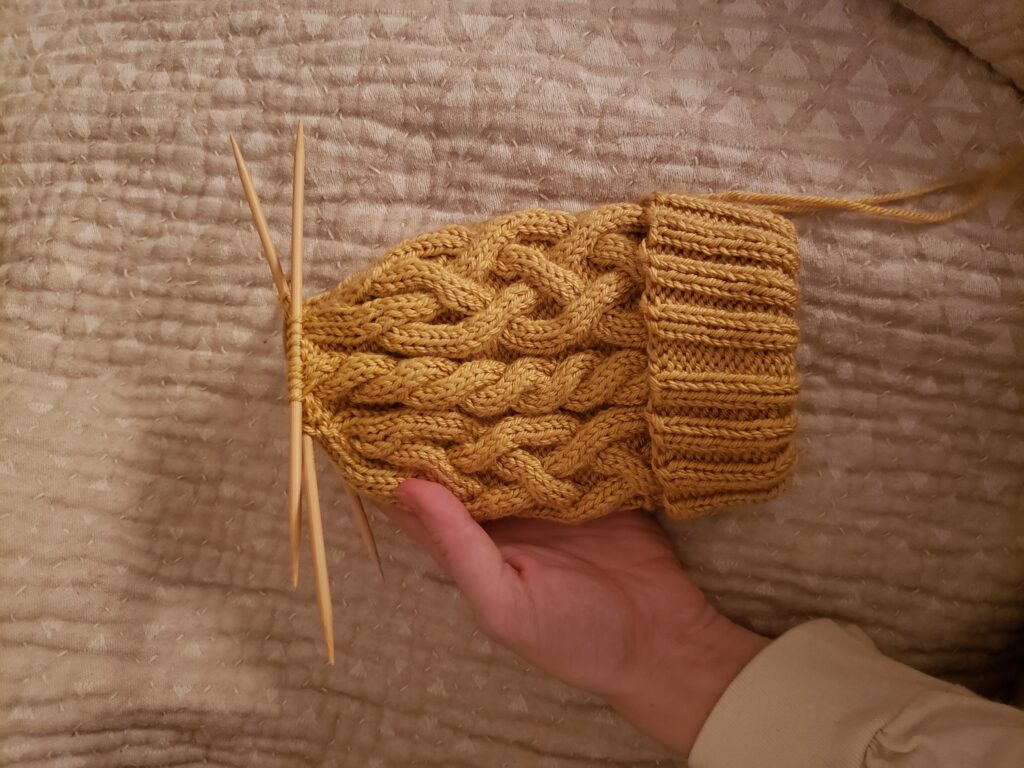
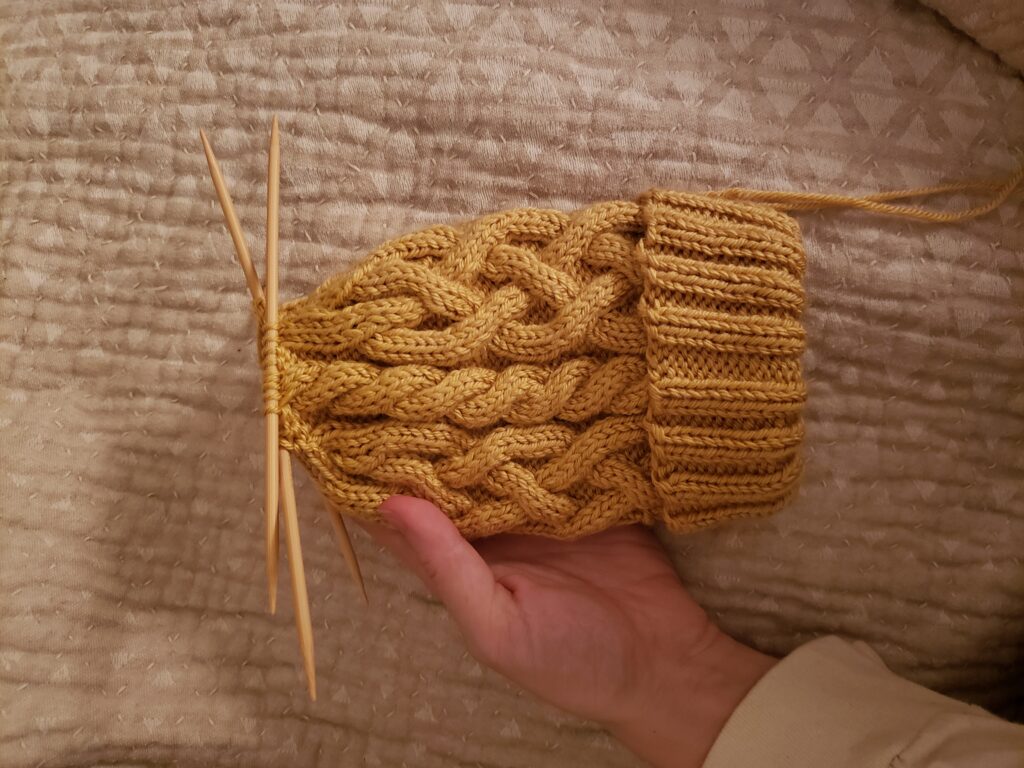
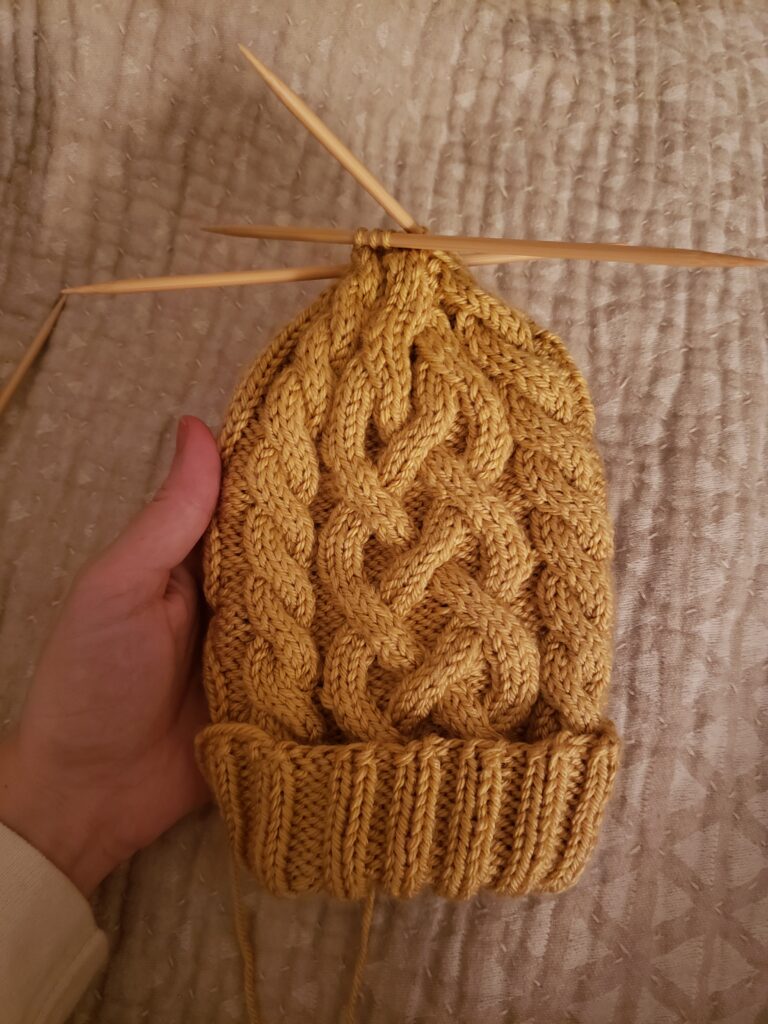
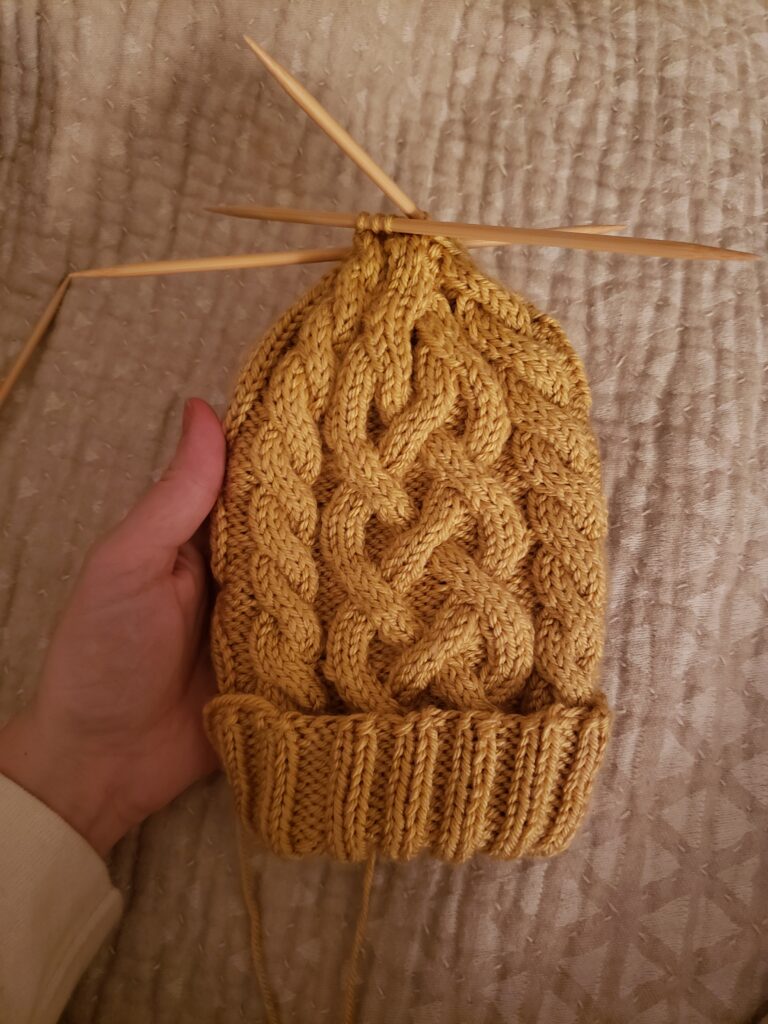
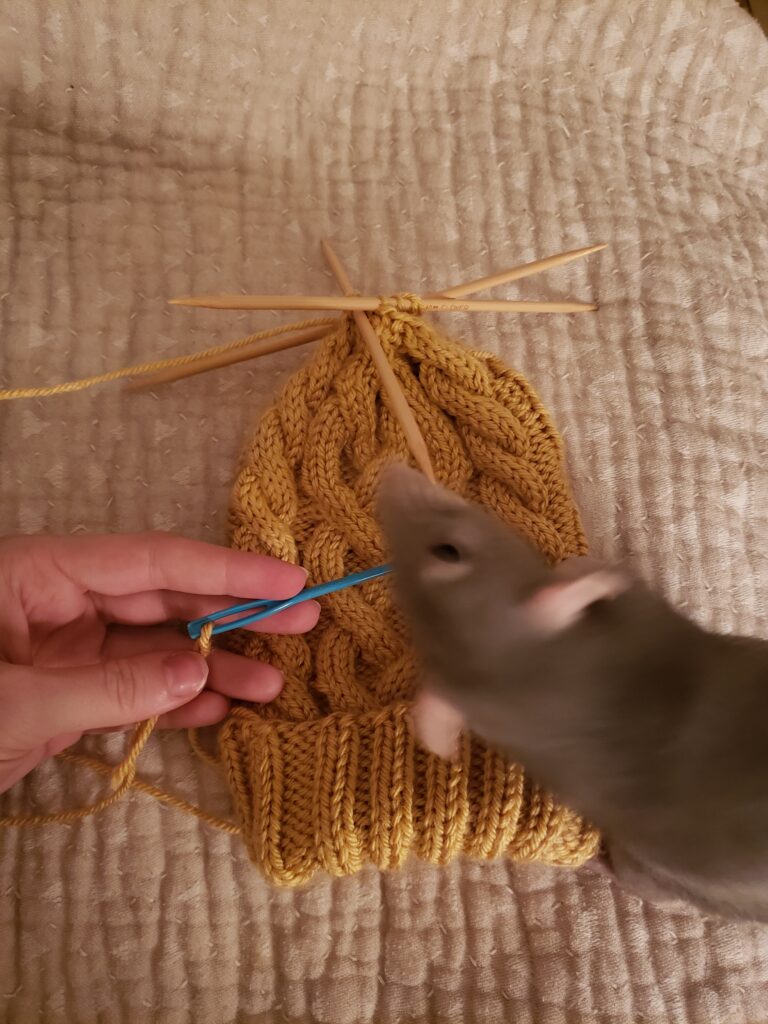
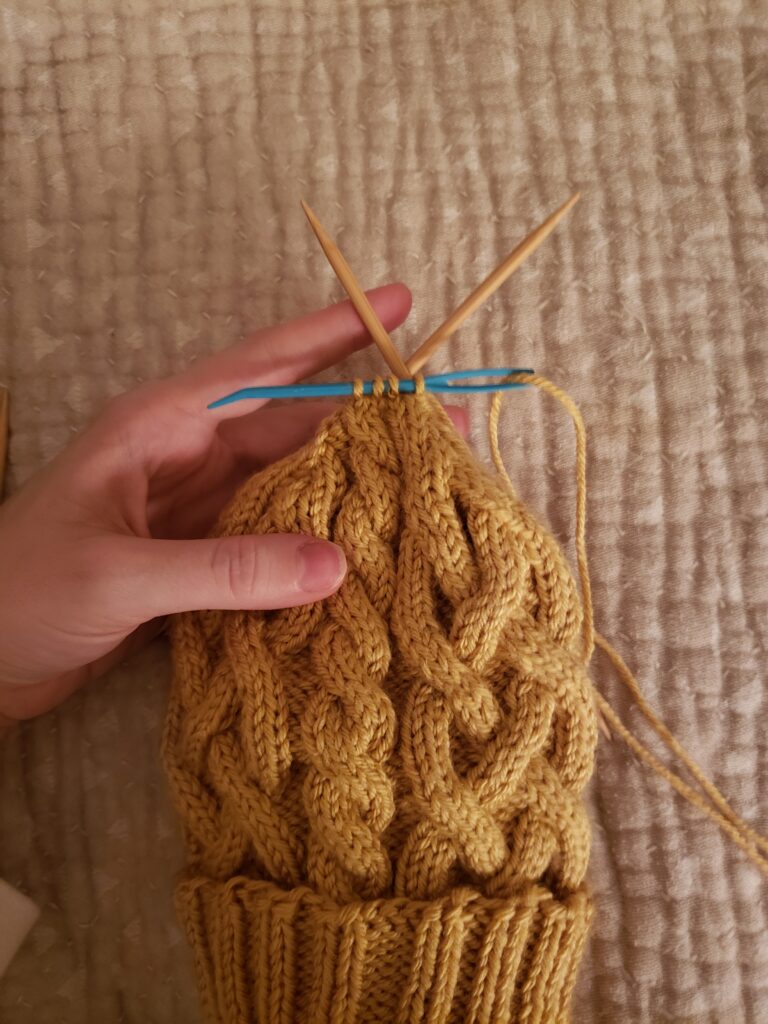
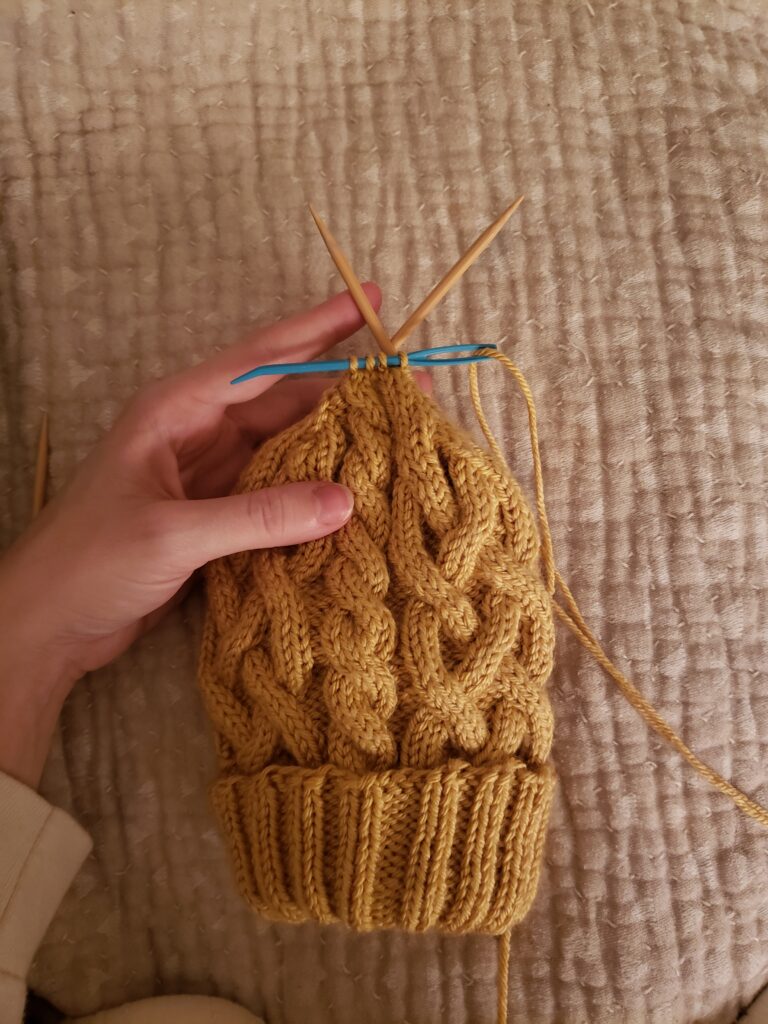
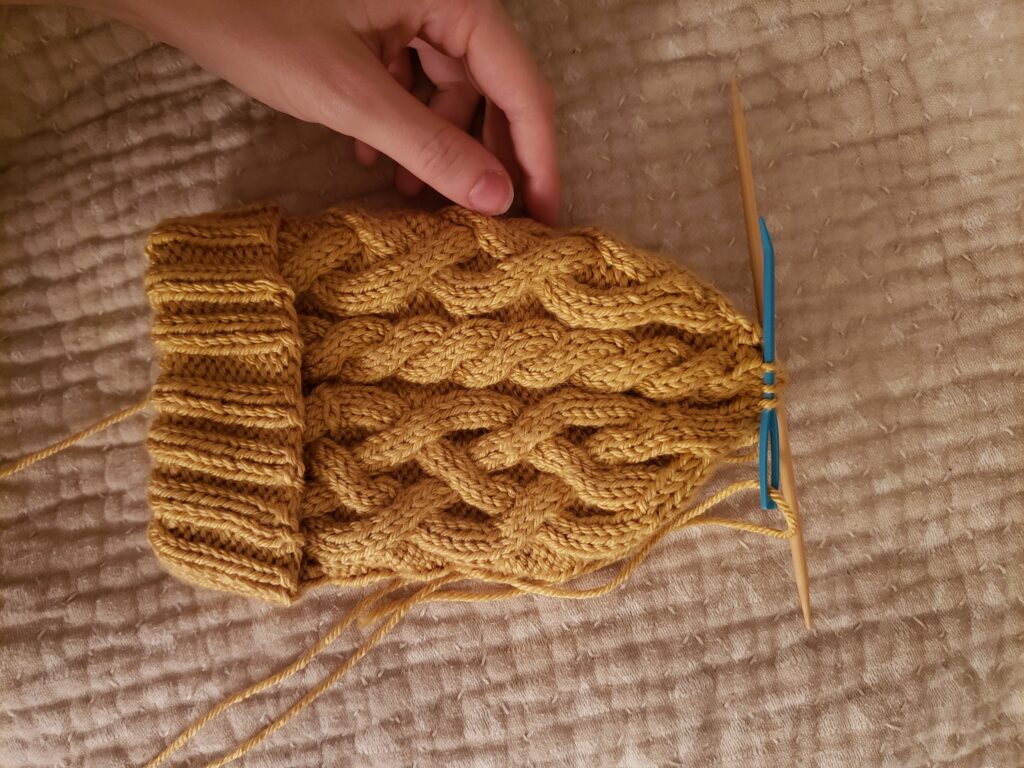
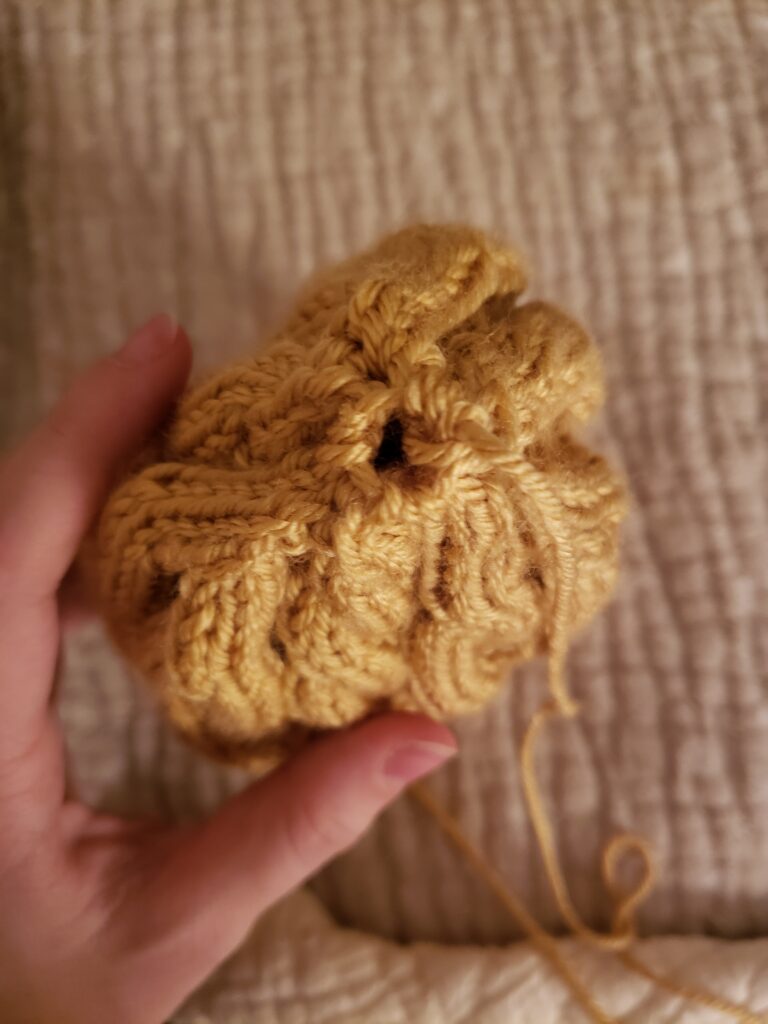
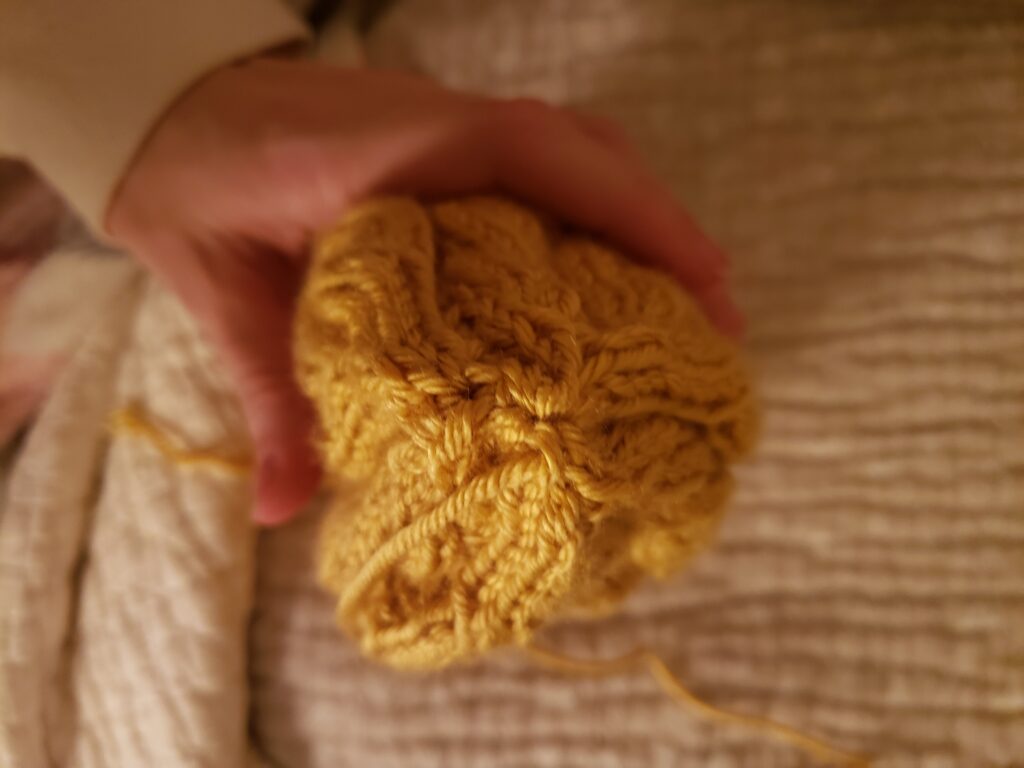
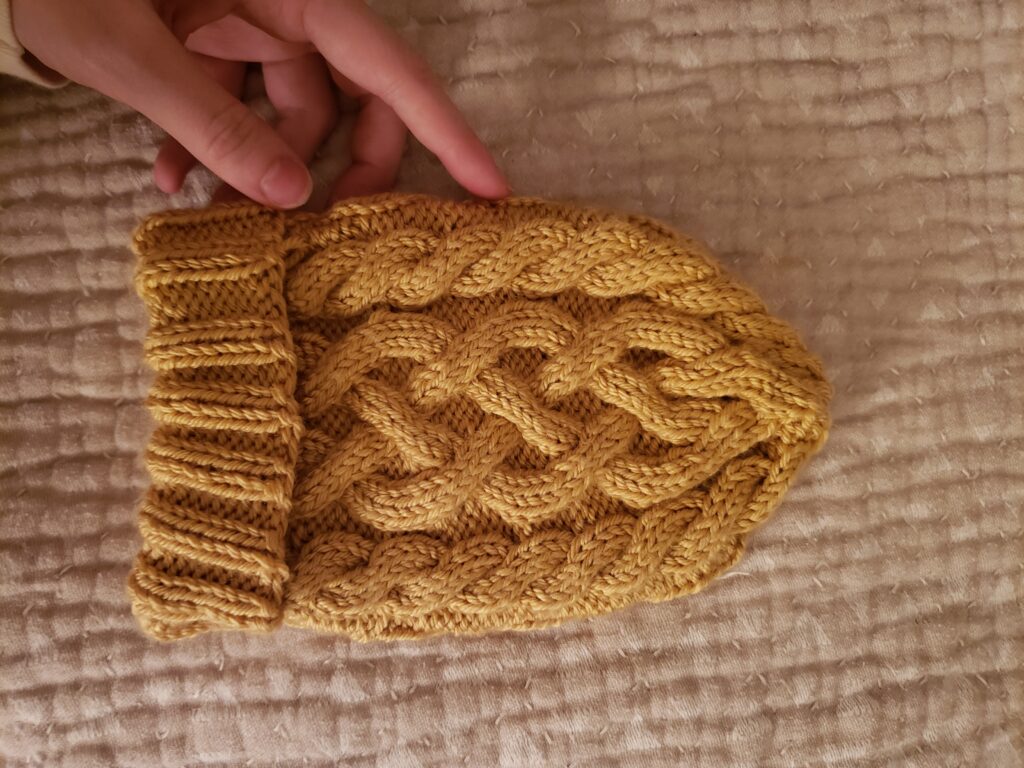
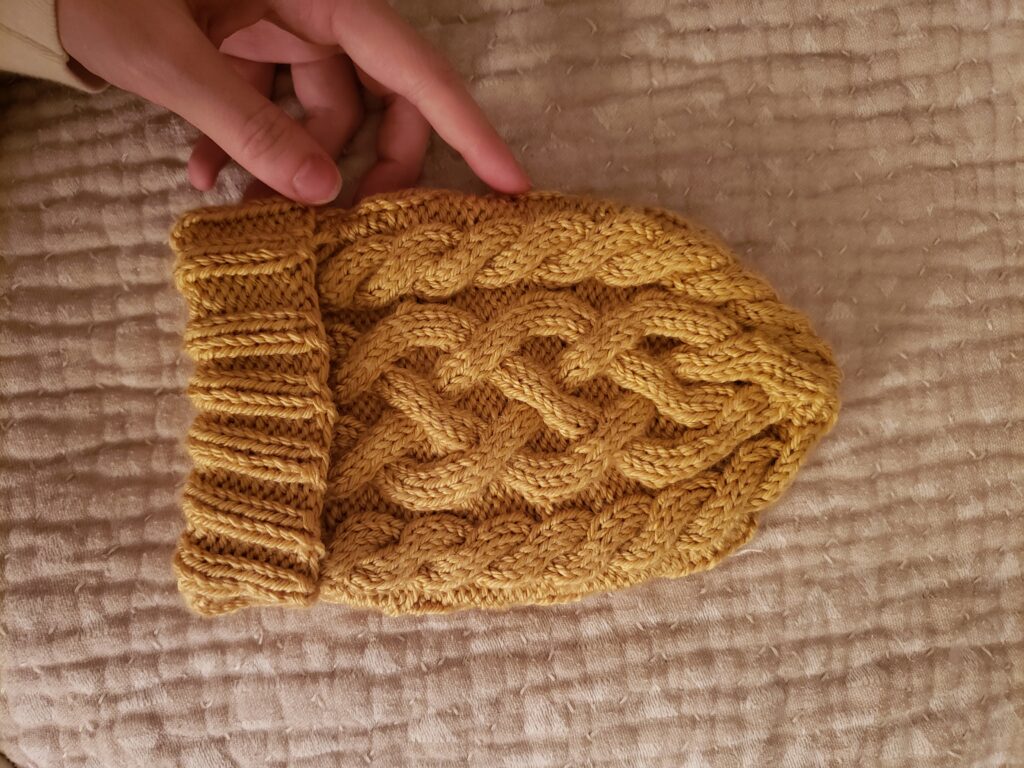
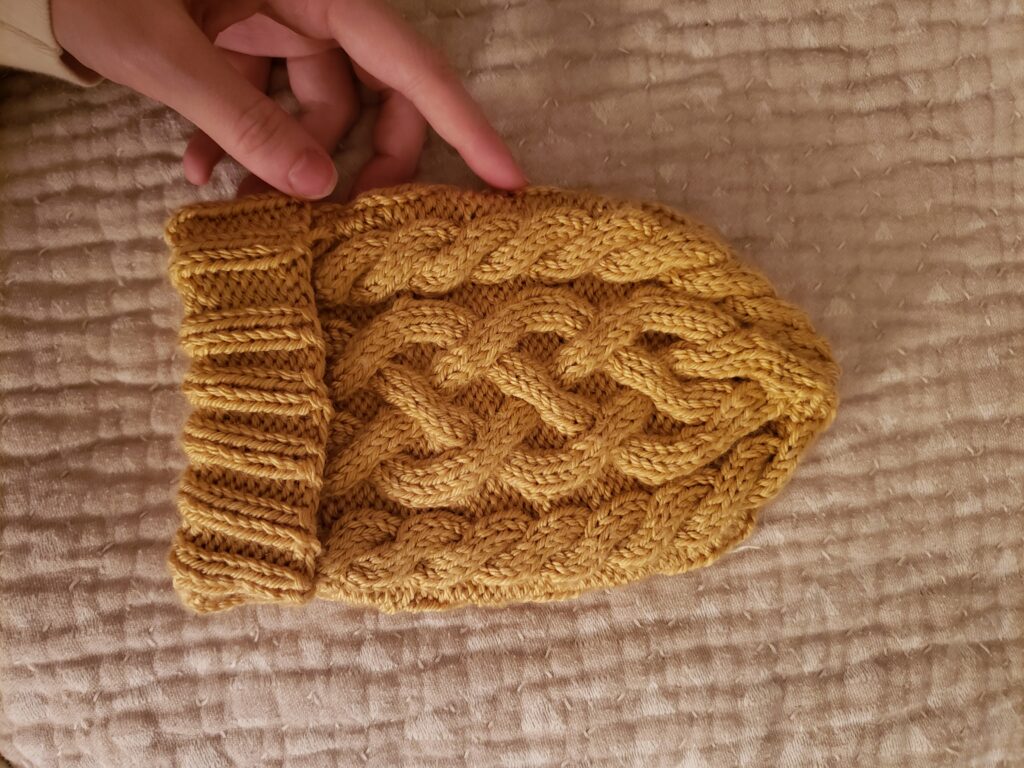
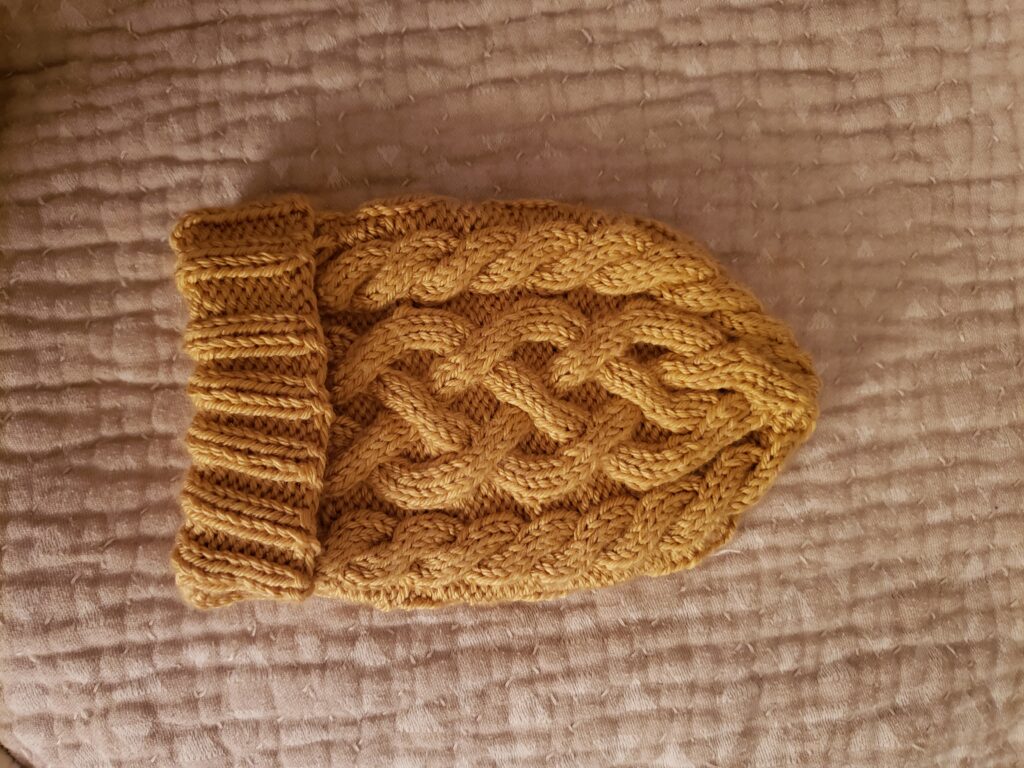
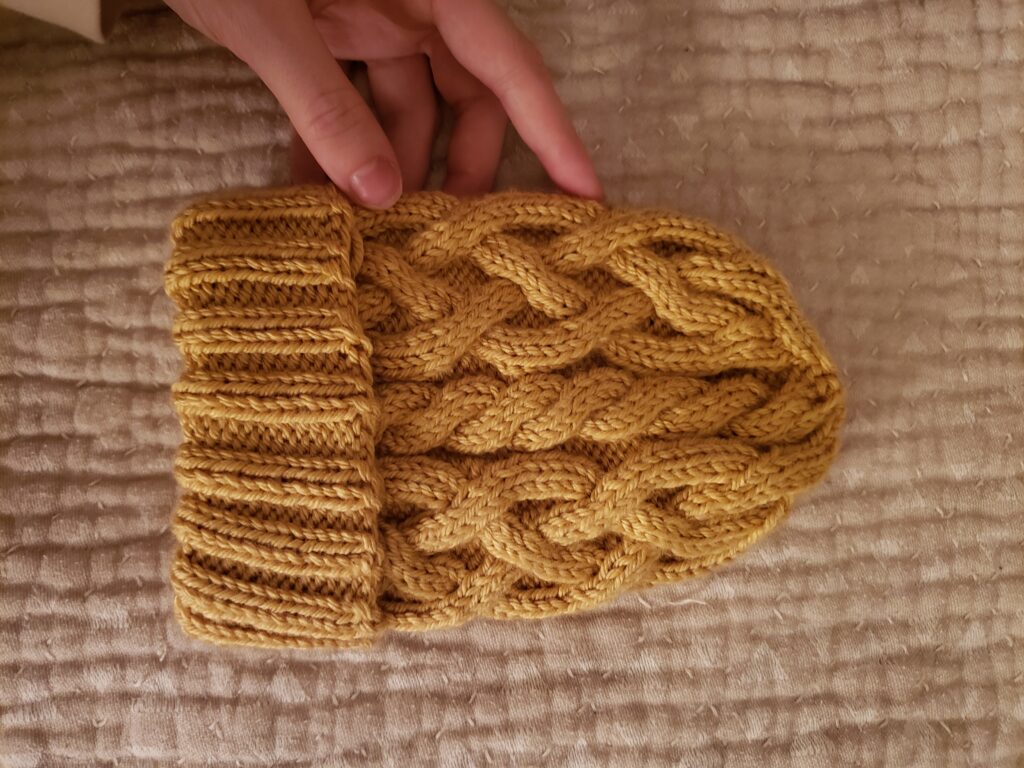
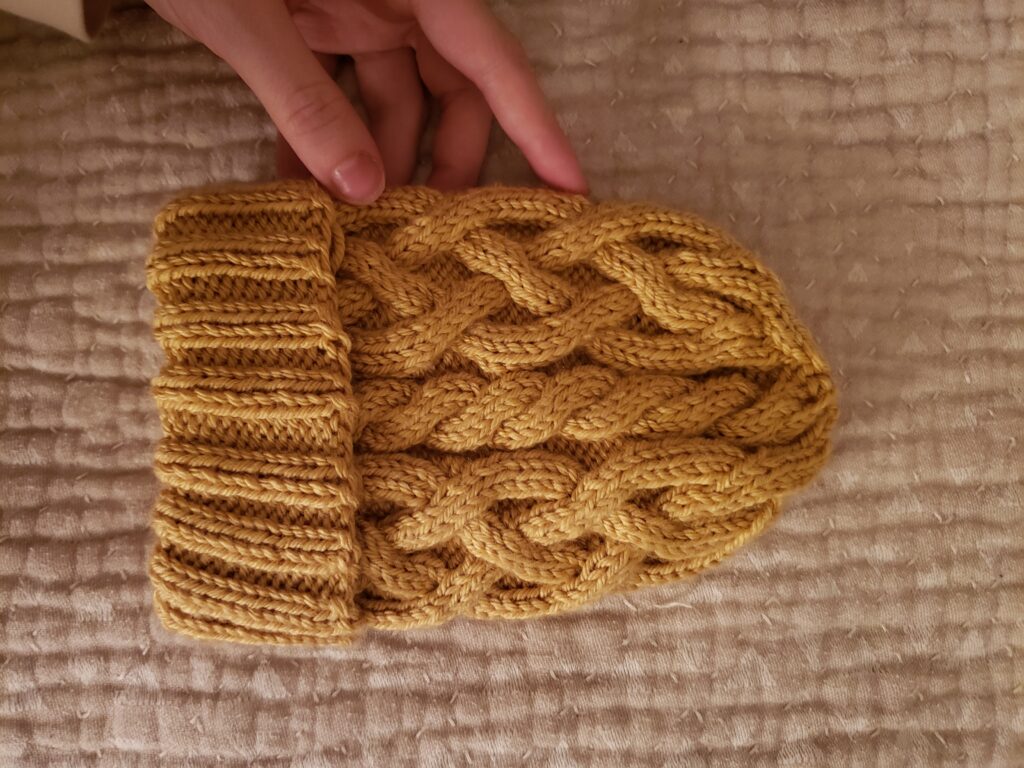
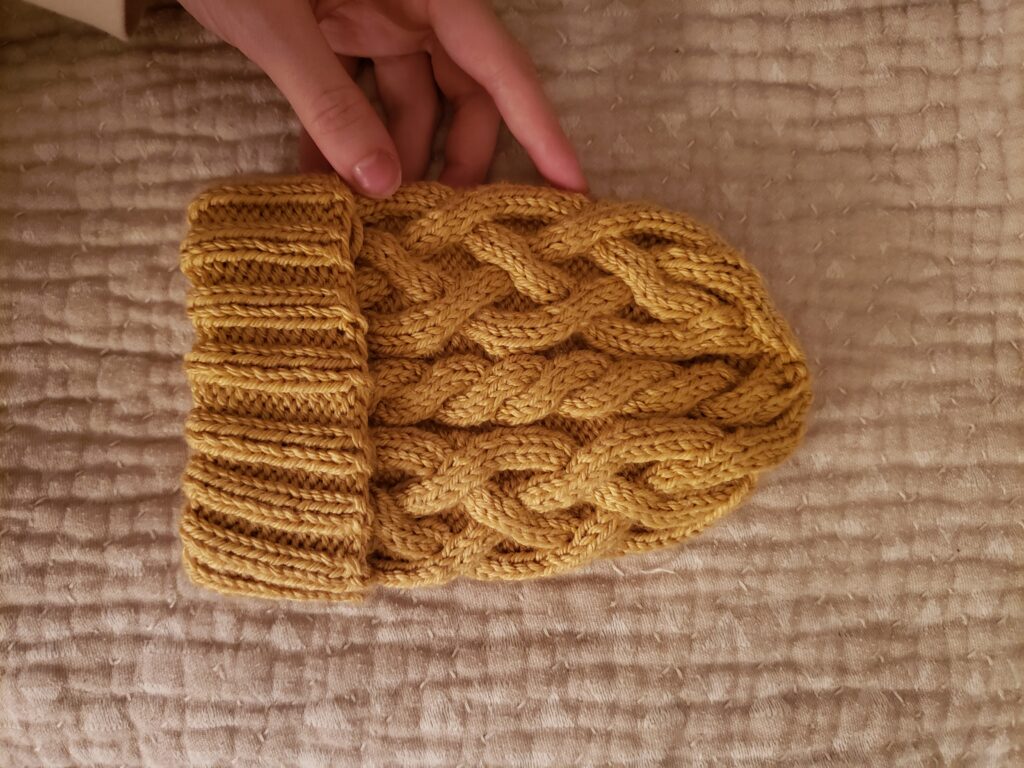
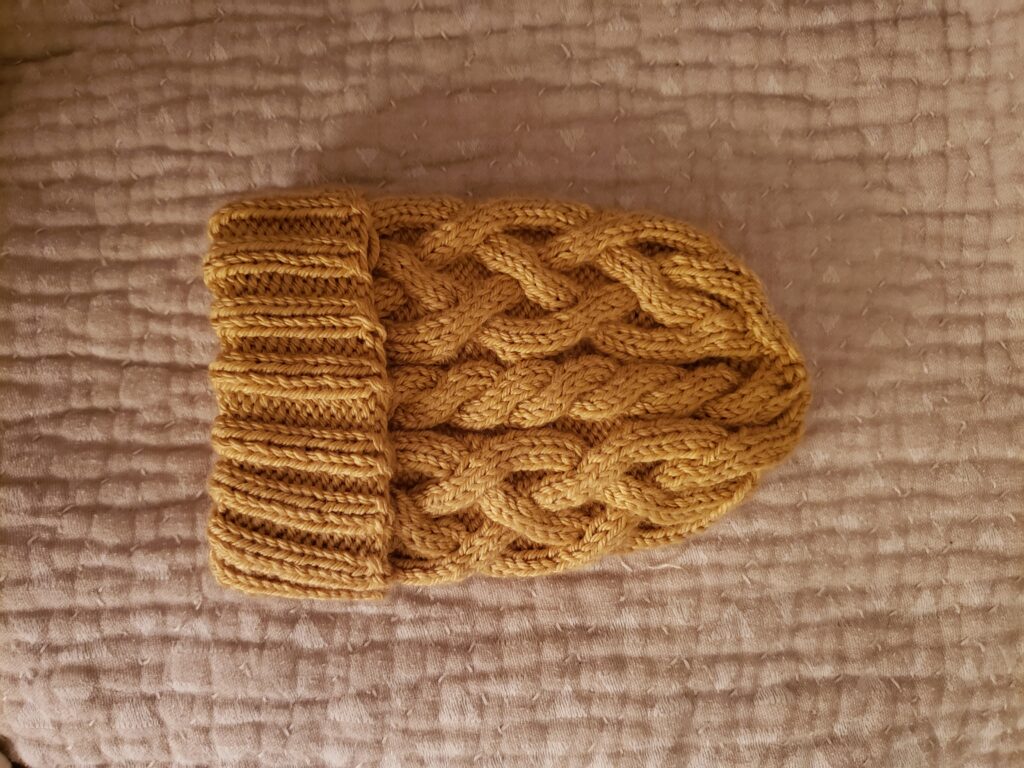
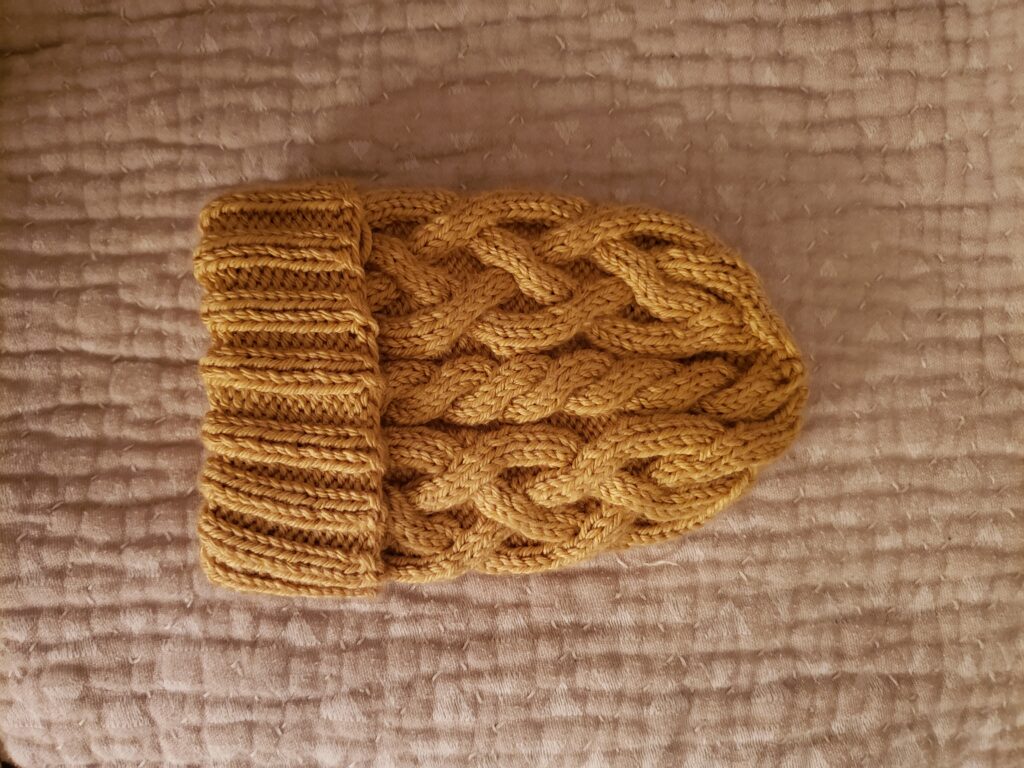
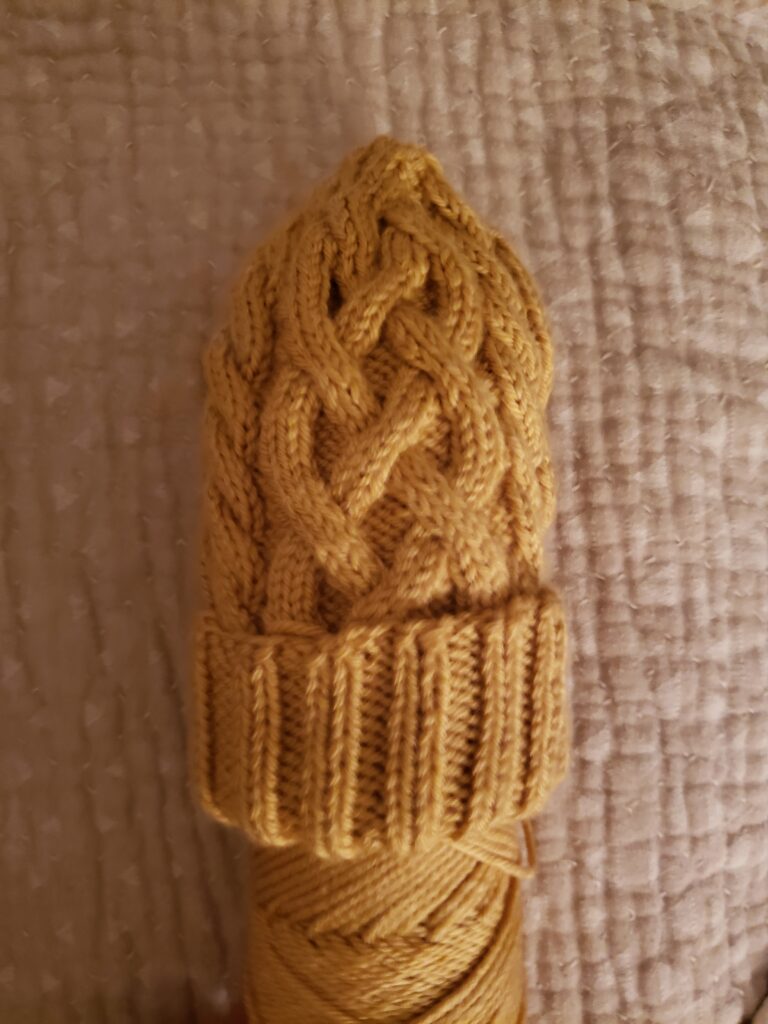
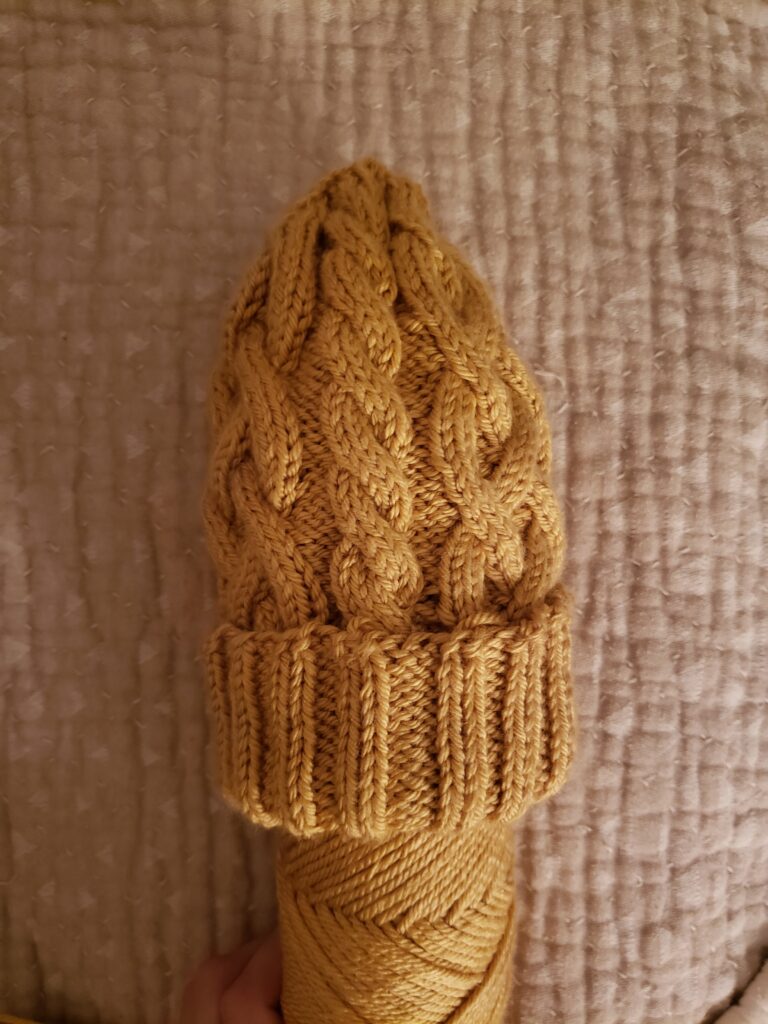
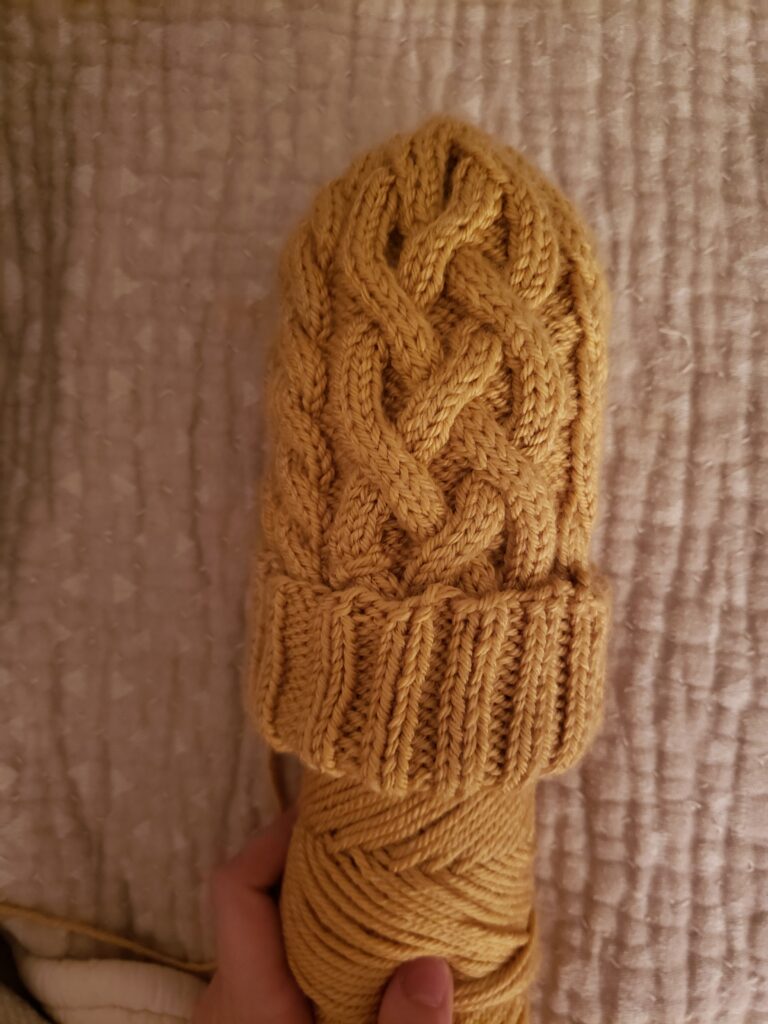
For our final project, I have decided to “play Rumpelstiltskin,” imitating as closely as I can Rumpelstiltskin’s act of turning straw into gold. Similar to the straw mentioned in the tale, yarn is commonplace, unimpressive, and inexpensive (mine cost $3). However, through the process of knitting the yarn into a garment (in my case, a hat), it transforms into something remarkable, beautiful, and much more valuable, like gold. Most of the time I spent knitting was between 11 p.m. and 4 a.m., which allowed me to experience the feeling of laboring through the night as Rumpelstiltskin does in the tale. I estimate that overall, this project took approximately 30 hours to complete, similar to the total time that Rumpelstiltskin would have spent spinning the straw over the course of three sleepless nights.
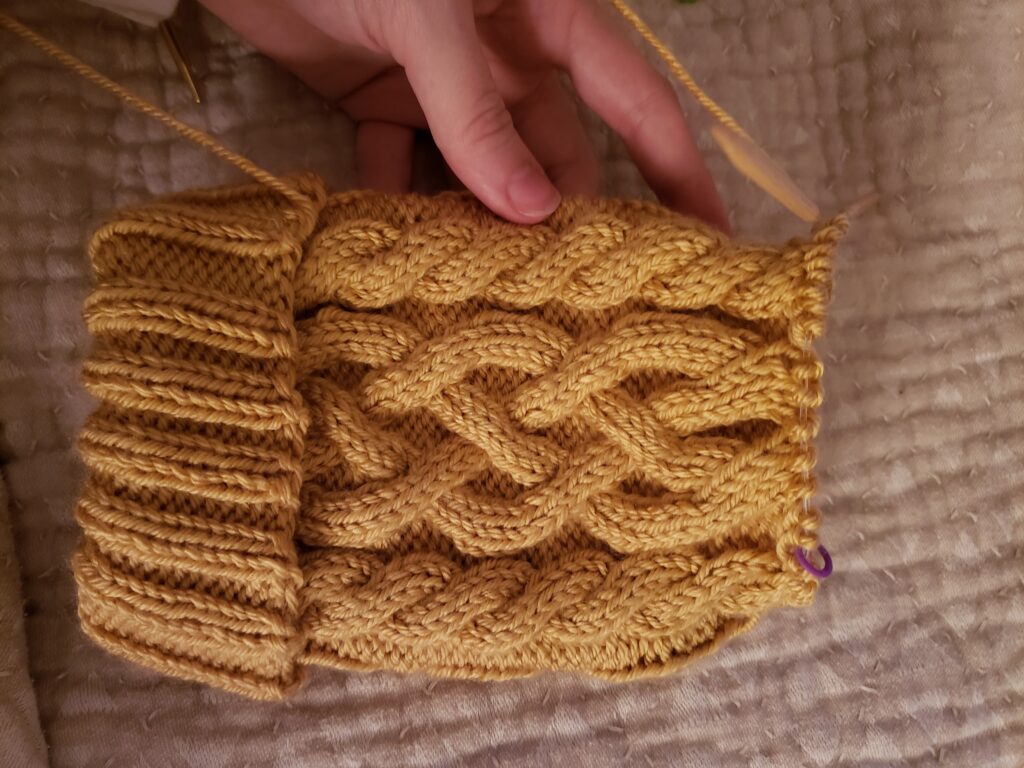
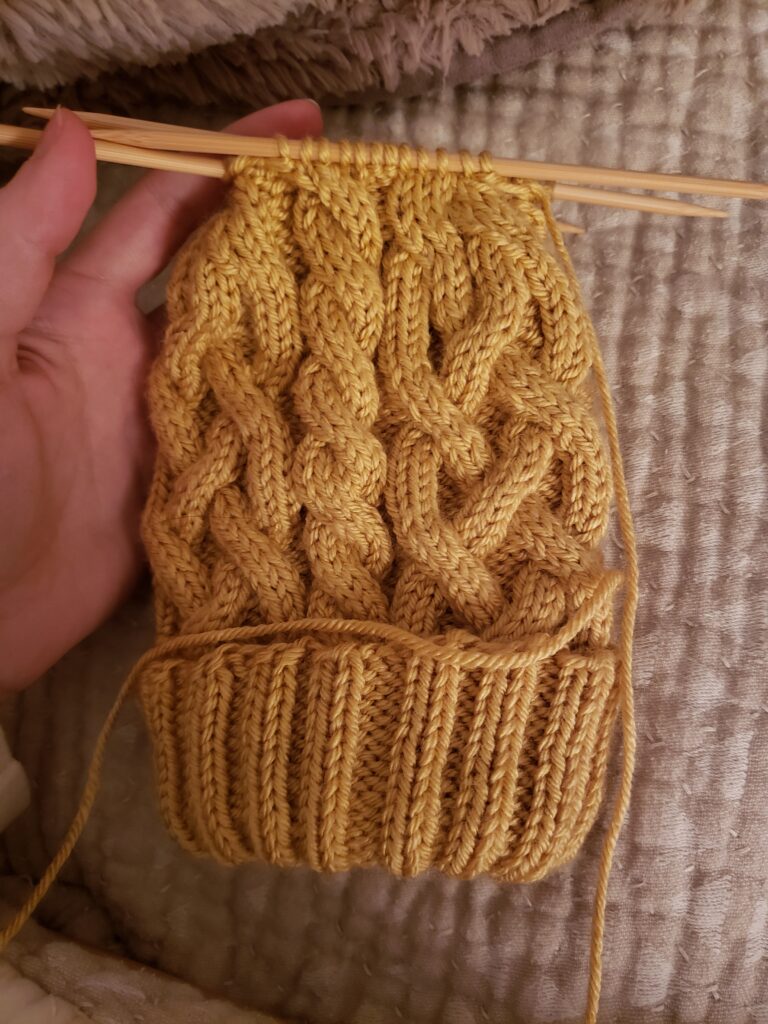
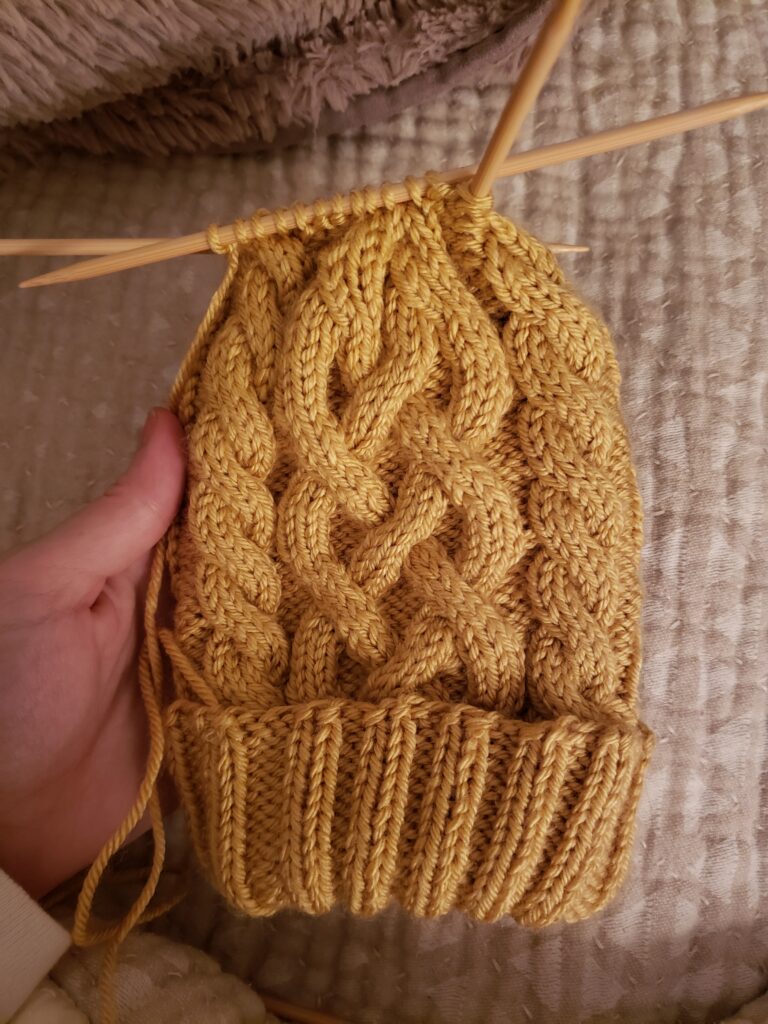
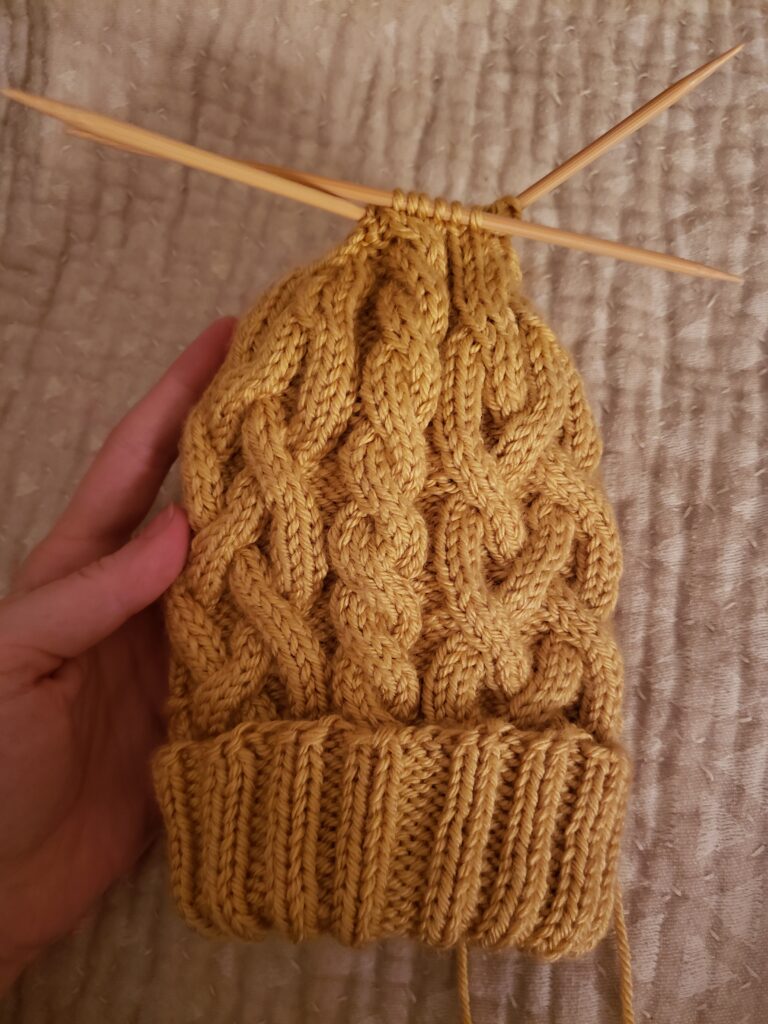
I’ve chosen this pattern because the number of cables and crosses creates a very intricate design with a lot of movement, mimicking the motion of the spinning wheel and the thread it produces as Rumpelstiltskin works his magic.
The pattern is written in child size, representing the child that the queen promises to Rumpelstiltskin in exchange for his help. Conversely, it can also represent Rumpelstiltskin’s dwarfish stature–the hat would probably fit him, too.
This pattern’s distinctive intertwining of cables also relates to traditional Irish cable knit sweaters, whose distinctive cable patterns were used by family members to identify dead fisherman who washed up on shore. This hat’s cables could be the distinctive pattern that identifies Rumpelstiltskin–a signature that goes beyond the name he so carefully guards.
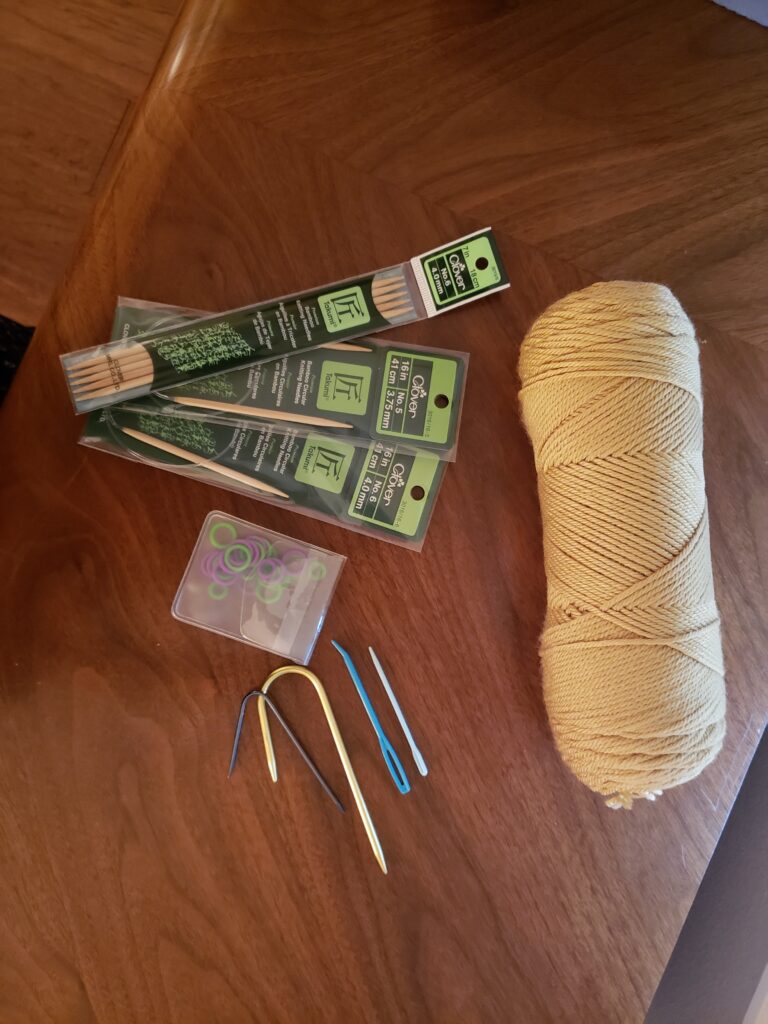
Yarn: Caron Simply Soft Autumn Maize
I chose this yarn for its color, which falls somewhere between straw and bright gold. It also has the greatest sheen of widely available yarns of its type, mimicking the shine of Rumpelstiltskin’s golden thread.
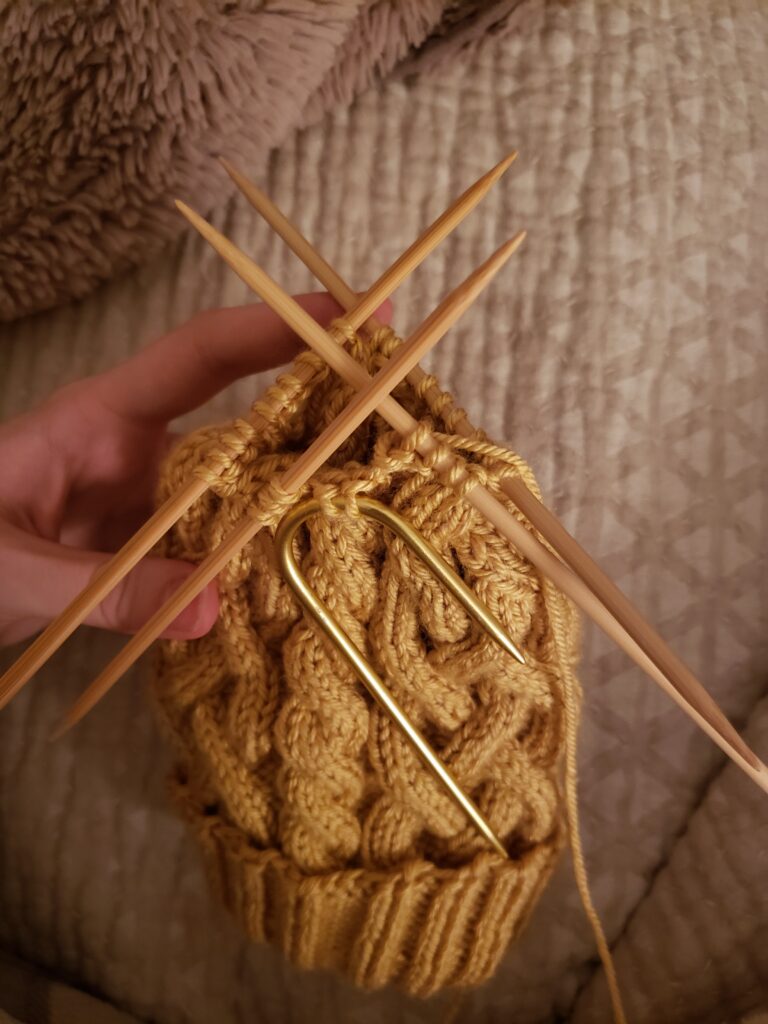
Stitches used: Cast-on method of choice, knit, purl, k2tog, p2tog, ssk, c6f, c6b, left cross, right cross, bind-off method of choice
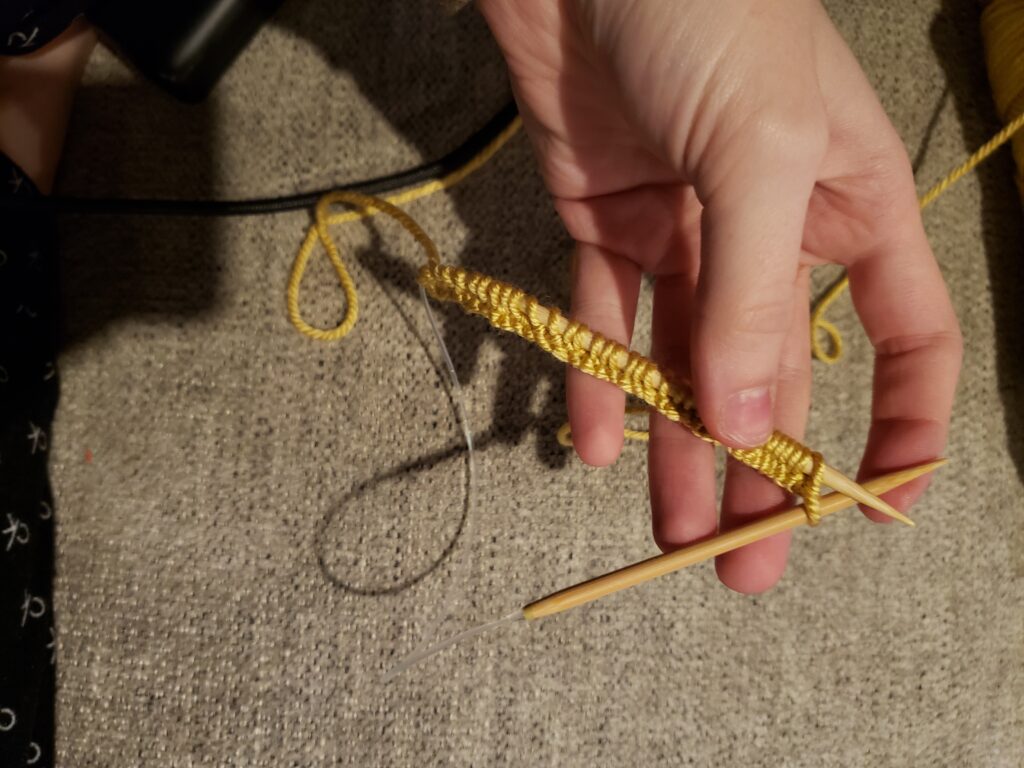
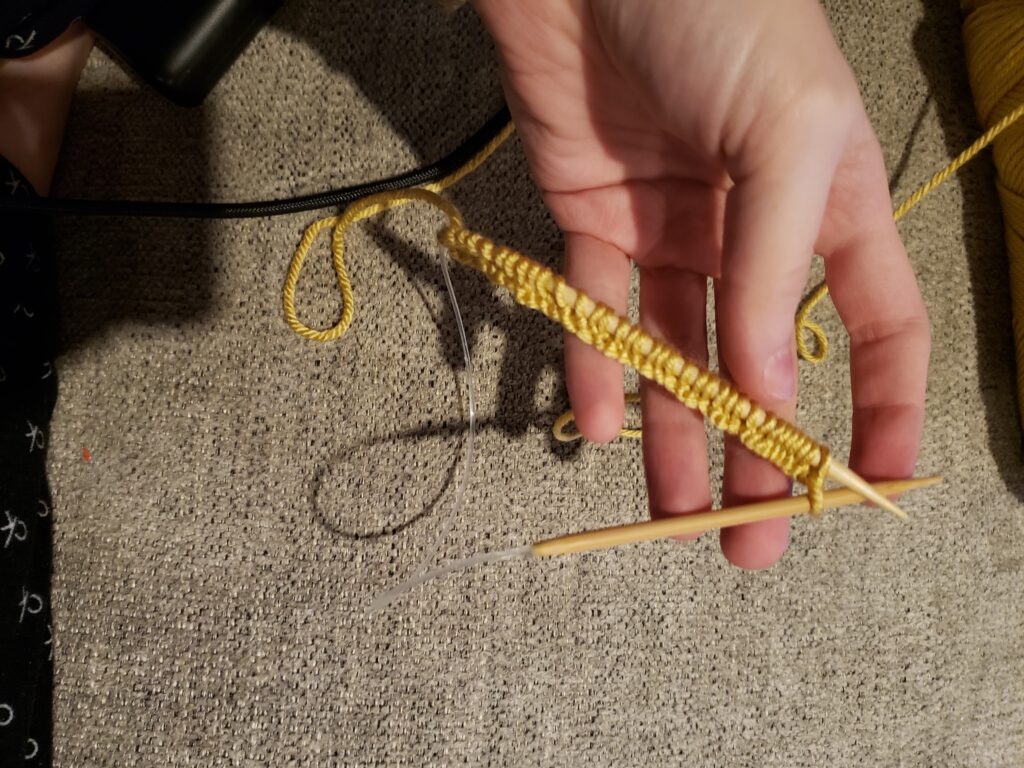
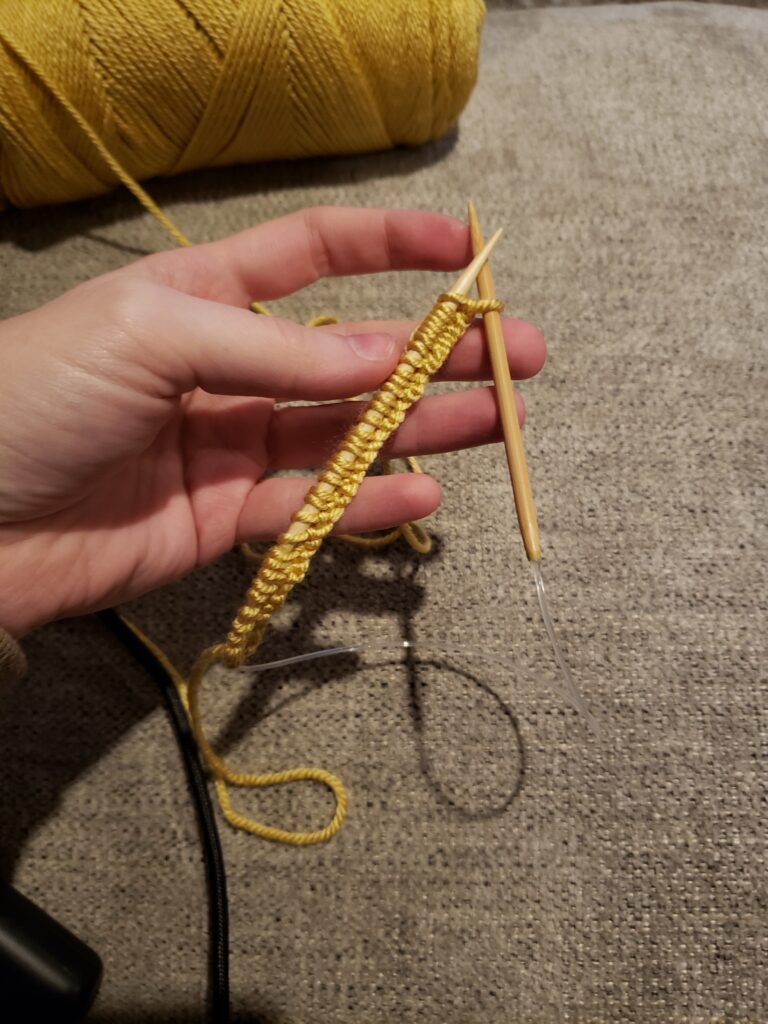
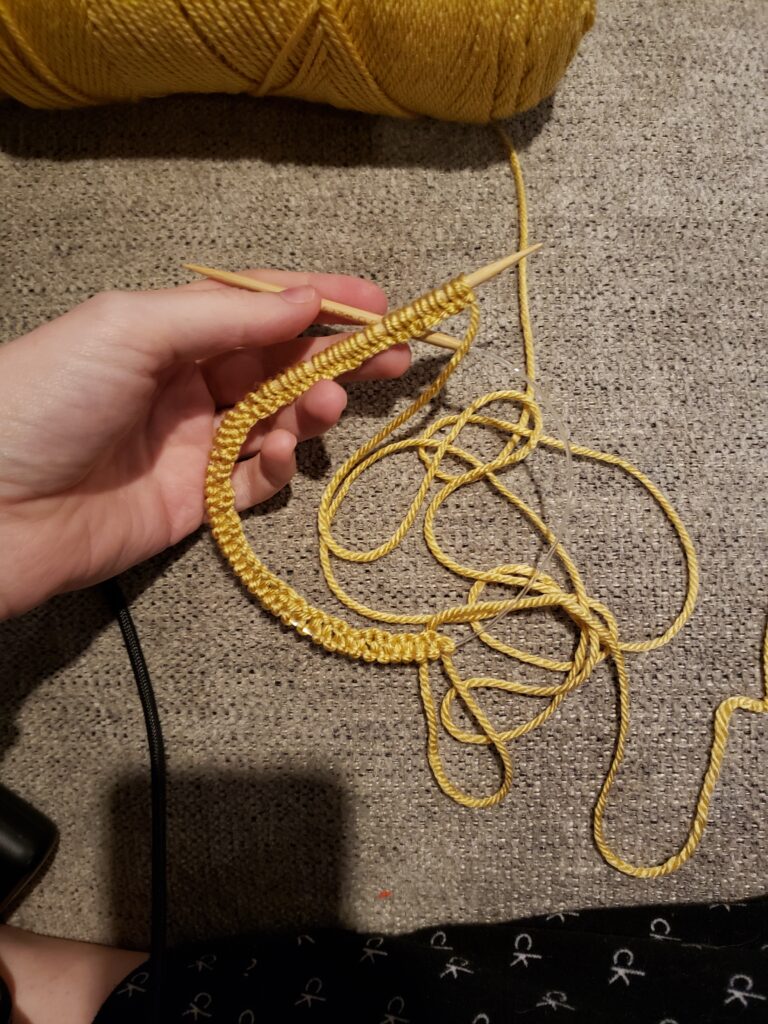
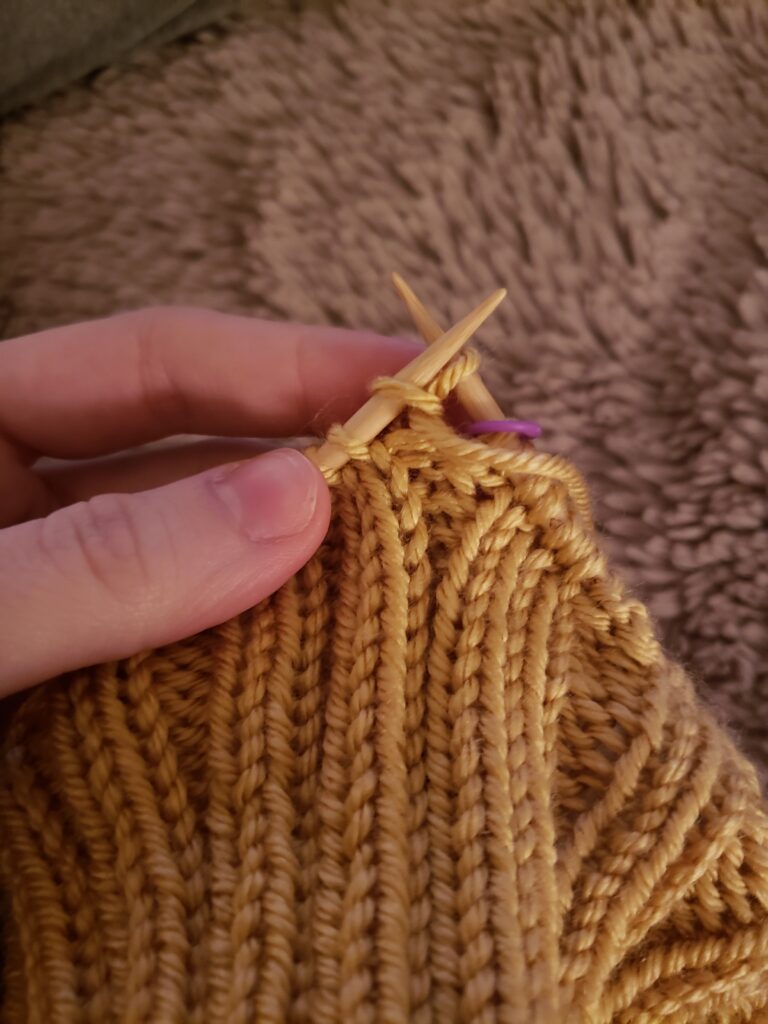
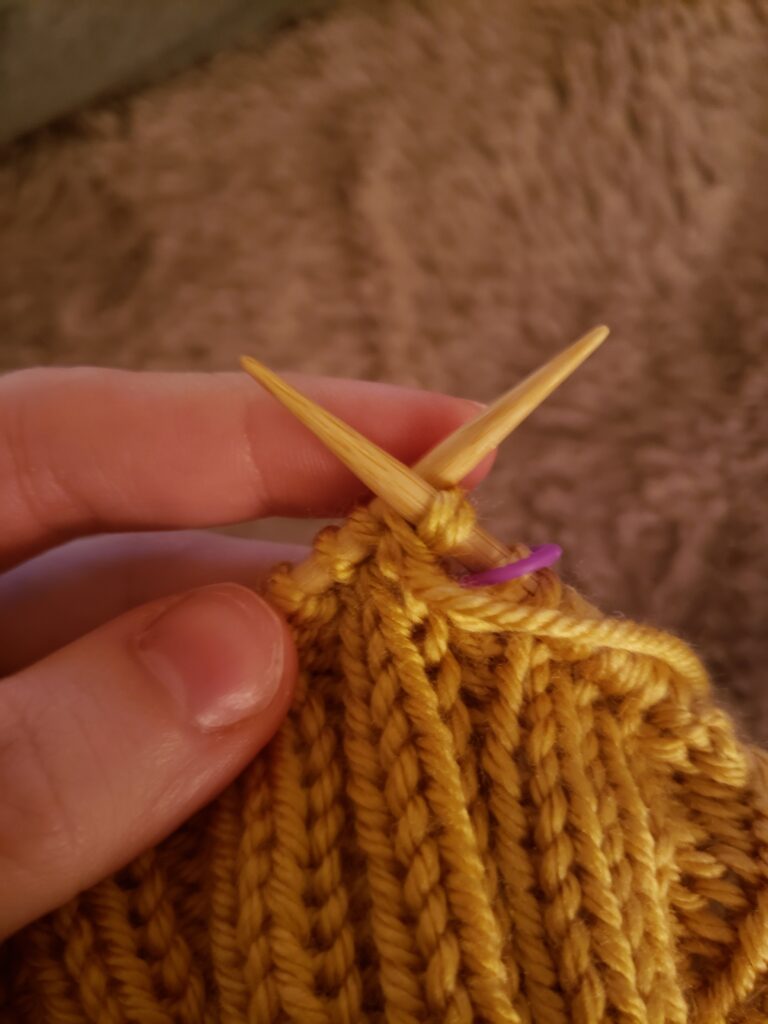
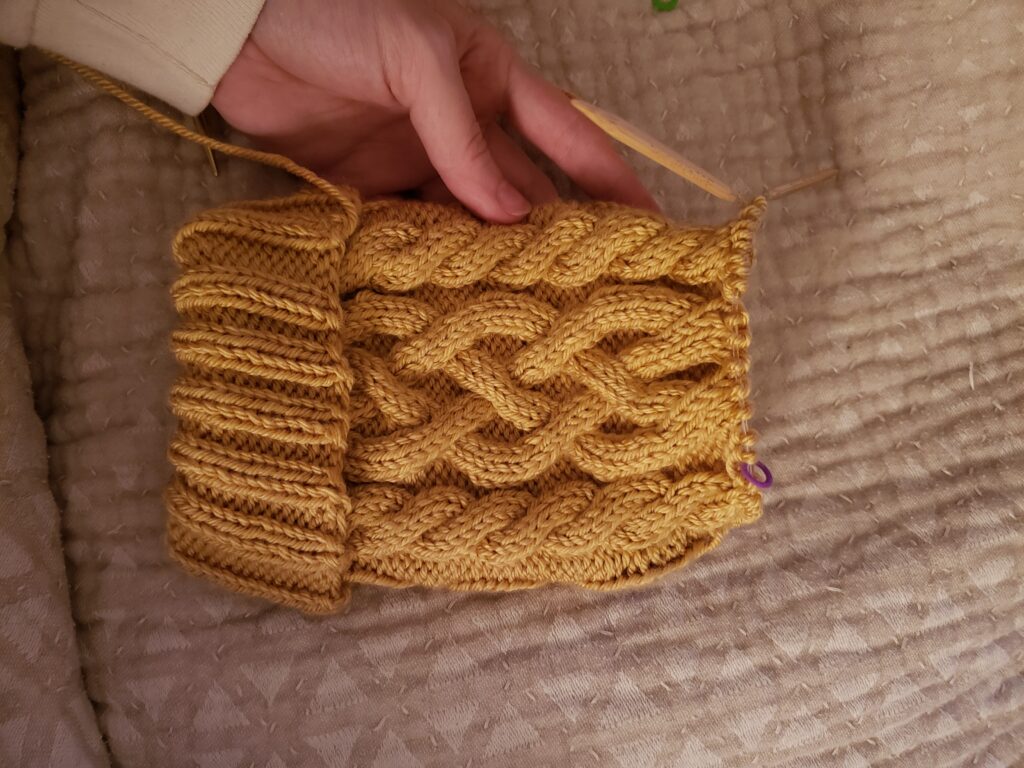
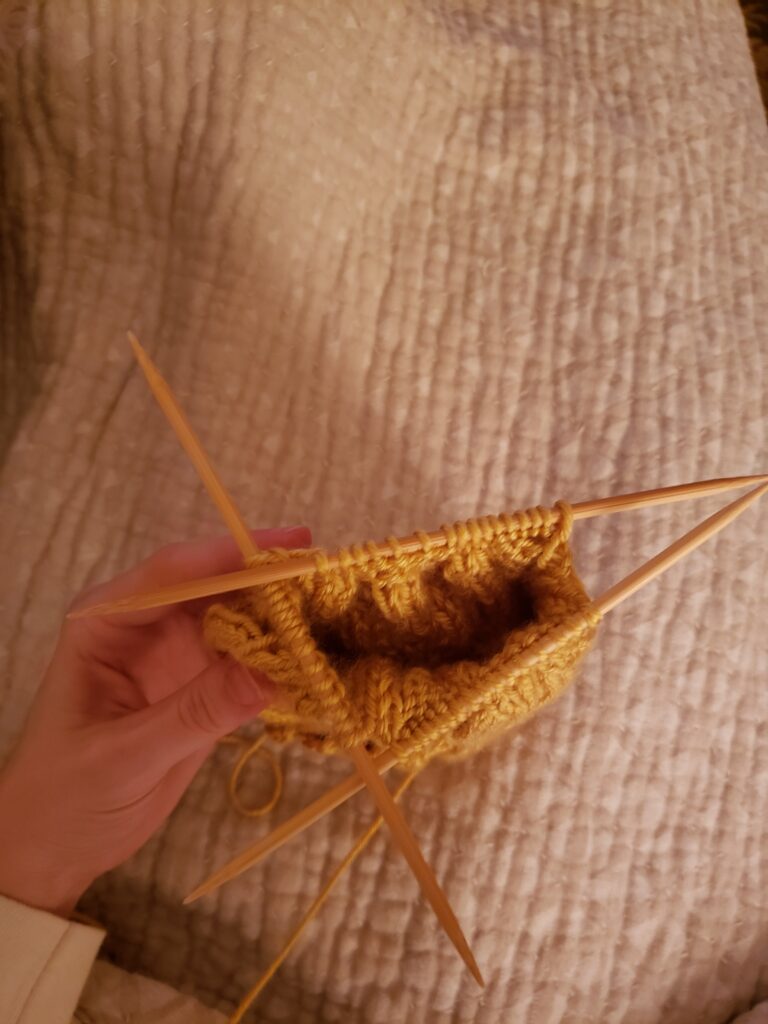
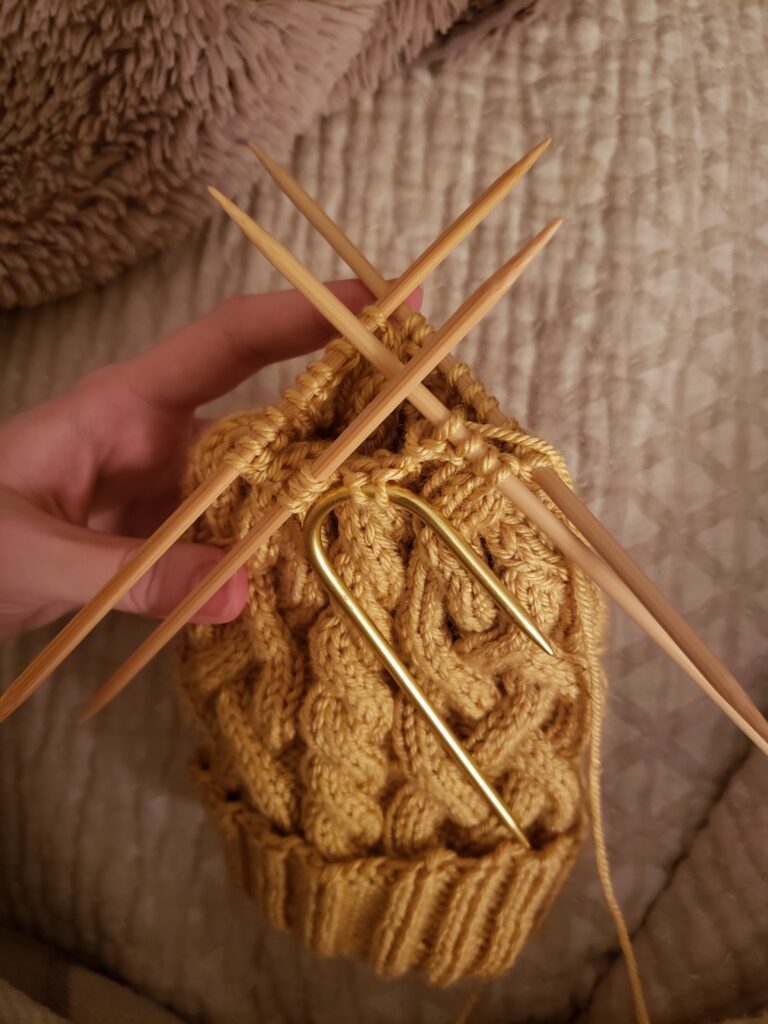
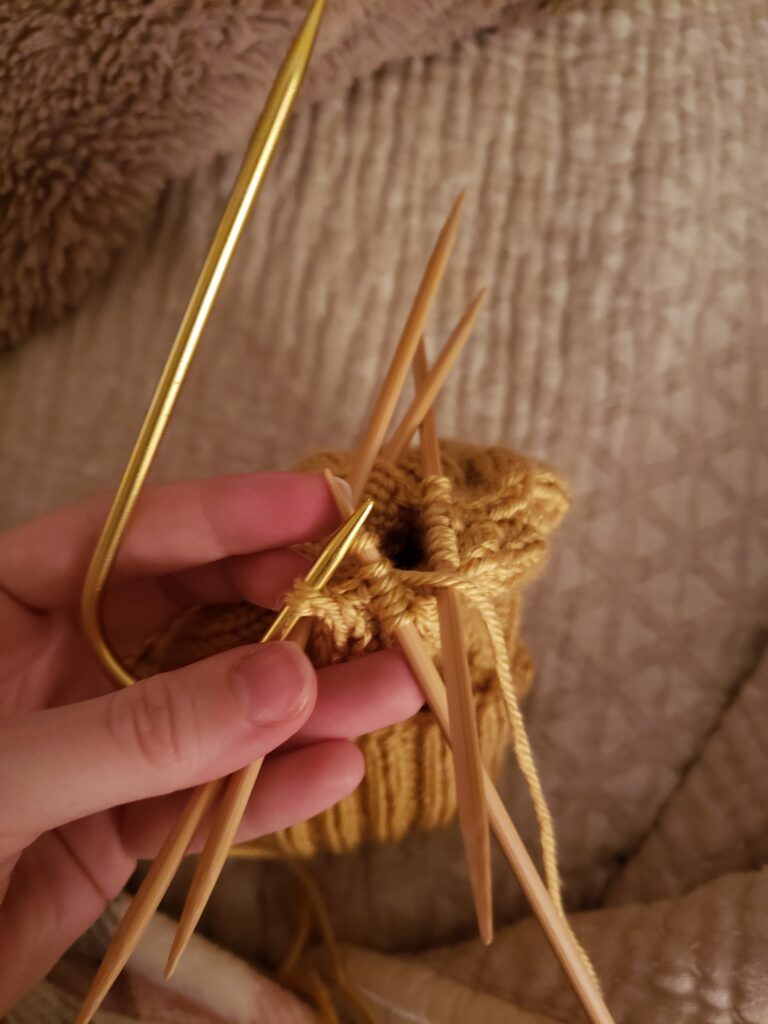
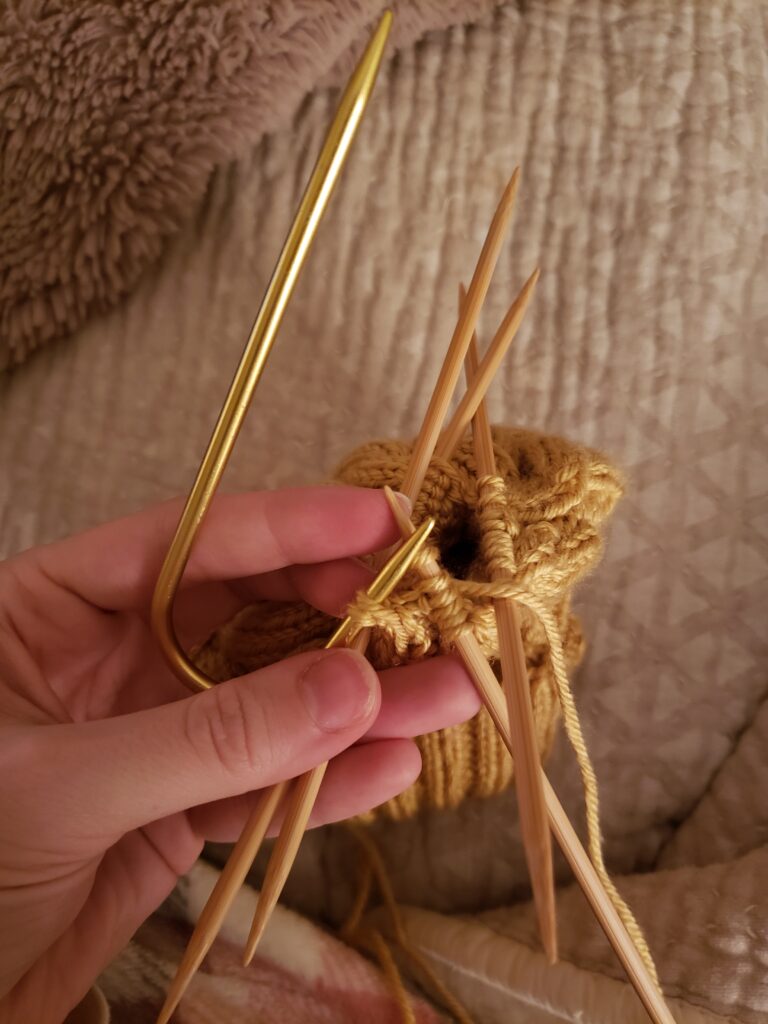
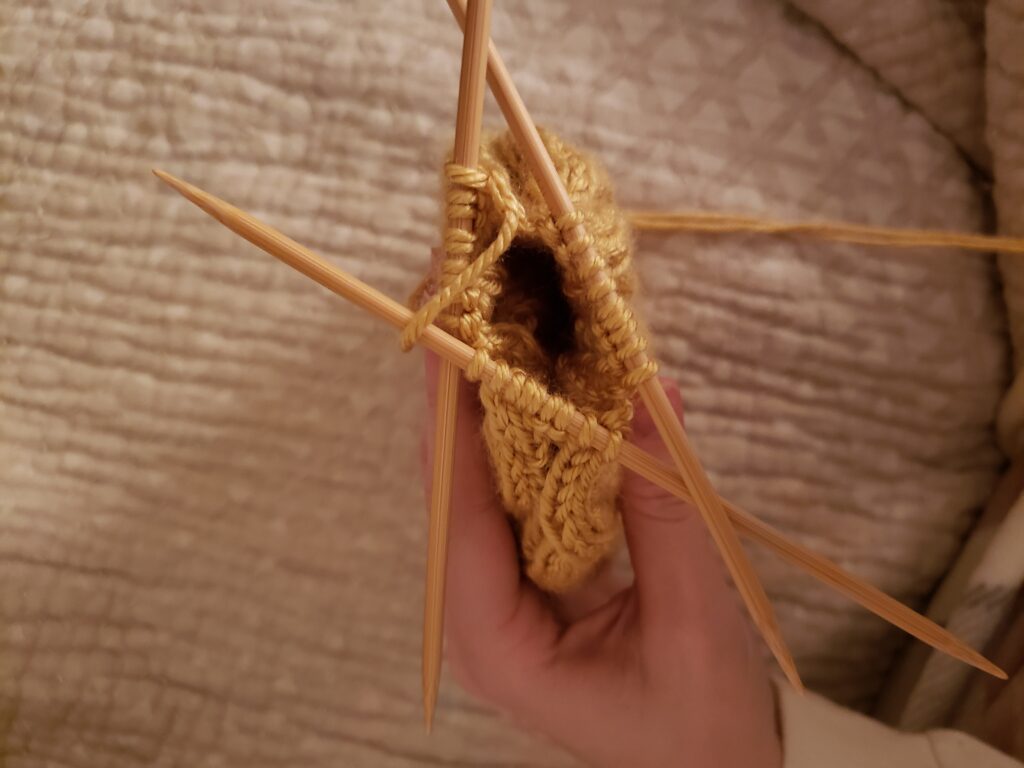
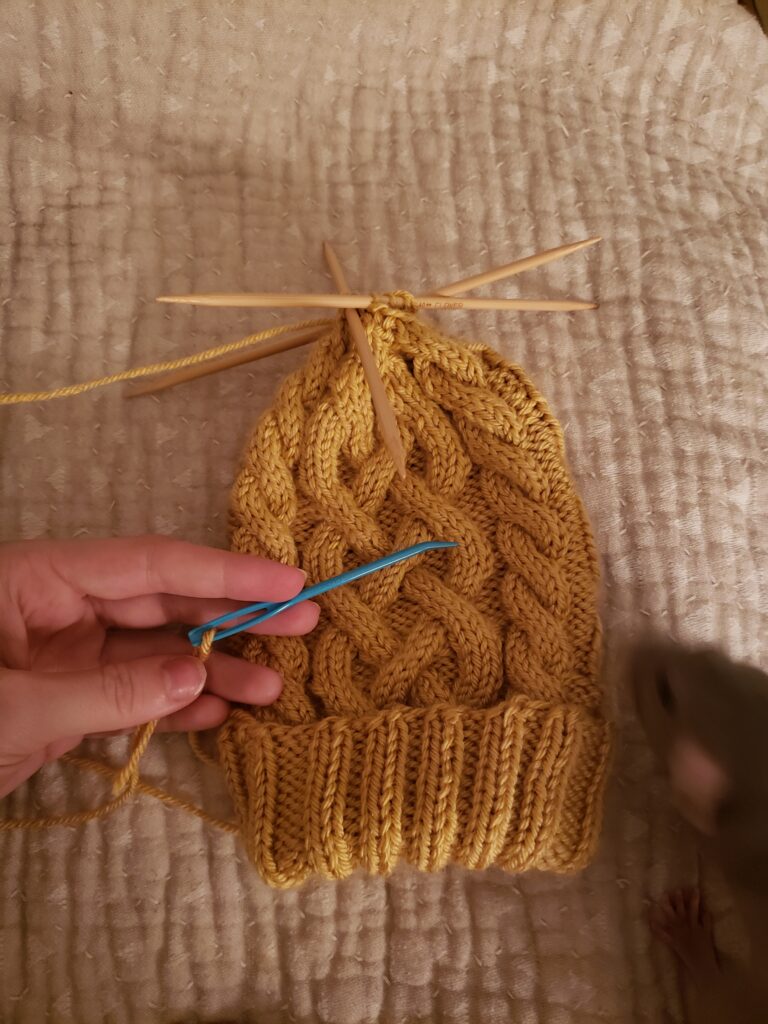
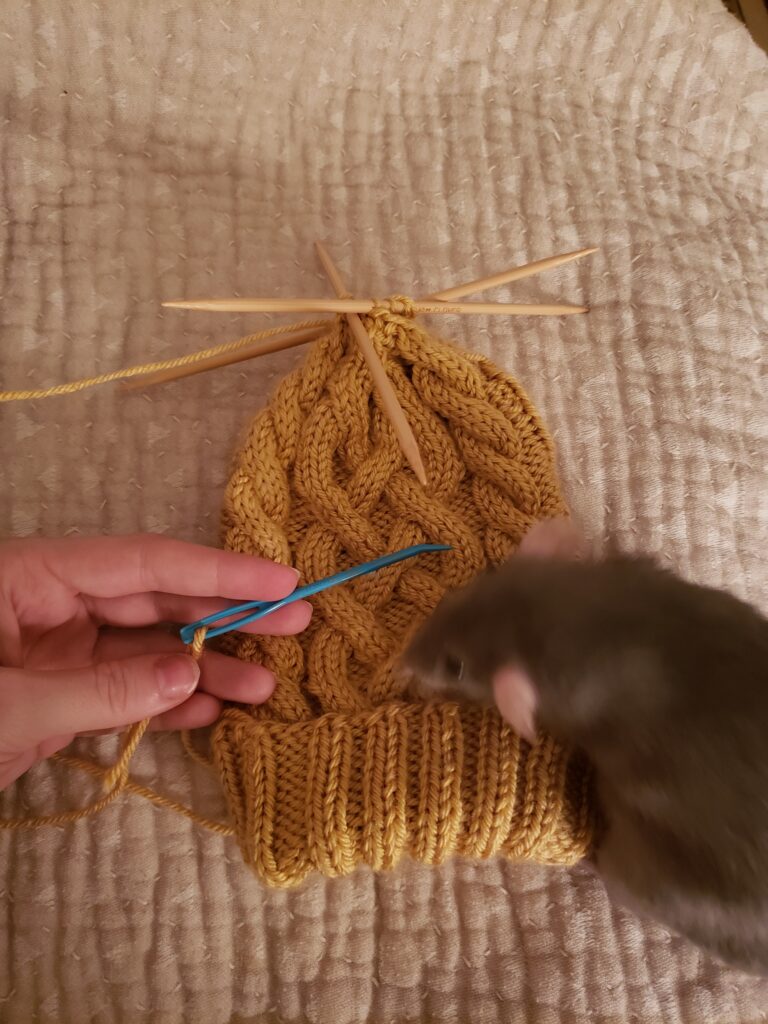
Photos of the process:
I documented the process of knitting the hat in photos because it adds a degree of ambiguity to the process in comparison to taking videos. You can see the hat transforming before your eyes, but without seeing the movement of the yarn and needles, it’s not clear exactly how the yarn works up–we just see that it does, in the same way that it’s a mystery how Rumpelstiltskin spins gold out of straw.
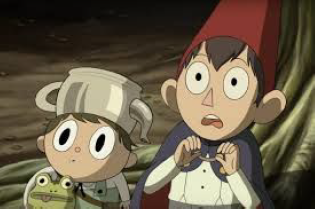
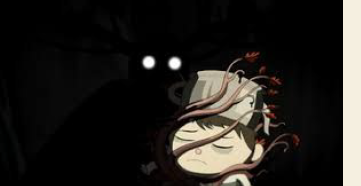
When people think of fairy tales today, they often think of the Disney versions that we grew up watching. Disney fairy tales are known for colorful animation, fun musical numbers, and above all a happy ending. And at first glance, the 2014 Cartoon Network miniseries Over the Garden Wall seems to follow these same tropes. It is animated, there are musical numbers, and I guess you could say it has a happy ending. But the animation is darker and more mysterious, the musical numbers are either folksy or sweeping and orchestral, and the final message of the show is really about death and dying, and the conscious choice to carry on living even in times of misfortune. I know what you’re thinking: This show doesn’t sound nearly as fun as a Disney movie. But after watching it many, many…many times, I have come to the conclusion that this show is a beautiful modernization of a Grimm fairy tale and can offer something to everyone, no matter their age.
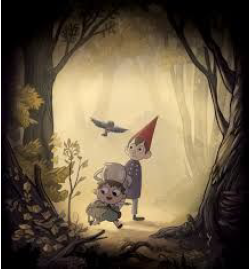
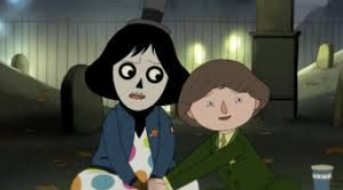
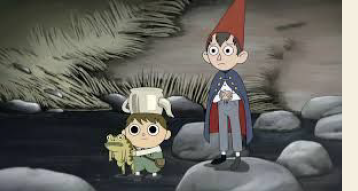
Over the Garden Wall begins with two brothers, Wirt and Greg, wandering through a strange forest, which the narrator names “The Unknown.” They do not remember how they got to this forest or how to get home. In the first episode, they meet a girl-turned-bluebird named Beatrice who claims she can help them escape the forest, and the rest of the show follows their adventures trying to do just that while avoiding the mysterious antagonist known only as “The Beast.”
On the surface, Over the Garden Wall is similar to a lot of 19th century fairy tales. It involves two young children lost in the woods, reminiscent of “Hansel and Gretel” or “Little Red Riding Hood,” people cursed to take the form of animals, as in stories like “The Frog Prince”, and a mysterious woodsman, like in “Snow White.” The setting is hard to place but looks similar to the average person’s idea of Puritan America: farms, small towns, no technology. But the show manages to subvert traditional fairy tale tropes as well. While Wirt and Greg are clearly the Hero and Helper archetypes and the Beast is the obvious Villain, the other characters are much more complex.
One hilarious example of this is Sara, Wirt’s love interest. Throughout the show, Wirt refers to his unrequited love and laments the fact that he believes Sara likes another boy, Jason Funderberker, instead. He paints Jason as the stereotypical cool kid. But when we finally meet the two of them, Jason is nerdy and has a grating voice that immediately gets on your nerves, while Sara is clearly more interested in Wirt. Similarly, many characters blur the line between good and evil. We find out the Woodsman is helping the Beast, which is upsetting until we find out he is only doing so to save his daughter. We also learn that Beatrice, someone who has been our ally, is tricking the two boys, but only because she is trying to help her family escape a curse.
Many Grimm’s fairy tales are also rooted in religion, Christianity specifically, something Over the Garden Wall leans into. The Unknown itself is a type of Purgatory. The audience discovers this towards the end of the series when it is revealed that Greg and Wirt are actually from modern times. When hanging out with their friends on Halloween night, the two fall into a lake. As they sink to the bottom, they are transported to the Unknown. The purpose of the show is for Greg and Wirt to make a decision: do they continue to wander the Unknown and give into its temptations, or do they choose to return to the real world and continue living?
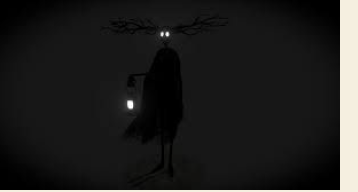
The Beast is a religious figure as well, more specifically a Satanic figure. He is the agent of death throughout the show. A terrifying monster who collects the souls of lost children. The Unknown acts as the Beast’s mechanism to trap people. Its forest is endless and the more you journey through it, the more hopeless you become until you finally give up. Most do not have the strength to outlast the Beast and he has clearly claimed many lives.
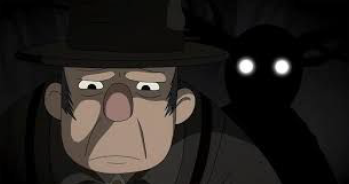
One life the Beast has allegedly claimed involves a character called the Woodsman. The boys meet the Woodsman in the very first episode. He tells them that his lot in life is to find the edelwood trees and grind up their branches to make oil to keep his lantern lit. Why? The Beast has trapped his daughter’s soul within the lantern, and tells him that keeping it lit is the only way to keep some semblance of her alive. Is this really living though? I’m not sure it’s a life many would choose. But the fear of loss is crippling for the Woodsman, and probably the audience themselves, and the Beast plays on this fear even further by asking the Woodsman to lead him to the two boys. If he can do this, the Beast claims he will see his daughter again. A life for a life.
Greg is our symbol of optimism throughout the show while his brother slowly starts to lose the will to carry on. Seeing that Wirt is about to be claimed, Greg makes a deal with the Beast. The Beast has Greg do various complex tasks, clearly designed to wear him down. At one point, the Beast tells him, “I thought you’d give up,” and Greg responds, “Give up? I’ll never give up.” Greg’s unwavering optimism allows him to refuse to give in to the Beast and, by extension, death. He is too excited about life to want it to end any time soon, no matter how hopeless things seem. He is making a conscious choice to continue to live.
Eventually however, the Beast is able to trick him into staying still long enough for a tree to begin to grow around him, trapping him in the forest. When Wirt finds him, he is weak and seemingly close to death. While Wirt tries to save him, the Beast calls the Woodsman. Greg has turned into an edelwood tree at the perfect time: the Woodsman is running out of oil. The realization on the Woodsman’s part that he has been burning children’s souls is a heartbreaking one and shows the cruelty and manipulation of the Beast. When the Woodsman protests that he did not know, the Beast replies, “And would it have mattered?” This touches on a chilling theme: the love that a parent has for a child or that Greg and Wirt have for each other, seems to overshadow any bad deeds. They are willing to do anything for each other, even if that means causing the deaths of others, at least that is the Beast’s idea.
The Beast finally tries to conclude his plan: he wants Wirt to take on the task of lantern-bearer, keeping Greg’s soul alive inside the lantern. On the brink of giving in, Wirt suddenly has an epiphany, and a funny one at that. His heroic and defiant words are, “Wait, that’s dumb.” If he agrees to be the lantern-bearer, he would be trapped in the Unknown as well. That is not what Greg would have wanted. Even in the face of serious loss, Wirt has to choose to continue living. He gives the lantern back to the Woodsman, and after choosing to live, escape is suddenly easy. He and Greg leave the Beast behind. Suddenly, the two wake up in the hospital, having been rescued from their near-death experience.
Classic fairy tales always have some sort of moral. This is why they were so popular. Children and adults alike could read them and get something relevant out of them. And the moral of Over the Garden Wall is clear. This show equates giving up to dying, and that death is a scary one, filled with monsters. So no matter what happens, you have to push through. Never give up, even in the face of seemingly insurmountable obstacles. In short, be more like Greg. This is something Wirt learns to do throughout the show and it pays off. The two return home stronger, braver, and more prepared for the world ahead of them than ever.
Many finish this show and are stuck on one particular question. Was the Unknown ever actually real? And to that, I’ll leave you with the words of the Beast: Would it have mattered? Watch the show, explore the magic of this strange and beautiful world, see what you take away from it. And then hopefully, you’ll have your answer.
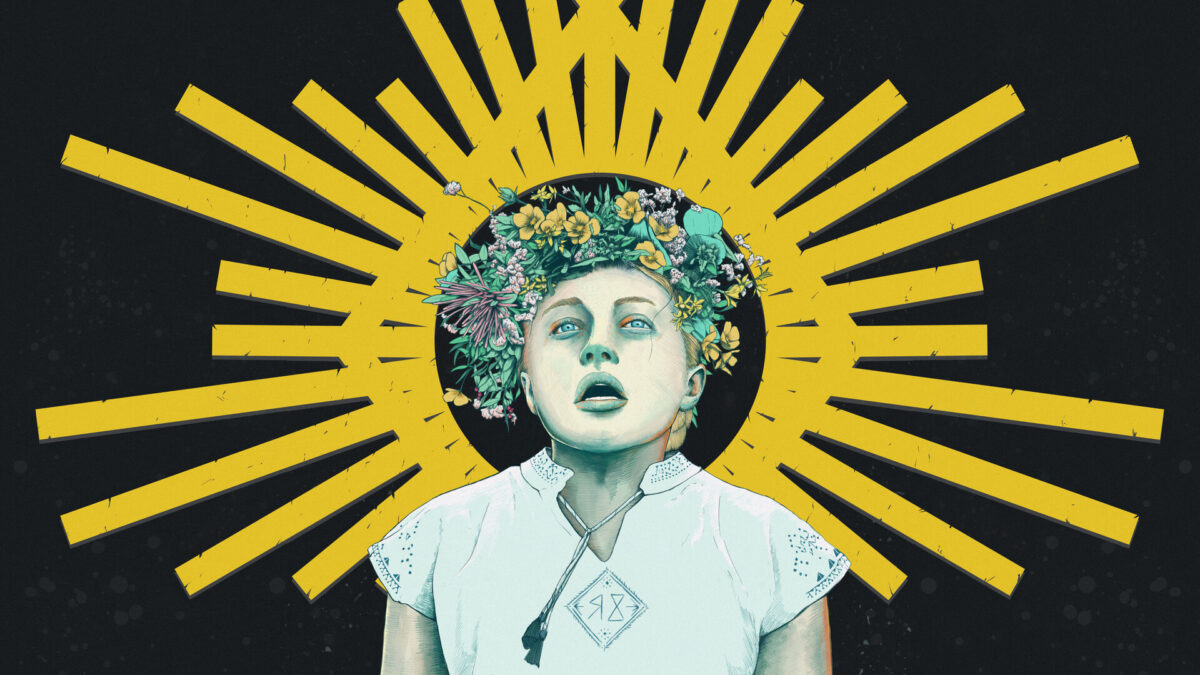
I love horror movies. The ghosts, the gore, and the scares have always resonated with me in a way I cannot explain. As we began reading fairy tales, I was struck by how macabre many of them were. These stories were dealing with cannibalism, serial killers, and evil curses… I thought these elements made them much more interesting, and surely, that was the goal of writers in the 1600-1800s: to make these stories entertaining for children and adults alike. These stories reminded me of a horror movie I had seen recently. Midsommar (2019) is a film by writer/director Ari Aster that details what happens when several unsuspecting American students venture to a Swedish summer solstice festival that happens to be run by a cult. The movie itself is fantastical, and Aster himself has described the film as “more of a fairy tale than anything else.” In this video essay, I’ve broken down Aster’s observation, exploring what exactly it is that makes this harrowing movie a modern-day pastiche of classic fairy tales.
Full script below:
“When was the last time you were scared by a fairytale?
About his 2019 horror film Midsommar, writer/director Ari Aster is quoted as saying, “I see the film as a fairy tale more than anything else.” However, anyone who knows exactly what Midsommar is about may tend to disagree. Midsommar tells the story of a group of American graduate students who travel to a summer solstice festival in Sweden put on by the Harga, a small, isolated community where nearly everyone is related. Over the course of the week, all of the friends are murdered as sacrifices for the festival except for one, Dani, who is crowned festival queen and indoctrinated into the community as a new member. It’s a hauntingly beautiful film, a horror that takes place during broad daylight. It disturbs you, it makes your stomach churn, and it sticks with you for weeks after viewing. This isn’t exactly the same reaction I had last time I watched Sleeping Beauty.
But let’s take what Aster said and consider it. What does Midsommar share with fairy tales that other horror movies don’t?
The most immediate explanation for Aster’s claim is the film’s style. Shot in the Swedish countryside, this film is nothing short of beautiful. There are lush forests, beautiful pastures, cows, and quaint wooden cottages. The characters dress in robes, participate in feasts, and technology is all but absent from the film. This film relies very heavily on production design to create a fantastical environment. Characters don gowns made of flowers, do ritualistic dances around a totem pole, play flutes, and ride in carriages. From the murals that feel as though they were painted 200 years ago by folk artists, to the fact that the Harga people themselves prefer runes as their form of written communication, everything about this movie feels distinctly old-world – it feels like once upon a time. However, the events that unfold – murder, incest, suicide, and deceit – do not. None of the fairy tales I read as a kid dealt with anything remotely like this. “Little Red Riding Hood” and “Cinderella” were about stranger danger, kindness, and forgiveness. Not lust, loneliness, and paganism.
However, this might just be because I was reading the wrong versions.
Those who have seen Disney’s “Cinderella” might remember that nothing really happens to the stepsisters. However, in the Brothers Grimm version, the sisters cut off their heels to fit into the shoe, and at the end have their eyes pecked out by birds as punishment for their transgressions. I mean, have you ever seen the Brothers Grimm Movie? That thing was nightmare fuel for me as a little kid. If you’ve read the original “Little Mermaid,” by Hans Christian Anderson, you know that at the end of the story, the little mermaid is forced to choose between killing the prince or killing herself and ultimately commits suicide, spending the rest of her life in purgatory. In one of my favorite fairy tales, “Fitcher’s Bird,” a young maiden uses magic to bring her sister’s dismembered bodies back from the dead, then burns the sorcerer who killed him alive.
Most fairy tales in their original versions are quite scary. Even modern retellings keep some of these attributes – after all, no one can deny that “Hansel and Gretel” is a story about cannibalism no matter how cute the gingerbread house is. At their core, one could say that fairy tales are the original horror stories. These tales have always been a bit horrifying, and it’s only through adaptations to film (mostly by the Walt Disney company) that the stories became sanitized for children and are viewed by society as ’sweet and beautiful.’ This is because 200 years ago, kids weren’t coddled in the same way they are now. These stories were to teach morals, justice had to be served, and, at the end of the day, these gruesome tales made for great entertainment for both children and adults alike.
Both Midsommar and many original fairy stories find their roots in folk horror. Folk horror is a subgenre that deals with settings that feel “old world” – cottages in the woods, small villages… isolated Swedish communities. They often deal with the topic of religion (like many Grimm fairy tales), and we see play into Midsommar heavily. It’s a type of Paganism really, an anti-church that the Brother’s Grimm would probably cringe at, as many of their stories featured Christian symbolism, imagery, and morals. Folk horror concepts often come from ancient folklore. In the development of Midsommar, Aster studied folklore from Swedish, German, and English cultures. Folklore, by definition, is a verbal art. Fairy tales, much like Midsommar itself, find their roots in verbal folklore – stories told by women in villages to children and families around a campfire. Stories that ebbed and flowed with the time and passing of generations of kinsfolk until someone, usually a man, wrote them down.
Fairy tale scholar Vladimir Propp asserts that all folklore and fairy tales follow similar tropes and a specific structure. Using Propp’s fairytale functions, we can actually analyze Midsommar to see if it is a fairytale on a quantifiable level.
Nearly every fairytale starts with ABSENTATION, AKA the death of parents, and Midsommar is no exception – Dani’s parents and sister die at the beginning of the film, and thus she becomes a poor maiden. Not materialistically, but rather emotionally. From there, Dani heads out on a grand voyage to a faraway place – a new kingdom, as it were – Sweden. Dani’s courted by a false hero – her horrible boyfriend Christian, who spends his time disregarding her feelings and gaslighting her. Dani is rescued by a dashing Prince, Pele – however, the dramatic irony is that he’s a member of the villainous community that’s murdered Dani’s friends. However, the community crowns Dani as Queen. She’s elevated from emotional poverty to royal status, like so many rags to riches tales we’ve seen before. The community also helps expose her boyfriend’s transgressions, and they dress him in a bear suit before setting him on fire and burning him alive. Through this, he quite literally becomes the beast of the story.
Through these tentpole moments, we see that Midsommar, unlike other recent folk horror movies such as Robert Eggers the witch, successfully turns a folk horror film into a startlingly true-to-form medieval fairy tale. When one hears Aster say something such as Midsommar is “The Wizard of Oz for perverts,” one might go into the film believing it to be a parody of folklore and pagan customs. However, what one instead finds is a pastiche of the highest degree – a celebration of the macabre elements that so defined original fairytales. Hundreds of years ago, fairytales used ghastly depictions of violence to teach children not to talk to strangers. Following after classic fairytales, Midsommar, too, comes with a moral. In a modern twist, Ari Aster teaches us in the most harrowing way that cutting toxic people out of one’s life and surrounding ourselves with those who truly appreciate us is one of the hardest but most important forms of self-care.
I was inspired to do this vlog by a conversation. The pandemic had been raging for about 7 months at the time, and the light at the end of the tunnel was not yet visible. While sharing smalltalk, my classmate mentioned how weird it felt to go to the grocery store. It got me thinking.
I spent my summer working in a grocery store. I needed the money, and it was one of the few places that was actually hiring. Looking back, I realize I took the job for another reason: to feel normal. I had a schedule that involved going outside of my own home, and despite the plexiglass at the checkstand and the storewide mask mandate, I could interact with people on a weekly basis. Of course, I was still hyper-aware that the virus was present, but it softened my mindset of being “quarantined.”
Then I moved back to California. Suddenly, my job became school which I Zoomed into from my closet, and my social interaction was playing video games with my similarly isolated roommates. However, we still needed food. Going to the grocery store became a surreal experience. It was an adventure on its own because it was our only real glimpse into the world beyond our duplex. It was boring, yet every time I went shopping for next week’s meals, I couldn’t help but feel fear.
This is the same fear I have felt since March. It is the same fear that was with me during a 36 hour whirlwind that brought me from Madrid to LA, and it is the same fear I have about returning to my family for the holidays when the only safe place in the country seems to be our island state. The story we call 2020 has been defined by this fear, and it has made a fairytale feel like a nightmare.
If my study of stories has taught me anything, it is that fear can be overcome. The pandemic has reminded me how young and helpless I still am, but it has also shown how resilient and mature I can be. Fear is necessary in fairy tales because it gives way to hope. Like fairytales, 2020 has shown us that there is a shining castle at the end of the mangled, oppressive woods. We just might need a GPS to get us through this last mile.
For my Project Three, I decided to create a short presentation pin-pointing certain fairytale elements within my life. Initially, I planned on making a prezi presentation to showcase my work. After meeting with Ryan McCue and Dylan Rivers in class one day, however, I thought it would be best to create a presentation and include a voiceover narration. And so that is what I did. Lately, I’ve taken an unusual interest in reading and writing. I’ve never been one to enjoy reading and writing down my thoughts, but I guess COVID really has gotten the best of us. And for that, I decide to write a short story recounting my first year in college and how I have progressed since then. I hope you enjoy this personal glimpse into my life!
P.S. – Many of these pictures are dramatic representations of what actually occurred. I promise you that I am not an alcoholic. Hahaha 😉
As we have seen throughout the semester, stories change depending on who is telling them. The same basic story, when told by different authors, can leave audiences with different impressions about the characters, takeaway themes, and reactions to the tale – all while maintaining nearly the same plot points.
A classic example of this is the many versions of the tale “Little Red Riding Hood.” Most who are familiar with the classic tale would identify the Wolf as the obvious villain, and Little Red Riding Hood as the hero. As we have seen from the many adaptations and variations of the story, however, every version of the tale is not this clear in the distinction between the hero and the villain. The line between hero and villain has become blurred in some adaptations of the tale, and in others, the roles completely reversed from their original designation. Most of these extreme differences can be traced back to the author’s intentions – what they wanted you to take away from their version, and their motive for telling the story. Charles Perrault, for example, who wanted to assign his own moral to the story about exercising caution with strangers, portrays Little Red Riding Hood as naïve and childish, and in essence, blames her misfortunes on her own poor decisions – supporting his motive of teaching children, especially young girls, to be cautious of those they meet.
Through examination of the circumstances in which these tales were written and an analysis of the variations within each, we have learned to become responsible readers of fairy tales – to use everything we know from outside the tale to inform our reading of everything inside the tale. Considering that stories exist all around us, this skill does not just apply to our reading of fairy tales. We are constantly interacting with different types of stories throughout our day – in the news, in ads on television, in conversations with friends. But just as we learned how to be responsible readers of fairy tales, we must also be responsible “readers” of these other types of stories in our lives – the news story that’s biased, the ad that’s selling us something, the friend’s story that has another side we’re not hearing – because all stories have authors, and all authors have motives.
Leading up to the 2020 election season, I, like everyone, was inundated with constant political ads, showing up seemingly everywhere I turned. I soon began to realize that just as with fairy tales, these ads represent variations of the same story being told by different authors and for different motives, where details are highlighted, inserted, or removed in order to change the audience’s perceptions in support of a specific goal. Each ad turns one candidate into the hero, while declaring the other the villain, and just as with the tale of “Little Red Riding Hood,” when these variations begin to contradict each other, it can seemingly blur the lines between hero and villain.
To demonstrate how our reading of fairy tales can translate to our reading of the world around us, I have created two political campaign advertisements for a fictional race for the position of Mayor of the Forest between Little Red Riding Hood and the Wolf. For these ads, I have pulled from the facts and events of the same tale, but from two different perspectives and in support of two different motives. I created these ads to showcase the power of spinning a story in support of different goals, with the hope that seeing this power in action will protect us from falling victim to it in our own worlds. Then, we can all be responsible “readers” of the stories that exist all around us.
Little Red Riding Hood Campaign AdWolf Campaign Ad