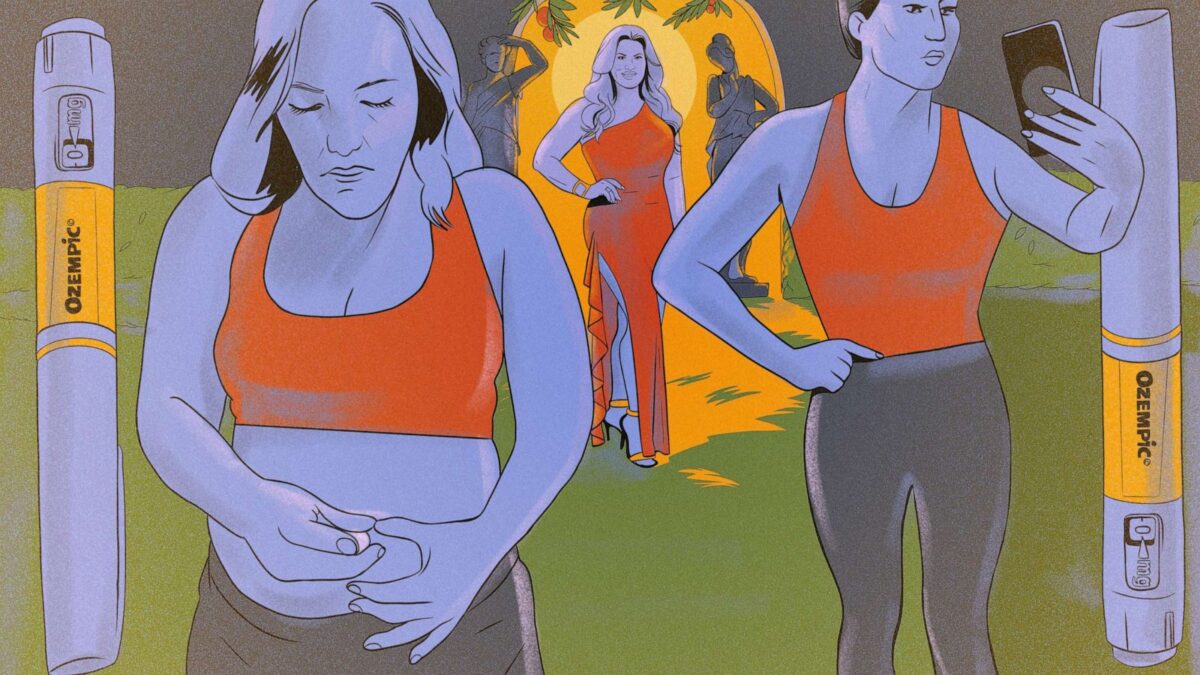
Disney princesses were essential to my childhood, shaping my core memories and creating characters that have become some of my most significant role models. From enchanting princess-themed birthday parties adorned with sparkling tiaras and shimmering gowns to the countless hours spent immersed in front of the television watching Belle float across the screen with the beast hand-in-hand, these films hold a special place in my heart. This experience is true for most young children, especially young girls, who grow up with these classic characters as their first introduction to real-world experiences, life lessons, and even love. This paper will examine how children idolize Disney’s fairy tale character adaptations, particularly princesses, and the resulting body image issues that often arise from this admiration. The manifestation of these body image issues creates the desire for what some might call “quick fixes” for weight loss, including the use of type-2 diabetes pharmaceutical medications like Ozempic, which consequently is creating severe shortages for these types of drugs.
Major film companies such as Disney shape the perception of what children envision a princess to resemble. Consequently, when Disney portrays these characters with tiny waists and hourglass figures, young girls come to believe that conforming to this beauty standard is necessary to be considered attractive and desirable. Of course, this body figure is easy to manipulate and project onto an animated character, but on real people, it is simply unattainable. A Rutgers study focused on testing this notion by interviewing preadolescent girls who acknowledged the unrealistic and unattainable nature of many media images. However, despite this awareness, “they were still dissatisfied with their body image. Their dissatisfaction stems from their belief that others view the unrealistic images as favorable and attainable,” (Schmidt 2015). With the age of live-action sequels of classic animated movies, this body norm is applied to real actresses embodying these characters, including the classic Cinderella. Lily James, the actress cast to play Cinderella in Disney’s live-action remake of the film, can be seen with a waist that “appears to be about half the size of her hips” (Schmidt) in her iconic blue gown.
Upon speculation from the public, Disney denied any claims about the use of CGI to enhance James’ waist. However, it was stated numerous times in interviews that when filming Cinderella, James was on an all-liquid diet to fit and be comfortable in her corset. An all-liquid diet is just one of the countless weight loss “crazes” that have come to be glorified by celebrities and influencers, especially with the rise of social media. The necessity for the actress playing Cinderella to adhere to such a diet merely to fit into her costume sends a clear message to young girls: regardless of their appearance, weight remains a crucial determinant of attractiveness.
Given the continuous reinforcement of this message and the prevalent promotion of weight loss regimens within the media, young girls are overwhelmed by constant reminders of weight reduction. Of course, as young girls develop into teenagers and young women, their influences change from Disney princesses to the princesses of the media: influencers and celebrities. These celebrities don’t stop the perpetuation of these messages and body standards, instead they reinforce them by participating in and posting about viral weight loss trends. Throughout the last decade, social media has created a cult-like following of the weight loss trends of joining WeightWatchers, following a juice cleanse/detox, going on a gluten-free diet, and even participating in intermittent fasting. Each of these approaches is problematic within themselves. However, they are masked by the belief that they offer quick and effective solutions to achieving desired body goals, making them appealing over social media. These trends often overlook the importance of balanced nutrition, sustainable lifestyle changes, and individualized approaches to health. As a result, many individuals may experience short-term success but struggle to maintain long-term health and well-being.
Over the last three years, celebrities and influencers have begun turning to a different type of weight loss support: the type-2 diabetes medication, Ozempic. This pharmaceutical, with the generic name of semaglutide, was approved by the Food and Drug Administration in 2017 as “a weekly injection that helps lower blood sugar by helping the pancreas make more insulin” for long-term use within adults experiencing type 2 diabetes (UC Davis Health, 2023). One of the common side effects that individuals experience while on this drug is weight loss, which is the primary reason that many celebrities not experiencing type 2 diabetes have started taking it. It is important to note that while some physicians prescribe it for weight loss in obese patients, Ozempic is not approved by the FDA as a weight loss drug. This is primarily due to the fact that if one were to start taking this drug for weight loss, their body may get used to it, establishing a new normal. This new normal from rapid weight loss caused by GLP-1 medications includes “a decrease in muscle mass, lessen bone density, and lower resting metabolic rate, leading to sarcopenia” (Cassata). If a person taking Ozempic primarily for weight loss were to stop taking the once-weekly injection, they would additionally quickly gain back the weight lost due to the drug.
With the trend of influential celebrities like Oprah Winfrey and Elon Musk admitting to taking Ozempic specifically for weight loss, it is evident that the pressure to conform to unrealistic beauty standards is driving significant demand for weight loss solutions. An article analyzing this very attraction of celebrities to Ozempic found that “from the beginning of 2020 to the end of 2022, prescriptions for Ozempic shot up by 300%” and “only 53.8% of people who received a glucagon-like peptide 1, or GLP-1, prescription for weight loss in the past year had a history of diabetes, meaning the chances of the remaining 46.2% of prescriptions are likely abusing such drugs,” (Szczesniak). The significant rise in injection usage, coupled with insights into how individuals are using their prescriptions, underscores the influence of celebrities. It is evident that people feel compelled to emulate these celebrities, whom the public admires and closely observes for guidance. Additionally, these highly influential individuals are sending clear and powerful messages to those within this audience that come to believe this approach to altering their bodies is acceptable and even desirable.
Some may ask themselves why using Ozempic for weight loss matters and why it is an issue if people choose to engage in this trend. Is it not the same as simply participating in a juice cleanse? Well, the surge in demand for Ozempic as a weight loss solution not only raises concerns about its long-term effects on one’s body composition, which may not be entirely reliable and consistent, but it also increases the severity of shortages for individuals who require Ozempic to manage their type 2 diabetes. Injectable medications like Ozempic are already susceptible to shortages due to the decreased number of firms producing sterile injectable drugs, meaning that “there are a limited number of production lines that can make these drugs,” (NABP). Turning towards how companies are responding to this shortage, one might expect companies to prioritize those who need Ozempic to maintain their health, however, that is not the case. In September of 2023, Costco, a large wholesale corporation, entered into a partnership with Sesame, an online healthcare marketplace targeting consumers with no insurance or high deductible plans. This partnership focused on supplying Costco’s members with the ability to sign up for Sesame’s weight loss program for $179 for three months, which in most cases includes a prescription for Ozempic or the similar drug Wegovy. There is no mention within this partnership of supplying Ozempic to those supporting those with type-2 diabetes by making Ozempic more accessible. This exclusive distribution of this drug towards weight loss treatments shows a clear priority within large companies like Costco, taking the available stock of a drug that is already facing shortages and supplying the materials towards one’s aesthetic wishes over one’s own survival needs. Overall, this underscores the broader consequences of the societal pressure to conform to unrealistic beauty standards.
However, these shortages also are creating concern from organizations like the FDA about potential off-brand versions of the pharmaceutical, potentially harming those who are desperate to obtain this prescription to treat their diabetes. The potential dangers of these non-FDA-approved versions of the drug with unknown side effects entering the market are alarming. This concern stems from the fact that there are historical examples of patients seeking weight loss solutions who received prescriptions for off-label, non-FDA-approved treatments, leading to lethal side effects. Between 1970 and 1997, the non-FDA-approved off-label combination of the individually FDA-approved appetite suppressants fenfluramine hydrochloride and phentermine, more commonly known as Fen-Phen, was prescribed to patients as a weight loss medication. Shortly after the number of prescriptions of this off-label combination exceeded 18 million, roughly ⅓ of patients began suffering life-threatening cardiovascular and respiratory damage, ending in severe disability and/or death for many. After filing over 20,000 personal injury lawsuits and about $21 billion in liability claims for the producing pharmaceutical company, the FDA requested the withdrawal of both drugs (Norman). This historical example is essential to consider when analyzing the effects of the glorification of the misuse of diabetes medications, causing shortages, since it potentially puts those who rely on these medications for diabetes treatment in harm’s way. Especially when those who are not able to get the drug due to shortages are willing to obtain and ingest non-approved versions of the drug that have unknown and unwanted side effects as a desperate measure. Heightening awareness of these consequences is crucial to mitigating the potential risks associated with shortages caused by the prioritization of cosmetic ideals over individual health.
One might ponder why they’re drawn to this specific weight loss trend or why they keep engaging in it despite knowing the repercussions. The simplest explanation? Gluttony. Gluttony traditionally refers to excessive indulgence in food or drink, but in this context, it extends to the relentless pursuit of an idealized body image at the expense of one’s health. It is no secret that the entire point of fairytales is to convey life lessons and warnings to children: don’t succumb to your own curiosity, don’t judge others by their appearances, always be wary of strangers, etc. The theme of warning against engaging in gluttony and overconsumption is one that is most commonly associated with the story of Hansel and Gretel. Just as Hansel and Gretel are lured by the promise of sweets in desperate times, individuals today may be pressured by societal pressures and unrealistic beauty standards, leading them to make decisions they know are not right. These decisions can include the misuse of medications like Ozempic for weight loss purposes. However, individuals can’t really be blamed for engaging in gluttony and utilizing Ozempic for weight loss when societal messages, when companies like Disney with large influences are consistently promoting certain body ideals. Perhaps if these standards had never been created, this would never have been an issue, but unfortunately, these standards have found themselves to become deeply ingrained into societal norms.
Nevertheless, there are instances of resistance against these ideals, as seen with actress Emma Watson’s refusal to wear a corset for her role in the live-action recreation of Disney’s “Beauty and the Beast.” In 2017, while filming “Beauty and the Beast,” shortly after Lily James’ portrayal of Cinderella, Emma Watson opted to avoid restrictive clothing features. The removal of these features included the removal of the corset from Belle’s iconic yellow ball gown. This decision allowed her the freedom to move comfortably in her costumes, enabling her to engage in various physical activities.
“Nothing she wears is inhibiting. She can do whatever she would want to do in any of her costumes. She rides a horse”
– Jacqueline Durran, costume designer for Emma Watson in Beauty and the Beast, on costume choices for Belle
Emma Watson’s decisions within this movie not only emphasize why she is considered a contemporary feminist icon but they also represent the first steps in the right direction towards changing the norms and rejecting harmful standards. Perhaps if more celebrities used their influence as Watson has, there would be no temptation towards overconsumption of medications such as Ozempic for weight loss purposes, allowing those struggling with the effects of type-2 diabetes to get their necessary medications without any obstacles.
With large companies sending these messages to some of the most vulnerable populations, including young children, the harmful effects are catastrophic. The messages that are being perceived by these populations include messages about what a body that is to be loved is to follow the blueprint of and that being a body that is simply unattainable through natural measures. In turn, the pursuit of these unattainable standards contributes to the demand for weight loss solutions like Ozempic. The scarcity of Ozempic, driven by increased demand fueled in part by societal pressures, creates shortages that disproportionately affect individuals who medically require the medication for conditions like type 2 diabetes. Therefore, the perpetuation of unrealistic beauty standards by influential companies not only harms individuals’ mental and physical health but also contributes to the systemic issues surrounding medications like Ozempic, highlighting the interconnectedness of societal influences and healthcare accessibility.
Although the influence of societal beauty standards may have deeply shaped our perceptions, it’s essential to recognize that change is possible. We have the opportunity to challenge these norms and redefine our understanding of beauty, embracing a new standard that celebrates diversity and authenticity. By promoting a “natural normal,” we can shift the focus away from unattainable ideals and towards genuine self-acceptance and appreciation. This involves rejecting the pressure to conform to narrow beauty standards and embracing the uniqueness of each individual. This new norm has the possibility of being implemented as more and more live action classic fairytale adaptations come to the big screen. In the end, it is up to not only the actors/actresses to change this perception of what a standard body should look like, but it is also up to the companies producing these films to end their long history of forcing actors to go on diets or wear tight corsets to play their role. Through the exposure of these issues, we can create a more inclusive and empowering society where everyone feels valued and accepted just as they are.
Bibliography
Cassata, C. (2023, May 2). Ozempic may make your muscles and bones weaker. Healthline. https://www.healthline.com/health-news/ozempic-muscle-mass-loss#:~:text=Rapid%20weight%20loss%20from%20taking,is%20typically%20associated%20with%20aging.
Gonzales, E. (2017, March 13). Why Emma Watson Doesn’t Wear a Corset as Belle in Beauty and the Beast. Harper’s Bazaar. https://www.harpersbazaar.com/culture/film-tv/news/a21370/emma-watson-modern-belle-costume/
Kindelan, K. (2024, January 18). First came ozempic for weight loss, then came the shaming. Good Morning America. https://www.goodmorningamerica.com/wellness/story/ozempic-weight-loss-shame-101897139
Lubitz, Rachel. “Is Emma Watson Ditching the Corset in ‘Beauty and the Beast’ as Feminist as She Thinks It Is?” Mic, BDG Media, 14 Mar. 2017, www.mic.com/articles/171106/is-emma-watson-ditching-the-corset-in-beauty-and-the-beast-as-feminist-as-she-thinks-it-is. Accessed 24 Apr. 2024.
Meisenzahl, M. (2024, April 8). Costco adds Ozempic prescriptions for members through virtual weight loss program. Digital Commerce 360. https://www.digitalcommerce360.com/2024/04/08/costco-adds-ozempic-prescriptions-for members/#:~:text=Costco%20expanded%20its%20partnership%20with,drugs%20including%20Ozempic%20and%20Wegovy.
Schmidt, Katie. “Disney’s Waist-Cinching Princesses, Body Representations.” University Wire, Mar 24 2015, ProQuest. Web. 13 Apr. 2024 http://electra.lmu.edu:2048/login?url=http s://www.proquest.com/wire-feeds/disney-s-waist-cinching-princesses-body/docview/1665573660/se-2?accountid=7418
Szczesniak, Alicia. “Ozempic Gains Traction with Celebrities.” University Wire, Mar 03 2024, ProQuest. Web. 13 Apr. 2024 . http://electra.lmu.edu:2048/login?url=https://www.proquest.com/wire-feeds/ozempic-gains-traction-with-celebrities/docview/2934054457/se-2?accountid=7418
UC Davis Health. (2023, July 19). Ozempic for weight loss: Does it work, and what do experts recommend?. Cultivating Health. https://health.ucdavis.edu/blog/cultivating-health/ozempic-for-weight-loss-does-it-work-and-what-do-experts-recommend/2023/07#:~:text=Ozempic%2C%20known%20generically%20as%20semaglutide,the%20pancreas%20make%20more%20insulin.
Van Norman, Gail A. 2023. “Off-Label Use vs Off-Label Marketing of Drugs.” JACC: Basic to Translational Science 8 (2): 224–33. Accessed 21 Apr. 2024 https://doi.org/10.1016/j.jacbts.2022.12.011.
Literature takes many forms, with many purposes and many manifestations. It is often used as a mirror reflection to the world that is happening tangentially to it. Literature is used to tell the truth about events, showing us the unsavory history. However, literature is also used to cover up issues and shape our perspective. There is no one “right” history, and finding authenticity in history is a problem that has plagued scholars for many years.
With so many historical “truths” being molded by the victor, and even more being covered up by years of alternating history, what is “truth” is often impossible to find. In the midst of this confusion, we turn to literature as a pathway to guide us. When authors are oppressed, their words silenced by those who do not wish them to share their stories, they turn to the written word. Disguising their stories, lessons, and morals in fables and fairy tales, these morals sneak through unnoticed by those who wish to keep them hidden. As years go on, these fables are adapted over and over, slowly twisting and warping into versions almost unrecognizable with their original counterparts. These tales go from stories of morality and safety for children to adverts for the latest toy or marketed movie. We see this time and time again in modern media. “Beauty and the Beast” becomes Twilight, and with it the initial meaning of marital anxiety is boiled down to a tween heartthrob fantasy. The Little Mermaid gets her happy ending in arguably the world’s most famous iteration, the Walt Disney Animation Company’s movie, sapping out the heartbreaking ending and moral tied to our original version. Cinderella is rebranded as a feminist icon, hanging up the glass slippers in favor of a leather briefcase in career oriented movies. Meanwhile, a feminist viewing of her original tale showcases the ways in which Cinderella is the ultimate male fantasy who is doomed to a life of objectification.
This essay will aim to showcase how literature is both a tool for truth and a slave to ever changing history, with no two works of literature at different points ever being the same. Within these pages I will inquire into when literature has been a tool forging its own path, and when it has been a slave to its past and future readers and their ever-changing histories.
Firstly, I would like to examine literature as truth. As discussed in this course, oftentimes fables and fairy tales are instructional tools for the youth. Their use and purpose in the classroom of life is simple: instruct children. Asop’s Fables, Grimm Brothers tales, Charles Perault’s stories: all of these have morals and lessons built in for the greater good of the children in their target audience. These works act as thinly veiled allegories for anything from the dangers of sexual predators to kindness principles and the idea of creating a communal society. They serve as introductory thought and oftentimes tell real world issues in easily digestible parts.
Take for example, the fairy tale of “Little Red Riding Hood”. “Little Red Riding Hood” is a fable we all know and love. In this classic story by Charles Perrault, our protagonist, Little Red Riding Hood, embarks on a perilous journey through the forest to deliver cakes and butter to her sickly grandmother. She is stalked through the journey by a hungry and menacing wolf. Ultimately, she perishes at the hands of the Wolf.
This story is a thinly veiled allegory about sexual purity and the dangers of older, charming men preying upon and taking advantage of young, innocent girls. Lines like, “From this story one learns that children,/ Especially young girls, / Pretty, well-bred, and genteel, / Are wrong to listen to just anyone…” (Tartar 17) drive home how this story is one about sexual purity and vulnerability. “Little Red Riding Hood” is a tale in the first category of literature: one whose goal is to inform. The wolf is not to be taken at face value. Rather, he represents a litany of older men who prey upon young sexually immature girls. This story was told to children over and over from a young age in order to drive home its defining message of being cautious around strangers. Rather than explaining that message in their own words, fables and tales like “Little Red Riding Hood” were created to have a repetitive and sticking story that could slip the morals into the child’s subconsciousness much like you mask medicine in a sweet treat.
A multitude of other stories also have morals and messages slipped into them. One of the most notable ones is “Beauty and the Beast”. Most modern people view this story and its subsequent morals from the perspective of the classic Disney Animation movie. The 1991 Disney renaissance classic tells the tale of Belle, a wistful only child to oddball inventor Maurice. Belle is known as the most beautiful, and the weirdest, girl in the whole village. Nose always buried in a book, she rebuffs even the town’s most sought after bachelor, Gaston, in favor of dreaming of more than her simple life. Through a series of missteps and challenges, Belle finds herself captive in the Beast’s abandoned castle. Imprisoned there, Belle’s initial loathing of the Beast softens to love as she reveals his kindhearted nature and sentimental side. Through her interactions with the Beast, Belle learns– and the audience is subsequently taught- not to judge a book by its cover and that good can remain in the heart of all of us, no matter how ghastly the outer appearance (Beauty and the Beast, 1991).
Though this is the version most of us are familiar with, there was originally a different version, with different hidden meanings and morals for its audience. The 1750’s version of “Beauty and the Beast” by author Jeanne-Marie Leprince de Beaumont (hereafter known as Beaumont) was originally a story to address marital and sexual anxiety. The Beast in this story was a metaphor for a woman’s fear of her husband’s lustful desires and actions on their wedding night. Let us examine our cast of characters and their actions again, shall we? A father loses his daughter to a “Beast”, giving her away to live in a new location and share a home with a creature whose cold exterior and foreboding presence shake him to his core. This is a textbook analogy for a father giving away his daughter into marriage, and the unspoken but subsequent sexual activity that follows. On page 40, when Beaumont is describing the Belle character of this story, Beauty, she not only makes it a point to identify Beauty as the most attractive of her siblings, but then goes to identify her as fiercely loyal to her innocence and father. Beaumont writes, “Since the girls were known to be very wealthy, many prominent merchants were interested in marrying them… Beauty … (the youngest daughter)… very politely thanked all those who proposed to her, but she told them that she was still too young for marriage and that she planned to keep her father company for some years to come” (Tartar 40). The use of highlighting her age and her loyalty to her father is to pull on her audience at the time’s heartstrings. It is a way to say here, look at this young girl, look how vulnerable she is!
Beauty in this story is also highlighted for her docility and domesticity. She is seen as an idealistic daughter, heightening the feeling of protection the audience has towards her. When her father is going away on business all her sisters request lavish gifts. Beauty instead asks for a simple rose, saying she wished to have once as, “(for) there are none here?” (Tartar 41). This sense of idealistic beauty in viewing the world is what makes Beauty so pure. She craves not jewels, nor fancy silks, nor money. Insead, she simply wants to appreciate the beauty in everyday life. This innocence is all the more damaged then, when the picking of said rose is what leads to her capture and imprisonment by the Beast. The rose is often a symbol of innocence. The rose coupled with Beauty’s tendency to ask little of her family all paint a picture of a pure, virgin woman to whom the most frightening thing possible has happened: she has been promised to a man. This version of “Beauty and the Beast” being an allegory for sexual fears upon one’s wedding night is vastly different from the classic disney movie so many of us had on VHS as children. Though the two share plot points, characters, and settings, their cultural interpretation as well as the symbols and plot devices highlighted have changed these forms of literature to mean drastically different things. How can this be so? Simple, literature is ever changing.
No two story interpretations can ever truly be the same. Personal bias, cultural relevance at the time, and world events all shape our interpretations of stories. This has never been truer than in the vastly expanding instantaneousness of this digital age we find ourselves in. With the immediate transfer of information, it has never been easier to speedrun cultural interpretations of classic fairy tales and their adaptations. In the article “Little Red Riding Hood Uncloaked: Sex, Morality, and the Evolution of a Fairy Tale (review)” published by the Wayne State University Press in the academic journal, “Marvels & Tales”, author Cathy Lynn Preston reviews a book categorizing the ways “Little Red Riding Hood” has transitioned from a story about sexual prowess to a family tale and bedtime story of a courageous little girl. When discussing the author’s delve into varying versions of “Little Red Riding Hood”, Preston states, “Each text is historically situated. For example, Perrault’s text is read in relation to the social history of the French court at Versailles, sexually charged and “notorious for its excesses,” a playground for seduction in “an age of institutionalized chastity” (36). The Grimms’ text is read against the background of German and English, middle-class, Victorian, family values: “discipline, piety, primacy of the father in the household and, above all, obedience” (55). Set side by side the two texts, Orenstein argues, represent a shift from “sexual parable to family fable” (56), while also marking a shift in audience from adult to child and from upper to middle class.” (Preston 133). Both the reviewer and original author agree, each version of a classic tale is molded and shaped by the views of people in its time. As young women gained more rights and protections, Little Red became less of a victim and more of a heroine. Going from being devoured in the original Perrult version (Tatar 17), to killing the wolf in more modern adaptations, such as the musical Into the Woods, Little Red as a character and her story as a whole are fluid with the time she is written.
No story better exemplifies this perhaps, than “Beauty and the Beast”. The original Beaumont version of this tale was an allegory for marital and sexual anxiety. It represented fear of sex and all things beastly, animalistic, and taboo. In the 21st century, Beauty and the Beast type stories have taken quite the opposite turn, with them now being framed as lustful, desirable sexual stories about an ordinary girl and her monstrous boyfriend. One famous example of this is the popular 2010’s book and movie series, Twilight.
Twilight rose to popularity in the 2010’s as a fictional novel series about human girl, Bella Swan, and her love triangle with brooding vampire, Edward, and loyal werewolf, Jacob. In these books, Bella falls in love with bad-boy vampire Edward. The trilogy culminates with Bella turning into a vampire and starting a family with Edward after her subsequent marriage to him. The fascinating thing about this modern “Beauty and the Beast” tale is that it completely flips the original moral of Beaumont’s version on its head. Instead of Bella – our Belle type – being afraid of the Beast (Edward in this case), she is drawn to him. One could argue this is simply because it is a teen-ified version of the classic Disney version of Beauty and the Beast. However, there are still major inconsistencies within this comparison being drawn. In the Disney “Beauty and the Beast”, the Beast does not have any malicious intent towards Belle. He is angry, sure, but never intends to harm her. In Twilight, on the other hand, Bella is outright prey to Edward and his family, and it is not until they begin to get to know each other that this fact changes. This shift from fear of animalistic instinct to longing and arousal at it marks a culture shift in the modern age, and showcases how historical context and popular culture of the time define our fairy tales.
In “Romancing the Plot: The Real Beast of Disney’s Beauty and the Beast”, an article published in the academic journal “Children’s Literature Association Quarterly”, author June Cummins discusses how history and narrator’s agenda work in tandem to change our heroines to best fit their time. On the topic of Disney’s Belle vs the classical Beaumont Beauty, Cummins writes, “In Newsweek, David Arisen claimed that “from the start, the filmmakers knew they didn’t want Belle to be the passive character of the original story or a carbon copy of Ariel in The Little Mermaid, a creation some critics found cloyingly sexist”” (Cummins 1). Additionally she quotes Janet Maslin from The New York Times, stating “Belle is “a smart, independent heroine . . . who makes a conspicuously better role model than the marriage-minded Disney heroines of the past”” (Cummins 1). These reflections upon direct quotes from authors and animators of this movie in relation to their view of Belle showcase how outside agenda can directly culminate into changes when it comes to how a classic character is written and portrayed in adaptations. These Disney animators went in with a mission, to rebrand Belle as less of a damsel and more of a heroine. They wanted to keep her soft sentimental side, but ax the docile nature she was originally written with.
Cummins goes on to say, “Although it is clear that “Beauty and the Beast” has always been in part a love story, earlier printed versions of the tale offer valuable lessons in addition to emphasizing the love relationship. Disney, on the other hand, strips the traditional fairy tale of anything but the romantic trajectory, throws in a dose of violence, and woos its vast audience into believing it has been educated as well as entertained. Disney’s Beauty and the Beast, while initially presenting a more interesting and better developed heroine than those we find in other Disney animated features, undermines the gains it makes by focusing narrative attention on courtship as plot advancement and marriage as dénouement” (Cummins 1).
And here lies the core of my argument: all literature will inherently be ever changing and different not just because of outright changes from adaptation or adaptation, but because of each individual reader’s inherent bias, memories, and experiences they bring to the table. No two people can ever read “Beauty and the Beast”, or “Little Red Riding Hood”, or even “The Little Mermaid” the same because no two people have the same experiences as human beings. Therefore, literature is both about history and is living history.
Fairy tales have the unique ability to have started out as morals and lessons for children. For many of us, they were our first teachers. And yet, as we grow older, we explore and discover just how many adaptations of fairy tales there are in the world. From the raunchy and lustful retelling of “Beauty and the Beast” with Twilight, to the feminist and empowering retelling of “Little Red Riding Hood” with “Into the Woods” – where Little Red flips the tale on its head and kills the wolf herself, adorning herself in its coat – adaptations of classic tales are proof of the fluidity and impressionability of classic fairy tales and literature. They are all ever moving, ever changing, and ever growing in their personal history as well as their reactions to human history. Whether literature is a tool to teach morality, or a commentary and reaction to the lack of morality at the time, it is never the same twice.
——————————————————————————————————————–
** WORKS CITED **
Tatar, Maria, and Charles Perrault. “CHARLES PERRAULT Little Red Riding Hood.” The Classic Fairy Tales: Texts, Criticism, W.W. Norton & Company, New York, New York, 2017, pp. 16–18.
Tatar, Maria, and Jeanne-Marie Leprince De Beaumont. “JEANNE-MARIE LEPRINCE DE BEAUMONT Beauty and the Beast.” The Classic Fairy Tales: Texts, Criticism, W.W. Norton & Company, New York, New York, 2017, pp. 39–50.
Meyer, Stephenie. Twilight. Little, Brown, 2013.
Preston, Cathy Lynn. “Little Red Riding Hood Uncloaked: Sex, Morality, and the Evolution of A Fairy Tale (Review).” Marvels & Tales, Wayne State University Press, 15 Apr. 2004, https://muse.jhu.edu/article/54923/pdf.
Cummins, June. “Romancing the Plot: The Real Beast of Disney’s Beauty and the Beast.” Children’s Literature Association Quarterly, Johns Hopkins University Press, 1 Jan. 2009, https://muse.jhu.edu/pub/1/article/249468/pdf.
Sondheim, Stephen, et al. “Hello Little Girl.” Into the Woods.
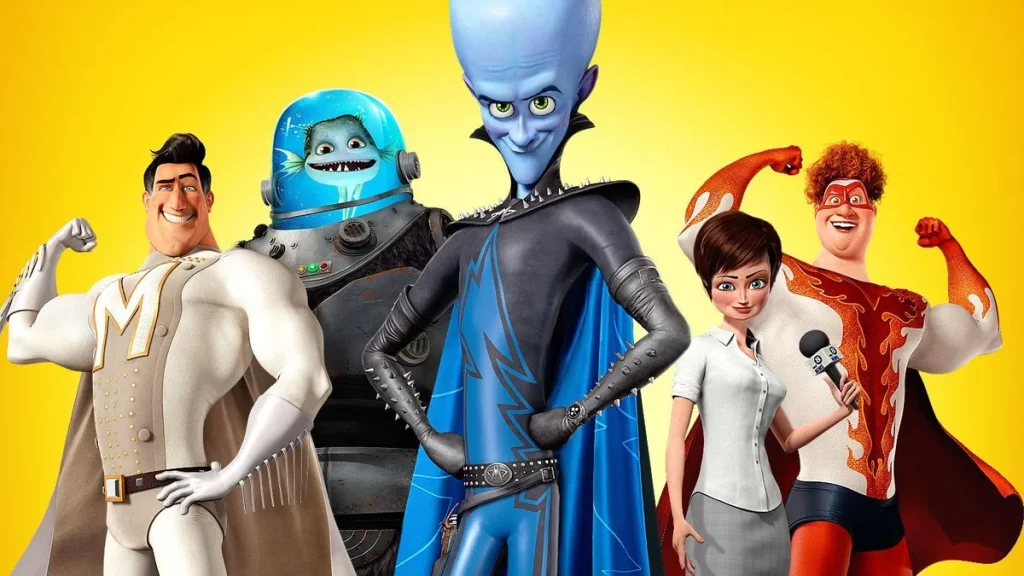
“Escape is one of the main functions of fairy stories”, writes JRR Tolkien in his essay, “On Fairy Stories”. What better story exemplifies escape than Megamind, a story about the hero’s escape from the school-to-prison pipeline? The movie Megamind, directed by Tom McGrath, follows the titular character, a blue alien who escaped his home planet as a baby when it was sucked into a black hole, as he is pushed out of school and into a life of supervillainy. After finally defeating his arch-nemesis, Metroman, he realizes that something is missing in his life and trains a new hero, to fight. But when Titan goes rogue, Megamind must step up and become the hero the city needs. The fairytale may be fictional, but the School to Prison Pipeline is a real systemic issue affecting marginalized students all over the country. While Megamind was able to escape from the cycle of incarceration, many real people who experience the school-to-prison pipeline are not. Furthermore, escaping the pipeline is not enough, we must dismantle the pipeline with adequate funding for schools, especially in low-income and neighborhoods of color, ensure teachers and administrators are not biased and represent the student body, and end ‘zero tolerance’ policies in schools.
Megamind as a Fairytale
While on the surface, Megamind may not seem like a fairytale, it absolutely is. In his essay “On Fairy Stories”, JRR Tolkien gives a series of criteria he believes distinguish fairytales from other kinds of tales, the vast majority of which can be applied to Megamind. As a broad definition, Tolkien writes, “a “fairy-story” is one which touches on or uses Faerie, whatever its own main purpose may be: satire, adventure, morality, fantasy. Faerie itself may perhaps most nearly be translated by Magic—but it is magic of a peculiar mood and power, at the furthest pole from the vulgar devices of the laborious, scientific, magician.” (Tolkien, 5). He also goes on to add that even if the story is satirical, the one thing it must take seriously is magic. Magic can be found in Megamind in the form of Metroman’s superpowers, which grant him super strength, along with the ability to fly, and shoot lasers from his eyes. Megamind also has a binky his parents gave to him as he escaped his home planet, which shoots out electricity that he uses to power his various inventions. While the movie is meant to be a satire of superhero origin stories, their powers, the magic found in the story, are not satirical.
Furthermore, Tolkien requires that the story must not take place in the real world to be considered a fairytale. When explaining why a travelers’ tale is not a fairytale he says, “Such tales report many marvels, but they are marvels to be seen in this mortal world in some region of our own time and space; distance alone conceals them.” (Tolkien, 6). Again, Megamind qualifies as a fairytale since it takes place in the fictional Metro City. Additionally, Megamind and his nemesis Metroman are both from neighboring fictional planets that are sucked into a black hole. Since none of these places exist in the real world, Megamind meets Tolkien’s requirements.
Finally, an integral aspect of a fairytale according to Tolkien is its happy ending. He writes “The consolation of fairy-stories, the joy of the happy ending: or more correctly of the good catastrophe, the sudden joyous “turn” (for there is no true end to any fairy-tale): this joy, which is one of the things which fairy-stories can produce supremely well, is not essentially “escapist,” nor “fugitive.” (Tolkien, 33). This “turn” is ingrained in fairytales and appears in Megamind. When Megamind is falling to his death and it seems like the false hero turned villain, Titan, will defeat him and take his love-interest Roxanne (the princess) and take over Metro City the story turns. Megamind uses his dehydration gun on himself and lands in a fountain, rehydrating himself between Titan and Roxane and taking Titan’s powers, defeating him for good. With his victory, Megamind wins the love of Roxane and the adoration of the city, but the true happy ending is him leaving behind a life of villainy, finally escaping the school-to-prison pipeline.
The School-to-Prison Pipeline in Megamindand Beyond
Now that we’ve established that Megamind is a fairytale, through the presence of magic, setting, and happy ending, we can discuss the presence of the school-to-prison pipeline in the story. The school-to-prison pipeline, or STPP, is defined by the NAACP Legal Defense fund in the book The School to Prison Pipeline: The Role of Culture and Discipline in Schools as “funneling of students out of school and into the streets and the juvenile correction system [perpetuating] a cycle known as the ‘School-to-Prison-Pipeline’, depriving children and youth of meaningful opportunities for education, future employment, and participation in our democracy” (Okilwa et al., 6). Many aspects of our public education system contribute to this pipeline, most notably underfunded and under resourced schools, inherent discrimination in classroom discipline, and disciplinary practices that disrupt students’ education and erode their trust in the institutions meant to help them succeed, all of which are present in Megamind.
The first aspect of the school-to-prison pipeline present in Megamind is underfunded schools. The book, The School to Prison Pipeline: Structuring Legal Reform, explains how detrimental under-resourced schools can be to children’s academic development. “Students in underresourced schools and districts, with too little access to experienced and highly qualified educators, with curriculum resources that do not prepare them for college, with inadequate exposure to the arts, and in facilities that are unsafe and poorly equipped and have too few early intervention programs for struggling students, are at high risk of academic failure.” (Kim et al., 9). When kids don’t have access to the resources they need to develop learning skills, they are set up for failure in academic settings, especially compared to students who did have access to those necessary resources. The problem of underfunded schools tends to be especially prevalent in school districts “marked by concentrated poverty and racial isolation” (Kim, 9). Education is the pathway to escaping poverty, but schools in areas of high poverty or communities of color are more likely to have inadequate schools, perpetuating the cycle of poverty and the STPP.
This problem is also present in Megamind. At the beginning of the movie, we see baby Megamind and baby Metroman fleeing their destroyed planets and heading to their new worlds. Despite landing in the same city, they couldn’t have ended up in more different circumstances. While Metroman lands in a large mansion and is welcomed with open arms by his white wealthy family, Megamind lands in a prison. All the early education Megamind receives is taught by the other prisoners, as seen in a scene where they hold up flashcards to teach him right, criminals, from wrong, police officers. Obviously, this early education is inadequate and doesn’t prepare him for future academic success. While we don’t see the early education Metroman receives, we can assume based on his privileged background that he received top-tier education or, at the very least, better education than being taught by prisoners as Megamind was.
To combat this aspect of the school-to-prison pipeline, we must advocate for better funding and resources for all schools, especially those that serve communities of color and low-income neighborhoods. Providing better resources, including qualified teachers, up-to-date educational materials, and arts and extracurricular programs, as well as early intervention programs to help struggling students early, will provide these students with more high-quality education, better preparing them for future success and create a path to escape the cycle of poverty and the school-to-prison pipeline.
Another aspect of the school-to-prison pipeline present in Megamind is the inherent discrimination minoritized students face in disciplinary actions. Okilwa and Kim agree that minoritized students, including Black, Latino, culturally and linguistically diverse (CLD), immigrant, and low-income students, are more likely to be referred, suspended, expelled, and arrested while in school and are more likely to be academically impacted by the disciplinary actions they endure. Additionally, many students fall under more than one of these categories. These minoritized students face disproportionate disciplinary actions compared to white students, even for similar behavior. For example, African American students are twice as likely to be referred to the office for problem behavior than their white peers in elementary school, and this figure jumps to 4 times more likely in middle school (Okilwa, 3). While being referred to the office may seem like a small issue, the disproportion of minoritized students facing harsher punishments only worsens as the severity of the disciplinary action increases. “When white youth and African American youth are charged for the same offense, African American youth with no prior admissions are six times more likely to be incarcerated in public facilities than white youth with the same background; Latino youth are three times more likely than white youth to be incarcerated.” (Kim, 35). Not only are minoritized students more likely to face disciplinary actions within schools, but they are also more likely to face disciplinary actions in the juvenile justice system, pushing them out of schools and directly into state facilities while they are still children. Furthermore, Okilwa claims “Some of the highest rates of racially disproportionate discipline are found in states with the lowest minority populations, where the disconnect between white teachers and black students is potentially the greatest.” (4). The disconnect between students of color and their white teachers not only makes it more difficult for students to engage with educational materials but also white teachers often feel more threatened by boys of color, contributing to their disproportionate discipline. Minoritized students, including students of color, low-income, and CLD students, are more likely to face disciplinary actions, both within the school system and the juvenile justice system, especially when there is a large disconnect between the white teacher and minoritized students.
In the story, Megamind is a minoritized student and falls into nearly all the categories listed. While he isn’t explicitly Black or Latino, his blue skin clearly sets him apart from the other students and represents that he is a student of color. Additionally, Megamind has a different accent than the other students, pronouncing school as “shool” and Metro City as “Metrocity”, making him culturally and linguistically diverse. He is also an immigrant, coming from a completely different planet than the other students. Finally, Megamind is raised in a prison, with no money to his name, making him a low-income student. All of these contribute to Megamind’s discrimination in the classroom, further perpetuated by his white teacher and majority white class. While Metroman is also an immigrant, he doesn’t face the same challenges Megamind does because he is able to assimilate more easily since he is white and has wealthy parents.
To combat this aspect of the school-to-prison pipeline, Okilwa offers a few solutions including professional development for teachers and administrators that include race, racism, and culturally responsive pedagogy, and “students own-race teacher-pairing”. First, professional development for teachers and administrators is crucial to dismantling the pipeline. These should include talks about how race and racism affect students in the classroom as well as how discipline and pedagogical practices contribute to the STPP. Additionally, teachers should include culturally responsive pedagogy to bridge the gap between the learning processes in school and the experiences of marginalized students. These practices will help increase academic engagement, which alleviates problem behaviors. Finally, Okilwa advocates for “student’s own-race teacher-pairing”. This system attempts to pair marginalized students with a teacher of their race and its advocates “point to the role model effect and the evidence that teacher’s perceptions have an effect on student outcome” (Okilwa, 7). The role model theory claims that students perform better when their teachers look like them or are like them, so they can use them as positive role models and adopt more ambitious goals. Additionally, a marginalized teacher is less likely to view minoritized students as a threat, hopefully minimizing the inherent discrimination these students often face. However, with the vast majority of teachers being white women, this system isn’t very widely applicable so Okilwa offers that school administrators should focus on hiring teachers with a focus on social justice to combat these issues.
Additionally, many disciplinary practices frequently used by schools can be incredibly detrimental to the educational development of students, especially zero-tolerance policies and suspension or expulsion. Zero-tolerance policies are policies that have mandated consequences for certain misbehaviors and don’t take into consideration any of the contexts of the situation. They are meant to “deal out severe punishment for all offenses, no matter how minor, ostensibly in an effort to treat all offenders equally in the spirit of fairness and intolerance of rule-breaking” (Okilwa, 4). Okilwa goes on to say “Clearly, zero tolerance policies criminalize minor infractions of school rules (more so for students of color), and the presence of police officers in schools has made the transition from student (school) to criminal (juvenile justice system) quite seamless.” (5). While they may be implemented to promote “fairness”, these policies are not equally applied. Minoritized students are more likely to face the consequences of these zero-tolerance policies than their white counterparts. This coupled with increasing police presence in schools facilitates the pipeline and pushes more and more marginalized students into the criminal justice system.
These policies are still harmful even if they don’t lead students directly into juvenile detention. Suspension and expulsion are also incredibly destructive to students’ development. “Exclusion from the classroom, for even a few days, disrupts a child’s education and may escalate misbehavior by removing the child from a structured environment and giving him or her increased time and opportunity to get into trouble.” (Kim, 78). Taking students out of the classroom and separating them from their classmates and the structure of school often leads to more trouble than if they would have been left in the classroom. Kim goes on to say, “Studies show that a child who has been suspended is more likely to be retained in his or her grade, to drop out, to commit a crime, and to end up incarcerated as an adult.” (78). Not only are these practices harmful to students’ short-term educational development, but they can also have lasting effects and are often the very things that push students towards worse behaviors and into the juvenile justice system.
Throughout the opening sequence of the movie, we see Megamind facing discrimination and disproportionate disciplinary practices in school. First, Metroman uses his laser eyes to make popcorn for the class and is met with cheers and praise from the students and the teachers. However, when Megamind also tries to use his magic binky to make popcorn for the class it goes slightly awry. The popcorn is set on fire and despite Megamind quickly extinguishing it, he is still punished and sent to time out in the corner. A little later all the kids are seen choosing teams for a game, but it turns out that all the students are on one team, except Megamind and the game is to throw the balls at him. When Megamind creates a helmet with his binky to protect himself from the abuse, the helmet sends the balls flying around the schoolyard, hitting other students, and nearly hitting the teacher. Despite Megamind only trying to protect himself, he is punished, while Metroman is rewarded for stopping Megamind’s bad behavior.
These disproportionate punishments hinder Megamind’s educational development and lead him directly to a life of villainy. Megamind is often punished with a time-out, which while not as harsh, is very similar to suspension as it removes him from the learning environment and isolates him from his peers. Megamind himself says “While they were learning the itsy-bitsy spider, I was learning how to dehydrate animate objects and rehydrate them at will” (Megamind, 4:35) Because of his frequent punishments he was excluded from learning with the other students and missed out on valuable instructional time. Instead, he was left on his own, allowing him to get into more trouble. Eventually, the constant punishments and antagonization cement the idea in Megamind’s head that he is inherently a villain and that’s all he’ll ever be. “I was destined to be a supervillain and we were destined to be rivals. The die had been cast and so began an enduring, epic, lifelong career.” (Megamind, 5:35). In his final act of rebellion as a student, he explodes blue paint all over the classroom, teacher, and students. He is promptly expelled and taken directly back to prison, which he would be in and out of throughout the rest of his formative years until he finally learns to be good while fighting Titan.
To combat this aspect of the school-to-prison pipeline, we need to replace zero-tolerance policies in schools with tiered discipline programs, like PBIS. Positive behavioral intervention and support, or PBIS, is an alternative to zero-tolerance policies that takes a tiered approach to discipline. Rather than immediate harsh punishments, even for small infractions, there are three tiers with the harshest punishments reserved only for serious offenses. However, it is crucial that PBIS and other tiered discipline programs must be culturally responsive otherwise minoritized students are often fast-tracked to the third, most severe, tier.
Conclusion
The movie Megamind can be considered a fairytale according to JRR Tolkien’s criteria in his essay “On Fairy Stories”. It features magic in the form of superpowers, takes place in a fictional world, and has a happy ending with Megamind becoming the hero of Metro City. It also deals with the theme of escape, as Megamind escapes from the school-to-prison pipeline, and ultimately becomes a hero. However, it is important to recognize that the real-life issue of the school-to-prison pipeline is a serious and ongoing problem that must be addressed through changes in education policy and support for marginalized students. Overall, Megamind serves as a reminder that fairytales can serve as powerful tools for addressing important issues and providing hope for a better future. When he is expelled, Megamind accepts that he is “destined to be a supervillain” (5:35). However, in the end, he comes to a new realization, “Funny, I guess destiny is not the path given to us but the path we choose for ourselves.” (Megamind, 1:24:17). While he broke out of what he believed was his destiny, his true destiny was hinted at in the very beginning of the movie when his parents say goodbye to him and say, “You are destined for great-” (Megamind, 1:30) before they are cut off. While he may not have been able to decipher what they were saying, it is clear they meant he was destined for greatness, proving that his destiny was never to be a villain. Instead, that false destiny was forced upon him by the school-to-prison pipeline. Similarly, the school-to-prison pipeline imposes a destiny of incarceration on marginalized students who were destined for greatness. They don’t live in a fairytale and may never be free from the cycle of poverty and incarceration. We must dismantle the school-to-prison pipeline to prevent future generations from falling into the cycle.
Works Cited
Kim, Catherine, et al. The School to Prison Pipeline: Structuring Legal Reform. New York University Press, 2012.
McGrath, Tom, director. Megamind. Paramount Pictures, 2010.
Okilwa, Nathern S., et al. The School to Prison Pipeline: The Role of Culture and Discipline in School. Emerald Publishing Limited, 2017.
Tolkien, JRR. “On Fairy Stories.” Essays Presented to Charles Williams, Oxford University Press, 1947.
Beauty and the Beast is a tale type that can be found across time, location, and culture, and that explores issues of acceptance, alienation, inner goodness vs. outer beauty, and arranged marriages. While not a direct adaptation, Doctor Who’s “Deep Breath” incorporates Beauty and the Beast archetypes to comment on the kinds of people our society paints as “the other” and to create a lead female character who presents us with an attainable path to achieving goodness.
Introduction
To explore how Doctor Who’s “Deep Breath” responds to “Beauty and the Beast,” we first need to understand some of the mechanics behind Doctor Who, mainly about the Doctor. The Doctor is a humanoid-looking alien, and one of the things that distinguishes them as a character is their ability to regenerate. At the moment of death, every cell in the Doctor’s body changes, giving them a new physical form and personality, while retaining the same memories and identity. In this way, they are at once new and the same, and this has allowed the character to be portrayed by a variety of different actors. In 2013, the Eleventh Doctor regenerated into the Twelfth Doctor, marking a drastic change in tone for the show. What’s notable about this is age: Matt Smith was 26 when he was cast to play the Doctor, the youngest actor to ever take on the role. Peter Capaldi was more than twice Smith’s age, 56 years old at the time he took over the role— the oldest actor to play the part since the 1960s. With this shift in appearance came a drastic shift in personality. For years, the Doctor had been played as a young, charming, and kind character, but this changed with Capaldi’s arrival. The Doctor’s companion Clara Oswald was also present during this transformation, and she now finds herself in Doctor Who’s own version of a Beauty and the Beast tale, confronted with a Doctor she must get to know all over again. In transforming its main character from welcoming and young to brash and old, and giving its traditionally female character a selfish, controlling personality— series 8 of Doctor Who tells a “Beauty and the Beast” inspired tale that is less about inherent virtue, and more about making an effort to do good. Using an Archetypal lens, we can look at how different elements in “Deep Breath” engage with themes found in Jeanne-Marie Leprince de Beaumont’s “Beauty and the Beast.”
A same-sex Beauty and the Beast couple. One “Other” vs. Three
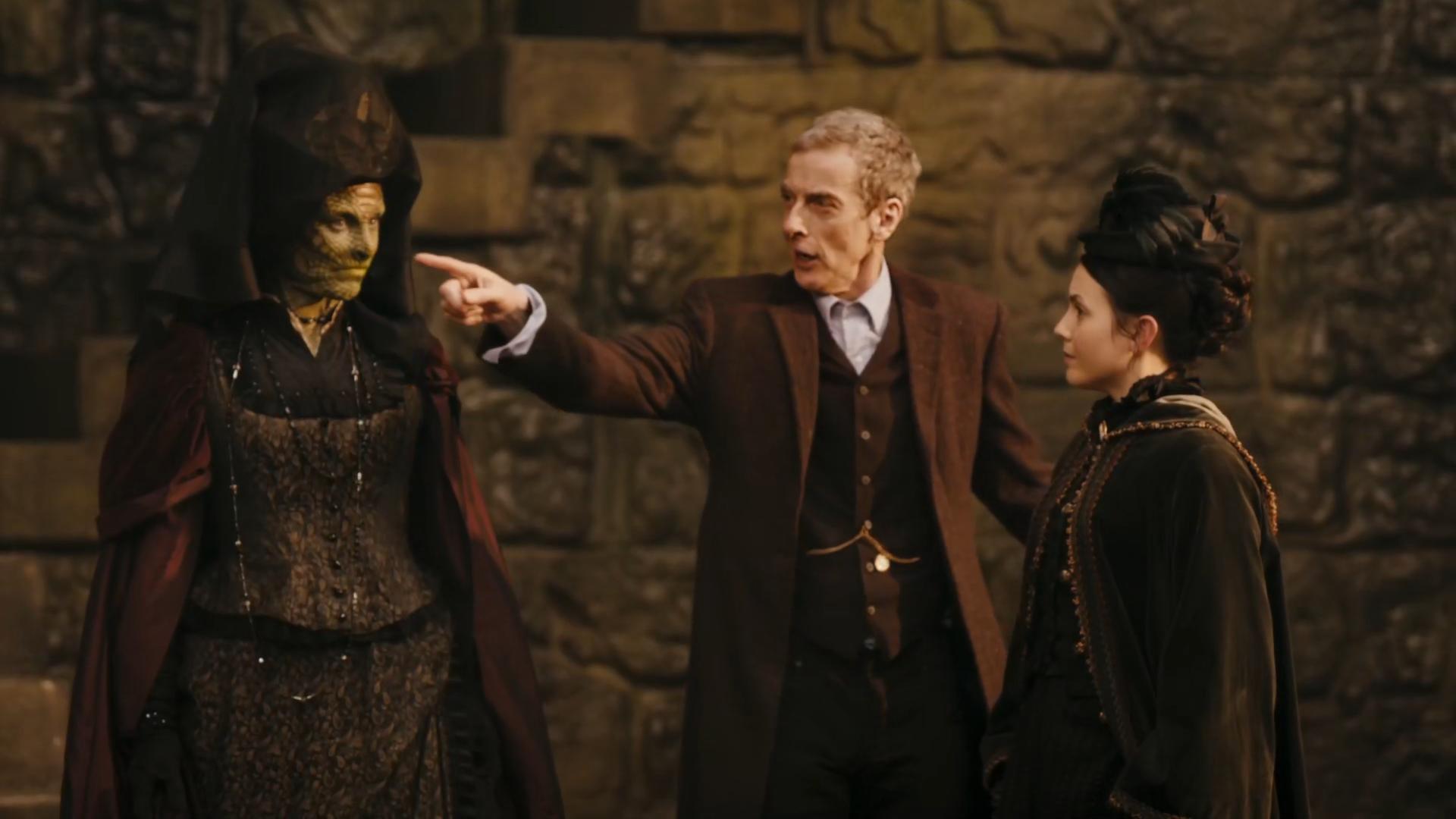
“Deep Breath” opens, and almost immediately presents us with a same-sex, interspecies couple: Vastra and Jenny. Vastra is a Silurian, a humanoid lizard, and Jenny is a human woman from the Victorian era. These two characters serve a dual purpose in the story— to help Clara come to terms with the Doctor’s transformation, and to demonstrate to the audience that love can exist multiple ways. In an early scene in “Deep Breath,” Clara struggles to accept the Doctor’s regeneration and new body: she asks Jenny what she would do “if [Vastra] was different, if she wasn’t the person that you liked?” Jenny responds to Clara, telling her that she doesn’t like Vastra, she “loves” her, and that difference doesn’t matter to her (Moffat). Here, we see a criticism of Clara’s relationship to the Doctor: if she cannot accept that his physical form has changed, then she doesn’t truly love him.
Vastra and Jenny fit into “Deep Breath,” not just as a comparison point for Clara’s relationship to the Doctor, but as a commentary on same-sex relationships. It’s in this way that “Deep Breath” uses this Beauty and the Beast archetype to explicitly make a point about love in our modern world. Where de Beaumont’s tale is explicitly about looking past a person’s physical form to love the person inside, the presence of Vastra and Jenny asks us to take that same idea and apply it to conceptions about gender, love, and same-sex relationships. “Deep Breath” aired on August 24, 2014, only months after the United Kingdom legalized same-sex marriage, and nearly a year before same-sex marriage was legalized nationwide in the United States. (Gerzic, Dau).
“Deep Breath” takes the Beauty and the Beast archetype, a reference point for how Clara should be able to see past the Doctor’s change if she truly loves him, and uses it to challenge the audience. If they believe that love can still exist when a person in a romantic relationship has a beast-like figure, they should also believe that gender doesn’t matter in relationships.
Throughout the episode, Vastra challenges Clara, judging her for being so hostile to the Doctor’s change. At the end, Clara eventually comes around, sees the Doctor for who he is, and decides to continue traveling with him (Moffat). However, it takes three different representations of “others” to get Clara to come to this understanding. In Jeanne-Marie Leprince de Beaumont’s “Beauty and the Beast,” the only figure that represents “the other” is the Beast. He’s alone in his otherness, and he is the only one who can plead that Beauty see his kindness and love him. In “Deep Breath,” however, there are multiple figures who represent “the other:” Vastra— who is not a human— Jenny, a woman who is married to a lizard person of the same sex as her— and the Doctor, othered by his status as an alien, and by his new, prickly personality and older-looking physical form (Moffat). It takes three embodiments of the “other,” three entirely different characters, to help Clara adjust and accept the Doctor for who he is. In presenting Clara as a selfish, stubborn character, “Deep Breath” tells us that people who might not have been othered, may need a lot of help to be able to understand another’s experiences, and that Beauty’s change of heart towards the beast at the end of “Beauty and the Beast” may take a lot more work than the tale communicates.
Perfect Beauty, Human Clara.
In de Beaumont’s “Beauty and the Beast,” Beauty comes to love the Beast out of her own virtue, and her own ability to recognize his kindness. But In Doctor Who, Clara needs help— a lot of it— to be able to see the Doctor for who he is now that his physical form and personality have changed. One of the main ways that “Deep Breath” draws its strongest contrast to “Beauty and the Beast,” is through its treatment of its female protagonist, Clara Oswald. In many ways, Clara is the opposite of Beauty in de Beaumont’s traditional tale. She’s selfish and controlling, described by both the Doctor and herself as an “egomaniac” (Moffat). There’s little about Clara that reminds one of Beauty’s inherent gentleness, fidelity, and self-sacrificial nature. When given a brain scan at the beginning of the episode, Clara is described as having “deflected narcissism” and “traces of passive-aggressive” (Moffat). Where Beauty suppresses her emotions as to not “make everyone even more sad,” Clara lets her anger burst out when challenged and judged (de Beaumont 44). Comparing the two, Clara is a much more human character.
Beauty is an attribute that is a luck-of-the-draw kind of thing. Some people have physical appearances that are deemed beautiful, others don’t. It is not a thing one has control over, or that one can change too much. In “Beauty and the Beast,” de Beaumont positions Goodness in the same way: an inherent quality, held by some, that determines their worth and their nature.
De Beaumont’s tale shines a light on goodness as an inherent quality to Beauty. It’s presented as something that she has to a degree that nobody else does, to the point that she turned down “all those who proposed to her” to stay and take care of her father (de Beaumont 40). An inner sort of beauty— not a quality that can be cultivated, but an attribute that she was born with. It is because of this inherent inner goodness that she possesses, that Beauty is able to see through the Beast’s scary exterior and come to love him. It is because of this inherent inner goodness that Beauty is able to transform the Beast, and break the curse.
Reading de Beaumont’s “Beauty and the Beast,” it’s hard to find anything that Beauty does wrong. She voluntarily sacrifices herself for her father, wishes for the simplest gift possible when asked to wish for one, she looks past the beast’s scary form to love him, and is rewarded for it (de Beaumont). While de Beaumont may have intended for Beauty to be a role model for how young girls should behave, Beauty’s behavior is unhealthy. She suppresses her emotions, wants, and needs totally, and puts others ahead of herself on every occasion. While it might be easy for de Beaumont to call Beauty virtuous and good, this is an unrealistic, unhealthy, and unattainable portrayal of what it means to be good. In Doctor Who, Clara doesn’t have that inherent inner virtue— she’s probably more like Beauty’s sisters than she is Beauty. A large theme in series 8 of Doctor Who is this idea of goodness, with the Doctor’s driving question after having regenerated and trying to solidify who he is being: “Am I a Good Man?” Clara’s answer to him, when asked, is “I don’t know… but I think you try to be and I think that’s probably the point” (Moffat and Ford).
Through its depiction of Clara Oswald in “Deep Breath,” and her journey from rejecting the Doctor’s new form, to coming to accept him for who he is, Doctor Who says sends a different message than “Beauty and the Beast” about what it means to be good. It says that goodness is a quality that can be cultivated, that you can strive to have— not something that, like physical beauty, you are either born with or without. Clara’s struggle to see the Doctor for who he is, her complex emotions, her outbursts of anger, and her eventual change of heart at the end of the episode demonstrate to the audience how an actual human being would react in a situation when confronted with a more Beast-like figure. Doctor Who, in its most complex depictions of both the Doctor and companion, tells us that “Beauty and the Beast” is a lie. The truth, instead, is that people are messy, selfish, and rude. They don’t understand others off the bat, it’s not easy for them to change what they believe. It tells us that Beauty— the character— is an ideal that can’t be reached, and instead presents us with Clara: a flawed, complex, human character, who overcomes her fear and uncertainty to come to understand her friend.
Conclusion
Through its depiction of an interspecies, same-sex relationship, and the complex, flawed character of Clara Oswald, “Deep Breath” demonstrates how Doctor Who engages with the themes and archetypes in the traditional Beauty and the Beast tale. Presenting us with Clara Oswald, a stark contrast to de Beaumont’s Beauty, Doctor Who provides its audience with a realistic depiction of a character found in a Beauty-and-the-Beast-like situation, and a realistic model of what a path to being good might actually look like for a human. With the character of Clara Oswald— with all her flaws, anger, wit, and emotions— Doctor Who tells us that we don’t have to be perfect, like Beauty. Instead, we can be flawed, lean on others for help, and strive for goodness, like Clara.
Works Cited:
Doctor Who, Series 8 Episode 1, “Deep Breath,” directed by Ben Wheatley, written by Steven Moffat, performed by Peter Capaldi, Jenna Coleman, and others, aired August 24, 2014, on BBC One and BBC America.
Doctor Who, Series 8 Episode 1, “Into the Dalek” directed by Ben Wheatley, written by Phil Ford and Steven Moffat, performed by Peter Capaldi, Jenna Coleman, and others, aired August 24, 2014, on BBC One and BBC America.
Gerzic, Marina, and Duc Dau. “’I Love Her and, as to Different, Well, She’s a Lizard’: Queer and Interspecies Relationships in Doctor Who.” The UWA Profiles and Research Repository, SWANSEA UNIV, 14 Jan. 2019, https://research-repository.uwa.edu.au/en/publications/i-love-her-and-as-to-different-well-shes-a-lizard-queer-and-inter
Jeanne-Marie Leprince de Beaumont, “Beauty and the Beast”
Jeanne-Marie Leprince de Beaumont’s fairy tale, “The Beauty and the Beast” tells the story of a young woman who is forced to live with a Beast, and eventually learns to love him as he is. The story ends with the Beast returning to his human form, as a handsome prince, and the two live happily ever after as a married human couple. The physical transformation of the Beast is a reward to Beauty’s character for her ability to love him even in his terrifying form. That being said, his Beast form is still an obstacle for her, and the two can only truly be happy when they exist as a couple that can be accepted in the society they live in. The story establishes a structure where the ostracized character of the Beast must undergo a physical transformation in order to successfully experience a return to normalcy. The return to normalcy is the prime goal, and one that is celebrated by the tale, but is also a goal that reinforces societal expectations of what a relationship can look like. The Beauty and the Prince, who formerly was a beast, are now able to be accepted because they are performing as an attractive, heterosexual cis-gendered couple. By establishing this type of performance as a successful, happy ending, the tale suggests that the former relationship between the accepted Beauty and the ostracized Beast is one that cannot operate successfully in society. This creates a dynamic of a right and wrong way to have a relationship. Several films have adapted de Beaumont’s story in a variety of ways, some of which challenge the message of the ending of the original tale, while others uphold it. This paper will examine four adaptations of “The Beauty and the Beast”, all of which have different endings based around the physical transformation of characters. How these films choose to adapt the ending of the story alters the message that is presented about relationships, sexuality, and gender.
Jean Coctau released his film adaptation of Beauty and the Beast in 1946, which utilizes unique set design, costume, and visual effects largely inspired by Surrealist film making techniques. Through its aesthetics, Coctau seeks to tonally stay true to the fairy tale source material. Coctau also remains true to the source material through his film’s narrative and ending. The film ultimately fulfills the return to normal for the Beast who transforms back into a handsome Prince at the end of the film. Belle and the now human Prince float into the air together, to presumably live happily ever after as a heterosexual, human couple.
While the film ends in a return to normal, the Coctau takes time to embrace the strange nature of the relationship. Throughout much of the film, the Beast is incredibly submissive to Belle, despite the perceived power dynamic of Belle living at the castle against her will. Belle is able to harness her beauty as a tool to negotiate with this power dynamic and gain her own agency. Ultimately, the return to normal is a reward to Belle for eventually trusting in the Beast and loving him even in his monstrous form. This ending celebrates the tasteful, conventionally attractive heterosexual couple as reward for trust between a couple. By celebrating the Beast returning to being a human, the film upholds the ostracization of his former form as something too monstrous to deserve a happily ever after. Coctau holds true to the original message of the tale and upholds the dynamic of a right and wrong relationship.
One direction of adapting the ending of “Beauty and the Beast” in other films has been to have the Beast character remain as a beast, avoiding the physical transformation. The 2007 animated film, The Bee Movie directed by Simon J. Smith and Steve Hickner, takes this approach to adapting the fairy tale. The Bee Movie follows the romance between a human woman, Vanessa, and a talking bee named Barry. After leaving his beehive and becoming a part of the human world, Barry becomes ostracized because his physical body is too beastly to be accepted into human society. Vanessa sees through Barry’s beastliness and appreciates him for his mind and personality. Ultimately, the two have a happy ending, and are successful in creating a lasting romantic connection without Barry transforming into a more suitable physical form to fit society’s standards for Vanessa.
This film maintains the oddness of the beauty and the beast couple by keeping the beast as a beast. In this, The Bee Movie rejects the return to normalcy, however, the human does allow for us to ground the relationship and have a character to see the world through. Vanessa acts as a surrogate for the human audience to understand their unconventional relationship, and even gain an appreciation for it. While the two characters of Barry and Vanessa are clearly gendered in the film as male and female, respectively, the celebration of an otherwise ostracized relationship suggests that relationships should not have to fit a mold created by the cultural landscape they reside in.
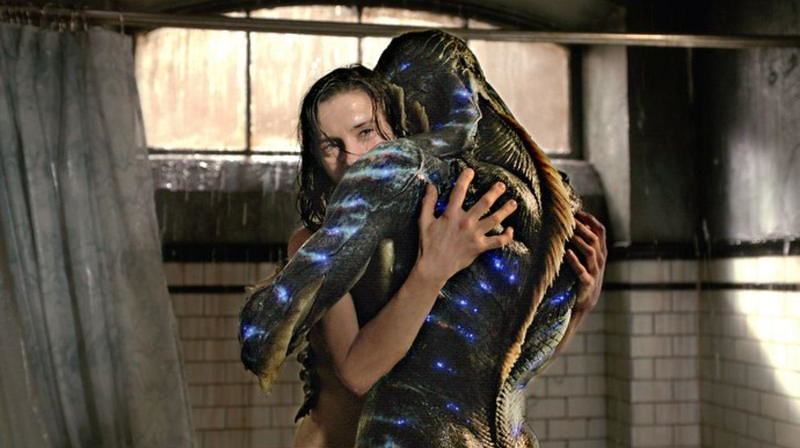
In some cases, there is a complete rejection of normalcy, and instead a transformation to otherness. The Shape of Water (2017) from director Guillermo Del Toro is a film that embraces otherness and monstrosity in its entirety. The film follows a deaf woman named Elisa who enters into a secret romance with a humanoid amphibian, while working at a secret government facility. Elisa must keep the Amphibian Man a secret, not only for the safety of their relationship, but for the safety of their lives. At the end of the film, Elisa is shot and on the brink of death, when the Amphibian Man carries her into a river, bringing her back to life and causing her to grow gills and transform into an amphibian herself. The two swim away into the ocean, finally safe, as another character narrates off screen, suggesting that the two were free to love each other and lived happily ever after.
One key shift in del Toro’s adaptation of the story is the conditions which lead to the romance between the Beauty and Beast characters. Rather than be forced to reside in the Beast’s home against her will, Elisa comes across the Amphibian Man as a result of her own curiosity. The two begin to develop feelings for each other as a result of their ability to communicate non-verbally with each other, and by bonding over their positions as outcasts in society. Because of her deafness, Elisa is mistreated by the society she lives in, which helps her to sympathize with the Beast in the story. The next key shift in the story is how the Beast character is positioned as an object of desire in, and despite, his beastly form. Similar to Vanessa’s character in The Bee Movie, Elisa is positioned as a human surrogate through which the audience can see the Amphibian Man as a viable romantic interest. Elisa has no hesitate towards becoming sexually intimate with the Amphibian Man, while he is in his beastly form. The theme of embracing taboo sexuality is even further reinforced in the film through the character of Elisa’s neighbor, Giles, a closeted gay man, who is also ostracized because of his sexuality.
By having Elisa change into a beast herself, the film not only challenges expectations of relationships and romance, but challenges the ideas of what bodies should look like. Because Elisa was already living as a person mistreated and misunderstood by society, her physical embrace of beastliness becomes an empowering decision for her to make, and allows for her to live happily ever after underwater with the Amphibian Man. Rejecting her human body is also a rejection of the expectations of a gender identity that is clear and easy to read, in favor of a monstrous body to make gender legible. Through this ending, Shape of Water rejects expectations of romance and bodies, and creates space for non-traditional love to be celebrated and embraced.
One film which complicates the idea of transformation in Beauty and the Beast type tales is Shrek 2 (2004) directed by Andrew Adamson, Conrad Vernon, and Kelly Asbury. Shrek 2 follows two newlywed ogre lovers named Shrek and Fiona, who find difficulty navigating their lives as ogres in a world ruled by humans. Shrek struggles with insecurities of being an ogre and fears that he may lose his wife Fiona to a human Prince Charming. Shrek decides to drink a potion which causes himself and Fiona to turn into humans, which Shrek believes will help their relationship. When the two reconvene at the end of the film, Fiona refuses to remain human, ensuring that she enjoys their lives as ogres and the two transform back into their true ogre selves. In this adaptation, both characters in the romance experience the roles of the Beauty and the Beast. For Fiona and Shrek, taking on the role of Beauty, by turning into humans, is a low point for the characters. Although they can finally be accepted in the human world because of their new appearance, neither is truly happy in their performance of being human.
This film utilizes the ending of characters having a return to normalcy through a physical transformation as a way to completely reject the message of the original tale. In its ending, the film suggests that there is a pleasure to be found in existing as a disgusting, ostracized beast if one is able to accept and love the body they have. Shrek 2 also positions assimilating into a society that does not accept one’s differences as an unworthy goal for the characters. To attempt to reject one’s true self in order to be accepted is a harmful practice. By having a return to, and embrace of, rejection as a happily ever after for these two characters, the film reimagines what living well can look like, and provides hope for those who exist as ostracized that there is a way to be happy and content without changing oneself to fit in to a harmful world.
Each of the previous adaptations discussed conclude with happy endings. The happy ending is used as a way for the films to suggest that their message on romance and relationship is worthy of celebration. The Bee Movie, Shape of Water, and Shrek 2 all embrace physical beasthood as a viable and pleasurable part of a relationship. Jean Coctau’s Beauty and the Beast creates expectations that the way to achieve happily ever after is to exist as heteronormative and perform one’s gender in a way that is pleasing to the society that they live in. The other three adaptations challenge what bodies are supposed to look like and how they are expected to perform. Even though the couples in The Bee Movie, Shape of Water, and Shrek 2 are gendered as male and female through language and other signifiers, there is a Queer sensibility to their relationships. They show how the Beauty and the Beast story is one which can be told in a way that radically challenges harmful and exclusive expectations of romance, sexuality, and gender.
Love and Its Impact on Emotional Development in One Piece
Eiichiro Oda’s One Piece, an animated series known for its action-packed storytelling and humorous moments, follows Monkey D. Luffy, a young pirate, who sets out on a journey to find the One Piece and become the next Pirate King. Although pirates are generally considered a force of evil, Luffy’s crew, the Straw Hat Pirates, highlight the complexity within the One Piece world through their countless good deeds and commitment to friendship. Whole Cake Island, one of the most recent arcs, further emphasizes One Piece’s complexity through its introduction of Big Mom, one of the four Emperors of the Sea, and the Big Mom Pirates. Big Mom behaves in typical pirate fashion, ravaging islands and manipulating people with her power & authority as an Emperor, and her pirate crew consists of a few subordinates and her eighty-five children, forty-six sons and thirty-nine daughters from forty-three ex-husbands. While Big Mom’s children have a clear bond with each other and with her, she commands respect from her crew and her subordinates with equal parts love and fear. Whole Cake Island centers around Big Mom commanding and arranging the marriage of Pudding, Big Mom’s 35th daughter, and Sanji, a member of the Straw Hat Pirates. As the wedding approaches, Eiichiro Oda establishes certain fairy tale elements for a variety of reasons. Whole Cake Island’s landscape mostly consists of sweets and confections made by the exploitation of stolen resources from different islands and parallels the witch’s food house from Hansel and Gretel. The landscape also shifts & changes frequently, particularly in the Seducing Woods, due to the “homies,” objects imbued with Big Mom’s soul. As the plot of Whole Cake Island progresses, Oda slowly reveals the backstories of Big Mom, Pudding, and Sanji, each full of themes of abuse & neglect (familial or otherwise) reminiscent of stories like Hansel and Gretel, Beauty and the Beast, and Cinderella & Little Red Riding Hood, respectively. From a psychoanalytical perspective, Eiichiro Oda utilizes fairy tale elements primarily within the backstories of Big Mom, Pudding, and Sanji and throughout Whole Cake Island to underscore how true love and a lack of it impacts personal development.
Central to Whole Cake Island’s plot, Big Mom acts as an agent of chaos within this interesting arc. Unlike her title suggests, Big Mom acts quite childish from the moment she’s introduced to the audience, singing about her brutal exploits of other islands with her “homies” and ravaging Whole Cake Island after she goes on one of her “Hunger Pang” tantrums. While having one of her Hunger Pangs, Big Mom becomes incredibly violent and unreasonable until she eats what she is craving at that moment, often destroying homes and even people in the process. The destruction of homes on any other island would be a much more significant issue, but on Whole Cake Island, the damage is minimal as nearly everything within Big Mom’s territory is made completely out of food.
Maria Tatar’s Classical Fairy Tales examines the relationship between food and fairy tales. “Fairy tales with child protagonists often take us squarely into the household, where everyone seems to be anxious, not only about what’s for dinner but more important about who’s for dinner” (Tatar 230). Oda takes the general family structure in regard to food in fairy tales and inverts it to offer an explanation for Big Mom’s present behavior. In her backstory, due to her voracious appetite, Linlin (Big Mom) is orphaned on an island where she meets her new adoptive family and her adoptive mother, a nun with special soul powers. (cite here). Linlin has another Hunger Pang attack after observing the island’s fasting ritual, nearly destroying the island in the process, and while she is given permission to stop fasting, she is never reprimanded primarily out of fear of her strength. At this moment it is clear that she is “given permission” to outrage whenever she wants. At the end of her backstory, after resolving their issues, Linlin’s family throws her a birthday party with a delicious cake and in her excitement, Linlin realizes that everyone has gone missing, but after exhibiting soul powers herself, it is implied that Big Mom eats her adoptive family. As an adult, Big Mom’s continued appetite & hunger pang tantrums, unnaturally large family without a stable father figure, and mistreatment of other people serve as indications that Big Mom, despite all of her strength and power, has not emotionally developed that much since she was a child and still yearns for stability and love. Due to her childish mindset, Big Mom pushes the responsibilities of a parent, i.e. watching & protecting her children, to her oldest son Katakuri, and behaves like a child, putting down her children rather than uplifting them, as evidenced by Pudding.
Another major storyline within Whole Cake Island is Pudding and Sanji’s wedding as ordered by Big Mom. Part of why Big Mom has such a large number of children with so many different ex-husbands is because she uses the familial tie to establish connections and expand her territory and influence. Pudding, a descendant of the Third-Eye tribe, also has a third eye, and always covers it due to her childhood. Maria Tatar’s Classical Fairy Tales considers how both love and physical appearance intersect. “Beauty and the Beast may be a love story about the transformative power of compassion, but it also has an emotional ferocity that encodes messages about how we manage anxieties about monstrosity and alterity” (Tatar 30).
Oda uses the core principle behind the Beauty and the Beast fairy tale type to flesh out Pudding’s character, despite Pudding not having an anthropomorphic transformation. Pudding was bullied as a child, constantly told that she was a monster by the children around her, including her mother. In fact, Big Mom is the one who tells Pudding that her third eye is ugly and that she should cover it. Studies show that a lack of positive affirmation from parental figures often has a significant impact on the mental well-being of children. “The importance of parents early in the life span is paramount as they can facilitate or hinder the development of emotional abilities and overall adaptive functioning in offspring” (Skinner 2016). Due to constantly getting bullied and not receiving support from her parental figure, Pudding eventually snaps and decides to become the monster that everyone believes her to be. She attacks those who bullied her with a knife without reservation and becomes cruel and mean-spirited up to the present.
Oda completes Pudding’s Beauty and the Beast tale within the arc during the wedding. Big Mom uses the wedding as a front to deceive and kill Sanji and steal his family’s impressive technology. At the crux of the Big Mom’s plan is Pudding, who has the ability to alter memories, whose third eye is supposed to shock Sanji for long enough to shoot him. Though once her eye gets revealed, Sanji remarks on its beauty, something Pudding has never experienced, and the plan falls to pieces. Throughout Whole Cake Island, Sanji shows nothing but love and affection towards Pudding, who believes it to be a deception based on her childhood experiences with bullies and her mother. Fortunately, whatever grasp Big Mom has on Pudding slips away as Sanji’s kindness offers the support that Pudding desperately yearns for her entire life.
Despite the affection that Sanji shows Pudding throughout Whole Cake Island, he truly wishes to return to the Thousand Sunny with his chosen family, the Straw Hats. The final major storyline within Whole Cake Island is Sanji’s rescue from Big Mom by the Straw Hats. Maria Tatar’s Classic Fairy Tales highlights the tense family situations that Cinderella stories typically contain and the struggle to succeed in spite of these often-abusive relationships. “The plots of “Cinderella” stories are driven by the anxious jealousy of biological mothers and stepmothers who subject the heroine to one ordeal of domestic drudgery after another…the tales capture the hard facts of everyday life, staging domestic arrangements that led to the physical abuse of girls, with cruel parents and stepparents who exploit rather than protect the young” (Tatar 141). Interestingly, Oda combines elements from both Cinderella and Skylappjenta, a Little Red Riding Hood-derived story, to accentuate his kindness in spite of the abuse he has endured from his family. Sanji’s brothers, genetically altered by their father to have superpowers and be cold-hearted, strike and injure Sanji throughout their childhood for not being like them and having an interest in cooking, something “unbecoming” of royalty. Eventually, he escapes from his family with the help of his sister Reiju, and crosses the sea where he eventually meets Owner Zeff, his adoptive father, who teaches Sanji truly how to cook and pursue his passions.
Despite Sanji’s escape, his past will not leave him as his father offers Sanji to Big Mom effectively as a sacrifice claiming ownership over Sanji in much the same way as the grandmother claims ownership of her granddaughter in Skylappjenta. “You belong to us” (Iram Haq 2012, 5:31). As Sanji’s crewmates come to save him, they find themselves lost within the Seducing Woods facing countless enemies, and only after a decisive struggle does Luffy escape the woods, mortally wounded. Oda juxtaposes Sanji’s family relationship dynamic with Sanji’s relationship dynamic with the Straw Hats through Luffy’s sheer determination to bring Sanji back to the crew, his real family. Despite this, initially, Sanji is unable to return with Luffy because he is being held hostage as his adoptive father’s life is on the life depending on Sanji’s cooperation. Beyond all else, Luffy’s determination has been one of the strongest elements of One Piece because it is this exact determination that has driven him to challenge even an Emperor of the Sea in pursuit of becoming the King of the Pirates. So when Luffy cries out, “I can’t become the King of the Pirates without you,” (Oda Chapter 843 pg.14) it emphasizes that Luffy holds his chosen family, the Straw Hats, in front of his ambition and is willing to sacrifice everything for his family. Eventually, Sanji, donning a red cape, must return to Luffy and heal him using his food after crossing through the woods effectively completing the Little Red Riding Hood aspect of Whole Cake Island, and when the Straw Hats end up saving Sanji from Big Mom and the Big Mom Pirates, they complete the Cinderella story Sanji’s rags to riches story, completing his Cinderella story as well.
Throughout Whole Cake Island, Eiichiro Oda tells a story of familial abuse and manipulation and implements multiple fairy tale elements to varying effects. Big Mom, a major driving force for the story, due to her voracious appetite and overwhelming strength, a character aspect taken from Hansel and Gretel, never develops emotionally. Big Mom’s lack of emotional development led to poor emotional development in her children like Pudding who develops a poor self-image and personality, aspects familiar to stories like Beauty and the Beast. Sanji’s familial abuse and victory in spite of this abuse mirrors the victory of characters like Cinderella and Little Red Riding Hood from Skylappjenta, and in all of these stories, the fairy tale elements implemented within them effectively and succinctly demonstrate that proper love and development of relationships at an early age leads to proper development as an adult.
Fairytales have been used through history as a tool to help individuals learn to cope with the hardships and difficulties of everyday living. Once upon a time, they were used to perpetuate the message that there will always be a happy ending waiting for us despite all of the scary stepmothers, wolves, and forests we may have to encounter—we need only be patient enough to see it. This message is still relevant today, but can be seen in slightly different contexts. Instead of fearing starvation and the institution of marriage, we now fear things like being isolated from one another due to a global pandemic and figuring out what “normal” looks like after such an event.
Imagine that you finally found your footing in an unfamiliar world only for it to change on you yet again. Yet, you are expected to return the previous status quo before your world was turned upside down. So then, what do you do? How do you begin to rectify that the circumstances and status quo to which society expects you to return to is not what is in place now despite what is being asked of you?
In this essay, I argue that being able to immerse oneself into a fairytale world, like in Disney’s Dreamlight Valley, helps to alleviate these stresses by allowing one to escape reality. Disney’s “Dreamlight Valley” is a recently developed life-simulation adventure game akin to the likes of “Animal Crossing” and “Stardew Valley.” Players are able to create their own avatar outfitted in Disney-themed items and interact with the classic Disney characters like Scar, Merlin, and Mickey himself while also interacting with newer characters like Moana, Kristoff, and Wall-E. By being able to live and interact with these characters on one’s own timeline, the game helps us to rewrite famous fairytale narratives so that they are more relevant and applicable to our unique contexts and circumstances.
By being able to be in control of how one allocates their time—choosing how much time is spent as well as what it is spent on—players are able to reduce their perceived stress levels. The ability to have control over the majority of one’s time has been proven to help alleviate perceived stress in undergraduate students (Hafner et al. 82). In the game, this can be seen in the fact that while players are situated within an overarching narrative and plot, they have the freedom to advance in the quests at their own pace while taking the time to decorate their world and advance their friendships with the Disney characters. This allows the player to have complete control over their gameplay experience whether that means taking the time to garden and decorate their village or try to unravel the mysteries of the “Forgetting” and save the kingdom.
This kind of extensive control is rarely seen in reality as there are too many factors that are simply out of our control. A clear example of this could be seen throughout the COVD-19 pandemic as global shutdowns dictated when and where people could be, what they had to do in order to be in public, and how life was going to continue despite a virus ravaging mankind. With so little control over one’s own daily life, people began to experience heightened levels of stress due to the growing uncertainty and forced isolation that they had to endure. However, as these circumstances became normalized, many individuals found themselves coping by finding other ways to simulate interacting with one another. Disney’s Dreamlight Valley capitalizes on this trend that has outlived the worst days of the pandemic.
The concept that time is controllable in the game is also something akin to fairytales in that the game is able to be picked when the player chooses, allowing them to resume their story at their leisure. Ernest Bloch states that “…the fairy tale narrates a wish- fulfillment that is not bound by its own time and the apparel of its contents” (qtd. in Tatar 349). The wish-fulfillment aspect of the game (doing as one pleases within the confines of the game’s design itself) or the fairytale is something that can occur whenever the player, reader, or listener chooses. Additionally, as Bloch stated, it is not something that is trapped only within the contents of the tale or game as both are mutable and can change to fit different circumstances and personal preferences.
This sentiment is echoed within the interactive and extremely customizable nature of the game that allows for players to adapt famous Disney stories and classic fairytales to fit their unique contexts. Within the game, players are able to create realistic avatars using the vast options available to them like the different skin tone palettes, height and body type adjustments, diverse hair styles, and many other features. The customizations continue into the extensive wardrobe options that the game has from basic blue jeans and t-shirts to the many varieties of Disney ears and merchandise that players can acquire through advancing in the game. These options, thus, allow the player to be transported into the video game world as if their avatar was an extension of themselves that was able to live within the Valley and interact with its many inhabitants—characters and critters alike. Additionally, with the animation of the avatar’s facial features that can change due to different circumstances (like when taking a selfie with Mickey), the player is able to view their avatar as an extension of themselves. This notion of facial features and customizability is consistent with recent literature which found that individuals were able to self-identify more with avatars that had habitual and customizable facial features than those without (Park et al.).
Often times, people are unable to truly express themselves in the way that they would like to due to external pressures like the need to conform to heteronormative standards or even a lack of self-confidence in front of others. Disney’s video game allows a private space where players are able to do as they wish and dress and speak as they would like to. The game’s ability to allow for self-expression can especially aid individuals who lack other outlets to express themselves in.
Being able to adapt fairytales and other classic stories is imperative to the nature of these types of works as it keeps them relevant to the ever-changing social, historical, and political contexts of society. Bloch underscores this notion by arguing: “It is precisely the unbound character of the fairy tale that has floated through the times that allows for such developments, such new incarnations in the present, incarnations that not only occur in the form of economic ogres or film stars” (qtd. in Tatar 350). Dreamlight Valley perpetuates the classic Disney fairytales and characters by providing players with different options for dialogue when interacting with the characters. Instead of sticking with a single script, players are able to further personalize their gameplay experience by choosing to be altruistic, snarky, or dramatic to Disney heroes and villains alike. In doing so, this alters the perception of their avatar by the other inhabitants of the Valley giving players complete autonomy to pursue the narrative that most interests them.
The importance of having these components of the game that aim to be fully customizable and unique to each player is synonymous with how fairytales are constantly being changed and adapted to best suit one’s circumstances. This is done so that the nightmares and tribulations that accompany reality can always be accounted for and overcome. For as Walter Benjamin maintains: “The wisest thing, as the fairy tale taught us in ancient times and continues to teach children today, is how to meet the forces of the mythical world with cunning and courage” (qtd. in Tatar 362). While the “mythical world” in reality more so translates to systemic injustices and the societal pressures to be someone you are not, the same sentiment still applies. If all we choose to focus on is the intimidating nature of these problems that must be addressed, whether its racial discrimination or the Forgetting (as depicted in the game), we will never have the courage to address them. Fairy tales and Disney’s Dreamlight Valley give us strength and confidence in the hope and fantastical solutions that they provide which can inspire us to come up with our own ways of solving reality’s many problems.
In regards to reading stories, Neil Gaiman once wrote: “We turn the page and the adventure begins. There is something waiting for you. So turn the page” (Gaiman 3). Gaiman emphasized how there is always something to discover and experience should we choose to continue reading and listening to stories. Today, we can go one step further— past the pages of a book and onto the screen—to physically immerse ourselves into these different fairytale worlds that allow us to escape our current realities and provide us with solutions and coping mechanisms to address our current realities. So go ahead and click A on your nearest Nintendo Switch controller or console of choice and dive into Disney’s Dreamlight Valley where something magical is waiting for you.
Works Cited
Gaiman, Neil. Stories All-New Tales. William Morrow, 2015. Häfner, Alexander, et al. “Decreasing Students’ Stress through Time Management Training: An
Intervention Study.” European Journal of Psychology of Education, vol. 30, no. 1, 2014, pp. 81–94., https://doi.org/10.1007/s10212-014-0229-2.
Park, Sung, et al. “Individual’s Social Perception of Virtual Avatars Embodied with Their Habitual Facial Expressions and Facial Appearance.” Sensors, vol. 21, no. 17, 2021, p. 5986., https://doi.org/10.3390/s21175986.
Tatar, Maria. The Classic Fairy Tales. 2nd ed., W. W. Norton, 2017, pp. 349-350, 356-362.
Into the Woods (1987) is a stage musical that combines four fairy tales from the Brothers Grimm – Cinderella, Jack and The Beanstalk, Little Red Riding Hood, and Rapunzel. The story largely focuses around a baker and his wife, two original characters created by writer James Lapine, as they venture “into the woods” to fulfill their wish. The musical, in juxtaposing the different fairy tales, raises a lot of interesting points on morality and worldview. Through the writing of Lapine and the music of the late musical composer Stephen Sondheim, ideas on simple binaries of good and evil are questioned, and the fairy tale notion of “wishes” are challenged. In the musical, Sondheim uses lyrics, musical techniques, and motivic development to flip conventional ideas of morality and recontextualize the function of “witches” and “wishes” in fairytales.
The musical begins with a 14 minute long opening prologue that establishes all of the moving parts that will be explored in the next two hours. The audience is introduced to every character and what it is they want. Cinderella wants to “go to the festival”, Jack’s mother wishes “the cow would give [them] some milk”, The baker and his wife “want a child”, etc. (Lapine). Within minutes, the character motives are laid out to the audience. This exposition is supported through the music being sung.
Figure 1: Excerpt from Into The Woods: Act I Opening Part 1 (Sondheim)
Sondheim begins the number with two notes – shown in the figure above. These two notes serve to represent the idea of “wishes”. Cinderella sings “I wish” with this short melodic whole step up. Although simple, this single musical motion encompasses the concept of a “wish” in the whole show. Any time the words “I wish” are sung, they are coupled with these notes specifically. As the number continues, the other characters chime in with their wishes, again using the two note theme that links them all together. Sondheim leads the audience through an otherwise overwhelming amount of exposition by establishing a connection between the short phrase and the narrative “wish”. This is Sondheim’s first use of musical motifin the musical score of the show.
A musical motif refers to the use of a short musical phrase as a representation of an idea, person, place, or thing. This connection is associative, serving as a direct musical callback. Such a term, however, can be broad and restrictive in analysis. Therefore, another phrase of similar background can be used; the leitmotif. Similar in concept, the leitmotif also utilizes short musical phrases given semantic and narrative value. However as Matthew Bribitzer-Stull writes, “Leitmotifs are developmental in nature, evolving to reflect and create new musico-dramatic contexts.” (Bribitzer-Stull). Developing a motif through any kind of rhythmic, melodic, or harmonic technique can be used to recontextualize an associative idea with dramatic beats. Although the “wish” theme shows up across the entire show, it remains largely unchanged. The narrative idea of a wish and what a character wants stays the same. There is a consistency in the action of “wishing” for something, although those wishes themselves can shift and change. The “wish” theme itself is simply an associative motif. However, Sondheim utilizes the leitmotif in the musical as well.
Halfway through the opening number, the audience is introduced to the character of “the witch”. At the head of her entrance, the music shifts to dissonance. The chords that are driving the narrative along are given a “sharp” and “clashing” quality. This is done to musically establish the discomfort and dissonance of the character of the witch itself. However, above these chords a single melodic line is played.
Figure 2: Excerpt from Into The Woods: Act I Opening Part 4 (Sondheim)
These five notes show up countless times across the entire musical in all matter of forms. As the witch explains the steps needed to reverse the curse placed on the baker’s family, the five notes are played in the orchestra. The same melody can be heard after the baker and his wife unsuccessfully feed Milky White the different items they were sent to fetch at the end of act one. As Jack sings of “giants in the sky” his melody is made of these five notes. Across the narrative, the notes are used to represent any action or moment related to the beans. Their influence on the story is shown musically. Put simply, the five notes “are and will represent the beans, the magic beans” (Sondheim). There were five beans found in the baker’s coat pocket, all five of which are attached to this musical idea. Although, in the moment, the theme serves to simply represent the witch and her beans, the application of this thematic material changes.The theme becomes a framework for a lot of the musical. Sondheim alters different aspects of the five notes to represent the changing context of the beans – specifically, in relation to morality.
Writer of the musical, James Lapine discusses the moral ambiguity of the lead characters:
“You can look at Cinderella and see her as someone who changes her identity, deceives everyone at the ball… basically is a character who is not all that forthright in a way… The idea for Jack of Jack and the beanstalk was a fellow that stole… Little Red Riding Hood seemed interesting from the viewpoint of blood thirsty kid, as opposed to an innocent… What [Sondheim] and I were very interested in, in the character of the witch, was someone who was honest all the time… though she comes in the most unpleasant package of the lot, she is in many ways the most direct and most honest.” – Lapine
(Into the Woods a Conversation Piece)
In traditional fairytale storytelling, witches are the “evil” that try to stop the protagonist from achieving their goal. A regular narrative of “good” versus “evil” is constructed between the hero and the witch. Max Lüthi writes, “Genuine folktales only speak of an ‘ugly old hag,’ an ‘old witch,’ am ‘evil witch,’…” (Tatar, 375). What Lüthi describes is the common lack of description in character depth to further benefit the simple plot. Many fairytales and folktales forgo any development of characters such as the simple “evil witch” to further drive a simplified dichotomy of morally good and morally evil. However, in Into the Woods, Lapine and Sondheim reexamine that dichotomy.
“Witches can be right
Giants can be good
You decide what’s right
You decide what’s good”
From No One Is Alone, Into the Woods. (Sondheim)
The musical introduces the function of the witch not as an evil but rather as a blunt truth. While the other characters that are normally considered “good” seek to fulfill their own wishes utilizing trickery and deception, the witch simply states things as they are. Musically, her clarity is reflected.
The “bean” theme, consisting of the five notes, is somewhat hidden across all of the different characters’ songs and orchestral backings. However in most cases, the theme is somewhat obscured. At times it is attached to another melodic idea, added in a contrasting instrumentation, or played in a different key than the rest of the piece, as if the theme is not central but rather alluded to in the music. For example, in the number “Maybe They’re Magic,” the baker’s wife sings about the beans and reflects on how she and the baker essentially deceived Jack to trade his cow, Milky White. Lyrically, she sings of the moral ambiguity of their actions all while a sharp accented brass instrument plays the two notes of the “I wish” motif. This correlation tells the audience, in a subtle way, that this moment in the woods is still connected to the baker’s wife, her husband, and their wish. However, in a clever play on words, Sondheim ends the short number with the baker’s wife surmising that “if the end is right, it justifies the beans”.
Figure 3: Excerpt from Into The Woods: Maybe They’re Magic (Sondheim)
In the final measures of this number, the orchestra builds to the final declaration of “the beans”. After those last words are sung – measure two of the figure above – the orchestra builds for what would normally be a strong ending to such a number. However, Sondheim chooses to introduce a subito piano, where the entire orchestra drops in volume to have one final melodic figure – the “bean” theme. The motif feels deliberately out of place, orchestrated to be much higher and sharper than any of the previous sonorities in the piece. Not only does this emphasize its place within the music, but it also separates the theme from the body of the number itself. The beans are affecting the baker and his wife lightly, almost as an afterthought. The theme played quickly, much like how the baker duo treat the beans themselves. This moment directly contrasts the number, Stay with me – sung by the witch to Rapunzel. The entire structure of the vocal melody is constructed using the five notes of the “bean” theme. The music lingers on this thematic idea, as the maternal figure of the witch convinces Rapunzel to stay in the tower. This also alludes to Rapunzel herself, who’s upbringing was a direct result of the beans. In fact, Rapunzel sings a melody up in her tower that is just the “bean” theme. In the character of the witch and Rapunzel, the “bean” motif is at its most sonorous. The melodic line is clear and at home its harmonic and narrative context. The sense of morality, however it is packaged, is at its most pure and truthful.
Blame plays an important role in the conclusion to the musical. After the “happy ending” of act one, act two follows the kingdom as chaos ensues and a giant goes on a rampage. In the number “Your Fault”, the surviving cast stumble through a recollection of the events passed to try to figure out who’s fault the entire situation truly was. This interaction, however, is less of a logical tracing and rather a lot of pointed fingers, as everyone tries to avoid the blame. Trickled throughout are iterations of the “bean” theme, unclear and somewhat dispersed. The influence of the beans is being reflected musically. The beans are at the heart of this moment. The cast then turns to the witch blaming her for the events that unfolded, and “Last Midnight” begins.
“I’m what no one believes,
I’m the Witch.
You’re all liars and thieves,”
From Last Midnight, Into The Woods. (Sondheim)
This is the witch’s final number. Here she criticizes everyone who remains for their wavering morals and need for blame. Sondheim and Lapine emphasize the reimagined view of the witch versus world dichotomy in the words the witch sings. We once again see the “bean” theme, this time however, harmonically rather than melodically. In most previous iterations of the motif, we are given the five notes played separately. However, on select occasions, the five notes are played simultaneously.
Figure 4: Excerpt from Into The Woods: Act I Opening Part 6 (Sondheim)
In this moment in the opening number, the witch describes for the first time what the baker and his wife must do to reverse the curse. As she begins listing the items, a chord plays. This specific chord shows up in different forms across the musical. All of them, however, are in relation to the witch and her beans. The chord itself is constructed of the five notes already established as the “bean” motif. It is now played together, in one large cluster.
Figure 5: Excerpt from Into The Woods: Last Midnight (Sondheim)
In this excerpt from Last Midnight, we see a similar chord outlined in harmonic context in the second measure. However unclear or unpleasant, this is the “bean” theme at its most direct. The theme in this form reflects the morality of the witch, the most direct and honest character of the entire musical.
Before the final number, the narrative closes with “No One is Alone”, lyrics referenced earlier. Among the many poetic lyrical moments that discuss the ambiguity of “real life” morals, this number also utilizes musical technique to establish a conclusion – narratively using the “bean” motif once more. For the first time, we hear the “bean” theme in its most soothing and comforting nature. The surviving cast sing of the lessons they learned while the orchestra accompanies with a sweeping, consonant iteration of the motif.
“This is where the bean theme finally becomes calm. It is neither sinister anymore nor is it agitated… And it’s at its most simple harmonically and at its most legato.” – Sondheim
(Into the Woods a Conversation Piece)
The surviving cast has learned to understand the beans and the morality connected to it. They understand that their initial wishes caused a selfishness that corrupted the power of the beans and brought their world crashing down. Only now, as they sing that “no one is alone” do they realize the moral implications of their actions. Another interesting musical moment to note is the melody as the words “people make mistakes” is sung.
Figure 6: Excerpt from Into The Woods: No One is Alone (Sondheim)
As Cinderella and the baker sing to Jack and Little Red Riding Hood, we hear this melodic figure. This is a reversal of the “bean” motif. Every note in “people make mistakes” is an inverted motif – the theme is played backwards. As the cast learn that these mistakes are made, the power of the beans are musically reversed, concluding the arcs of the four remaining characters.
Sondheim displays a variety of techniques to associate musical elements to the narrative at play. However when looking through the use of motivic development in hand with the literary themes being written by Lapine, the true nature and exploration of morality is uncovered. The “witch” is musically represented as our most direct and in a way “righteous” character, regardless of her depiction. The main cast is shown to be tricksters, cheating, and having a loose grasp on the power of the beans – on morality. By exploring these ideas through the music of the stage production, Sondheim and Lapine bend traditional fairy tale structures to show that “nice is different than good.”
Works Cited
Bribitzer-Stull, Matthew. Understanding the Leitmotif: From Wagner to Hollywood Film Music. Cambridge University Press, 2015.
“Into the Woods A Conversation Piece.” Music Theatre International, 29 Aug. 2019, https://www.mtishows.com/into-the-woods-a-conversation-piece.
Lapine, James, librettist. Into the Woods. Composed by Stephen Sondheim, Rilting Music, 1987.
Tatar, Maria. The Classic Fairy Tales. 2nd ed., W. W. Norton & Company, Inc., 2017.
“I wanna love glitter and also stand up for the double standards that exist in our society. I wanna wear pink, and tell you how I feel about politics. I don’t think those things have to cancel each other out.”
– Taylor Swift, Miss Americana
Disney Princesses have had a long-standing history in the Walt Disney Franchise, with the first Princess movie, Snow White and the Seven Dwarfs, released in 1937. Throughout history, women have been underrepresented in various aspects of life, calling for the rise of feminism: a social movement and systems of thought that include a ‘wide-ranging set of theories, politics, and practices that … contest the dominant gender order'” (Schiele). When Snow White was released, the ideal woman would be described as submissive and to remain in the domestic sphere. This is precisely how Snow White was characterized. As the second wave of feminism occurred, which challenged women’s domestic roles and workplace rights, public opinions swayed. Disney continued to modify its female protagonists in order to fit the new social climates and more accurately represent women. Different characteristics are pushed to be emphasized in these princesses, such as independence, ambition, and courage. However, this does not mean that other “more feminine” characteristics must be diminished to be seen as equals in society. The quote by Taylor Swift describes the idea that women should be able to continue to express their femininity without being seen as lesser than others. Disney has aspired to do just that: reclaim what it means to be a princess and empower women and girls to lean into their femininity while reaching their goals. Fourth-wave feminism, beginning around 2012, focuses on the positive use of the internet and social media (Schiele). Disney has leaned into this by utilizing online platforms to spread its messaging, seen through its #DreamBigPrincess photo and video campaign in 2017. By using real women and girls from around the world as its “Princesses,” Disney showcased their varying empowering stories, reimagining the definition of a Princess. Disney’s #DreamBigPrincess campaign aims to reconstruct problematic gender norms established in early Disney Princess movies in order to adapt to changing consumer demands, highlighting different characteristics of what it means to be a princess.
Disney is an influential force over women through its extensive reach into young girls’ childhoods, dictating much of the information absorbed during this time. One study found that only 4% of girls are reported to never engage with media related to princesses during their childhood (Coyne). Disney has leaned into its Princess franchise completely over the years, selling accessories, dolls, clothing, and more relating to the movie characters. The abundance of products has led to an obsession with princesses in many girls’ early childhood. This obsession has been dubbed ‘Princess culture:’ “a time when the obsession with the colors pink and purple, tiaras, twirl-y dresses, curled hair, and sparkly accessories dominate girls’ lives” (Leader). The combination of Princess media’s vast reach with Disney’s extensive marketing efforts has allowed princesses to influence the behavior and actions of girls growing up significantly.
One study found a positive interaction between female gender-stereotypical behavior during early childhood and engagement with princess media (Coyne). This stereotypical behavior could be a focus on beauty or the involvement in traditionally feminine areas such as the domestic sphere. Disney played into these stereotypes by initially characterizing its Princesses through this stereotypically female lens. The initial stories about princesses emphasize the presumed weaknesses society has about women, such as their helplessness, naivety, and focus on romantic relationships. For example, in Snow White and the Seven Dwarfs, Snow White is restricted to domestic actions such as cooking or cleaning and is pictured as a naïve and fragile girl. She is a typical portrayal of an early princess through her characterization and the depiction of her in a big dress with a small waist and perfect features. Disney’s princesses up until second-wave feminism continued to be portrayed in this light. However, after this wave, the characterization began to shift, and Disney introduced more dimensional female characters.
While early Disney Princesses promoted negative stereotypical characteristics, Disney has worked to change this narrative to show the positive influence of female role models in girls’ childhoods. One example of the shift in Disney’s Princess characterization is Ariel in, the little mermaid who has an adventurous spirit, acts defiant to her father, and accomplishes her dreams. Similarly, Mulan is an independent and ambitious princess who steps into the traditional role of a man by going to war. Over time, these depictions of Disney princesses only grew stronger as Frozen in 2013 featured two female protagonists for the first time. These are also the characteristics that Disney aims to emphasize in its #DreamBigPrincess campaign.
Disney’s #DreamBigPrincess campaign turns to real-world Princesses, showcasing women’s accomplishments in the face of adversity and empowering girls and women to reach their goals. By characterizing these women as Princesses, Disney wants to highlight the favorable characteristics of their own Princesses in an attempt to redeem their original movies and maintain their relevance in society. The publicized goal of this campaign was to raise money for the UN’s Girl Up Foundation, a non-profit that provides resources for girls in developing countries. Although the campaign still promotes Disney’s products through its association with the Princess franchise, Disney shifted their primary focus to donating funds to a charity that supports women worldwide. This goal shows that Disney’s focus has shifted from wanting to raise profits for themselves to wanting to make a difference in women’s lives. On the other hand, this campaign could also be seen as a mask to make their original Princess movies seem more socially acceptable again. Taking attention away from the problematic and sexist undertones and focusing the consumer’s attention on more positive actions Disney has created can cause the public to view the company more favorably. However, with Disney having taken steps to increase accuracy and representation in their movies over time, this campaign is seen as a way to empower women to reclaim what it means to be a princess.
Disney challenged photographers from around the world to create powerful images of real-life role models and help support the UN Foundation’s Girl Up Program. One picture features Grace Bunke, who was diagnosed with aggressive bone cancer at age 11 (“Dream Big, Princess.”). Even with an amputated leg, she continues to dream big and pursue her goal of being a Paralympian runner (“Dream Big, Princess.”). She is pictured wearing a crown which is most associated with Princesses, implying that Grace is also a Princess. Since Grace is not royalty, the audience reframes the idea of what it means to be a Princess as exemplifying the same positive characteristics as Grace. Another image in which traditional Princess imagery is shown is that of Alice Parker. Alice is pictured with her youth soccer team, wearing Princess dresses yet also covered in mud (“Dream Big, Princess.”). Disney’s original princesses were presented as perfect images and the audience rarely, if not never, saw them “dirty.” Therefore, showing that these two ideas are not mutually exclusive through the image of Alice repositions what it means to be a princess as well. Disney shows that girls can get dressed in pretty dresses yet still partake in traditionally seen as masculine activities such as playing sports. They also convey that girls do not have to look a certain way to be seen as princesses, even if they are covered in mud; this does not make Alice any less like a princess. By using seemingly ordinary girls, Disney reinforces the idea that anyone can be a Princess as long as they exemplify positive characteristics such as courage, ambition, and kindness.
Disney also released a few short videos in support of the photography campaign. One of these includes the same girls featured in the photographs and asks them about their favorite princesses. One answers Tiana because of her entrepreneurial spirit, and another Belle because she is courageous and intelligent (“Dream Big Princess Photography Campaign.”). These answers further support Disney’s message that their Princesses have many positive and inspirational characteristics. Another video in support of this campaign is a comparison between girls living their passions and Disney Princesses. One of the headlines for this campaign is “for every girl who dreams big, there is a princess to show her it’s possible” (“Dream Big Princess Photography Campaign.”). One of these parallels includes Pocahontas kayaking down a river with a girl mirroring her. Another visual shows a girl leaving the library with a stack of books while Belle is pictured in her home library from the films. Besides highlighting the more dimensional characteristics of these Princesses, this also teaches girls that they can be a princess in any situation. Highlighting Princess parallels in more ordinary situations shows the audience that they can find Princess qualities anywhere and while doing anything.
For the video campaign aspect, Disney used influential female role models to represent real-life Princesses. These role models were interviewed by young aspiring storytellers, aiming to empower the next generation of leaders by capturing their inspiring advice. This part of the #DreamBigPrincess campaign further breaks down the barriers between fictional Princesses and their application in the real world. One story that was told was that of Jo Malone. Jo Malone was diagnosed with dyslexia at a young age (“Dream Big Princess Video Campaign.”). However, instead of allowing that to hinder her, she looked towards other avenues at which she excelled, such as being able to identify fragrant scents. She advises young girls that “Dreams are so important in life… I would say stand on your tiptoes and reach for the highest dream because you’re worth it” (“Dream Big Princess Video Campaign.”). Allowing young girls to connect with these real-life female trailblazers shows them that women can reach their goals, no matter what they are. Disney uses this in their campaign to reposition traditional ideas surrounding princesses and maintain the relevance of its movies in modern society.
Disney successfully redeemed their Disney Princesses by reconstructing what it means to be a princess through the #DreamBigPrincess campaign. Disney’s call to action was to share this campaign, allowing them to gain more engagement from the public with their message. Their goal was 500,000 shares, which would mean $500,000 donated to Girl Up. However, the campaign exceeded this goal, and the shares exceeded Disney’s maximum donation amount of $1 million. Apart from social media shares, the campaign also reached a lot of other media traction, garnering blog posts and articles from worldwide outlets. Since this campaign was primarily published on social media, it is interesting to note the target audience. Younger girls have yet to get social media, which does not make them Disney’s target audience. The target audience would be the parents of young girls that may have felt unsure about feeding into princess culture due to the past problematic stereotypes surrounding it. Allowing them to see the positive aspects of Disney Princesses causes the parents to be encouraged to support these princess movies and possibly even drive them to purchase more merchandise. Overall, Disney’s #DreamBigPrincess marketing campaign repositioned the Disney Princess brand, steering it away from past problematic stereotypes that could be found in the characters to showcase the true meaning of a princess. Disney managed to stay relevant with social climates changing and new waves of feminism placing increasing pressure on influential companies to promote change.
Works Cited
Beail, Linda. “‘Dream Big, Princess’: Identity, Gender, Power and Nostalgia in Twenty-First Century Disney Culture.” Visual Inquiry, vol. 7, no. 2, 2018, pp. 87–91., https://doi.org/10.1386/vi.7.2.87_2.
Coyne, Sarah M., et al. “Princess Power: Longitudinal Associations between Engagement with Princess Culture in Preschool and Gender Stereotypical Behavior, Body Esteem, and Hegemonic Masculinity in Early Adolescence.” Child Development, vol. 92, no. 6, 2021, pp. 2413–2430., https://doi.org/10.1111/cdev.13633.
“Dream Big Princess Video Campaign.” Disney Partners, https://partners.disney.com/dream-big-princess-video-series.
“Dream Big Princess Photography Campaign.” Dream Big Princess Photography Campaign | Disney Partners, https://partners.disney.com/dream-big-princess-photo-campaign.
“Dream Big, Princess.” United Nations, United Nations, https://www.un.org/en/exhibits/dream-big-princess.
Leader, Caroline F. “Branding the Disney Princess: Femininity, Family, and Franchising.” The University of Wisconsin – Madison ProQuest Dissertations Publishing, 12 July 2019.
Miss Americana. Directed by Lana Wilson, performances by Taylor Swift, Tremolo Productions, 2020.
Schiele, Kristen, et al. “Marketing Feminism in Youth Media: A Study of Disney and Pixar Animation.” Business Horizons, vol. 63, no. 5, 2020, pp. 659–669., https://doi.org/10.1016/j.bushor.2020.05.001.
“If you want your children to be intelligent, read them fairy tales.”
Albert Einstein
Fairy tales are a cherished part of childhood for many people. These stories, often featuring magic and fantastical elements, have been passed down through generations and have become a beloved part of many cultural traditions. Aside from their ability to entertain and captivate young audiences, fairy tales may also have a profound effect on neurological development. Einstein believed that these fictitious tales play a pragmatic role in the neural development of children. A study conducted in Iran supports Einstein’s hypothesis, indicating statistically significant data regarding a positive direct correlation between intelligence and childhood fairy tales (Sajedi et al., 2018). Another study in Greece indicated the same data, with children preferring classical fairy tales over modern ones (Tsitsani et al., 2011). Einstein’s hypothesis about fairy tales and intellect is plausible because the trends of these studies indicate a deeply rooted correlation between neurological development and characteristics of classical fairy tales.
A study conducted in 2019 revealed differences between expository and narrative genres in brain development (Aboud et al., 2019). The study utilized 62 participants between the ages of 8 and 10. The children read a total of 5 narrative passages and 5 expository passages that met adequate statistical parameters in terms of difficulty and length. Between each read, the children were scanned by MRI to detect regions of brain activation. The article indicated that the fairy tale genre significantly aids in the development of the angular gyrus, superior temporal sulcus, lingual gyrus, and temporal lobe in comparison to the expository genre.
The angular gyrus lies in the rear region of the posterior parietal lobe and plays a significant role in determining the meaning of visually perceived words, memory retrieval, and attention. The visual perception of words develops as a direct result of reading fairy tales, leading to greater literacy. Some fairy tales, such as “The Three Little Pigs” offer repetitive, rhythmic, patterned language, such as “little pig, little pig, let me in,” or “I’ll huff, and I’ll puff, and I’ll blow your house down” (Jacobs, 1890). This phonological characteristic of some classic fairy tales contributes to language development because it offers a unique, recognizable pattern to words. Further supporting this claim is a journal from 2021 that indicates the development of these phonological skills demonstrates a strong correlation to early reading and writing development (Milankov et al., 2021). Fairy tales, therefore, boost intelligence because they greatly aid in the acquisition of developmental literary skills. Memory retrieval and attention, on the other hand, work synergistically, with attention generating sensory queues for memory traces (engrams) to be stored within the mind. The imagery oftentimes described in these magical tales requires its reader to utilize sensory imagination, amplifying the necessity for attention. Subsequent reading of the same fairy tale oftentimes leads to the same image generation, aiding in memory retrieval. Fairy tales such as the Grimm’s “Snow White” state, “…white as snow, as red as blood, and as black as ebony…” to aid in the visualization of the character (Tatar 95). This example doubles down on its application of imagery, employing visual aids such as snow and blood to further drive specificity. Further evidence to support the linkage between narrative genres and greater proficiency in memory retrieval is shown in The Impact of Pleasure of Reading on Academic Success which provides sufficient evidence for a positive correlation between reading and comprehension (Cupp et al., 1990). Finally, the angular gyrus deals with the processing of social queues, often regarded as the theory of mind.
The lingual gyrus primarily deals with basic and higher-level visual processes. The visual processing unit of the lingual gyrus deals with the recognition and naming of different visual stimuli, such as letters and words. Consequentially, the lingual gyrus plays a crucial role in the development of literacy. Reading fairy tales aids in the development of the lingual gyrus because fairy tales present literary material with unique characteristics such as phonological patterns, resulting in increasing levels of literacy. The narrative nature of fairy tales also entails the usage of common or everyday objects and actions, allowing for the development of foundational, frequently used words, further boosting literary and intellectual development. It is also important to note that the lingual gyrus plays a secondary role in analyzing logical conditions. While the correlation between reading fictional fairy tales and the development of logical conditions seems counter-intuitive, fairy tales present a unique landscape for this process to develop. Because fairy tales utilize Propp functions as a scaffold to build their narrative, each fairy tale follows these functions to an extent, leading to a logical, patterned, sequence of events. It is no wonder, therefore, why fairy tales contribute to higher levels of development of the lingual gyrus. The temporal lobe works synergistically with the lingual gyrus by forming a bridge between literacy and meaning.
The temporal lobe deals primarily with language comprehension and emotion association. Within the temporal lobe lies the hippocampus, a structure of the brain that is crucial for all memory formation, with its surrounding structures required for memory storage. Fairytales are often either read or told, each contributing a unique stimulus to the temporal lobe. Auditory and visual memory are processed in separate areas, indicating that fairy tales play a twofold role in processing sensory development. Unlike the lingual gyrus, the temporal lobe plays a crucial role in both auditory and visual language recognition. The temporal lobe plays an additional role in creating bridges between memory and emotion, relaying complex ideas to visual and auditory stimuli. This linkage promotes greater memory formation and retainment because the incorporation of an emotional aspect to memories imparts greater interconnectedness of hippocampal neurons. For example, “Little Red Riding Hood” evokes emotions of fear and terror of the bestial nature of wolves, whilst “The Little Mermaid” evokes emotions of tragic pity. These emotions assist in the recollection of the entire story, giving additional context to the fairy tale. Furthermore, emotional development is a crucial part of developing social skills that contribute to intelligence.
The final region of the brain that is stimulated and developed to a greater extent by fairy tales is the superior temporal sulcus. The superior temporal sulcus deals primarily with spoken language processing and social processing. Phenomes, words, sentences, and phonological cues stimulate the superior temporal sulcus. Fairy tales include all these cues, oftentimes averaging a greater quantity of phonological cues compared to expository writing. Fairy tales, therefore, play a specialized role in language processing because they are powerful stimuli that assist in the development of fundamental language processing skills. Social processing, on the other hand, presents a much more fascinating implication of fairy tales because the theory of mind is largely involved in this process. The theory of the mind describes the capacity of a person to understand another person’s mental state. Given that fairy tales are synthesized the human mind and tell stories about relatable protagonists, they allow us to peer into the minds of both the characters and the writers themselves. This characteristic of fairy tales and many other forms of narrative literature offers a special stimulus for the development of the theory of mind, leading to higher levels of intelligence because the theory of mind is required for successful social interactions.
With the regions of the brain that are especially stimulated and developed by fairy tales established, it would be appropriate to turn and apply this hypothesis to “Little Red Riding Hood” because the study in Greece supporting Einstein’s hypothesis indicated that the classical version of this tale was preferred among most children (Tsitsani et al., 2011). This study introduces the perspective of Bruno Bettelheim, an Austrian-born psychologist of the 20th century, to explain why children would prefer the harsh, classical version of “Little Red Riding Hood.” The study explores ideas from Bettelheim’s “The Uses of Enchantment” to explain that fairy tales are a particularly special genre of literature that exploits characteristics of the developing mind, such as animism, to provide coping mechanisms for children’s inner stresses and anxieties (Bettelheim, 2010). Facts use fiction as a disguise, much like the wolf of “Little Red Riding Hood,” to lower the “guard” of children, promoting a more effective delivery of the message. Bettelheim explains that the maturity of a child’s mind is not ready to handle the utterly complex structure of society or the sciences, but fairy tales provide the same message through magical means that are more understandable to the child’s mind. The magic that fairy tales possess, therefore, is a necessary quality for children to
Perrault’s “Little Red Riding Hood” stimulates all regions of the brain previously explained. “Little Red Riding Hood” incorporates phonological components during the final exchange between Little Red Riding Hood and the wolf disguised as her grandmother. The exchange between the two characters involves many single-syllable words, such as “Grandmother, what big ears you have!” or “Grandmother, what big eyes you have!” that isolate the phonemes (individual sounds) of words (Tatar 17). This characteristic of “Little Red Riding Hood” aids in the development of the angular gyrus and lingual gyrus because the single syllable repetition acts as a powerful stimulus for word recognition. Word recognition, in turn, promotes higher levels of intelligence because word recognition is a foundational component of literacy. “Little Red Riding Hood” stimulates language processing of the superior temporal sulcus through hidden innuendos, such as the promiscuous nature of the exchange between Little Red Riding Hood and the wolf at the end of the tale. There are other hidden innuendos such as Little Red Riding Hood having a “good time” on the longer path. Detection of these innuendos requires higher forms of language processing because they require the reader to derive interpretations beyond the surface of the text. The superior temporal sulcus is also stimulated through the social commentary of the fairy tale. The wolf of “Little Red Riding Hood” symbolizes the predatory nature of certain men, providing information that grows the theory of mind. At the same time, the animism of the wolf creates an understandable medium for children, as Bettelheim describes. “Little Red Riding Hood” demonstrates its potential in intellectual development because its linguistic characteristics and content provide a stimulus for neural development while maintaining an interesting story for children.
While it is fascinating to see the complex relationship between fairy tales and neurological development, it should be no wonder why the two are deeply interconnected. Fairy tales are the product of the immensely complex human mind; therefore, fairy tales tell a story about human nature. As organisms that have benefited greatly from intellectual evolution, humans have developed a method that allows us to develop our highly advanced linguistic abilities and sociability. Fairy tales have maintained continuity over the past millennia because they describe human nature, which will exist as long as humans do.
Works Cited:
Bettelheim, B. (2010). The uses of enchantment: The meaning and importance of fairy tales. VINTAGE Books.
Cupp, G. M., Dyer, P. A., Morrison, T. F., & Tracz, S. M. (1990). The relationship between Pleasure reading, textbook reading & academic success. Journal of College Reading and Learning, 23(1), 10–19. https://doi.org/10.1080/10790195.1990.10849955
Jacobs J, English Fairy Tales (London: David Nutt, 1890), no. 14, pp. 68-72.
Milankov, V., Golubović, S., Krstić, T., & Golubović, Š. (2021). Phonological awareness as the foundation of reading acquisition in students reading in transparent orthography. International Journal of Environmental Research and Public Health, 18(10), 5440. https://doi.org/10.3390/ijerph18105440
Sajedi, F., Habibi, E., Hatamizadeh, N., Shahshahanipour, S., & Malek Afzali, H. (2018). Early storybook reading and childhood development: A cross-sectional study in Iran. F1000Research, 7, 411. https://doi.org/10.12688/f1000research.14078.1
Tatar, M. (2017). The Classic Fairy Tales: Texts, criticism. W.W. Norton et Company.
Tsitsani, P., Psyllidou, S., Batzios, S. P., Livas, S., Ouranos, M., & Cassimos, D. (2011). Fairy tales: A compass for children’s healthy development – a qualitative study in a greek island. Child: Care, Health and Development, 38(2), 266–272. https://doi.org/10.1111/j.1365-2214.2011.01216.x