Categories
Fairy Tales

Rockets & Beanstalks

By Tristyn Kelly

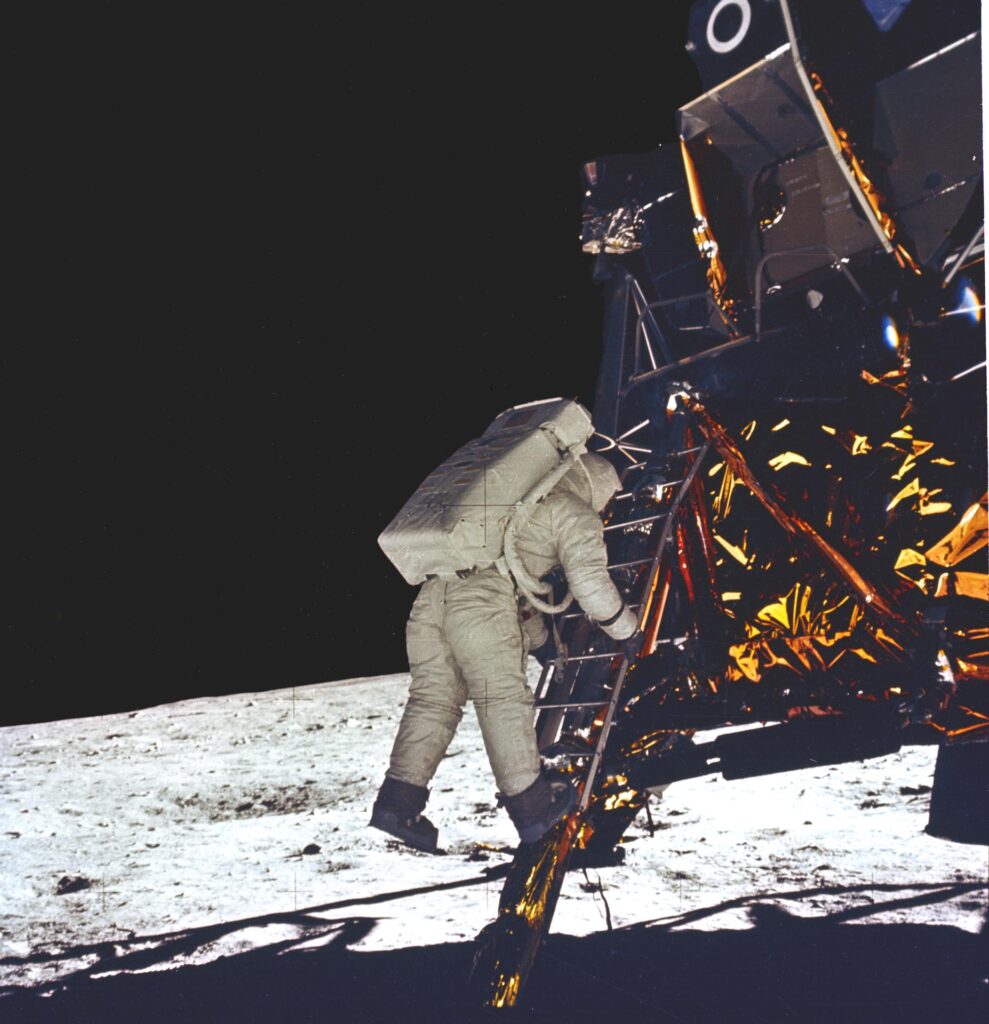
NASA. Apollo 11. https://www.nasa.gov/mission/apollo-11/. Accessed 29 Apr. 2024.

The Premise

There was once a time when two of the most powerful countries in the entire world shared the same national goal to ascend above the clouds to push the limits of human-made technology (the closest thing we have to magic) and embark firsthand on a search into the highest unknown. Through the analysis of the primary characters and their respective actions towards the period known as the Space Race, a close resemblance to the narrative Fairy Tale Jack and the Beanstalk is revealed; themes of risk versus reward, a remarkable number of Propp Functions, and of course the duality in motivation behind the drive to explore above and beyond.

“Why go to the moon?”

Leading with the perspective of the United States president during the most predominant years of the race, John F. Kennedy’s speech ‘Why go to the moon?’ starts with setting the context for the period as he states, “We meet in an hour of change and challenge, in a decade of hope and fear, in an age of both knowledge and ignorance; the greater our knowledge increases the greater our ignorance unfolds.”  (Rice University) Kennedy explores the duality between knowledge and ignorance; by casting light on a new subject of the physical world, a greater shadow emerges and outlines the unknown aspects around that subject. This statement is a pretext for the gruelingly exponential pace of technological advancement. Each new discovery comes with its own list of desired rewards and unknown risks. The United States is one of the world’s countries that consistently chooses to take risks with the reasoning entirely related to the high significance of the reward. Further, the US makes these choices spontaneously as noted by President Kennedy when he stated, “We will have literally reached the stars, before midnight tonight; this is a breathtaking pace, and such a pace cannot help, but create new wail, as it dispels old; new ignorance, new problems, new dangers, surely the opening vistas of space promise high cost and hardships, as well as high reward.” (Rice University) In a similar decision-making process to Jack, President Kennedy explains that he is fully aware of the risks involved,  now informed by multiple disastrous failed rocket launches such as Vanguard TV3, and chooses to proceed at an accelerated pace because the reward is that great. (NASA)

Kennedy presses on to state, “The United States was not built by those who waited and rested and wish to look behind them; this country was conquered by those who move forward,” (Rice University) with applause from the audience throughout. This statement is somewhat aggressively charged; while audience members may have learned otherwise in their history classes, the United States as we know it was stolen from Native Americans and the history of this injustice and the discrimination that followed was purposefully erased and considered incorrect in most high schools at this point. Kennedy himself as a president most likely fully understood this context and chose to use the word ‘conquered’ showing full support to the narrative of the US being built on stolen land and financially reinforced through ill-gotten funds. Similar aggressive undertones are used to describe Jack’s status when arriving at the giant’s house as being “as hungry as a hunter.” (Jacobs 7) The idea of hunting as the action of overwhelming one’s prey (conquering unsuspecting natives), and then consuming and benefiting from that prey (killing some and turning others into slaves) is shared between the two narratives. Kennedy explains that the US must now conquer a new frontier only this time, in a direct race with another country.  He states, “It is one of the greatest adventures of all time and no nation which expects to be the leader of other nations can expect to stay behind in this race for space.” From Kennedy’s perspective, the significance of this race is primarily based on the need for national political dominance on a new plateau. The desire to make one’s nation the leader of others is paralleled by the wish to digest the given rights of others for greater power to oneself. Similarly, Jack steals the various treasures of the giant in an attempt to gain power for himself. By outsmarting the giant and making off with what he can carry, Jack proves his dominance over the giant and is only satisfied with his power once he’s stolen every prized possession of the giant and stands proudly above his corpse. Kennedy’s vision of the country as the leader of this new medium of territory requires the nation to not only make it there but be the first; this rules out the prospect of any other nation taking dominance over the recently discovered plateau. 

Internal Government

To cross-examine the government’s external perspective with that of an internal entity, the CIA touches on the matter in declassified official documents regarding the Space Race and their early support towards the Earth Satellite Project as they state, “The importance of this program in connection with psychological warfare. The announcement of the US program for launching an earth satellite as part of the International Geophysical Year has already caused favorable reactions abroad. It is essential that this initial success not be discounted by failure to actually launch a satellite within the time limit, or by the Soviets to anticipate it with a launching of their own due to our failure to press ahead vigorously.” (Central Intelligence Agency) The specific use of the space program as psychological warfare is far from the potential and type of political advantage the US seeks to gain given in Kennedy’s speech. The competitive themes in language are shared between the CIA’s document and Kennedy’s speech, but the CIA’s statements regarding the collaborative direction of space which Kennedy reflected full national commitment to is mentioned in a clouded and politically ambiguous manner.  From the same document the CIA states,  “CIA would be a principal user and beneficiary of the data collected by such means: d. From a national point of view, the launching of the satellite under the auspices of an international, cooperative scientific effort will enable progress to be made toward more sophisticated and instrumented satellites without necessarily involving a test of the principle of ‘Freedom of Space,’ the implications of which for the United States are as yet undetermined.” (Central Intelligence Agency) In other words, full support of the first primary space exploration project conducted by the US will receive full support so long as the concept that all nations are allowed equal rights in space is not trialed. The CIA encourages scientific collaboration as it could only benefit the US but not the political collaboration created by nationality being irrelevant when something or someone is 300,000 feet above the Earth’s surface(NASA/JPL). It is the differing rhetoric behind the CIA’s internal argument towards space exploration and the external argument given by the President of the United States to his people that leads to the misleading nature of the government’s reasoning behind taking the risk and racing to the moon. The reasoning fed to the public was primarily based on the prospects of discovery and the drive to lead the charge into space so that the US could influence the future of the realm and shape it towards political collaboration and “freedom.” The reasoning commonly understood by the internal government was to gain political leverage on new territory and reinforce the fear cast on the enemies that reside on Earth. The weaponized potential of the advanced technology needed to explore space is only mentioned in a statement that lasts about six seconds in the twenty-two-minute speech by Kennedy; every CIA document regarding the reasoning behind early funding or support for space exploration contains at least two paragraphs mentioning the application of either the rocket itself or a satellite delivered by a rocket being used for military purposes. Both sides display the yearning for advancement, only the president makes it seem like we merely seek to explore and push our capabilities while the CIA shows the true motivation is to take total dominance over both the sky and the ground. Jack too initially states himself to the giant’s wife as an explorer disadvantaged by lack of supper the night before. While the giant’s unsuspecting wife does not know Jack has a much greater appetite than simply food, we as the readers are fully informed of Jack’s deeper desire for treasure and purpose; these of course stem from his and his mother’s financial need and his uselessness as a common worker since getting denied by all in town. While the themes of the overall stories parallel each other, taking a closer look at the defining plot points of a fairy and applying them to the main events of the Space Race alludes further connection between the two narratives.   

Propp Functions

Breaking down the space race into Vladimir Propp’s 31 Functions reveals the era’s close resemblance to the narrative of a fairy tale. Dwight D. Eisenhower, the 34th president, spent the majority of his second term from 1957 to 1961 easing the tensions with the Soviet Union as the Cold War began to heat up (The White House). Once his term is over, we see our first Propp Function Absentation. Eisenhower leaves the house and Kennedy enters with interdiction from the previous president who tried to avoid the idea of space travel as a race. Kennedy sees it as the greatest adventure the nation has ever embarked on and violates the interdiction by proceeding to invest more funding and resources towards winning the race (Rice University). Reconnaissance from both sides is littered throughout the Cold War with CIA documents explicitly stating that the use of satellite technology for espionage would be the primary interest of the CIA regarding their investment in the program (Central Intelligence Agency). Paralleling the US as the hero and the USSR as the villain (purely because the US ends up as the ‘victor’ in the end), the Soviet space program stayed entirely private about their discoveries and initially stated that they had no interest in an expedition to the moon when in reality they had an entire division for it. Additionally, trickery is played out by USSR news sources both to the nation’s and world’s public eye by changing the name of failed missions to something unrelated to their intended goal like when Venera 1VANo.1, a rocket intended to orbit Venus failed and was renamed Sputnik 7, announced as a heavy satellite test mission (Wade).  With the context set a cross-examination of the primary Propp functions used in Jack & the Beanstalk and those of the Space Race will show greater relation between the tale and the era respectively. The first function examined is lack. In Jack’s case, he lacks both the financials his mother requires and the ability to produce such financials through manual labor. His lack drives him to seek alternative ways of helping his mother and gaining her approval such as his ascension to the sky. For the United States, the nation is disadvantaged by a lack of development towards space exploration in comparison to the competition. This drives the government and its space agencies to increase the pace of advancement. Spatial transference between two kingdoms or guidance is the next primary function present in both stories. For Jack, the beanstalk promises adventures to the skyworld where treasure and danger await. For the US government, rockets that bring their nation’s people into space mean political leverage but also the risk of total publicized failure. Finally, the last Propp function shared by the two stories is pursuit or chase. Jack is chased down the beanstalk by the giant at the end of his story and takes his victory by severing his connection to the skyworld, sending the giant toppling down. This is where the two stories differ immensely in plot. The chase for the first-place position on the moon as a symbol of political dominance between capitalism and communism was the core and strongest motivating factor that drove both sides throughout the course of the space race. Even after the tragedies of the Apollo 1 rocket explosion killing its entire crew and Soyuz 1 when a Russian astronaut plummeted to his death after his parachute malfunctioned on reentry, neither side relented in their struggle (Royal Museums Greenwich). From my perspective, the Space Race ended with an unrecognized arrival as the US put the first human on the moon and accomplished what the government saw as the primary win condition of the race. While the United States and its leaders certainly went through what they stated was the most important goal, nothing new was discovered from this feat. No new horizons were expanded and to an extent, the US returned with unfounded claims. Kennedy explained that making it to the first moon would allow some kind of authority over the cosmic body and that we would use this authority to make the new frontier one that is democratic and collaborative. Through actions such as David Scott on Apollo 15 delivering the Fallen Astronauts tribute for the recognition of both US and USSR crew members who died pursuing the stars, the difficult task of actually uniting two of the most powerful and politically competitive nations is made possible (Royal Museums Greenwich).  On July 15 1975 the true victory for both sides was achieved when Tom Stafford and Alexei Leonov handshake aboard the Apollo-Soyuz inside the airlock chamber; two rockets, one American and one Russian, mated in a wedding-like cosmic celebration of internationality. The Space Race is a story for the ages and rises far beyond the simplicities of a fairy tale like Jack & the Beanstalk, but in the drive towards the sky, in pursuit of something that means much more than its literal value, and the choice to take the risk for the reward are all certainly shared attributes between the two narratives.

To boldly go

The Space Race is a story for the ages and rises far beyond the simplicities of a fairy tale like Jack & the Beanstalk, but in the drive towards the sky, in pursuit of something that means much more than its literal value, and the choice to take the risk for the reward are all certainly shared attributes between the two narratives. After the United States got a man on the moon, the nation never set up camp or established a long stay in space until plans for the international space station were released nearly thirty years later.  While the plots differ heavily, the themes at the end of the story of the space race do parallel those of Jack and the Beanstalk as the main stalk Jack had access to is now cut and he does not seek another magic bean. The US still expends tremendous amounts of money towards space exploration but the public and political attention received by both sides of the space race has yet to be reached since. The dangers of one side having superior intercontinental ballistic missile technology are still present, as is the desire to have technological dominance in space. What we lack now is the adventure Kennedy spoke about at Rice University regarding why we intended to join the Space Race. Nationality aside, this was the first time humanity ever put one of its own on something we all see every night no matter where you live. In that achievement, there is a certain, almost magical, intense motivation based purely on curiosity.

Works Sited

Central Intelligence Agency. “CIA FINANCIAL SUPPORT FOR EARTH SATELLITE PROJECT.” FOIA, CIA, 7 Sept. 2017, https://www.cia.gov/readingroom/document/0002287889. Accessed 14 Apr. 2024.

NASA. “NASA – NSSDCA – Spacecraft.” Wayback Machine, NASA, https://web.archive.org/web/20231003175643/https://nssdc.gsfc.nasa.gov/nmc/spacecraft/display.action?id=VAGT3. Accessed 29 Apr. 2024.

NASA/JPL. “Educator Guide: How Far Away Is Space?” NASA/JPL Edu, 30 Sept. 2021, https://www.jpl.nasa.gov/edu/teach/activity/how-far-away-is-space/. Accessed 29 Apr. 2024.

Rice University. “‘Why Go to the Moon?’ – John F. Kennedy at Rice University.” YouTube, Video, 12 Sept. 2018, https://www.youtube.com/watch?v=QXqlziZV63k&t=1124s. Accessed 28 Apr. 2024.

Royal Museums Greenwich. “Space Race Timeline.” Royal Observatory, Royal Museums Greenwich, https://www.rmg.co.uk/stories/topics/space-race-timeline. Accessed 14 Apr. 2024.

Tatar, Maria. The Classic Fairy Tales (Norton Critical Editions). 2nd ed., W. W. Norton & Company, 2017, p. 368.

The White House. “Dwight D. Eisenhower.” The White House, 12 Jan. 2021, https://www.whitehouse.gov/about-the-white-house/presidents/dwight-d-eisenhower/. Accessed 28 Apr. 2024.

Universal Studios. “Navy’s Satellite. Vanguard Fails in Second Launching.” Internet Archive, Video, 29 June 1958, https://archive.org/details/1958-02-06_Navys_Satellite. Accessed 14 Apr. 2024.Wade, Mark. “Venera 1VA.” Astronautix, 7 Jan. 2010, https://web.archive.org/web/20100909085012/http://www.astronautix.com/craft/venra1va.htm. Accessed 28 Apr. 2024.

Categories
Fairy Tales

An Era of Enchantment

Pierre Shamee

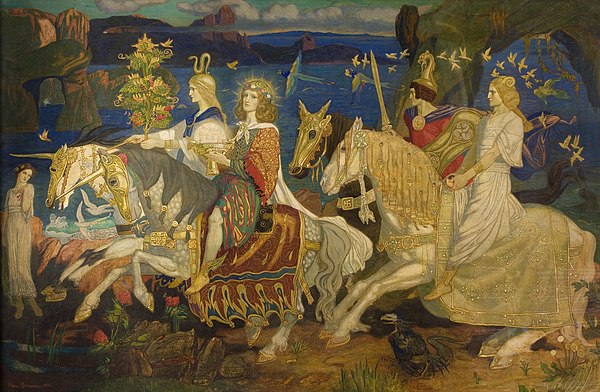
The Arthurian Revival as a means of cultural influence in Victorian England.

Loader Loading…
EAD Logo Taking too long?

Reload Reload document
| Open Open in new tab
Categories
Fairy Tales

Villains through Different Lenses: An Exploration of Female Antagonists in Literature and Theater

By June Lee

Female villains have always been an exciting subject in literature and general theater. The female antagonists’ character development and manipulation strategies, ranging from evil stepmothers in fairy tales to femme fatales in Shakespearean plays, have continued to draw attention throughout the centuries. However, much depends on what is shown through different types of media. This paper examines the effect of media on the interpretation of “Hansel and Gretel” and “Macbeth.” Both stories involve close adversaries who manipulate one another. Nonetheless, they differ in their communication medium – written literature or live stage performance. This analysis will clarify how women are depicted as villains depending on the medium used. It will also contribute to understanding whether there are any specific relations between narratology, gender, and its role within interpretative practice concerning literature and drama.

The antagonist of the fairy tale, “Hansel and Gretel,” is an old, wicked witch who deceives and manipulates the children in order to devour them. This story mainly revolves around the ordeal experienced by these young ones. From this device, the readers are mainly meant to identify with the kids and see nothing in the witch but pure evil. In line with this description by the Brothers Grimm, “Just then the door opened, and a very old woman walking on crutches came out” (Brothers 56). Her unnatural appearance is described initially through this image of an older adult who is physically disabled and later enhanced by her tricks and malicious plans. From the story’s detail, one can see how the narrative’s perspective determines what is considered evil. We see her feeding, locking up, and attempting to cook Hansel, whilst overworking little Gretel—all from their point of view, increasing the terror and demonstrating her wickedness (Brothers 63-75). Such kind characters who pretend to offer help but harm you are familiar in fairy tales because they teach children a moral lesson about strangers.

On the contrary, Lady Macbeth in Shakespeare’s “Macbeth” is a much more complicated and exciting evil character. This character is considered “witchlike” similarly in the children’s story of Hansel and Gretel. However, this woman cannot be compared with a simple witch because aside from being just wicked, she also has to deal with her deep innermost thoughts: the thought about what she wants and what follows after it. Right away, it becomes clear that she plans something – “Glamis thou art, and Cawdor, and shalt be/ What thou art promised’ (Shakespeare 1. 5). Her manipulation of Macbeth is neither passive nor innocent but very active, well-planned, and leading to his downfall. 

Throughout Shakespeare’s narrative, Lady Macbeth becomes less malicious as she begins to go mad from grief over her many sins. The complexity portrayed here typifies Shakespeare’s morally convoluted world, an environment in which villains are not simply wicked but motivated by pride, ambition, and terror inherent in every person. There are two tales that both have female oppositions who use manipulation to achieve their goals. However, the character of Lady Macbeth is depicted in a complex manner, considering the effects of her drive and manipulation while an outright evil witch is portrayed “Hansel and Gretel.”

The particular form of media employed directly affects how readers or viewers portray and perceive these characters. For instance, within the written story of “Hansel and Gretel,” readers see things only from one side, forming an image of the witch without being offered reasons for or understanding her behavior. On the other hand, the theatrical account of Macbeth reveals a different side to events through navigating the speaking and acting characters of Lady Macbeth and others, with some complexity portraying motivation that leads to the gradual downfall on her part. Comparing these textual portrayals of female villains reveals that the nature of the work—conventional literature compared to stage production—has dramatically impacted how we interpret their persona and lies, insulting simpler interpretations in the former case.

Scholars have examined how female criminals are depicted in literature, especially regarding how and reinforces reading against such backdrops. In her thesis on witches in Literature, Haesler observes that witches are usually described as “simple evil old women” in written texts (Haesler 29). The conventional picture derived from this is inherently limited since it follows some guidelines of the patriarchy, but not all of them, for it does not delve into the characters’ thoughts and motivations.This point by Haesler is evident in the witch’s character in “Hansel and Gretel.” It was noted before that she appears like your typical bad guy who is very controlling and manipulates others while always showing her true colors and evil plans for them both. Unlike Lady Macbeth, this portrayal results primarily from a single viewpoint the text adopts within a conventional fairytale framework.

Theater provides an avenue through which one can know the complexity of a character since, in drama, sometimes a variety of different things are done or said by various people (McCall 187). A good case study for this is the character of Lady Macbeth. McCall’s paper analyzes the reasons behind this statement. By analyzing other witches first before comparing them to Lady Macbeth, one can conclude that her evil nature encompasses many factors, such as relentless determination towards her goals, which causes so much harm or even death, always feeling troubled deep down inside because she cannot control everything like she used to, and finally, tragedy occurs.

However, even though she is evil, some scholars view Lady Macbeth’s character is that of a strong feminist. The character is an evil woman full of ambition and intelligence, contradicting the conventional gender theories about Macbeth or the stereotype of women only utilizing sex appeal to achieve their goals. From these scholarly opinions on other female villains, we can see how stories have been influenced by what we see or read about women and their mischief in media forms.

The witch is portrayed as entirely wicked in “Hansel and Gretel” because of the simple narrative point of view adopted in most children’s literature and societal norms; however, this could not work with theatre script, which took another approach into considering several issues concerning motivation and conflicts within Lady Macbeth. It illustrates that different forms of media can significantly shape how people perceive and analyze female villains’ nature, whether they are considered evil characters or pitied for the tragic fate they bring upon themselves. Thus, analyzing the primary written materials alongside some additional guidelines reveals one crucial fact – women evildoers cannot be similarly seen in all classical books or plays due to formatting in literature.

Apart from analyzing written materials closely and integrating other authors’ opinions, examining visual media may also show the impact of such media on the interpretation of female villains in “Hansel and Gretel” and “Macbeth” primary texts. 

Diverse portrayals become apparent when analyzing different pictures portraying the evil female characters in these stories. For example, in most illustrated versions of “Hansel and Gretel,” the witch appears as a repulsive old woman with highly emphasized ugly characteristics that create terror and disgust and emphasize her as an utterly lousy character. These images reinforce how the text presents the identity of the witch, like every other, who is feared because of her difference – seen mainly through the innocent eyes of some children. For instance, an animated version would show the witch “as a scary old hag, with her nose covered in warts and heinous look on her face” (Brothers Grimm, Animated Film). This standard portrayal strengthens the idea that witches are pure forms of evil that lack any positive attributes.

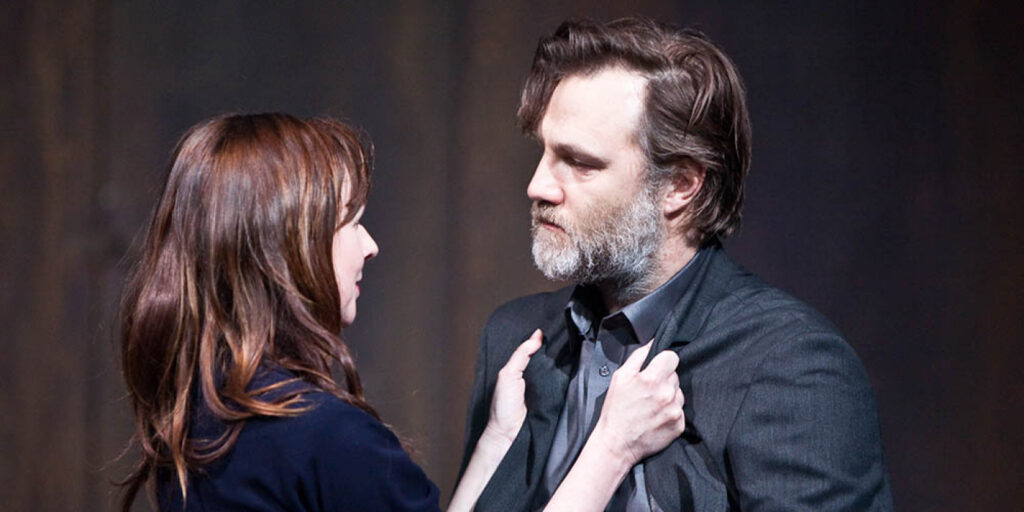
However, the way Lady Macbeth appears in different theatre performances tells a different story altogether because it is not easy to determine the character of Lady Macbeth due to the immoral nature found in most of Shakespeare’s work. Liverpool Everyman Playhouse’s production portrays her as an intelligent temptress, showing hints of royalty behind an attire that spells sophistication. This portrayal is inconsistent with other productions, where Lady Macbeth comes off as callous and insensitive. The costume, lighting, and setting details bring out another aspect of change in character whereby she changes from being just ambitious like any other woman into someone now haunted by guilt and going insane with madness. For example, when she manipulates Macbeth in one of the scenes, her courage and ambition are brought up through intense soliloquy while highlighting the emotional chores she engages in herself. Stage-wise, it portrays how cunning she can be (Digital Theatre+, “Macbeth,” Act 1, Scene 7).

In addition, the physicality depicted when Lady Macbeth is in action brings out interesting details on her state of mind and motivation that otherwise would have given a straightforward picture. For example, in one production, there were long pauses, grimaces, and trembling fits, in this case rightly taken to imply that she is mad with guilt and has come to pieces (Digital Theatre+, “Macbeth”, Act 5, Scene 1).

Visual media dramatically influences people’s views and opinions about evil women characters from books or plays. It depends on what kind of media was taken – did they prefer stills from a comic book about “Hansel Gretel,” or maybe they used special effects during their work on “Macbeth” which could not convey everything by words alone but provided additional information for better understanding of the role? All these differences depend on specific properties inherent to the mediums through which female villains are represented and determine complex audience reactions ranging from fear/hatred towards the witch character in “Hansel and Gretel” to admiration/pity for Lady Macbeth herself. 

In conclusion, the portrayal of evil women in drama and fiction depends much upon what kind of media is used. This essay has investigated how different factors such as narrative mode, stagecraft, and iconography affect our understanding when comparing two classic texts – “Hansel and Gretel” and “Macbeth”. It follows that written literature most times uses a very plain linear female villain character. Stage performances on the other hand can avail to the development of complex female villains. Additionally, this is enhanced by visual media that reveal more about these characters’ nature through numerous symbolic representations. These results are important for understanding the ways through which media constructs gender and morality in literature and art. In conclusion, one must take into account the communication channel employed in a given story so as to understand and judge correctly the role and character of female villains therein depicted.

Works Cited

Brothers Grimm. Hansel and Gretel. BompaCrazy. Com, 1975.

Brewer, David. “Macbeth.” Liverpool Everyman & Playhouse Theatres, Everyman&Playhouse, 11 June 2011, www.everymanplayhouse.com/whats-on/macbeth-2011. 

Digital Theatre+. “Macbeth.” Act 1, Scene 7, Act 5, Scene 1. Digital Theatre+, 2018. https://education.digitaltheatreplus.com/he-explore-digital-theatre/shakespeare-early-modern

Haesler, Jóna Kristín Óttarsdóttir. Witches in Literature. The changes of the witch figure throughout history. Diss. 2021.

McCall, Jessica. Monsters and Villains of Movies and Literature. ABC-CLIO, 2019.

Merino Calle, Beatriz. “Disney Witches and Feminism.” The Disney Middle Ages: A Fairytale and Fantasy Past. Ed. Tison Pugh. Palgrave Macmillan, Cham, 2020. 11-23.

Shakespeare, William. Macbeth: A Tragedy. Mathews and Leigh, 1807.

Categories
Fairy Tales

A Bridge Between Two Rivers of the Same Sea: An Analysis of Songwriting in Fairytales.

By Ally Kwun C.

When I was a child, I dreamt of being a songwriter. I was mesmerized by the lyrical soundtracks in various movies and television, as well as the songs I sang in choir and
musical theatre. Lyrics seemed to open the heart’s doors when scripted words
couldn’t quite reach, and it sparked a desire to pursue storytelling through
music. I had been writing fictional tales since I could hold a pen, but now decided
to teach myself the piano and began to write simple lyrics and melodies. I wove
them into the stories I’d write in hopes of creating some form of art. However,
as I began to share my dream with others, I was scoffed at and told my ambition
was “impractical” and a “waste of my time.” That, no matter how much time I
dedicated, or how much passion enveloped my heart, I would go “nowhere” and be worth
“nothing.”


I quit the arts shortly after. A decade of theatre, vocal lessons, and choir
wiped clean off my calendars. Writing was all I knew how to do, the only thing
I was “good” at. But “creativity won’t put food on the table,” my mother said. “A
career in writing? How many figures will that make you, like two?” my classmates
would laugh. I caged my creative spark for years, unsure of what my bleak future
could hold. I tried going down paths that weren’t paved for my shoeprints, starting
fires on wood that was charred; I was without passion or purpose. I began to
question why I was even here. But it was then, at rock bottom, that I decided
to revisit the grave I had let others dig for me.


At age 16, I picked up a guitar that I was gifted the year prior but had been
rotting quietly in my closet. I taught myself how to play, and began to write
again, but this time with expression and purpose. I wanted to prove that writing
is more than a “useless entertainment art.” Each word chosen to create a single
sentence is filled with so much intention and meaning. Similarly, lyrical
compositions in fairytales help to transform and develop stories, offering
insights into characters’ emotions, motivations, and the overall arc of the
tale. People resonate with songs that have lyrics that make them feel seen and
understood. Music is our gateway to understanding fairytales on a deeper, more
personal level.

~

In the classic tale of “Cinderella,” or “The Little Glass Slipper,” by
Charles Perrault,  Cinderella finds
solace and hope in the songs she creates while enduring the abuse from her stepmother
and step-sisters. When she is locked in her room and forbidden from attending the
royal ball, she sings a tune to console and reaffirm herself:

“Sing, sweet nightingale, sing,

Let your melody take wing.

Though my steps are worn and weary,

In your song, I find strength dreary.”

Churchill, Frank. Sing Sweet Nightingale. Performed by Ilene Woods, Cinderella, directed by Clyde Geronimi, Walt Disney Productions, 1950.

This verse showcases Cinderella’s strength and determination. Despite her unjust situation, she holds onto her dreams of a life outside her stepmother’s clutches. Her
entire world is shattered, yet she still sings while doing chores and remains
kind to the animals who help her. Her lyrics are filled with hope and a touch
of sorrow, but it’s not just the words; the melody itself depicts her longing
and determination. It’s a somber, slow tempo that allows the viewers to be swept
into her heartbreaking reality, but then ease into a sense of comfort that she
will prevail. The writers of the 1950 Disney adaptation could’ve simply said “Cinderella
is resilient,” but instead, they crafted songs and lyrics that implied it. In
tough times, people tend to turn to worldly goods to fill the empty void inside
of them. But like Cinderella, I turn to music. I’ve built a home inside my
guitar, one that I can return to whenever I please. In the face of adversity, I
go back there, jotting down words to remind myself I am not alone.


~

Literary and music scholars alike have explored the intricate connections between
fairytales and songwriting. In Dr. Emily Jones’s article From Grimm to
Grammy: The Influence of Fairytales on Popular Music
, Jones describes how
fairytales provide songwriters with rich roots of material that tap into
universal human experiences and emotions. Jones argues that songwriters often
use fairytales as a type of framework to emphasize themes too complex to put
bluntly, such as love, loss, and redemption, resonating with audiences on a
deeper, more intuitive level.


Similarly, musicologist Dr. Michael Smith explores the musical adaptations of fairytales in his book Once Upon a Tune: Fairytales in Music. Smith writes about
how composers throughout history have drawn inspiration from fairytales to
create operas, ballets, and symphonies that capture the enchanting aura of
these narrative tales. Furthermore, Smith elaborates on how music helps convey
the classic characters and themes of fairytales. He writes, “Just as the
characters of fairytales are defined by their recurring traits and attributes,
so too are the musical themes and motifs that accompany them.” (2018.) By
analyzing the musical methods and structures in these compositions, Smith shines
a light on the incredible influence that music has on the minds of its listeners.


In his world-renowned essay, Breaking the Disney Spell, (1994.) Jack Zipes
provides a comprehensive critique of Disney’s adaptations of classic fairytales
in an attempt to emphasize the philosophical implications of these retellings.
Zipes argues that Disney’s “sanitized” versions tend to strip the tales of
their original messages, with the outcome being a diluted spiel that aligns
with mainstream values. He believes Disney-made musical interludes serve as
marketing tools to enhance the commercial appeal of the films, rather than
authentic expressions of the original story. He writes, “By adding songs,
Disney aims to appeal to a wider audience and sell more merchandise rather than
staying true to the essence of the tales” (25). But while Disney’s
incorporation of music and song does cater to mass audiences, I believe that in
itself is the point of music. Music has functioned as a form of oral tradition since
the start of time, with words and melodies being passed down through
generations to preserve cultural values and beliefs. In regards to what Zipes
argues in his essay, I can understand why one would want to keep tradition sacred.
But music isn’t supposed to be static and linear, it’s evergrowing and changing
and beautiful. It’s meant to inspire a grand variety of audiences with underlying
themes intertwined through the lyrics. Maybe it is, in fact, truly a money
grab, but regardless of the intent, Disney music has sparked courage and hope
in the minds of millions of children, like me. I don’t think Disney films
become diluted, either, just different. Different doesn’t mean diluted or
second to, it just became something new. The stories and songs that Disney releases
give hope and a reason to work hard and believe you can make your dreams come
true. I think I lost that childlike hope and reason on a path that has since
grown over. But as I pick up my pen alongside my guitar, I feel a newfound
sense of self. The forest of doubt can only extend for so long.

~

Songs in fairytales serve to bridge the gap between the audience and a story’s moral
messages. They enrich the tale-telling experience by allowing us to step into
the shoes of the characters and relate their trials and struggles to our own. Words
will only connect with those willing to hear them. I am now 18 years old, a screenwriting
major living in a country I know so little about, but no longer trying to prove
myself worthy. I am no longer holding myself back for fear of objective judgment.
I am no longer writing out of anger and pain. I’m not perfect, nor will I ever
be, but I have the passion and desire to learn and create. I am a writer, an
artist, and a storyteller, and my story is just beginning.

~

Bibliography

Disney. Cinderella. Directed
by Clyde Geronimi, Walt Disney Productions, 1950.


Disney. The Little Mermaid.
Directed by Ron Clements and John Musker, Walt Disney Pictures, 1989.


Jones, Emily. From Grimm to
Grammy: The Influence of Fairytales on Popular Music.
Journal of Popular
Music Studies, vol. 25, no. 2, 2020, pp. 45-67.


Smith, Michael. Once Upon a Tune:
Fairytales in Music
. Oxford University Press, 2018.


Tatar, Maria. The Classic Fairy
Tales
(Second Edition) (Norton Critical Editions) (p.12). W. W. Norton &
Company. Kindle Edition.


Zipes, Jack. Breaking the Disney
Spell.
From Mouse to Mermaid: The Politics of Film, Gender, and Culture,
edited by Elizabeth Bell, Lynda Haas, and Laura Sells, Indiana University
Press, 1994, pp. 21-42.


Categories
Fairy Tales

The Princess Bride: A Perfect Modern Representation of a Classic Fairy Tale

By Ryan O’Connell

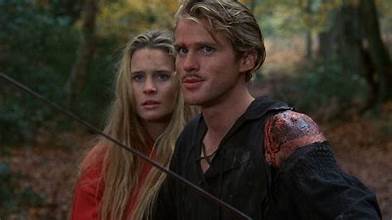
In the category of modern storytelling, very few cinematic creations possess the enduring charm and universal appeal that made The Princess Bride a cult classic. Directed by Rob Reiner and adapted from William Goldman’s iconic novel, this film stands as a timeless classic that can appeal to both children and adults alike. Through its whimsical narrative and unique characters, The Princess Bride captivates audiences with a tale that feels both comfortingly familiar and refreshingly original. Because of this, the film is more than just a movie; it is a modern masterpiece that can perfectly slot into the fairy tale genre. The Princess Bride is the perfect representation of a modern fairy tale as it matches modern definitions of a fairy tale, follows the verbal tradition of the original folk tales, and closely resembles the fairy tale outline laid out by Vladimir Propp.

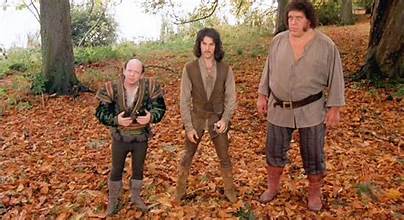
The modern Merriam-Webster dictionary defines a fairy tale as “a story involving fantastic forces and beings,” which is an overly simplistic definition that fails to capture the depth of the genre. Despite the shortcomings of this definition, The Princess Bride fits this definition completely. While there are no immediately obvious magical beings, there are several impossibilities that appear upon closer inspection. The most obvious of these is definitely Wesley’s revival from the dead. A chocolate covered pill provided by a man named Miracle Max bringing a man back to life is clearly a prime example of a fantastic force. Additionally, characters like Fezzik, while not completely impossible, certainly could be a fantastical being. In the movie, Fezzik is described as “…this colossus. You were this great legendary thing (The Princess Bride 15:10-15:20).” This is clearly a fantastic being through that description alone. Just because something is possible does not mean that it cannot also be fantastic. Part of what makes a movie great is the casting, and Andre the Giant in the role of Fezzik is great because he would be so awe inspiring to see in real life. Other aspects of the story, such as the fire swamp with its random jets of fire, quicksand, and “rodents of unusual size” further add to the fantastic nature of the tale. So while The Princess Bride doesn’t have any completely impossible beings, the pill that revives Wesley, the giant Fezzik, and other aspects such as the fire swamp as a whole certainly fall into the category of fantastical forces and beings. 

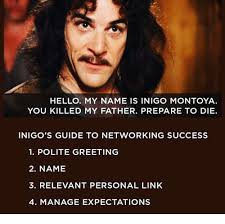
The other definition provided by Merriam-Webster for a fairytale is “a story in which improbable events lead to a happy ending.” This definition again is severely lacking, as it completely misses the fact that a significant number of the original fairy tales did not have happy endings at all, and involved a great deal of suffering. For example, some versions of Little Red Riding Hood have everyone get eaten by the wolf, or even a version where the wolf makes the little girl eat her grandmother. Despite the slight inaccuracies in this definition, it again fits the story of The Princess Bride extraordinarily well. The entire story is incredibly improbable, with aspects such as the six fingered man, a swamp that shoots fire and has rats the size of dogs, or three people defeating one hundred guards. We also have a happy ending, though this is not essential for a classic fairy tale despite this definition. In The Princess Bride, Wesley and Buttercup are reunited, riding off into the sunset together. Additionally, Inigo gets revenge on the six-fingered man who murdered his father so there is a happy ending for all of our protagonists. The whole series of events that is the plot is highly improbable, yet all of our protagonists get a happy ending.

Another way that The Princess Bride represents a fairy tale is that it relates back to the verbal tradition of folk tales before they were written down and became fairy tales. The Princess Bride does this by adding the aspect of the grandfather reading the original book version of The Princess Bride to his grandson when his grandson is home from school sick. This was a deliberate choice by the director, rather than following the plot of the original book that the movie was based on. This deliberate choice by the director, Rob Reiner, to frame the film within the narrative of a grandfather reading the story to his sick grandson adds a layer of depth that directly connects The Princess Bride to the oral tradition of storytelling. By presenting the tale as a story within a story, the film pays homage to the ancient practice of passing down stories through spoken word, long before they were transcribed into written texts. In doing so, The Princess Bride not only honors the rich heritage of folk tales and fairy tales but also underscores the timeless nature of its narrative, as it is represented as a story that is cherished and retold across generations. Through this cinematic choice The Princess Bride embraces the oral tradition from which fairy tales originally emerged, further cementing its status as a modern embodiment of this classic style. 

Lastly, The Princess Bride follows the morphology of fairy tales as laid out by Vladimir Propp; in fact it follows the structure better than many of the classic fairy tales. Of the 31 Propp’s functions, The Princess Bride has plot points that can fit into nearly every aspect that Propp identified as being part of a fairy tale. In fact, the film’s adherence to Propp’s functions surpasses that of many classic fairy tales, demonstrating again the film’s relatedness to a classic fairy tale. For example, in The Princess Bride only four of the thirty one functions that Propp identified are missing, while I was only able to identify seven or eight functions in much more traditional fairy tales such as Little Red Riding Hood when I wrote about it previously. To name a few, function number 16, or the struggle between hero and villain is present twice in the movie, between two different hero and villain pairs. The first and most obvious is the confrontation between Wesley and Prince Humperdink, but there is also the confrontation, chase, and sword fight between the six fingered man and Inigo. Another one of Propp’s functions is number 23, or “The hero, unrecognized, arrives home or in another country(Propp 35).” This can be seen when Wesley returns to Florin in hot pursuit of Buttercup’s kidnappers, but he is wearing a black mask so he is not recognized by anyone, including Buttercup. Everyone who sees him in his mask either refers to him as the man in black or the Dread Pirate Roberts. This is an important function because it shows that the director of the film and author of the book put effort into matching the movie to the functions of a fairytale. This function doesn’t appear in a significant portion of classic fairy tales, including Little Red Riding Hood, Snow White, and Hansel and Gretel. Another notable function in The Princess Bride is the second, which states, “An interdiction is addressed to the hero [OR: [she]he is ordered to do something] (Propp 34).” This is again present in two different characters, as Buttercup finds herself constrained by the societal expectations imposed upon her as she is coerced into a loveless marriage with the villainous Prince Humperdink. Wesley experiences his own interdiction as he is compelled to undergo rigorous training to assume the name and role of the Dread Pirate Roberts. The use of these functions helps to adhere to the fairy tale theme that runs through the whole film, while increasing the prevalence of certain functions allows multiple characters to follow their own unique journeys, thus adding depth and diversity to the plot. The characters’ different goals who come together, whether it is Wesley fighting for love or Inigo hunting the six-fingered man for revenge, help create a more interesting tale than a movie that would have followed Propp’s functions one at a time in a linear sequence. Through the film’s complex yet meticulous adherence to Propp’s functions, the film diverges from conventional storytelling, offering audiences a captivating tale that more closely mirrors a traditional fairy tale rather than a modern story.

Many film critics claimed that the movie is “a fractured fairy tale that gently mocks the genre.” However, a deeper analysis reveals that the film is, in fact, a modern example that faithfully follows the classic fairy tale tradition. Rather than simply mocking the genre, The Princess Bride embraces and celebrates the timeless elements of fairy tales while infusing them with wit, humor, and self-awareness to make them more entertaining to modern audiences. Critics make this claim because there is an increased level of suffering when compared to the more modern ideas about fairy tales created by Disney. Wesley is tortured to death which is not a subject you would ever expect to see in anything classified as a fairy tale today. However, this is not permanent and the level of suffering actually makes The Princess Bride more similar to most classic fairytales than the more recent adaptations. In Hans Christian Anderson’s The Little Mermaid, using the little mermaids legs is described as “every step you take will feel as if you were treading on a sharp knife, enough to make your feet bleed(Tatar 226).” This depiction of physical suffering is a hallmark of classic fairy tales, where characters often endure trials and tribulations as they pursue their quests or face the consequences of their actions. This is only present in the classic fairy tales, and the removal of this pain from any modern fairytale can explain why many critics would think that The Princess Bride can only pay homage or mock the fairy tale genre rather than being a good modern example. By portraying the characters’ struggles in this traditional and deeper fashion, the film captures the essence of traditional fairy tales, where adversity and suffering are integral to the hero’s journey. Far from simply paying homage or mocking the genre, The Princess Bride embraces the inherent complexities of fairy tale narratives, offering a modern portrayal that resonates with the timeless themes and motifs found in classic folklore.

In conclusion, The Princess Bride transcends its label as a mere parody or fractured fairy tale to emerge as a genuine modern classic that faithfully follows the tradition of classic fairy tales. Despite criticisms that the film may only pay homage or mock the genre, a closer examination reveals that it embodies the timeless elements and narrative structures inherent in traditional folklore. From its adherence to Vladimir Propp’s functions to its exploration of themes such as love, friendship, and the inevitability of suffering, The Princess Bride captures the essence of classic fairy tales while infusing them with modern wit, humor, and self-awareness. By embracing both the whimsical charm and the darker complexities of the fairy tale genre, the film transcends generational and cultural boundaries to enchant audiences of all ages. Through its enduring appeal and universal themes, The Princess Bride solidifies its place as perhaps the best modern example that both celebrates and also revitalizes the magic of fairy tales for generations to come. 

Works Cited

Bogel, Anne. “A Fractured Fairy Tale. (Yes, You Have to Read the Kissing Parts.).” Modern Mrs Darcy, 19 Oct. 2013, https://modernmrsdarcy.com/the-princess-bride-cult-classic-fractured-fairy-tale/

Cleto, Sara. “The Classic Fairy Tales Ed. by Maria Tatar (Review).” Marvels & Tales, vol. 32, no. 2, 2018, pp. 461–63.
Reiner, Rob. The Princess Bride. Twentieth Century Fox, 1987.

MORPHOLOGY OF THE FOLK TALE : Vladímir Propp : Free Download, Borrow, and Streaming : Internet Archive. https://archive.org/details/MorphologyOfTheFolkTale. Accessed 29 Apr. 2024.


Tatar, Maria. The Classic Fairy Tales: Texts, Criticism. W. W. Norton, 1999.


“What Makes a Fairy Tale?” Curriculum Review, vol. 40, no. 3, 2000, pp. 8-.


Zipes, Jack. The Enchanted Screen : The Unknown History of Fairy-Tale Films. Routledge, 2011, https://doi.org/10.4324/9780203927496.

Categories
Fairy Tales

Claiming The Midnight Lantern: An Explanation of the Human Infatuation with the Moon

by Natali Garcia

1.Why “The Moon?”

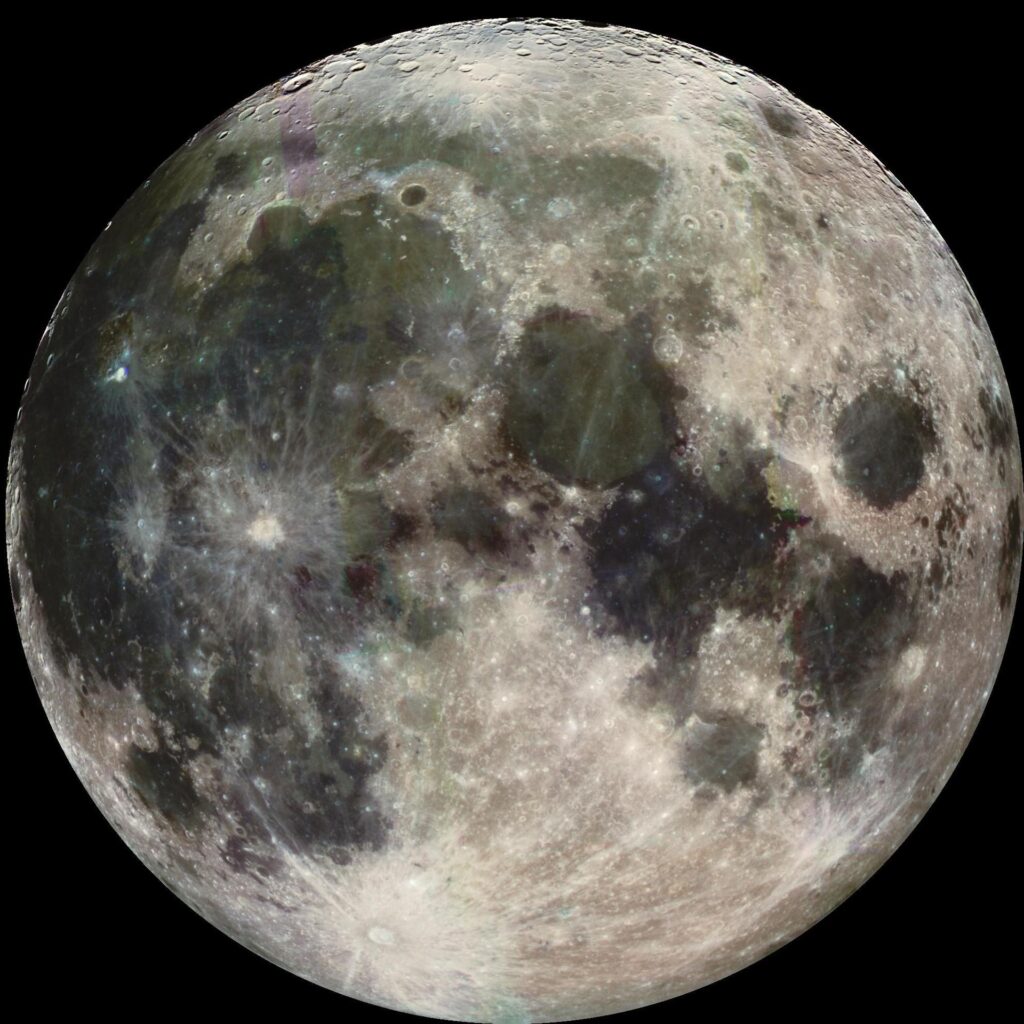
When encouraged to consider the possibilities of the future, we are often told to “shoot for the stars” or “the sky’s the limit.” We like to compare the greatest potential of our minds to the limitlessness and unconstrained value of the cold vacuum of space. According to UIUC The “vacuum” of space, in the literal sense, simply means that particles in space are very, very far apart( “Space Vacuum,” University of Illinois Urbna-Champaign). However, another type of vacuum exists in space. While recent advancements in technology have allowed us to gain a better understanding of these celestial bodies, the fascination with celestial objects that remain just out of reach has persisted in the human consciousness for centuries. And for centuries, these celestial objects have remained immaculate in the sky, untouched and unmarked by human interference. The unclaimed possibility speaks to us today, the same way Manifest Destiny spoke to Lewis and Clark. Because why admire the Heavens when you could have it for yourself? The fairy tale, “The Moon,” by the Brothers Grimm, reflects why humans are so obsessed with the Moon and celestial objects through the use of themes such as of domination, religion, divine intervention, and ethical dilemmas. The drive to conquer and claim has caused the desire to claim and control the Moon. “The Moon” serves as a cautionary tale against the defiance of religion and natural law. “The Moon” also mirrors the puzzling ethical questions facing institutions today in the pursuit of technological innovation. Humans have an infatuation with the moon, and only after analyzing one of these legends can we find where our infatuation truly begins. 

2.Space Race!

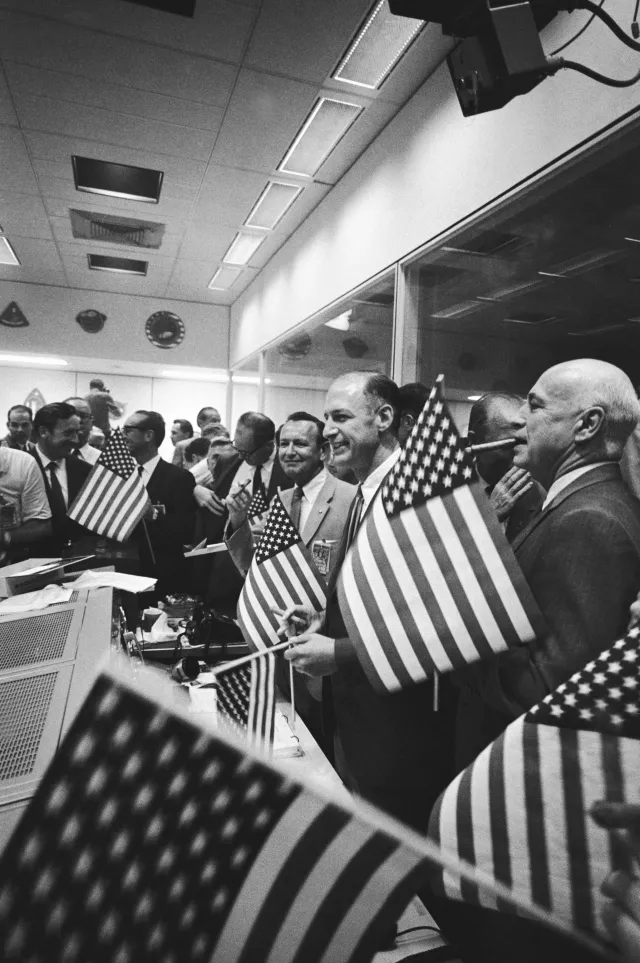
The story of “The Moon” reflects one of the key drives to dominate the Moon itself. Control. Humans have claimed everything on earth: the sea, all the land, even the sky above us.  For billions of years there has been no claim to the celestial object that has been a vital course of many religions, cultures and ways of life. After the brothers stumble across a “shining globe,” one of them remarks “We could make some use of this lamp”(Brothers Grimm 1). The Moon represents a type of power. The brothers lived where “the nights were always dark, and the sky spread over it like a black cloth”(Brothers Grimm 1). The ability to see at night was an ability that only this other nation or kingdom had. The brothers saw this and wanted to claim the Moon for themselves so they might have this power instead. The brothers actions reflect the greed of human nature in our desire to control the world around us. This is also seen in humans’ pursuit to claim the Moon by actually traveling there. This is exemplified by NASA’s Apollo 11 mission in the 1960’s which successfully landed the first man on the Moon (Albert K 1). The motivation for this amazing technological feat was to have the ability to launch and create missiles of ultimate destruction. During the Cold War the US and USSR “sought to vie for supremacy across cultural, military, political, and technological fronts” which sparked the space race (Leonard 1). It was the United States desire to gain a monopoly over space technology and the Moon that set us on a path of space exploration. Scientists, engineers, industry specialists, the government, and many more combined their skill sets and all helped to achieve what seemed to be an impossible goal. The danger of this kind of camaraderie and unity was that it was only achieved through the common goal to dominate. The collaboration between the four brothers was in an effort to claim, just as it was in the 1960’s. Although their collaboration is commendable, the goal of their actions reflected their greed.  The US and the four brothers didn’t want to share their hold on the Moon with anyone else. Both parties wanted a monopoly on the celestial object, and earned a sense of safety after accomplishing their goal. However, how do we know that our desire to roam, and claim won’t come back to haunt us, just as greed got the better of the four brothers?

3. Lunar Origins

“The Moon” uses religion to try and explain the origins of the moon along with the consequences of humans overstepping boundaries of nature. The brothers attempted to keep their pieces of the moon since they believed it to be their property due to the “claim” they had on the it. As a result of their greed, when all the pieces of the Moon had been buried with the four brothers, “the pieces of the moon had united… and the dead became restless and awoke from their sleep” (Brothers Grimm 1). The dead rising was the result of the punishment of humans interfering in the divine. There were unintended consequences of messing with the laws of nature and celestial benevolent objects. The four brothers attempted to play god and claim the Moon as their own. As a result of their selfishness the dead began to rise. However, how do we know that our desire to roam, and explore won’t come back to haunt us, just as greed got the better of the four brothers? Humans are obsessed with the things they can’t have. The idea of making something so unattainable like the Moon, become branded by humans is an act of defiance. In the tale “The Moon,” which has christian ties by its Germanic origin, claiming the “shining globe,” is an act of defiance against god. However, in reality, the goal to claim the Moon can be an act of defiance of natural laws, or a challenge of moral ambiguities. This celestial object was never meant to be branded, tied to a nation or set of ideals. Yet an American flag is planted atop the lunar surface. In the story of “The Moon” the consequences of their actions came later. However in real life the consequences are yet to be seen. 

The fairy tale,“The Moon,” has an unclassified ATU category. The tale cannot be classified as a tale of magic, religious tale, realistic tale, or any of the other 4 types(Grimm Brothers’ Children’s and Household Tales). “The Moon” tries to explain how the real Moon was created. Through a story that combines religion, observation, mystery and human nature. “The Moon” explains how celestial objects were never meant to belong to humans. Entangled in the idea of the creation of the moon is the ATU category of religion, adventure, realism, magic and magical creatures. The Moon is mysterious and the story about the four brothers demonstrates the desire to possess it even beyond death. Through their teamwork and collaboration they take the Moon, but divine intervention must take it away because humans are not fit to own something so divine, mysterious, or seraphic. The moon has long since been deemed as something beyond human understanding because it is so unattainable. However, through the increase of space technology, St.Peter’s Gate of Heaven is becoming a lot closer. NASA’s next mission may change the benevolent and celestial position of the Moon. Low earth orbit is soon to become commercialized. Through the Artemis project humans have will return to the Moon by September 2025, the first time since 1972. Time and time again humans keep returning to the Moon (M. Smith). Our desire to understand, dominate, and our own human nature pushes us to explore our curiosity and expand our domain of control.

4. Human vs Moon

It is human nature to want what others have. We see a shiny thing and we want it for ourselves. Character determines whether we choose to take it, or leave it. In “The Moon,” the four brothers choose to take the shiny object they see. The first brother suggests “what a pleasure it would be not to have to feel about at night in the darkness!”, the second served as the leader for this task and “The fourth brought a cart and horses, and the third climbed the tree.” (Brother Grimm 1). The four brothers saw something of value and their immediate response was to seek a way to exploit it. They saw something valuable and they wanted to claim it. The brothers’ greedy and selfish mindset is something true not only in the context of this story, but is true in the mind of all humans. Elon Musk, while known mainly as a great technological innovator and founder of companies like SpaceX and Tesla shares this mindset. In 2023, Musk expressed his implicit support for overthrowing a country in South America, a country with rich natural lithium resources (South American Country is World’s Second Largest Lithium Exporter, Desired by Elon Musk 1). The US is also known for similar practices in which they recognize the value of another country’s natural resources and seek to exploit it under the pretense of national security. This has happened several times throughout history, where western industries will push the boundaries of science, an innovation despite the detrimental effects on other countries. The brothers’ undoing was their attempt to take their riches with them in death. Instead of sharing their gifts they wanted to keep it for themselves. The four brothers demonstrate the danger of greed and giving into temptation.When the “evil” is allowed to wander free, albeit in the form of walking dead or indecorous tech companies. Both will exploit the resources for their own personal gain. Saint Peter represents order and he returns the world to the way it was. This story speaks to the default of human nature and the constant pull towards greed and gluttony. The brother saw something valuable and immediately thought to make it for themselves. The competition to claim the Moon will never cease because of the default of human nature that seeks to dominate and control.

Moon and Beyond

Human infatuation with the Moon stems from its mysterious, seraphic ever changing state that has been attempted to be dominated, explained by religion and has brought up questions of morality which are all reflected by the fairy tale “The Moon.” The tale reflects the dangers of innovation, and the hidden motivation behind our accomplishments. The actions of the four brothers reflect the selfishness of human nature. The drive to claim and dominate things is the very concept that has driven the course of human history. No one has yet to have a complete monopoly over the Moon or the rest of space. However, innovative technology has made the possibility of commercialized space travel and even travel to another planet possible. Saint Peter, and the heavens and all of the unknown are becoming closer, and more attainable.The danger of domination looms over the Moon just as it did in the fairy tale. Whether humans choose to share the celestial world will be determined by the character of the entities, and industries that have been driven by greed for hundreds of years. We are pushing the boundaries of our curiosity. We are pushing the bounds of science and using our resources to fuel our fascination with the unknown. However, what will we do with that once we discover it? Who will own Mars, who will have a monopoly over the Moon, who will be allowed to visit? Will we separate by class, race, or nationality? Something that used to be so universal will now become just as fixed as our own world. The unknown will become something familiar, it will be infected with the problems of our world instead of staying celestial and benevolent. “The Moon” warns against the domination of things that are meant to be universally enjoyed by everyone. Instead the Moon is being colonized for future billionaires to spend their vacations. As human ability increases with the innovation of technology the question remains of the consequences of trying to play god.

Works Cited

“Apollo 11.” NASA, https://www.nasa.gov/gallery/apollo-11/. Accessed 29 Apr. 2024. 

“Brothers Grimm Fairy Tales.” The Moon, https://www.worldoftales.com/fairy_tales/Brothers_Grimm/Margaret_Hunt/The_Moon.html#gsc.tab=0. Accessed 26 Apr. 2024. 

David, Leonard. Moon Rush: The New Space Race. National Geographic Partners, 2019, pp. 184–247. Accessed 28 Apr. 2024. 

Grimm Brothers’ Children’s and Household Tales (Grimms’ Fairy Tales). https://sites.pitt.edu/~dash/grimmtales.html. Accessed 29 Apr. 2024. 

Lai, Albert K. The Cold War, the Space Race, and the Law of Outer Space: Space for Peace. Routledge, 2021. Web. 28 Apr. 2024.

“Moon Galleries.” NASA Science, https://science.nasa.gov/moon/galleries/. Accessed 29 Apr. 2024. 

M. Smith et al., “The Artemis Program: An Overview of NASA’s Activities to Return Humans to the Moon,” 2020 IEEE Aerospace Conference, Big Sky, MT, USA, 2020, pp. 1-10, doi: 10.1109/AERO47225.2020.9172323. Accessed 26 Apr. 2024. 

“Space Vacuum.” UIUC, https://van.physics.illinois.edu/ask/listing/1132. Accessed 29 Apr. 2024. 

“South American Country is World’s Second Largest Lithium Exporter, Desired by Elon Musk.” CE Noticias Financieras, English ed. ed., Mar 14 2024, ProQuest. Web. 26 Apr. 2024.

“The Space Race.” National Air and Space Museum, 6 Mar. 2023, https://airandspace.si.edu/explore/stories/space-race. Accessed 28 Apr. 2024

Categories
Fairy Tales

Unlocking the Forbidden Room: Curiosity and Risk in the Tale of Bluebeard and Behavioral Finance

Aaron Rezaee
FFYS 1000: Fairy Tales
Prof. Kelly Younger
17 April 2024

Unlocking the Forbidden Room: Curiosity and Risk in the Tale of Bluebeard and Behavioral
Finance

Written in 1697, “The Tale of Bluebeard” by Charles Perrault is a famous French story that employs themes of curiosity and disobedience to teach children about the dangers of the unknown. It also holds a significant place in the human psyche’s decision-making realm. Through its dark narrative, Perrault’s story serves as a powerful cautionary tale about the potential consequences of defying established norms and delving into the forbidden or the unknown. The decisions that Bluebeard’s wife makes by dwelling on the unknown and the potential of what lies behind the forbidden chamber parallels the risk and the unknowable dangers of high-risk financial investments. For this paper, I will analyze different research on behavioral finance to examine how psychological elements – mainly curiosity – influence financial market risk assessment and economic decisions. By unraveling and understanding the thought processes of Bluebeard’s wife in Perrault’s Bluebeard, behavioral finance risk analyses consider the roles of disobedience, curiosity, and greed in decision-making.
The tale opens with a rich man known in the region as Bluebeard due to his frighteningly blue-colored beard. He owns a magnificent estate that draws much attention but instills fear due to his mysterious and ominous reputation. Using his massive wealth to convince women to marry him, he has had many wives who have all gone missing with unanswered questions. His newest wife is left with his entire estate while he is away, and he has instructed one condition: not opening a specific chamber. Naturally, she is curious about what could be hidden behind this door, and “the temptation was so great she was unable to resist it” (Perrault 190). Eventually, she discovers that behind the door are the wives who have gone missing, all of them dead with their blood spilled over the floor. When Bluebeard learns of her decision to enter the chamber, he decides to kill her for violating his instruction, yet is stopped by her brother, who saves his sister’s life and ends Bluebeard’s. From the tale, we see the mistake of Bluebeard’s wife and how foolish she is for risking a peek into the forbidden. She already has all the physical wealth she needs and is undoubtedly comfortable in the castle, yet she succumbs to her curiosity and opens the door. However, it is essential to explore what drove her curiosity. Greed, lack of knowledge, and the temptation of the forbidden often make a compelling combination that overrides caution and rational decision-making. The combination of emotion and forbidden attraction can lead to catastrophic consequences, much like those faced by Bluebeard’s wife, who, despite various warnings and existing wealth, still gave into the fatal lure of the unknown. Her risk-taking behavior is mirrored in financial markets where investors, often well-situated but driven by the desire for greater returns, engage in high-risk investments without fully appreciating the potential for loss. The finance focus for the current analysis is that of larger companies making multi-million investments. On the individual level of thinking, examples from massive firms and the common trends we see within the markets will be examined.
One could argue that greed pushed Bluebeard’s wife’s decision to act as she did. Within the world of finance are those who are successful and have much but still clamor for more, and “in the domain of gains, when prior outcomes are not an issue, entrepreneurial risk managers are more prone to take risks than others” (Hersh Shefrin 383). Considering Bluebeard’s wife’s perspective, similar to an entrepreneurial risk manager who tends to have much wealth entrusted to them, taking extra risk is less of a personal worry since their job is to mediate someone else’s money. They already possess substantial resources and are often driven to pursue even more significant gains, a pursuit that can sometimes lead them to overlook or underestimate the potential risks involved. This psychological tendency to engage in riskier behaviors when one feels financially secure can mirror the actions of Bluebeard’s wife, who, despite having everything she could need, still ventured into the forbidden, driven by a mix of curiosity and perhaps greed for what else might be beyond the established boundaries. This idea is referred to as the overconfidence bias as it “typically leads people to underestimate risk, and that is perhaps the most important point about overconfidence that risk managers need to know” (Shefrin 62). Bluebeard’s wife seemed to have an overconfidence bias as she believed that whatever was behind that door was something she could handle, and she did not seem worried about the consequences. Such overconfidence bias parallels investors’ belief that their knowledge and confidence in risky decision-making will lead them to success. In both cases, the decision-makers are not worried about potentially harmful consequences. Financial confidence comes after some success in the business world; Bluebeard’s wife’s confidence comes from the riches and the magnificent life she has attained. Success often eventually involves taking on substantial risks. When comparing the overconfidence bias to how success brings greater risk, Mrs. Bluebeard’s choices seem to reflect a perfect example of how past accomplishments and security may inspire people to take on more considerable risks. In short, investors who achieve initial success may become blinded to the potential hazards of their risky financial businesses.
To blame Bluebeard’s wife for her assumed greed and her curiosity for the unknown is what the original tale aims to warn against. Yet, the role of fear and anxiety never seemed to be blamed. To give her the benefit of the doubt, even though her decision was not rash, her fear is sensible as three of his wives have gone missing. The curiosity about the unknown could have been aimed at the fact that she feared what she would find, including the possibility of finding something gruesome and the real threat that Bluebeard himself posed. She may have assumed that she would be better prepared for what lay beyond that door by discovering the truth and entering the forbidden chamber, being able to defend herself from what Bluebeard had hidden behind this chamber. Her combined fear and anxiety could be the alternative answer to her lapse in judgment so as not to blame her decision on greed, offering a multifaceted response to a profoundly threatening situation. This variation of understanding Bluebeard’s wife’s motivations can be applied to panic selling at both the individual and the institutional level. The leading cause of panic selling is the fear of losing more during a financial downturn, prompting investors to sell off their holdings prematurely. Driven by the fear of losing money, the reaction parallels the fear experienced by Bluebeard’s wife. In financial markets, panic selling is often observed as “exiting the stock market in sudden panic or buying a hot stock on the basis of enthusiasm rather than critical evaluation,” as David Hirshleifer notes in behavioral finance research (Hirshleifer 136). Just as fear and anxiety lured Bluebeard’s wife to explore the forbidden chamber in hopes of protecting her future, investors with the same fear and anxiety are pushed in a way that makes their decision-making counterproductive.
In 2008, a substantial financial crisis hit the market, causing a worldwide economic collapse. The financial crisis happened when a housing market crash led many people to default on their home loans, resulting in foreclosures and decreased value of housing investments.

The above image shows the S&P 500, an index of the 500 largest companies in the world. The S&P 500 is generally used to measure market health in a broad spectrum. We follow the black line, which shows an intense decrease in the S&P 500 from May to December. This line represents the market reaction to the housing crisis and the ensuing financial instability and uncertainty that characterized this period for millions worldwide impacted. The blue and red lines are referred to as the bearish trends. What those lines represent suggests that the market’s movement at small periods of time showed negative price changes, which dictated selling pressure and led to falling prices. As fear and anxiety spread throughout communities globally, they often led to dramatic measures, just as Bluebeard’s wife felt forced to open the forbidden door despite understanding the risk. Marked by fear and the drive for self-preservation, this human response to disaster is similar to the desperate acts of individuals and institutions during the financial meltdown. Markets collapsed, taking with them the livelihoods of people who acted in panic, selling off assets to safeguard their financial futures, reflecting Bluebeard’s wife’s frantic fight for safety. Reactions to sudden changes with negative impacts lead to panicked decision-making, underscoring the critical role of psychological resilience and working to make informed judgments during times of struggle. Bluebeard’s wife, for her part, may have profited from wisdom and restraint. Still, the lesson for the modern financial world is clear: the significance of remaining calm and knowledgeable during economic downturns cannot be overemphasized. Looking toward Bluebeard’s wife’s reaction to the situation, she tried to cover up her mistake and avoid seemingly evitable death. Yet, she tapped into psychological resilience while waiting for her brothers. Daniel Kahneman explains the basis of such resilience, stating, “Resilience to setbacks is enhanced by an optimistic explanatory style; optimistic individuals take credit for successes and explain away their failures, and this skill is partly trainable” (Kahneman 250). Mrs. Bluebeard’s optimism enhances resilience and can be developed as a skill vital in both personal crises and financial turmoil.
In the end, Charles Perrault’s “The Tale of Bluebeard” is a work of fiction that offers profound insight into the nature of human behavior. This famous French tale shared with many children showed the dangers of curiosity and the power of the unknown in a simple manner, yet the depth of the story continues so much more. The behavioral finance explored in this paper investigates how psychological factors – curiosity and fear – influence financial market risk assessment and economic actions. Behavioral finance risk assessments examine the roles of disobedience, curiosity, and greed in decision-making by unraveling and comprehending the mental processes of Bluebeard’s wife in Perrault’s Cautionary Tale. The story’s themes closely align with key aspects of behavioral finance and explore the psychological dynamics driving financial decision-making. These themes closely compare to phenomena in the 2008 economic meltdown. Finally, the lessons learned from Bluebeard’s narrative are not only academic; they apply directly to our knowledge and interaction with financial markets. This multifaceted study broadens the scope of literary themes and provides practical insights for navigating today’s complex financial markets.

Works Cited

Hirshleifer, David. “Behavioral Finance.” Annual Review of Financial Economics, vol. 7, 2015, pp. 133–59. JSTOR, http://www.jstor.org/stable/44864033. Accessed 14 Apr. 2024.

Kahneman, Daniel. Thinking, Fast and Slow. Farrar, Straus and Giroux, 2013.

Lerner, Jennifer S., et al. “Emotion and Decision Making.” Annual Review of Psychology, vol. 66, 2015, pp. 799–823. Annual Reviews, doi:10.1146/annurev-psych-010213-115043.

Shefrin, Hersh. Behavioral Risk Management: Managing the Psychology That Drives Decisions and Influences Operational Risk. Palgrave Macmillan, 2016. Accessed 14 April 2024.

Categories
Fairy Tales

The Biological Impossibilities of Fairy Tales

By Bennett Kim

I haven’t ever found a subject that I have loved or thought about outside of school. Of course, I had classes that I found a little interesting, but no subject stood out enough for me to pursue. That was until I decided to take AP Biology in my junior year of high school. It was the first class that I had completely no understanding of yet didn’t get frustrated at. I found myself thinking of concepts even after I had completed the class. This interest in biology and life science only continued to develop during my senior year as I took APES (AP Environmental Science). I was for the first time able to connect concepts from that class to my other interests like camping and backpacking. It was because of these experiences that I decided to become a biology major in college. From there, my interest only grew as professors like Dr. Ezin ignited a newfound appreciation and admiration of the life sciences. In college, I found a passion for how these processes although small affect our everyday lives. Constantly, our cells are replicating whether we injure ourselves or just live everyday life this process never stops. It is because of my interest in how these concepts apply to fields outside of class that I am interested in how biology can be applied to fairy tales. Two Fairy tales stuck out to me because of the prominence of large wild animals.

Classic fairy tales such as “Little Red Riding Hood” and “The Three Little Pigs” are often the first interactions people have with animals like wolves and pigs. However their depiction in fairy tales are far off from what they are in the real world.  In fairy tales, these animals are depicted as for out of the ordinary, blowing down homes, and talking to people like it’s a normal thing. However, fairy tales are as fantastical as they are biologically impossible, this is because they break many of the known barriers of the biological world both behaviorally and physiologically. This demonstrates the importance of understanding real-world concepts to fully learn the true extent of what the fairy tale genre can teach and the difference between the real world and those depicted in fairy tales.

            .Wolves are animals that have been depicted throughout history as cunning and deception. In part, Little Red has helped contribute to this as the big bad wolf is characterized as dangerous and cunning deceiving its prey. In “Little Red Riding Hood” the wolf uses deception to hunt asking Little Red “where she was going” and “Does [grandma] live very far away?” when asking about the little girl’s plan (Tatar 34).  While wolves have a variety of hunting strategies this is not one of them. Wolves don’t use the same silver tongue trickery when hunting in the wild. Instead, naturally, they utilize a much more direct and active approach. Wolves are persistence hunters meaning they “will chase and test their prey looking for weakness” (Wolf Haven International 1). In “Little Red Riding Hood” it is the wolf’s persistent questions about where Little Red is going that tests the character’s endurance. Wolves cant do this in the real world as they don’t have the intelligence or vocal abilities. Additionally, while hunting they want to waste as little energy as possible. Predators don’t receive much energy from their prey, especially wolves. This is because they are tertiary consumers and only receive about 0.1% of the energy their prey got from what they ate. This is because the energy transferred from the trophic level to the trophic level is only about 10%. The wolf’s portrayal in the fairy tale helps teach the importance of mental determination and perseverance. Through the act of continuously asking questions, the wolf shows how patience always leads to opportunity. This fairy tale focuses on the mental aptitude of the wolf which allows it to trick Little Red into its trap. By switching the wolf’s endurance from a physical standpoint to a mental one the fairy tale becomes biologically impossible.

There are also some physiological inconsistencies within the story as well. Grey wolves have “long legs that are well adapted to running, allowing them to move fast and travel far in search of food” (U.S Fish and Wildlife Service 1). Wolves as a species take up a lot of space having territories that span miles across. However, this aspect of wolf behavior and physical adaptation is ignored in the story. In the story, the wolf is described as an “old Neighbor Wolf” meaning that it had lived in the area for a long time not moving constantly like its real-world counterparts (Tatar 34). Territoriality isn’t just a trait that some wolves have it is ingrained in their DNA to be territorial species as we learn in Bio 102. These behaviors aren’t naturally altered without some physical barrier. However, through the social interactions of this story it becomes evident that this is not the case for the Big Bad Wolf as it chooses to stay in the same area. Additionally, wolves while social animals cannot talk like people. Little Red breaks this truth by having a full conversation with the Big Bad Wolf. This is simply impossible. Wolves communicate through a variety of different methods. They have to ability to maintain a “complex social system: they breed, hunt, and keep large territories cooperatively” these all being intraspecific interactions (Farago 1). However, this complexity is not the same as human wolves as most people know communicate through barks and howls. They do not speak to people nor choose to interact with people when a choice is given.

Fairy tales stretch the biological possibilities of their characters to show different perspectives. By making these non-human characters perform human tasks a new point of view can be gained. In “Little Red Riding Hood” by making the wolf talk with Little Red you can apply aspects of wolf behavior to the story. The presence of the wolf and its notoriety as a predator gives more weight to the story as well as everyone knows what a wolf is. Despite the absurdity in which the wolf “hunts” Little Red it adds an evil and menacing tone to the story. Additionally, even though aspects of wolf behavior are used incorrectly or interpreted very creatively cultural knowledge can be applied to the story. Fairy tales span many different regions and cultures and by using an animal that is so well spread through the world with “a circumpolar range including North America, Europe, and Asia” more people can relate to the story (U.S Fish and Wildlife Service 1).  Fairy tales while containing a lot of information mean nothing if that information can’t be identified and connected with. By making the wolf a character the tale is better able to reach more people. But how does this relate to the biological impossibilities of fairy tales? By making traits like the wolf’s ability to talk or wait to eat a part of the tale it becomes more relatable to the individual reading as these are things we have to do every day. However, there are more biologically challenged aspects to this story such as what other dangers lie in the woods.

The forest isn’t a safe place by any stretch of the imagination as I know from backpacking in the sierras. It is unrealistic to assume that Little Red would just run into the Big Bad Wolf and not some other danger like a rattle snake or poorly maintained trail. One of the biggest dangers of walking in the woods is falling. Falling could result in sprained ankles, broken bones, head injuries, and a variety of other injuries which all require you to be air lifted out by helicopter. The CDC reports that “Approximately 8000 US children are treated for fall-related injuries in EDs every day” (Ali 1). Although not biologically impossible it is highly likely that through walking through the woods alone Little Red would have sustained some other type of injury as it is very easy to stumble or take a bad step. 8000 cases daily in the US alone may not seem terrible however this is considering only emergency room cases and modern technology. Shoes have a big influence on how stable you are while walking this is why people like me pay for hiking-specific shoes. Little Red’s shoes certainly were not up to today’s standards as this is an old fairy tale and most likely she used animal skin boots that lack a rock plate in the sole supportive ankle construction. Injuries in the woods are much more dangerous as you lose one of the most important abilities which is the ability to move and get yourself help which is terrifying. Nationally people need to be rescued every year from national parks “From 1992 to 2007 there were 78,488 individuals involved in 65,439 SAR incidents” I have even seen people airlifted out of camps because they rolled an ankle (Amundson and Heggie 1). Little Red would likely have injured a lower extremity in the woods in some way and would not have been prepared as it can get dark and cold quickly outside.  The fantastical outlook of the woods in the fairy tale is that it is some magical place it isn’t always. The woods are a place to admire but with respect. They can show you some amazing things that seem straight out of a movie but also contain dangers such as snakes’ loose rocks and stupid uphill climbs. I think fairy tales choose to ignore the biological diversity and thus the danger of the woods taking one bad approach. I think it is done to encourage curiosity within the reader to explore outside more. Back to one of my favorites the “Three Little Pigs” demonstrate a variety of biological impossibilities through their human actions”.

The three little pigs have several fantastical elements that are biologically impossible. Like the wolf in “Little Red Riding Hood,” the pigs are also able to speak a language that they could physically never in the real world. Generally, pigs use a series of “high-frequency calls such as screams or squeals in negative situations, [or] low-frequency calls such as barks and grunts occur when pigs experience both positive and negative emotions” which can be frightening when unexpected (Yang 1). This mode of communication is far from that of how the pigs in the tale are depicted. Pigs are physically incapable of communication like people due to the structure of their vocal cords. This is additionally true for the wolf character as they also communicate in a fictional way that is physiologically impossible due to their vocal cord structure. Another biological falsehood seen in this fairy tale is the pig’s construction of homes. Pigs naturally sleep outside in grass beds they create through a behavior known as bedding. I have seen ruminates of these beds while in Arizona and they are nothing like a house. These beds more resemble that of dog beds. Additionally, wild pigs are known to fight off wolves as they have “sharp tusks help wild pigs fend off predators” making the homes of the pigs not only impossible to build because they don’t have tools or thumbs but also not needed (Hein 1). These biological concepts I have seen in real life as I have seen a cousin to wild boar the white collard peccary up close. They have massive teeth that come out the side of their mouths developed as a part of antagonistic coevolution to protect against coyotes and mountain lions.

            From my time in this class, I have heard some of the weirdest things from abstract ideas about serial killers and why they have blue beards to Merpeople who want to have legs so that they can spread them due to sexual desires. Despite the logical shortcomings of how the characters are shown in fairy tales, there is still a way to appreciate the differences and similarities between the two.  Biology teaches people to think in a particular way and this train of thought can also be applied to fairy tales. Through this lens a whole new perspective on how to analyze fairy tales is possible.

References

Ali, Bina, et al. “Consumer Products Contributing to Fall Injuries in Children Aged <1 to 19 Years Treated in US Emergency Departments, 2010 to 2013: An Observational Study.” Global Pediatric Health, vol. 6, Jan. 2019, p. 2333794X18821941. PubMed Central, https://doi.org/10.1177/2333794X18821941.

Faragó, Tamás, et al. “The Information Content of Wolf (and Dog) Social Communication.” Biocommunication of Animals, edited by Guenther Witzany, Springer Netherlands, 2014, pp. 41–62. Springer Link, https://doi.org/10.1007/978-94-007-7414-8_4.

Gray Wolf (Canis Lupus) | U.S. Fish & Wildlife Service. 11 Dec. 2008, https://www.fws.gov/species/gray-wolf-canis-lupus.

Heggie, Travis W., and Michael E. Amundson. “Dead Men Walking: Search and Rescue in US National Parks.” Wilderness & Environmental Medicine, vol. 20, no. 3, 2009, pp. 244–49. PubMed, https://doi.org/10.1580/08-WEME-OR-299R.1.

Hein, Treena. “Controlling Feral Pigs in the US and Canada.” Pig Progress, 2 June 2020, https://www.pigprogress.net/world-of-pigs/controlling-feral-pigs-in-the-us-and-canada/.

Predation – Wolf Haven International. https://wolfhaven.org/conservation/wolves/predation/. Accessed 29 Apr. 2024.

Tatar, Maria. The Classic Fairy Tales (Second Edition) (Norton Critical Editions) (p. 9). W. W. Norton & Company. Kindle Edition.

Yang, Maya. “Swine Language: Scientists Decode Pig Emotions from Their Sounds.” The Guardian, 22 Mar. 2022. The Guardian, https://www.theguardian.com/science/2022/mar/22/oinks-squeals-grunts-scientists-decode-pig-emotions.

Categories
Fairy Tales

Fairy Tale Origins: Celtic and Germanic fairy and folktales

Riders of the Sidhe- John Duncan

By Jackson Cahn

History has seen the rise and fall of many great civilizations, like the Romans, the Greeks, and the Egyptians, and each of these cultures had their own belief system, religion, mythology, and places of worship. Some of these ancient cultures are relatively well-preserved even today, long after they were destroyed by outsiders or from within. Some were completely wiped out by the growth of new religions, globalization, and the natural ebb and flow of empires, and some cultures aren’t quite either. With the spread of both the Roman Empire, and later Christianity, throughout Europe, many religions were lost to time, but some still exist in the stories we tell today, their heroes, gods, and sacred places shrunken down into ideas and motifs, to fit with the more popular Christian religion and values. Two such religions are Celtic Paganism and Germanic Paganism. Together, the two progenitors of these belief systems would have covered a sizable section of Europe before the Roman Empire and the Church, with the Celts settling throughout the Western to Northwestern regions, and the Norse and Germanic peoples taking Northern Europe. Many of the stories in which we find the remnants of ancient cultures and religions are in the form of fairy and folk tales. While the myths of the Norse and Germanic peoples have been more clearly recorded, and we are all aware of their gods, like Odin or Thor, Norse/Germanic paganism has also found its way into many folk and fairy tales today, just as the beliefs of the Celts have. While it is more common for the analysis of fairy tales to be more forward-looking, focusing on problematic aspects of these tales in today’s society, fairy tales, and the cultural folktales in which many of them are rooted, also open a window into the past, through which we can see how these ancient cultures still exist today. To examine Celtic and Germanic/Norse Paganism in folklore and fairytales, this paper will focus on a cultural folktale from the Irish Celtic tradition and a more well-known authorial tale to explore Germanic/Norse influence. 

The Celts

Today we think of the Celts, and Celtic tradition and paganism as inherently tied to the British Isles; as warriors with flaming red hair (think: Cu Chulainn). This was not always the case, however. Millennia Ago, the Celts were a massive variety of tribes that all spoke similar languages, known today as Celtic languages. These tribes took hold of a huge swath of Western Europe. Celtic territory at one point encompassed not only the modern-day British Isles but France and Spain as well, with the Easternmost reaches of their lands being somewhere around modern-day Transylvania. In large part because of the growth of the Roman empire, especially during the reign of Julius Caesar, the Celts’ hold on their land was removed bit by bit, until only the tribes that resided in the British Isles remained. Of the British Isles, the region least susceptible to outside influence was Ireland. Ireland is where we find the richest Celtic tradition today, although Scotland and Wales have their own traditions that are impactful in their own right. To narrow the focus of this essay to a manageable width, I will place my efforts on examining only Irish mythology, folklore, and beliefs.

As the Celts arrived on the shores of Ireland, they encountered the remains of megalithic monuments from more ancient peoples. It is possible that the Celtic tribes invented their race of gods, the Tuatha de Danann, to explain these mysterious structures. In Irish myth, the Milesians (the Celts), sailed to Ireland and defeated the Tuatha de Danann in battle, thus becoming the rulers of Ireland. The gods took revenge on the Milesians, destroying their crops. Finally, a pact was reached between the gods and men, where the gods expected worship and granted gifts and favors, and acting as gods generally do. These deities were given the lower half (the underground), of Ireland as their home, and there they lived, on the other side of an invisible veil that protected them and which they could remove at any time to show themselves to humans. This idea of invisibility is connected to the spiritual and otherworldly nature of the Tuatha de Danann (Conroy 33-37). It was under the hills that the Tuatha de Danann became the rulers of the fairies (Cross and Slover qt. in Conroy 35). Throughout Irish myth and legend, the Tuatha de Danann are sometimes referred to as gods, sometimes as supernatural beings, or spirits of the deathly realm or otherworld. In any case, they are said to have magical abilities and attributes. It is they that the people of Ireland put their spiritual faith in. The gods’ home underground and their invisible cloak are connected to the gods’ power over death and the spirit world, and agriculture. 

As Christianity began to overtake Ireland, the Christian monks wrote down the later cycles of Celtic mythology, they altered it to make the magical elements, and characters, less powerful. Because these later cycles of Celtic mythology weren’t as ingrained upon Celtic worshippers, and because they were passed down orally, the monks could edit them however they wanted, so they would often put a Christian spin on everything (Conroy 53-54). Eventually, due to both the efforts of the monks, and the other efforts to convert the Irish people, the Tuatha de Danann were slowly removed from Irish folklore, changed to mere magicians or druids rather than gods, or merged with fairies becoming the “fae folk.” However, in Irish folklore, we still see many instances of the fairies exhibiting the same connection to the spirit world and agriculture, and the same magical displays as were once commonplace long ago, in Irish mythology. 

One Irish tale that contains an obvious reference to the Celtic fairies, and also obvious Christian themes, is the tale of “Guleesh”, adapted by fairy tale writer Joseph Jacobs into his compendium of Celtic Fairy Tales. It is important to note that the following analysis is not historical, and does not come from another source, scholarly or otherwise, so it is therefore completely speculatory. It does, however, base its analysis on the previously described Celto-Christian narrative mixing found time and time again throughout Irish history.

The tale starts when Guleesh hears the fairies come out on the night of the Celtic festival of Samhain. It is thought that on the night of Samhain, the barriers between the spirit world and the human world are the thinnest they will be all year. For the Irish characters in many Fairy tales, they see the fairy world only once, or a few times, which shows the separation between the magical and human. These fairies also appear to Guleesh directly after he has spoken aloud about how miserable he is living in Ireland. This could be a liberty taken by the original storyteller for a more entertaining story, which might have ties to the rich Irish bardic tradition of storytelling. They appear around a grass bank that Guleesh is sitting on, as grassy mounds are the home of the fairies, evident in their Gaelic name Aos Sidhe, “the people of the mounds”. The fairies do not appear visibly to Guleesh until he has spoken the magical words he hears the fairies say and has gotten on one of their steeds. This is a reference to the cloak of invisibility the Tuatha de Danann, and all fairies, have around them. Then the fairies and Guleesh travel to France, where the fairies want to steal away the Princess of France. They tell Guleesh that it is unlawful for them to have the princess sitting behind them on their horses, so Guleesh must take her. 

When the fae folk, or sheehogues (sidheog) as they are called in the tale, and Guleesh go into the French castle, Guleesh sees before him a bountiful wedding feast, which is likely an instance of the common food fantasies found in many fairy and folk tales. Guleesh then sees the princess and hears from the fairies that she is sad because she does not want to marry her betrothed. This echoes the common “damsel in distress” and forced marriage motifs found throughout many tales. During their invisible stay at the wedding banquet, Guleesh hears that a fae man wants to marry the princess, and is saddened that a “nasty sheehogue” would be marrying her, the sheehogue is also later referred to as a devil. These are very Christian, very diminutive and demonizing, descriptions of the fae folk. Later the sheehogue is described as little, which was a common epithet for the fairies. To carry off the princess, the aforementioned sheehogue throws “something” on the girl which makes her invisible. This seems to be an extension of the magical invisible cloak that all fae folk have. 

The most interesting part of this tale happens when all the fairies escape with the princess and arrive back in Ireland. Guleesh, wanting to save the princess from the clutches of the “nasty sheehogue”, declares: “I call and cross you to myself, in the name of God!” (Jacobs 32). This exclamation breaks the spell with which the fairies had created their magical horses, turning them back into the random household objects they were fashioned from. This is a very clear example of a Christian triumph over the “demonic” magic of the fairies. It is important to note here that it is the spoken word that breaks the spell of the fairies. In many literary and oral traditions, many things hold special power- names, times, places, and various artifacts- and here, words. The particular way in which the fairies’ magic is dispelled suggests that their magic is illusory, just smoke and mirrors, without any real substance, and also shows the power of the Lord to destroy this evil magic, an idea likely reappearing throughout Irish folklore in connection to the Christianization of Ireland. Right after this there is another extremely interesting line in this tale: “But they had no power at all to carry off the girl, after Guleesh had consecrated her to himself” (Jacobs 33). Here the incantation of the Lord not only breaks the fairies’ illusion but also takes (some of) their power away. The word “consecrated” here has a particular meaning. It means to make something sacred. In this case, sacred to the Lord, and therefore safe from those who are not associated with Him. Therefore the fairies can not hurt her anymore. After this, however, the “nasty sheehogue” lays a curse on the princess, making it so that she can not speak. It would seem that this kind of thing is as easily fixed as the consecration, but it may be a symbolic curse, corresponding to Guleesh’s spoken words against the fae folk. This somewhat illogical narrative likely has its roots in the ancient Irish bardic storytelling tradition. The fairies, while overpowered by the Christian God, still can lay curses and affect the world in certain ways. Through this simple act, we can see the dual pagan and Christian beliefs of the Irish people.

At the end of the story, to restore speech to the princess, Guleesh overhears the fairies talking about a magical herb. This might be a reference to the forbidden magical knowledge of the druids, which emerged naturally as a result of the deep-rooted Celtic heritage of this tale. The druids were deeply connected to the natural world around them. If the druids had this knowledge, certainly the Tuatha de Danann, and therefore fairies, would have had it. 

By examining “Guleesh”, we can see that it contains many Celtic and Christian aspects that combine to form the tale. The tale itself is a piece of folklore and was passed down orally, so it wasn’t subject to the literary Christianization that the Irish monks practiced as much as actual Irish mythology was, but rather organically Christianized by the people who passed it down; expressing the powerful Celtic heritage of the Irish people, but also the supremacy of Christianity. Its themes of the Christian overpowering of the pagan, supernatural, and heathen, are symbolic of the shift from paganism to Christianity throughout Ireland. It may also contain some didactic elements to teach listeners about Celtic superstition- the tale is set during Samhain, or Halloween as we know it now, which ancient Celtic storytellers and Druids would have celebrated as the most magical and spiritual time of the year. “Guleesh” contains various Celtic characters- a host of otherworldly creatures, and an unnamed sheehogue antagonist. This inclusion of unnamed characters echoes the widespread removal of the names of minor characters in many kinds of folklore, which itself could correspond to the shift from an insular myth, to a more widespread legend, and finally to folklore, but not quite to fairy tale. “Guleesh” isn’t a fairy tale, evidenced by its plain ties to a rich Irish tradition and mythology. The name-dropping could also reflect the transition from Celticism to Christianity. The proponents of the latter would likely have deemed that as many remnants of pagan Ireland as possible be destroyed or Christianized.  

The Germanic Peoples/The Grimms Brothers

While Germanic/Norse mythology and beliefs still retain a relatively large amount of their pure pagan and mythological status, thanks to one Snorri Sturlusson, their influence on tales by the Grimms brothers is frequently apparent, and they have cemented themselves in the landscape of fairy and folk tales. A particular Grimms tale that exhibits both strong Germanic and Christian undertones, is “Briar Rose”. As with Celtic folklore, the Christianization of the Teutonic peoples was instrumental in creating Germanic fairy tales. While “Briar Rose” is an authorial tale and therefore didn’t appear organically, at least not in the same form as it is in the Grimm’s Fairy Tales, it is still full of a wealth of themes and motifs that stretch back to ancient Germanic paganism, as well as Christianity. 

Patrick D. Rogers, the author of a dissertation submitted to Georgetown University, from which this section on Germanic paganism will draw its material, says that “the Grimms then set out to restore tales to their former splendor and illuminate, for their own time, these gems of Germanic wisdom and belief” (Rogers 4). The tale reflects the geographical location, Germanic heritage, and nationalistic pride of the Grimms Brothers, and the beliefs of the people from whom they received these stories. It is somewhat well-known that the Grimms brothers collected and adapted tales from around Germany to help cultivate a strong sense of German identity in their country. “The quest to reclaim artistic expressions of beauty from the ancient Germanic past became a lifelong passion for Jacob and Wilhelm Grimm” (Rogers 7). To help connect to the Germanic origins of their country but also instill their Christian values into their stories, the Grimms brothers gathered folktales and adapted them into their famous collection of works known now as “Grimms Fairy Tales”. 

The two tales on which Briar Rose was based were Charles Perrault and Giambattista Basile’s versions of “Sleeping Beauty”. A foundational folktale for Perrault and Basile’s versions was called “Perceforest” (Rogers 92). “Perceforest” has its roots in both Christianity and Roman paganism, most notably, although it does contain some Germanic elements as well. The Grimms brothers didn’t emphasize this part of the tale’s origins, as they believed it had deeper Germanic roots and wanted to emphasize those to fit their mission to unite Germany. “Although the Grimm Brothers recognized that the previous compilers of the ‘Sleeping Beauty’ tale type had come from French and Italian-speaking cultures, they were convinced that the roots of this tale were Germanic in origin. This was the case because the brothers could trace vital components of this tale back to the myths and sagas of the ancient Teutonic people” (Rogers 93). With the Grimms brothers, we have a unique authorial case. In the tales by Perrault and Basile, they added their personal spin, but the Grimms brothers had a different goal: to create an anthology of distinctly German folklore. While the contemporaries of the Grimms brothers took less mythologically focused liberties with the mythological, cultural, and religious roots of their adaptations, the Grimms sought to find a deeper connection to Germany in their retelling. Because of this, “Briar Rose” can tell us a lot about the ancient beliefs of the Germanic peoples, and how those beliefs were intertwined with Christianity- if only because its authors were deeply interested in creating a work that showcased both of these belief systems and mythologies.

Along with its connection to the mixture of pagan and Christian beliefs, “Briar Rose” also takes narrative cues from the characters in Germanic narratives. One example of this is in the famous German epic, the Nibelungenlied. A side character within the Nibelungenlied is a water fairy who lays down a fateful curse upon an army; a precursor to the spiteful wise woman who curses Briar Rose. By far the most obvious Germanic influence upon the tale is one of the main characters from this epic: Brunhild, a princess. The Norse version of the Neibelungenlied, the Volsung Saga, has its own Brunhild whose story is remarkably similar to Briar Rose’s. Jacob Grimm says as much in his annotations within the Grimm’s Fairy Tales: “Briar Rose, who is put to sleep after being pricked by a spindle, is Brunhilde, put to sleep after being pricked by a thorn- not the one in The Nibelungenlied, but the Old Norse one herself” (Grimms qt. in Rogers 110). Norse Brunhild is a Valkyrie (not the Christianized princess of the Nibelungenlied), and a disobedient daughter of Odin. She is put to sleep by the Allfather with a prick of a thorn. He then encases her in a ring of fire, until a hero is brave enough to walk through fire to wake her up (Rogers 133).

The Grimms’ inspirations for the characters of Briar Rose and the 13th wise woman are obvious with even just a quick comparison between “Briar Rose” and the Niebelungenlied; but just as interesting as the cultural influences and narrative inspiration for “Briar Rose”, are the Teutonic and Christian themes and motifs in the tale itself. Directly at the outset of the tale, we see religious imagery; the frog emerging from the Queen’s (Briar Rose’s mother) bathwater connects to both the biblical creation story and the Germanic myth of Yggdrasil, which spans the nine worlds. At Yggdrasil’s heavenly root, by the well of Urd, sit the three Norns, weavers of fate. Thus, the Queen’s bath in “Briar Rose” connects to fate but also to biblical creation and baptism (Rogers 117).

The frog’s message to the queen, foretelling the birth of the princess, is a purposeful addition by the Grimm brothers, and symbolizes the divine entering into the mortal world to give a revelation; this idea of a divine message or encounter is both Judeo-Christian and Germanic (Rogers 121). Then, we see the 13 wise women perform charms upon Briar Rose to give her many attractive and virtuous attributes. These wise women can be likened to the three Norns. In this case, they are not so much deciding the length of the princess’s life, but the nature of it- except for the 12th and 13th fairies; through the actions of these two, we can see clear evidence of the pagan idea of fate within “Briar Rose”. The 13th wise woman’s curse can be instead looked at as the gift of fate; although fate is not usually welcome, it is always there, as is the uninvited wise woman of the tale. Though the 12th wise woman tries to stop fate, she can only mitigate it; correspondingly, the Germanic people believed that their fate, often connected specifically with their death, was inevitable. Another connection to the Norns is the spinning wheel and the wise woman who sits by it. As the Norns spun and cut the thread of each person’s lifespan, the wise woman by the spindle marked the fateful beginning of the princess’s 100-year sleep (Rogers 125-127).

Along with connections to famous Norse beliefs and characters, there is one particular and well-known Norse myth that shares many similarities with “Briar Rose”: The Death of Balder. The level of connection between the two is striking, with Balder’s death by a mistletoe stab wound, and his light, beauty, and radiance (like Briar Rose’s attributes given to her by the fairies). Here we also see fate come up. First, we see Balder having terrible dreams of his death, which then creates a dilemma of fate for him and his family to try to escape. Balder’s mother, Frigg, travels all around the nine worlds, making every living and non-living thing swear that it will never harm Balder, but she doesn’t ask the mistletoe plant as she thinks it is too small to harm anyone. Loki, the Norse trickster god, then kills Balder with the plant- similar to Briar Rose’s pricked finger by the spinning wheel. Not only was Balder’s death inescapable, but with Balder’s death came Ragnarok, the last battle and end of days (Rogers 135-138). This is very interesting because it parallels “Briar Rose”: as the princess falls asleep, the rest of the castle falls asleep around her, as if they had been ordained to when she did. Briar Rose’s father is comparable to Frigg in this story, as he does much the same thing as her when he burns all the spinning wheels in the kingdom to prevent her 100-year sleep. Loki’s jealous act of killing Balder with mistletoe is similar to the angry curse of the 13th fairy as a result of not being invited to the party. Interestingly, like the awakening of the princess at the end of “Briar Rose”, the full story of Balder also involves his resurrection at the end of Ragnarok. For Balder, Ragnarok is not the end but just the end of his time in Hel- his time asleep (Rogers 135-138).

The famous thorn hedge from which we get the tale’s name is another instance of religious metaphor. The thorn hedge is meaningful for both Christians and pagans because of its status as a protector of the sleeping and defenseless (from lustful and treacherous princes), and also because it represents unchangeable fate; no prince can enter before the 100 years are up. It also connects to Yggdrasil, which will protect one man and one woman to repopulate the earth during Ragnarok. 

Along with the thorn hedge obviously referencing the Crown of Thorns worn by Jesus on the cross, some other Christian narrative points and motifs within “Briar Rose” include the rescuing of Briar Rose by the Prince, which connects to Jesus’s raising of Lazarus. Both the Prince and Jesus exhibit great resolution and bravery. The Prince does so when he says he is not afraid to go through the thorn hedge to get to the princess, and Jesus shows his bravery when he decides to go back to Jerusalem and face the angry and violent crowds there, to raise Lazarus from the dead. The Prince, as a savior, is also a Christlike figure. The Prince’s journey through the thorn hedge also reflects the Passion, Death, and eventual Resurrection of Jesus Christ (Rogers 151-160).

Like in the Irish Celtic folktale “Guleesh”, there is a profound idea of the triumph of Christianity over Paganism in “Briar Rose”, although it is more subtle here. The Grimms brothers wanted to connect to their German heritage, but they also needed to make sure they were adding Christian themes and morals into the story. In Briar Rose, we see the pagan idea of fate appear as the spinning wheel that puts Briar Rose in a 100-year sleep, and we see her salvation from this fate with the Christlike figure of the Prince. While the Brunhild with whom Briar Rose shares much of its roots, dies in her own story, and is not resurrected, Briar Rose is brought back, hinting at the Christian idea of resurrection and salvation present throughout the tale (Rogers 160). 

The Norse idea of fate in one’s life, and eventual death in Ragnarok, is the old way of thinking, but with the advent of Christianity, comes new life for its followers. The tale of Briar Rose, while it does contain powerful pagan elements and definitely revels in them, represents this defeat of paganism by Christianity, much as the Celtic mythology/folklore does. The Norse idea of fate is a powerful thing, but what is much more powerful is the salvation of God. With the prince mirroring Jesus’s life and resurrection as he walks through the thorns to save Briar Rose, the Grimms Brothers give Christianity the final say on fate. When we look at this tale through a historical lens, we can look at it as an allegory for the changing beliefs of the Germanic people. Followers of the Germanic Paganism might have been seeking more from eternity than to be destroyed in Ragnarok, through Jesus Christ, they can realize that desire and become immortal in heaven (Rogers 160). 

By examining “Guleesh”, and “Briar Rose”, we can see evidence of their ancient roots in Germanic/Norse, and Celtic cultures. While fairy tales are often thought to be timeless didactic stories for children, what is just as fascinating and important to realize, is where and when they come from. Each tale we read, while it may not seem like it, is a snapshot of the time and place it was written in. It can tell us many things about the nature of the people and beliefs where and when it was created. More interesting than that even, is that different folk tales show the passage of time with respect to a belief system and a changing religious, and cultural landscape. Through folk and fairy tales we can get a deep and personal understanding of a religious and narrative transition a particular people went through. Through the fairy tales we tell each other to teach and to entertain, we also keep alive the memories of ancient cultures that have long since passed into the recesses of our historical and societal memory.

Works Cited

Conroy, Brian J. Evidence of religious influence on the folk and fairy tales of Ireland, San Jose State University, United States — California, 1992. ProQuest, Link to Source

Jacobs, J. (n.d.). Guleesh. In Celtic Fairy Tales (pp. 24–48). essay. Link to Source

Rogers, Patrick D. Germanic Mythology and Christian Story in the Grimms’ Fairy Tales. ProQuest Dissertations Publishing, 2016. Link to Source

Categories
Fairy Tales

Beyond Stereotypes: Promoting Acceptance Through Representation in ‘Steven Universe’

By: Becca Maw

The Cartoon Network series “Steven Universe” has emerged as a groundbreaking animated series renowned for its positive representations of marginalized communities. Through its diverse cast of characters and inclusive storytelling, the show has garnered praise for its portrayal of themes such as acceptance, love, and identity. Steven Universe’s commitment to challenging traditional gender norms and stereotypes sets it apart as a trailblazer in promoting inclusivity and empowerment in children’s media. “Steven Universe” represents and normalizes gender-queerness and non-normative families, along with demonstrations and commentary of human-environment relations. In effect, this show gives viewers who fall into these identities affirmation in main media along with teaching all viewers acceptance of diverse communities.

The power of representation of marginalized communities in mainstream media, particularly in children’s programming, is severely under appreciated despite its social significance. Firstly, it validates the experiences and identities of individuals who have historically been underrepresented or misrepresented in mainstream media. Seeing characters who reflect their own experiences can provide a sense of belonging, reducing feelings of alienation and invisibility. Moreover, representation fosters empathy and understanding among viewers who may not be part of marginalized communities, promoting inclusivity and acceptance. When children are exposed to diverse representations of race, ethnicity, gender, sexuality, ability, and other identities, they develop more open-minded attitudes towards differences in others, ultimately contributing to a more tolerant and compassionate society. Additionally, representation challenges harmful stereotypes and misconceptions surrounding marginalized identities, helping to dismantle systemic barriers and promote social justice. By providing positive and authentic portrayals of marginalized characters, media creators have the power to empower individuals from marginalized communities, inspire social change, and create a more equitable and inclusive world for all. 

Steven Universe: A Modern Fairy Tale of Acceptance

Steven Universe’s intentional representation of marginalized queer communities provides children with important foundations surrounding acceptance, making it into an important teaching tool for young audiences. This is similar to fairy tales, which serve as narratives teaching important foundations for children. However, fairy tales often centered around illustrating consequences, acting as cautionary tales for children. In contrast, ‘Steven Universe’ emerges as an exemplary narrative that not only showcases themes the author aims to portray but also emphasizes positive ones like affirmation of queerness. Unlike fairytales, ‘Steven Universe’ unfolds over a series of episodes, affording ample space for character development and the exploration of complex themes. This format allows viewers, particularly children, to witness how these themes manifest and evolve over time. While fairytales tend to be short, serving as moral tales, ‘Steven Universe’ offers a more comprehensive demonstration of its themes, given its multiple installments and interconnected storylines.

Breaking the Binary

Within “Steven Universe,” this theme of representation starts with the alien race called the Gems, who serve as prime representation for agender or genderless people. The first Gems that we are introduced to are Garnet, Pearl, and Amethyst who are the main character, Steven’s, family. These and all other Gems in the show use she/her pronouns, but are ultimately genderless. This has been confirmed by “writers and animators from the show [who] have asserted that they are agender, or at least outside the human gender binary,” (Dunn 45). The representation of the Gems as agendered beings is immensely significant for viewers grappling with acceptance within their communities due to their genderqueer identities. It offers acceptance, serving as a beacon of empowerment for those navigating similar struggles with societal acceptance of their gender identities. Also, these characters highlight how gender is merely a construct, as “Pearl calls Gem bodies “human constructs” (“Reformed”) and Garnet asserts that Gem bodies are ‘only an illusion’ (“Fusion Cuisine”),” (Dunn 45). By having this idea presented to the viewers, it takes the societal pressure off them to declare their gendered identity. Further, the Gems possess the ability to change their appearances and bodies, as Pearl says “All Gems have shape shift powers Steven, we can turn into objects [and] change parts of our bodies,” (“Catfingers”). This ability is a manifestation of gender fluidity, emphasizing that one’s body is not a determination of their gender identity. This theme connects with trans, agender and genderfluid viewers, offering acceptance and empathy. 

In the show, the character Stevonnie who is a fusion between Steven and Connie is the only transgender character, which provides trans representation in mainstream media. We are first introduced to Stevonnie in “Alone Together” where Steven taught how Gems fuse with each other and wants to do so. He tries it out with his best friend Connie and succeeds, creating Stevonnie. This is different from a Gem fusion because they are genderless whereas Steven and Connie are both human and adhere to their genders, so when they create Stevonnie, Steven transitions to a new gender (“Alone Together”). The creation of Stevonnie, a fusion of Steven and Connie, presents a compelling portrayal of gender fluidity and transition (Kennedy). This depiction of a transgender character undergoing a metamorphosis resonates deeply with transgender viewers, offering a rare and authentic representation of their experiences. Moreover, it serves as a powerful educational tool for cisgender viewers, fostering empathy and understanding by showcasing the complexities of gender identity.

Later in the episode, as Stevonnie goes to show the Crystal Gems (Garnet, Pearl, and Amethyst) her new form, it acts as a coming out scene by Steven for his family (Dunn 52). Each Gem’s reaction reflects a spectrum of responses commonly observed in real-life coming-out experiences. Garnet, a fusion herself, embodies a sense of joy and celebration, mirroring the enthusiasm often exhibited by supportive family members upon learning about a loved one’s true identity. Similarly, Amethyst’s excitement mirrors the reactions of friends who embrace and celebrate their friend’s authenticity, showcasing the importance of friendship and solidarity in the coming-out process. However, it’s Pearl’s apprehension that adds a layer of complexity to Steven’s coming-out. As a character deeply entrenched in tradition and order due to her previous role of a lady in waiting, Pearl’s initial hesitance resonates with the fear and uncertainty that many queer individuals encounter when revealing their true selves to family members. Her apprehension highlights the reality that not all family members immediately understand or accept a loved one’s identity, highlighting the challenges and emotional complexities inherent in the coming-out process.

Queer Love Empowerment

Garnet, a central character and leader of the Crystal Gems, embodies the empowerment of queer identity and love as a fusion of two agender Gems, Ruby and Sapphire, showcasing self-acceptance and resilience against societal prejudice and discrimination. Garnet is one of the central characters of the series, being the leader of the Crystal Gems. In the episode “Jailbreak” it is revealed that she has been a fusion of two different Gems Ruby and Sapphire. Making Garnet the combination of two agender entities and a manifestation of their love shows the empowerment of both queer identity but most importantly queer love. Garnet is also an example of complete and total self-acceptance, self-confidence, and self-love as a queer couple. In this same episode, Garnet sings the song “Stronger Than You” in which she sings lyrics like “This is who we are, This is who I am,” (Jailbreak). In this song, viewers are told that there is no way to tear down this type of love. Viewers also learn how powerful this love is through the scene and that there is no way to break them up, despite several efforts. In the episode “The Answer,” Garnet recounts the story of how she, as a fusion of Ruby and Sapphire, defied the societal norms of Homeworld by existing as a permanent fusion. The episode depicts the disdain and confusion from Homeworld Gems towards Garnet’s fusion, highlighting the prejudice and intolerance faced by fusions within Gem society. The oppressive Diamond regime views fusions like Garnet’s as abominations, subjecting her to relentless discrimination. Despite this adversity, Garnet remains steadfast in her self-love and resilience, echoing the struggles faced by queer individuals in mainstream society.

Challenging Feminine Archetypes

Lapis Lazuli in “Steven Universe” embodies feminine stereotypes of fluidity and dramatism, demonstrated through her wavering loyalties and emotional turmoil while also portraying remarkable strength and resilience, challenging traditional notions of femininity and contributing to the show’s nuanced discussion of gender. Her conflicting loyalties are evident throughout the series, exemplified by her shifting allegiances between Homeworld and the Crystal Gems. In “Barn Mates,” she finds temporary solace with Peridot, symbolizing her desire for stability and companionship. However, in “Raising the Barn,” she abruptly flees with the barn, afraid of the coming confrontation with Homeworld. Because of her nature, Lapis embodies the feminine stereotypes of fluidity, weakness, and submission. However, despite embodying feminine stereotypes, Lapis is also portrayed as one of the strongest Gems, capable of remarkable feats of power and resilience. For instance, in “Jailbreak” where she saves Earth from Jasper’s attack, her display of strength showcases feminine rage and power, challenging traditional notions of femininity as passive or weak. This juxtaposition of femininity and power adds depth to Lapis’s character and resonates with viewers, as it highlights the complexity and strength inherent in feminine identity. Lapis’s journey serves as a powerful exploration of the intersection between gender, power, and emotion, contributing to the show’s nuanced discussion of gender. However, these stereotypes can carry over onto other roles of women in society, such as familial creation. 

Redefining Family

The sacrifice of Rose Quartz to create Steven challenges traditional notions of reproduction, paving the way for a broader understanding of family dynamics in “Steven Universe.” In the episode “Lion 3: Straight to Video” (Season 1, Episode 35), Rose Quartz, Steven’s mother, leaves behind a videotape for Steven inside his pet Lion’s mane. In the video, Rose directly addresses Steven, expressing her love for him and explaining that giving birth to him meant giving up her physical form. Rose Quartz’s unconventional method of reproduction, sacrificing her own form to give birth to Steven, challenges societal norms regarding reproduction. By erasing herself from her gem to bring Steven into the world, Rose provides an instance of non-normative reproduction. This opens up space for diverse family structures, empowering queer parents who may have conceived through methods such as in vitro fertilization (IVF) or assisted reproductive technology (ART). This representation in “Steven Universe” highlights the importance of recognizing and celebrating the multitude of ways families can be formed, fostering inclusivity and acceptance in society. It encourages viewers to embrace the uniqueness of their own family dynamics, reinforcing the idea that love and connection transcend traditional boundaries.

Additionally, Steven and the original three Crystal Gems stand as a positive representation of a happy non-normative family. Steven’s upbringing within the care of the Crystal Gems—Garnet, Pearl, and Amethyst—serves as a central aspect of his adolescence and character development. This familial dynamic originated when he moved in with them in the inaugural episode, “Gem Glow.” By showcasing Steven’s primary caregivers as non-traditional family members, “Steven Universe” provides representation of non-nuclear families, diverging from the conventional model of one father, one mother, and two children. This portrayal offers viewers with non-normative family structures a sense of validation and belonging, as they see their own experiences reflected on screen. Furthermore, by presenting an alternative family structure with love, support, and stability, the show challenges societal norms and promotes acceptance of diverse family configurations among its audience.

Throughout the series, Steven maintains a notably fluid ideal of his family with the Crystal Gems, contributing to the ideal of normalizing non-normative families. For example, Steven affectionately refers to the Crystal Gems as several different relations to him. In “Steven’s Lion,” he explicitly calls them his “family,” highlighting the depth of their connection and the role they play in his life. Conversely, in “Together Breakfast,” Steven affectionately refers to them as his “best buds,” emphasizing the close friendship they share. This fluidity in Steven’s perception of family reflects the ‘found family’ ideal present in society, where individuals form deep, meaningful connections with non-biological relatives. Garnet, Amethyst, and Pearl, while not biologically related to Steven’s mother Pink Diamond, serve as his guardians and mentors. Despite not sharing blood ties, they provide love, guidance, and support to Steven, effectively acting as his non-familial guardians. This portrayal not only reflects the reality of many viewers who may have similar non-traditional family structures but also normalizes this idea of family to all viewers. 

In the episode “Fusion Cuisine” (Season 1, Episode 32), Steven faces a unique dilemma when he’s expected to introduce his parents to Connie’s parents for dinner. Instead of bringing his actual parents, he brings Sugilite, the powerful fusion of Garnet, Amethyst, and Pearl, posing as his mother. This decision sparks confusion and concern among the Beach City community, as Steven’s unconventional family structure is questioned for the first time in the series. Dr. Maheswaran, Connie’s mother and a generally critical character, initially struggles to accept this non-traditional family setup. However, through the course of the episode, Dr. Maheswaran ultimately comes to understand and accept Steven’s family, realizing that love and support transcend conventional norms. This storyline directly addresses viewers’ concerns about Steven and the Crystal Gems’ familial structure, reassuring them of the strength and validity of their bond. By portraying Dr. Maheswaran’s journey towards acceptance, the show reflects people of mainstream society’s journey towards acceptances as well.

Nature’s Duality: Lapis & Peridot

“Steven Universe” does not only represent the queer community’s experiences but also other social themes such as the relationship between humans and the environment, illustrated through the characters Lapis and Peridot. Lapis Lazuli’s ability to control water, demonstrated in episodes like “Ocean Gem” (Season 1, Episode 26) such as creating a tower of water in and directly impacting the environment, highlighting her significance as a symbol of nature’s power and vulnerability and symbolizing her connection to the environment and its vital elements. Lapis’s imprisonment in the mirror in “Mirror Gem” represents the passive aspect of nature, while her potential to drain the Earth’s oceans demonstrates the chaos she can unleash, echoing humanity’s complex relationship with the environment. This relationship is continued to be portrayed through the tumultuous relationship between Peridot and Lapis. Peridot is a scientist, attempting to continue the colonization of Earth in the name of The Diamond Regime. She exhibits a deep need for control, shown through her scientific endeavors to technologically develop and progress the Earth. For example, throughout Season 2, Peridot is shown conducting various experiments and analyses related to Earth’s resources and potential for colonization. For instance, in “It Could’ve Been Great” (Season 2, Episode 25), she enthusiastically examines and evaluates Earth’s moon base for its suitability for Homeworld’s colonization plans. She forces this controlling nature onto the natural environment of Earth, which creates a collision of her character with Lapis’ that represents such environment.

Their relationship creates an image of the relationship between human development and the environment. Initially, Peridot uses Lapis as a source of information that she can exploit, as seen when she interrogates Lapis for the Gems’ location in “Jailbreak.” This represents how human development often comes with environmental degradation and exploitation. However, as their relationship develops, they grow into coexistence and even into a couple (“Barn Mates”). This represents the growth and evolution of the relationship between humans and the environment, as it spans from exploitation, to coexisting, to love.

In conclusion, “Steven Universe” stands as a beacon of positive representation in mainstream media, offering authentic portrayals of marginalized communities that challenge stereotypes and promote acceptance and inclusion. Through characters like Garnet, Lapis Lazuli, and Stevonnie, the show not only celebrates diverse identities but also empowers viewers to embrace their own uniqueness and foster empathy towards others. By normalizing non-normative families, gender fluidity, and queer love, “Steven Universe” inspires social change and creates a more equitable and compassionate world for all.

Works Cited

“Alone Together.” Steven Universe, created by Rebecca Sugar, season 1, episode 36, Cartoon Network Studios, 2015.

“Barn Mates.” Steven Universe, created by Rebecca sugar, season 3, episode 4, Cartoon Network Studios, 2016.

“Catfingers.” Steven Universe, created by Rebecca sugar, season 1, episode 6, Cartoon Network Studios, 2013.

“Fusion Cuisine.” Steven Universe, created by Rebecca sugar, season 1, episode 32, Cartoon Network Studios, 2014.

“It Could’ve Been Great.” Steven Universe, created by Rebecca sugar, season 2, episode 24, Cartoon Network Studios, 2016.

“Jailbreak.” Steven Universe, created by Rebecca sugar, season 1, episode 49, Cartoon Network Studios, 2015.

Kozuchova, Paulina. “Non-normative Family on Children’s Television: Queering Kinship, Temporality and Reproduction on Steven Universe.” (2018).

“Lion 3: Straight to Video.” Steven Universe, created by Rebecca sugar, season 1, episode 35, Cartoon Network Studios, 2013.

“Mirror Gem.” Steven Universe, created by Rebecca sugar, season 1, episode 25, Cartoon Network Studios, 2013.

Nguyen, Alisha. “‘Children Have the Fairest Things to Say’: Young Children’s Engagement with Anti-Bias Picture Books.” Early Childhood Education Journal, U.S. National Library of Medicine, 28 Apr. 2021, www.ncbi.nlm.nih.gov/pmc/articles/PMC8081004/.

“Ocean Gem.” Steven Universe, created by Rebecca sugar, season 1, episode 26, Cartoon Network Studios, 2014.

“Reformed.” Steven Universe, created by Rebecca sugar, season 2, episode 5, Cartoon Network Studios, 2015.

“The Answer.” Steven Universe, created by Rebecca sugar, season 2, episode 22, Cartoon Network Studios, 2016.“Together Breakfast.” Steven Universe, created by Rebecca sugar, season 1, episode 4, Cartoon Network Studios, 2013.

css.php