Categories
Fairy Tales

“Why do Black Disney Characters Always Turn into Animals?”: A Media Analysis of The Princess and the Frog: Prisons With and Without Walls.

By: Taha Douhaj

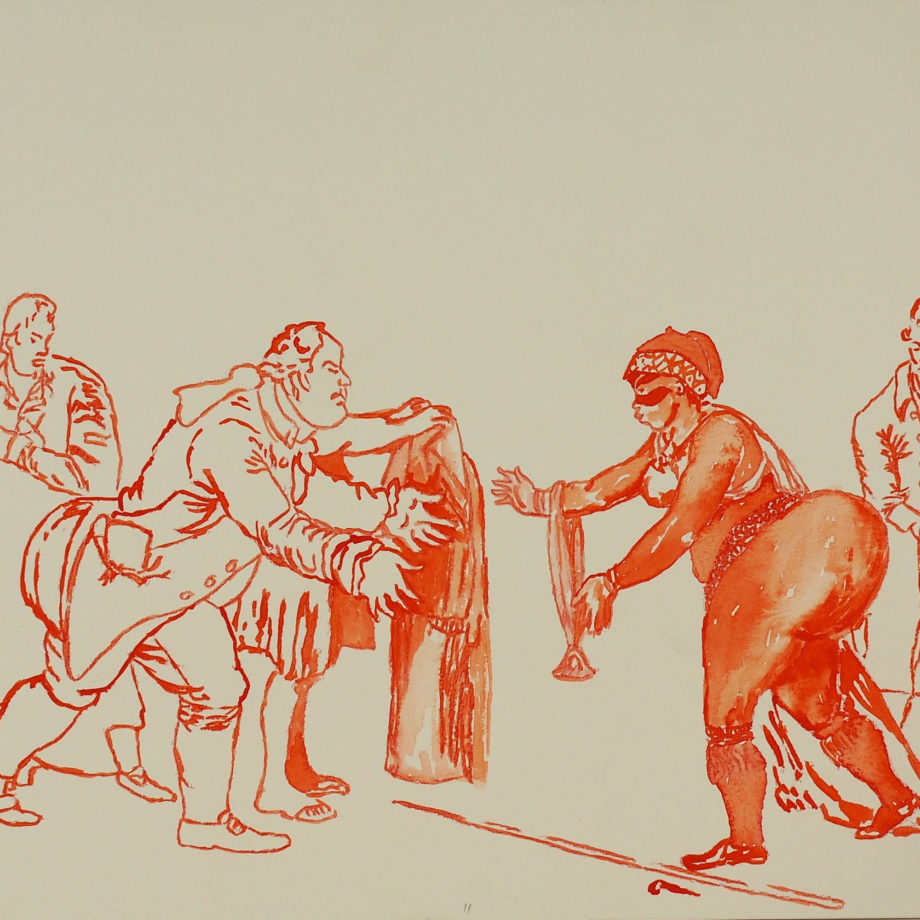
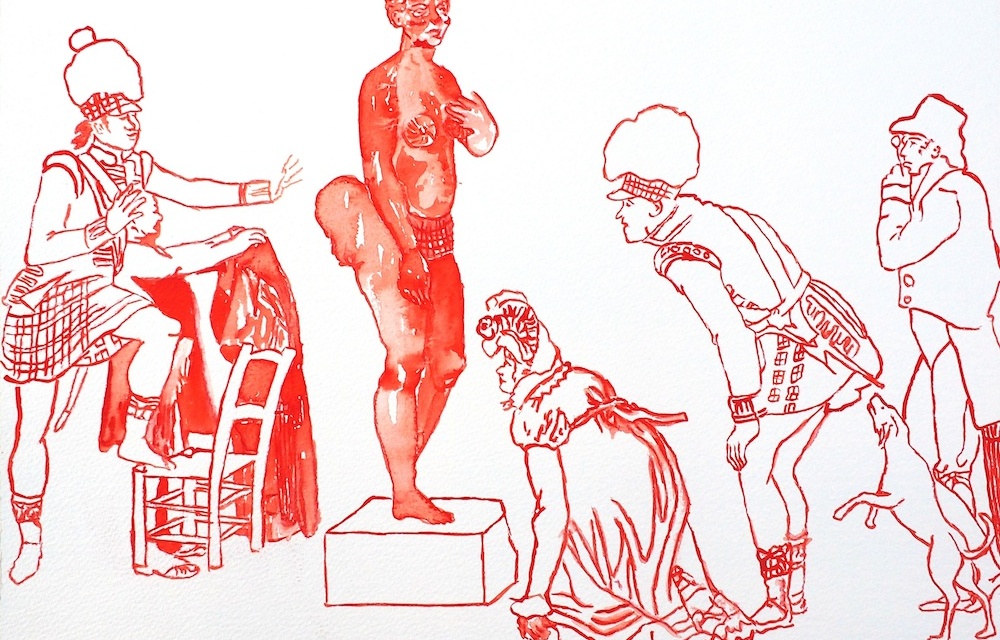
Rows of people talking and whispering amongst themselves, all one step closer, and one shilling poorer. They whisper and discuss in eager excitement about who or what they are about to see. It’s 1810 and in London, the Piccadilly circus is exhibiting what they call on pamphlets as the “Hottentot Venus.” A group of kids and adults alike squeeze and fight their way through a huddle of incoherent whispers. Rumors spread that if you spend one more shilling you can poke the exhibition. The lights start to dim and the curtain begins to flap signaling the unveiling of what the circus calls “The missing link between man and beast” (Imma 137).

Sarah Baartman was a Khoisan woman taken from her home in the cape of South Africa to become a circus animal due to having steatopygia, which caused a build-up of fat in her buttocks. Sarah would get on stage, and be put in a cage by an actor acting as her “trainer.” This trainer would then tell her to sit and stand as he did to the other circus animals (Gordon-Chipembere 10). This correlation of hypersexuality and beastification towards black men and women was sparked by Bartman and countless other exploited black bodies. This vaudevillian way of thinking is reflective of a racist synchronicity between animals and Africans, an idea that still persists in our modern-day society. Forever immortalized in the pages of stories and strips of celluloid in films, “the missing link between man of beast” occurs in subliminal means. Instead of paying a shilling to watch or poke Sarah Baartmann, we now pay $10.00 a month, and that’s if you want ads.

There was something peculiar that struck me about Baartman shows, in every ad Baartman shows were indiscriminate of age and welcomed children (Kelsey-Sugg 1). It was as if this hyper-sexuality and animal-fication of black bodies were something that must be embedded in minds of all ages, young or old. A social dogma is then created in which a correlation between  black body and beast was seen as obstinate and true. Today not only is this hypersexualization and animalification seen in adult mediums, akin to porn or adult-themed films or texts; it is as well subtly ingrained in children’s fairy tales and Disney movies. This essay will uncover and delve into a phenomenon, in Disney Pixar animated fairy tale films, that have their black characters transform into animals for a majority of their screen time. Even with intentions of right full representations and a black crew and cast this phenomenon still exists in movies like The Princess and the Frog and new releases like Soul. In relation to the movie The Princess and the Frog anthropomorphic representation is used with racist iconography and caricatures that are explained by antiquated racist beliefs and origins that have still persisted in our modern-day media, but now occur through subliminal means. Therefore, if a light is shined on this unconscious phenomenon and its malicious origins, there can be a hopeful chain reaction from awareness to action. 

Origins 

“Some ape as low as a baboon, instead of as at present between the negro or Australian and the gorilla” (Darwin 236). In Charles Darwin’s 1871 book The Descent of Man Darwin’s theory claims Africans and aboriginal Australians are more closely related to apes than the Caucasians of the European continent. Darwin’s ideas and theories permeate through classrooms and lecture halls across the globe. The glorification of Darwin’s works signifies a universality of his ideas that is not only applicable to the world of academia, but as well as the cultural economy of a society, however as a society, no matter Darwin’s positive and progressive ways of thought, one must not ignore the perversions of ancient thought. In the world of academia African bodies have been related to animals as evidence of racist ideologies equating black bodies to being either subhuman or, as Darwin describes, “savages..with hideously perforated lips, nostrils, or ears, and distorted heads” (495). When multiple respected scholars and scientists use the idea of the Animification of black men and women in scientific journals, these correlations then seep into our entertainment and cultural spheres of influence.

Circuses and plays of the past would use black inferiority as a plot device and or as evidence. Sarah Baartman, as aforementioned, was a byproduct of scientific studies and experiments using the African continent as one big experiment to test the ideas of Black civilization and inferior to the civilizations of the West. When Baartman died in the house of S. Reaux, her animal trainer used in shows, the first on the scene to carry her exhausted 26-year-old body was first “a team of zoologists, anatomists, and naturalists”(Chipembere 10). European construction of African and Animal continued for years seeping into art and literature, “Europeans were seen to be in the most superior position and Africans in close developmental proximity to animals” (Imma 138). Art later embraced pervasive stereotypes of African Americans such as the Mammy, Uncle Tom, Black Buck/Brute, etc. To describe black men and women as either lazy, violent, and above all Animalistic. These stereotypes were formed, and some were even inspired by “discoveries” and exploitation of Sarah Baartman and others.  

“How Sleeps the Beast” Tracy 1954
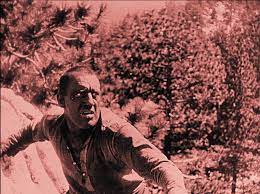
  “The Black Buck” in the film “The Birth of a Nation” 1915

In films and racist cartoons and novels, black men and women are represented to have beast-like and animalistic tendencies. Like the “buck,” as represented in the film “The Birth of a Nation”, the buck is a symbol of the racist correlation between animals and Africans that was prevalent in American cinema (Bogle 37). One company that was a part of a cinematic boom in the early 20th century was Disney. Although Disney fairy tale films depict worlds of talking animals, these animals are still not separate from, “Darwinian concepts of “survival of the fittest,” in which only the fiercest animals survive” (Condis, 2015). However, a trend in old and new Disney movies is a piece of imagery that is symbolic “Disney films depict Black characters as having a deeper connection to the beast within them, thereby perpetuating racism” (Dundes and Streiff  2016). Every piece of art is filtered and processed through a primary perspective or gaze. Disney’s lessons on dominant presuppositions are reflections of Western society and ideals. By utilizing fairy tales as the base of their films a reflection of a company that embodies family and wholesome values. It is these inherent biases from outside society and dominating presence in cultural spheres that make Disney films not only influential but dangerous.

Disney’s representation of black characters through the years is seen as problematic and reflective of a past dominant Gaze of a racist zeitgeist. In old Disney films like Dumbo (1941) a group of animated crows are used to help Dumbo learn how to fly. These characters are dressed in stereotypical African American garb and speak in African-American Vernacular English (AAEVE), being portrayed as a group of caricatured black men. The leader of these black crows is named “Jim Crow.” This history of obviously racist characters was met with criticism in later years. In response to racial criticism Disney started to develop a film with the goal to have a female black lead (Enoch 6). However, racial stereotypes still persist and an anthropomorphic transformation that changes a black character for more than half their run time occurs in the film. Disney moved from obvious racist characters and moved to subtly depict them. 

The Princess and the Frog 
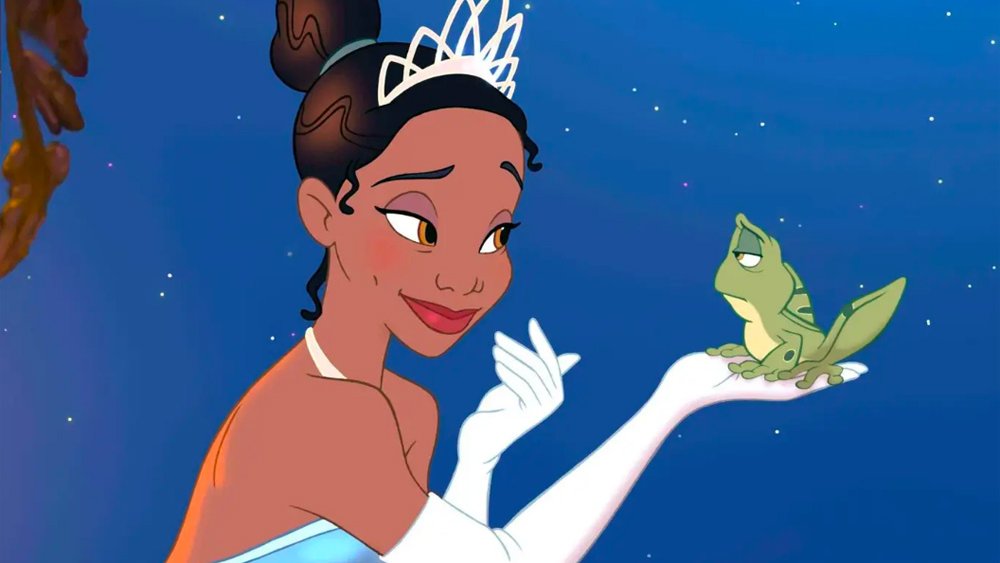
Although Disney tried to make The Princess and the Frog to dismantle previous notions of a racist past, this mission is absolved when the film is viewed through a critical eye. Tiana and other black characters are presented as animals. Not as beautiful swans (The Swan Princess 1994) but as swamp-dwelling creatures like frogs, crocodiles, and horse flies lathered in mucus. Louis, the crocodile, recalls a memory in which he tries to join a band and is met with utter disgust and fear, there is an inherent disgust interpreted with these creatures.

When Tiana first discovers the prince as a frog she instinctively beats the frog with a book in utter revulsion. These animals are not met with love, like Snow White and other woodland creatures, but black characters–as these creatures–are treated as subhuman and must be either exterminated or met with fear. Tiffany Tyantan Enoch, a media scholar at the University of South Carolina notes that “Tiana spends more time as a frog throughout the course of the movie (57 minutes of the film’s 97-minute running time) than she does as a human being—let alone as a princess” (Enoch 10). Disney’s first black Princess is an animal for more than half of her run time. This assumption of black people and animals are a reflection of broader historical and cultural contexts. This subhuman representation of black men and women compared to white elites is a motif that reinforces ideas of black inferiority in the eyes of a white-dominant gaze that elicits control and power. Her runtime makes her Disney’s first animal princess and this fear of putting a black woman on screen is scary to the company, by putting a “stand in” for her there is an attempt to save face. It’s important to note that Tiana is molded to be the amalgamation of two black Jim Crow media stereotypes: The Jezebel and The Mammy.Although Disney tried to make The Princess and the Frog to dismantle previous notions of a racist past, this mission is absolved when the film is viewed through a critical eye. Tiana and other black characters are presented as animals. Not as beautiful swans (The Swan Princess 1994) but as swamp-dwelling creatures like frogs, crocodiles, and horse flies lathered in mucus. Louis, the crocodile, recalls a memory in which he tries to join a band and is met with utter disgust and fear, there is an inherent disgust interpreted with these creatures. When Tiana first discovers the prince as a frog she instinctively beats the frog with a book in utter disgust. These animals are not met with love, like Snow White and other woodland creatures, but black characters–as these creatures–are treated as subhuman and must be either exterminated or met with fear. Tiffany Tyantan Enoch, a media scholar at the University of South Carolina notes that “Tiana spends more time as a frog throughout the course of the movie (57 minutes of the film’s 97-minute running time) than she does as a human being—let alone as a princess” (Enoch 10). Disney’s first black Princess is an animal for more than half of her run time. This assumption of black people and animals are a reflection of broader historical and cultural contexts. This subhuman representation of black men and women compared to white elites is a motif that reinforces ideas of black inferiority in the eyes of a white-dominant gaze that elicits control and power. Her runtime makes her Disney’s first animal princess and this fear of putting a black woman on screen is scary to the company, by putting a “stand in” for her there is an attempt to save face. It’s important to note that Tiana is molded to be the amalgamation of two black Jim Crow media stereotypes: The Jezebel and The Mammy.

The Jezebel stereotype is a Jim Crow-era stereotype that portrays the victim in the otherness faced by black Americans. Sarah Baartman was the original Jezebel, a victim of adverse sexualization and animalization, “the Jezebel is representing wild animals by using Black characters—particularly, Black women—creates an “otherness” that divides them from civilized society and is represented by the “Jezebel” archetype” (Enoch 14). Promiscuous and lacking self-control of one’s sexual proclivity and others is the Jezebel. As if he is programmed by a gaze of sexuality, Prince Naveen responds to Tiana as if she were a “Jezebel.” After fleeing from a group of alligators, Prince Naveen and Tiana are stuck in a hollow tree and forced to interact. This confined space has Naveen tell Tiana, “Well, waitress, looks like we will be here for a while. So, we might as well get comfortable” (The Princess and the Frog, 35:35-35:45). Tiana constantly refuses Naveen’s sexual advances and is played off as a joke throughout the film as if her “No’s” would transform into “Yes’s” in the blink of an eye. 

Blood sweat and tears are what make up the Mammy stereotype. A pre-Civil War/slavery stereotype of the Black maid or help, that finds solace in aiding whites then her own liberation. From Vaudeville stages to being the first film shown in the White House: The Birth of Nation. The hardworking servant of a white family is a trope still seen today. Tiana is one of the only princesses whose hard work and labor are done through voluntary servitude and ambition. One scene that strikes this trope to its core, is in the first act of the film in which Tiana prepares for her work and waits tables at dinner, this dinner rush means that Tiana must take the load of three waitresses. In true Mammy fashion, although sleep-deprived and angry, Tiana saves face and hides her true feelings and pretends to be happy, “Tiana’s multiple jobs are not presented as a consequence of oppression and racial disparity, but rather as a sign of character development and a way to achieve the American dream” (Gregory, S.M., 2010). These stereotypes and lack of physical/virtual representation of a black face to the face of a green frog are detrimental. When little girls watch a film and eagerly look for a movie that is representative of them, a problem arises when an animal then acts as a substitute for that representation. 

Disney’s dominant and powerful gaze has the ability to portray a beauty standard reflective of a zeitgeist and for a black woman to be that princess and figurehead for said beauty standard is just rectifying a past wrong. There is a subconscious association between black characters and animals, seen in films like Soul 2020, Brother Bear 2003, and Emperors New Groove 2000 have black or minority characters turned into animals. “The continued depiction of Black characters as animals (e.g., frogs) … reinforces harmful stereotypes and prejudices, thereby promoting the idea that Black people are subhuman and undeserving of the same rights and dignity as white people” (Enoch 8). If these racist correlations between African and Animal exist even now but occur through subtle and subliminal means; the problem is not gone but now is hidden. 

The Gaze
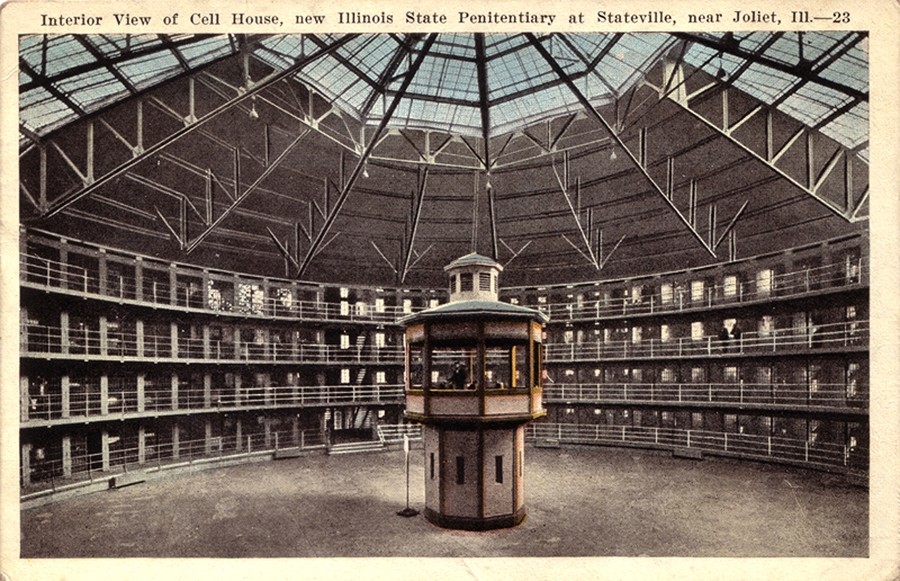
Is this bestialization of carnal representation of black bodies a voluntary practice or is it a mere remnant of a racist past? Now this animalistic representation is a tenant of something more symbolic, something more appalling. When creators like Oprah Winfrey act as, not only voice actors but consultants of the The Princess and the Frog and these correlations still exist then what can be the solution? Again when black writers and producers exist in movies like Soul and this correlation still persists there is a problem that is being understated.

Drawing on Micheal Foucault’s Panopticon analogy, an examination of how external and internal forces contribute to the oppression of the black minority. Micheal Foucault, a 20th- century French philosopher, examines the “gaze” of society and how surveillance and observation function as mechanisms of power within disciplinary institutions. Foucault elucidates this power in his analogy of prisons. Describing a design of a prison called the panopticon. Foucault elucidates how the panopticon’s design, featuring a central watchtower enabling continuous monitoring of inmates, embodies a power mechanism reliant on perpetual surveillance. This surveillance instills a sense of visibility and control, prompting inmates to internalize the sensation of being observed and adjust their conduct to align with expected standards. Foucault contends that the panoptic structure, characterized by the omnipresent gaze of the observer, extends beyond the physical confines of the prison to infiltrate various societal domains. He further suggests that even if the watchtower were to become tinted and inside is no observer, the power of the gaze still persists and permeates every cell block. This internalized power shapes individuals’ behavior, disciplining them to adhere to societal norms even without direct oversight. Even when no one is in the tower, inmates still feel the power of the gaze and structure their lives around the gaze of someone not even there.

To utilize this idea within media literacy black oppressive stereotypes and anamorphic representation exist within the black creators, because of an innate/inmate programming. This internalization of the dominant gaze can lead to self-objectification and internalized oppression, wherein individuals come to see themselves through the lens of the dominant culture and internalize negative stereotypes about their own identities. This animal-fication of black characters is a byproduct of generations of programming from a dominant disciplinary gaze, and creators still act within the realms of this gaze. When no one is watching these creators act within the confines of the gaze shackled to a domination that lies dormant beneath the pages of frames of a piece of art. The impact of the dominant gaze extends far beyond explicit acts of censorship or control, infiltrating the very essence of artistic expression and perpetuating cycles of oppression. It underscores the need for critical engagement with the power dynamics inherent in storytelling and the importance of dismantling oppressive structures to foster authentic and empowering narratives. By acknowledging the pervasive influence of the dominant gaze and working to dismantle its hold, we can strive towards more inclusive and equitable representations in media.

Conclusion

When starting this analysis there was a meager amount of information on the topic. If a light can be shown on this phenomenon and a spotlight on a racist past one can expand their lens of media literacy and view art through another more critical lens. Because of the lack of information on the phenomena, there exists a problem of unawareness that can drive this problem forward and this subconscious correlation between a minority and animals will linger in cultural spheres. If these antiquated disciplinary gazes continue to define us, we will not be free but will continue to be prisoners disciplined by an invisible eye. By first being aware of the origin and history of malicious black representation, and understanding a phenomenon that is a remnant of said history, one can be informed. If enough regular viewers can be aware of these racist souvenirs of the past a critical eye can be formed that can be used for all media; nevertheless, awareness does not stop at the viewer, but to future artists who can be aware of the very gaze they work under. A chain starting from awareness to action can be directed. Let the sins of the past die and let us be aware and truly evolve into a society no longer shackled by the ghosts of the past, but guided by new beacons and horizons. No longer guided by spotlights from watchtowers but now by the lights of our own flashlights. If society cares to move forward, a reflection from the past is necessary: Baartman’s people, the Khosian say “When the moon dies every month, let the sin in me die with it. When the moon is reborn each month, let the good in me be reborn with it.” 

Works Cited:

Bogle, Donald. “Toms, coons, mulattoes, mammies, and bucks: An interpretive history of 

Blacks in American films.” Bloomsbury Publishing, 2001.

Condis, Megan. (2015). “She Was a Beautiful Girl, and All of the Animals Loved Her: Race, the

 Disney Princesses, and their Animal Friends.” Gender Forum, No. 55, pp. 1-12.

Darwin, Charles. The descent of man, and selection in relation to sex. Vol. 2. D. Appleton, 1872.

Dundes, L., and Streiff, M. (2016). “Reel Royal Diversity? The Glass Ceiling in Disney’s Mulan

and [The] Princess and the Frog.” Societies, vol. 6, no. 4, p. 35. Retrieved from: doaj.org/article/cbcbd23633b442c3bf32f5fca278ba07

Enoch, Tiffany Tyantyan. Animal Representation of Race in The Princess and the Frog

Diss. University of South Carolina, 2023.

Foucault, Michel. “Panopticism.” The Information Society Reader. Routledge, 2020. 302-312.

Gordon-Chipembere, Natasha, ed. Representation and black womanhood: the legacy of Sarah    

Baartman. New York: Palgrave Macmillan, 2011.

Gregory, Sarita McCoy. (2010). “Disney’s Second Line: New Orleans, Racial Masquerade, 

and the Reproduction of Whiteness in The Princess and the Frog.” Journal of African American Studies, vol. 14, no. 4, pp. 432-449. 

Imma, Z. (2011). “Just Ask the Scientists”: Troubling the “Hottentot” and Scientific Racism 

in Bessie Head’s Maru and Ama Ata Aidoo’s Our Sister Killjoy. In: Gordon-Chipembere, N. (eds) Representation and Black Womanhood. Palgrave Macmillan, New York. 

Kelsey-Sugg, Anna, and Marc Fennell. “Sarah Baartman Was Taken from Her Home in South      

Africa and Sold as a ‘Freak Show’. This Is How She Returned.” ABC News, ABC News, 17 Nov. 2021, www.abc.net.au/news/2021-11-17/stuff-the-british-stole-sarah-baartman-south-africa-london/100568276.

Musker, John, and Ron Clements. The Princess and the Frog. Walt Disney Studios Motion  Pictures, 2009.
Categories
Fairy Tales

The Folklore of folklore

By: Kelly Kurland

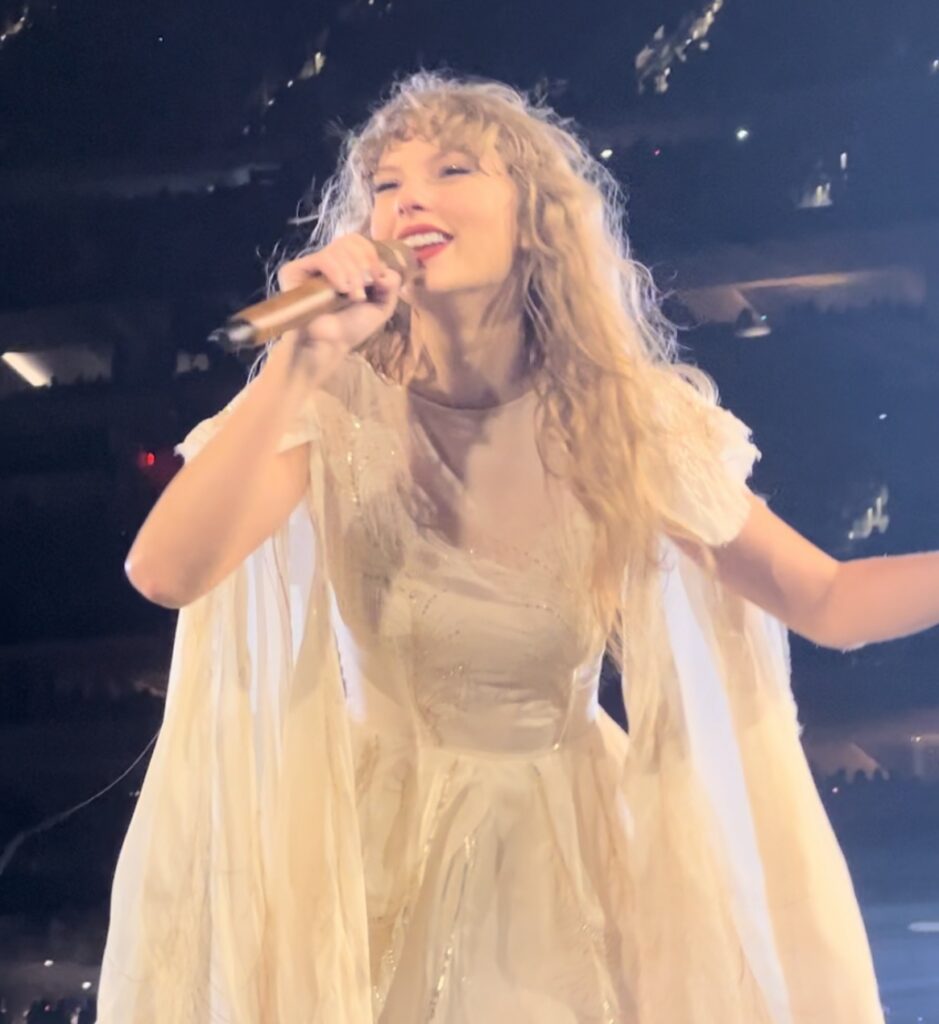
When searching up the definition of “folklore” on the internet, instead of getting the definition of “folklore”, you get results for Taylor Swift’s eighth studio album folklore. Being my personal favorite of Taylor Swift’s discography, I was first drawn into the album with the song “cardigan”. On March 21, 2021, I was tuned in to the 63rd annual Grammy Awards to watch my true love Harry Styles. But, in addition to being encapsulated by his performance of “Watermelon Sugar”, I was also in awe of Taylor Swift’s performance mashup of “august”, “cardigan”, and “betty”. Not only was it her ability to perform, but it was also the songs themselves, and how beautifully written they were. As said, I first truly connected to Taylor Swift with her song “cardigan”. I had never really connected with her music before that moment. It’s not that I didn’t like it, I just didn’t listen to her. From that moment on, I began to listen to everything Taylor Swift and fall more in love with her work. folklore would slowly, but surely, not only become my favorite Taylor Swift album, but also one of my favorite albums of all time. Though I love a lot of her other music, the storytelling of folklore is what makes it stand out from the others and awards it my favorite. I am fascinated by how Taylor Swift can create such deep and intricate stories through her lyricism. Not discounting that other music artists also create stories in their music, but Taylor Swift crafts lyrics in a way that sets her apart from other artists. Specifically, Taylor Swift’s album folklore generates storytelling and expresses larger themes through the composition of diction and figurative language within its lyrics which also connects to and found in fairy tale stories.

“… My storytelling is what it is for me…” (Miss Americana 2019 0:11:26-0:11:29) Taylor Swift comments on what her artist “niche specialty” is. She approaches her art and craftsmanship to writing lyrics in a unique way that heavily contrasts those of other artists. But it’s just composing words to a beat? What’s so interesting about that? Well, Taylor Swift has three different types of songs she writes: Fountain Pen, Quill Pen, and Glitter Gel Pen. “I came up with these categories based on what writing tool I imagine having in my hand when I scribbled it down…” she reveals at  the NSAI’s Songwriter-Artist of the Decade awards. Each lyric type exhibits her writing approach and what kind of story she intends to tell. Taylor Swift then goes on by what means by these three “types of lyrics”. 

Firstly quill pen lyrics “…sound like a letter written by Emily Dickinson’s great grandmother while sewing a lace curtain, that’s me writing in the Quill genre…”. In her speech, she references “ivy” from the album evermore as falling into this category. Just from  “your touch brought forth an incandescent glow” (0:16-0:19), which demonstrates the warmth of love and care that one brings to another, presents this type of lyric.

But, to get the full Quill lyric experience, listen here: https://youtu.be/9nIOx-ezlzA?si=dLwEl1291yhJife- 

Then, “…fountain pen style means a modern storyline or references, with a poetic twist. Taking a common phrase and flipping its meaning. Trying to paint a vivid picture of a situation, down to the chipped paint on the door frame and the incense dust on the vinyl shelf. Placing yourself and whoever is listening right there in the room where it all happened…”.  She recalls her epitome fountain pen song is “All Too Well” (10 Minute Version) (Taylor’s Version) from the album Red (Taylor’s Version). This track vividly paints an autumn scene of heartbrokenness. The following scene exemplifies this:  “Oh, your sweet disposition and my wide-eyed gaze we’re singing in the car, getting lost upstate autumn leaves falling down like pieces into place and I can picture it after all these days” (0:53-1:14). The scene illustrates the naivety of the relationship, and the metaphorical loss destined from the start.

Although it’s a 10 minute commitment, unlike the song, time will fly along through this track: https://youtu.be/sRxrwjOtIag?si=ZGc_tsdJ5hjOz-Rm 

And finally, “…the third category is called Glitter Gel Pen and it lives up to its name in every way. Frivolous, carefree, bouncy, syncopated perfectly to the beat. Glitter Gel Pen lyrics don’t care if you don’t take them seriously because they don’t take themselves seriously. Glitter Gel Pen lyrics are the drunk girl at the party who tells you that you look like an Angel in the bathroom…” (Swift). Sounding similar to “glitter gel pen”, “Bejeweled” from Midnights, fits in this category. Though it contrasts heavily sound-wise from the other two types, “Bejeweled” still fits into the lyric heavy album of Midnights. “Best believe I’m still bejeweled when I walk in the room I can still make the whole place shimmer” (2:24-2:29) is guaranteed to make one feel like a shining diamond as described in the song. This is everything a glitter gel pen song is supposed to do, they’re the type of feel good sing-along songs.

For a pick me up, stream the whole track here: https://youtu.be/XzKSPRqFg9E?si=vdzsgVooK-Lh1n74

With that said, Taylor Swift’s writing process allows one to better understand the ideology of what goes into the song itself. The lot of folklore fits into the quill pen and fountain pen categories, and has none in the glitter gel pen category. A lot of people can read into her songs too literally, but a lot of the time it’s just the metaphors talking. Similarly to this however, various authors of fairy tales use similar writing techniques with figurative language. And like Taylor Swift, a lot of what you read, is not what it means. There are plentiful underlying themes and messages revealed when delving deep into the true implications of a story that were once not quite so obvious before. 

“the last great american dynasty”, is arguably the most underrated track on the album. This track stands out for its detailed storytelling. When listening to the track, you’re not in your car, or your room, or wherever, but on the coast of Rhode Island, living in the story of Rebekah Harkness. The song follows the true story of socialite and heiress Rebekah Harkness, and her lavishness and outgoing reputation. Her reputation proceeds as “filled the pool with champagne and swam with the big names and blew through the money on the boys and the ballet and losin’ on card game bets with Dalí” (1:42-1:53). The song expertly describes the lavish parties she would hold at her Rhode Island mansion. It alludes to some of the significant guests that would attend, being renowned Spanish painter Salvador Dalí. She was deemed a “disgrace” to her family name, hence being the last great American dynasty. On that note, a lot of fairy tales are particularly negative towards women. In the tale “Bluebeard”, by Charles Perrault, goes through the liberating confinement of a wife who discovers the past wifes of her new husband. As noted in the introduction by Maria Tatar, “‘Bluebeard’ is a story about a woman’s martial disobedience or sexual infidelity…” (185). Like how “the last great american dynasty” notes how scandalous the infidelity of Rebekah Harkness was at the time of her multiple marriages. This is shown through the writing of dialogue/commentary from the town, “and the town said, “How did a middle-class divorcee do it?” (0:31-0:36). The two pieces go through motifs of disgraceful actions on the woman’s end. How Rebekah Harkness was criticized for her actions, and how the wife in “Bluebeard” was deemed “unloyal” to her husband by entering into the forbidden room, which is a motif for sexual infidelity.

However, Taylor Swift’s intention for the track was to show the elaborate backstory behind the previous owner of her Rhode Island mansion, “Holiday House”, which she reveals after the bridge in the song (2:46-2:48). She doesn’t have malicious intentions towards Rebekah Harkness, but actually admires her courageousness.

 To fully envelop yourself into the east coast in the 20th century, listen here: https://youtu.be/2s5xdY6MCeI?si=GAWCZdDrs5ST_jvJ

On a similar note, the track “mad woman” goes through the misogynistic views of women, by men and women included. As previously stated, fairy tales have a lot of misogynistic views and underlying tones. In the song “mad woman”, the song addresses the ideology of women being called “crazy” or “mad” through normal emotional responses. “Every time you call me crazy I get more crazy what about that? And when you say I seem angry I get more angry” (0:49-0:54). As said, the song goes that only women are considered “mad” for feeling this way. The track also highlights the internalized misogyny in other women as well with the line, “and women like hunting witches, too” (1:56-1:59). Misogyny is something that has been implicated in society since the dawn of time. In folklore: the long pond studio sessions, Taylor Swift references the “gaslighting” that women are expected to absorb from men over centuries (1:05:56-1:07:27).  It’s unfortunate to see that the issue is still relevant today with the song “mad woman”, and also in fairy tale stories centuries ago.

Listen to “mad woman” here: https://youtu.be/6DP4q_1EgQQ?si=UCce1P7PXI7PODgY

“mirrorball”, the most reflective storyline on the album. More traditionally, a disco ball, it’s a “shimmering beautiful” (0:33-037) reflective object. This song is what first prompted me to connect Taylor Swift’s lyrics and songs to fairy tales. When reading Snow White, the significance and meaning of the mirror was a big motif to focus on in the story. For the step-mother, the mirror revealed her true intentions and was a reflection of her true self. In the song “mirrorball”, which is a metaphor for oneself, and how something so beautiful is actually broken down in a million pieces. The song goes through how one tremendously tries to fit into society and how they wish to be perceived. The song can also symbolize how someone can “mirror” another person, but this results in them not being their true self and is behind the image of someone else. This entire song is a big metaphor of revealing how someone can be broken and beautiful, and how genuine that can be. Like, how in Snow White, the step-mother wanted to know the fairest of them all, and how the mirror revealed the truth. Taylor Swift also makes an honest message with how she expertly makes reference to another song on folklore, “this is me trying”, with the line “I’ve never been a natural all I do is try, try, try” (2:51-2:56). How beauty can be fabricated to fit within the reality of exceeding societal pressures of your mirror image. Both Snow White and “mirrorball” use this mirror metaphor to reflect the perception of one’s self image.

To fit in with the masquerade revelers, listen here: https://youtu.be/KaM1bCuG4xo?si=Fmd99ieQcNy3lgKY

“cardigan”, “august”, and “betty”, also known as Betty, Augustine, and James, also known as the folklore love triangle. The three songs, which can all be stand alone songs, have an intertwining love story wrapped in it. “betty” is the story through James’ point of view, the perpetrator, and how he still has feelings for Betty. James cheated on Betty with Augstine. In the song, James claims that it was “the worst thing that I ever did”, was cheating on Betty. The song “august” is in the perspective of Augustine, who was deemed “the other woman” and is who James cheated on Betty with. Taylor Swift comments on “august” in folklore: the long pond studio sessions, and how “the other woman” is usually seen as a villain, but August genuinely loved James and cherished their relationship(0:45:46-0:46:10). At the end of the summer love, Augustine recognized that James was “never mine”. Lastly, “cardigan” is in the perspective of Betty, who was with James. This perspective is from 20-30 years after the breakup, and is looking back at it reflectively. Betty mourns the loss of her love James, and how she felt like “an old cardigan under someone’s bed”. There is reference to other fairy tale characters to portray this loss: Peter Pan and Wendy (2:31-2:32).  Meaning that while she grew up, like Wendy, and James stayed a child, like Peter Pan. Like Fairy tales, the songs paint the scenes from the perspectives of different characters. They all share the stories as if we are the ones living in them. The perspective writing envelops us into the stories to live and feel them ourselves.

“cardigan”, “august”, and “betty” have lyrical connections, can you find them all?

 cardigan: https://youtu.be/zLSUp53y-HQ?si=XE4L4lYogOBSujIM 

august: https://youtu.be/nn_0zPAfyo8?si=TWCUVyDCrLqftbc8 

betty: https://youtu.be/6TAPqXkZW_I?si=pxei75fsjT76ttW6 

(Hints: cobblestones, cardigans, car rides)

“seven”, also satisfyingly track 7, is a story through the eyes of a seven year old. “Please picture me in the weeds before I learned civility” (1:52-2:02), expresses the naivety of childhood innocence, before gaining consciousness about the world. In folklore: the long pond studio sessions, Taylor Swift discusses with her collaborators, Jack Antonoff and Aaron Dressner about where and when that feeling leaves. Fairy tales are a similar concept. We grow up reading them and being engrossed in this magic-like feeling and carefree wonder. It’s also how don’t birthdays feel the same as they did when we were at the ripe time of childhood. There is a time where that feeling switches to maturity and understanding. Like, with all of the hidden messages spun into fairy tales, when did we begin to understand them?

To feel seven once more, listen here: https://youtu.be/pEY-GPsru_E?si=oAq-LXDVVXCXVTnH 

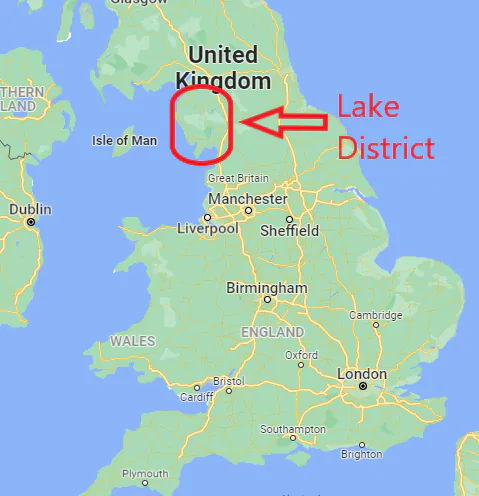
“the lakes” is an emblem of the destiny of a far away land. “Take me to the lakes where all the poets went to die” (0:43-0:46) refers to the Lake District in northern England.

In the 18th and 19th century, the Lake District was a place where famous romance poets would retreat to and become influenced by their surroundings. The Lake District is where Taylor Swift pictures herself escaping to. Being one of the biggest artists in the world, she wishes for a sense of escapism every now and then. She homages to those poets and artists who had that escape plan and how she admires how those artists left the ridicule of society behind in a healthy way (folklore: the long pond studio sessions 1:38:33-1:41:44). Fairy tales provide this sense of escapism too. They bring the readers to far away lands of princesses, fairies, and magic. Every once in a while, we all need that break from reality and grounding ourselves.

Go where wisteria grows right over your bare feet, to the Lake District: https://youtu.be/tOHcAc3r2kw?si=K_Hlw2pK-4hDTqAU

From top to bottom, folklore transports me to places and scenes beyond my reality. It is the album that truly made me feel connected to Taylor Swift. Especially during the time when it came out, in the midst of the pandemic, it brought me feelings of a magical faraway land. It took me away from the chaos of the world around me, and allowed me to be in the stories. If I told myself during this time that I would experience that album performed live 5 feet away from me, I wouldn’t believe myself. Being the pinnacle of my existence, I  jokingly say that experiencing folklore live in concert made me a changed person, but I will always have that feeling I felt encapsulated in me when I heard the bridge of “august” being played to me and just feet away. Like fairy tales, I wouldn’t have been transported to the 20th century east coast, or the Lake District, or to a small town had it been without Taylor Swift’s insane ability to compose lyrics. I will forever have folklore kept in a special place in my heart and it will always mean the world to me. I hope this piece inspires you to appreciate her artistry. I was told that you don’t have to like something, but you can always find room to appreciate it. 


Enjoyed what you heard? Here is more to listen to:

folklore album:

https://www.youtube.com/playlist?list=PLmU8B4gZ41icKdheg4d2KZBgDR1wSWfbH

Author’s Pick:

https://youtube.com/playlist?list=PLzX77kWbYWRPBAO11T3ALByVtvJxn9ixt&si=JUNSyeWYZF5f_jg_
Categories
Fairy Tales

A Rundown of the Runways of Fairy Tales in High Fashion

By: Morgan Scott

Fashion itself is magical; it is an art form that allows people to become someone else for the night. Getting dressed up like a Princess or Prince just for a moment. In Fashion, stylists are the Fairy Godmothers of high fashion and the models are the main characters. Taking inspiration from all walks of life all over the Earth. Along with the history of fashion within fairy tales, it makes sense that they are intertwined with each other. Also, see throughout history, fashion trends have changed what characters wear and how society views fairytales. This is illustrated specifically through the history of fairy tales in fashion, fairy tales influencing fashion show collections, and other fashion events that incorporate fairytales into them. Like fairy tales, fashion tells a story with underlying meanings and details that people need to look deeper to understand. So, fashion creators take inspiration from a multitude of different fairy tales. Fairy Tales have always been an integral part of high fashion and fashion trends, which have inspired the community in numerous ways.

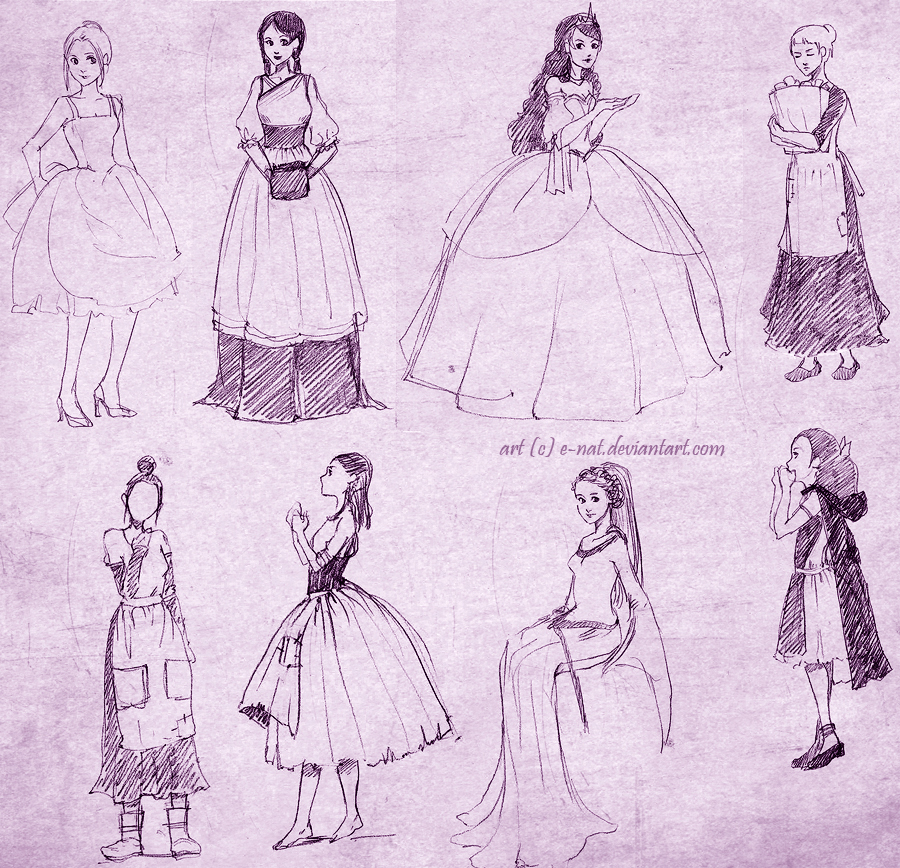
In history, fairy tales have been a way that people have enriched themselves and entertained themselves. First, they started as oral stories and traditions that people would tell to their families and passed down. The clothing that was described in the stories were often those of the clothes that were worn from that time period. Things such as Cinderella’s “glass slipper” which was a fur shoe. Also, Little Red Riding Hood’s red cloak has been a different article of clothing based on when and where it was told. The earliest oral renditions of stories all have different outfits from when they were first told, yet are still just important to the story. Then in the 18th century, fairy tales started to be turned into written versions and eventually published. The authors Charles Perrault and Grimm Brothers changed the stories to fit the fashion standard of the time(Rozario). This was the Victorian era so dresses were large and flowy. The silhouettes were considered ethereal with intricate embellishments. This is where many of the iconic fairytale princesses got their dress designs from. This also coincides with the Romanticism era. Which often put showcased fairy tales within women’s fashion illustrations and literature to highlight how to be a “proper woman”. Out of these eras came elaborate ball gowns, corsets fit for princess attire, and accessories riddled with motifs.

After that in the late 19th and early 20th century, there was a surge in fairytales in trending culture due to the Art Nouveau movement and Belle Époque era. Art Nouveau which focused on natural forms and feminine mystique coexisted with fairy tales. In turn, introduced floral motifs and romantic symbolism into fairytales. This then influenced fashion with flowing lines and floral patterns. The French Belle Époque era then added to the popularization of fairy tale themes in fashion. Some designers like Charles Frederick Worth created luxurious gowns that depicted the elegance of fairy tale heroines. Later into the 20th century fairy tales were introduced to Hollywood adaptations. The onscreen costumes were then directly taken from fashion trends of the time(Rozario). The 1950s animated ‘Cinderella’ and ‘Sleeping Beauty’ display fashion from that time. Cinderella’s working outfit and Aurora’s everyday outfit are an ode to the women of the time’s outfits. In today’s Fashion fairy tales are drawn more often with high fashion brands taking motifs and narratives in their collections but giving it a modern twist. Fashion photography and editorials repeatedly feature large-scale sets, costumes, and storytelling to illustrate the themes of classic fairy tales. Rebecca-Anne Rozario, a Literary Studies at Monash University, Australia says “The key is bringing these threads together—exploring how the fashion system and material cultures have influenced the way fairy tales have evolved”(Rozario). This means both fashion and fairy tales have evolved and changed each other. Through the timeless power that fairytales hold, it is continuously shown in fashion trends and couture. 

Though fairy tales now are known through reading, the most prominent statements in Fashion are made on the runways. When people think of high fashion and designs their minds normally go to runway shows. Runway shows are ways that designers and brands showcase their new collections and what their brands are going to represent for that season. Often when a runway show is based on fairy tales the designers take a creative and childlike route to enchant the audience and remind them of their former selves. They are able to reinterpret classic fairy tales in a simulating and visual way; that not only keeps the audience entertained but also able to relate to the models they see walking due to the familiarity with the clothes that are based on fairy tales told to them in their childhood. Just as fairytales do, runway shows tell a story and each piece of clothing from the collection contributes to the overarching plot.

Along with storytelling runways take design elements, fantasy, silhouettes, and emotional connections all from the fairy tale they are basing their collections on. For design elements, things such as certain aesthetics taking specific coloring and patterns that are often associated with the chosen fairytales. The fantasy aspect of fairy tales is needed to make the fashion show credible to the audience. If the idea of a fairytale is not showcased well, not only will the pieces in the show reflect that but the audience will know right away because the stories used are normally well known. So the creation of fantasy is highly important for the success of a fairytale-inspired runway and looks. Silhouettes are sometimes based on the dresses and clothing from all different characters in the fairytales. Additionally with emotional connection, which relates to the feeling of nostalgia and the themes that are presented during the show. The nostalgia comes from the fairy tales that were told from childhood. Themes in shows such as love, courage, transformation, and overcoming are associated with fairytales that evoke an emotional reaction from the audience. 

Fashion Shows/Looks from Fairy Tales: 

Comme des Garçons Spring 2015:

This Comme des Garçons look is an ode to Little Red Riding Hood. The entire collection was fully red. This avant-garde show was to represent passion and aggressive love. Every single model was adorned in all Red. So, it makes sense that within the collection there would be a Red Riding Hood look. This collection had multiple themes that relate to the fairytale. Within the Little Red Riding Hood fairy tale, the aggressive wolf almost yearns for the young child in an uncomfortable way. The love she has for her grandmother to stand up to the wolf. Also, blood within fairytales is a large motif that symbolizes multiple things. This collection was also full of aggression, love, and symbols of blood that empathized well-constructed designs that would not have caused such intense emotional reactions without these themes(Ajie).

Alice and Olivia Fall 2014:

Though this was the look that stood out the most as being inspired by a fairy tale the entire collection seemed to reminisce childlike wonder. The setting was made to look like an enchanted forest. There were multiple homages to other fairy tales as well like Snow White and Cinderella. The themes of this collection were that of childlike wonder and to be like a children’s pop-up. The utilization of bringing a magical forest alive and showcasing the pieces puts the audiences into the fairytales and feel like they are there. This Rapunzel look is a direct take away from the fairy tale of her long hair and flowy dress. The dark makeup, smokey eyeshadow, and red lips, juxtaposed with the bright clothing truly show the essence of fairy tales. While they seem sweet and a message for kids, however, there is a deeper, darker meaning sometimes that makes audiences look within themselves as the monster in the story(Thatcher).

Givenchy Couture 1997:

The Givenchy Couture show was inspired by both Greek mythology clothing and then fairytales. This look was inspired by the Wicked Stepmother in several fairytales. The themes of this show are attitude and fantasticality. The conjunction of fairy tales and Greek mythology creates an ethereal look for the entire show. The theme of attitude is perfect for a stepmother’s looks because in most fairy tales, her attitude is the reason for the heroine’s downfall but also hers in the end. The look is inspired by the animated 1950s ‘Cinderella’, specifically the hair, and the outfit as a whole are similar to the Wicked Stepmother from the 1987 Broadway production of ‘Into The Woods’. Though the whole collection is not completely inspired by fairytales, many looks take themes and wardrobe from them (Ghanem). 

However, it is not only just fashion runways that incorporate fairy tales into their fashion. Fairy tales are seen on the red carpet. A specific runway that sees a lot of fairy tale references is the MET Gala. Celebrities’ MET Gala looks are not just supposed to be on theme for that year, but also tell a story through their outfit. As an event that is based on fashion and is marketed as a place for high fashion, it corresponds with the history of fairy tales also being used to invite innovation and creativity to their outfits. One look that stands out is Zendeya’s 2019 MET Gala look. The theme was Camp: Notes on Fashion, so for her outfit, she dressed up as Cinderella and her stylist Law Roach came on the red carpet dressed as her fairy godmother (Vogue). Then with a wave of a wand, smoke came out of it and just like in the Disney Cinderella movie the dress lit up and rose. This display was a direct pull from the 1950s ‘Cinderella’ as her fairy godmother dressed her up for the ball. Both have a fairy godmother to dress them up, they are both getting ready for the “ball”, and they are both known for standing out the most at this “ball”. The parallels between Cinderella and Zendya illustrate why this was such a good idea for the MET.  

Along with the MET and other red carpets, there are also exhibits and museums dedicated to displaying high fashion. While the MET Gala is an event it is held at The MET museum that is all about fashion throughout history. Just like The MET the NYC Fit Museum is also dedicated to housing fashion. One exhibit that they housed was the 2016 ‘Fairy Tale Fashion’, examining fairy tales through the lens of high fashion. In the exhibit, they define fairy tale fashion as “clothing that is especially lavish, beautiful, and seemingly unattainable” (Hill). The museum had multiple sections that were dedicated to specific fairy tales and some full collections that were full of items that reference fairy tales. Though the exhibit is no longer in the museum it still stands as one of the most unique and imaginative collections they had. 

When it comes to fashion there are a lot of ways that people can create and showcase their skills. However, when it comes to taking inspiration from fairytale designers, stylists, and even models throughout history have done it in a remarkable and long-lasting way. Fairy tales have been around for a long time and have had an impact on almost every part of the fashion world. People still to this day take time to pay homage and create things based on a mirage of fairy tales means that in high fashion, people respect and like clothes and designs that represent the same things that fairytales do. Not just the characters and stories, but also the deeper things like themes and motifs that stick with both readers and watchers. Trends have been started, ended, and continued with fairy tales in fashion and will probably continue to do so as fashion evolves and changes. 

Work Cited

Ajie, Teuku. “Comme Des Garçons Spring 2015 RTW.” DEW Magazine, 30 Sept. 2014, www.dewmagazine.com/comme-des-garcons-spring-2015-rtw/. 

Ghanem, Khaoula. “Couture #beautyhistory: Alexander McQueen’s 1997 Debut at Givenchy.” Vogue Arabia, 19 Jan. 2016, en.vogue.me/archive/backstage-confidential/alexander-mcqueen-givenchy-haute-couture-debut-1997/. 

Hill, Colleen. “Fairy Tale Fashion – Google Arts & Culture.” Google, Google, 2016, artsandculture.google.com/story/fairy-tale-fashion-the-museum-at-fit/PgXBun-debzuKw?hl=en.

Vogue. “Met Gala 2019 Red Carpet: See All the Celebrity Dresses, Outfits, and Looks Here.” Vogue, Vogue, 7 May 2019, www.vogue.com/slideshow/met-gala-2019-red-carpet-live-celebrity-fashion. 

Rozario, Rebecca-Anne. (2018). Fashion in the Fairy Tale Tradition. 10.1007/978-3-319-91101-4. 

Thatcher, Andrea. “Alice + Olivia Transports Onlookers to a Whimsical Fairytale Land for Fall 2014 (Runway Review).” theFashionSpot, 11 Feb. 2014, www.thefashionspot.com/runway-news/372969-alice-olivia-fall-2014/. 

Categories
Fairy Tales

The Magic of Love: Fairy Tales and Romance Literature

By Hana Christensen

“And they lived happily ever after.”

These six words are the last you see before closing the fairy tale storybook. But fairy tales aren’t the only stories that end in “happily ever after.” This phrase often refers to a marriage in many fairy tales. In the romance genre, it has a similar meaning – two people who are deeply in love with each other get to be together  and happy despite whatever odds. Romance authors have and do draw influence from fairy tales, expanding their creativity through the inclusion of tropes and symbols, retellings, and erotica to craft intriguing and successful stories within the romance genre.

Aspects of fairy tales are found quite commonly in past and modern romance literature, romance authors often drawing from these stories for inspiration. This connection seems easy to explain: fairy tales have romance in them, therefore romance books can use them for inspiration. But the relationship between the two genres is far more complex than that. It is a misconceived notion that fairy tales are meant for children. “Fairy tales, like romance novels, target an adult audience and address adult concerns. They invoke a fictional, fantasy realm and express a collective fantasy for their audience. Despite the fear of romance critics, the audiences of both forms do not confuse reality with the fantasy presented; there is no element of belief in these genres” (Lee 56). Fairy tales have whimsical magic like talking mirrors and sleeping curses, and this is where ideas of “love magic” arise from. “True love’s kiss” is a motif found in and popularized by fairy tales, first introduced by the Brothers Grimm’s tale “Little Briar Rose.” They cover difficult and dark topics, from complex family dynamics, magic and power, revenge, jealousy, love, betrayal, death, and more. The romance genre is a genre that encompasses a broad range of tropes, characters, plots, ideas, and themes. There are, of course, kid-appropriate stories within the romance genre, but it is thought to be and often crafted more towards older audiences, who can understand complex ideas about relationships and have the maturity to read darker themes and scenes. Combining stories of magic and stories of romantic relationships was an easy feat, as fairy tales essentially had already done so, and romance authors continue to draw inspiration from these tales.

Many romance authors incorporate common tropes that originated from fairy tales in their own works. The storyline between a protagonist and a love interest is exactly that, a romance. But there are tropes that involve no romance at all. A trope refers to a literary aspect that is used repeatedly in a work. The “Cinderella trope,” the “Beauty and the Beast trope,” the “Ugly Duckling trope,” to name a few, have become incredibly popularized in past and modern romance literature. These tropes have a few commonalities: an underdog protagonist, struggle between beauty and ugliness, the theme of transformation. These are aspects of story writing that can be easily replicated and expanded on in a work. These stories also have surprising messages and depth on other complex and darker topics. For example, “‘Beauty and the Beast’ may be a love story about the transformative power of compassion, but it also has an emotional ferocity that encodes messages about how we manage our anxieties about monstrosity and alterity” (Tartar 30). Numerous successful book series are known for their fairy tale tropes, and they are considered a “selling-point” to read them.

In Julia Quinn’s bestselling historical romance series Bridgerton,” the third installment in the series “An Offer from a Gentleman” follows Benedict Bridgerton as he falls in love with a mysterious lady – Sophie – during a masquerade ball. When she runs away, he searches for her, unbeknownst to him or anyone that Sophie is a kitchen maid who snuck into the event and was technically not allowed to be there. This story perfectly follows the Cinderella trope. In the Brothers Grimm “Cinderella,” the transformation occurred when Cinderella dressed in nice gowns and attended the ball unrecognized, just as Sophie did. In the same series, book three “Romancing Mister Bridgerton” follows Penelope Featherington, the wallflower of the ton, as she moves on from her crush on her best friend Colin Bridgerton and seeks to marry. Colin agrees to help her become more enticing and attractive in all matters to the ton and potential suitors, and it is there that he realizes his feelings for Penelope were never platonic, but pure, unadulterated love and devotion. Penelope’s story follows the Ugly Duckling trope, where she was made fun of and looked down upon for her appearance and her familial status, only to transform into a beautiful and alluring entity that everyone is envious of. The Beauty and the Beast trope is also commonly found in popular romance novels. “The Duchess Deal” by Tessa Dare follows this trope, when seamstress Emma marries and falls in love with the emotionally closed off, tonally abrasive, sorrowfully scarred Duke.

In historically fictitious settings, Quinn’s and Dare’s works take inspiration from famous fairy tales by incorporating a popular trope. They are recognizable within these stories, but what is inspiring is how the authors’ creativity altered the stories and created new worlds for these storylines. The protagonists representing the characters Cinderella, Beauty, and the Ugly Duckling are plain to see, and while their stories are unique and different compared to the original tales they’re based off of, they are known to possess these fairy tale tropes. These fairy tales are already popular in their own right, but by incorporating these tropes, romance authors are able to expand their creativity by imagining new and separate versions of the tale. When referring to these famous works, they are known to have similar plots to Cinderella and Beauty and the Beast, but to also have their own plots and characters in their own right separate from the fairy tales. The blending of the classic and the new are how not only romance, but all creative products gain attention and success.

Famous symbols in fairy tales can also be found in past and modern romance literature that are separate from fairy tales. Though the context perhaps may be different, the premise and meaning of the symbol may be the same as in an original fairy tale. These symbols can be easily spotted in works and connected back to famous fairy tales. One famous example is in the first book of Stephenie Myers’ Twilight Saga “Twilight,” where a green apple held by white hands is pictured on the cover. The apple is most prevalent in the Brothers Grimm tale “Snow White.” The apple can be a biblical allusion to Adam and Eve, how the serpent offers Eve, to the Evil Queen offers Snow White, and Edward offers Bella an apple. An apple can represent a plethora of things: beauty, knowledge, temptation, and immortality and mortality, to name a few. In Snow White, the apple represents mortality and beauty, the Evil Queen offering it so Snow will die and she will be the fairest in the land. In Twilight, the apple represents beauty, knowledge, and both mortality and immortality, Edward offering it as a subtle invitation into his supernatural world full of immortal, gorgeous, blood-thirsty vampires. In both these two stories, the apple’s purpose is to bring the protagonist toward a darker, grimmer fate. In separate tales, the fairy tale symbol of the apple and its symbolism is easily identified, and yet the authors were able to craft individual and unique stories whilst both possessing this symbol. This shows how authors can take a well-known idea and twist it in their own way.

Romance authors can also draw influence from fairy tales so closely that they become an interpretation or variation of the tale. These are often referred to as “retellings.” An author may retell a fairy tale by improvising the story or embellishing the tale already as it was. This sparks creativity in ways different than simply using tropes. When writing a retelling, the author already knows the entire story. The struggle comes when the author is then forced to look into another perspective, analyze a concept deeper, or reimagine an event and its consequences.

One of the most popular series currently in the romance genre is a retelling of “Beauty and the Beast,” fascinatingly. “A Court of Thorns and Roses” by Sarah J. Mass takes place in a mystical world where faeries and humans live together, though not totally harmoniously. The series follows Feyre, a human, who must live with a fae named Tamlin, who she met when he was under the disguise as a beast, in the fae realm. She falls in love with Tamlin, but he has a curse that can only be broken by the love of a woman who hates fae – which happens to be Feyre. Mass was able to tell the story of Beauty and the Beast, but in a different setting – the fae realm –  and with new plots and details – like Feyre competing in lethal physical tasks to get Tamlin back.

Another popular variation of retelling is modernizing a fairy tale. One example of this is Kelly Oram’s retelling of “Cinderella,” “Cinder and Ella,” which follows a car accident survivor named Ellamara as she is sent to live with her wealthy father and step family after her mother dies in the accident. She has an internet buddy she met through her reading blog named Cinder, who turns out to be an upcoming young and attractive actor named Brian Oliver. They have been anonymously messaging each other under screen names and do not know who the other is until they meet one fateful day at a fantasy convention. Ella later flees the convention and disappears from Brian’s life, and he still doesn’t even know her full name. He then searches for the girl he has fallen in love with all these years messaging in time for his upcoming film premier. “Our quintessential story about a rise from rags to riches has also become a cultural meme for capturing dramatic turnarounds, hard-won victories that are earned by an undeserving underdog… Flashing out at us as reminders of a fairy tale drama that mingles persecution at home and class differences with romance that takes the form of love at first sight” (Tartar 139). Oram instead modernizes the tale, putting the fairy tale in the real world and in today’s time, with references to more current events and cultural practices, as well as more realistic and less dramatic relationship dynamics between characters. She not only explores a romantic relationship dynamic in her book, but complex familial dynamics and surviving incredible trauma through Ella.

While Mass and Oram retell their classic fairy tales in different ways, what remains consistent is the effect of the romance between the protagonist and the love interest. The romantic relationship is arguably strengthened when put in new limelights and stories, as audiences can empathize or connect more deeply with the stories and characters. Plots and characters can be refigured and reconstructed, but the original story is still prevalent throughout the work. When you think about it, retellings are really just fairy tale fanfiction.

With growing popularity, fairy tale erotica is a branch of the romance genre. The inclusion of sexual material or “smut” in works influenced or based on fairy tales is not new nor surprising. Classical fairy tales allude to or express openly dangerous and adult topics, including sex, violence, pregnancy, etc. Combining fairy tales and erotica allow authors and readers to explore these topics deeper within contexts of the fairy tales and in new contexts.“We see evidence of the sexual relationship (that is, the children), but not the relationship itself. Erotic romances, in contrast, offer elaborated descriptions of the intimate bond” (Lee 58). What is important to remember, as mentioned before, is that fairy tales aren’t strictly meant for children.

Many classic tales discuss sex, love, marriage, and intimacy. Despite the dark and complex topics often brought up in the tales, the Brothers Grimm and other classic writers toned down the language around sex and intimate relationships in their stories. “The Grimms’ transformation of a tale replete with sexual innuendos into a prim and proper nursery story with a dutiful daughter is almost as striking as the folkloric metamorphosis of frog into prince” (Tartar 450). Fairy tales are filled with scenes and inferences that romance authors can draw inspiration from to write erotic literature. Based on many fairy tales’ origins, it won’t be much of a surprise in many retellings to find sexual scenes in such works. Tara Lovell’s Ever After series consisted of fairy tale retellings – titled “Beauty and the Beast,” “The Little Mermaid,” and “The Frog Princess” – with heavy smut mixed in with improvised and reworked plots to the original tales. Sarah J. Mass’s “A Court of Thorns and Roses,” a “Beauty and the Beast’ retelling, also included explicit sexual scenes.

One reason for why smut is so popular in works influenced by fairy tales is that it can be used to reconstruct power dynamics within intimate relationships between people. Authors can explore various aspects of sex and pleasure, as well as describe scenarios that introduce new ideas and pose new questions about sex and relationships. Erotica can also just be fun to read and write for many authors and readers, and fairy tales provide a solid foundation to take inspiration from. “In contemporary culture the erotic popular romance novel serves the function once filled by the fairy tale. Fairy tales have been interpreted as encapsulating collective fantasies” (Lee 62). Fairy tales are stories also meant to be read for pleasure, as is most fictional literature. It is no surprise that combining them with erotica would only enhance an author’s and reader’s pleasurable experience with such a story.

The romance genre is one of the most profitable and successful adult literature genres, with numerous bestselling series that call upon fairy tales to craft such stories. From “Beauty and the Beast” to “Cinderella,” romance authors have taken inspiration from these tales to eroticize, retell, and expand on these classic stories, exploring new perspectives of characters, issues, and plots. Fairy tales were created to teach children life lessons through dramatic fictitious stories and magic, just as romance teaches others about love, sex, and intimacy through romantic relationships. Combining the two genres provide new insights on love, life, and people as they explore dynamic characters in familiar and new settings and situations. Though fairy tales and romance are not completely synonymous, they both will end in those six magical words before the storybook pages close.

“And they lived happily ever after.”

Works Cited

Dare, Tessa. The Duchess Deal: Girl Meets Duke. Avon, 22 Aug. 2017.

Lee, Linda J. “Guilty Pleasures: Reading Romance Novels as Reworked Fairy Tales.” Marvels & Tales, vol. 22, no. 1, 2008, pp. 52–66, https://doi.org/10.1353/mat.2008.a247497.

Lovell, Tara. The Frog Princess. Evermore Publishing, 21 Jan. 2016.

Maas, Sarah J. A Court of Thorns and Roses. New York, Ny, Bloomsbury, 2016.

Meyer, Stephenie. Twilight. Waterville, Me., Thorndike Press, 2005.

Oram, Kelly. Cinder & Ella. Bluefields Creative, 2016.

Quinn, Julia. An Offer from a Gentleman. HarperCollins, 25 Aug. 2015.

—. Romancing Mister Bridgerton. New York, Ny, Avon, An Imprint Of Harpercollins Publishers Inc, 2021.

Tatar, Maria. The Classic Fairy Tales (Second Edition) (Norton Critical Editions). W.W. Norton 

& Company, 2017.

Categories
Fairy Tales

The Confidence to put on The Slipper 

Ryan Boschken

Townie Treatment Case: A Team ApproachTownie Treatment Case: A Team Approach
Initial Final 
Figure 2: Case 1 of Orthodontic improvements (Boschken Orthodontics)

 “The patient was satisfied with the clinical results and expressed gratitude for achieving his beautiful new smile” (Boschken). 

A collage of a child's teeth

Description automatically generatedA collage of a person's face

Description automatically generated
InitialFinal 
Figure 3: Case 2 of Orthodontic improvements (Boschken Orthodontics)

Description: Figure 2 and 3 provide examples of transformative journeys through the orthodontic remodeling. 

 by: Ryan Boschken

Humanity carries a certain obsession with constantly advancing because it can drive one’s purpose. People find solitude in constantly finding ways to improve their lives. Doctor Steve Maraboli is an author, public speaker, and academic in human behavior, finds his purpose in sharing his knowledge on the subject with the rest of the world by stating “Incredible change happens in your life when you decide to take control of what you have power over instead of craving control over what you don’t” (Maraboli). Dr. Maraboli defines self-analysis by discussing the importance of confidence inspiring self-improvement. The voyage of introspection reveals a moment when one realizes how obtaining the confidence to ignite change from within yields massive results. Many authors and professionals in their respective fields across different times integrate the voyage of self-discovery into their works such as orthodontists and the brothers Grimm. The process of Orthodontics and the narrative of “Cinderella” by the Brothers Grimm converge in their depictions of undergoing transformative journeys marked by surmounting challenges and self-discovery, ultimately acknowledging the human inclination for amplified self-assurance and acceptance.  

The process of Orthodontics displays a transformative journey marked by surmounting challenges and self-discovery, ultimately acknowledging the human inclination for amplified self-assurance and acceptance. For instance, Yolanda Lee and Theresa Nguyen, the main authors of “Effects of orthodontic treatment on self-confidence,” an article exploring the research of dental hygiene students. The two main authors are dental professionals and are affiliated with reputable dental institutions and wrote this article in 2011. The article highlights the impact of orthodontic treatment that is beyond pure aesthetics emphasizing its role in enhancing the patient’s self-esteem and therefore, overall well-being. Throughout their study, the students sent out 144 surveys to peers within the Regency Dental Hygiene Academy. After receiving responses from the series of questions within the surveys, their findings were that “approximately 16% indicated very low self-confidence before treatment and 52% indicated a very high self-confidence after treatment. 87% of [the] total respondents were satisfied with the results of their orthodontic treatment” (Lee and Nguyen). The results of the experiment indicate how the process of Orthodontics can improve the overall mental health of individuals through enhanced self-esteem. The article shows how patients can overcome a lack of confidence in physical appearance with the assistance of correctional appliances such as Invisalign, braces, or retainers. Even patients without a diminished sense of confidence seek and are satisfied with oral improvements because of the natural human desire for improved self-confidence and acceptance. For example, authors Vanessa de Couto Nascimento, Ana Cláudia de Castro Ferreira Conti, Maurício de Almeida Cardoso, Danilo Pinelli Valarelli, Renata Rodrigues de Almeida-Pedrin are dental professionals studying the impact orthodontic treatment influences the self-esteem and quality of life among patients that need oral rehabilitation. They published this article on September 1, 2016. The article explores the correlation between oral rehabilitation and the patient’s quality of life, having a positive effect on social interactions and emotional well-being. They gather their findings by collecting a sample size “requir[ing] a minimum of 97 patients” and concluding with a sample size of “102 adult patients: 77 women (75.5%) and 25 men (24.5%) between 18 and 66 years of age” (Vanessa de Couto Nascimento et al). Their findings showed that “70.6% of patients showed self-esteem improvement, 12.7% were unaltered, and self-esteem worsened in only 16.7%” (Vanessa de Couto Nascimento et al). The study provided evidence that shows orthodontics can make a significant change in mental well-being. Through a simple dental transformation, people become more comfortable with themselves and accepting of their physical attributes. Results may not be as desired which is why the experience can cause a rough patch in low cases but a majority of patients found overall improvement in their lives. In addition, this article by Richa Sharma, Robert Drummond, William Wiltshire, etc. investigates the patient experience with fixed appliances (appliances that are attached to the teeth by metal bands or cement. Ex: braces) versus Invisalign. They studied patients who were in active treatment for a minimum of 6 months and asked them a series of questions to assess their experience before, during, and after the treatment. Their findings showed that the outcomes, both physical and related to emotional well-being, were similar with no significant difference. However, those who used Invisalign had a better experience during the treatment. In fact, “the fixed-appliance group was 2.7 times more likely to report having difficulty eating” than the Invisalign group. This article is another example of how orthodontics compared to the motifs in “Cinderella”. The active treatment for a minimum of 6 months displays a transformative journey. Patients start with a less desirable arrangement of teeth and remold into a beautiful alignment which leaves the patients in awe providing newfound confidence. Invisalign provides patients with an oral avenue which also makes the process more enjoyable because instead of a rough path towards oral perfection, patients are given a beautiful appliance which is like putting on a glass slipper. However, some fixed appliances show the surmounting challenges that arise from this alteration such as, difficulty eating or a potential decrease in self-esteem. Even with these challenges people still trust orthodontics because humans require constant improvement and self-acceptance. The journey of self-acceptance through oral health can be complicated but the path can easily be defined through the fairy tale story of “Cinderella”. 

The narrative of “Cinderella” divulges a transformative journey marked by surmounting challenges and self-discovery, ultimately acknowledging the human inclination for amplified self-assurance and acceptance. For example, Cinderella struggles to find where she belongs after her mother dies and it results in a lack of self-esteem. Her physical appearance explains her emotional and psychological state because “She always looks so dusty and dirty that people started to call her Cinderella” (Grimm 148). This moment marks the start of a transformative journey that begins with social neglect and low self-confidence. The terms dusty, and dirty describing the girl are phases that are commonly associated with objects that are forgotten or unappreciated. Cinder, the stem of the name Cinderella, is a byproduct of fire that creates discomfort and annoyance for those in contact. The negative association with the girl portrays a lost sense of self and creates desire sparking sympathy in the readers to see a positive transformation. This desire reveals the human need for self-assurance. Additionally, Elizabeth Panttaja writes a review article about social status in Cinderella describing how her increase in confidence helps her rise to a better life. “Cinderella finds herself in need of her mother’s good advice, and it is through keeping her mother’s advice that she manages to overcome her social isolation and the plots of her enemies. In the end, Cinderella rises to a position of power and influence” (Panttaja 89). Furthermore, Cinderella’s journey from “social isolation” to “power and influence” reveals self-growth. Cinderella “keeping her mother’s advice” represents individuality because it demonstrates finding confidence from within. Cinderella finding “herself in need of her mother’s good advice” shows a solution to several problems and challenges that occur during the journey of self-discovery. For instance. towards the end of Cinderella’s transformative journey, she is allowed to express her self-affirmation to the world. “She sat down on the stool, took her foot out of the heavy wooden shoe, and put it into the slipper. It fits perfectly. And when she stood up and the Prince looked her straight in the face, he recognized the beautiful girl with whom he had danced and exclaimed: ‘She is the true bride’” (Grimm 153). Recognizing the time to emancipate oneself from corrupt social norms can help one take advantage of finding self-affirmation. These actions represent a transformative experience because they display a disregard for social embrace and a revealing of self-affirmation. Although challenges may arise while trying to find self-acceptance without social approval, self-discovery is not found through others. A personal transformation is marked when one’s true potential is discovered, and others begin to recognize “the beautiful girl” or “true bride”. The “true bride” and the “beautiful girl” symbolize the expression of inner beauty. The ending of Cinderella brings joy to the readers, acknowledging how people find satisfaction in a rough journey ending in improvement. Orthodontics and “Cinderella” share very common themes in finding oneself through a challenging transformative experience. 

In conclusion, many parallels between orthodontics and “Cinderella” reveal the beauty in self-improvement. the reshaping of orthodontics and the story of “Cinderella” align in their process of experiencing substantial positive change marked by overcoming adversity and self-realization, eventually recognizing the human demand for enhanced self-confirmation and acceptance. Time has always favored species that constantly adapt and evolve because improvement leads to survival. The inclination to make micro changes within our lives will remain hotwired inside our brains as an evolutionary advantage. However, it is easy to lose yourself while changing because there are several unnatural avenues to take while trying to improve. The best ways to change are those that amplify residing beauty whether that’s physical or psychological because these ways result in self-discovery instead of depersonalization. 

Work Cited:

“Disney Princesses with Braces Are Actually Really Adorable: Oral Health, Dental Art, 

Dental Fun.” Pinterest, 27 Oct. 2016, www.pinterest.com/pin/433753007846202970/. 

Lee, Yolanda M., and Theresa N. Nguyen. “Effects of orthodontic treatment on self 

confidence: perspective survey by dental hygiene students.” Canadian Journal of Dental Hygiene 45.3 (2011). 

Mars Girolimon Jan 19, 2024, et al. “50 Best Personal Growth Quotes for Everyday 

Evolution.” Southern New Hampshire University, www.snhu.edu/about-us/newsroom/education/personal-growth-quotes. Accessed 29 Apr. 2024. 

Panttaja, Elisabeth. “Going up in the World: Class in ‘Cinderella.’” Western Folklore, vol. 52, no. 1, 1993, pp. 85–104. JSTOR, https://doi.org/10.2307/1499495. Accessed 29 Apr. 2024.

Richa Sharma, Robert Drummond, William Wiltshire, Robert Schroth, Milos Lekic, Mary Bertone, Robert Tate; “Quality of life in an adolescent orthodontic population: Invisalign versus fixed appliances.” Angle Orthod 1 November 2021; 91 (6): 718–724.

Tatar, Maria. The Classic Fairy Tales (Second Edition) (Norton Critical Editions). W. W. Norton & Company, 2017. 

“Townie Treatment Case: A Team Approach by Dr. David R. Boschken.” Orthotown

www.orthotown.com/magazine/article/8694/townie-treatment-case-a-team-approach. Accessed 28 Apr. 2024

Vanessa de Couto Nascimento, Ana Cláudia de Castro Ferreira Conti, Maurício de Almeida Cardoso, Danilo Pinelli Valarelli, Renata Rodrigues de Almeida-Pedrin; “Impact of orthodontic treatment on self-esteem and quality of life of adult patients requiring oral rehabilitation.” Angle Orthod 1 September 2016; 86 (5): 839–845.  

Categories
Fairy Tales

The Prince and the Velociraptor: A Fairytale for the Modern Age.

By Peter Cooper

When observed from the perspective of a modern viewer, original fairy tales are to say the least odd. Gruesome violence and sexual allusions are certainly seen as oddities, and a great many of the ideas are very very much outdated. Why then do we tell our children these stories? Simply because we were told them as children? Well in part yes, we tell our children these stories because it is tradition, and in the words of Donald Kingsbury, “Tradition is a set of solutions for which we have forgotten the problems. Throw away the solution and you get the problem back. Sometimes the problem has mutated or disappeared. Often it is still there as strong as it ever was.” (Kingsbury 179). However in our age, we have new problems, a new culture, a new reality, the stories that became our fairy tales don’t address some of the problems we haven’t forgotten. This exercise therefore is to take the formula of the fairy tale, and adapt it to the context of the modern day to prove that the fairy tale, though a phenomenon most associated in the past, is not necessarily exclusive to stories of a bygone age. Fairy Tales and their similarities are the result of the shared purpose of explaining adult problems to children, and therefore can

be recreated to regard modern issues due to the consistency of the nature of childhood.

To start, let’s look at some of the past efforts to reduce fairy tales to their basest elements to inspect what really makes up a fairy tale. The most prominent scholarly effort to categorize the basest elements of Fairy Tales is that of Vladimir Propp. Propp’s work with the Arne-Thompson-Uther complex, (The Complex used to numerically categorize fairy tales,) are complicated to say the least, Propp made a conscious effort to encapsulate as many stories as possible, not only in exact structure, but in what specific tropes may beget others, as seen here:

(Propp 47)

 This allows us to ensure the story maintains a familiar flow to it, and though Propp’s work in this regard is a tool for classification rather than creation, ensures we are in line with tradition. Propp further worked in creating a structure that defines 31 series of events that make up a fairy tale. Propp’s functions are not universally agreed upon, and nowadays are considered relatively conservative, and many modern scholars argue  “Every narrative has its own distinct number of functions” (Murphy 473). However the framework of Propp’s functions is suitable in the effort of creating the modern Fairy tale. Propp’s work gives us a structure and guidelines within which we may write our modern Fairy Tale. 

The next aspect that must be considered are the more textually substantial aspects of the fairy tale, such as conflict, setting,  and characters, of these, Conflict is the most vital and it is from there our story derives the majority of its plot. To this end we must implement the first modern variable into our formula, the lesson. In the words of a psychology professional: “Fairy tales use their conflicts to teach to children These make-believe stories that often reflect reality give children the opportunity to nurture their imaginations and teach them about situations and feelings they can face in real life,” (Kolonko), this indicates the goal of the fairy tale, and allows us to formulate conflict by mimicking a real life goal children May face. In the interest of modernity I’ve elected to use a more modern issue, that of the internet scam. Therefore our conflict will come from a gullible protagonist being deceived by our antagonist and learning his lesson.

The next aspect to address is the matter of the setting, what is “Once Upon a Time?”  We do not want our setting to be perfect, as so many modern interpretations do, for the fairy tale is not to create what scholar Jack Zipes resentfully referred to as  “enchanting dreamworlds that lure the eye,” (Zipes 136), but to impart a lesson. To that end an urban environment would be the closest equivalent of the “Dark Forest” of a fairy tale. The time period is also often an important part of the setting, we want it to seem fantastical yet familiar, as advancements in technology were more stagnant when fairy tales were being created; this is a more difficult endeavor now. Fortunately Fairy tales exist in a sort of space outside of time, allowing for a mixture of elements as the story requires.

Finally the Characters, as people’s nature does not change too much this is a fairly straightforward process. First the protagonist, as usual a child will serve to allow for easier relatability, and he needs something to lose so making him a prince will do. It may seem counterintuitive to maintain a monarchy in a modern story, but we strive for timelessness, and forms of monarchy are very much still abundant. The Antagonist simply needs to be an intimidating creature. A wolf is often used here but in the interest of engagement I will use a creature equally familiar to children but far more exotic to them, the velociraptor. Next the Donor, according to Propp it is “ from him that the hero (both the seeker hero and the victim hero) obtains some agent (usually magical) which permits the eventual liquidation of misfortune.” If we have a prince it would be suitable to have a Queen to be his mother and parental guide.

To sum up the effort, I have utilized Propp’s 31 functions, as well as his work on proper sequences of events to put together a story that intends to serve the purpose for our age that fairy tales did for theirs. As an exercise for a writer and scholar I’d say it was a success, but I leave the Judgment of the work itself up for the interpretation of the reader. Without further ado, I present:

The Prince and the Velociraptor

A Modern-Day Fairy Tale

By Peter Cooper

Once upon a time there was a young prince, who lived in a large palace in the big city. Every day the prince would put on his fancy clothes and his silver crown, and leave his mother and father in their palace and set off to explore the city. Before leaving his mother, the Queen would always warn him “Help who you can, but be sure people are who they say,” The prince, thinking his mother was too old to know how things were anymore, would roll his eyes at this. One day, this interaction was overheard by a sneaky velociraptor passing by the Palace. That day as the prince walked along the street he was approached by the velociraptor, who said to him. “Ah a prince, hello good sir, I too am a prince”

 “How wonderful,” Replied the prince, “What can I do for you?”

“Well” Responded the Velociraptor, “I need to go reclaim my place among the dinosaurs, but I’ve lost my crown. Let me borrow your silver crown and I promise to return with a golden one by sundown.”

The Prince obliged and allowed the dinosaur to borrow his crown, and agreed to meet him in the same spot at sundown.  When he returns home the Queen asks,

“Son, where is your silver crown?”

“I let someone borrow it, but they’ve not returned”

The queen shook her head, “If it is lost you must retrieve it.”

“I gave it to another prince.”

“How do you know?”

“He told me.”

The queen simply shook her head “Son, I told you You must be sure people are who they say, you are to go to bed, tomorrow you must retrieve your crown.”

The Prince did as he was told and set off the next morning, given a coin from his mother to pay for his travel to the dinosaur’s neighborhood.  However the prince, embarrassed of being deceived, elected to use another tactic, He snuck back into the house and made a crown of tin-foil he then showed it to the Queen.

“Dear Mother, look! I am not as foolish as you thought, the velociraptor returned with my crown, look I still have your coin as well.”

The Queen Squinted, “I am not foolish either, I know tin-foil when I see it. This time I will go with you to ensure you do as you say.”

And with that the Queen took the prince to the dinosaur neighborhood, urging him not to return until he had retrieved his crown. The Prince searched high and low for the velociraptor, trying desperately to find him, every once and a while the prince would catch a glimpse of him but he would dart away before he could catch him. Eventually the prince came up with a solution, He took his tinfoil crown and placed it on the ground and hid, eventually the velociraptor came to grab it, as he bent down, the prince swooped in, took the crown and ran off. But the velociraptor was in pursuit and quickly gaining, so the young prince began to pick shiny rocks from the ground and throw them behind him, yelling “My gems are falling from my pockets.” The trick worked, and the Velociraptor doubled back to pick up the rocks. Soon enough the prince had returned to the palace, crown in hand and presented it to his mother, but he was shocked that the velociraptor had beat him there. 

“Son.” Said the Queen, “This fine creature has returned to me your crown, I was just about to reward him.” The Queen held up the tinfoil crown.

“It’s a lie mother,” Replied the prince, “This is the real crown, that one is made of tinfoil, look.”

The Prince presented his mother the crown, she squinted to inspect them. 

“Goodness me you’re right! I suppose we’re both a tad gullible.”

The queen then put the Silver Crown on her son’s head, and the tinfoil crown on the velociraptor’s and banned him from entering the city ever again.  The Prince and the Queen  then promised each other to be far more careful who they trust, and they lived happily ever after, the end. 

Works Cited

Bottigheimer, Ruth B. “Fairy-Tale Origins, Fairy-Tale Dissemination, and Folk Narrative Theory.” Fabula 47.3–4 (2006): 211–221. Web.

Kingsbury, Donald. Courtship Rite. SFBC Science Fiction, 2006.

Kolonko, Catherine. “How Do Fairytales Affect Child Development? Benefits and Downsides.” Psych Central, Psych Central, 8 Feb. 2023, psychcentral.com/health/pros-and-cons-of-exposing-kids-to-fairytales. 

Murphy, Terence Patrick. The Fairytale and Plot Structure. New York: Palgrave Macmillan, 2015. Web.

Propp, V. I͡A. (Vladimir I͡Akovlevich). Morphology of the Folktale. 2nd ed., rev.edited with a pref. by Louis A. Wagner, new introd. by Alan Dundes. Austin: University of Texas Press, 1968. Print.

Zipes, Jack. Fairy Tale as Myth/Myth as Fairy Tale. Lexington: University Press of Kentucky, 1994. Print.

Categories
Fairy Tales

Page-turning, Wound-healing: The Enchantment of Fairy Tales in Medical Practice

By Nicholas Leung

A surprising ally appears in the healthcare industry, where our personal experiences collide with the complexities of science and compassion: fairy tales. These timeless stories are not only imaginative plays, but they also provide deep insights into the characteristics of the human, such as health, resilience, and the pursuit of wellness. Especially with our continuous technological breakthroughs, healthcare professionals can discover new ways to empower, educate, and care for patients through utilization of the storytelling medium. By examining fairy tales through a different perspective, we can uncover a wealth of metaphors and allegories that address the difficulties and successes involved in the healthcare industry. Fairy tales can help us dissect the complexity of healthcare through compassion, understanding, and optimism. Because of their enduring stories and relatable characters, fairy tales have long been used as a vehicle for social commentary and moral teachings. They tell stories of allegiances established through hardship and persistence in the face of adversity. However, these stories have an elaborate tapestry of themes and symbolism that go far beyond the boundaries of fantasy hidden behind their charming exterior. The similarities between fairy tales and the healthcare industry are unexpectedly insightful and significant. In these stories, the protagonists go out on transformative journeys; similarly, people find their own ways through the maze-like healthcare systems, encounter obstacles, look for solutions, and eventually aim for improved well-being. This suggests that incorporating fairy tale elements into healthcare interactions can enhance bedside care and bolster the physical and emotional strength of patients. By creating an atmosphere of safety and comfort in stressful situations, such elements can significantly improve the healthcare experience. We are able to combat the unfamiliar with something familiar, facilitating reassurance in desperate times.

Fairy tales transform the impossible into possible, fostering a sense of resilience and bravery. This innovative approach not only captivates patients with stories of characters overcoming adversity but also allows them to craft an environment where they feel most comfortable and empowered. By fostering a mindset of optimism and confidence, we aim to reassure patients that everything will be alright, supporting their healing journey with a sense of wonder and personal empowerment. It is important to take advantage of fairy tales in our lives because “the fairy tale has a specific function in the natural life of the individual and offers new dimensions to the child’s imagination. Emotional aspects are allowed to enter his consciousness and are processed through by his imagination and so these elements gradually become tolerable. Fairy tales, myths and stories belong to the psychic group mentality and connect the individual to the great myths of humanity… it is a road map to help children to find their pathway and meanings“ (Margherita et. al. 427). These narratives remind us that despite facing challenges, the characters we admire exhibit strength and courage, encouraging us to recognize our own extraordinary qualities. Another way to think of the fairy tale is as a phenomenon of change. The use of fairy tales is an appropriate method of understanding and combating traumatizing experiences. When children play in a well-designed clinic environment, they can explore new ideas, use their creativity to build solutions to problems, or try out different roles where they can be anything or anyone they want to be, including a patient free of any ailments.

Many major healthcare corporations are researching similar topics and coming to the same conclusion that reading stories to children in hospitals has positive impacts. Children can be calmed and soothed via storytelling, as parents, educators, and other caregivers have long proven. The psychological and somatic benefits of a well-told story have now been quantified by researchers working in pediatric intensive care units. During their stay, the patients’ physical needs are the top priority, but they also need emotional and mental support, which should not be disregarded. To prove this idea of fairy tales in healthcare and how they benefit both the caregiver and patient, researchers from multiple Brazilian hospitals, working for Scientific American, divided 81 patients between the ages of four and eleven into two groups and paired them with storytellers that were experienced in working in hospitals for ten years. The storyteller guided each child in a group as they played a game of riddles. Children selected books in the other activity and listened to the storyteller read them aloud. Each child provided saliva samples before and after these sessions, and the researchers also asked them to report their level of pain and administered a free-association word test. Measurably, the interactions between the children in both groups produced positive effects. For example, cortisol, the hormone related to stress, was found to be lowered, while oxytocin, often referred to as the “feel-good” hormone and linked to empathy, was elevated. However, children in the storytelling group benefited much more; their oxytocin levels were almost twice as high and their cortisol levels were a quarter of those in the riddle group. In addition to reporting nearly twice as much reduction in pain as those in the puzzle group, individuals who listened to stories also described their hospital stay with more favorable adjectives. According to the study, children relax and their attitudes improve when they play games and spend time with others, but listening to stories has a particularly strong positive impact. Most importantly, the researchers made a coordinated effort to regulate the storyteller’s social interaction component. The duration of these effects and the potential advantages of storytelling for children with certain conditions, such as cancer, will be the subjects of future research by the investigators. The findings suggest that using storytelling to enhance health outcomes in a range of contexts can be a very effective and affordable strategy. It shows a lot of promise, is scalable, and might be generalizable (Cosier 2021). This experiment, and future ones like it, are extremely important for the healthcare industry to follow with full intent and enthusiasm because it could be an inexpensive and productive alternative to countless different methods of assistance and backing throughout difficult and trying situations. This is due to the fact that the results underscore the diverse advantages of narrative therapy in the medical field, stressing its capacity to improve children’s physical and mental health.

Image from CHOC Health Hub Home » Article » Health » Enhancing CHOC magic through the power of Disney stories

The Children’s Hospital of Orange County, CHOC, utilizes a special resource called the Disney Children’s Hospitals Initiative, where they provide support and motivation to pediatric patients dealing with various illnesses. This dedication goes back to Walt Disney, who frequently visited hospitals with young patients, escorted by beloved Disney characters and artists. Additionally, they run an event called the CHOC Walk to generate money for research, education, and programming for kids in Southern California. For the past thirty years, Disney has made CHOC Walk a tradition. For instance, at a pre-COVID event, teams of CHOC walkers held signs that paid tribute to CHOC or the specific patient for whom they walked. In support of children’s health and wellbeing, this special event brings the Disneyland Resort community together for a thought-provoking and inspirational stroll across Disneyland park and Disney California Adventure park. In 2023, the community came together to honor the bravery and strength shown by the CHOC patients, families, and staff (CHOCWalk.org). This is not only valuable to the community but also beneficial to patients as it fosters community support and encouragement, provides essential funding for healthcare services, underscores the importance of pediatric healthcare, promotes physical and mental well-being, and celebrates hope and perseverance. This is also emotionally beneficial as it creates an environment of care and uplift through the sense of friendship and support from other participants, including family members, medical professionals, and community members. Patients feel supported and a sense of camaraderie as they walk alongside others to advance pediatric healthcare.

By creating a space that reflects a patient’s imaginations, healthcare providers can employ distraction as a therapeutic tool, enveloping them in an environment of their own design. This behavior aims to reinforce in young patients the belief that, although the characters they admire may seem fantastical, they too possess unique traits that make them exceptional. With technological advancements and the networking and connections that are always expanding, there are a countless number of projects we can turn into reality. For example, leveraging my travels in Japan and visiting teamLabs as inspiration, I envision creating interactive digital rooms at the hospital, where patients and families can customize their environment via an app. This app will guide families to their personalized room, brought to life with lights and holograms to minimize germ transmission. It would contain countless options for the patient to design, and it can allow them to meet and interact with their heroes. While they are distracted with awe and amazement, they are subconsciously reminding themselves about the wondrous abilities the heroes have, thus fortifying their own mentality and courage to confront their fears. Not only does this alleviate the pain and anxiety, it also allows an immediate interaction between a patient and their hero. This project utilizes positive distraction, the idea that “when someone is in an unfamiliar place, a familiar routine can bring a sense of normalcy and relaxation. Having access to choose what those small moments of comfort are can give patients a sense of control in a place where they otherwise feel helpless” (SONIFI Health). The use of positive distraction presents many benefits such as assisting patients in feeling less discomfort, preventing a negative emotional spiral, encouraging happy feelings to help deal with a hospital visit, and lessening anxiety. Although being in an environment from a land that was once only imagined has its unfamiliar aspects, it is outweighed by the familiarity of these characters and the feeling of safety they elicit.

Right now, there are many companies trying to implement fairy tales to immerse people into a world that includes everything they have ever imagined with a captivating environment. These companies, such as Disney, remind us that we are able to bring these fantasies into reality through different forms. I believe this advancement could impact healthcare, especially in the pediatric sector, because it allows for patients to be assessed efficiently and effectively in the comfort of their own imagined environment. According to Boston Children’s Hospital, 30-40% of children are diagnosed with white-coat hypertension, which is where they experience high levels of anxiety when in an examination room. Using fairy tales, whether through reading, watching a movie, or creating their own via an app, we can decrease anxiety levels as well as the risk of post traumatic stress disorder from being uncomfortable in the hospital. Right now, children look forward to the candy and superhero or princess stickers they receive as a reward after an injection, but we can develop that so much more with the constant improvements our society is engaging with. One company that is currently succeeding at generating a place filled with fascination, entertainment, and excitement, is the Walt Disney Company, who have been continually engaging with the public with a spoonful of sugar.

Quote from CHOC Home » Programs and Services » Disney Children’s Hospitals Initiative

The Walt Disney Company prides itself on its magic and ability to charm everybody with their fairy tales and imaginative endeavors. The collaboration between pediatric healthcare experts and The Walt Disney Company is a ground-breaking approach to enhancing the patient experience in children’s hospitals worldwide. The emotional bond that consumers and the Disney brand share is strengthened by these catchphrases. Disney fosters awe, wonder, and a feeling of enchantment in its visitors by presenting Disneyland as “the happiest place on Earth” and Disney World as “most magical place on Earth.” These catchphrases arouse excitement and memories in people, luring them to experience Disney enchantment directly from all over the world in order to fulfill their mission of informing, entertaining, and inspiring “people around the globe through the power of unparalleled storytelling, reflecting the iconic brands, creative minds and innovative technologies that make [theirs] the world’s premier entertainment company” (The Walt Disney Company). By means of the beloved characters and incredible creativity that are Disney’s trademark, this endeavor seeks to transform hospital environments into personalized and engaging spaces that are tailored to the needs and preferences of young patients. Hospitals use interactive activities, Disney magic-inspired themed décor, and entertainment options to try to make kids feel inspired and at ease during their medical trips. Hospitals can use popular Disney characters and storylines to give young patients confidence, hope, and perseverance. This makes people feel better and less stressed about being in the hospital. Additionally, by working together, Disney can be sure that its initiatives are in line with the particular needs and knowledge of pediatric healthcare providers, leading to creative solutions that improve the standard of care given to young patients. All things considered, this project has the potential to improve not only the outward appearance of children’s hospitals but also the whole experience of pediatric patients and their families around the globe.

In conclusion, the incorporation of fairy tales into medical procedures presents a revolutionary strategy for both community well-being and patient treatment. Healthcare professionals may build understanding, inspire perseverance in the face of hardship, and foster meaningful relationships by utilizing the universal language of storytelling. People are given the confidence, empathy, and hope to negotiate the complexity of healthcare through the well-known stories and symbolism found in fairy tales. Let us embrace the magic of fairy tales to rewrite the story of healthcare and create a world where every journey towards wellness is filled with the transformational power of compassion and imagination.

Bibliography

“About Choc.” 2024 CHOC Walk, www.chocwalk.org/Static/aboutchoc

Choc. “Enhancing CHOC Magic through the Power of Disney Stories – CHOC – Children’s Health Hub.” CHOC, 11 Nov. 2022, health.choc.org/enhancing-choc-magic-through-the-power-of-disney-stories/

Cosier, Susan. “Listening to a Story Helps Hospitalized Kids Heal.” Scientific American, SCIENTIFIC AMERICAN, a Division of Springer Nature America, Inc., 1 Oct. 2021, www.scientificamerican.com/article/listening-to-a-story-helps-hospitalized-kids-heal/.

“Disney Children’s Hospitals Initiative.” Children’s Hospital of Orange County, 21 Feb. 2023, www.choc.org/programs-services/disney-childrens-hospitals-initiative/

“Disney – Leadership, History, Corporate Social Responsibility.” The Walt Disney Company, 2 Mar. 2020, thewaltdisneycompany.com/about/.

“Hypertension.” Hypertension | Boston Children’s Hospitalwww.childrenshospital.org/conditions/hypertension

Margherita, G., Martino, M.L., Recano, F., Camera, F., 2014. Invented fairy tales in groups with onco‐hematological children. Child 40, 426–434. https://doi.org/10.1111/cch.12076 

Sonifihealth. “The Power of the Familiar in an Unfamiliar Place.” SONIFI Health, 14 Nov. 2023, www.sonifihealth.com/the-power-of-the-familiar-in-an-unfamiliar-place/

Categories
Fairy Tales

What do Cinderella Stories Mean in College Basketball?

By Daniel Gilhooley

Every March, many discussions are held that ask “Who will be this year’s Cinderella story?” To those who aren’t familiar with the world of sports, this doesn’t make any sense, however, those who are will immediately fire off a variety of strongly opinionated answers. For those who identify with the former, this question is related to March Madness, a 68-team college basketball tournament that starts in mid-March and ends in early April. People across the country fill out annual brackets with underdog upsets, “blue blood” dominance, and more, waiting to see who will come out on top. While the historically top-seeded teams have a high chance of advancing to the final couple rounds, most fans hope to see a low ranked team exceed expectations and defeat these favorites. These underdog teams began being referred to as “Cinderella stories” because of their similar storylines to the classic fairy tale, especially the version by Charles Perrault. Traditionally, Cinderella is a story of a young girl who was looked down upon her entire life, but eventually shows her true beauty and marries a prince, fulfilling the original underdog story. Out of all the Cinderella stories in college basketball history, Loyola University of Chicago’s run in 2018 truly fits the criteria of what it means to receive this label and shows how being recognized as a Cinderella story alters the trajectory of a program due to the publicity provided.

As stated earlier, Cinderella is an icon that is constantly referred to when discussing this seasonal tournament, however, the comparison has a deeper history outside of college basketball. While modern announcers such as Gus Johnson and his iconic calls such as “the clock strikes midnight,” “the Cinderella run continues for [insert team],” and most famously “the slipper still fits!” (Jarden) have played an essential role in popularizing the fairy tale comparison, its origin dates back to a boxing match in 1939. In this event, James J. Braddock beat Max Braer in surprising fashion in the heavyweight title, birthing the nickname “Cinderella Man,” (Curtis). Surprisingly, the first NCAA basketball tournament occurred in the same year, but it wasn’t until 1950 in which the first recorded use of “Cinderella story” was used. This timely reference can be attributed to the release of Disney’s animated film of the fairy tale in the same year. According to sportingnews.com, the City College of New York won the NCAA tournament (prior to it being coined “March Madness”) in the spring, defeating North Carolina, Ohio State, and Bradley. Defeating these powerhouses is impressive, however, the most shocking part of their journey was that they became the first team to win the official tournament and the “Not in Tournament” bracket in the same year (Jarden). This journey from rags to riches completed the ultimate underdog story, which was rightly compared to the popular new Disney movie. The combination of CCNY’s rise to the top and the movie release sparked the use of “Cinderella” in describing any low-seeded team that makes an unexpected push late into the tournament. Since this pioneering run, many iconic college teams have had similar journeys, including George Mason (2006), Davidson (2008), VCU (2011), UCLA (2021), and most notably, Loyola Chicago (2018). When discussing Cinderella stories in March Madness, most fans will name one of these squads as the most iconic, however, it may be surprising to learn that some highly coveted teams throughout history weren’t true underdogs.

Each of these teams consistently defied the odds, defeating highly ranked teams in the fast-paced tournament and overcoming adversity from the media. However, there are yearly upsets, so what is the distinction between an upset and a true Cinderella run? Traditionally, a team that earns the title of “Cinderella story” is low seeded (11 or below) and is favored to lose in every game, mostly by multiple points. Shown below are the teams listed earlier and their point spread in each round of their March Madness games, using empirical data to help prove whether they were truly an underdog or not.

Data from https://www.oddsshark.com/ncaab/database : Red box indicates the team was favored. * indicates the team lost. Not including First Four play-in games for VCU and UCLA.

Surprisingly, George Mason is a team that doesn’t quite fit the numerical criteria for a true Cinderella team, even though they’re highly regarded as one of the most popular underdog stories in the history of college basketball. George Mason, along with Davidson and UCLA were favored to lose by as many as fourteen points in a majority of their games, however, it’s hard to ignore the round in which they played an inferior team. Even though the Patriots have been labeled as a Cinderella story by college basketball fans, people seem to forget that they weren’t underdogs in all of their games. If Cinderella teams were judged solely by numerical data, it would be easy to rule some of these teams out of the conversation, but this is where media and in-game play is a major factor.

Loyola Chicago’s historic run doesn’t just fit the criteria based on point spread; the team was able to use its in-game play to add an additional element from the fairy tale that emphasizes their story. To start, the Official NCAA website states that in the history of 11 vs. 6 seeds in the first round, the lower-seeded team wins only 38.16% of the time, already setting the Ramblers up for an improbable victory (Boozell). This low chance paired with the data on how their opponents were constantly favored by multiple points proves how they had everything against them, however, they introduced another aspect from the fairy tale that ameliorates their Final Four run.

People who grew up reading classic versions of “Cinderella,” such as the one written by Charles Perrault, are aware of the midnight deadline put in place by her fairy godmother so that her magic doesn’t wear off.

“But her godmother, above all things, commanded her not to stay till after midnight, telling her, at the same time, that if she stayed one moment longer, the coach would be a pumpkin again, her horses mice, her coachman a rat, her footmen lizards, and her clothes become just as they were before” (Perrault).

This part of the story can be directly related to the plot of Loyola Chicago’s first three games according to the NCAA Video Vault. The Ramblers had a similar deadline in these games: the buzzer. In both the story and their first three rounds, Cinderella and Loyola needed to get home, or win, before the clock struck midnight. As 1.5-point underdogs against the University of Miami, they were losing with less than ten seconds left. However, Donte Ingram made a last second heave “about 26 feet away from the rim, which is never a high percentage shot at the college level” (Wittry). As Ingram sunk this deep three point to give his team the lead, it resembled the fairy tale in that Cinderella was able to escape with just enough time to make it home before her magic disappeared. This aspect is often forgotten when discussing Cinderella stories because it extends beyond the normal underdog narrative given to these teams. Ingram’s shot in the final moments and the team’s ability to pull through allowed them to continue “dancing” just like Cinderella and her ability to go to the ball the next day.

Immediately, Loyola Chicago was praised as successful underdogs following their first-round win, but it wasn’t until their second round in which they were labeled as a Cinderella story. Facing off against the Tennessee Volunteers, they continued to be doubted, projected to lose by five points. Just like Cinderella, they continued to be doubted as people didn’t believe that they were truly “beautiful”. This game ended similarly to the previous round, winning on a shot with six seconds left to defeat Tennessee by one point. Again, they escaped the deadline in time to continue their magic, just as the fairy tale depicts. Even though they were doubted, they overcame challenges and showed people who they really were. This is also similar to “Cinderella” because after barely escaping the ball on her second visit, she was recognized for her true beauty and married the prince. Likewise, after escaping this game, the media finally labeled the Ramblers as a Cinderella story.

Lastly, their win in the Elite Eight to move onto the Final Four identically mimics the interaction of Cinderella trying on the slipper because of the doubt from others and the result that followed. In Perrault’s rendition of the classic tale, when Cinderella offers to try on the slipper, “her sisters burst out a-laughing, and began to banter her” (Perrault). This reaction from others is similar to how people would’ve reacted to the Ramblers hoping to win this game if basing it off historical data. As of 2024, only six 11 seeds have made the Final Four, giving them approximately a 3% chance to make it this far at the start of the tournament. After examining the data, viewers would have laughed at Loyola for hoping to make it to the coveted Final Four, but they would sadly be mistaken. As if trying on the slipper and fitting it perfectly, the Ramblers overcame the Kansas State Wildcats in an astonishing 78-62 victory, defying the doubters and advancing onto the next round. By being statistical underdogs, moving on safely right before the deadline, and symbolically fitting a slipper whilst people doubted them, Loyola Chicago perfectly fits the criteria for a Cinderella story.

Labeling a team, such as Loyola Chicago, as a Cinderella story positively alters the university publicity and team morale. Cinderella stories are very prominent in media coverage, which undoubtedly boosts the school’s overall popularity. This surge in popularity can be seen in growth in applicants and enrollment in the university. Since their magical run in 2018, yearly applications have increased by an average of 3,468 per year, jumping by as many as 12,000 in one year (How Loyola University). This 82% increase from the 1,906 average in the five years prior is no coincidence, in fact it can be directly attributed to their growth in media coverage throughout the 2018 March Madness tournament. Granted, most schools see a natural increase in popularity as time goes on, however this immediate surge in applicants is clearly caused by the publicity received from their underdog journey to the Final Four. As these new applicants enrolled at Loyola Chicago, the entire atmosphere of the school changed: once a school that excelled in nursing and medicine is now a basketball school. Posters advertising team game days and season long-schedules line the Damen Student Center and other campus buildings, creating an enthusiastic atmosphere all built from this improbable Final Four journey in the 2018 March Madness Tournament. By labeling Loyola Chicago as a Cinderella story, the publicity that came with the label positively impacted the overall popularity and atmosphere of the university.

On top of popularity, the Cinderella story label increased team morale. Being labeled as an underdog undoubtedly incentivized them to win more, attempting to earn their place as a true favorite in their games. In an interview with head coach Porter Moser, he discussed the team’s mindset and intentions in the tournament. Originally co-conference champions, he stated that the team continued their mindset into the tournament in that “they wanted more, they want more… it’s just the way they’re wired… we’ll have plenty of time to celebrate [after]” (Katz 00:01:15 – 00:01:25). This statement from the head coach clearly displays the goal of the team, showing how they’re driven by being considered underdogs. They’re never satisfied with winning just one game or tying for conference, they want to be champions with no doubt. Labeling a squad with this mentality as a Cinderella story implies that they are underdogs and it’s magic, making it their top priority to escape this label and prove to everyone that they are the real deal. Calling the Ramblers a Cinderella Story motivated them to be successful, pushing them to fulfill the true tale of Cinderella and live happily ever after.

On the other hand, not all impacts of this label are positive. Firstly, when a team is named a Cinderella story and receives an increase in media attention, their expectations immediately rise for their next season because of their sudden success. Coming off a 32-6 season and a trip to the Final Four, fans expected Loyola Chicago to have as good if not a better season. While this was nearly the best season in program history, outside of their national championship in 1963, it wasn’t unfair to hope for their success to continue. Sadly, these high expectations weren’t met as the Ramblers finished the season with a 20-14 record, significantly lower than the season before. Along with this worse record, the team completely missed the NCAA tournament. Just one year prior, Loyola was tearing up March Madness and taking the media by storm, however, now they must watch from the sidelines. As a result of their magical “Cinderella story” title caused by their run in the 2018 tournament, Loyola Chicago received high expectations from fans and analysts that hoped to repeat their magic. These expectations were far from being met, causing the team to let down their fans.

Another negative effect of being labeled as a Cinderella story comes from the coaching staff. The increased attention drawn from this incredible run also involves the person who ran the team, not just the overall program, players, and fans. Upon showcasing strong skills in leading their team through the biggest stages in college basketball against the best teams, highly renowned programs begin to notice these talented coaches and offer them a spot on their staff. This is one of the most troubling issues with Cinderella stories because the coaches, who played a key role in these magical runs, get recruited by higher-ranked programs and abandon their original team. In 2021, just three years after completing his underdog story with the Ramblers, head coach Porter Moser accepted the head coaching job at the University of Oklahoma, a highly talented and historically successful program in the Big 12 Conference. Programs at larger universities receive more funding, giving them an advantage over programs like Loyola Chicago. At LUC, Moser made around $450,000 per year before being given a raise to $1.1 million after playing an essential role in their Cinderella run. Even though this raise nearly doubled his salary, Oklahoma offered him a deal that paid him between $2.5-3 million annually (Zagoria), blowing his original contract out of the water. Moser was the final piece of this magical story, hoping to keep the spark alive. However, when he left, he stripped the program of their fairy tale affinity. As a result of being labeled as a Cinderella story, the Loyola Chicago men’s basketball program received an increase in media presence, leading to their head coach being recruited by a more powerful program. Although an increase in publicity may seem like a benefit, there are harms that sometimes go unseen with this recognition.

Throughout the Rambler’s historic run in the 2018 NCAA March Madness tournament, they fulfilled what it truly meant to be a Cinderella story. However, with this title came many benefits and detriments for the program. The label “Cinderella story” augmented publicity, causing yearly application numbers to increase and change the identity of the university. It also improved player morale, pushing them to escape the underdog label and become an undoubtedly successful team. However, Loyola Chicago was also harmed by this trendy label. As a new Cinderella story, they received higher, unmet standards and lost their coveted head coach. While this label has its advantages and disadvantages, I believe that the term “Cinderella story” overall positively impacts basketball programs and is important for college basketball.

Works Cited

“Andy Katz Interviews Loyola Chicago Head Coach Porter Moser.” YouTube, March Madness, 23 Mar. 2018, www.youtube.com/watch?v=FYGJHkjtDTs&t=116s 

Boozell, Joe. “History of 11 Seeds vs. 6 Seeds in March Madness.” NCAA.Com, 24 Jan. 2024, www.ncaa.com/news/basketball-men/article/2022-02-23/history-11-seeds-vs-6-seeds-march-madness 

Curtis, Charles. “Why March Madness Upset Teams Are Known as ‘Cinderella.’” USA Today, Gannett Satellite Information Network, 17 Mar. 2023, ftw.usatoday.com/lists/march-madness-cinderella-why-origin 

“How Loyola University Chicago’s Acceptance Rate Changes.” College Tuition Compare, 2023, www.collegetuitioncompare.com/trends/loyola-university-chicago/admission/

Jarden, Sam. “What Does Cinderella Mean in March Madness? How the NCAA Tournament’s Underdog Nickname Started.” Sporting News, 24 Mar. 2023, www.sportingnews.com/us/ncaa-basketball/news/cinderella-march-madness-meaning-ncaa-tournament-underdog-nickname/dvn3qryslyma7fe3qydnrr2q

“NCAAB Database: College Basketball Betting Data.” Odds Shark, www.oddsshark.com/ncaab/database Accessed 14 Apr. 2024.

Perrault, Charles. “Cinderella.” Sur La Lune || Cinderella Annotated Tale, 1889, www.surlalunefairytales.com/a-g/cinderella/cinderella-tale.html 

Wittry, Andy. “NCAA Video Vault: Cinderella Loyola Chicago’s Three Straight Game Winners in 2018 March Madness.” NCAA.Com, NCAA, 22 Jan. 2022, www.ncaa.com/news/basketball-men/article/2022-01-11/cinderella-loyola-chicagos-three-straight-game-winners-2018-march-madness

Zagoria, Adam. “NCAA Coaching Carousel: Oklahoma Names Loyola’s Porter Moser New Head Coach.” Forbes, Forbes Magazine, 3 Apr. 2021, www.forbes.com/sites/adamzagoria/2021/04/02/ncaa-coaching-carousel-oklahoma-poised-to-name-loyolas-porter-moser-new-head-coach/?sh=3cdee9c329bd

Categories
Fairy Tales

Branching Narratives: A Modern Approach to Fairy Tales

By Marcus Herrera

In stark contrast to a fairy tale with a happy ending, Charles Perrault’s version of Little Red Riding Hood ends abruptly with the big bad wolf devouring the grandmother and Little Red. Unlike many renditions where Little Red escapes with her own cunning or is saved, she is simply eaten and the story ends with nothing more than a moral of “stranger danger”. The last words are literally a “moral” that treats its audience as children who need to be warned about trusting people. Just as there are many versions of the classic tale, there are equally as many different ways that this story could have been told. Since fairy tales originally were an oral tradition, the audience could change the story during a retelling if they did not agree with it. Because of this, telling fairy tales was and would be more interesting when they adapted to their audience. Perrault’s written version of The Little Red Riding Hood is narratively unsatisfactory, not only for its condescending and static ending, but because it prevents participation from the audience. For the modern audience, fairy tales can and should be adapted to a similarly fluid medium like games where player choice can directly affect the narrative to enhance the consumer’s experience.

For video games, increasing the player’s control over the narrative has proven to likewise increase enjoyment. In general, studies have found that people playing RPG (role-playing games) tend to make moral decisions congruent with those they would make in real life and would experience emotions in interactions with in-game characters similar to normal interpersonal interactions (Moser, 623). Of course, no two people think the same, so why should stories be catered to one over another? In order for a story to be maximally satisfying it must either appeal to a particular group or adapt from person to person. One way that video games have been able to adapt to individual players is through a branching narrative where the story is not always the same experience. A study by Christopher Moser and Xiaowen Fang followed a group playing a game called Mass Effect 2 where a single story quest had many decision points that could affect the overall narrative. The study found that the hypothesis of “Branching Narrative Feedback in an RPG Leads to Increased Enjoyment and Engagement” was partially supported (631). This makes sense because there are essentially infinite decision points in one’s life. Rather than being confined to a static and potentially unsatisfying end like in Perrault’s version of Little Red, players in a branching narrative have more freedom and choice to influence the game. As such, what matters to the players is that they have a sense of control over the story and world through decision points. As mentioned earlier, if someone heard a fairy tale they did not like in the past, they could just change it, but fairy tales in printed form took that power away from modern audiences. If the power to affect the narrative was reintroduced to fairy tales, this study shows that enjoyment should increase with perceived control over the story.

Another study looking into the idea that more fluid stories are more appealing is a paper titled “Adaptive Branching Quests Based on Automated Planning and Story Arcs.” The study discusses using AI to procedurally generate quests. What is particularly  special about the AI-generated method is that it takes into account past player actions to best determine what would be an engaging quest (de Lima et al). In a strange way, adaptive stories are evolving to be more like the oral traditions of our past, where change was a normal part of the medium. In addition, the generated quests are not unlike multiple variations of a fairy tale, where the focus of the narrative can be on different elements depending on the person telling or experiencing it.

As for how to adapt fairy tales, I believe a visual novel format would enhance the narrative of the story. A visual novel is a type of game where the player reads through the story with interactivity and other visual or auditory assets as afforded by the medium. While it can be combined with other gaming genres, at its most basic, it is a story in electronic format. Because of this, a fairy tale plotted into a visual novel would not be difficult to adapt and would also increase immersion with the ability to make more decisions that affect the fairy tale itself.

While it can be said that adapting fairy tales into a medium where one must experience it multiple times to truly appreciate it might be boring, I believe this is short sighted. An example to the contrary is a visual novel called “I Was a Teenage Exocolonist,” a sci-fi coming of age story where you are a child growing up on the first colony on another planet. The story lasts ten in-game years from when your character is 10 years old to 20 years old. As expected, many challenges arise throughout those years. A core narrative tool that makes this story more interesting is that your player character has memories from previous playthroughs of the story which allows them to make more informed decisions, just like the player would with meta knowledge. This means that as the player “learns” the outcome of various actions in-game, so too does the player character learn those same consequences. An example of this is how your parents can die due to famine and disease during the game. While it is possible to save them on your first play through, it is incredibly difficult without direction or paying close attention to contextual clues. When I played the game, I was actually able to prevent them from dying and while it was very heartwarming, the emotional impact of the story was slightly lessened. For me, saving my character’s parents was a linear storyline and while they were saved, I did not first experience the consequence of losing them.

Images from “I Was a Teenage Exocolonist”

The suggested, or perhaps intended, experience through game design is to first learn a painful, terrible lesson and then fix it on the next playthrough for a different and more rewarding ending. While my experience of avoiding the loss was satisfactory, it was less impactful. A similar narrative structure would work well with fairy tales, especially since many fairy tales have morals or lessons that are “taught” through the story and visual novels could build on those lessons to offer meaningful paths.

The fairy tale I chose to analyze with this approach was Charles Perrault’s Little Red Riding Hood. Out of the versions I have read, this version ends the most abruptly, with Little Red being eaten and with no woodsman, deception, or other means to escape. While I did not attempt to make an entire visual novel myself, a storyboard showing the branching story illustrates my point. The storyboard captures some key points that would-be-writers need to keep in mind when adapting a fairy tale and also highlights what is so limiting about Charles Perrault’s written version of the tale. These things that I am looking out for are primarily the endings and the key decision points that Perrault takes out of the audience’s control and that significantly alter the ending.

As for what type of story the Little Red Riding Hood visual novel could be, a book titled “Branching Story, Unlocked Dialogue: Designing and Writing Visual Novels” details several potential types. A method that I avoided with the story tree is a “gauntlet” story structure. In a gauntlet structure, there are more diverging paths but they get prematurely “cut off” and are all the results of the character dying or other bad endings (Finley, 68). This structure seemed too similar to the original Perrault version where there is only one path that the reader can do nothing to change. Instead, a different structure was more appealing and consistent with the oral history of fairy tales. Broadly speaking, there are two main “endings” for Red Riding Hood in that she lives or dies. This type of story structure where there are branches that converge on just a few ending points is called a foldback structure. Despite the few endings however, the decisions made still have to matter in some way through relationships with characters of other variables otherwise “…it can make players feel their choices are meaningless because all branches “eventually lead to the same conclusion (Finley, 68).” Therefore, the decision points of the fairy tale cannot be at random points, but at key moments that lead to a new development. The following is an image of the branching story structure that I made.

I started by creating the initial “#Perrault” branch and noting the key decisions that Little Red made along the way. After that, I used either my knowledge of other adaptations of Little Red Riding Hood like the Grimm’s version to make other paths or added paths based on the logical consequences of an action such as lying to the Wolf. An important thing I wanted to include were paths and decisions based off of the original material. For example, Perrault’s version mentions that the Wolf “…wanted to eat her right there on the spot…” but “…he didn’t dare because some woodcutters were in the forest (Perrault, 16).” In an interactive story this sort of knowledge could be used to create different paths while not having it come out of seemingly nowhere. Finally, I added a few decision points that diverged depending on whether or not the player passed a certain “checkpoint”. If this or any other story were to be adapted to a game, there would need to be additional entertaining game elements that you can play and thus, potentially fail, leading to another branching path.

Although I heavily talk about fairy tales being adapted to games, that is not the only avenue for modern fairy tales. More traditional mediums like choose your own adventure books can be used for similar effect while still staying as a written work. However, given the way modern audiences approach literature in digital books, comics, and video games, the potential for offering more choice and emotional engagement in fairy tales is expanding.  What is most important is that the modern version keeps the reader engaged and able to actively interact. Whatever method is used to achieve this, as long as fairy tales continue to adapt, they have a well-deserved and long held place for the modern audience.

Bibliography

de Lima, Edirlei Soares, et al. “Adaptive Branching Quests Based on Automated Planning and Story Arcs.” 2021 20TH BRAZILIAN SYMPOSIUM ON COMPUTER GAMES AND DIGITAL ENTERTAINMENT (SBGAMES 2021), IEEE, 2021, pp. 9–18, https://doi.org/10.1109/SBGames54170.2021.00012.

Finley, Toiya Kristen. Branching Story, Unlocked Dialogue: Designing and Writing Visual Novels. 1st ed., CRC Press, 2022, https://doi.org/10.1201/9781003199724.

I Was a Teenage Exocolonist. Steam, 2022

Moser, Christopher, and Xiaowen Fang. “Narrative Control and Player Experience in Role Playing Games: Decision Points and Branching Narrative Feedback.” Human-Computer Interaction. Applications and Services, Springer International Publishing, pp. 622–33, https://doi.org/10.1007/978-3-319-07227-2_59.

Tatar, Maria. The Classic Fairy Tales (Norton Critical Editions). Available from: Yuzu, (2nd Edition). W. W. Norton, 2017.

Categories
Fairy Tales

The Utilization of Fairy Tale Propaganda and Its Effects  

By Madeline Wiener

Introduction: 

Fairy tales have been around for a long time and have been used to make socio-political commentaries. Propaganda has also been around for a while, consistently being used to spread certain ideologies. For this reason, it is no surprise that propaganda and fairy tales would eventually intertwine. As is widely known, the 1900s was a time plagued by war, and it became a prominent aspect of daily life for citizens around the globe, eventually affecting almost every industry in the economy. During this time, the economy focused on aiding the war effort, which resulted in various companies making propaganda. During World War II, fairy tale usage in propaganda became more widespread. This essay intends to focus on the manipulation of fairy tales in World War II propaganda while analyzing the original stories about the three little pigs and Sleeping Beauty and discussing the use of these fairy tale stories in wartime propaganda. The utilization of fairy tales in World War II propaganda made by the Allies and the Nazis was successful because general audiences felt comfortable around fairy tales, which resulted in audiences letting their guards down and becoming susceptible to the messaging of the propaganda, which tried to influence children and adults to participate in the war effort. By utilizing fairy tales in propaganda, World War II emphasized the good and evil influential abilities behind fairy tales, which have often been deemed childish throughout the years because of the utilization of fairy tales to put children to bed. It is crucial to understand the implementation of fairy tales so that those in contemporary times can begin to understand the societal impacts fairy tales can have on society.   

The Three Little Pigs and the Animated Allied Fairy Tales: 

In Joseph Jacobs’s “The Story of the Three Little Pigs,” a big bad wolf is looking for his meal when he comes upon the houses of three pigs. The three little pigs each build their own house out of various materials; due to the low amount of effort and thoughtfulness two of the three pigs put in when building their homes, the big bad destroys the two houses and eats the pigs within them. The third pig, who has absorbed the knowledge of the two other pigs, understood how to build a more secure house. The big bad wolf could not blow down the brick house because it proved too strong for the wolf. After the big bad wolf fails to blow down the house, the third pig tricks the big bad wolf numerous times and kills the big bad wolf during one of his tricks. The story leaves readers with a lasting message about sacrificing childhood, growing up, and becoming more intelligent and hard-working. If unable to leave childhood behind, like two of the three pigs, the result is death.   

In 1933, Disney produced an animated short, Three Little Pigs, for entertainment. The concept of the story is like the written tale; however, in this story, neither the pigs nor the big bad wolf dies. The wolf receives punishment for blowing down the houses of the two childish pigs by falling into a pot of boiling water and burning himself. However, the two more childish pigs, who received refuge from the most mature of the three pigs, do not come out of the story having learned a lesson. After the wolf runs away after being burnt, the two childish pigs sing a song, which they had sung throughout the entire animation: “Who’s afraid of the big bad wolf” (Disney 7:57-7:58). The immature pigs mockingly sing about their lack of fear towards the big bad wolf, because they have survived the big bad wolf. In response, the most mature of the pigs creates a knocking noise, and the two other pigs cower in fear, which proves the two childish pigs still fear the big bad wolf. In the Disney version of the story, there are no real consequences. The wolf gets to live and will likely continue his behavior, and the immature pigs get to continue being childish. The original message of the tale is lessened and does not have the same fearful impact it does in the original story. No real consequences come from the pigs’ refusal to grow up, and because of that, the original message of the story becomes less important. The animated version seems more for entertainment purposes and less about teaching lessons.      

In 1941, Disney utilized the story of the three little pigs to produce The Thrifty Pig to highlight a propagandistic message. The animation has two parts: the first part is the story of the three little pigs with political undertones, and in the second part, the animation becomes more overtly propagandistic. This essay will focus on the first part of the animation. The story setup is similar to the earlier film, Three Little Pigs. The actual visuals of the propagandistic tale are almost identical to the original animation. However, in this retelling, the wolf is a Nazi. Below are the two cartoons, with the Three Little Pigs animation shown on the top (Disney 3:31) and The Thrifty Pig shown below (Disney 1:23):   

The Thrifty Pig (Disney 1:23)

Similarly to the past stories of the three little pigs, in the story of The Thrifty Pig, the Nazi wolf destroys the houses of the two childish pigs; the two pigs did not buy war savings certificates, which resulted in their misfortune of no longer having houses. Upon going to the residence of the third pig, the wolf struggles to blow down the house. The residence of the mature pig is sturdy because various war savings certificates strengthen the house, which solidifies the safety of all the pigs from the big bad Nazi wolf. The animation ends with the pigs singing: “We’ll be safe from the big bad wolf If you lend your savings” (2:51-2:54). The cartoon encourages the general population, which is represented by the three little pigs, to buy war savings certificates because they help in the war effort and protect the homes of people from Nazis. The story focus is narrowed down and becomes more like what the original tale hoped to imply about the message of sacrifice. In The Thrifty Pig, viewers are encouraged to sacrifice; however, the sacrifice is in finances, not childhood. The Thrifty Pig encourages its audience to give up some of their finances for the war effort.  

Effective propaganda is identified as successful when the propaganda achieves its goal. The Thrifty Pig was successful propaganda because it led to the purchasing of numerous Canadian war savings certificates. In 1941, fifty-two million war savings certificates and stamps went to the selected federally funded debt operations (McIvor 70). However, in 1942, following the release of The Thrifty Pig and other propagandistic films made by the Disney company, the selected federally funded debt operations targeting war savings certificates and stamps increased to eighty-two million dollars (McIvor 70); this increase shows that fairy tale propaganda was successful at relaying wartime messages. Furthermore, the utilization of fairy tales by the Allies within propaganda was successful in appealing to a large audience. The propaganda was successful at targeting children, who would discuss what they had watched with their parents. However, the propaganda also experienced success at influencing adults more directly: “people ‘let their guard down’ when they saw cartoons because they were expecting to be entertained, not recruited for war. Using Disney characters to advocate serious patriotic messages was successful because the characters are traditionally non-threatening” (Raiti 156). The characters within the propaganda made by Disney were fairy tale characters that various individuals had grown up hearing stories about. People were familiar with the fairy tale characters utilized in the propaganda, which made people feel a sense of safety. The cartoony imagery and comforting characters that people had grown up with made the adults watching the propaganda feel secure. The vibrant colors and fun music juxtaposed the dreariness of war. While viewing seemingly childish cartoony tales, adults experienced a transportation experience back into their childhood bedrooms. Adults would become more susceptible to the propagandistic message because they assumed they did not have to be alert towards propagandistic messaging. After all, the propaganda was just fairy tales, which adults assumed were safe from the domain of war because it is an accepted belief that war is an adult topic, while fairy tales are childish. Due to the accepted belief that fairy tales and wars were topics directed towards different audiences, it created an interesting juxtaposition when used simultaneously.  

Disney sent a broad message to audiences by utilizing the three little pigs and other fairy tale stories in its propagandistic films about supporting the Allies. Along with selling war savings certificates, propaganda sent messages about numerous war-related things. Various other fairy tales continued to be used in propaganda to spread the message of the Allies. However, the Allies were not the only ones to utilize fairy tales in the propaganda they made. During World War II, the Nazi party also utilized fairy tales within their propaganda to spread their ideologies.   

Sleeping Beauty and the Literal Nazi Fairy Tales: 

The Brothers Grimms’ story, “Briar Rose,” is about a Wise Woman who curses a young girl. The girl is cursed to prick her finger on a spindle and die on her fifteenth birthday. Another Wise Woman changes the curse, so the young girl only sleeps for a hundred years. Despite the precautions taken to avoid the curse, the girl pricks her finger on a spindle and falls into a hundred-year slumber, along with the rest of her kingdom. After a hundred years of slumber, Briar Rose awakens to see a prince; the kingdom awakens alongside Briar Rose. Not soon after, “the wedding of Briar Rose and the prince was celebrated in great splendor and the two lived out their days in happiness” (Brothers Grimm 133). In the story, Briar Rose falls asleep as a young girl; when she wakes up, she faces adult responsibilities, such as getting married. Similar to the story of the three little pigs, the message of this story is about growing up and leaving childhood behind. However, when reinterpreted for propaganda, the tale became much more political, with the original message about growing up being entirely lost.   

During World War II, the Nazi party utilized various fairy tales by adapting them to fit their ideologies because they were using them as a form of educational material. Children learned about the ideals of the Nazi party using the fairy tales, which had heavy-handed political undertones. One of the stories the Nazi party adapted was the tale of “Briar Rose,” which was viewed as representative of German culture because the adapters of the tale were German. The fairy tale was a symbol of nationalistic pride. The Nazified version of the tale has many of the same characters, including the characters of the evil Wise Woman, the prince, and Sleeping Beauty. In the retelling, a witch representative of democracy replaces the Wise Woman; a knight in shining armor depicting Hitler replaces the prince, and the sleeping beauty character comes to represent Germany. Depicted below are two pictures; on the top is the Disney portrayal of the Nazified adapted fairy tale (Disney 4:26) in its film Education for Death, and below is Hitler portrayed as a knight in shining armor (Axis History Forum):    

painting-the-standard-bearer.jpg

In the Nazified version of Sleeping Beauty, the evil democratic witch curses Germany. This moment represents the actions taken by the Allies when they punished Germany for the actions they had taken during World War I. Helpless and in need of saving, Hitler comes to awaken Germany and save her from the evil curse democracy put on the country. The adapted fairy tale portrays Hitler as the savior of Germany, as he defeats democracy and rescues Germany. When children read about Hitler saving Germany, they come to an understanding that they should be placing Hitler on a pedestal and believe that they should regard him as a savior. The Sleeping Beauty story produced by Germany is supposed to rally support among the school children in Germany in favor of Hitler.    

The Nazis utilized “Briar Rose” and various other fairy tales when making propaganda because they found them to be successful educational materials. However, unlike the fairy tale propaganda the Allies used, which appealed to audiences of all ages, the fairy tale propaganda created by the Nazis created only appealed to children in the German education system and was not used outside of the classroom. Nazified fairy tales, such as the Nazi Sleeping Beauty story, were read by the youth within the German education system during World War II. The goal of fairy tale propaganda in Germany was to indoctrinate German children into the Nazi belief system. Overall, the utilization of adapted fairy tales and other means of education was successful; “From their first days in school, German children were imbued with the cult of Adolf Hitler. His portrait was a standard fixture in classrooms. Textbooks frequently described the thrill of a child seeing the German leader for the first time” (United States Holocaust Memorial Museum). From an early age, the utilization of fairy tales within propaganda instructed children in Germany to idolize the Nazi party, more specifically Hitler. The Nazi party practiced the extreme conditioning of children, which resulted in children never having the opportunity to hear differing perspectives on politics.

Conclusion:

Fairy tales have a long history of being utilized to communicate issues prevalent in society. They have served as a form of entertainment and moral teaching. Hence, fairy tale usage in war propaganda comes with little surprise. The utilization of fairy tales within propaganda became highly prevalent during World War II, being used by the Allies and the Nazis. The versatility of fairy tale propaganda allowed it to be the perfect method to influence the thoughts of children and adults. For many years, people have disregarded the fairy tale genre, and a belief has grown that fairy tales are only for children. However, fairy tale utilization in propaganda shows that this tale type is powerful. The fairy tale is capable of being used for good and evil purposes, as demonstrated by the propaganda created by the Allies and the Nazis. People must be aware of the influence of fairy tales because of the ability people have to twist the genre into something evil. World War II was a significant event demonstrating a fairy tale’s power. The fairy tale genre has immense power, and it is crucial to understand this power to avoid the weaponization of fairy tales ever again. By understanding the genre, the evil utilization of fairy tales is avoidable.   

Works Cited:

“Axis History Forum.” Nazi Distortion of the Sleeping Beauty Fairytale – Axis History Forum, https://forum.axishistory.com/viewtopic.php?t=250794

Brothers Grimm. “Briar Rose,” The Classic Fairy Tales (Second Edition) (Norton Critical Editions). W. W. Norton & Company, 2017, pp. 130-133 

“Education for Death.” C-Span, 14 Sept. 2019, https://www.c-span.org/video/?464005-2/education-death.

Joseph Jacobs, English Fairy Tales (London: David Nutt, 1890), no. 14, pp. 68-72. 

McIvor, Craig  R. “Canadian War-Time Fiscal Policy, 1939-45.” JSTOR, The Canadian Journal of Economics and Political Science , Feb. 1948, www.jstor.org/stable/137653?seq=1

Raiti, Gerard C. “The Disappearance of Disney Animated Propaganda: A Globalization Perspective.” Animation, vol. 2, no. 2, July 2007, pp. 153–169, https://doi.org/10.1177/1746847707074703

“Three Little Pigs – Silly Symphony Walt Disney 1933.” YouTube, YouTube, 13 Aug. 2012, www.youtube.com/watch?v=leAh00n3hno

“The Thrifty Pig | 1941 | WW2 Era Cartoon.” YouTube, YouTube, 24 Dec. 2013, www.youtube.com/watch?v=l8fjvfmnMqc

United States Holocaust Memorial Museum. “Introduction to the Holocaust.” Holocaust Encyclopedia. https://encyclopedia.ushmm.org/content/en/article/introduction-to-the-holocaust

css.php