
table of contents by separators.
climate change
children and fairy tales
our climate change tales
“Petite Cap”
analysis of predator and prey
conclusion
Up to a certain age, we should not tell kids about climate change,” says Mary DeMocker in The Parents’ Guide to Climate Revolution. “It isn’t their fault, and it’s too big for them to entirely comprehend. Instead, our job is to make our children fall in love with the natural world — and very few people fall in love with the terminally ill.”
Parents and fairy tales share a lot of the same responsibilities: put children to bed, remind children not to talk to strangers, teach children how to wield their imagination. They both scare children in an appropriate way and train them to distinguish between the good and the bad. Fairy tales, however, use lessons fashioned from furred monsters and tiny protagonists.
What is the point of positioning fairy tales in a post-climate-catastrophe setting, where the iconography of our most beloved stories have shapeshifted? What do we gain from the new conditions, fears and desires of this habitat? What new information does my version of LRRH have to tell? The reverse is what Ernest Block in “The Fairy Tale Moves on Its Own in Time” fought to answer: “How can [fairy tales mirror our wish-projections against a background that has long since disappeared?” (Tatar 349). I mirrored her question onto our future as it descends further into climate crsis, developing fairy tales positioned inside a post-climate-catastrophe (abbreviated as PCC).
In Classic Fairy Tales, Maria Tatar tells us, beside Claude Levitt-Straus’ analysis of fairy tales, “Minimalist and miniaturized, fairy tales require us to fill in gaps, to think more and think harder about what moves the figures in them” (Tatar xii). In the Little Red Riding Hood, we ask ourselves who the wolf is and what he represents; is it men prowling on young girls, who sometimes don’t look like wolves at all, but instead, charming princes, like Perrault insinuated? Is it womanhood–prowess, sexual awakenings, seduction as a tool–like its folkloric roots entertained? Upon my repositioning of the Grimm brothers’ stories, I began to think harder about how the creatures that tantalize come to be. How the squeaky heroin’s manage to fail or how they manage to survive. Upon my repositioning, I understand well what conditions plague the worst outcome of climate change.
What moves figures in the Grimm’s tales won’t be what moves the figures of my tales, because key elements’ recognizability will have changed–the villain’s form, the name that imbues the protagonist, the obstacles between equilibrium and destruction, all of it. The changing of lands means retaining essence but changing each standard of living. Will the children read Briar Rose, look out at the yellowed ground, and ask, “what’s a rose?” Will dystopian girls dream of being whisked away by alien princes who take her to lands that speak back–that provide food, entice one to roll around in itself, generate beauty?
Fairy tales, which not only have a grand impact on children and their development, but also serve as sociocultural context, shall be reworked for the future children inhabiting a post-climate-catastrophe world, specifically Briar Rose and Little Red Cap, because changed habitats would inform new cautionary and escapist rhetoric.
Note: what I rework is not the language. Within both of these tales lines from the tales verbatim – shared are the literary styles, dominant language, passage of social norms. Reworked are the concepts, emblems, motifs, obstacles, resolutions and impact.
We have briefly adopted our own fairy tales to accommodate changes in our Earth’s condition. Following capitalist responses to rapid industrialization and the environmental movement’s subsequently organized (NPR, 2017), Theodor Geisel (Dr. Suess) wrote The Lorax. The Lorax, now both a literary and cinematic feat, follows the thread of extreme environmental greed as it destroys a fictitious environment. It asks and fashions answers for the following fundamental questions:
- What does a post-climate-catastrophe environment look like?
- How does a society approach that point?
The story additionally poses smaller, more specific questions, which exacerbate it’s fairy tale likeness:
- What does an early voice of reason sound like?
- Is there a means of salvation once destruction occurs?
Though The Lorax is loosely deemed a fairy tale for the sake of the analysis and is, in reality, a cousin to the fairy tale at best, it emulates the cultural unique to fairy tales. Fairy tales aren’t born in response to a singular event nor movement, but rather are raw collections of scattered social understanding that seek unification.
“The parallels with this week’s U.N. climate report are stark. ‘The report paints a very sobering picture of the unforgiving, unimaginable world we have in store if our addiction to burning fossil fuels and destroying forests continues,’ says Mathai. She says Dr. Seuss’ eco-parable is a ‘powerful depiction’ of this point, despite being written so many years ago” (NPR, 2017).
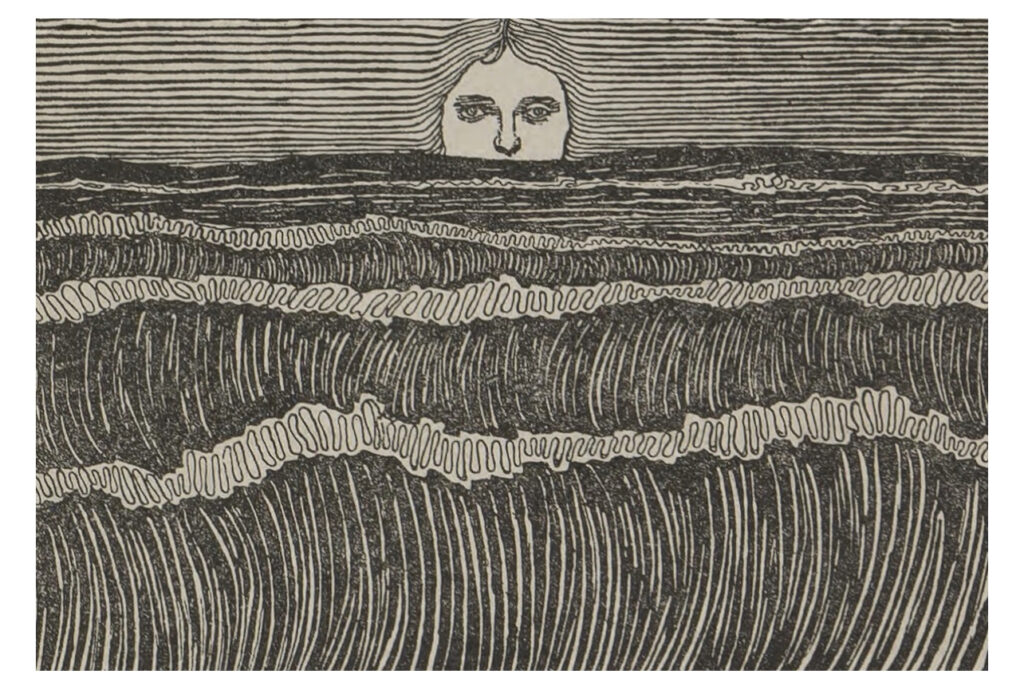
Petite Cap
Once upon a time there was a village girl, the bravest you can imagine. The person who loved her most was her mother, and she wished for her child to be able to do everything she desired. The girl’s biggest desire was to visit the cliffs, a beautiful view she never got to see because of the acid rains plaguing it’s land. The mother, guardian of the region’s beloved okra bushes, once bartered many bunches of Okra for a little polytetrafluoroethylene (PFTE) cap. PTFE made it so that the acid rains plaguing the cliffs she so greatly desired to visit could not harm her! Oh, what a joy this was to the girl, who started wearing it all the time. Soon, everyone began to call her Petite Cap.
One day, her mother said to her: “Look, Petite Cap. You may go to the cliffs now that you have your cap. It will protect you, but you’d better leave now so that you get there before the rains become heavy. Leave as soon as you see more clouds begin to gather! Walk carefully and don’t take the cap off. Otherwise, you’ll be burned by the rain and you’ll have painful scars that will make you hideous forever. When you get to the cliffs, don’t forget to say good day and good bye to the land.”
“I’ll do just as you say,” Petite Cap promised her mother.
The cliffs were a far trek, a two hour walk from the village. She could tell she was getting close by the smell of the acid mixing with the land. No sooner had Petite Cap arrived at the cliffs than she met a dancing boy. Petite Cap couldn’t believe that she was seeing a boy dancing unharmed in the acid rain without protection–he had not one ugly boil on his arm! She wasn’t the least afraid of him, but envious.
“Good day, Petite Cap,” said the dancing boy.
“Good day,” she says to the cliffs. “Thank you kindly,” she says to the dancing boy, “and good day to you, too, boy who dances.”
The dancing boy laughs and dances even more gleefully.
“What brought you to the cliffs on this day, Petite Cap?”
“I have never visited them before.”
“What is that cap upon your head, Petite Cap?”
“Why you just said it, dancing boy. It is a cap that keeps me safe from the rain.”
He followed Petite Cap for a short while as she moseyed the cliffsides. Then he said: “Have you ever danced in the rain before? With that cap, you can’t move your head properly. Why don’t you take that cap off? The rain feels good and free on my skin. You are walking under this rain as if you are walking through your village, and yet it is so heavenly dancing under this rain on this cliffside.”
Petite Cap opened her eyes wide and saw how much fun the boy was having in the rain. The rain slid off of his plump cheeks and swaying arms like regular rain. He galloped through puddles and pranced through mud. He even opened his mouth and let the rain fall on his tongue! She thought to herself: “If I dance in the rain, I can bring the village to dance in the rain with me, and they will be overjoyed. I’m sure if this boy is just fine dancing in the rain, I, too, will be just fine.”
Overjoyed with excitement and freedom, she tossed the special cap off the cliffside. She was horribly surprised to find the rain began to burn. The rain caused boils to bubble on her arms and legs. She covered her face, and called out to the boy but there was no answer. He was no longer dancing.
“Oh, dancing boy, what burned ears I have!”
“The more music you’ll hear.”
“Oh, dancing boy, what burned eyes I have!”
“The less clouds you will watch for.”
“Oh, dancing boy, what burned hands I have!”
“The more you’ll sway your arms.”
“Oh, dancing boy, I am melting!”
“That is the way to feel free.”
With haste and ubiquity, Little Red Riding Hood became a quintessential text to what Tatar calls “a rational moral economy” (Tatar 7). Before such shifts, however, Little Red Riding Hood was a risky and ribald piece of folklore between a curious girl and a prowling wolf. In consideration of the fact that fairy tales “have their roots in peasant culture relatively uninhibited in its expressive energy … [with] agricultural laborers and domestic workers [relying] on the telling of tales to shorten the hours devoted to repetitive tasks, ranging from hoeing and harvesting to spinning and sewing,” a PCC LRRH begs the question: what labor would exist? (Tatar 6). If agricultural, then what type of agriculture? One that is perhaps a regional, specified and careful provision due to incredibly sparse resources and abstruse points of harvest? If spinning and sewing, then spinning and sewing what? With a lack of animals and thus animal skin or fur, would the dominant form of weaving and twisting fabric utilize a synthetic, perhaps plastic, material?
The shifting of the laborious tasks themselves, in turn, shifts the tales that are brought to a life as a product of them. No longer would even their folkloric possibilities be “full of earthy humor and high melodrama,” if Earth’s personality itself has undergone fundamental changes. How could the word of ‘raw’, and the “traces” of such a concept’s “energy” as we know it–something that is rich or fresh–be expressed in a similar fashion within a world where ‘raw’ may come to mean dry or barren (Tatar 9).
There are a few emblems within the tale that dominate its sense of change, such as the fact that I do not rely on such a grandmother character to drive the story because a PCC would contain lower mortality rates, thus, the mother, who finds a lack of her own guidance early on, will naively sends LRRH off to the cliffsides. I also use acid rains, which has been found to be a consequence of climate crisis. “The causes of climate change and acid rain are anthropogenic and emissions based. When considering the cumulative gases and pollutants emitted from vehicles or coal power plants, we see the effects of acid rain and climate change are worsened” (Bowen, 2019).It is a motif that positions the environment as a dangerous threat, as an unpredictable force dressed in happiness—like a hungry wolf dressed in grandmother’s clothes.
Naturally, the existence of a strong moral that clearly drives our modern understanding of LRRH, would continue to drive the tale in the future. I predict a willingness to preserve cautionary tales such as LRRH because “they tap into discursive practices that rely on a pedagogy of fear to regulate behavior” (Tatar 10). In this dystopain society, the obstacles in the way of survival, such as acid rains, are exaggerated and highly consequential–incomparable to the obstacles we combat in the current age. Cautionary tales functions an widely used tool in a PCC scenario, using more fear and more terror, as they attempt to dissuade children from fatal consequences.
While we consider many historians’ and critics’ understanding of the tale, it is important to remember DeMocker’s insight, removed from the realm of fairy tales but intrinsic to children’s perception of the world: “…our job is to make our children fall in love with the natural world — and very few people fall in love with the terminally ill.” To balance inflated fear for the environment, the tale presents a similarly exaggerated appreciation for it through the boy’s voice. Like some writers’ unwillingeness to demonize the wolf, there is an allowed glimpse into the joy the child craves from the Earth: splashing in puddles and feeling fresh water coming from the sky on warm skin (Tatar 11).
One can imagine–upon seeing the social and political changes that subsequently alienated this thrifty, raunchy story for adults into a warning bell for children–the influences that PCC might impose on such a story. The new fears and hopes that might squash the story into a more disturbing moment in which not a wolf, but the environment itself, preys on children.
In the future, cautionary tales won’t be about the caution of climate change since it is the given circumstance. A cautionary tale instead will caution children from falling prey to the dangerous environment. This is what my version of Little Red Cap is.
If we want to dispose of the current functions of our planet, then we might as well start thinking about the new functions that future children will need to navigate and adhere to. The future kids in a post-disaster environment won’t read The Grimm Brothers or Charles Perrault because it won’t make sense to them. They won’t know what a wolf is which tempts the little girl. They won’t know what the woods are which a Prince hacks through to get to the Princess. Instead, children will read my stories because they will make sense.
BIBLIOGRAPHY
Tatar, Maria. The Classical Fairy Tales. 2nd ed., W. W. Norton & Company, 2017.
DeMocker, Mary. The Parents’ Guide to Climate Revolution: 100 Ways to Build a Fossil-Free Future, Raise Empowered Kids, and Still Get a Good Night’s Sleep. Foreword by Bill McKibben, New World Library, 2018.
Bowen, Jackie. “Acid Rain & Climate Change Are Connected, Here’s How.” Adirondack Council: Preserving Water, Air and Wildlands, Adirondack Council, 6 Dec. 2019.
Hall, Shannon. “Exxon Knew about Climate Change Almost 40 Years Ago.” Scientific American, Springer Nature, 26 Oct. 2015, www.scientificamerican.com/article/exxon-knew-about-climate-change-almost-40-years-ago/.
Blair, Elizabeth. “‘The Lorax’ Warned US 50 Years Ago, but We Didn’t Listen.” NPR, Morning Edition, 12 Aug. 2021, www.npr.org/2021/08/12/1026385429/the-lorax-dr-seuss.
