In the vast landscape of literature, fairy tales have held a significant place, weaving themselves into the fabric of cultures across the globe. However, as time progresses, these tales have undergone a metamorphosis, evolving to reflect the changing societal norms and ideals. The adaptation of fairy tales into modern Hollywood productions shows the juxtaposition of them with their original counterparts from Brothers Grimm and Charles Perrault. Through this exploration, aiming to unravel how themes such as feminism, the concept of true love, and diversity have been reimagined and reshaped in contemporary retellings. The transformation of fairy tales in modern adaptations through Hollywood films reflects not only a progressive shift in societal values but also serves as a reflection of our evolving cultural landscape, providing insights into the complexities of gender roles, relationships, and inclusivity. By exploring these themes through characters like Aurora, Rapunzle, Ariel and more I aim to demonstrate how the narrative surrounding these characters has become a prominent topic of discussion in contemporary critics and media judgment.
One of the most notable changes in modern adaptations of fairy tales is the portrayal of female characters. Gone are the passive damsels waiting for rescue; instead, there is an emergence of empowered heroines who navigate their own destinies. In “Tangled,” Rapunzel emerges as a vibrant embodiment of female empowerment, challenging stereotypes and inspiring audiences with her unwavering determination and resilience. Raised in isolation by the villainous Mother Gothel, Rapunzel’s journey to self-discovery is characterized by a steadfast resolve to break free from the confines of her tower and explore the world beyond. Central to Rapunzel’s empowerment is her agency and ability to navigate challenges independently. Unlike traditional fairy tale heroines who passively await rescue, Rapunzel takes matters into her own hands, wielding her intelligence and creativity as tools for survival. For instance, when faced with imminent danger, she ingeniously employs her long, magical hair not only as a means of escape but also as a means of defending herself, showcasing her resourcefulness and ingenuity. The portrayal of Rapunzel as an empowered heroine has far-reaching implications for how female characters are perceived in popular culture. By subverting traditional gender roles and showcasing the agency and resilience of women, “Tangled” challenges societal expectations and empowers audiences to embrace their own inner strength and potential. Furthermore, Rapunzel’s character resonates deeply with young girls, providing them with a relatable role model who embodies qualities of independence, bravery, and resilience. Through her journey of self-discovery and empowerment, Rapunzel teaches audiences that true strength comes from within and that they possess the power to shape their own destinies.
It is imperative to recognize that such qualities of independence and strength, while undoubtedly commendable, represent only a fraction of the multifaceted spectrum of feminine attributes deserving of celebration and admiration. Aurora from “Maleficent” is a prime example of how nuance can be introduced to the idea of feminism. In the original telling of sleeping beauty, the Grimm’s “Briar Rose”, Aurora’s character languishes in passivity, propelled only by the actions of others. When reimagined in the movie “Maleficent”, it strays from the conventional route of imbuing her with physical prowess, a common trope in contemporary retellings. Instead, the film delicately weaves Aurora’s strength to showcase her innate kindness and femininity. In this nuanced portrayal, Aurora’s character design becomes a poignant reminder of Louisa May Alcott’s timeless wisdom, echoed in the words, “Just because my dreams are different from yours does not mean that they are unimportant” (Alcott). This line instantly reminds me of the complex dreams and roles women can have and play in society. We are not confined to a pursuit of careers and independence, so it should also be an honor to pursue motherhood and the art of nurturing a home. Herein lies the beauty of embracing femininity not as a compromise to be made, but as an intrinsic source of strength and resilience. In redefining the narrative landscape of female characters, there emerges a conscious effort to broaden our collective perception of women’s agency and empowerment. It is a narrative that transcends the confines of traditional archetypes, inviting us to celebrate the myriad facets of femininity and the inherent strength that resides therein. As we navigate the complexities of gender dynamics in our modern world, let us heed the profound lessons imparted by characters like Aurora, embracing the diversity of female experiences and embracing the inherent strength of kindness and sincerity.
The traditional narrative of true love’s kiss as the ultimate resolution to fairy tales has been challenged in contemporary adaptations. The motif of true love’s kiss as the ultimate resolution to conflicts was a staple to the original tales. This trope, popularized by narratives like those collected by the Brothers Grimm and Charles Perrault, has ingrained itself deeply in our cultural consciousness. However, contemporary adaptations of these tales have begun to challenge this traditional notion, offering alternative perspectives on love and its transformative power. Films like “Frozen” emphasize the power of sisterly love, while “Maleficent” explores the complexities of maternal affection.
Disney’s “Frozen,” is a great example of this form of challenging as it shifts the focus from romantic love to the profound bond of sisterhood. In classical fairy tales, true love’s kiss is depicted as a magical solution to breaking curses, waking sleeping princesses, and overcoming various trials. The Grimms’ and Perrault’s tales often culminate in a romantic kiss between the protagonist and their love interest, symbolizing the triumph of love over adversity. It usually has a simplistic storyline where a prince “could not turn away his eyes; and presently he stooped and kissed her. And she awaked, and opened her eyes, and looked very kindly on him. And she rose, and they went forth together” (Grimm). This narrative formula, while enchanting, can perpetuate the idea that romantic love is the only form of love capable of saving the day. In contrast to traditional fairy tales, “Frozen” challenges the primacy of romantic love by placing emphasis on the bond between two sisters, Elsa and Anna. Throughout the film, it is their unwavering devotion and sacrifice for each other that ultimately saves the kingdom of Arendelle. Elsa’s act of true love, not a romantic kiss but rather an act of selflessness to protect Anna, breaks the icy curse that had engulfed the land (Frozen). Overall, Frozen highlights the complexities and depth of familial relationships, showcasing how familial bonds can be just as powerful, if not more so, than romantic ones.
Disney’s “Maleficent,” is another example of a movie which subverts the traditional narrative by emphasizing the significance of maternal love over romantic love. In “Maleficent,” the story unfolds from the perspective of the eponymous character, who, betrayed by love, curses Princess Aurora. Yet, as Aurora grows, Maleficent finds herself drawn to the child, developing a maternal affection that transcends the darkness of her curse. In the climactic moment, it is not a romantic kiss but Maleficent’s maternal kiss that awakens Aurora, symbolizing the power of maternal love to break curses and heal wounds. By challenging the importance of romantic love, the film offers a more nuanced and inclusive portrayal of love’s transformative potential. Maleficent’s journey from a vengeful fairy to a loving mother subverts stereotypes and expands our understanding of love in all its forms. This narrative was subject to criticism though. Audiences can accept the notion to make true love come in different forms. But Disney then gets accused of its poor writing of mothers. Their motherhood is their only importance to the story, not them as individuals. It is criticized for the lack of effort they put to humanize the parents when they are so pivotal in the trajectory of their children’s stories, “none of the dead mothers are even named in the films, including Pocahontas’ mother, whose spirit is visually present, guiding her and other characters throughout the entire story”(Kadlec). However, I disagree with Kadlec, I think that the film acknowledges the agency and autonomy of maternal characters, allowing them to navigate their own paths and make choices that transcend conventional expectations. Regardless of the commentary on the mothers themselves though, the reimagination of true love as more than just a romantic gesture is still very significant progress from the traditional tales. By expanding the definition of true love beyond romantic relationships, these adaptations offer more diverse and inclusive narratives that reflect the complexity of human connections.
In recent adaptations, there is a noticeable effort to introduce diversity both in terms of culture and representation. Films like “Encanto” celebrate the richness of Latinx culture, while the casting of Halle Bailey as Ariel in the live-action adaptation of “The Little Mermaid” signals a move towards greater inclusivity. Disney’s “Encanto” stands as a vibrant testament to the beauty and richness of Latinx culture. Set in Colombia, the film immerses audiences in a world filled with colorful imagery, lively music, and authentic representation of traditions and customs. From the vibrant landscapes of the Colombian countryside to the spirited rhythms of cumbia and vallenato, “Encanto” embraces its cultural heritage with pride and authenticity. At the heart of the film lies the story of the Madrigal family, each member endowed with unique magical gifts that reflect the diversity of Latin American folklore. Through characters like Mirabel, who embarks on a journey of self-discovery and empowerment, “Encanto” celebrates the resilience, strength, and interconnectedness of Latinx communities. These aspects of the film can both educate children that have never had exposure to these cultures but can also make people of that race or ethnicity feel represented. By centering the narrative on a diverse cast of characters, the film not only entertains but also educates and empowers audiences, fostering a greater appreciation for Latinx culture and heritage.
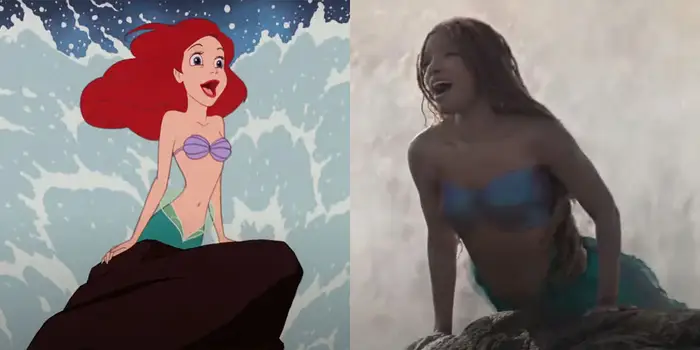
The casting of Halle Bailey, a talented African American actress, as Ariel in the upcoming live-action adaptation of “The Little Mermaid” represents a significant milestone in the pursuit of greater inclusivity in Hollywood. By reimagining a beloved character traditionally depicted as white, Disney sends a powerful message of representation and diversity to audiences worldwide. Bailey’s casting not only challenges conventional norms but also opens the door for more inclusive portrayals of iconic characters in mainstream media. It is a testament to the importance of representation and the recognition of talent beyond racial boundaries. As Bailey steps into the role of Ariel, she not only brings her own unique interpretation but also paves the way for future generations of diverse actors to claim their rightful place in the spotlight. However, her acceptance into this role was not without its trials. One of the main complaints was that this was an attempt for Disney to come across as “woke” or “force diversity”. More complaints include: “trolls declared that Bailey was #NotMyAriel. Many claimed that her casting was an example – surprise, surprise – of “woke” culture gone mad” (Vassell). I think this conversation of preformative activism is a conversation that should absolutely be capitalized in this conversation of diversity. Throughout my studies as an actress I have been told repeatedly that the only time race is important to casting is if it is a part of the script. No where in the original tellings of “The Little Mermaid” does it specify that Ariel is white. The casting of Halle Bailey as Ariel serves as a beacon of progress in the ongoing quest for greater diversity and inclusivity in Hollywood. While criticisms may arise, it is essential to engage in meaningful dialogue surrounding these issues and to continue championing representation that authentically reflects the diversity of our society.
As displayed, these strides are not without their share of criticisms and controversies, raising questions about authenticity, tokenism, and the boundaries of representation. Critics argue “For a brief period, there were more films and TV shows that featured diverse casts and themes” (Lidaka). The notion that the diversity in Hollywood today is forced is from critics who are sharing a narrative based on internalized racism and a poor interpretation of society. The Disney we are seeing today is one attempting to replicate the actual diversity in our county. It is imperative to navigate these discussions with nuance, acknowledging both the progress made but also allow these things to be challenged. While the evolution of fairy tales in modern adaptations is a testament to our evolving consciousness, it is not immune to scrutiny. Critics argue that certain adaptations, despite their progressive facade, perpetuate underlying stereotypes and fail to truly subvert entrenched norms. Moreover, the commodification of diversity and feminism in mainstream media raises concerns about authenticity and the co-optation of social movements for commercial gain. These criticisms underscore the need for a discerning eye and a critical lens when engaging with modern adaptations of fairy tales.
The journey of fairy tales from their humble origins to their modern adaptations reflects a larger narrative of societal transformation. Through the prism of feminism, the reimagining of what love means, and the embrace of diversity, these adaptations serve as a reflection of our evolving values and aspirations. However, amidst the celebration of progress, it is crucial to remain attentive and interrogate the complexities inherent in these narratives. By doing so, a meaningful dialogue can be engaged that not only honors the legacy of fairy tales but also paves the way for a more inclusive and equitable future. The evolution of fairy tales in modern adaptations through Hollywood films represents a dynamic interplay between tradition and progress, reflecting the changing societal norms and ideals. Through the exploration of themes such as feminism, the concept of true love, and diversity, contemporary retellings offer nuanced and multifaceted narratives that challenge traditional conventions and expand our collective understanding of these timeless tales. By engaging in meaningful dialogue and interrogating the complexities inherent in these narratives, it challenges us socially to both honor the legacy of fairy tales while also paving the way for a more inclusive and equitable future in storytelling.
Works Cited
Rowe, Karen E., (1986) “Feminism and Fairy Tales” from Zipes, Jack, Don’t bet on the prince : contemporary feminist fairy tales in North America and England pp.209-266, Aldershot: Gower
Kilmer, Alyson, “Moving Foward?: Problematic Ideologies in Twenty-First Century Fairy Tale Films” (2015). All Master’s Theses. 73.
Maria Tatar. The Classic Fairy Tales (Second Edition) (Norton Critical Editions). W.W. Norton & Company, 2017.
Nicola @ Thoughts on Fantasy. “How the Last 300 Years Have Changed Fairy Tales.” Thoughts on Fantasy, 13 May 2016, thoughtsonfantasy.com/2014/09/29/how-the-last-300-years-have-changed-fairy-tales/.
“Maleficent.” Walt Disney Studios Home Entertainment (Distributore), 2014.
“The Backlash against Halle Bailey’s Little Mermaid Is as Silly as It Is Predictable.” The Independent, Independent Digital News and Media, 15 Sept. 2022, www.independent.co.uk/life-style/little-mermaid-ariel-movie-halle-bailey-ursula-b2166767.html.
Alcott, Louisa May, 1832-1888. Little Women. Melbourne ; London ; Baltimore :Penguin Books, 1953.
Nathan Greno, Byron Howard, et al. TANGLED . USA, 2010.
Buck, Chris, and Jennifer Lee. Frozen. Walt Disney Studios Motion Pictures, 2013.
Bush, J., & Howard, B. (2021). Encanto. Walt Disney Pictures; Walt Disney Animation Studios.
Rob Marshal. l(2023). The Little Mermaid. Walt Disney Pictures.
Lidaka, Maris. “Wokeness in Film Isn’t the Problem.” LinkedIn, 15 Apr. 2024, www.linkedin.com/pulse/wokeness-film-isnt-problem-maris-lidaka-4rj4c.
