Sofia Baer
The trickster personae dramatis finds its origins in folklore, fairytales, and mythology. From Native American creation mythology to the Ancient Greeks, to the films and television series of the twenty-first century, the trickster infests stories of every capacity. Throughout time and across the world, the trickster has taken up permanent residence. What about these slippery, abrasive personalities make the trickster an apparent necessity in storytelling? While many interpretations exist on what exactly the trickster represents in the reader’s psyche, the result is the same; the trickster is so prolific because we connect with what the trickster represents as a symbol of resistance, as a teacher of culture, and as a comedic relief. By dissecting famous tricksters throughout history, we find the characters acting per their responsibility of providing the reader with an entry point to understand the tales they inhabit. By dissecting their purpose, the importance of the trickster, a character often villainized, is revealed.
The trickster character, while having many narrative and social responsibilities, is multi-faceted purposefully for the benefit of the reader. Both a creator and a destroyer, a problem-solver and a game designer, the trickster is liminal. In Norse mythology, Loki the God of Trickery is also referred to as “The Liminal One” (Smith), meaning he exists in a constant in-between. Tricksters are often creatures of both things, neither completely one or the other. They are forces of good and evil who move between the world of gods and men. William J. Hynes in his essay “Metaplayers and Revealers” calls the trickster, “a psychic adventurer, the trickster continues to go where others wish to venture yet fear to tread.” (Mythical, 211) As a meta character, the trickster acts as an avatar that readers can easily move through the story as, meaning it exists both inside and outside of the story itself. For example, in the fairytale “Hansel and Gretel”, the reader places themselves in the role of the children destined to outsmart the evil witch. Folklorist James Deutsch explains why trickster characters like Hansel and Gretel are so universally beloved, “The success of the trickster demonstrates that you don’t need extraordinary physical prowess to win the day. Mere mortals may take much satisfaction in this turning of the tables.” (Smith) We enjoy watching the trickster outsmart their prey and as our entry point into the fairytale, we in turn outsmart ours.

Otto Kubel
The trickster, acting in its role as a representation of confronting authority, challenges the status quo in a way that satisfies the reader. While the common man follows societal customs mindlessly, the trickster is a disruptive force that proves the benefits of disobedience. Willian J. Hynes, trickster expert, says “Historically, the single most common significance overtly attached to the trickster and their antics…has been their ability to function as a vent through which pressures engendered by a system of beliefs and behaviors can be dissipated.” (Mythical, 206) In the case of Jack from Jacob Joseph’s retelling of the classic fairytale “Jack and the Giant Beanstalk”, the social frustration of poverty leads our trickster to theft. “So they lived off the bag of gold for some time, but at last they came to the end of it, and Jack made up his mind to try his luck once more at the top of the beanstalk.” (Tartar, 275) By undermining the authority of the giant, trickster Jack violates moral law successfully in a way that the reader sympathizes with and supports. Robin Hood is another socio-political trickster who rebels against subordination in legal and societal contexts, taking from the rich and giving to the poor. In her collection of fairytales, Maria Tartar writes that “They [fairytale characters] are the underdogs who turn the tables on their oppressors and establish, out of the least promising materials imaginable, a new social order characterized by measured abundance and amiable goodwill.” (Tartar, 229) The tricksters in these tales and histories are supported by the longings of the common people and the readers who cannot confront authority in their realities, and thus find solace in the accomplishments of the trickster. Apart from moral and social customs, tricksters also challenge political and racial status quos, giving readers a method of escape from the inequality suffered in daily life. Joaquin Murrietta, the Mexican cowboy, is preserved in folklore history as a violent martyr. In the film Legends and Folklore of the Old West, Murrietta’s legacy as a trickster is explained, “He took revenge against Anglo Americans for injustices committed against Mexicans during the California Gold Rush, essentially becoming a symbol of resistance against racial oppression and violence” (Legends, 2:30). Murrietta did his work at night, cutting cattle lines while riding horseback in acts of political disobedience that marked him as the infamous trickster that to this day inspires tales of the frontier. Hynes classifies folklore like Murrieta’s as being “both entertaining and educational”, speaking on the importance of giving the common people a literary anti-hero who understands the struggles of a human while acting against their frustrations in the methods of a god.
Because they often operate in systems where beliefs and entertainment remain intertwined, tricksters are used as a device to teach. Through their wits and scheming, trickster figures have brought to life the worlds they inhabit, making many of their tales creation stories. Susa-no-o is one such character from Japanese Mythology. In his article, A Japanese Mythic Trickster Figure: Susa-no-o, Robert S. Ellwood calls Susa-no-o “Undeniably a trickster figure in any sense of the word…” (Mythical, 52). The mythology is greatly contested and changes from retelling to retelling, but the chaotic disorder of the god is clear. After a marriage to his sister resulting in a bounty of divine children, Susa-no-o destroyed the sacred site of Niiname-sai and strewed his feces before the celebration of the Harvest Festival. After the death of Ogetsuhime the food goddess at the hands of Susa-no-o, rice, wheat, and soybeans was brought to the world. (Mythical, 145) There is a cyclical nature to the trickster as a creature that both brings into being and takes life from. In understanding this reality, the reader understands the cycle of life. This is made possible due to the inclusion of the trickster, who William J. Hynes calls “both the occasion for humor and the bearer of enlightenment.” (Mythical, 205) As readers, we listen to the knowledge of the trickster because of their erratic natures which tends to mirror our own. An important aspect of the trickster in the role of a creator is appetite. The craftiness and ingenuity of the trickster mean little if not paired with will, and because the archetype often acts in self-interest, appetite is a natural incentivizer. Again, as readers we relate to the drive of hunger, and thus understand the motivation of the trickster. This creates a bond of trust between the reader and narrator that immerses us in the story. From the Native mythology, “Raven Becomes Voracious” from the North Pacific Coast region, comes the creation of appetite. Appetite in itself mirrors the trickster, being both physical and effervescent, holding a peculiar place between worlds as the trickster does. As explained by Lewis Hyde, author of Trickster Makes This World, “Raven Becomes Voracious” is a story of descent “In heaven there are beings who do not eat; in this lower world of stomachs and fish there are mortals who eat constantly. Raven is a mixture…a being of considerable power who is unable to satiate his hunger.” (Trickster, 27) This transformative quality of the trickster, being both god and man, connects with the reader because as humans we have the tendency to imagine ourselves as higher beings concerning the rest of the animals we share the Earth with until we are forced to satisfy our base desires and descend back down to the lower world of stomachs and fish, led forcefully by appetite. Perhaps the most recognized trickster in Native American mythology and folklore, Coyote is known for his multitudes and transformative qualities. In his book The Oxford Companion to World Mythology, David Leeming describes Coyote as “At once clever and foolish, creative and destructive, otherworldly and worldly, a community figure and a loner. His appetites for sex and food are limitless, and he recognizes no taboos.” (Leeming, 83) In a Maidu myth, Coyote is said to have created the first lie, wept the first tears, and designed the first death. (Leeming, 84). Coyote shows us the destructive power of creation, educating us on our transgressions in assuming a place of power in the food chain and the innocuous contradictions that come with it. Creation stories that highlight tricksters are so popular because in material reality, we are the tricksters. We have created the world we live in through our wits and scheming, and thus the ironies of the creator trickster ring true.
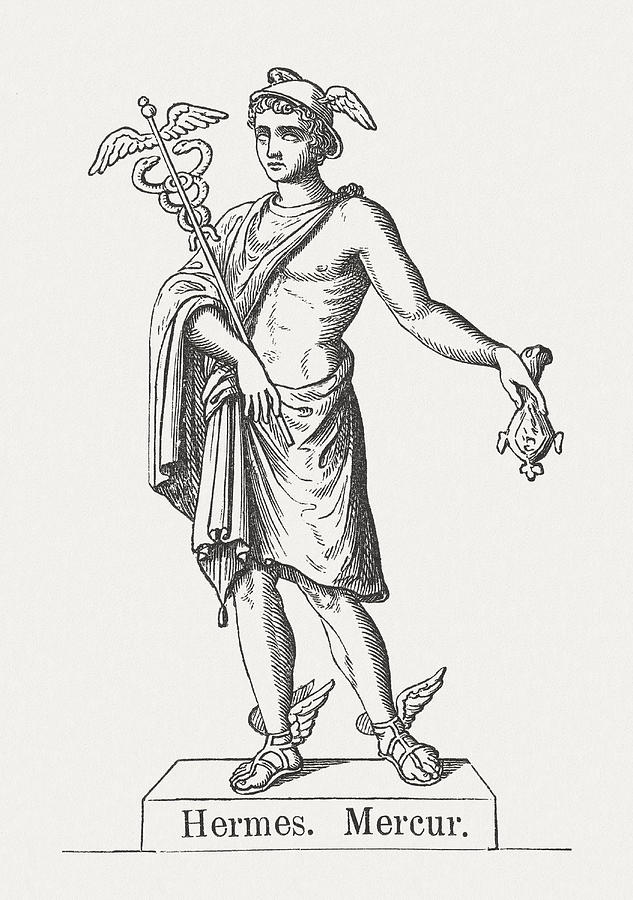
Apart from educating the reader on the world and his place in it, the trickster also works to affirm societal beliefs. Hynes says “Trickster myths can be a powerful teaching device utilizing deeply humorous negative examples that reveal and reinforce the societal values that are being broken.” In fewer words; To show us the rules, trickster breaks them. In Greek mythology, Prometheus and Hermes carry the responsibilities of the trickster. William G. Doty in his article Hermes as Trickster, says “What seems more typically tricker-ish than his creations and inventions are Hermes’ corrections and restorations…in which he enables humans to reunite or to move to a higher level of awareness or insight.” (Mythical, 55) Hermes, by stealing fellow god Apollo’s sacred cattle, teaches us the dangers of thievery. The titan Prometheus steals fire from the Greek gods and gifts it to humans, resulting in the rise of human civilizations and forever altering the subservient status of humans to the gods (Liverpool). For punishment, Zeus chains the Titan to a rock to be brutalized by a bird for eternity. If the punishment was not clear enough, Hynes quoting Babcock-Abrahams, a trickster expert, says “That which is being broken, is always implicit…for the very act of deconstructing reconstructs.” (Mythical, 208) By raising humankind to the point of the creation of society, Prometheus subtly reminds us of the relationship between god and man and of the punishment for defying the natural order just as Hermes teaches us to be wary of sacrilege. This is a direct contradiction to the role the trickster plays as a creator, reminding us that while in some respects we act as gods, we are not the source of total power in the universe and must maintain a balance of social order.
By placing ourselves into stories via the trickster, we reveal hidden insights that deepen our understanding. By recognizing the outside influence of the trickster on the world around us, we can better appreciate our relationship to the trickster. Davy Crockett, while also a historical American hero, was inflated into a trickster god of mythological proportions. In a particular folklore, Crockett sells the same coonskin cap, now a permanent fixture of his character, back to a bartender ten times over (Jackson, 25). He now lives on in his god-like visage as a staple of the identity of the American frontier. A reinvention of Crockett was historically realized by conman James Fisk Jr., who worked in finance and was infamous for bribing lawmakers and members of the justice department in the 1800s. Author of American Tricksters; Thoughts on the Shadow Side of a Culture’s Psyche William L. Jackson says “He was called a con man by high society but was a hero loved by working class and poor people…Americans often seem to look up to the skillful players of improvised self-invention and confidence games, despite the sleaziness of their actual crimes and punishments.” (Jackson, 6) The image of a man rising to power inside a corrupt system through total disregard for legality is a romanticized bastardization of the American dream, one that has cemented itself into the identity of the country. The rebirth of James Fisk Jr. is realized in films like The Wolf of Wall Street, and in men like Bernard Lawrence Madoff, proving the trickster legacy to be a permanent and essential part of national identity. Not only is the trickster important narratively, but also in reality. By creating a cultural identity influenced by the trickster, we recognize our reliance on it.
Wikimedia
The final responsibility of the trickster is perhaps the most obvious – to provide entertainment. Katherine Luomala, a trickster expert says “Their basic human appeal, independence of cultural differences, is their initial attractive quality and their most enduring.” (Mythical, 203). The reason these stories are so pervasive, have stood against the test of time and come out victorious, is because we enjoy them. We listen to the wisdom they present because we like to laugh. Hyne says, “Both within specific cultures and worldwide, the humor and laughter evoked by trickster myths are never exhausted in a single telling. Obviously something is being communicated that bears repeating.” Without the trickster, we are left with little interest in the tales themselves. Even for those who find the humor unnecessary and deem the tales worthy of a listen regardless, readers are tasked with navigating the difficulty of the stories with no true entry point into the world of gods. Anne Doeuihi says in her essay “Inhabiting the Space Between Discourse and Story in Trickster Narratives”, “It is only to the closed, ordinary mind that trickster stories seem absurd or profane. It is in the language out of which they are constructed that trickster stories make accessible this deeper wisdom about the nature of reality.” (Mythical, 198) Humor is a point of connection and without it, the wisdom of the mythology, fairy tales, and folklore that are home to the trickster is lost.
Anne Dueihi says “The trickster shows us a way to see the world by opening our minds to the spontaneous transformations of a reality that is always open and creative.” Regardless of the role the trickster takes, regardless of the tale they inhabit, the reader is always drawn towards the complications of the archetype because The trickster reflects humanity. The trickster is liminal, unbelonging, transformative, a creator and a destroyer, a symbol of resistance and positive change, a teacher, a bringer of laughter, complicated and imperfect, and because of this, we love it.
Works Cited
Cushing, Frank Hamilton. Zuñi Coyote Tales. University of Arizona Press, 1998. JSTOR.
Leeming, David. The Oxford Companion to World Mythology. Oxford University Press, 2005.
Google Books
Legends and Folklore of the Old West. Films for the Humanities Sciences (Firm), 2011. A&E Television Networks, LLC. Master Academic.
Deutsch, James. “A Folklorist Explains Loki’s Place in Mythology’s Pantheon of Trickster Heroes.” Smithsonian Magazine, 9 June 2021,
Gilhus, Ingvild Saelid. Laughing Gods, Weeping Virgins: Laughter in the History of Religion. London, Routledge, 1997. EBSCO Books.
Hyde, Lewis. Trickster makes this world. Farrar, Straus and Giroux, 1998.
Hynes, William J., and William G. Doty, editors. Mythical Trickster Figures: Contours, Contexts, and Criticisms. University of Alabama Press, 1993.
Jackson, William J., and Peter Johannes Thuesen. American Tricksters: Thoughts on the Shadow Side of a Culture’s Psyche. Cascade Books, 2014.
“Prometheus: Stealing Fire from the Gods.” National Museums Liverpool, Accessed 1
December 2024.
Tatar, Maria, editor. The Classic Fairy Tales: Texts, Criticism. W.W. Norton, 2017.
