The Incarnation of Gendered Fairy Tale Bodies
By Natalie Skaggs
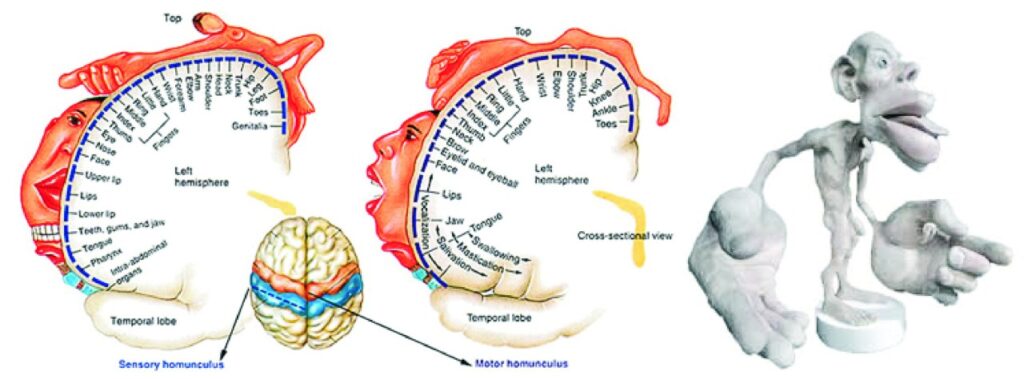
Within the scientific community the homunculus is a representation, often used in teaching and memorization, to display the space dedicated to distinct body parts within the somatosensory cortex or motor cortex of the brain. The motor and sensory homunculi are depicted as human persons having disproportionately large or small body parts according to their prominence within that system. For example, the sensory homunculus possesses a very large tongue because a large portion of the somatosensory cortex is dedicated to the tongue (Saladin 524). While these figures are designed to be nothing more than to-scale mappings, one could argue that they represent the aspects of human anatomy most significant to us as individuals. These cortexes of our minds are primarily dedicated to the homunculi’s largest limbs which we use to understand and interact with the world. In this way, the motor and sensory homunculi are creatures which more fully represent our relationship with our physical bodies than that of the human figure. However, the homunculus medium has yet to display the human body according to its existence within fairy tales. These stories reflect ideas and understanding, acting as one cortex of the global human brain. As Bordo writes, “Our bodies, no less than anything else that is human, are constituted by culture” (Bordo 142). Thus it is time to incarnate a new profound creature, one which will expound our knowledge of our physical selves within society, especially the differences between male and female.
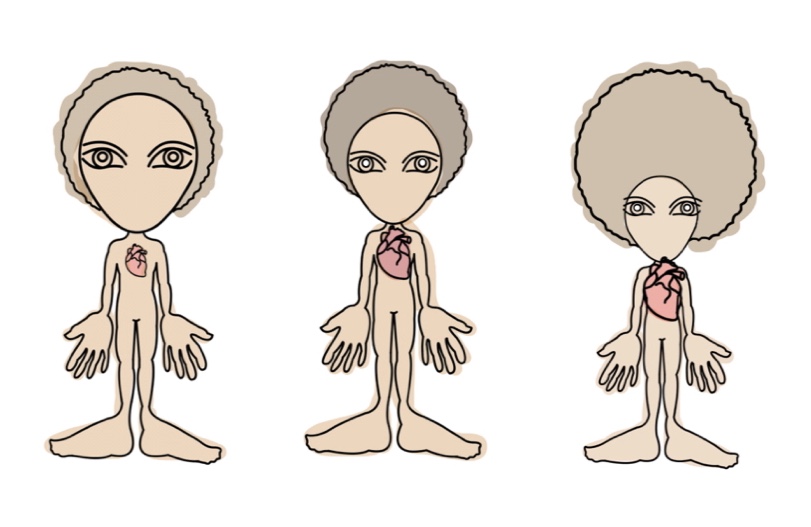
Both quantitative and qualitative methods were used to conceptualize the fairy tale corpus. Previous research, especially that of Jorgensen, quantified the presense of human anatomy within European fairy tales. Through this method the importance of individual body parts, as proven through frequency of mention, was accounted for. Then, this understanding was used to create the bodies of three fairy tale homunculi. The first homunculus depicts a universal human body, not identified by sex. This neutral homunculus is the foundation of the later two, possessing large eyes, head, heart, fingers, hands, face, hair, and feet because these are the most mentioned body parts within fairy tales. Two other homunculi stand for the gendered dimensions of human anatomy within fairy tales. Contrasting these later two figures reveals an unbalanced representation of male and female anatomy. Further analysis of the symbolic understanding of body parts within the context of fairy tales and common symbolism gives a larger meaning to each formed homunculus. Ultimately, the ununiform nature of the three homunculi is evidence of a gendered dichotomy within fairy tales which plays into a larger cultural understanding.
The head is the largest body part of the sex neutral and male homunculi (figure 3). The head is the most frequently mentioned body part within the Brothers Grimm tales, having 152 mentions in total for both genders combined (Jorgensen). However, the head is not equally significant for each gender. Another data base shows that the noun “head” is predominately used in reference to men within fairy tales. Specifically, male characters account for 73.08% of all usage. (Jorgensen). Additionally, the neck, that which secures the head to the body, is only used for men and never for women within these tales. But what is to be made of this hypertrophy?
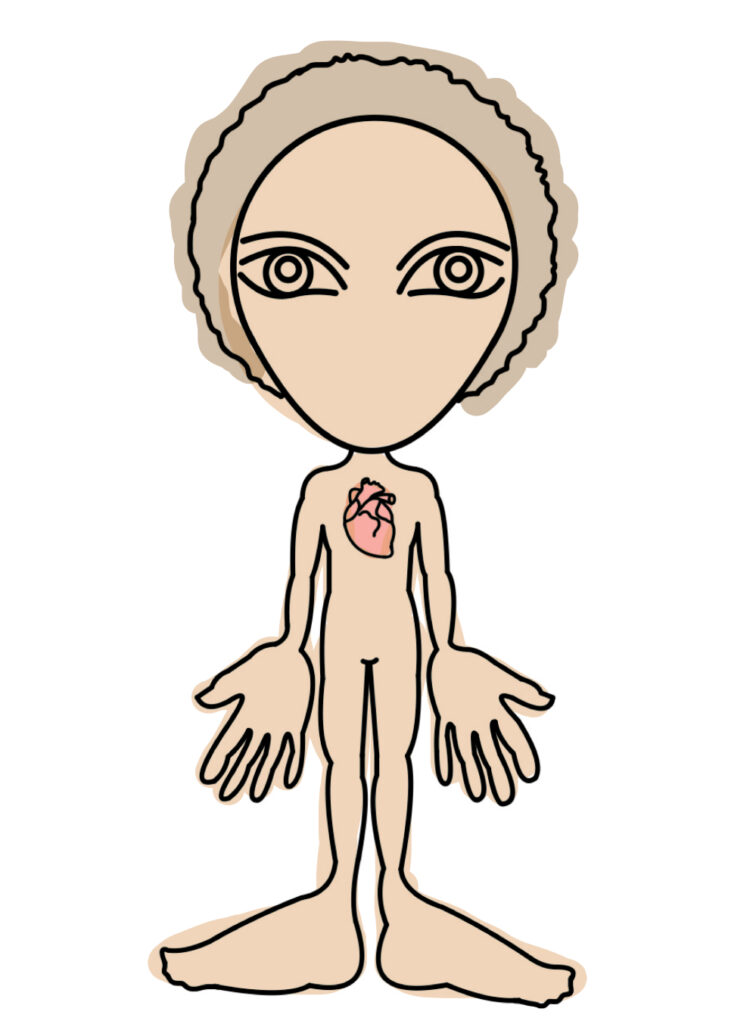
The male association with the head encourages an elevated perspective of all men. First, the head is a symbol of power and authoritative position. The phrase, “the head of the household” or simply “head of” a group is used to define the individual with the highest rank. Due to its role within the physical body, the head is also accredited with cognitive ability and intelligence. For this reason “having a good head on one’s shoulders” is a compliment of intellect. In colloquial terms, the head is also equivalent to logic and reason. An example of this is the phrase “use your head,” which is an instruction to think logically and rationally. This cultural understanding aligns with anatomical function. The head houses the central nervous system, including the brain and spinal cord which are responsible for conscious thought as well as responsible for the autonomic life-preserving functions of the whole body. One could argue that the brain is the most vital part of human anatomy, for without it no other organ could function. Finally, the head is incased in the protective skull. Without the skull the brain would be soft and fragile, rather it is protected and sturdy. In parallel, men are shown to have strength and are free of susceptibility. In these ways, men are represented as powerful, wise, and strong figures within fairy tales.
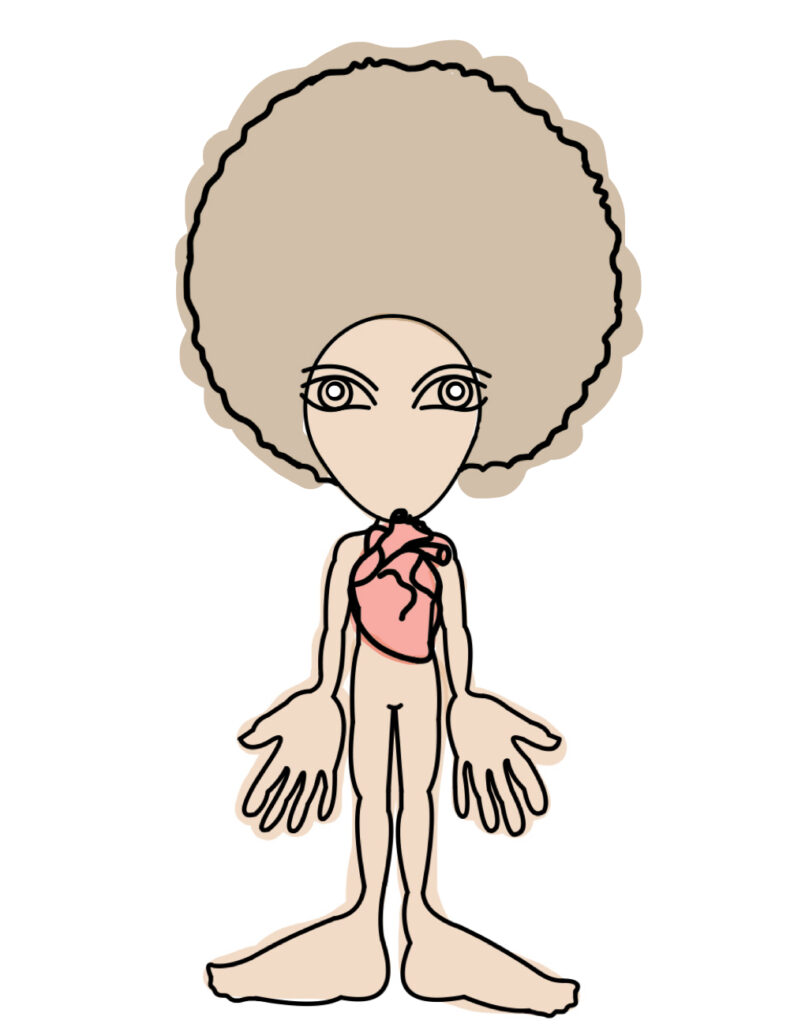
In contrast, the female homunculus possesses the largest heart of all the fairy tale homunculi. Previous studies show that the heart is the third most mentioned body part of all, having 141 mentions. The majority of the mentions are accredited to female characters. The implications of such a large heart are vastly different than those of the male’s large head.
The cultural connotations of the heart are vast and primordial. Largely, the heart is accredited with affection and love. Within American culture hearts are plastered distributed on every medium on valentine’s day, a holiday which celebrates romantic effection and relationship. One fairy tale with many mentions of the heart is Jeanne-Marie Leprince de Beaumont’s version of “Beauty and the Beast.” For example, female protagonist “loved [the beast] with all her heart” (Tatar 48). So, women are displayed as loving creatures. The heart also frequently symbolizes authenticity and good character. At the heart of a person or thing is its core or true colors, and a possessing a good heart means being good in entirety. Within the same tale beauty tells the beast “I am completely pleased with your good heart” (Tatar 46). Within these tales women are depicted as creatures of love, affection, and good will.
However, equating women with the heart also means equating them with weakness. The heart is considered a fickle organ, susceptible to emotional and physical injury. In the Brothers Grimm edition of “The King Frog” a servant of the young king, Heinrich, is “so saddened by the transformation of his master into a frog that he had to have three hoops placed around his heart to keep it from bursting with pain and sorrow” (Tatar 58). Heinrich’s heart is so fickle due to sadness that without additional support it would have been his demise. The heart is also a mechanism to portray other negative emotions such as fear. Brothers Grimm also write that the “king could see that [the princess’s] heart was pounding” at the sight of the disgusting frog. (Tatar 57). Hearts are frequently damaged within fairy tales, which includes many instances of broken heartedness, a state of grief over some sort of loss. The heart has many positive connotations but is ultimately weak and becomes the downfall of many fairy tale characters.
The feet are an example of an anatomical part which is mentioned with similar frequency for both men and women but holds vastly different significance for each. There are 38 mentions of feet within the Brothers Grimm fairy tales. However, there is a pattern of essential “pillars of the body,” such as the bones and back, having a higher association with men (Jorgensen). For example, men hold 65.91% of all leg references. Although this does not directly include feet, there is a thematic similarity of stability between the men’s feet and their legs. Within this context feet represent a strong foundation for the body, holding a positive connotation. In “Little Thumbling” by Charles Perrault the male protagonist takes boots off an ogre and places them on his own feet. Little Thumbling was very pleased because the enchanted boots “had the power to become larger or smaller according to the feet wearing them. As a result they fit his feet and his ankles as if they had been made just for him” and felt empowered to continue on his adventure (Tatar 261-262). In other instances, women lower themselves to men’s feet, demonstrating men’s position of superiority. In Charles Perrault’s “Bluebeard” the same woman does this twice when she “threw herself at her husband’s feet, weeping an begging,” and then repeats the same action when she “threw herself at his feet” just one page later (Tatar 191-192). Whenever men’s feet are mentioned, it is in a manner which favors their strength and status.
On the flip side, references of feet including women generally depict weakness. There are many instances of foot amputation or foot torture within fairy tales. In Hans Christian Andersen’s tale “The Red Shoes” one woman, Karen, finds her feet stuck in a pair of enchanted shoes which compel her to dance without control until her feet are eventually amputated (Tatar 280). This is far from the stable pillars which men’s feet are suggested to be. Another example of unsteady standing is in “The Little Match Girl” also authored by Andersen. In this tale the protagonist is “a poor little girl, with nothing on her head and with… tiny, bare feet, which were red and blue from the cold” (Tatar 301). Here feet are used to illustrate depravity. Perhaps the most famous mention of feet within a fairy tale is in “Cinderella” by Brothers Grimm. In this tale there is one girl, Cinderella, whose feet become her greatest asset. Yet, there are twice as many girls whose feet become a source of pain, the two stepsisters. One stepsister “sliced off her toe, [and] forced her foot into the shoe” and the other “sliced off a piece of her heel, [and] forced her foot into the shoe” (Tatar 152). Both stepsisters ultimately fail at their goals when their feet, bleeding from manipulation, expose them to the prince. Although feet are significant to both genders within fairy tales, they are a resource to men and a liability to women.
In summation, the homunculi demonstrate a deeper understanding of how humanity is represented within European fairy tales. If every anatomical mention is considered a synecdoche for the whole being, then we must consider how we define those individuals. Observing the frequency of, and associations with, body parts mentioned gives light to a dichotomous perspective of gender. Specifically, masculine connections with the head and feet depict men as the more superior, wise, and strong sex. This contrasts fairy tales’ illustration of women as loving yet vulnerable and weak through the symbolism of heart and feet. Fairy tales use human anatomy to tell a story which favors male empowerment and anticipates female failure.
A scientific method of understanding the fairy tale corpus is especially valuable considering how much culture, communicated through mediums such as fairy tales, impact the health sciences. Recent research has linked gender bias with “negative attitudes and behaviors in healthcare providers” (Rhiannon 1) The forms of bias have been found within medical education through unequal representation in anatomy textbooks, “the visualization of stereotypical gendered emotions, roles and settings; the lack of ethnic, age, and body type diversity; and in the almost complete adherence to a sex/gender binary” (Rhiannon 5) Despite increased awareness of the impacts of gender bias within the science fields little change is yet to occur. Change may only occur within medicine when those conducting the medicine become aware of the cultural practices which breed gender bias, like fairy tale telling. If people of the sciences acknowledge that the first things they learn about our heads, our hearts, and our feet come from these stories then perhaps they will become better at treating them.
Works Cited
Bordo, Susan. The Male Body: A New Look at Men in Public and Private. Farrar, Straus & Giroux, 1999.
Jorgensen, Jeana. “Masculinity and Men’s Bodies in Fairy Tales: Youth, Violence, and Transformation.” Marvels & Tales 32.2 (2018): 338,361,494. ProQuest. Web. 7 May 2021.
Jorgensen, Jeana. “Quantifying the Grimm Corpus: Transgressive and Transformative Bodies in the Grimms’ Fairy Tales.” Marvels & Tales 28.1 (2014): 127,141,216. ProQuest. Web. 7 May 2021.
Jorgensen, Jeana. “The most Beautiful of all: A Quantitative Approach to Fairy-Tale Femininity.” Journal of American Folklore 132.523 (2019): 36,60,107. ProQuest. Web. 7 May 2021.
Parker, Rhiannon, Theresa Larkin, and Jon Cockburn. “A visual analysis of gender bias in contemporary anatomy textbooks.” Social Science & Medicine 180 (2017): 106-113.
Saladin, Kenneth S., et al. Anatomy & Physiology: the Unity of Form and Function. Ninth Edition ed., McGraw-Hill Education, 2021.
Steven, Van Wolputte. “HANG ON TO YOUR SELF: Of Bodies, Embodiment, and Selves.” Annual Review of Anthropology 33 (2004): 251-69. ProQuest. Web. 7 May 2021.
Tatar, Maria. The Classic Fairy Tales (Second Edition) (Norton Critical Editions). W. W. Norton, 2017. [Yuzu].
